
International Research Journal of Engineering and Technology (IRJET) e-ISSN: 2395-0056
Volume: 12 Issue: 12 | Dec 2025 www.irjet.net p-ISSN: 2395-0072
International Research Journal of Engineering and Technology (IRJET) e-ISSN: 2395-0056
Volume: 12 Issue: 12 | Dec 2025 www.irjet.net p-ISSN: 2395-0072
Savita Gautam1, Mr. Ram Krishna Paramhansh Dubey2
1M.Tech, Computer Science and Engineering, SR Institute of Management & Technology, Lucknow, India 2Professor, Computer Science and Engineering, SR Institute of Management & Technology, Lucknow
Abstract - The growing transition from traditional standalone simulation tools to cloud-based simulation services has createdanincreasing demandforcloud-basedSimulation-asa-Service (SMaaS). Therefore this research provides an evaluation of a new cloud based platform which combines web-based simulation, training and analytical services in one cloud native platform by utilizing micro services and containerized orchestration technology. In addition, it provides resource utilization through the use of automated provisioning,dynamicpricing (adaptivelicensing),andhybrid virtual machine (VM)-containerized deployment; it also supports the ability to scale performance in real-time across various types of academic and commercial users. An example case study using Polymer Portal and Manifold Flow Predictor showed that the proposed model is able to provide improvementsinefficiency,reductionsinoperationalcosts,as well as higher levels of user satisfaction. Results from benchmarkingstudiesdemonstratedthatthehybridapproach significantly reduces response times and computational overhead when compared to previous VM-based models. Finally, evaluations of user acceptance were completed using both TAM and UTAUT methods, which demonstrate that the proposed model is more usable and will be adopted at a greaterratethanpriormodels.Therefore,theproposedmodel provides a base for further extension, including the use of AIassisted prediction, collaboration between edge-clouds, and block chain enabled license transparencies.
Key Words: Simulation-as-a-Service (SMaaS), Web Services Integration, Micro services Architecture,Cloud Computing, High Performance Computing (HPC), Adaptive Licensing and Billing.
Simulation technology has traditionally been a vital componentofresearch,designofengineeringproductsand production in the industrial sector. Historically, nearly all simulationprogramswerestandalonedesktopapplications thatrequiredspecialcomputerhardwareconfigurationsand considerableinvestmentforlicensefees.Inrecentyearswith the pursuit by industry of the digital transformation of business,thedeliveryplatformforsimulationsystemshas undergone a dramatic shift from independent computing environmentmodelstoadistributed(cloud)basedmodel. Withthisshifthascometheopportunityforgreaterremote collaboration, lower costs and more accessible, and
powerful,HighPerformanceComputing(HPC)capabilities alongwithsophisticatedanalyticaltools.
Simulation technology has traditionally been a vital componentofresearch,designofengineeringproductsand production in the industrial sector. Historically, nearly all simulationprogramswerestandalonedesktopapplications thatrequiredspecialcomputerhardwareconfigurationsand considerableinvestmentforlicensefees.Inrecentyearswith the pursuit by industry of the digital transformation of business,thedeliveryplatformforsimulationsystemshas undergone a dramatic shift from independent computing environmentmodelstoadistributed(cloud)basedmodel. Withthisshifthascometheopportunityforgreaterremote collaboration, lower costs and more accessible, and powerful,HighPerformanceComputing(HPC)capabilities alongwithsophisticatedanalyticaltools.
From 2020 through 2024, modern cloud services have utilized micro-service architecture, and containerized servicessuchasDockerandKubernetes.Micro-servicesand containerized services enable the decomposition of large complexsimulationsystemsintosmall,independentservices whichcanbescaledup,updated,orindependentlydeployed. In contrast to large monolithic systems, the use of microservice systems decreases the operational overhead and increasestheoverallreliabilityofsystems.
Orchestrationofcontainersenablesadditionalefficienciesin automation for resources, load balancing, and fault tolerance. Cloud service providers utilize orchestration of containers to provide seamless performance, increased availability, and faster time-to-deploy to SMaaS platforms whichsupportmultipleusersrunningdifferentsimulation taskswithvariablecomputationalrequirements.
International Research Journal of Engineering and Technology (IRJET) e-ISSN: 2395-0056
Volume: 12 Issue: 12 | Dec 2025 www.irjet.net p-ISSN: 2395-0072
1.3 Increasing Industrial Demand for Real-Time Simulation, Lightweight Licensing Models, and Remote Access
Manufacturing, Automotive, Aerospace, Polymer, and MaterialsEngineeringindustriesrelyonReal-TimeAnalysis and Simulation-Driven Decision Making. With shorter ProductDevelopmentTimelines,itisnecessaryto receive faster Feedback with Reduced Reliance on Physical Prototypes.TheneedforOnlineSimulationPlatformsthat enable Users to Rent Computational Power instead of PurchasingPerpetualLicenseshasincreasedduetothis.
Subscription-BasedLicensingandPay-Per-UseBillingallows users to have access to Professional Simulation Tools, eliminating the need to purchase a Long-Term Perpetual License. Also, Remote Access through Web Portals and Virtual Environments, enable Teams from various Geographical Locations to Collaborate Effectively, thus ImprovingProductivityandReducingOperationalDelays.
1.4 Research Gap between Monolithic Simulation Deployment and Distributed SMaaS Models
Eventhoughtheuseofcloudcomputingisexpanding,many current simulation systems continue to be built on tight, monolithic deployment architectures that have difficulty withscalability,costofmaintenance,andcan'taccommodate a wide variety of user needs due to a rigid design. As simulationsinreal-worldsettingsareevaluated,monolithic simulationenvironmentsareshowntohavegreatdifficulties inhandlingfluctuationinworkload(i.e.,whenthedemand forasimulationincreasessuchasatanacademicpeaktime, orwhenacontinuoushighvolumeofrequestsaregenerated in an industry), and therefore may require a distributed, service-orientedarchitecturethatwillallowtheintegration of simulation tools through web services and scalable resource management. The proposed model would also
provideuserswithmulti-tenantaccess,distributetheload across all available processors to increase system performance,andsimplifytheprocessofmanagingsoftware licensesanduserauthentication.
This research introduces an integrated framework that enables simulation services to be delivered through a scalable cloud-based architecture. The key contributions include:
1.5.1
A framework that uses web services to integrate multiple simulation tools within a unified portal, allowing users to accessresourcesthroughacommonentrypointwithsingle sign-oncapabilities.
Aquantitative evaluationof theframework based onuser experience, cost effectiveness, computation performance, and practical adoption in both industrial and academic settings.
1.5.3
Theincorporationofmodernautomationtechniquessuchas virtualization, containerized deployment, and dynamic resourceallocationtoimproveresponsivenessandsystem efficiency.
Web service technology development and transition from traditional,self-containedapplicationstodistributedService OrientedArchitecture(SOA),hashadasignificantimpacton bothdesignanddeliveryofsimulationservices.NewCloud Computing,MicroServices,HighPerformanceVirtualization, Automated Resource Orchestration, Intelligent Licensing Frameworks,etc.arefacilitatingthedevelopmentofscalable and accessible Simulation as a Service (SMaaS) platforms. Thissectionwillprovideanoverviewofliteratureregarding WebServiceTechnologies,HPCBasedSimulationDelivery, EvolvingBillingStrategies,andEndUserPortalEvaluation Models.
2.1.1 Traditional SOA vs. Micro services vs. Server less Frameworks
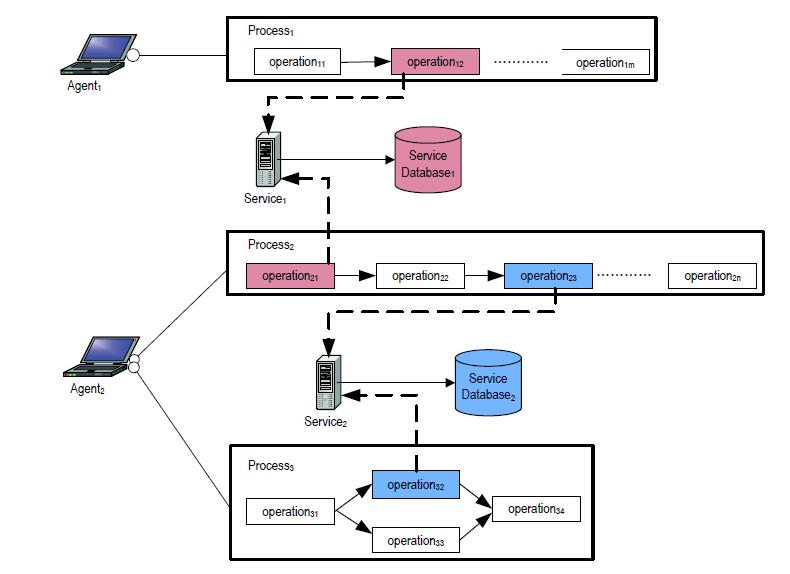
Service-OrientedArchitecture(SOA)hasbecomeacommon approach to integrate business process and software componentinvariouslocations.IntraditionalSOA,business processesareorchestratedthroughacentralcontrolpoint andcommunicationbetweendifferentsystemcomponentsis typicallyconductedwithstandardprotocols.Withincreased scalabilityofthesystems,thisarchitecturewillincreaseboth
International Research Journal of Engineering and Technology (IRJET) e-ISSN: 2395-0056
Volume: 12 Issue: 12 | Dec 2025 www.irjet.net p-ISSN: 2395-0072
complexityandperformancebottleneck.Microservices,on the other hand, partition an application into many small, independentservices,eachcapableofbeingindependently deployedandscaled.Duetotheirabilitytoindependently deploy and scale, micro services are more suited than traditional SOA for cloud-native simulation services that havetodealwithavarietyofworkloadsandmultipleuser groups.Additionally,ServerlessComputinghasemergedas an alternative to micro services due to its lack of requirementformanagementof theapplicationserver(s), and automatically scales depending on demand alone; therefore,suitableforunpredictablesimulationworkloads.
Orchestration models based on event triggers have developed as a method of controlling dependency relationships between large-scale distributed services. Comparedtothetraditionaluseofworkflowmanagementto control theflow ofdata betweenservices,event-triggered systems create new flows of activity by triggering the executionofaservice(orsetofservices)uponoccurrenceof aneventthathasbeenidentifiedasrelevanttothatactivity. Bycreatingtheseflowsofactivityatthetimeoftheevent occurrence, this model provides improved performance responsiveness,betterfaultisolationandhigherthroughput in real-time environments. As such, event-triggered orchestrationmodelsarebeingwidelyadoptedwithinthe design of newer SMaaS platforms to manage the task of coordinating simulation processes, scheduling jobs, and executingresultprocessingpipelines.
While previous generations of web service technology commonly utilized SOAP/WSDL based communications, todayasignificantnumberofWebServicedevelopersutilize RESTfullAPIs,OpenAPISpecificationsaswellasemerging GraphQLbasedinterfacesduetotheirflexiblenature,lower communication overheads and easier integration across cloud computing platforms. This newer generation of API technologies will provide better interoperability among
simulationservices,e-commercecomponentsandresource provisioninglayerswithinanintegratedframeworkforweb services.
2.2 Simulation-as-a-ServiceandHigh-Performance Computing
In traditional Cloud Simulation Systems, virtual machines (VMs),havebeenusedtocreatea"sandbox"environment for each user. VMs provide a level of isolation that allows developerstoconfiguretheirapplicationsinthesameway across different platforms, but at the cost of increased resources and longer deployment times. A new type of virtualization tool is container-based virtualization, with toolssuchasDocker,whichprovideslightweight,portable and fast execution environments. This has made it an attractive option for use in High Performance Computing (HPC)-basedsimulationworkflows.Containersallowusers toscaleup/downwitheaseandmakeefficientuseofsystem resourceswhenperformingrepeatedsimulationjobs.
2.2.2 Use of Kubernetes and Docker for Runtime Automation
Kuberneteshasbecomeanindustrystandardforautomation ofdistributedorchestrationforcontainerizedapplications. In addition to providing automation for resource provisioning, job scheduling, fail-over and scaling of simulation workloads, integration of Kubernetes with Docker-based simulation services provides SMaaS (Simulation-as-a-Service) providers the ability to dynamically allocate computing resources in response to real-time usage of the service, allowing for reduced costs whilemaintaininghighlevelsofperformancereliability.
Research studies have recently investigated hybrid computingmodelsthatcombinebothcloudbasedprocessing andedge-basedprocessing.Inautomatedmanufacturingand other industrial applications which are time sensitive, to achieve timely (real-time) process monitoring and optimizationiscriticalandwillrequireaminimumamount oflatency.Amethodforcollaborativesimulationbetween edgeandcloudisedge-cloudcollaborativesimulation.This methodinvolvespre-processingorpartialmodelexecution atthephysicallocationofthesensor(s)ordevice(edge),and theremainingand/orcomplexcalculationswillbeexecuted onthecloud.Therefore,edge-cloudcollaborativesimulation improves the speed and reliability of the overall system, reducesitsdependencyonthenetwork,andmaintainsthe requiredlevelofsystemstability.
International Research Journal of Engineering and Technology (IRJET) e-ISSN: 2395-0056
Volume: 12 Issue: 12 | Dec 2025 www.irjet.net p-ISSN: 2395-0072
2.3.1 Usage-Based Licensing in Commercial Simulation Platforms
Simulationengineeringsoftwarelicensingismovingfroma perpetualorextendedsubscriptionlicensemodeltoa"payper-use"modelwhereengineersarechargedonlybytheir actual use of the software (by computation time, or frequencyofuse),thiswilldramaticallylowertheeconomic barrier for academics as well as smaller industry organizationsinutilizinghigh-endsimulationsoftware.
Recently, block chain based smart contracts have been proposedasawaytoimprovesoftwarelicenseverification, licenseusagetrackingandbillingtransparency.Theuseofa distributedledgerthatisimmutableallowsthetransactions associated with licensing to be recorded securely so that unauthorizedaccesscanbeprevented,licensedistribution among multiple tenants can be ensured fairly and secure audittrailrecordscanbecreatedforbothserviceproviders andcustomers.
Theneedtoprovideflexibility,scalability,andcost-effective accesstohigh-performancecomputingresourceshasledto significantadvancementsincomputationalengineeringand industrialsimulation.Nevertheless,thereisalargenumber ofthecurrentlyusedsimulationenvironmentsbasedonthe so-called"legacy"systems,wheretheselegacysystemswork as isolated monolithic structures, thus limiting the availability,performance,andaffordabilityofthesesystems. Theaforementionedlimitationsrepresenta hindrancefor bothindustrialcustomersthatusecontinuoussimulationsto developproductsandacademiccustomersthathavelimited accesstothesystemwithfluctuatingusagedemands.This section will identify the primary challenges that are motivating the development of an SMaaS framework as a serviceintegrationmodel.
Themajorityoftraditionalsimulationsoftwareapplications require significant investments in expensive perpetual licenses, specialized hardware configurations as well as continuing support and maintenance. Consequently, the investmentcostiselevated(especiallyforsmall-to-medium enterprisesandeducation-basedinstitutions)sincetheyare unable to afford a large initial expenditure. In addition to beingcostly,legacysimulationdeploymentmethodologies lack flexibility resources do not scale with demand; therefore,ifutilizationislowthencomputationalcapability remains idle while during high demand there may be insufficient computational capability. The limitations
imposedbytheaboveconstraintslimitboththewideruseof simulationsandinnovation.
Usage of academic environment's simulation tools varies significantly based on an academic setting's schedule (lab sessions, due dates for assignments and group projects), which can cause a surge in demand for these types of softwaretoolsatvarioustimes.However,legacysystemsfail toadapttodynamicrequestsformorecomputingpower,as such, students experience slow responses, job queue backlogs,andfailedaccesswhenmultipleusersattemptto use them simultaneously. These system performance limitationsnegativelyimpactstudentlearningexperiences andpreventtimelyrunningofcriticalsimulations.Therefore, ascalablearchitectureisrequiredtoensurethattheservices continuetooperatereliablywhiletheloadonthoseservices changesthroughouttheday.
Traditionalsimulationframeworksprovideastaticamount of computing power to an individual application or user community(notdynamicallybasedoncurrentworkloador priority).Staticprovisioningcanresultinwastedcomputing power and is inefficient in both academic and business settings.Theabilitytomanagecomputingresourcesthrough intelligent means (through dynamic scaling and runtime allocation)hasbecomecriticaltomeetdemandasitrelates tosimulationapplications.Theneedforresourceflexibility will becritical in moderncloud-basedsimulationsasthey will require continuous adaptation to meet changing simulationdemandswithoptimalcostsandperformance.
Theproposedframeworkprovidesascalable,service-based solutionforofferingsimulationsoftwareaspartofacloudintegrated platform; it offers a modern alternative to traditionalsimulationsystemsthatarelimitedintheirability totakeadvantageofcloud-basedcomputingresources(i.e., cloud-native virtualization, micro-services, adaptive resource utilization). The proposed framework utilizes cloud-based services to provide streamlined access to software, improved computational performance, flexible licensingoptionsandenhanceduserexperienceviaasingle servicecatalog.
Thesystemarchitectureisbasedonamulti-layerdesignthat enablesseamlessintegrationofsimulationservices,training modules, and analytical tools within a unified portal. The framework is constructed using three core modern
International Research Journal of Engineering and Technology (IRJET) e-ISSN: 2395-0056
Volume: 12 Issue: 12 | Dec 2025 www.irjet.net p-ISSN: 2395-0072
computing approaches: cloud-native virtualization, micro servicedeployment,andfederatedidentitymanagement.
4.1.1
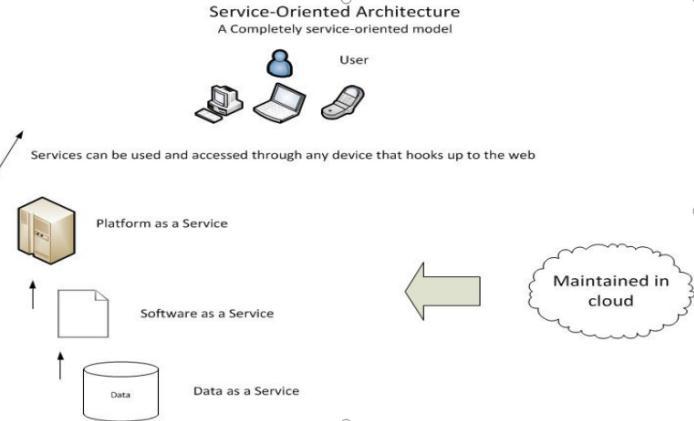
The ability to scale and dynamically allocate computing resourcesisakeybenefitofusingcloud-basedvirtualization for running simulation software in a cloud-native environment.Simulationsoftwarecanruneitherasavirtual machine (VM) or a containerized instance as needed and therefore does not require a fixed amount of compute resources prior to running. As a result, cloud-based virtualizationalsooffersscalabilitywhichallowsforhighperformance computing during peak workload conditions thatwouldotherwiselimittraditionalstaticconfigurations. Therefore,itprovidesacommonplatformforbothacademia andindustrytoutilizesimulationtoolswithlessconcernfor hardware limitations or the complexity associated with configuringsystems.
4.1.2
A micro service based architecture is utilized in order to create a larger simulation system from multiple smaller services which are able to operate independently, to be deployedseparately,to beupdated individuallyand/or to scaleeachserviceindependently;thiswillallowforgreater reliability, enhanced ability to perform maintenance and faster deployment times for simulation services that are beingusedinanintegratedmanner.
4.1.3 IdentityFederationUsingSSO,OAuth2, andOpenID Connect
TheuseoffederatedidentitymanagementwithSingleSignOn (SSO), along with modern authentication methods like OAuth2andOpenIDConnect,hasmadeiteasierforusersto sign-in one time and then be able to access all authorized tools and systems through the portal, therefore no longer having to sign into each system separately. Federated identitymanagementwithSSOincreasestheuser'sabilityto produce work while also increasing the ease of use by decreasingthenumberoftimesthatausermustsign-in.
The framework provides a workflow that is completely automatedandfordeliveringservicesrelatedtosimulations; the framework can manage all aspects of a simulation service request'slifecyclefromthetimetheuserlogsinto the system until they have access to results of their computation. The framework also provides a self-service modelwhereusersselectaservicefromthecatalogandthen the system will automatically provision all resources requiredfortheselectedserviceasneeded,includingvirtual machinesand/orcontainerizedinstancesbasedonreal-time demand. The provisioning process has all aspects of automation, which include resource allocations (compute, memory, and storage), license validations, load balancing,
and monitoring to ensure that the service provided is consistentandstable.
Anadditionalfunctionoftheframework'sworkflowisthe schedulingofcontainer-basedworkloadsforthepurposeof optimizingworkloaddistribution.Aspartofthisprocess,the frameworkutilizesKubernetestoorchestratethelaunching ofsimulation-basedworkloads.ByutilizingKubernetes,the framework ensures that the containers are launched on availablecomputenodeswithnoconflictsregardingtheuse of those resources. The optimized workload distribution reduces waiting time for both the user and the system, eliminatesresourcecontentions,andallowsforcontinuous serviceavailabilityforlargenumbersofusers.
ThedeploymentoftheproposedSMaaSframeworkshows anexampleofhowtointegratecloud-basedsimulationand webservicesintorealworldenvironments.Todemonstrate the SMaaS framework's feasibility, two case studies were developed as cloud-native virtualized, web-integrated applications PolymerPortalandManifoldFlowPredictor whichdemonstratedtheabilitytotesttheperformanceof the system; the user experience; and the adaptive managementofresourcesforbothacademicandindustrial users. This project demonstrates that Simulation-as-aService (SMaaS), with features including automated computing resource allocation, dynamic licensing, and centralaccessviaawebinterface,isviable.
Two of the most commonly used simulation tools in both materials science and engineering were incorporated into thisframeworkforpurposesofdemonstratingthefeasibility oftheproposedarchitecture.Thetwotoolexampleswere selectedbasedontheirabilitytoprovidedifferingtypesof simulationworkloadthatcouldpotentiallybeexecutedbya distributedcloudcomputingenvironment,withthepotential benefits of providing real-time performance and user interfaceenhancements.
The Polymer Portal is a comprehensive simulation-based application that is intended for use in the evaluation of materials, product development and process selection for polymers.Thisportalprovidesaccesstoavarietyofdifferent simulationservicesaswell asseveraltrainingtoolswhich are used by both industrial personnel and research academicstopredicthowapolymerbehaveswhensubjected to varying forms of processing. A major advantage of the Polymer Portal's cloud-based architecture is the ability to remotelyruncomplexsimulationswithouthavingtoacquire expensivelocalcomputersystemscapableofrunningthese applications. The Polymer Portal uses high-performance virtualcomputingnodeswhichareallocateddynamicallyto
International Research Journal of Engineering and Technology (IRJET) e-ISSN: 2395-0056
Volume: 12 Issue: 12 | Dec 2025 www.irjet.net p-ISSN: 2395-0072
meetcurrentworkloaddemands.IntegrationofthePolymer Portalintotheframeworkalsoresultsinfastercomputation times and cost effective licensing options; both of which reduceoperationalcostsandencouragegreaterutilizationof thistechnologywithinengineeringfirms.
The Manifold Flow Predictor tool is a valuable asset for analyzing flow behavior and evaluating performance of multi-branch manifold systems. The predictor is utilized acrossavarietyofapplicationswithinbothmechanicaland fluid dynamics engineering to assess the flow behaviors, pressurelossesandoverallefficiencyofthesystem.Aspart of the overall framework of the implementation, the applicationutilizescontainer-orchestrationbasedexecution environment to enable fast start-up times, allow for concurrent job execution and to control the resources allocatedforeachjob.Thismethodallowsnumeroususers toexecutetheirownsimulationatthesametimeandavoids slowing down the computer system by having all jobs executedoneafteranother.Dataobtainedasaresultofthe case study indicate that the cloud managed version of the configurationallowsforfasterjobexecutionthanwhenthe userinstallstheapplicationthemselvesusinglocalsoftware.
Theimplementationframeworkwillcreateopportunitiesfor integration of artificial intelligence and machine learning modelinginsimulationworkflows.ArtificialIntelligence(AI) based prediction can improve the accuracy of simulation results while decreasing computation time by predicting near optimal results before complex simulations are executed. The ability to provide early feedback to both engineers and students will help to reduce the amount of iterative work and improve the speed of decision making. Futureplanstoextendthissystemincludeincorporationof PredictiveAnalyticsmodulesthatusehistoricalsimulation datatosuggestthebestinitialconfigurationforasimulation, predicttheoutcome(s)ofthesimulation,and/ordetermine theoptimalparameter(s)formaterialordesign.Positioning AIwithintheServiceCatalogwillpositiontheframeworkfor Real-TimeIntelligentSimulationEnvironmentsthatutilize hybrid models combining Physics-Based Simulations with Data-DrivenPredictionsofPerformance.
User feedback was utilized as part of an evaluation to determine if the proposed architecture can be used efficientlyandeffectivelybyusers,atareasonablecost,and in a real-world setting for both educational and industry applications. User studies were conducted to evaluate the usability of the architecture, benchmarking performance studieswerealsoconductedtocompareperformanceofthe proposedarchitecturetocurrentarchitecturesinthefieldof
simulation, and various configurations of the architecture were tested against one another in a comparative study format.Thesestudiesprovidedinsightintohowcloud-based simulationserviceimprovesaccesstosimulations,speedof computation, and usage of resources compared to locally installedandexpensiveequipment.
A user evaluation study was conducted to understand the acceptance,usabilityperception,andpracticalbenefitsofthe implementedSimulation-as-a-Serviceframework.Thestudy includedparticipantsfrombothacademicinstitutionsand industry organizations with varying levels of simulation expertise.
Usersatisfactionandwillingnesstoutilizetheplatformwas measuredbyusingTAMandUTAUTstandardizedsurveys, as both models evaluate perceived usefulness, perceived ease of use, behavioral intention, and actual system utilization.Inadditiontothesemetrics,participantfeedback showedthatusersfeltahighlevelofconfidenceregarding their ability to easily access the system; especially appreciatedbytheusersweretheunifiedportalfeatureof the system which provided one-stop shopping for all simulations, and a simple sign-on process. Users also appreciatedbeingabletoaccessseveralsimulationservices throughthesystemwithlittleornoneedtoconfigureeach serviceindividually.
More metrics were collected to determine technical efficiency in addition to the performance evaluation parameters.Theseincluded:Responsetimeofsystemswhile performing tasks with multiple users at the same time; Resourceusageoptimizationduringpeaksimulationtasks; Costreductionsincomparisontolocallyinstalledsimulation environments.Thedatashowedthattheautomatedmethod ofallocatingresourcestosimulationsresultedinsignificant decreasesinwaittimesforusersandincreasesinsimulation processingrates,aswellasoverallcostreductionsusinga "pay-as-you-go"modelofutilizingsharedresources.
The proposed framework for integrated web-based simulation services demonstrates a viable solution to the challengesassociatedwithtraditionalstandalonesimulation systems.Byincorporatingcloud-nativevirtualization,micro servicesarchitecture,andautomatedresourceprovisioning, thesystemsuccessfullydeliversscalable,cost-efficient,and user-friendlyaccesstosimulationtools.Theimplementation ofcasestudyapplicationssuchasthePolymerPortalandthe Manifold Flow Predictor validates the effectiveness of the modelinbothacademicandindustrialsettings.Evaluation
International Research Journal of Engineering and Technology (IRJET) e-ISSN: 2395-0056
Volume: 12 Issue: 12 | Dec 2025 www.irjet.net p-ISSN: 2395-0072
results indicate significant performance improvement, reduced operational cost, and enhanced usability through unified service access and dynamic pay-per-use licensing. Overall, the study confirms that Simulation-as-a-Service (SMaaS)cansubstantiallyimproveproductivity,accelerate engineeringworkflows,andexpandaccessibilitytoadvanced computationalresources.
Although the proposed framework appears to have a numberofpositiveresults,thereareseveralconstraintsthat should be acknowledged. Cloud based simulation services (performance&accessibility)willdependonareliablehigh speed internet connection; therefore, this may pose a challenge for regions with minimal or no internet infrastructure available. Many commercially developed simulationprogramsrequireproprietaryhardwaresupport, which could limit them from being directly deployed as a container application and could necessitate a hybrid configurationapproach.Interoperabilityissuesmaydevelop with third party tools if they use varying data formats or licensing agreements. Although users provide an overwhelminglevelofacceptancewithrespecttousingthe platform, additional research is required to assess the platforms' impact over time as well as its ability to assist industry'sandotherlargegroupsofusers.
Thefuturedevelopmentofthisframeworkoffersnumerous enhancements thatcanhelp expand itsuse,aswell asthe intelligenceoftheframework.Futureenhancementsinclude usingartificialintelligence(AI)-basedpredictivemodelingto enhance the accuracy of simulations and to accelerate computationcyclesbygeneratinganear-optimalresultprior to executing the simulation; expanding the capabilities of hybrid cloud and edge computing so that simulations are executed in real-time for time sensitive industrial applications;andintegrationofblockchainbasedlicensing and data protection to provide additional transparency in billing and access controls. Additional areas of study that could be researched include automated workload forecasting, zero trust security authentications, and the expansion of service catalog offerings with additional domain specific simulation tools, interactive training modules,andenhancedanalytics.Theongoingdevelopment oftheframework,ifitcontinuestoevolve,hasthepotential to become an intelligent autonomous simulation environment that supports wide spread digital transformation across the disciplines of engineering, manufacturing,andeducation.
[1]D.N.Jha,S.K.Jena,“EvaluationofHPCmicroservicesin containerized environments,” Concurrency and Computation:PracticeandExperience,vol.33,no.1,pp.1–15,2021.
[2]F.Tapia,J.García,M.Pinto,“Frommonolithicsystemsto microservices: A comparative analysis,” Applied Sciences, vol.10,no.17,pp.5797-5808,2020.
[3]H. Sturley et al., “Virtualization vs. Containerization: A comparativeapproachforapplicationdeployment,”Future Internet,vol.16,no.11,pp.1-22,2024.
[4]I. Mavridis and H. Karatza, “Combining containers and VMs to enhance isolation and functionality in cloud computing,”FutureGenerationComputerSystems,vol.98, pp.461–472,2019.
[5]A. Kanso and Y. F. Becerra, “Container orchestration using Kubernetes for microservice-based cloud applications,”JournalofCloudComputing,vol.10,pp.1-13, 2021.
[6]S. Sharma and V. P. Singh, “Migration from SOA to microservices architecture: A case-based performance evaluation,” Journal of Computational Analysis and Applications,vol.33,no.3,2024.
[7]V. Raj, P. Krishnan and S. Chakraborty, “Patterns for migration of SOA based applications to microservices,” JournalofWebEngineering,vol.19,no.5-6,pp.4871-4890, 2021.
[8]G.Ortizetal.,“Amicroservicesarchitectureforreal-time IoTdataprocessing,”FutureGenerationComputerSystems, vol.125,pp.1-15,2022.
[9]T.Müller,N.Mujkanovic,J.Durillo,N.Hammer,“Survey of adaptive containerization architectures for HPC,” ArXiv preprint,2023.
[10]T.Azevedo,R.J.F.Rossetti,J.Barbosa,“Densifyingthe sparseCloudSimSaaS,”ArXivpreprint,2016.
[11]R. N. Calheiros, R. Ranjan, C. De Rose and R. Buyya, “CloudSim: Modeling and simulation of cloud computing environments,”Software:PracticeandExperience,vol.41, pp.23–50,2011
[12]M.G.Khanetal.,“PerfSim:Aperformancesimulatorfor cloud-nativemicroservices,”ProceedingsofIEEECloud,pp. 245-252,2021.
[13]A. Haider and J. El-Hag, “Performance evaluation of virtual cloud labs using container-based virtualization,” IndianJournalofScienceandTechnology,vol.13,no.13,pp. 1-14,2020.
[14]F. Rossi and L. Bonomi, “Edge-cloud collaborative simulation for low-latency industrial computation,” IEEE Access,vol.10,pp.89745-89759,2022.
[15]M. Satyanarayanan, “The emergence of edge computing,”Computer,vol.50,no.1,pp.30–39,2017.
International Research Journal of Engineering and Technology (IRJET) e-ISSN: 2395-0056
Volume: 12 Issue: 12 | Dec 2025 www.irjet.net p-ISSN: 2395-0072
[16]B.Vargheseetal.,“Challengesandopportunitiesinedge computing,”ProceedingsofIEEE,vol.107,no.8,pp.16551674,2019.
[17]Y. Elkhatib, “Serverless computing for scientific workflow automation,” Future Generation Computer Systems,vol.117,pp.349-363,2021.
[18]A.Al-Kiswanyetal.,“Anevaluationofparallelcontainer execution for HPC workloads,” IEEE International SymposiumonParallelandDistributedProcessing,pp.570581,2019.
[19]H. Abu-Lebdeh et al., “A cloud service model for scientific simulation,” IEEE Transactions on Services Computing,vol.14,no.3,pp.621-634,2021.
[20]A. Gupta and R. Jain, “Blockchain-based license managementforcloudsoftwareservices,”IEEEAccess,vol. 9,pp.12454-12468,2021.
[21]S.SinghandP.Kumar,“Usage-basedlicensingincloud platforms:Modelsandchallenges,”InternationalJournalof CloudApplications,vol.4,no.2,pp.22-34,2022.
[22]A. Dua et al., “Virtualization vs containerization: A performance comparison for cloud,” Proceedings of IEEE CloudCom,pp.415-422,2018.
[23]P. Mell and T. Grance, “The NIST definition of cloud computing,”NISTPublications,2011.
[24]D. Bernstein, “Containers and cloud: A review of technologies,”IEEECloudComputing,vol.1,no.3,pp.81-84, 2014.
[25] A.Lewisetal.,“Evaluatingcontainerperformancefor scientificcomputing,”ProceedingsofACMHPC,2019.
[26]A.RahmanandK.Sakr,“Migratingfrommonolithicto microservicesarchitectures,”IEEECloud,vol.7,no.4,pp.620,2020.
[27]J.Moore,S.Choi,“Event-drivenserviceorchestrationfor distributedsimulation,”ACMSimulationModellingPractice andTheory,vol.105,pp.1–15,2020.
[28] H.SalahandA.El-Awady,“RESTvsGraphQLvsSOAP performanceevaluation,”IEEEICINT,2021.
[29] J. Brooke, “SUS: A quick and dirty usability scale,” UsabilityEvaluationinIndustry,1996.
[30]F. Davis, “TAM: A technology acceptance model,” ManagementScience,vol.35,no.8,pp.982-1003,1989.
[31]V.Venkateshetal.,“UnifiedTheoryofAcceptanceand Use of Technology,” MIS Quarterly, vol. 27, no. 3, pp. 425478,2003.
[32]S.Koch,“AI-drivenpredictionassistanceforsimulation workflows,”IEEEAccess,vol.11,pp.21545-21559,2023.
[33]R.Buyyaetal.,“Amanifestoforfuturegenerationcloud computing,”JournalofCloudComputing,vol.9,no.1,pp.138,2020.