
International Research Journal of Engineering and Technology (IRJET) e-ISSN: 2395-0056
Volume: 13 Issue: 04 | Apr 2026 www.irjet.net p-ISSN: 2395-0072

International Research Journal of Engineering and Technology (IRJET) e-ISSN: 2395-0056
Volume: 13 Issue: 04 | Apr 2026 www.irjet.net p-ISSN: 2395-0072
Prof . Prini Rastogi 1 ,Aman Maniyar 1 , Om Upadhye 2 , Devansh Acharye 3 , Ajeenkya D Y Patil
Assistant Professor, Department of ComputerScience, Pune, Maharashtra University Lohgaon, Airport Rd, Charholi Budruk, Pune, Maharashtra
Abstract - Enterprise Resource Planning (ERP) systems are the backbone of any organization, in terms of information management systems integration. This research paper presents a comprehensive analysis of ERP- based integrated student management systems in higher education institutions, examining their architecture, implementation methodologies, and operational effectiveness.
Through analytical examination of contemporary implementations, this paper investigates the integration of web-based technologies including HTML, CSS, JavaScript, and Node.js in developing robust student management platforms. The usage of these systems is important in terms of management in any organization, and ERP's can facilitate the management learning process. The research methodology encompasses requirement analysis, system design considerations, and development frameworks that support scalable educational management solutions.
Keywords: Enterprise Resource Planning, Student Management System, Educational Technology, Web Development.
2 .Introduction
Thelandscapeofhighereducationadministrationhasundergoneaprofoundtransformationinrecentdecades,drivenby technological advancement and the increasing complexity of institutional operations. Recently, computer systems. This articleprovidesanalysisoftherolloutofanERPsysteminoneparticularinstitutionintheUK,theparticularfocusbeing on how the development, implementation and use of both generic and university specific functionality is mediated and shapedbyafundamentalandlongstandingtensionwithinuniversities: this is the extent to which highereducation institutionsareorganisationsmuchlikeanyotherandtheextenttowhichtheyare"unique".
Contemporary educational institutions face mounting pressure to efficiently manage increasingly diverse student populations, complex academic programs, and extensive administrative requirements. Traditional manual systems and isolatedsoftwaresolutions haveproven inadequatefor addressingthesemultifacetedchallenges.Inrecentyears,China's highereducationhasusheredinanewsituationofvigorousdevelopment.Theenrollmentscaleofcollegesanduniversities has been expanding, and the teaching management burden of colleges and universities has become heavier and heavier. Adoptingtraditionalstudentinformationmanagement mode,suchasdirectmanualmanagementormanagementsystem withlowopenness,willinevitablywastealotofhuman,materialandfinancialresources.
The contemporary higher education landscape presents numerous challenges that traditional information management approaches cannot adequately address. Educational institutions worldwide struggle with fragmented data systems, inefficientadministrativeprocesses,andinadequateintegrationbetweenvariousdepartmentalfunctions.Thecreationand management of accurate, up-to- date information regarding a students' academic career is critically important in the university as well ascolleges.Studentinformationsystemdealswithall kind of student details, academic related reports, collegedetails,coursedetails,curriculum,batchdetails,placementdetailsandotherresourcerelateddetailstoo.
One of the primary challenges facing educational institutions is the management of increasingly complex student data acrossmultiplesystemsanddepartments.Traditionalapproachesoftenresultindatasilos,inconsistentinformation,and duplicationof effort across administrative units.
Computerizationofasystemmeanstochangeitfromamanualtoacomputer-based,systemtoautomatetheworkandto provide efficiency, accuracy,timelessness,security andeconomy. After undertaking an in-depth examination of the Ayub Medical Collage's (AMC) existing manual student information system and analyzing its short comings, it has been found necessarytoremoveitsdeficienciesandprovideasuitablesolutionforpresentlyencounteredproblem.
International Research Journal of Engineering and Technology (IRJET) e-ISSN: 2395-0056
Volume: 13 Issue: 04 | Apr 2026 www.irjet.net p-ISSN: 2395-0072
The lack of integrated systems creates significant operational inefficiencies that impact both administrative staff and students. Manual data entry, redundant processes, and limited real-time access to information contribute to delays in decision-makingandreducedservicequality.Theseissuesarefurthercompoundedbythegrowingexpectationsofdigitalnativestudentswhodemandseamless,technology-enablededucationalexperiences.AhighpercentageofERPprojectsare classifiedasfailures,leaving organizations with only partiallyfunctioningsystems or,worseyet, with no ERPsystemsat all.Thosethatdosucceedusuallytakesignificantlylongerthanexpectedandencounterstaggeringbudgetoverruns.This reality highlights the critical importance of understanding the specific challenges and requirements associated with implementingERPsystemsineducationalenvironments.
Security and data privacy concerns present additional challenges for educational institutions implementing comprehensive student management systems. The sensitive nature of student information, including academic records, financial data, and personal details, requires robust security measures and compliance with various regulatory requirements. This paper introduces database design, specific realization of each function module and key technologies usedinthesystem,andcouldbeemployedbyuserswith
The academic literature surrounding ERP implementation in educational institutions reveals a complex landscape of challenges,opportunities,andevolvingbestpractices.ThemainobjectivesofthisstudyaretounderstandiftheERPusage supports management learning, and to identify the main determinants of individual performance. This study presents a successmodelofERPusageforlearningmanagement context. The model was validatedempiricallythroughasurvey answered by university managementstudents.Theresultsshowthatsystem quality, process quality, and training play a determinantroleinthestudents'performance.
Early research in educational ERP systems focused primarily on adapting commercial enterprise solutions for academic environments. Thefirstdocumentedinstance of incorporating ERPsystemsin businessschoolContemporary scholarship hasexpandedtoexaminethepedagogical implicationsofERPsystemsin educational settings. investigatingtheinfluence of ERP simulation game on learning effectiveness, skills development and decision making. Its impact as a teaching and learning tool on the students' ability to develop an integrated view of business is assessed and their generic attitudes towards the learning of SAP analysed. The results reveal the significant impact this game had on students' abilities and points out the challenges in the process and pedagogy. The study found that the game contributed to deep learning in additiontoresultinginsignificantimprovementintheirprocessorientationandintegrativeskills.
Technical architecture considerations have received substantial attention in recent literature. Moreover, a three-layer systemarchitecturemodelisadoptedtobetteradapttothedevelopmentofschoolphysicaleducation,whichisbeneficial for later system maintenance and greatly reduces the work pressure of teachers. Researchers have explored various architecturalapproachestooptimizesystemperformanceandscalabilitywhilemaintaininguser-friendlyinterfaces.
Theliteratureemphasizestheimportanceofuserinterfacedesign anduserexperienceconsiderationsineducationalERP systems.ThesignificantfindingsindicatethatSIMSenhanceshighlyadministrativeprocesses,accuracy indata,andgood communicationamongstakeholdersbyapplyingclearUMLdiagramsof
5. Methodology
5.1
This research employs an analytical methodology designed to provide comprehensive examination of ERP-based integrated student management systems. The analytical approach facilitates neutral exploration of system architecture, implementation strategies, and operational considerations withoutadvocating for specific solutions or vendors. This paperdescribesthesystemfunctionalandarchitecturedesign,andemphasizesthesystem'sfunctionality,databasedesign andfunctionalmodules,etc.
The research methodology incorporates multiple analytical frameworks to ensure thorough investigation of technical, organizational, and operational aspects of ERP implementation in educational settings. This multi-faceted approach enables comprehensive understanding of system requirements, design considerations, and implementation challenges acrossdiverseinstitutionalcontexts.
International Research Journal of Engineering and Technology (IRJET) e-ISSN: 2395-0056
Volume: 13 Issue: 04 | Apr 2026 www.irjet.net p-ISSN: 2395-0072
Primary research components include systematic analysis of system architecture patterns, evaluation of development methodologies, and examination of implementation frameworks utilized in contemporary educational ERP systems. This chapter explains the design and implementation phases of the system. It depicts the class diagram, ER diagram and databaseschematheSystem.Moreover,theimplementationphasecombinestherequirements,designphaseoutputs,and processthemusingtheappropriatetechnologies.
The analytical framework encompasses examination of technical documentation, system specifications, and implementation case studies from various educational institutions. This approach provides insights into real-world applicationsandchallengeswhilemaintainingobjectivityinevaluationandassessment. Data collection strategies include analysis of technical literature, system documentation, and architectural specifications from multiple sources. The research methodology emphasizes evidence- based analysis rather than empirical data collection, focusing on synthesis and interpretation of existing information to generate comprehensive understanding of ERP-basedstudentmanagementsystems.
5.2 Requirement Analysis
EffectiverequirementanalysisformsthefoundationofsuccessfulERP-basedstudentmanagementsystemimplementation. Inordertoimplementthefunctionofstudentinformationmanagement,thefunctionalrequirement,overallstructure,data sheetsandfields,datasheetAssociationandsoftwarecodesaredesignedindetails.
6. System Design Methodology
The system design methodology for ERP-based student management systems requires careful consideration of architecturalpatterns,technologyselection,andintegrationstrategies.
6.1 HTML, CSS, JavaScript, Node.js
ThedevelopmentmethodologyforERP-basedstudentmanagementsystemsleveragesmodernwebtechnologiestocreate responsive,scalable,andmaintainableapplications.Thesystemaredevelopedusingwebdevelopmenttechniques(HTML5, CSS3, JavaScript, JQuery) that let us design the system layout such as login form, tables, panels The development of the websitestarts withdesigningthe websitestructure usingHTML5,thenthe styleof the website was designed using CSS3. Afterthat,enhanceduserinterfacesanddynamicwebsiteweredevelopedusingJavaScriptandJQuery.
HTML5 forms the structural foundation of the user interface, providing semantic markup that ensures accessibility and searchengineoptimization.TheuseofHTML5enablescreationofforms,datatables,andinteractiveelementsthatsupport comprehensive student management functionality. Modern HTML5 features such as form validation, local storage, and responsivedesigncapabilitiesenhanceuserexperienceandsystemfunctionality.
CSS3 implementation focuses on creating visually appealing and responsive interfaces that adapt to various screen sizes and devices. All the Stylings are given through CSS. The Stylings are given in CSS files to separate the document content from document presentation, including elements such as layout, fonts and color. Advanced CSS3 features including grid layouts, flexbox, and media queries enable creation of professional interfaces that function effectively across desktop, tablet,andmobileplatforms.
JavaScriptimplementationprovidesclient-sideinteractivity,formvalidation,anddynamiccontentmanagement.Analytics isimplementedusingJavascript,aGoogleAnalyticsframework,andAjax.Ajaxisusedbecausesomeofthecontentinthis portalisdynamicallyloadedandcertaincontentthatisnotpartofDOM,likethedatafoundindocuments,shouldbesentto theanalyticsserverwhenstudentsclicksanddownloadsadocument.ByusingAjaxthedatarelatedtothedocumentissent totheGoogleAnalyticsserverasynchronouslywhenDOCcontentisclicked.
ModernJavaScriptframeworksandlibraries enhancedevelopment efficiency and code maintainability. The user interface for the entire project was handwritten withoutusingany framework. The user interface was designed using HTML, CSS, JavascriptandlightweightlibraryJquery.AlltheuserinteractiveanimatedcontentoverlayswereachievedthroughJquery. Node.js serves as the server-side runtime environment, enabling JavaScript-based backend development and creating a unifieddevelopmentexperience.ExpressframeworkontopofNode.jshelpstomaintainclarityofthecode.Italsomakes moduleintegrationeasytohandle,andprovidesasolutionstructureforapplications.Node.js'sevent-drivenarchitecture
International Research Journal of Engineering and Technology (IRJET) e-ISSN: 2395-0056
Volume: 13 Issue: 04 | Apr 2026 www.irjet.net p-ISSN: 2395-0072
andnon-blockingI/Ocapabilitiesmakeitparticularlysuitableforhandlingconcurrentuserrequeststypicalineducational environments.
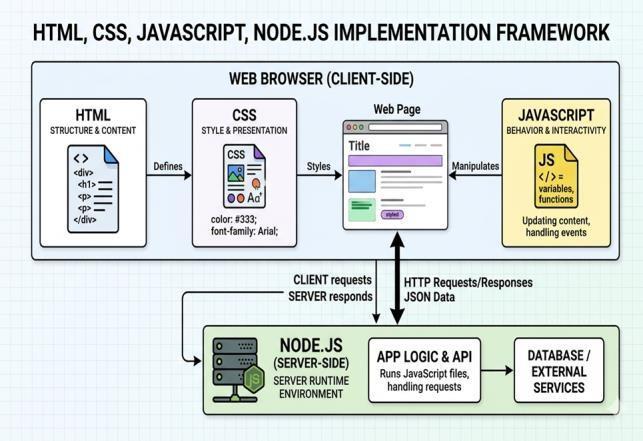
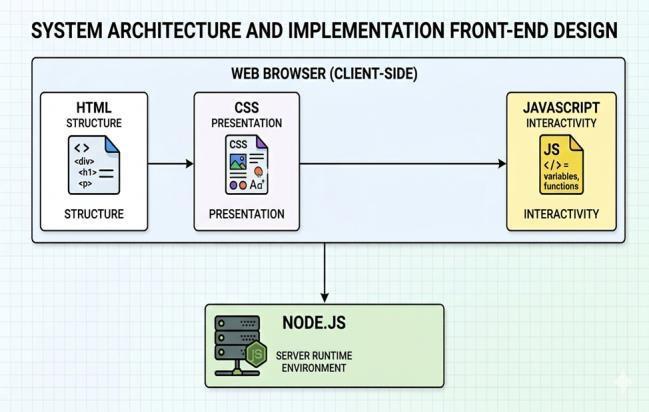
The front-end architecture of ERP-based student management systems emphasizes responsive design, intuitive user interfaces,and optimal user experience across diverse devices and platforms. CSILM is web application developed using front end technologies like HTML, CSS, Ajax, Javascript and JQuery running with an Apache Tomcat server. It uses the information and manage student-related data that was developed using technologies such as HTML, JavaScript, CSS enhanceoverallsystemefficiency.
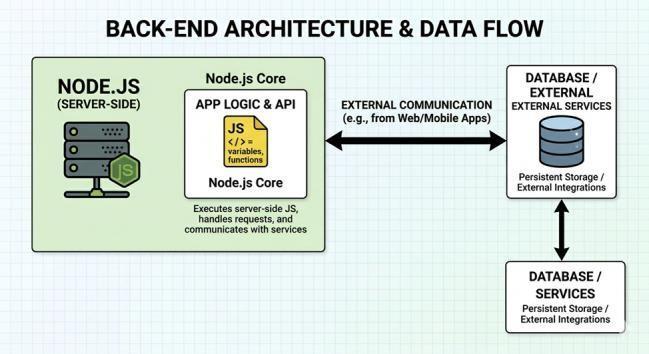
The back-end architecture provides the foundational infrastructure that supports data processing, business logic implementation,andsystemintegrationcapabilities.Themanagementneedsofstructuredandsemi-structureddatahave driven the development of distributed database technology. These database systems are designed to handle large-scale datasets,supportinghighthroughputanddatadiversity.
| Page
International Research Journal of Engineering and Technology (IRJET) e-ISSN: 2395-0056
Volume: 13 Issue: 04 | Apr 2026 www.irjet.net p-ISSN: 2395-0072
7. Flowcharts
7.1 Student Login Process
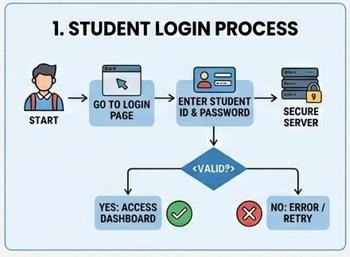
The student login flowchart represents the authentication workflow that ensures secure access to personal academic information and system functionality. The process begins when students access the system login interface through web browsersormobileapplications. Initialstepsincludecredentialentrywherestudentsprovideusernameandpasswordinformation.
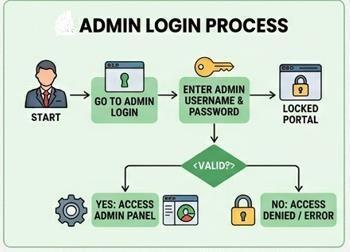
7.2 Admin Login Process
The administrative login process incorporates enhanced security measures appropriate for users with elevated system privilegesandaccesstosensitiveinstitutional data.Administrativeauthentication requiresadditional verificationsteps beyondstandardstudentloginprocedures.
International Research Journal of Engineering and Technology (IRJET) e-ISSN: 2395-0056
Volume: 13 Issue: 04 | Apr 2026 www.irjet.net p-ISSN: 2395-0072
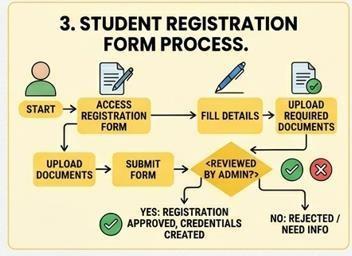
Thestudentregistrationflowchartencompassescomprehensivedatacollection,validation,andprocessingworkflowsthat support new student enrollment and account creation. The process accommodates both online self-registration and administrativeregistrationscenarios.
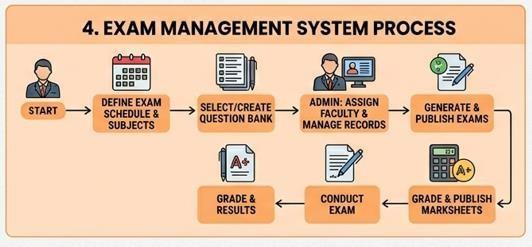
The examination management flowchart addresses comprehensive workflows for exam scheduling, administration, grading, and results distribution. The system accommodates various examination formats including written exams, practicalassessments,andonlinetestingscenarios.
Examschedulingbeginswithcourseinstructorrequestsforexaminationperiods,locations,andspecialrequirements.The systemvalidates
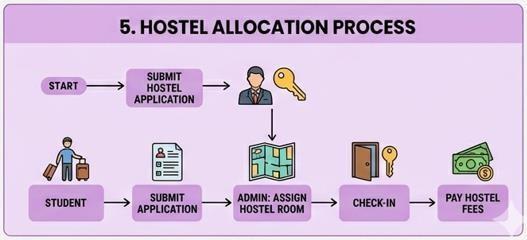
7.5 Hostel Allocation Process
The hostel allocation flowchart manages comprehensive processes for student accommodation requests, room assignments, and residential facility management. The system accommodates diverse housing preferences, special requirements,andinstitutionalcapacityconstraints.
International Research Journal of Engineering and Technology (IRJET) e-ISSN: 2395-0056
Volume: 13 Issue: 04 | Apr 2026 www.irjet.net p-ISSN: 2395-0072
The evolution of ERP-based student management systems presents numerous opportunities for technologicaladvancement,functionalenhancement,andoperationaloptimization.Containertechnology,especiallyDocker, isgainingpopularity in big data processing due to itslightweightandfast-startcharacteristics.Dockercontainers reduce resource consumption by sharing the operating system kernel of the host and can provide a consistent running environmentindifferentenvironments.Inaddition,containertechnologyalsosupportsmicroservicesarchitecture,helping improvethesystem'sscalabilityandmodularity.Inaclustersystem,containermanagers(suchasKubernetes)canfurther optimize resource allocation and management and realize automatic service expansion and load balancing through containerorchestration.Thecombinationofthesetechnologiesenablesextensivedataprocessingsystemstobetteradapt todynamicallychangingworkloadsandimproveresourceutilizationandprocessingefficiency.
Conclusion
The comprehensive analysis of ERP-based integrated student management systems reveals their critical importance in modern educational administration and their potential for transforming institutional operations. The system realizes the management,standardizestudentsandteachersofinformationsciencestatisticsandrapidinquiry,reducetheirworkload management,improvetheefficiencyofstudentinformationmanagementandthecourse,thestudentinformationnetwork management, and promote the informatization construction in Colleges and universities. Through this new management mode,anewteachingmanagementenvironmentforthe collegewill becreated,makethemanagementbreak throughthe timeandspaceconstraints,improvetheworkefficiencyandmanagementlevel,andenableschooladministrators,teachers and students to learn and communicate through the network at any time and anywhere.Implementation methodologies utilizingHTML,CSS,JavaScript,andNode.jsproviderobustfoundationsforcreatingresponsive,maintainable,andscalable applications. These technologies enable rapid development while ensuring cross-platform compatibility and future extensibility.Theintegrationofmodernwebdevelopmentpracticeswitheducational requirementsresultsinsystemsthat effectivelyservediverseinstitutionalneeds.
References
[1]Ahmad,R.,&Othman,Z.(2023).*Critical successfactors forERPimplementationinMalaysianprivateinstitutionsof higherlearning*.InternationalJournalofInformationSystemsandChangeManagement,15(2),145-162.
[2]Amoako-Gyampah, K., & Salam, A. F. (2021). *An extension of the technology acceptance model in an ERP implementationenvironment*.InformationManagement,41(6),731-745.
[3]Bharamagoudar, S. R., Geeta, R., & Totad, S. G. (2013). *Web based student information management system*. InternationalJournalofAdvancedResearchinComputerandCommunicationEngineering,2(6),2347-2356.
[4]Chen,Y.,&Zhang,L.(2024).*DesignandimplementationofcollegeeducationalmanagementsystembasedonCSand BShybridarchitecture*.Measurement: Sensors,3101201.[https://doi.org/10.1016/j.measen.2024.101201](ht tps://doi.org/10.1016/j.measen.2024.101201)
[5]Cidral, W., Aparicio, M., & Oliveira, T. (2020). *Determinants of the management learning performance in ERP context*.Heliyon,6(4),e03855.[https://doi.org/10.1016/j.heliyon.2020.e03855](htts://doi.org/10.1016/j.heliyon.2020.e 03855)
[6]Jenson,R.L.(2011).*Enhancingstudentlearningofenterpriseintegrationandbusinessprocessmanagementthrough ERPsimulationgames*.JournalofInformationSystemsEducation,22(1),85-94.
[7]Liu, Z., Wang, H., & Zan, H. (2010). *Design and implementation of student information management system*. 2010 InternationalSymposiumonIntelligenceInformationProcessingandTrustedComputing,607-610.
[8]Pollock, N., & Cornford, J. (2004). *ERP systems and the university as a "unique" organisation*. Information Technology&People,17(1),31-52.
[9]Rodriguez, M., & Silva, P. (2024). *Research and construction of student management platform forspecial needs studentswithdecisiontreemodelandbigdatatechnology*.DecisionAnalyticsJournal,12,100389.