
Enhancing the Geotechnical Properties of Clayey Soil Using Limestone Powder and Polypropylene Fiber
Allaa saleh1, Prof. Mahmoud Abo Bakr Alsedik2, Lect. Mustafa merzk3
1MSc student, Dept of Civil Engineering Al-Azhar University, Cairo, Egypt
2Professor, Dept of Civil Engineering, Al-Azhar University, Cairo, Egypt
3 lecturer, Dept of Civil Engineering, Al-Azhar University, Cairo, Egypt
Abstract - Many researchers have studied clayey soils because they cause challenges in construction due totheirlow strength and high compressibility This study investigates the effect of using limestone powder (LP) and polypropylene fiber (PPF) as soil stabilizers to improvethegeotechnicalproperties of clayey soil. The soil sample was collected from the West Delta region in Tanta, Egypt.
Limestone powder was added in different percentages (2%, 4%, 6%, 8%, 10%, 20%, 30%, and 40% by dry weight of soil), and various laboratory tests were conducted on both untreated and treated samples, including specific gravity, Atterberg limits, free swell, and standard Proctorcompaction. Based on the results, 20% LP was found to be the optimum percentage for improvement. This percentage was then combined with different ratios of polypropylene fiber (0.2%, 0.4%, 0.6%, and 0.8%), and (10%,20%,30%,40) further tests namely direct shear and one-dimensional consolidation were performed. The shear tests were carried out immediately after mixing and after 14 and 28 days of curing. The results showed that adding 20% LP significantly improved soil properties: the free swell index decreased from 40% to 33%, optimum moisture contentreducedfrom21.04% to 18.8%, maximum dry density increased from 18.8 to 19 kN/m³, cohesion increased from 0.36 to 0.39 kg/cm², and internal friction angle raise from 18.33° to 25.27°. However, The addition of 0.4% polypropylene fibers (PPF) to clayey soil did not yield the expected improvement in shear strength. Instead, fiber clumping occurred due to excessive fiber length, leading to non-uniform distributionandreducedeffectiveness. Cohesion remained nearly constant (0.31 to 0.30 kg/cm²), while the friction angle showed a modest increase (16.54° to 20.77°) after 14 days of curing. These results highlight the importance of optimizing fiber length and mixing techniques to avoid agglomeration and achieve effective soil reinforcement.
Key Words: clayay soil, limestone powder, Polypropylene fiber, Shear strength; Consolidation , Compaction.
1. INTRODUCTION
Clayey soils are commonly found in climatic regions characterized by alternating wet and dry seasons. These
soils undergo periodic swelling and shrinkage due to moisturevariations,primarilyinfluencedbythepresenceof montmorillonite clay minerals. This cyclic swell-shrink behavioroftenleadstosignificantdamagetostructuresbuilt onsuchsoils[1].Infact,intheUnitedStates,damagecaused byexpansiveclayssurpassesthecombinedaverageannual damage from floods, hurricanes, and earthquakes [2]. Therefore,understandingthepropertiesofthesesoilsand developingeffectivetreatmentmethodsiscrucial.
Soil stabilization can generally be achieved through two main approaches: chemical and mechanical methods. Chemical stabilization typically involves additives such as lime, cement, and granite powder, while mechanical stabilization uses reinforcement materials like polypropylenefibersandnylon[3].
Severalstudieshavefocusedontheeffectsofpolypropylene fibers (PPF) on clayey soils. It has been shown that incorporating PPF effectively reduces the soil’s swell potentialandswellingpressure[2,4].Researchindicatesthat the optimum fiber content is approximately 2%, which maximizestheunconfinedcompressivestrength(UCS)while minimizingswelling[3].Additionally,increasingfiberaspect ratiosleadstohigheroptimummoisturecontent,reduced maximum dry density, increased cohesion, and decreased internalfrictionangle[5].
Other investigations have explored combining polypropylene fibers with supplementary materials. For example,theadditionofsilicafumealongsidePPFreduces the plasticity index and liquid limit of the soil while increasing the plastic limit, resulting in a reclassification from high-plastic clays (CH) to low-plastic clays (OH) [6]. Similarly,theuseofricehuskash(RHA),lime,andPPFhas been shown to enhance soil strength, with pozzolanic reactionsimprovingstrengthovercuringtime.[7].
Further studies have examined the use of brick powder combined with PPF, identifying an optimum mix of 40% brickpowderand0.35%fiberfor60%soilcontent,which significantly improves the California Bearing Ratio (CBR) values[8].Thecombinationofmarbledust,cementkilndust, and PPF has also been found to enhance unconfined compressivestrength[9].Additionally,researchoncoirfiber
andnanosilica demonstratedtheirpositiveeffectsonsoil strength,permeability,andswellingpotential[10].
Recently, granite powder has gained attention as a soil stabilizer.Studiesinvolvinggranitedustandlimeonblack cottonsoilhaveshownincreasesinCBRvalues,decreasesin optimummoisturecontent,andincreasesinmaximumdry density[11].Moreover,addingfinesilicasandandgranite powder waste has been shown to reduce the swelling potentialofhighlyexpansivesoils,effectivelyreclassifying themaslow-expansivesoils[12].
2. MATERIALS
2.1
clayey soils
Theclaysoilusedintheexperimentalworkwasobtained fromthewestdeltaintantacity,Egypt.Thesoilwassiltand clay. It was collected at a depth of one meter below the natural ground surface. Before being used in this investigation thesoilwasdriedinanoven pulverized and then passed through a 40sieve size. The hydrometer analysiscurve,showninFig.1,wasperformedonthenatural soilpassingthroughthe7 μsieve.Table showsthephysical propertiesevaluatedaspartofthisresearch.Basedonthe gradationandAtterberglimitsvalues,thesoilwasclassified asCIaccordingtotheUSCSclassificationmethod.
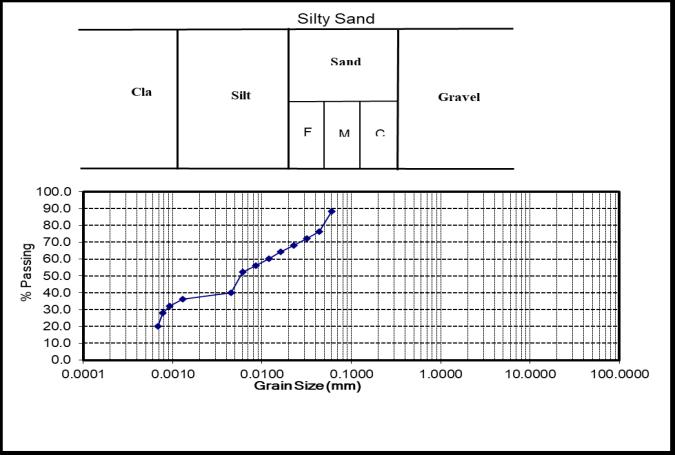
1: HydrometerAnalysisforNaturalSoil
Table -1: SummaryofPhysicalPropertiesofSoilUsed
2.2 Polypropylene Fiber (PPF)
Polypropylene fiber was selected for this investigation owingtoitssuperiorperformancecharacteristics,including hightensilestrength,economicfeasibility,andresistanceto corrosion, chemical inertness, and availability in various lengths. In contrast to other reinforcement materials, polypropylenefibersdonot undergodegradationor react adversely in the presence of soil moisture. The fibers employedinthisstudywereprocuredfromSikaCompany, asshowninFigure3.Adetailedsummaryoftheirphysical, chemical,andmechanicalpropertiesisprovidedinTable2.
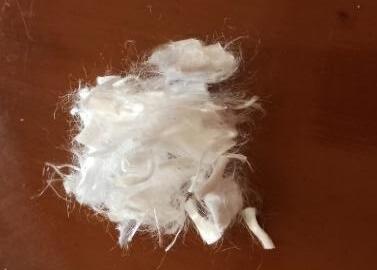
Table -2: PropertiesofPolypropyleneFiber
2.3 limestone Powder (LP)
Limestoneconsistsmainlyofcalciteminerals(calcium carbonate with a trigonal structure, CaCO3). These sedimentaryrocksaresolidandgranular,originatingfrom organic or chemical processes. Typically, their calcium carbonatecontentexceeds95%.Thelimestonepowderwas driedinanovenat105°Cfor24hourstoremovemoisture, thenpulverizedrepeatedlywithaplastichammertoremove any agglomeration as shown in Fig. 2. The important characteristicoflimestonepowderasanadditivematerialis thepercentagepassingthroughtheNo.40sieve.
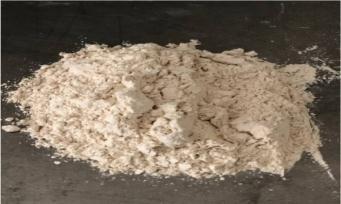
Fig-
Fig- 2: PolypropyleneFibers
Fig. 3: limestonePowder
Volume
3. METHODOLOGY
The experimental program initially involved incorporatingvaryingpercentagesoflimestonepowder(2%, 4%, 6%, and 8%) based on the dry weight of the soil. However, preliminary tests on the basic properties of the treatedsoilrevealedonlymarginalimprovements,withthe mostnoticeableeffectobservedatthe8%replacementlevel. Consequently, the experimental plan was revised in accordance with the recommendations of Manal and Abdulrazzaq [12], and Hassan and Abdelaal [13], by increasingthelimestonepowdercontentto10%,20%,30%, and40%.InlinewiththestudybyNitinandNeelima[6],the polypropylenefiber(PPF)contentwasvariedat0.2%,0.4%, 0.6%, and 0.8%. The experimental investigation was conductedintwomainphases.Inthefirstphase,aseriesof tests includingspecificgravity,Atterberglimits,freeswell, andstandardProctorcompaction wereperformedonboth untreated soil and soil treated with varying limestone powder contents. In the second phase, the optimum limestonepowdercontentidentifiedfromtheinitialtestswas combined with varying PPF percentages to evaluate performance using the direct shear box test and the onedimensional consolidation test. Direct shear tests were conductedonsamplesimmediatelyafterpreparation,aswell asaftercuringperiodsof14and28days.Alllaboratorytests werecarriedoutinaccordancewithASTMstandardsandthe Egyptian Code of Practice for Soil Mechanics at the GeotechnicalLaboratoryofAl-AzharUniversity,Cairo,Egypt.
4. EXPERIMENTAL RESULTS AND DISCUSSION
4.1
Limestone Powder on Atterberg’s Limits
Theliquidlimit,plasticlimit,andshrinkagelimittestswere conductedforboththenaturalsoilandthesoiltreatedwith varying proportions of limestone powder. The correlation between the plasticity index and the swelling behavior of soils has been established by several researchers; in this study,therelationshipproposedbyO’NeilandPoormoayed [14]wasadopted,aspresentedinTable3.
Table -3:RelationshipsbetweenPlasticityIndex(PI)and SwellPotential
plasticityindex,liquidlimit,andplasticlimit.However,upon increasingthelimestonepowdercontentto10%,20%,30%, and 40%, these indicesshowed a more noticeable decline. Specifically,theplasticityindex,liquidlimit,andplasticlimit decreased to 14.7%, 40%, and 25.3%, respectively, as detailedinTable4.
Table -4: PropertiesofSoilSamplesTreatedwith limestonePowder
Whenlimestonepowderwasaddedinproportionsranging from0%to8%,onlyaslightreductionwasobservedinthe
Furthermore, as illustrated in Figure 4, increasing the limestonepowdercontentfrom0%to40%ledtoareduction in the soil’s water absorption capacity. These findings are consistent with the results reported by Manal and Abdulrazzaq[12].
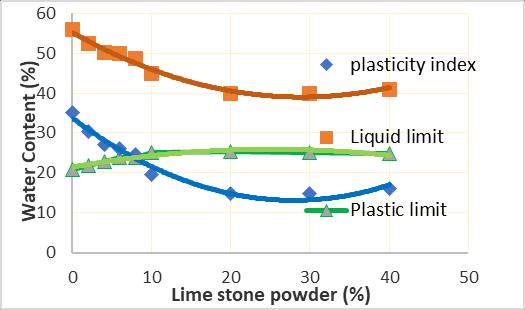
Fig- 4:VariationofLL,PL,andPIwithVariousPercentages ofLimestonePowder
International Research Journal of Engineering and Technology (IRJET) e-ISSN: 2395-0056
Volume 13 Issue 01| Jan 2026 www.irjet.net
Fig. 5 shows that the increase in the limestone powder content shifts nature soil from high-plasticity clay (CH) into low-plasticity clay (CL) according to the unified soil classificationsystem(USCS).

4.2 Effect of limestone Powder Addition on Free Swell Index
The free swelling index can be considered a property of clayeysoil.Itreflectsthepotentialofthesoiltoexpand.Itis determinedbyknowingthevolumeofswollensoilpassing throughsieveNo.40,afterallowing10gofdrysoiltosoakin waterfor24hours.Thefreeswellingindexisexpressedasa percentageoffreeswellinggivenbytheequationbelow:

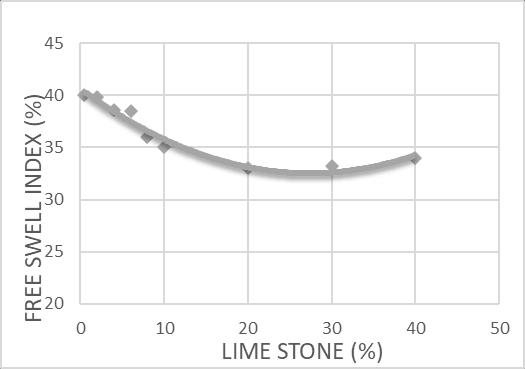
Fig. 6 shows that the free swell index for natural soil was 40%then,asthepercentageoflimestonepowder20%used increased,itdecreasedto33%.
4.3 Effect of
Powder Addition on Compaction Test
Thecompactiontesthasbeenperformedonsampleswith differentlimestonepowdercontentsof2%,4%,6%,8%,10%, 20%,30%,and40%ofdrymass.Fig.7,andFig.8showthe variation of maximum dry density MDD and optimum moisture content OMC with the variation of limestone powder.Itisobservedthatasincreasedlimestonepowders theMDDincreasedfrom18.8KN/m3to19KN/m3,andOMC reduced from 21.04 % to 18.8% at the percentage of limestonepowder20%
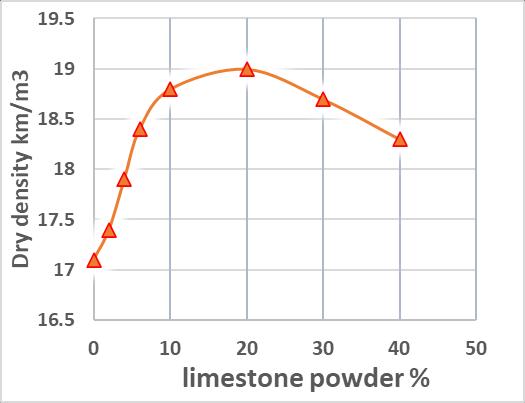
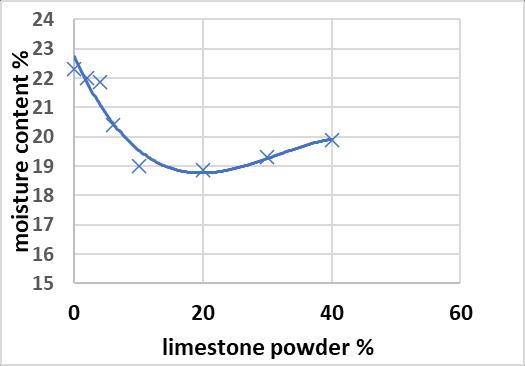
Fig- 5: Effectoflimestonepowder(LP)onPlasticityChart
FreeSwell= (1)
Fig. 6:EffectoflimestonePowderAdditivesonFreeSwell Index
limestone
Fig- 7:EffectoflimestonePowderAdditivesonDry Density
Fig- 8:EffectofGranitePowderAdditivesonMoisture Content
International Research Journal of Engineering and Technology (IRJET) e-ISSN: 2395-0056
Volume 13 Issue 01 | Jan 2026 www.irjet.net
4.4The One-dimensionalCompression Test Results
Theone-dimensionalconsolidationtestwasconducted toevaluatetherateandmagnitudeofconsolidationbehavior in soil specimens under axial loading with lateral confinement. Initially, the soil was treated with varying percentagesoflimestonepowder(LP),specifically10%,20%, 30%,and40%bythedryweightofthesoil.Thespecimens werepreparedanddirectlycompactedintooedometerrings withadiameterof63mmandaheightof20mm,withthe initialspecimenheightapproximately16mm.
Eachspecimenwassubjectedtoincrementalverticalloading in a consolidation cell mounted on the odometer loading platform. Dial gauge readings were recorded continuously over a 24-hour period or until primary consolidation was consideredcomplete.Uponcompletionoftheloadingphase, the specimens underwent unloading in stages, with each stressdecrementalsomaintainedfor24hourstoobservethe swellingbehavior.
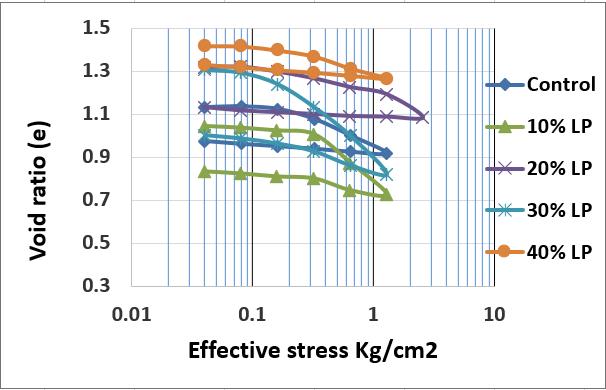
The results were plotted as void ratio (e) versus the logarithmoftheappliedverticalstress(logσv) asillustrated inFig.9.Thedatarevealedthatthespecimentreatedwith 20%LPexhibitedsuperiorperformance,sustainingvertical loadsofupto8kg.Incontrast,othertreatmentratiosshowed lower resistance, with maximum supported loads not exceeding 4kg.Thesefindingsindicate that20%LPisthe optimumcontentforimprovingthecompressibilitybehavior ofthesoil.
2395-0072
Followingthis,theoptimalLPcontent(20%)wascombined with varying percentages of polypropylene fibers (PPF), namely0.2%,0.4%,0.6%,and0.8%,toassessthecombined effectonconsolidationbehavior.Thetestresults,presented inFig.10,indicatedthattheinclusionofPPFalongsideLP didnotenhancetheconsolidationperformanceasexpected. Instead, the fiber-reinforced specimens exhibited inferior behavior, with the maximum supported vertical loads not exceeding2kg.
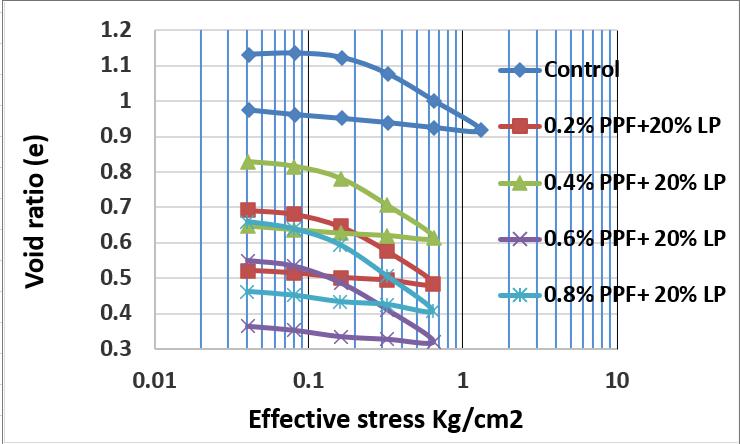
Optimum ProportionofLIMESTONEPowderandVarious PercentagesofPolypropyleneFibers
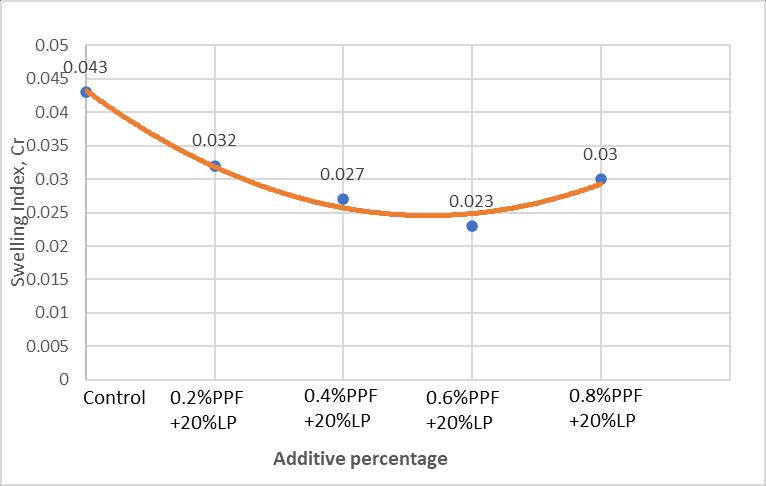
Fig. 9: E-logσvforSoilsTreatedwithVarious PercentagesoflimestonePowder
Fig. 10: E-logσvforSoilsTreatedwith
Fig. 11: EffectofLIMESTONEPowderandPolypropylene FiberonSwellingIndex
International Research Journal of
Table 5: ResultofConsolidationTest
4.5 The Direct Shear Box Test Results
Samples were conducted on soil treated with limestone powderbydifferentproportions(10,20,30,and40percent bythedryweightofsoil),andwerepreparedwithrespective OMC obtained from the compaction test. The remolded sampleswereweighedandplacedintheringofthetest,then the direct shear test specimens with size (55x55x25) mm wereextracted,thenthespecimensweretestedinthedirect shearbox.Shearboxsamplesweremadewithoutcuringand withcuringfor14daysand28days,Theresultspresentedin Tables6,7,and8clearlydemonstratethepositiveinfluence ofincorporatinglimestonepowder(Lp)intoclayeysoilon itsshearstrengthparameters,namelycohesion(C)andthe angle of internal friction (φ). The improvement is evident bothintheimmediatecondition(withoutcuring)andafter curingfor14and28days.Intheun-curedcondition(Table 6),theadditionofLpsignificantlyenhancedbothcohesion and the internal friction angle compared to the untreated controlsample.Theoptimumperformancewasrecordedat amixtureof80%A+20%Lp,wherecohesionreached0.36 kg/cm²andtheinternalfrictionangleincreasedto18.33°. However, increasing the Lp content beyond 20% did not result in further improvement; instead, a slight decline in strengthparameterswasobserved,indicatingthat20%Lpis the optimal content under immediate conditions. After curingfor14days(Table7),asubstantialimprovementwas observedinalltreatedsamples.Thesamemixtureof80%A + 20% Lp recorded the highest values, with cohesion reaching0.39kg/cm²andtheinternalfrictionanglerisingto 25.27°.Thisconfirmsthatcuringenhancestheeffectiveness ofLpthroughtime-dependentpozzolanicreactionsthat
improvesoilbondingandstructure.Interestingly,thevalues recorded after 28 days of curing (Table 8) were nearly identicaltothoseobtainedafter14days,suggestingthatthe majorityofstrengthgainoccurswithinthefirsttwoweeksof curing.Beyondthisperiod,therateofimprovementtendsto stabilize.Overall,thestudyconfirmsthattheadditionoflime stone powder can effectively improve the shear strength characteristicsofclayeysoils,especiallyatadosageof20%. The curing period plays a vital role in the stabilization process,with14days ofcuringbeingsufficienttoachieve significantgainsinbothcohesionandinternalfrictionangle. Excessive Lp content beyond 20% does not yield further benefitsandmayslightlyreduceperformance.
The addition of 0.4% polypropylene fiber (PPF) to the optimallime-stabilizedsoilmix(80%soil+20%lime)did notresultinthe expectedimprovementinshearstrength. Although this proportion initially showed relatively high cohesion and internal frictionanglevaluesintheuncured state,cohesionremainednearlyconstant(from0.31to0.30 kg/cm²)after14daysofcuring,whiletheinternalfriction angle exhibited only a modest increase (from 16.54° to 20.77°). The limited enhancement is attributed to fiber clumpingcausedbyexcessivefiberlength,whichledtononuniformdistributionwithinthesoilmatrixandreducedthe overall reinforcing effect. These findings highlight the importanceofoptimizingfiberlengthandmixingtechniques to prevent agglomeration and ensure effective fiber-soil interaction.
International Research Journal of Engineering and Technology (IRJET) e-ISSN:
Volume 13 Issue 01 | Jan 2026 www.irjet.net
Table 6: Cohesion&angleofinternalfrictionvaluesof samplesimmediately(withoutcuring)
Table 7: Cohesion&angleofinternalfrictionvaluesof
sampleswithcuringof14day
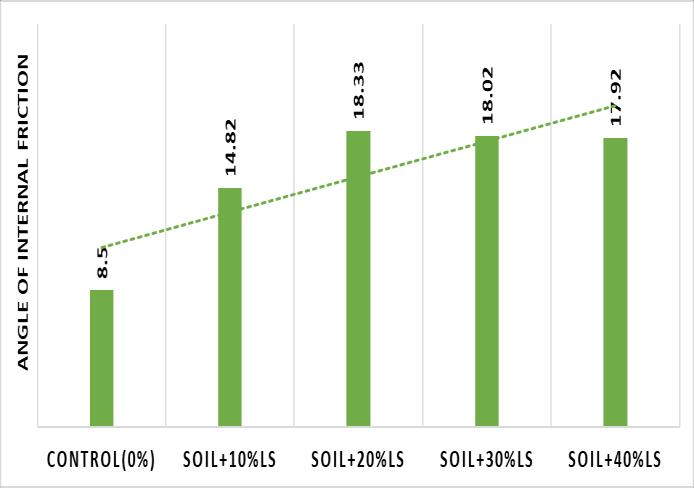
Fig 12:Cohesionvaluesofsamplesimmediately(without curing)
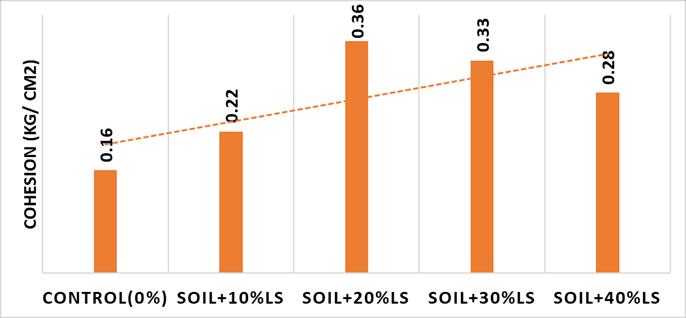
Fig 13: Angleofinternalfrictionvaluesofsamples immediately(withoutcuring)
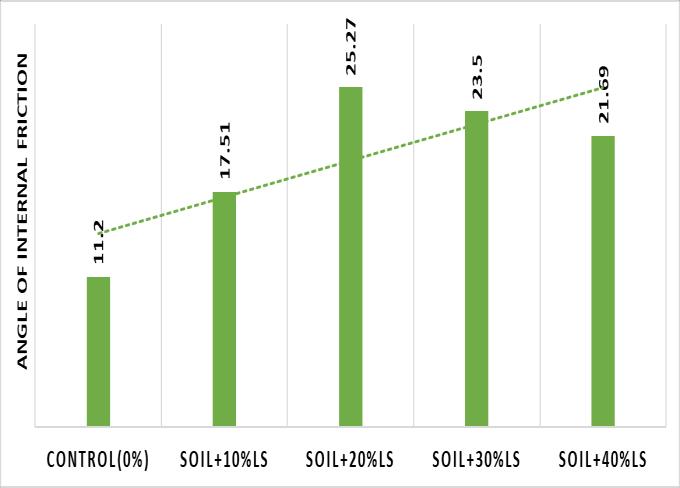
Fig 14: Cohesionvaluesofsampleswithcuringof14 days
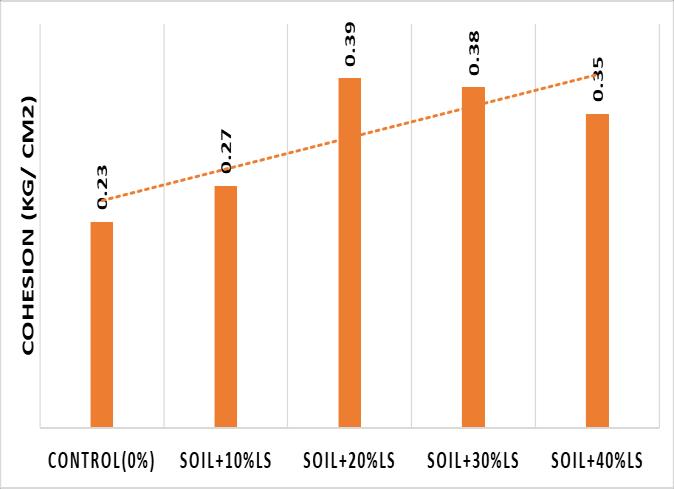
Fig 15: Angleofinternalfrictionvaluesofsampleswith curingof14days
Table 8: Cohesion&angleofinternalfrictionvaluesof sampleswithcuringof28days
Table 9: Cohesion&angleofinternalfrictionvaluesof samplesimmediately(withoutcuring)
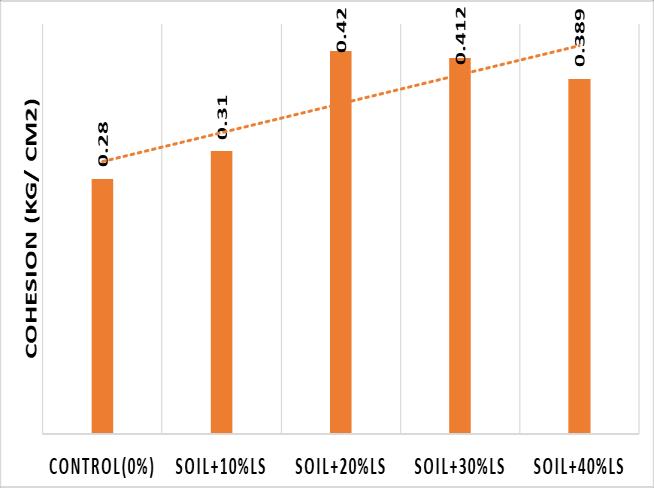
Fig 16: Cohesionvaluesofsampleswithcuringof28days
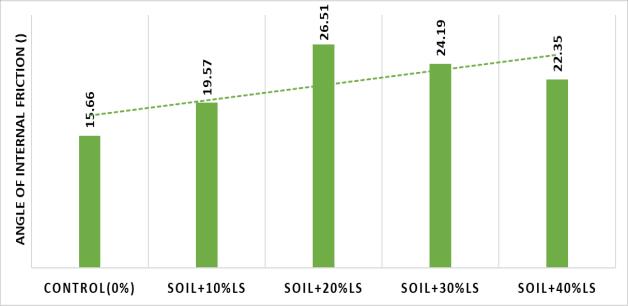
Fig 17: Angleofinternalfrictionvaluesofsampleswith curingof28days
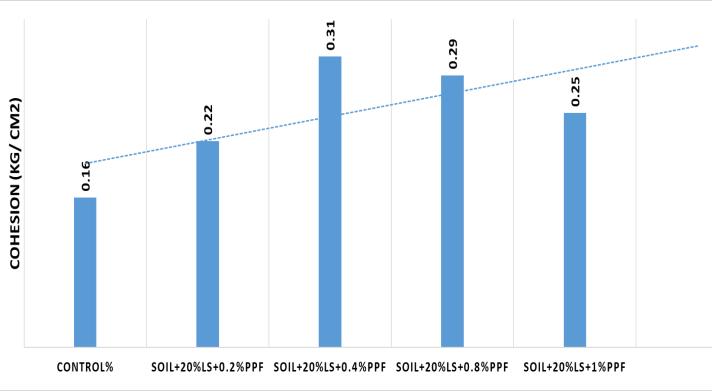
Fig 18: Cohesionvaluesofsamplesimmediately(without curing)
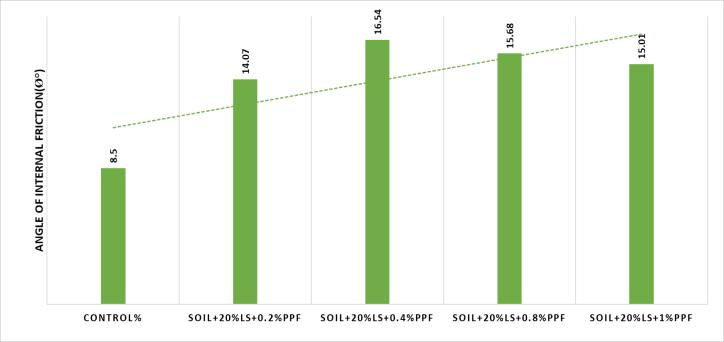
Fig 19: Angleofinternalfrictionvaluesofsamples immediately(withoutcuring)
International Research Journal of Engineering and Technology (IRJET) e-ISSN: 2395-0056
Volume 13 Issue 01 | Jan 2026 www.irjet.net p-ISSN: 2395-0072
Table 10: Cohesion&angleofinternalfrictionvaluesof sampleswithcuringof14days
Table11: Cohesion&angleofinternalfrictionvaluesof sampleswithcuringof28days
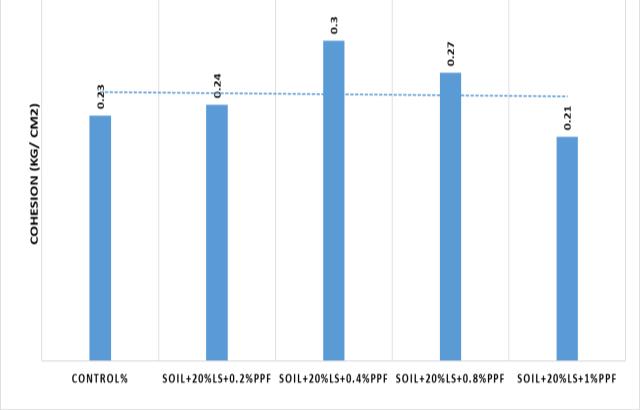
Fig 20: Cohesionvaluesofsampleswithcuringof14days
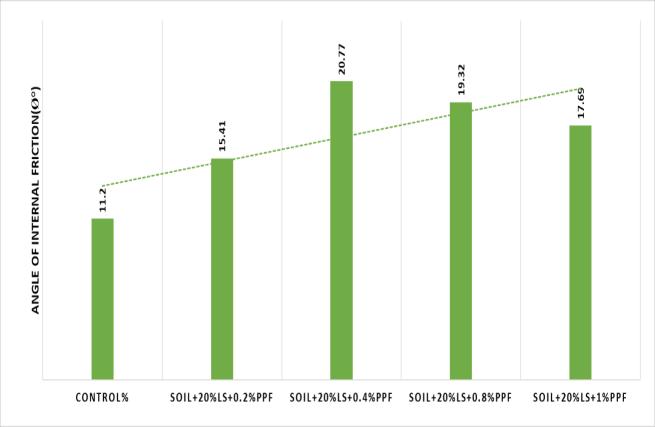
Fig 21: Angleofinternalfrictionvaluesofsampleswith curingof14days
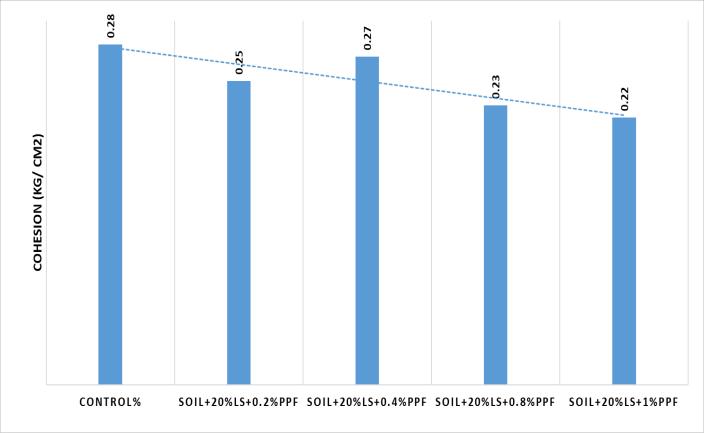
Fig 22: Cohesionvaluesofsampleswithcuringof28days
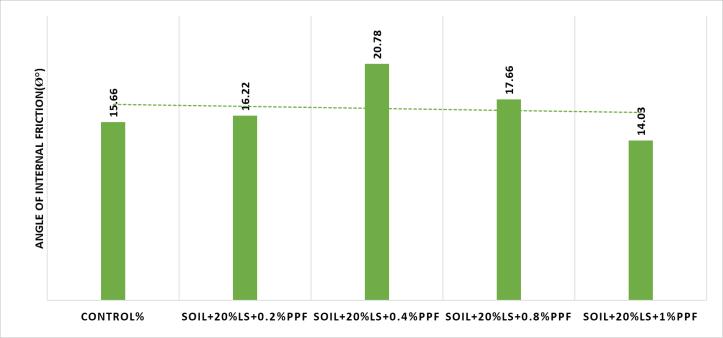
Fig 23: Angleofinternalfrictionvaluesofsampleswith curingof28days
5. CONCLUSIONS
A series of tests were conducted to study the effect of limestonepowder&polypropylenefiberoncharacteristics oftheclayeysoilfromthewestdeltaintantacity,Egypt.The proportions of limestone powder were 2%, 4%, 6%, 8%,
International Research Journal of Engineering and Technology (IRJET) e-ISSN: 2395-0056
Volume 13 Issue 01 | Jan 2026 www.irjet.net p-ISSN: 2395-0072
10%, 20%, 30%, and 40% by weight of soil, and polypropylene fiber were 0.2%, 0.4 %, 0.6%, and 8% by weight of soil. As the result of this investigation, it is indicated that the stabilization technique with 20% of limestone powder is a very useful method and the stabilizationbyusingpolypropylenefiberwasanineffective method,asproblemsappearedwhenpreparingthesample and increased the voids in the soil. The following are the conclusionsfromthesetests.
1) With the addition of limestone powder plasticity index, liquid limit, and plastic limit of clayey soil decreasedfrom352%,56%,and20.8%to147%, 40%,and253%respectively.Duetothisalteration in the property of clayey soil, the soil changed its UCSCclassificationfromhigh-plasticityclay(CH)to low-plasticityclay(CL).
2) The limestone powder addition decreased the clayeysoil'sfreeswellindexfrom40%to33%.
3) Additionof limestone powder increased the MDD from18.8KN/m3to19KN/m3andreducedOMC from21.04%to18.8%.
4) The study demonstrated that the addition of limestone powder (Lp) significantly enhances the shear strength parameters of clayey soil. The optimal performance was observed at 20% Lp content (i.e., 80% soil + 20% Lp). In the uncured state,thismixachievedacohesionof0.36kg/cm² and an internal friction angle of 18.33°. After 14 daysofcuring,thesamemixturerecordedahigher cohesionof0.39kg/cm²andapeakinternalfriction angle of 25.27°. However, increasing Lp content beyond 20% (i.e., to 30% or 40%) resulted in a slightreductioninstrength,indicatingthat20%LS isthemosteffectiveproportion.Thestrengthvalues after 28 days of curing showed minimal improvement compared to the 14-day results, suggesting that most of the pozzolanic reaction occurswithinthefirsttwoweeks
5) Incorporating polypropylene fiber (PPF) into the optimal 80% soil + 20% LP mix did not yield the expected enhancement in mechanical properties. While 0.4% PPF initially provided relatively high cohesion(0.31kg/cm²)andinternalfrictionangle (16.54°)intheuncuredcondition,theimprovement after14daysofcuringwasmodest,withcohesion slightlydecreasingto0.30kg/cm²andfrictionangle increasing to 20.77°. The limited performance is attributed to fiber clustering caused by excessive fiberlength,whichledtonon-uniformdistribution and reduced effectiveness. Therefore, while the combinationof20%LPand0.4%PPFshowedsome short-term improvement, it was not conclusively effective in enhancing the shear strength
characteristics of expansive clayey soil without furtheroptimizationoffiberpropertiesandmixing methods.
6) In the case of using limestone powder on the consolidation test, 20% of limestone powder decreasedtheCrvaluesfrom0.043to0.027.While usingpolypropylenefiberwithlimestonepowder, theCrdecreasedcomparedtothecontrolsample, duetothepresenceoflimestonepowder.
ACKNOWLEDGEMENT
The author wishes to acknowledge the support of the LaboratoryofCivilDepartment,FacultyofEngineeringatAlAzharUniversity,Cairo,Egypt.
REFERENCES
[1]S.Twinkle,M.K.sayida,"EFFECTOFPOLYPROPYLENE FIBERANDLIMEADMIXTUREON ENGINEERING PROPERTIES OF EXPANSIVE SOIL," in Conf. ProceedingsofIndianGeotechnical,Kochi,2011, No.H-085.
[2]A.S.Soganci, "The Effect of Polypropylene Fiber in theStabilizationofExpansiveSoils,"International Journal of Geological and Environmental Engineering,Vol.9,No.8,pp.994-997,2015.
[3]Sarah A. Hussein, Haifaa A. Ali, "Stabilization of expansive soils using Polypropylene Fiber” ivil Engineering Journal", Vol.5, No.3, pp.624635,2019.
[4]H. Manesh, M. Anil kumar, "The Effect of PolypropyleneFibersonPropertiesofExpansive Soil" International Journal of Recent Technology andEngineering(IJRTE),Vol.7,2019.
[5]Firake. Dipeeka B, Borole. Seema, Kulkarni M, "Effect of Polypropylene Fibers on Properties of BlackCottonSoil",InternationalJournalofLatest TechnologyinEngineering,Management&Applied Science (IJL TEMAS),Vol. VII, No. IV, PP.361-363, 2018.
[6]Nitin, Neelima, "Experimental study on the influence of polypropylene fiber on swelling pressure- expansion attribute of silica fume stabilizedclayeysoil," doi:10.20944/prprints201907.0203.v1,2019.
[7]Akshaya.kumar,"EffectofPolypropyleneFiberon Engineering Properties of Rice Husk Ash – Lime Stabilized Expansive Soil,"Electronic Journal of Geotechnical Engineering, Vol.17, pp.651-660, 2012.
International Research Journal of Engineering and Technology (IRJET) e-ISSN: 2395-0056
Volume 13 Issue 01 | Jan 2026 www.irjet.net
[8]Rachit,Mohit,"EffectofSurkhiAndPolypropylene Fiber on Geotechnical Properties of Expansive Soil,"InternationalJournal ofRecentTechnology and Engineering (IJRTE), vol.6, No.1, pp.14681470,2019.
[9]Vishwanath. Vishwakarma, "Stabilization of ExpansivesoilReinforcedwithShortPolypropylene Fibers Treated with Admixtures,"International TransactiononEngineering&Science,Vol.1,No.2, 2019.
[10] R.Suresh,V.Murugaiyan,"ImprovementofClay soil Using Natural Fibers and Nano Silica: A Review," Indianj.Sci.Res,2018.
[11] JagmohanMishra,R.K.Yadav,"EffectofGranite DustonEngineeringPropertiesofLimeStabilized Black Cotton Soil," International Journal of EngineeringResearch&Technology(IJERT)Vol.3, pp.832-837,2014.
[12] Manal O. Suliman, Abdulrazzaq. Jawish, "Using Fine Silica Sand and Granite Powder Waste to ControlFreeSwellingBehaviorofHighExpansive Soil," Modern Applied Science; Vol. 15, No. 1, pp.53-62,2020.
[13] HassanA.M.Abdelkader,AbdelaalS.A.Ahmed, "An Experimental Study on Geotechnical PropertiesandMicro-StructureofExpansiveSoil StabilizedwithWasteGraniteDust,"Sustainability Journal,2022.
[14] O’neıll Poormoayed "Methodology for Foundations on Expansive Clays," Journal of the Geotechnical Engineering Division, American SocietyofCivilEngineers,pp.1345-1367,1980.
[15] Arif . Moghal, B. Munwar Basha, "Effect of Polypropylene Fiber Reinforcement on the Consolidation, Swell and Shrinkage Behavior of LimeBlendedExpansiveSoil,"RoadMaterialsand PavementDesign,availableonlineatdoi:10.1080/ 14680629.2016.1272479,2018.