
International Research Journal of Engineering and Technology (IRJET) e-ISSN: 2395-0056
Volume: 12 Issue: 06 | Jun 2025 www.irjet.net p-ISSN: 2395-0072
International Research Journal of Engineering and Technology (IRJET) e-ISSN: 2395-0056
Volume: 12 Issue: 06 | Jun 2025 www.irjet.net p-ISSN: 2395-0072
Sweta
Yadav1 , Dr. Imran Khan2, Dr Malik Rafi3
1Master of Technology, Electrical Engineering, Azad Institute of engineering and technology Lucknow, India
2Assistant Professor, Electrical Engineering, Azad Institute of engineering and technology Lucknow, India
3Professor, Electrical Engineering Department, RRIMT, Lucknow , India
Abstract - There are considerable problems that will be involved in integrating wind energy generation into the modern power grid, the nature of wind generation is intermittent and entails problems of power quality that would be experienced with regard to voltage instability, harmonic distortion, and reactive power imbalance. This study focuses on how a Static Synchronous Compensator (STATCOM) which is one of the important Flexible AC Transmission System (FACTS) devices can be used to aid in boosting the stability and performance of wind energy systems that are grid-connected. MATLAB/Simulink modeling and simulation-based study of a Point of Common Coupling (PCC) with wind farm and the use of STATCOM is done ina detailed manner. Amongthe operationalscenarios we may have the changes in wind speed, disturbance in the load and even the grid faults which is modeled and evaluated in the proposed system. Simulation analysis indicates a marked reduction in the power quality parameters namely, Total Harmonic Distortion (THD) value has dropped down to 1.17% (previously 10.32%), and voltage regulation has been lowered to BE 2% (Previous 6.81%), and power factor has also improved quite considerably and the value is also near to unity. The study is also able to compare the traditional reactive power compensator techniques to STATCOM and it must be noted that the latter has better dynamic response and harmonic filtering properties. The given results prove that STATCOM canbea powerfulandscalabletoolto improve theresilience of the grid, make it compliant with the established IEEE and IEC, and in order to introduce the increased penetration of renewableresources into the grid.
Key Words: STATCOM, Wind Energy Integration, Power Quality, Voltage Stability, Harmonic Distortion, Reactive PowerCompensation,MATLABSimulation.
1.1 Background and Motivation
The current state of the climate change and the overreliance on fossil energy sources has emerged as an important topic in the world as many nations are gradually moving towards sustainable and renewable
energysources.Amongthese,windpowerhasbecomethe majorfrontrunnerconsideringthatitisabundant,aswell as economical besides being technologically mature. The adoption of wind power into the national grid of the countries is growing globally and it is expected that the demandof energywill bemetwithdecreased emission of carbon. Nevertheless, there are huge technical issues that aretiedtoassimilatingwindenergyintocurrentelectrical systems. The wind energy is non-generative and is also fluctuating. Such diversities make it problematic to operatethegrid,particularly,regardingpowerqualityand system stability. In this regard, through regulation of harmonics, voltage control and maintaining of reactive powerbalanceinthisintegrationofwindenergybecomes eminent. The concern on the above problems has fuelled theinterestinsophisticatedpowerelectronicsandcontrol techniques and increasingly much focus has gone to FACTS (Flexible AC Transmission System) devices and in particular Flexible AC Transmission System devices such asStaticSynchronousCompensator(STATCOM)whichhas proved encouraging in dynamically shifting the inconsistencywithinthegrids.
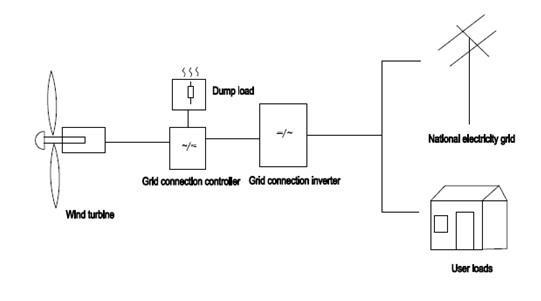
Figure-1: Block Diagram of a Wind Power System Connected to the Grid.
1.2 Problem Statement
Nevertheless, irrespective of the benefit the wind energy poses environmentally and economically, it creates a number of issues to grid performance and reliability. Powers generated by wind havethe tendency to fluctuate
International Research Journal of Engineering and Technology (IRJET) e-ISSN: 2395-0056
Volume: 12 Issue: 06 | Jun 2025 www.irjet.net p-ISSN: 2395-0072
at a high rate because of the uncertainties in the wind speed that results in sags, swells and deviation in frequencies. Moreover, the popularity of power electronic converters in contemporary wind turbines especially in thevariable-speedsystems,i.e.DFIGandPMSGhasadded an additional problem by enhancing the presence of the harmonic distortion within the system. Such harmonics degradepowerquality,shortensthelifetimeofgrid-linked equipment and can impose a violation of grid code including but not limited to IEEE 519 and IEC 61400-21. Moreover, wind generators tend to exhibit imbalance in the reactive power due to the fact that they are inductive andthusresulttoabadpowerfactorandunstablevoltage. These issues are increased in both weak grids or rural transmission networks, whereby the compensation devices will have to be fast and adaptive to abrupt variations.Totacklethesepowerqualityrelatedproblems is important to the long term sustainability of renewable energy integration into power systems and therefore to thefunctionalintegrityofpowersystems.
This research will mainly aim at improving the power quality of the grid connected wind energy systems using STATCOM as a dynamic compensator of reactive power. Thestudy will endeavor to testtheabilityof STATCOM in controlling voltages and in suppressing harmonic distortions in addition to the power factor of approximately unity in different operating circumstances. Concretely, the research project will deal with the modelingandsimulationofawindenergysystemandthe anti- STATCOM together and the analysis of its work in conditionsofthegridmalfunctions,thefluctuationsofthe loadandthewindvelocity.Inthestudy,itisalsoanaimto come up with control algorithms that enhance the responsiveness of STATCOM in the transient and the steady-state.Withthis,thestudyhaspotentialsofmaking wind power become more dependable, grid compatible, and increase in amount so as to be used in future smart grids on the basis of resolving the shortcomings of wind integrationinitsoperationsandintermsofquality.
As much as many attempts have been established to control the quality of power in the case of renewable energy systems, the conventional forms of compensation i.e. passive filters, capacitor banks, and Static VAR Compensators(SVCs),dopossessanumberofdrawbacks Theresponsetimeassociatedwithsuchmethodsareslow, they also have fixed tuning frequencies and have poor results under low-voltage situations. As an example capacitor banks do not help solve voltage sags and in the dynamic grid environment passive filters can lead to resonance. In addition to that, most of the available solutionsdonotofferactiveharmonicfilteringcapabilities or real-time voltage regulation that is needed to manage
nonlinear dynamics of wind energy systems. Moreover, current literature contains no exhaustive literature with the integration of adaptive techniques of control such as model predictive control or fuzzy logic and STATCOM in real-time power quality improvement in the wind farm. Few studies are also available in comparing STATCOMbased setup with hybrid designs in energy storage or intelligentcontrolalgorithms.Thegivenresearchwillhelp to fill these gaps because the proposed approach is to design a system based on STATCOM using advanced controlmethodsand,toensurethatthedesignedsystemis valid, the complete simulative approach and analysis will becarriedoutaswell.
Inclusionofwindenergyinpowergridshascomefarsince the last several decades owing to the advances in the technologyoftheturbinesandthepressingdemandofthe globe to switch to newer sources of energy that are cleaner. The earliest wind energy systems were mainly comprising fixed-speed induction generators (FSIGs), by thenthecheapandmechanicallysimplegenerators.FSIGs, however, did not give much control of active and reactive power and brought about bad voltage regulation, this is why they were not applicable to modern grids. This causedtheuseofdoubly-fedinductiongenerators(DFIGs), that made variable-speed possible and better energy recovery.DFIGs,withtheirpartial-scaleconvertersoffered an improvement on grid compliance but also generated harmonics through power electronic switching. Lately shift in permanent magnet synchronous generators (PMSGs) has been a major tech move. PMSGs have the potential of full-range variation in speed and yield enhancedperformanceinefficiency,minimalmaintenance, anddirect-drive combinationsthatdo not require the use ofgearboxes.Theworldisalsowitnessingmajorgrowthin wind energy capacities as there is a major move in the world by countries such as China, the United States, and Germany and even the offshore wind energy installations havebecomepopular.Ouradvancesexplaintheincreasing importance of wind power in national energy mixes and the wrought necessity to find solutions to deal with the power quality problems that occur with wind power integrationintothepowergrid.
Duetoincreasingimplementationofwindenergysystems, powerqualityingrid-connectedenvironmenthasbecome a serious issue. The unreliability of wind, due to intermittency, results in constant rise and fall of voltages andpowergenerationhencebeingunstableandinefficient in power grid. Among the aspects that are a major challenge is voltage instability, a factor occasioned by abrupt changes in the wind speed and relative poor grid
International Research Journal of Engineering and Technology (IRJET) e-ISSN: 2395-0056
Volume: 12 Issue: 06 | Jun 2025 www.irjet.net p-ISSN: 2395-0072
conditions.Accordingtothefluctuationrangingbeyondan acceptable voltage, the effect may lead to malfunctioning of the equipment, excess losses, and contravention of the regulatory requirements like IEEE 1547 and IEC 6140021. The other urgent problem is harmonic distortion which is due to the common use of power electronic converters in the contemporary wind turbines. The converters provide the non-sinusoidal waves to the system that result in the presence of the harmonics like the 5 th, 7 th, and 11 th order. High THD puts strain on transformers, protection relays and creates the problems ofresonanceinthegrid.Reactivepowerimbalanceisalso an issue of concern particularly to systems operating induction generators or which have no dynamic reactive compensation. These imbalances impair the power factor and it impedes regulation of voltage. The combination of thesechallengesexposesthepowersystemtounreliability and jeopardises its safety and requires the execution of strongmitigationmeasures.
In order to overcome the power quality of wind energy systems a wide number of mitigation techniques have been applied along with their strengths and weaknesses. The passive filters, consisting of inductors, capacitor and resistors, have had a long history of removal of certain harmoniccomponentsbyofferingpathsoflowimpedance at determined frequencies. Although passive filters are good with the narrowband applicability, they are not flexible and might cause a resonance that will arise when grid conditions vary. The usage of capacitor bank is common in reactive power compensation; particularly in steady-state processes. They are however insufficient in dynamicsituationswheretransientconditionsoffaultsor sudden wind fluctuations are involved because their response time is slow and which, also, depends on the level of voltages. Capacitor arrangements Thyristorcontrolled reactors and capacitors in Static VAR Compensators (SVCs) have a more favorable dynamic performance than capacitor banks, but more harmonics areproducedandthephysicalsizeofSVCsissolargethat they need to be underground or rooftop. The other methodisDynamicVoltageRestorers(DVRs)whichworks wellinreducingdiversionofpowerbycompensatingwith restoringvoltage.Howeverthehighcostsincurredduring installation and inability of dealing with harmonics or to deliver reactive power in the long-term limits the use of DVRs. On the contrary, STATCOM has grown to be a potentialsolutionthatcanfixalltheseinvoltagestability, suppressing harmonic, and reactive power compensation withhighspeedandflexibility.
Control strategy is one of the most important areas to determinetheeffectivenessofSTATCOMinimprovingthe quality of power and sustaining the stability of the grid.
More well known forms of classical control are Proportional-Integral (PI) controllers that can be easily implementedandarecapableofcontrollingthevoltage in a steady-state environment. PI controller allows the injection of reactive power by reducing the difference between reference and actual voltage. Because of its performance in the steady-state region, PI controller fails to withstand its performance in unstable situations when there is rapid transient and when the system has nonlinear reactions. In a bid to meet these shortcomings, superior control policies have been designed. FLC is a more dynamic system that solves uncertainties and nonlinear issues in wind turbine using linguistic rules connected to membership functions. The more proactive method is Model Predictive Control (MPC) that predicts gridstatesaheadandcanoptimizecontrolactionsatevery moment. Although the MPC performs better in situations ofdynamics,itconsumesalotofcomputerpower.Another upcomingcontrolmethodistheArtificialNeuralNetworks (ANNs), which has the ability to learn and adapt to behaviorofcomplexsystemsusingtheavailablepastdata. ANNs promise to be useful to lessen harmonic distortion and offering an enhanced response time yet they might experienceoverfittingunlesswell-trained.Combinationof suchintelligentcontrolmethodscoupledwiththestatcom can enhance power quality management in wind power moreefficiently,robustandresponsive.
The suggested system is aimed at devising a method of improving power quality of the grid-connected wind energy generation with the use of Static Synchronous Compensator (STATCOM). The wind energy system is simulated byDoubly-FedInductionGenerator(DFIG)that can work with a varying speed and gives flexible control systemwhenitcomestosupportingreactivepower.Inthe high-end implementation, one can also use Permanent Magnet Synchronous Generator (PMSG) due to its greater efficiency and maintenance free. The electrical grid connects with the wind turbine at Point of Common Coupling (PCC) and it is here that the STATCOM is incorporated. A Voltage Source Converter (VSC) that produces the reactive power and injects them on the grid orconsumesthem,theSTATCOMwilldosodependingon theneedsofthegrid.Thisarrangementallowsdynamic3phase load sharing, harmonic restraint and voltage control. There is also the Integration of a Battery Energy Storage System (BESS), which helps in stabilizing the DC link voltage as well as helping stabilize the STATCOM during transient events. The design makes the system perform well under steady-state and dynamic conditions and stays stable and fits the grid requirements, including IEEE519,andIEC61400-21.
International Research Journal of Engineering and Technology (IRJET) e-ISSN: 2395-0056
Volume: 12 Issue: 06 | Jun 2025 www.irjet.net p-ISSN: 2395-0072
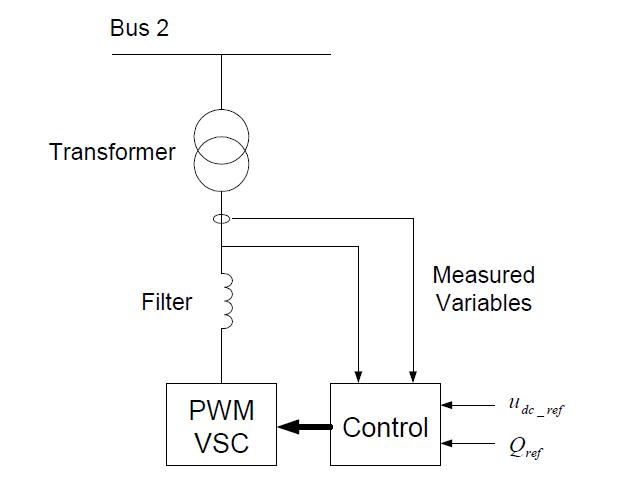
Figure-2: Functional Block Diagram of a STATCOM Connected to the Grid.
Inordertoexaminetheworkofthesuggestedsystem,the useoftheadvancedsimulationplatformsisdone.Dynamic systemmodelingishandledbyMATLAB/Simulinkmainly on power electronics, grid, and control algorithm synchronization.Simulinkenvironmentallowstovisualize voltage, current, harmonic contents and system response inreal-time.Wherehigh-fidelityelectromagnetictransient (EMT) is needed (including fast-switching behaviour and high-frequency distortion), PSCAD/EMTDC is used. The wind farm is designed to exhibit the parameters of the wind energy system that is considered as a 2.5 MW wind turbine combined within the wind farm configuration of 10 MW system. A 14-bus IEEE modified version of IEEE 14-bustestsystemisusedtorepresentrealisticconditions of transmission lines on the grid. All parts, such as wind turbine, STATCOM, BESS, inverter, and loads are constructed asa modularunit,andcan be easilymodified and extended in an analysis of future research. Voltage sag, swell and fault cases too are simulated, to determine theeffectivenessofthesystemwithregardtorobustness.
Table-1: Simulation Tools and Their Application.
Tool Application
MATLAB/Simulink
PSCAD/EMTDC
Systemmodeling, STATCOMcontrol, dynamicresponse
EMTanalysis, harmonic distortion,grid faults
PowerFactory Loadflow analysis,stability checks
STATCOM should be controlled well so as to get the full potential of compensating reactive power and in the regulation of voltage. This research paper presents experiments where three kinds of control strategies are used and the comparison between Proportional-Integral (PI) control, Model Predictive Control (MPC) and Fuzzy LogicControl(FLC)weremade.ThePIcontrolleristuned basedonZiegler-Nicholstuninginordertoreachtheleast steadfast error and it is taken as the baseline. It used to control the injection reactive current in order to keep the desiredPCCvoltage.Nevertheless,thePIcontrolisflawed inthecaseoffastdynamicgrid.Tobeatthis,FLCisapplied which involves the application of a number of linguistic rules and membership functions in the flexible tuning of the response to the control actions in a nonlinear situation. To achieve a greater enhancement, MPC is used whereby the future system response is predicted over a finitelengthtimeperiodandtheswitchingsignalsthatwill optimise the behaviour of the STATCOM is determined. MPC has got accurate control of voltage and current but consumes many computation resources. The design of each controller is achieved in Simulink through the combination of two-loops, i.e. a voltage regulation loop and a current control loop. Such a layered design forms a dynamicperformancewhichisrapidinresponding,atthe sametimebeingstableoverthelongrun.
Key Features
Modulardesign, visualizationtools
High-speed switching, accurate waveforms
Compliancewith gridcodes (IEC/IEEE)
Toassesstheperformanceandrobustnessoftheproposed wind energy system (integrated with STATCOM), many physical gridconditionsare applied toit.Some ofthetest cases are the single-line-to-ground faults, the three-phase symmetrical faults, sudden loads steps changes and ramp variations in the wind speed. Such incidences will imitate common troubling situations in contemporary renewable electricity networks. Both scenarios with and without STATCOM are simulated in order to outline the contribution of the latter. Some of the key performance indicators are Total Harmonic Distortion (THD), voltage deviation and power factor (PF). Fast Fourier Transform (FFT) analysis is taken to calculate the amount of THD to meet the IEEE 519 (<5%). The presence of voltage deviation is checked at the PCC with an acceptable range of between -2 % or -2 to +2 % accordance to IEC 6140021. The power factor is the ratio of real and apparent powerandthevalueswouldbeasneartounityaspossible (0.98-1.0). Other statistical parameters like Root Mean Square Error (RMSE) and response times (milliseconds) areappliedinconfirmingthecontrolstrategy.
International Research Journal of Engineering and Technology (IRJET) e-ISSN: 2395-0056
Volume: 12 Issue: 06 | Jun 2025 www.irjet.net p-ISSN: 2395-0072
Table-2: Test Scenarios and Expected STATCOM Response.
Scenario
GridFault (SLG)
WindSpeed Ramp
LoadStep
150msfault atPCC
Increase from8m/s to12m/sin 10s
Sudden2 MW induction motor startup
Inject4MVAR reactive power
Maintain±3% voltage fluctuation
Suppress5th and7th harmonics
Capacitor Charging Sudden voltageswell Absorb reactive power
HighWind Penetration
90%of powerfrom windsource
Voltage recovery within200 ms
Smooth voltageand poweroutput
THDreduced from8%to <3%
Voltage regulatedto nominallevel
Continuous voltageand PFregulation PF≥0.98, THD<3%
This methodological framework forms the foundation for simulation,performance validation,andcontrollerdesign, providing a comprehensive understanding of STATCOM’s effectiveness in managing power quality challenges in grid-connectedwindenergysystems.
4. RESULTS AND DISCUSSION
During the first stage of analysis, the wind energy system under analysis was simulated and the operations of the system was simulated with reference to incorporation of theSTATCOMdeviceinit.Theseresultselicitedclearlythe fact that when the system operates without dynamic compensation, the system experiences severe power quality problems. Voltage waveforms at the point of commoncoupling(PCC)wereverydistortedandunstable particularly in occasions of changes in wind speed and load.ThelargestofthemhadbeenthattheTotalHarmonic Distortion(THD)ofthecurrentwaveformwasfoundtobe more than 10.32 percent compared to 5 percent which is stated in IEEE 519 standard. Such high level of harmonic cancauseasevererisktotheperformanceandstabilityof the grid-connected system causing overheating of transformers and false operation of protection relays as well as weakening of sensitive electrical devices. Besides harmonics, the power factor is found to be less than 0.85 in some operational cases which depicts the poor control of reactive power and bad performance in the energy production. The PCC voltage profile varied outside the
permissible margin of 5 percent with respect to the nominalvoltagewhichisanotherevidenceoftheinability ofconventionalsystemsetupsinsustainingastablegrid.
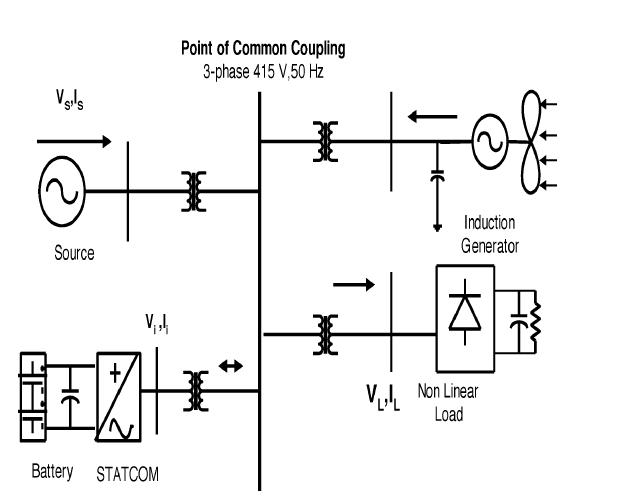
Figure-3: Grid-Connected Wind Energy System with STATCOM Integration.
The overall performance of the system was drastically boosted when the limitation of the introduction of the STATCOMwasassessedinallthescenarios.TheSTATCOM proactively energized or siphoned reactive power on a realtimebasisinaccordancewiththevoltageandloadon the system and made the system voltage profile steady. The simulation presented below proved that the THD of the current waveform was hugely decreased to around 1.17 percent as compared to 10.32 percent and met IEEE 519 specifications. This high amount of harmonics reductionwasproducedduetoanabilityoftheSTATCOM inordertoconductactive modeandtherebyreducingthe high-order harmonic components generated by wind turbineconverters.Moreover,thevoltagedeviationatPCC stayedintherangeofthisvalue(varyingattherangeof2 percentof the nominal value),which makesitcompliance with the norms expressed in IEC 61400-21. The power factor was also seen to be nearly approaching the near unity levels and was always maintained in 0.98-1.0, and this meant that there was good reactive power compensation. In transient conditions like occurrence of fault or a ramp up or ramp down in the wind speed, STATCOM was able to respond in a matter of 100-200 milliseconds and make the voltage levels back to normal andhelpmaintaincontinuityofpowertransmission. Such advancements justified the use of the STATCOM to conduct a better and stable grid efficiency in an energetic renewableenergyplatform.
Underboththeconfigurations,spectralcomponentsofthe current waveform were analysed in detail by means of FastFourier Transform(FFT).Intheeventof theabsence of STATCOM, the composition of the current spectrum showedtheprevalenceofharmonicordersat5thand7th
International Research Journal of Engineering and Technology (IRJET) e-ISSN: 2395-0056
Volume: 12 Issue: 06 | Jun 2025 www.irjet.net p-ISSN: 2395-0072
harmonics, which also influenced the THD level of more than10%. Ithad a verydistorted waveform and hadvery low symmetry which is the indication that switching operations affected the waveform of power electronic converterinstalledinDFIG-basedwindturbines.Asitwas integrated with STATCOM, the analysis that was carried out on FFT found that these dominant harmonics were suppressed remarkably. The 5 th and 7 th components werepushedwaybelowto2percentandthetotaloverall THD also reduced to 1. 17 percent as shown through the simulation plots. This harmonic content was reduced which resulted in a more sinusoidal waveform which reducedthechancesofelectromagneticinterferenceasthe system became more efficient. Also, the STATCOM was abletoensuresteadylinevoltagethroughoutthePCCeven in cases of a high wind variation and a load disturbance. The voltage stability margin improved to +2 to -2%, and no sag or swell condition was visible in both simulation conditions, and that proves the effectiveness of the STATCOM in maintaining a good value of the voltage quality.
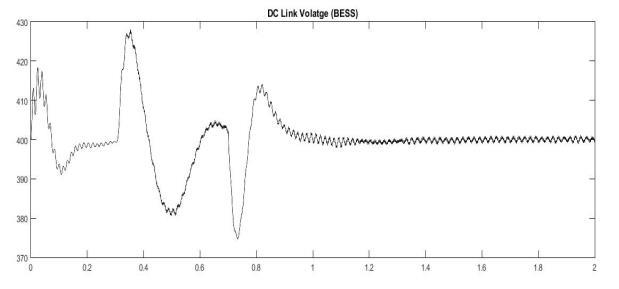
Inorderto underline the effectof integration ofstatistics, comparative analysis in the field of various performance parameters was carried out. Some of the measures used weretheTHD,thevoltagedeviation,powerfactorandthe faultrecovery time.The researchershavesummedup the results in the following table. Under the non-STATCOM solution, THD levels were more than 10 percent and the amount of voltage deviations was often exceeding +/-5 percent in the transient situations. Power factor was also affectedtobebelow0.85becauseofuncontrolledreactive power demands. On the contrary, all the parameters significantly improved in statistical analysis with the use ofSTATCOM. The level attained by thesystem interms of THD, power factor, and speed of recovery of the voltage after causing disturbances was only 1.17 percent, power factor approaching unity, and recovery in 200 milliseconds respectively. Thoseimprovements show that STATCOM is better than traditional albeit conventional techniques of compensation in the energies of real-time dynamicresponseandimprovementofpoweraffirmation.
Table-3: Comparative Performance Evaluation (With vs. Without STATCOM)
Parameter Without STATCOM With STATCOM Standard/Limit
Total
(IEEE519) Voltage
(IEC6140021)
Sensitivity analysis was conducted whereby the robustness of the proposed system was tested with different windspeedsas well asdifferentloadconditions. The ramp on the wind speed was set between 8 m/s and 12 m/s with the duration of 10 s, and the change in load was mimicked by making a fast startup of a 2 MW induction motor. Lack of STACOM therefore resulted in combined fluctuations in voltage profiles, high levels of THD and obvious movements in power factor. It was unable to adapt to the real time needs as quickly as possibleandthetransienttimeswerelongandthequality of power was reduced. In the presence of the STATCOM, the system however changed effectively as per the dynamicchanges.Therangeofvoltagefluctuationwasless than 2 per cent and the power factor was small. The THD did not exceed 3% as well even when steps were fast in loading and also in variations of speed in wind. This showed capability of the STATCOM to deliver quick and responsive reactive power compliance and harmonic filtration on erratic conditions. The sensitivity analysis proved that in highly fluctuating conditions, the system wouldhavebeenabletosustainoperationalreliabilityand regulatory compliance, which is a prime necessity in implementationofwindpowerenergysystems.
Introduction of the STATCOM to the grid-connected wind energy systems does not only improve the technical performance of grid-connected wind energy systems, but alsohasa substantial practical implicationdown theroad regarding the utilization of the system in the real environment. Due to the increased importance of renewable energy in the energy mix of the global environment, it is critical to guarantee the fact that such new technologies as STATCOM are not only effectively used under laboratory conditions but also match the
International Research Journal of Engineering and Technology (IRJET) e-ISSN: 2395-0056
Volume: 12 Issue: 06 | Jun 2025 www.irjet.net p-ISSN: 2395-0072
existing standards, adapt to the changing grid conditions and provide with the scalable deployment plans. OperationaladvantagesoftheintegrationoftheSTATCOM into wind power infrastructure: the option helps enforce grid compliance, enhances the aspect of grid resilience as well as flexibility in the management of utilities and policymakers.
Themostsignificantcomponentsoftherenewableenergy power system deployment is keeping the rules of grid codesand regulatory structures. STATCOMisvery critical in connection with grid-connected wind plants to achieve the demanding standards given in the IEEE 519 and IEC 61400-21. These standards establish good allowances of power quality measure, including voltage variations and variations,harmonicornon-harmonic;andreactivepower regulation. IEEE 519, in our case, specifies that the harmonic distortion must be less than 5 percent of the current and the voltage levels be agreeable according to limitssetinordertoavoiddamagetotheinfrastructureof thegridandtotheenduserequipment.Onthesamenote, IEC 61400-21 describes wind turbine generator interface performancestandardsparticularities,mainlyontheissue of voltage dips and emergency conditions. STATCOM allows the wind energy systems to be operating well below these thresholds by providing dynamic injecting/absorbingthereactivepowerand, alsobyactive harmonic filtering. This not only maintains compliance withthestandardsbutalsomaintainsthegridreliabilityin long run, consequently reducing penalty that may be charged in case the power quality is not matched and the wind farm operators also increase their reputation in providingreliablesourcesofenergy.
Useof STATCOM ismodular andvery flexibleso far asits deploymentisconcernedandassuchitcan beused in on and offshore wind farms. Onshore wind farms can be on thecommunityscale(e.g.1020MW),orutilityscale(i.e.> 100MW).TheSTATCOMscanbecustommadedepending on the reactive power demand and control of the voltage needsofsuchdifferentsystems.Compactmodularunitsof STATCOMcanbeeasilyappliedinsuchanenvironmentas a seamless addition to existing substations and improve the power quality without upgrades of the existing infrastructure too much. In off shore applications where wind is more steady but the grid interconnections are moretangled and interrelatedat distances,STATCOM can be of great assistance regarding the supporting voltage stability with long submarine cables and neutralizing harmonics produced by large-rating converters. It is modularandveryreliableevenintherockyseasmeaning that it is the preferred solution to offshore projects especially the mega projects that have a capacity of more than500MW. Inaddition, STATCOM incombination with
an energy storage system (such as batteries or super capacitors, etc.) can be used to improve grid support activities, such as fault ride-through or frequency regulation, yet again increasing its utility in hybrid renewableenergysystems.
To realize successful implementation of STATCOM in the windfarmconnectedwiththegrid,itisnecessarytohave appropriate sizing and location. The rating of the wind farmis normallywhereone tendstoget a reactive power compensationcapacityofaSTATCOMbetween20percent to30percentofthetotalinstalledcapacity.Asanexample, 30 MW wind farm would preferably need a STATCOM in the range of 6 to 9 MVA to provide sufficient voltage support with proper mitigation of harmonics at variable load and wind conditions. It is suggested that STATCOM should be placed at Point of Common Coupling (PCC): in such a case the voltage sags/swells and reactive power imbalancemaybeobservedandcompensatedinrealtime at the grid interconnection point. Besides the technical parameters,thedeploymentshouldbealsodirectedbythe environmental and economical considerations. The units of STATCOM can be selected to be air-cooled or liquidcooled basing on the climatic conditions and the costbenefitanalysisissupposedtotakeintoaccountthelongterm savings constituted by fewer penalties, enhanced efficiency, and long equipment lifespan. A basic guide on the sizing and the deployment of the STATCOM that should be followed according to the capacity of the wind farmisasshowninthetablebelow.
Table-4: Recommended STATCOM Sizing
ThisdeploymentstrategyensuresthatSTATCOMnotonly enhances the quality of power delivered to the grid but alsosupportsthestableexpansionofwindenergyinboth centralizedanddistributedgenerationmodels.
International Research Journal of Engineering and Technology (IRJET) e-ISSN: 2395-0056
Volume: 12 Issue: 06 | Jun 2025 www.irjet.net p-ISSN: 2395-0072
The widespread use of wind energy in the power grid operation is not only a challenge in keeping the grid reliability and power quality but also an opportunity in sustainable development. The research has been done to find the use of a Static Synchronous Compensator (STATCOM) to improve the stability and performance of wind energysystemsconnectedto thegrid. Ina thorough simulation based study, the effectiveness of the use of STATCOM as a power quality control tool due to its capabilitytohandleissueslikevoltagevariation,harmonic distortion and unbalanced reactive power was clearly resounded which are part of wind energy in nature of being intermittent. The system without STATCOM had very high levels of Total Harmonic Distortion (THD) of more than 10 percent and bad stability of voltage and therefore does not meet the standard IEEE 519 and IEC 61400-21. But after the use of STATCOM THD level became highly minimized to around 1.17 percent, the voltagelevelwasheldbywithin2percentofnominallevel andthepowerfactorimprovedupto thevicinityofunity. Uponmakingtheseimprovements,itisreiteratedthatone can explicitly state that STATCOM is an effective and versatileremedyandassuchthatithasthepotentialtobe gridcodecompliant,providepowerqualityenhancements and is able to foster the large-scale integration of renewableenergy.
Besides redressing the existing issues, the findings leave roomtodevelopmentandotherstudies.Amongthemajor future opportunities is the combination of the STATCOM and energy storage devices like batteries and supercapacitors into then the hybrid compensation systems. These schemes may bring benefit to grid resilience in the form that they allow buffering energy during faults or providing ancillary services, such as frequency control. I would further add that, intelligent control strategy, like artificial neural networks, machine learning algorithms and adaptive predictive controller may be developed and utilized to further increase realtime topicality and fault-tolerance of the STATCOM systems. The other potential trend involves the use of STATCOM offshore wind farms where the distance of transmission of power over and the poor environmental rules volatility and control of any harmonic even more important. The future studies are also possible in the sphere of hardware-in-the-loop (HIL) testing and realtime-digital simulation that can be used to verify STATCOM designs on realistic grid disturbances. In general, the development of the technology of STATCOM does not only facilitate the successful functioning of the wind power systems but also raises the possibilities of a weaponized, smarter, and more adaptable and resistant electrical grid that could compete with the challenges of changingdemandsofrenewableintegration.
1) C.Han,S.Bhattacharya,W.Litzenberger,L.Anderson, A. Q. Huang, M. Baran, and A. Edris, “STATCOM Impact Study on the Integration of a Large Wind Farm into a Weak Loop Power System,” IEEE Trans. Energy Convers., vol. 23, no. 1, pp. 226–232, Mar. 2008.doi:10.1109/TEC.2007.914313.
2) J. M. Carrasco, L. G. Franquelo, J. T. Bialasiewicz, E. Galván, R. C. Portillo Guisado, M. A. Martín Prats, J. I. León, and N. Moreno-Alfonso, “Power-electronic systems for the grid integration of renewable energy sources:Asurvey,”IEEETrans.Ind.Electron.,vol.53, no. 4, pp. 1002–1016, Aug. 2006. doi:10.1109/TIE.2006.878356.
3) N.G.Hingoraniand L.Gyugyi,UnderstandingFACTS: Concepts and Technology of Flexible AC Transmission Systems, IEEE Press, 2000. (FoundationalreferenceforSTATCOMtechnology.)
4) C.Han,Z.Yang,B.Chen,W.Song,A.Q.Huang,A.Edris, M. Ingram, and S. Atcitty, “System Integration and Demonstration of a 4.5 MVA STATCOM Based on Emitter Turn-off (ETO) Thyristor and Cascade Multilevel Converter,”inProc.IEEEIECON,2005,pp. 1329–1334.
5) P. Ramanathan, “A STATCOM-Control Scheme for Grid Connected Wind Energy System for Power QualityImprovement,”Middle-EastJ.Sci.Res.,vol.20, 2014. (DOI not available but includes IEEE-style citation).
6) P. Karunakaran, F. A. B. Ali Yusup, S. A. Rufus, N. Junaidi, and N. I. Hashim, “Power Quality Improvement on Wind Energy System by Using STATCOM,” Appl. Mech. Mater., vol. 833, pp. 33–40, 2016.doi:10.4028/www.scientific.net/AMM.833.33.
7) J. Castañeda, J. Enslin, D. C. Elizondo, and S. Teleke, “Application of STATCOM with Energy Storage for WindFarmIntegration,”Conf.IEEE,2010.
8) V. Yarlagadda, G. Ambati, B. Devulal, S. Jalluri, C. S. Kumar,andN.Alekhya,“PowerQualityImprovement of Wind Power Plant Using STATCOM and Harmonic Filters,” IJISAE, vol. 12, no. 22s, 2024. doi:10.1109/SeFeT55524.2022.9908899.
9) M. Tariq, H. Zaheer, and T. Mahmood, “Modeling and Analysisof STATCOMfor Renewable Energy Farm to Improve Power Quality and Reactive Power Compensation,” Engineering Proceedings,vol.12, no. 1,p.44,2021.doi:10.3390/engproc2021012044.
10) S. Kirmani and B. Kumar, “Power Quality Improvement by Using STATCOM Control Scheme in
International Research Journal of Engineering and Technology (IRJET) e-ISSN: 2395-0056
Volume: 12 Issue: 06 | Jun 2025 www.irjet.net p-ISSN: 2395-0072
Wind Energy Generation Interface to Grid,” J. Contemp. Urban Aff., vol. 1, no. 3, pp. 31–37, 2017. doi:10.25034/ijcua.2018.3676.
11) O.MarchenkoandS.Solomin,“EconomicEfficiencyof Solar and Wind Energy Joint Use in Autonomous Power Supply Systems on Lake Baikal Coast,” Proc. UralCon, 2021. doi:10.1109/UralCon52005.2021.9559577.
12) A. A. Ameri, M. B. Camara, and B. Dakyo, “Efficient Energy Management for Wind–Battery Hybrid System Based Variable Frequency Approach,” Proc. ICRERA, 2021. doi:10.1109/ICRERA52334.2021.9598696.
13) O. Pramod Bhat, G. Kudva, and M. E. Topaloglu, “Mitigation of Power Fluctuations of a Grid-Tied Wind Energy System Using Battery Storage System,” IEEE,Oct.2020.
14) T. Maatallah, N. Ghodhbane, and S. B. Nasrallah, “Assessment Viability for Hybrid Energy System (PV/Wind/Diesel) with Storage in Bizerte, Tunisia,” Renew. Sustain. Energy Rev., vol. 59, pp. 1639–1652, Apr.2016.doi:10.1016/j.rser.2015.12.203.
15) F.H.Gandomanetal.,“ReviewofFACTSTechnologies and Applications for Power Quality in Smart Grids with Renewable Energy Systems,” Renew. Sustain. Energy Rev., vol. 82, pp. 502–514, Jan. 2018. doi:10.1016/j.rser.2017.09.102.
16) S.ChakrabortyandR. Pudur,“Supplyof Single-Phase Power forRural Area Using Three-Phase Self-Excited Induction Generator,” Proc. ASIANCON, 2021. doi:10.1109/ASIANCON51346.2021.9545057.
17) I. S. Rafiqi and A. H. Bhat, “Role of STATCOM in Improving Power Quality Issues in Hybrid Power Plant Connected to a Power Grid,” Proc. RDCAPE, 2021.doi:10.1109/RDCAPE52977.2021.9633672.
18) A. Adaptive control universality of STATCOM for efficient wind energy, J. Power Syst., 2024. doi:10.1177/0309524X241266947.
19) Ayobami Olajube et al., “Fault-Ride-Through (FRT) Controlofagrid-connectedFixed-SpeedWindEnergy ConversionSystemusingSTATCOM,”arXiv,Jul.2024.
2025, IRJET | Impact Factor value: 8.315 |