
International Research Journal of Engineering and Technology (IRJET) e-ISSN: 2395-0056
Volume: 13 Issue: 02 | Feb 2026 www.irjet.net p-ISSN: 2395-0072
International Research Journal of Engineering and Technology (IRJET) e-ISSN: 2395-0056
Volume: 13 Issue: 02 | Feb 2026 www.irjet.net p-ISSN: 2395-0072
Sonalee Singh1, Mr. Pravin Kumar Pandey2
1Master of Technology, Computer Science and Engineering, Veer Bahadur Singh Purvanchal University, Jaunpur, Uttar Pradesh, India
2Assistant Professor, Department of Computer Science and Engineering, Veer Bahadur Singh Purvanchal University, Jaunpur, Uttar Pradesh, India
Abstract - Object Detection (OD) is one of the most important parts of many smart systems. These include selfdriving cars, medical image analysis, precision agriculture, andedge-basedvideosurveillance.Thereareseveralobstacles to implementing highly accurate OD algorithms in Low Resource Environments (LRE). One major challenge is that LRE have limited computing resources, limited memory, limited access to large amounts of labeled data, and require OD results in near real-time. Transfer Learning has been shown to be effective at addressing some of the abovementioned challenges. By leveraging existing pre-trained knowledge and decreasing the amount of time required to train new models, TL enables the development of high performance OD models that can run on LRE. This literature reviewwilllook into theevolutionofODtechniques,provide a comprehensive evaluation of the most recent advances in usingTLto developODmodels,andevaluatehowTL-basedOD modelperformancecomparestotraditionalODmodelsinLRE. Throughathoroughliteraturereview,thisstudydemonstrates several key strategies that can help address the challenges of OD in LRE including using lightweight OD architectures; knowledge distillation (KD); selective fine-tuning (SFT); domain adaptation (DA), and data-efficient learning (DEL). Thisstudyalsoprovidesexamplesoftheuseofeachstrategyin multipleareasofapplication(agriculture,surveillance,health care, remote sensing, and Internet-of-Things (IoT)) demonstrating the practical value of these techniques. The study concludes with an emphasis on the need for future research to continue developing adaptive and scalable TL frameworks that can enable the widespread adoption of high performance OD models suitable for various real-world applications.
Key Words: Transfer Learning, Object Detection, LowResource Environments, Lightweight Models,Knowledge Distillation, Domain Adaptation, Edge Computing, FewShot Learning
Computer Vision has been at the center of the explosive growthofObjectDetectioninrecentyearsasithasenabled computers to identify and locate objects of interest inside imagesandvideorecordings.ThefieldofObjectDetection has enabled the development of an increasing number of
automatedperceptionsystemsforuseinvariousindustries byallowingtheautomationofdecisionmakinginthesame environment where data is collected [1]. Since Deep Learning technologies have made possible rapid advancements in accuracy and capabilities of Object Detectionmodelsoverthepasttenyears,ithascreatednew opportunities in both the research community and the industrialcommunity.
Fromahand-craftedfeaturebasedmethodologytotoday's advanced deep learning framework object detection has experienced significant improvements in accuracy and processingtime[2].Today'sobjectdetectionsystemssuch as faster r-cnn, yolov4, ssd and retina net are being embeddedintoallofourdailylifetechnologiesandprovide theabilitytorapidlyprocessandinterpretvisualdata.The applications for these object detection systems include; autonomous vehicles, intelligent surveillance, medical imaging,precisionfarming,automatedretail androbotics. Withtheneedforsmartersystemsgrowing,objectdetection will continue to be a key technology in areas that require accurate,robust,real-timevisualsensing[3]
Eventhoughtherehavebeenmanydevelopmentsinobject detection,it isstill a problemto deploythemin resourceconstrainedenvironments.Therealworldincludesalotof low-resource areas like rural communities, developing countries,smallbusinesses,andIoTdevices[4].Inaddition to this, they do not have enough resources for high performancecomputingequipment(GPUs),largeamountsof labeled data, reliable network access, or available power. Deepneuralnetworksareresource-intensive,whichmeans theyneedfast,high-poweredGPUswithlotsofmemoryand alongtimetotrain–allthingsthatarenotavailableonmost low-power edge devices (e.g., drone, camera, cell phone, etc.).Asaresultoftheabovelimitations,itisdifficulttotrain and/ordeploystate-of-the-artobjectdetectionsystemsat scale;thuslimitingtheirspeedandaccuracy.
International Research Journal of Engineering and Technology (IRJET) e-ISSN: 2395-0056
Volume: 13 Issue: 02 | Feb 2026 www.irjet.net p-ISSN: 2395-0072
Transfer learning is a practical way to get around the problemsmentionedabovebyusingpre-trainednetworks that are trained to learn general image feature representationsfromlargedatasets(e.g.,ImageNet,COCO, OpenImages).Byadaptingthosemodelsthroughfine-tuning (orpartiallytraining)them,transferlearninggreatlyreduces boththecomputationalcosts,timeanddatarequirements necessarytotrainamodel,enablinghighperformanceobject detection on low-power hardware with minimal data. Additionally,approachessuchaslightweightarchitectures, knowledge distillation, and domain adaptation make the system even more efficient while maintaining strong detectionperformance[5]
Thisreviewaimstoinvestigatehowtransferlearningwill improveobjectdetectioninresource-poorconditions(low resources). This study will provide an overview of foundational concepts,a reviewof recentcontributions to the literature and comparative analysis of methods for optimizing detection systems when constrained by both hardware and limited data [6]. In addition to providing practical methodology for improving object detection systems, it identifies typical limitations and reviews emergingareasforresearchthatsupportsthedevelopment ofdeployableobjectdetectionmodelswithscalabilityand lowcosts.Bycombiningcurrentstate-of-the-artknowledge and research voids, this work hopes to inform future developments which will allow for widely available and sustainably priced AI solutions across many different applicationdomains.
Incomputervision,objectdetectionisafundamentaltask, which includes detecting objects inside an image and specifying the location of each object with the use of a boundingboxorasegmentationmask.Objectdetectionhas been one of the most prominent areas of advancement in computer vision over the years, as it has evolved from conventionalmachinelearningbasedmethodstoadvanced deeplearningarchitectures.Collectivelytheadvancementof neuralnetworks,availabilityoflargerdatasetsfortraining modelsandimprovedcomputingcapabilitieshavecreateda new area of object detection that can be reliably used by numeroususers[7].
Traditionally,earlyobjectdetectionusedmanuallydesigned methodstoextractfeaturesfromimages,suchasHaar-like
features,HistogramofOrientedGradients(HOG),andScaleInvariant Feature Transform (SIFT). Typically, they were combined with a variety of classical machine learning classification methods including SVM and AdaBoost. Although useful for simple object detection tasks, these classic methods failed when detecting objects within complex background conditions, varying light conditions, and/orwhenobjectsareoccluded.
Thekeyturningpointinobjectdetectionwastheadventof Convolutional Neural Networks (CNN's) that allowed the computer to learn hierarchically about an image automatically without the need to use manual feature extraction techniques. This ultimately led to the developmentofmanyCNN-basedobjectdetectionmethods suchasR-CNN,providingmuchhigherdetectionaccuracy and robustness than previously seen [8]. With continued advances made in architectural design, feature extraction, and faster training times, real time object detection has becomepossible.
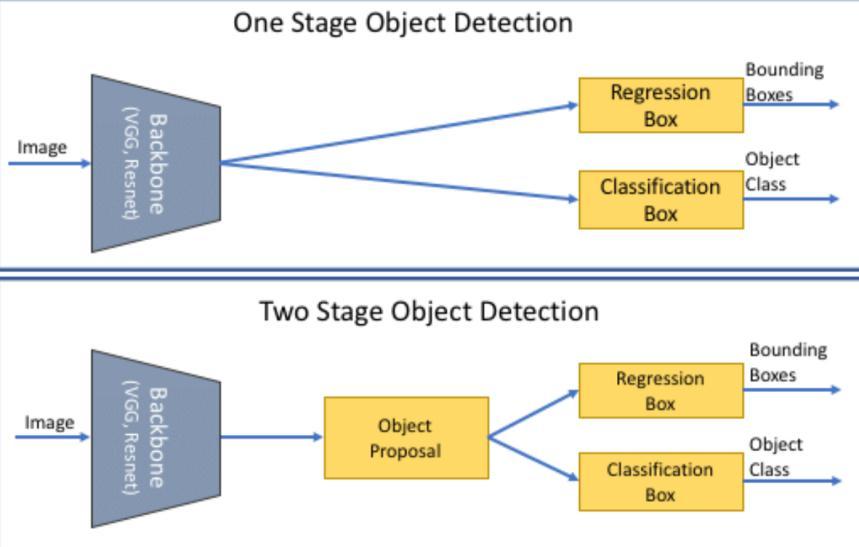
Deep-learning-based object detectors are broadly categorizedintotwomajorfamilies:two-stagedetectorsand single-stage detectors, each designed to balance accuracy andprocessingspeed.
2.2.1.Two-Stage
(R-CNN Variants)
Thetwo-stagedetectorgeneratesregionproposalsanduses theproposaltoclassifyregionsinanobjectcategory.This familyofdetectorsincludesR-CNN,FastR-CNNandFaster R-CNNwhichrepresentthisarchitecture.TheuseofaRegion Proposal Network (RPN) in Faster R-CNN has greatly reduced processing times as opposed to previous architectures[8].Two-stagedetectorsarebestusedwhen detectionof objects withsmall dimensionsor objectsthat areoverlappedinanimageisrequired.Assuch,theycanbe applied to applications requiring detection precision (medicalimagingandtrafficmonitoring).
2.2.2.Single-Stage
Asinglestagedetectorbypassesaregionofinterestproposal stage and predicts object class and bounding box simultaneouslywithinaunifiedframework.Fasterinference isachievablebyasinglestagedetectorwhencomparedwith multi-stagedetectorswhichincludeYOLO(YouOnlyLook Once),SSD(SingleShotMultiBoxDetector)andRetinaNet. YOLO has become a widely used model due to its fast executiontimeandabilitytobedeployedonembeddedand edgedevices. The focal loss wasproposedin RetinaNet to improveclassbalancewhilemaintainingdetectionspeed.A singlestagedetectorismostsuitableforapplicationswhere quick decisions need to be made, such as, autonomous navigationandvideosurveillance[9].
International Research Journal of Engineering and Technology (IRJET) e-ISSN: 2395-0056
Volume: 13 Issue: 02 | Feb 2026 www.irjet.net p-ISSN: 2395-0072
2.3 Common Performance Metrics and Evaluation Methods
When evaluating object detection models you need to use established methods to measure both how accurate your detectorisatidentifyingobjects(classification)andwhereit has located them on an image (localization). The primary waythatobjectdetectionmodelsareevaluatedisthrough theuseoftheMeanAveragePrecision(mAP).mAPprovides amethodtoevaluatehowwellyourmodelperformsacross each class of object, using its ability to achieve precision/recallperformance[9-10].Acommonevaluation metrictodetermineifyourobjectdetector'spredictionsare close enough to the ground-truth bounding box to be considered"correct"istheIntersectionOverUnion(IoU)or Jaccard Index. This provides a clear threshold for what constitutesasuccessfulprediction.Otheradditionalmetrics thatcanprovideusefulinformationincludeFPS(FramesPer Second),LatencyandModelSize,whichareallparticularly relevant when implementing detectors within limited resourceenvironmentswhereSpeed/Efficiencyarecritical. All of these metrics can also be used to compare performanceofdifferentmodelsandtoselectarchitectures basedonperformanceunderreal-worldconstraints[10]
Transfer Learning is a powerful approach that has been developed as a method to speed up computer vision processing and improves results (object detection), for example,byreducingtheneedforalargeamountofdataand longtrainingtimes.Ratherthanbuildingamodelfromstart to finish, Transfer Learning allows developers to use knowledge acquired during the training process of an existingmodelthatwastrainedusingalargeandvarieddata set.Inadditiontoprovidingastrongbaseofvisualfeature understanding,thepre-trainedmodelalsoallowsdevelopers to adapt to a new task with limited amounts of data and computationalresources.Assuch,thismethoddramatically reducesthetimeittakestodevelopandimproveresultsin manycasesinlimiteddataenvironments[11]
Theconceptoftransferlearningincomputervisioninvolves using an existing model that was previously trained on a largeamountofdata(e.g.,ImageNet,COCO,OpenImages)to developamodeltolearnanewtaskorworkwithnewdata. In many ways, the pre-trained model has learned generalizable features such as texture, shape, object attributes and has formed a generalized feature representation based on all of the images used during its initial training [11]. As a result of the model having been trained to be able to identify the key elements of these images, when the model's knowledge is applied to a new task,itwillrequiresignificantlylesstrainingtimeandcan also provide good results with much smaller amounts of data. Transfer learning is particularly useful for object detection because manual annotation of data can be expensiveandverytimeconsuming.
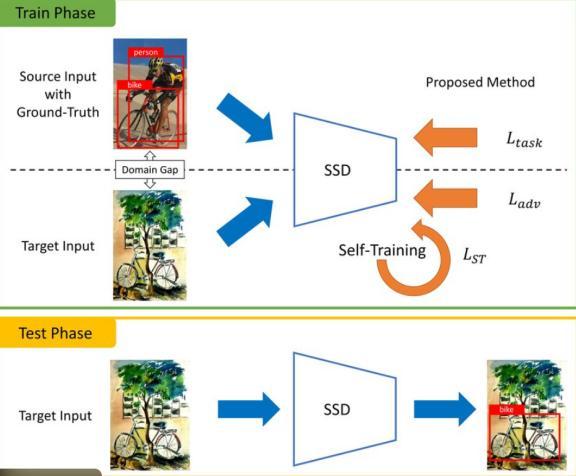
Several transfer learning strategies exist based on the specific task needs and resource availability. The most commonmethodsincludefeatureextraction(involvesusing a pre-trained model as a feature extractor, so that it's representationsareusedtofeednewlayersforclassification or detection tasks, but does not modify the pre-trained model),fine-tuning(featureextractionwithadditionalpretrainedlayer(s)trainedonthetargetdataset),anddomain adaptation (when the source data set has significant differences than the target environment, techniques like adversariallearningorstyletransferareemployedtoallow the model to learn to perform well despite differences in lighting,objectappearance,etc.).
International Research Journal of Engineering and Technology (IRJET) e-ISSN: 2395-0056
Volume: 13 Issue: 02 | Feb 2026 www.irjet.net p-ISSN: 2395-0072
Allcontemporaryobjectdetectionsystemsutilizeanefficient backbonearchitecturetogeneratethemostoptimalfeature maps. The pre-trained backbone architectures that have become popular include ResNet, VGG, MobileNet, EfficientNet, DenseNet, and variants of the Vision Transformer (ViT). As each backbone has different architectural characteristics including their respective depths,numberofparameters,andcomputationcost,they can be classified into two categories [12]. First, there are backboneswithhighaccuracybutalsohighcomputational costsuchasResNetandVGG,whicharemoreappropriate foraGPU-basedsetup.Second,therearelow-computation backbonessuchasMobileNet,ShuffleNet,andEfficientNet, which are optimized for low-power computing platforms and edge devices, and achieve the best trade-off between speed and accuracy. Therefore, the correct backbone selectionisimportantbecauseitmusttakeintoaccountthe performanceconstraints.
Transfer learning can be particularly valuable when resources are very limited (in terms of computing power, memory,ortrainingdata).Thefactthatpre-trainedmodels havelearnedgeneralknowledgeaboutfeaturesmeansless training is needed with fewer images (i.e., less time and energy),allowingobjectdetectiontorunonmobilephones, drones, cameras, IoT devices etc. using only low-power hardware (not requiring expensive GPUs) [13]. Transfer learning allows the combination of layer-freezing, quantizationandotherapproachestobuildsmall,butstill accurate object detection systems for use in resourceconstrainedsituations,sotransferlearninghasanimportant functioninclosingthegapbetweenAIpossibilitiesandreal worlddeployment.
While there have been a number of studies focused on developing and testing the performance of deep-learningbased object detection algorithms for use in various lowresource environments (e.g., rural surveillance systems, embedded IoT devices, agricultural drones and mobile healthapplications),allofthesestudiespointouttheneedto improvetheefficiencyoftrainingandinferenceprocessesto enablesuchmodelstobeimplementedinavarietyoflowresourcesettings.Thisisparticularlyrelevantsincecurrent state-of-the-art models exhibit excellent accuracy on benchmark datasets, but were primarily developed and testedusinglargeamountsofdataandhigh-poweredGPU processorsfoundinlaboratorysettings[14].
Studiesalsoshowthatdeployingobjectdetectionusingedge computing hardware causes serious computation restrictions. The edge devices (for example: Raspberry Pi, NVIDIA Jetson Nano, ARM-based processor, drone, and mobiledevices)donothavesufficientmemorybandwidth, orGPU-accelerationorthenecessaryparallelprocessingfor many DNNs. In addition to reporting that edge-AI model deploymentsarechallengingwithmodelsbasedonFasterRCNN and ResNet-based backbones because these models require too much computational overhead and memory usage to perform in real time [15]. Due to these requirements lightweight networks and transfer learning techniques have been developed in order to allow object detection to occur in environments where power consumptionanddevicetemperaturealongwithbattery-life needtobestrictlymonitored.
Research also points out that many low-resource environmentsdonotcontainlarge,high-qualitylabeledsets necessaryforinitialmodeldevelopmentusinganew,deep detectionmodel.Collectinglargedatasetstotrainmodelsis typically very time consuming and/or cost prohibitive for areas of study such as precision agriculture, medical diagnosis, and remote sensing. Additionally, many fieldspecific datasets will have problems associated with class imbalances, rarity of target items, or noise in the annotations.Ithasbeendemonstratedthroughresearchthat whenamodelistrainedwithinsufficientdataittendstofit toowelltothesmalldataset,resultinginpoorperformance outsidethetrainingenvironment[16].Asaresult,transfer learning, few-shot learning, and generating synthetic data arebeingusedingreaternumbersaspracticalmethodsto addressthedata-basedchallenges.
Complex deep object detection architectures have the potential to be millions of parameters, thus requiring substantial amounts of memory and computational resourcesforbothtrainingandinferencetasks.Theprevious workestablishedthattheselargecomplexarchitectureswill incursubstantiallyincreasedlatency,whichisachallengeto real-time processing within constrained resource environments. High-capacity neural networks in robotics and UAV's battery powered and portable applications consumeexcessiveamountsofpower,resultinginreduced operational time. As a result, it is necessary to strike an optimal balance among model size, model accuracy, and inferencespeed.Modelpruning,knowledgedistillation,and quantizationarepopulartechniquesusedintheliteratureto
International Research Journal of Engineering and Technology (IRJET) e-ISSN: 2395-0056
Volume: 13 Issue: 02 | Feb 2026 www.irjet.net p-ISSN: 2395-0072
minimizetheamountofcomputationsrequiredbyaneural networkwhileminimizinglossofmodelaccuracy[17-18].
ReliabilityofNetworkConnectivityisacommonissuewith Low-ResourceDeploymentResearch.Whilepowerful,cloudbasedprocessingreliesonstablehigh-bandwidthconnection to communicate image data, which is often unavailable in remote areas of the world. As shown by various studies, networklatency,bandwidthlimitations,andsecurityissues canlimittheuseofcloud-basedprocessingforseveralrealtime applications such as emergency response or rural surveillance. In addition to network connectivity issues, environmental factors such as extreme temperatures, vibrations,andlowlightconditionswillalsonegativelyaffect thereliabilityandrobustnessofthemodelwhenithasbeen deployed.
5.1 Overview of Significant Studies Applying TransferLearninginResource-ConstrainedObject Detection
Recent research has shown that transfer learning with lightweight detection frameworks are viable options for implementingobjectdetectioninverylowresourceorvery constrainedenvironments.Asanexample,astudyreviewing manydeep-learning-basedlightweightobjectdetectorsfor use on edge devices examines different backbone architectures to demonstrate how pre-trained models adaptedthroughtransferlearningcanbeusedeffectivelyto deployontheedge[19]
Another area of research is TranSDet TranSDet uses transfer learning with a dynamic resolution adaptation scheme to enhance small-object detection when limited datasets exist. By adapting a pre-trained model to detect objectsinimagesatmultiplelowresolutions,thedetection modelbecomesbetterabletodetectsmallobjects,whichis often a requirement in resource-constrained and domainspecificapplications[20].
There are also works, such as LSTD (Low-Shot Transfer Detector),thatfocuson“low-shot”scenarios,i.e.,whereonly afewlabeledsamplesareavailableinthetargetapplication domain. LSTD uses knowledge from a source domain and fine-tunes to the target domain with minimal labeled examples,demonstratingcomparableresultstofull-domain methodsevenwhenminimalamountsoftrainingdataare available.
Morerecently,studieslikeTiny-DSODhaveillustratedthe designofextremelyefficientdetectionarchitecturesthatare targetedtowardresource-constraineddevices,e.g.,byusing depth-wise dense blocks and lightweight feature pyramid
networks to provide high quality object detection while minimizingboththenumberofparametersrequiredandthe amountofcomputationalresourcesrequired.
Collectively,alloftheseareasofresearchsupporttheidea thatthecombinationoftransferlearningwithmodeldesign andoptimizationareviableapproachestoenablingobject detection in constrained environments such as embedded systems, edge devices, Unmanned Aerial Vehicles (UAVs), andsmall-domaindatasets.
The reviewed works vary along multiple dimensions: detectionarchitectures,datasetsizeandtype,preprocessing and augmentation strategies, and training protocols. The tablebelowsummarizesasubsetofrepresentativestudiesto highlighttheirdifferencesandoutcomes.
Table 1 : Comparison of Representative Studies
Study / Metho d Target Scenario / Constraint
TranSD et
Smallobject detection, limited datasetsize
Strategy (Transfer / Lightweight / DataEfficient)
LSTD
TinyDSOD
Low-shot detection (fewtarget examples)
Transfer learning+ resolution adaptation+ modifiedFPN &anchor module
Dataset (s) / Domain
Low-shot transfer learningwith regularization for background suppression
TT100K -Lite, BUUISEMO-Lite, COCO
Key Results / Observat ions
Significan tmAP gains over baseline (e.g. +8.0%for FasterRCNN, +22.7% for RetinaNet on TT100KLite)
Various targetdomain sets (few samples ) Outperfor ms standard detectors under limited data, showing robustnes sinlowshot regimes
Resourcerestricted deploymen Lightweight backbone+ efficient PASCAL VOC, KITTI, Achieved ~72.1% mAPwith
International Research Journal of Engineering and Technology (IRJET) e-ISSN: 2395-0056
Volume: 13 Issue: 02 | Feb 2026 www.irjet.net p-ISSN: 2395-0072
t (embedded /lowpower devices) featurepyramid network (depthwise convs, parameterefficient)
General lightwe ight detecto rs (survey ) Edge devices, embedded platforms
Useofmobilefriendly backbones (MobileNet, ShuffleNet, etc.),model compression, quantization/p runing
COCO only ~0.95M paramete rsand 1.06B FLOPs outperfor msmany earlier lightweig ht detectors.
Standar d benchm arks (MSCOCO, PASCAL -VOC)+ varied realworld domains
Demonstr ates trade-off between accuracy and resource usage; good performa ncewith careful backbone and architect ure choice.
Thesestudiescollectivelyshowhowtransferlearningand architecturedesign(lightweightnetworks,efficientfeature pyramids, resolution adaptation) combined withsmart training strategies enable object detection even when resourcesordataarescarce.
Table 2 : Trends in Resource-Constrained Object Detection via Transfer Learning
Trend / Technique When It Helps Most
Pretrained models+transfer learning(finetuningorlowshot)
Resolution adaptation+ small-object specialization (e.g.TranSDet)
Limitedtarget data;newdomain withsmalldataset
Small-object detection,limited trainingdata
Typical Benefit (compared to baseline / from literature)
Allowsworkingwith fewsamples; maintainscompetitive accuracy(e.g.LSTD results)(arXiv)
SignificantmAP improvementover standarddetectors undersame constraints(MDPI)
Lightweight Low-power, Drasticreductionin
backbone+ efficientnetwork design(e.g.TinyDSOD)
Model compression/ pruning/ quantization+ transferlearning
embeddedoredge platforms parameters/FLOPs; acceptablemAPfor manytasks(arXiv)
Embedded deployment, latency/energycriticalsystems
Reducedinference latencyandmemory footprint;feasible deploymentonJetson, RaspberryPi,etc. (ACMDigitalLibrary)
5.4.Key Design Features Identified from Prior Studies
Based on a synthesis of prior studies, the following key readingfeaturesconsistentlyinfluenceperformanceinlowresourceobjectdetection:
Table-3: Related Reading Features Identified in Literature
Feature Description Supporting Studies
Lightweight Backbones
Feature Pyramid Networks (FPN)
Knowledge Transfer
SelectiveFineTuning
DataEfficiency
MobileNet,ShuffleNet, EfficientNetreduce FLOPs
Tiny-DSOD,Mittal (2024)
Multi-scaleobject representation TranSDet
Teacher–student modelcompression LSTD,DSOD
Freezeearlylayers, adapthigherlayers
Few-shotOD surveys
Few-shotlearning, augmentation LSTD
The study shows that using transfer learning along with efficient architectures, smart network design and domain specific adaptation can create a viable way to deploy an objectdetectionsystemonconstraineddevices[22].Assuch, while it has been shown that (e.g., LSTD, Tran SDet) with littletrainingdataand/orsmallobjects,goodenoughobject detection results have been obtained, also it has been demonstrated (Tiny DSOD) that object detection can be performed at a computational cost low enough to be deployedattheedge.
2026, IRJET | Impact Factor value: 8.315 | ISO 9001:2008
International Research Journal of Engineering and Technology (IRJET) e-ISSN: 2395-0056
Volume: 13 Issue: 02 | Feb 2026 www.irjet.net p-ISSN: 2395-0072
While many challenges exist including tradeoffs between detection quality and detection speed, and the ability to generalizefromoneenvironmenttoanother,detectingsmall objectsunderconstrainedconditionsisstilllessrobustthan detecting objects under unconstrained conditions. Additionally,veryfewstandardbenchmarktestsanddevice deploymentsexist,whichcomplicatesthecomparisonofthe effectiveness of research-based methods versus their translationintopractice[23]
Insummary,thisareaofresearchappearstobeadeveloping fieldwithagreatdealofpromiseforusewithconstrained resources,butmuchadditionaldevelopmentisrequiredto createrobust,generalizableanddeployableobjectdetection systemsacrossawidevarietyofrealworldconditions.
6. METHODOLOGICAL FRAMEWORK ADOPTED IN PRIOR STUDIES
Most transfer-learning–based object detection studies in low-resource environments follow a four-stage methodology:(i)backbonepertaining,(ii)transferlearning adaptation, (iii) lightweight optimization, and (iv) constraineddeploymentevaluation.
Apretrainedbackbonefθs,trainedonalarge-scaledataset Ds (e.g., ImageNet or MS-COCO), is adapted to a target dataset Dt with limited samples by minimizing the target loss:
Lt=Lcls+λLreg
where
Lcls=−Σyilog(ŷi) istheclassificationloss
Lreg=ΣSmoothL (bj bj) istheboundingboxregression loss(usedinFasterR-CNN,SSD,andYOLOvariants).
TranSDetfurtherincorporatesresolution-adaptivefeature learning,wherefeaturemapsatmultipleresolutionsrkare fused:
F=ΣwkFrk
Thisapproachleadstoupto+22.7%mAPimprovementfor RetinaNetonTT100K-Liteunderlimiteddataconditions.
7. MATHEMATICAL MODELS AND ALGORITHMS USED IN TRANSFER LEARNING–BASED OBJECT DETECTION
KnowledgeDistillationAlgorithm(Tiny-DSOD,LSTD)
LetTbeateachermodelandSalightweightstudentmodel. Thedistillationlossisdefinedas:
LKD=αLdet(S)+( −α)Lsoft
where Lsoft=KL(σ(zT/T)||σ(zS/T))
zT and zS are logits from the teacher and student models respectively; T is the temperature parameter and α is the balancingcoefficient.
Tiny-DSODachieves72.1%mAPonPASCAL-VOCwithonly 0.95Mparameters,comparedtomorethan20Mparameters in conventional detectors, making it suitable for edge devices.
8.COMPARISONOFDATASETSANDQUANTITATIVE PERFORMANCE
Table-4: Dataset-Level Comparison from Prior Studies Study
Recentliteraturehasbeenworkingonusingmanydifferent waystousecombinationofefficientnetworkarchitecture, dataefficienttechniques,andtransferlearningtoallowfor objectdetectioninconstrainedenvironmentssuchasUAVs oredgedevicesandinverylimitedtrainingdata(few-data) applications.Below,Idiscussseveralmethodsofdoingthis bytheme;describehowtheyareused;describeresultsfrom prior studies; and explain why they will be useful to lowresourceobjectdetectionapplications.
The most commonly applied method to make object detectionsystemssuitableforlowresourceapplications,is byusinglightweightandefficientbackbonesanddetection architectures that consume less computational resources. Theauthorsofa2024reviewtitled"DeepLearning–Based Lightweight Object Detection Models for Edge Devices" discuss how backbone architectures such as MobileNet, ShuffleNet(orotherdepthseparable/efficientconvolutional networks) and lightweight detection frameworks such as EfficientDet are being successfully employed for object detectionatreasonableaccuracylevels,whilemaintaining low model sizes, low inference times, and low memory footprints[24].
International Research Journal of Engineering and Technology (IRJET) e-ISSN: 2395-0056
Volume: 13 Issue: 02 | Feb 2026 www.irjet.net p-ISSN: 2395-0072
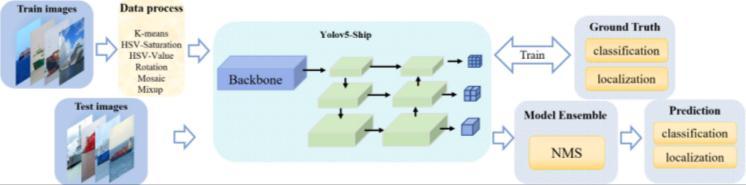
Figure-3: Lightweight / mobile-optimized backbone architectures
In general, these lightweight architectures utilize fewer parameters than their "heavier" counterparts, smaller featuremaps,andusedepthwise-separableconvolutionsto decrease both floating point operations (FLOPS) and memory consumption which make them better suited to deviceswithlimitedprocessingpowerand/ormemory(e.g., mobiledevices,embeddedsystems,andedgehardware).
Experimentalresultshaveshownthatlightweightdetectors are able to achieve an acceptable level of performance in termsof detecting objects butnotnecessarilyatthesame levelasthebestperforming("heavy")detectors;however, they can provide a reasonable tradeoff among speed, resources,andobjectdetectionperformance[25]
Apossibleapproachistoutilizeknowledgedistillation a processofpassinginformationfroma larger, well-trained "teacher" model to a smaller "student" model as an approach to reduce size of object detection models; this permits compact models to capture similar performance characteristics of their heavier counterparts, but still be capableofbeingusedatlowerlevelsofresources[26].
Anexampleofthiscanbeseeninarecentstudyemploying knowledgedistillationforfew-shotobjectdetection inthe case of the proposed method, it utilized a "bag-of-visualwords"(BoVW)representationlearnedfromasmallnumber of images, and then aligned the student detector's feature spacetotheBoVWembeddingrepresentationstoprovide guidancetothelearningprocess,therebyminimizingover fittingwhentrainingusingaverysmallnumberofexamples.
Similarly,a2024researcheffortwasabletodemonstratethe feasibilityofusingacombinationofknowledgedistillation, and a design technique called feature-adaptive backbone design to improve the UAV (drone) object detection demonstratingtheabilitytocreateabalancebetweenobject detection capability and resource utilization that was applicabletoairborneembeddedsystems.
Thesestudiesshowthatknowledgedistillationwillremain one of the most effective ways to "shrink" the amount of computationalresourcesneededbyheavyobjectdetectors, whilemaintainingasmuchoftheirlearnedrepresentation capabilities as possible enabling object detection to
becomemorefeasibleforuseondevicesorwithinsystems that have very limited amounts of computing power, memory,orelectricalenergyavailable[27].
Transferlearningistypicallycarriedoutbybeginningwitha pre-trained "backbone" and then tailoring it to another application using fine-tuning. However, under tight computationalresources,limiteddata,orboth,completely training all of its layers again could be prohibitive for achieving acceptable performance or might lead to over fitting. Many researchers have thus developed various methods of selectively freezing layers (especially lower layers)topreservethegeneralfeatureextractioncapabilities learnedinthesourcedomain,whileonlyfine-tuningupper layers (that are most relevant to the detection task or the new classes). Selective fine-tuning also offers a reduced computational overhead as well as smaller data requirementscomparedtofull-layerretraining.Lightweight backbonesordistillationcombinedwithselectivefreezingof layers helps improve deployment efficiency for object detectors within resource-constrained environments. The majority of studies on few-shot detection have adopted similarfine-tuningmethodologieswhentransferringfrom baseclassestonewclasses[28]
Regardless of the specifics, selective fine-tuning is widely usedduetothefactthatitusesminimalresourcestoadapt themodel,butstillleveragesthebroadknowledgeofvisual patterns and concepts that were learned in the source domain.
9.4Cross-DomainAdaptationandReusableFeature Representations
A number of studies have looked at developing ways to adapt feature representation across various deployment domains that are different than the training domain (e.g. different lighting, backgrounds, objects, aerial vs. ground views).
To give an example: The primary problem faced by many few-shotdetectorsisthedomainshiftissuewhenthereisa largedifferenceinthebaseclassversusthenovelclass;as stated above, projects such as DCNet (Dense Relation Distillation with Context-aware Aggregation) creates a density match between the support and query features; whichwillhelpimprovethedetector'sabilitytogeneralize whenthereisalargedomainshift.
Causal inspired knowledge distillation has also been proposed to be applied to the few-shot detection task to handleissuesofover-fittingandpoorgeneralizationtonew classes when the base and new classes are very different; using causal inspired knowledge distillation allows the
International Research Journal of Engineering and Technology (IRJET) e-ISSN: 2395-0056
Volume: 13 Issue: 02 | Feb 2026 www.irjet.net p-ISSN: 2395-0072
model to learn more stable, transferable feature representations[29].
Usingthesecross-domainadaptationsalongwiththeuseofa single, reused pre trained backbone can provide the flexibility and robustness needed for deploying models in diverse real world scenarios even when there is limited amountsofdataavailableorthedomainchangesgreatly.
Transfer learning for object detection has provided the abilitytodeployobjectdetectioninavarietyofrealworld applications with limited computing power, processing capabilityandaccesstotrainingdata.Severalstudieshave shown that utilizing pre-trained backbones, along with trainingmethodsthatconservecomputeresources,enables successful deployment of object detection in various practical fields such as agriculture, public safety, medical imaging,remotesensingandIoT-basedsmartdevices.The next sections detail specific application areas, their limitations and what can be learned from the field experiencereportedbypriorresearchers.
Object Detection in agriculture is a key task that has numerous uses including crop monitoring, fruit counting, identifying diseases of plants, and detecting pests by analyzing images taken from Unmanned Aerial Vehicles (UAV) or collected from sensors placed on the ground. Studies have demonstrated that when transfer learning is usedonanagriculturaldatasetthatapre-trainedmodelcan greatly decrease the amount of data required to be annotatedmanually,whichisalimitationofagriculturesince itrequiresahighcosttoannotateandthereisahighdegree ofspecializationinannotatingagriculturaldata.Studieshave shown that lightweight versions of object detection algorithms such as YOLOv4-Tiny and EfficientDet-D0 are capable of running on small platforms like drones and mobile devices and perform fruit detection and crop classification at speeds of 30 frames per second, while demonstrating significant increases in performance over training from scratch. Studies conducted in actual field environmentshavedemonstratedthatlightweightmodels arecriticalforbatterypoweredequipmentoperatinginthe fields,asthesemodelsrequirelessmemoryandenergythan traditional models [30]. These studies have also demonstratedthatlightweightmodelsenableadaptationto varying environmental conditions such as changing light levels,occlusionfromleaves,andirregularlyshapedobjects.
The ability to detect objects within video feeds is a key function of many types of surveillance systems. Examples include cameras placed at public locations such as traffic intersections,parksandnearsecuritysensitivebuildings.In
addition, there are a variety of research studies which demonstratethatusinglightweightobjectdetectionsystems that have been pre-trained and then deployed onto edge computing hardware (i.e., Jetson Nano, Raspberry Pi, etc.) canprovideameanstoperformrealtimevehicledetection, pedestrian detection and abnormal activity detection without the need to send the video feed to be processed centrally through a cloud environment [31]. The move towardedgebasedAImodelsisprimarilyduetobandwidth limitations whencommunicatingvideoto remoteservers; thedesiretoprotectuser'sprivateinformationandtheneed for rapid action in emergency situations. It has also been shownthatbyselectivelyfinetuninganedgebasedmodel and compressing its weights, high accuracy performance maybeachievedwithedgebasedmodels.However,ithas alsobeennotedthattherewillbeaneedtobalancemodel complexity with responsiveness when implementing practicalsolutions.Transferlearningwillcontinuetoplaya majorroleinoptimizingtheuseofsurveillancetechnology by providing a method to achieve both high accuracy and fastresponsetimes.
Transferlearningisalsousedwithmedicalimagemodalities (i.e., X-rays, CT scans, MRIs, and ultrasounds) to enhance computer-aided-diagnosis. Because there is a lack of annotated medical images and due to the high cost associated with annotating them by experts; many researchersusepre-trainedconvolutionalneuralnetworks todetecttumors,segmentorgans,oridentifyanomalieson theseimages;theythenfine-tunethosenetworkstospecific detectiontasks.Theliteratureshowsthattransferlearningis veryusefulforreducingdependenceuponlargeamountsof data and it can provide higher diagnostic accuracy than traditionalfeature-basedmethods.Furthermore,theability to create lighter versions of transfer learned models provides additional opportunities for deploying them in portable medical devices, mobile health apps, and field diagnostic stations which have limited computing capabilities and/or connectivity [32]. Practical experience with domain adaptation was also discussed in clinical studies because when trained on one population and equipment, pre-trained models need to be fine-tuned to matchanotherpopulationandpossiblyanotherequipment.
Object detection is a key element for remote sensing applicationsincludinglanduse/covermappinganddamage assessmentbasedonimagesobtainedfromeithersatelliteor Unmanned Aerial Vehicle (UAV) platforms; thus transfer learning-based detectors are better at handling domain variabilityduetodifferencesinaltitude,scaleandviewpoint thanlearningfromdatafromscratch.Lightweightdetector studies for UAV-based object tracking in disaster zones demonstrate that using knowledge distillation along with
International Research Journal of Engineering and Technology (IRJET) e-ISSN: 2395-0056
Volume: 13 Issue: 02 | Feb 2026 www.irjet.net p-ISSN: 2395-0072
lightweight detectors achieves real time inference on airborne hardware with very limited battery power. Experiences during deployment of these systems has demonstratedthatlocalonboardprocessing(asopposedto relyinguponcloud-basedsystems)willsignificantlyreduce latencywhichcanbecriticalinmissiontimesensitiveareas suchassearchandrescue.
Objectdetectionhasbeenshowntobeusefulforbothsmarthome monitoring (IoT) and industrial automation and/or environmentalsensing.Thelimitationsofedge-AIsystemsin terms of CPU/GPU capacity, memory and power consumptionmakeitdifficulttoimplementobjectdetection asa reliableand efficientprocess;thustheneedforusing transferlearningalongwithmodelcompressiontechniques suchaspruningandquantization,orefficientarchitecture designstoallowforfastobjectdetection;thecasestudiesof implementingobjectdetectioninmicro-edgedeviceshave demonstrated that even when there is little-to-no connectivity,andtheabilitytooperateinanofflinemode,a compressed transfer learned model can provide reliable results; these are examples of how the use of object detectioninedge-AIdevicesaresuccessfulwhentrade-off betweenaccuracyandavailableresourcesiswell-balanced.
Practicalobservationsarecommonacrossvarioususecases of AI. The first observation is that feature representation transferfromabroadgeneraldataset(COCO,ImageNetetc.) willimproveboththeaccuracyanddecreasetrainingtimes when there is a lack of specific data for your domain. The secondobservationisthatselectingamodelsizebasedon available device capabilities is crucial the larger the model, the greater its latency and memory requirements, and the less it may be able to functionally operate at acceptablelevelsonsmalleredgedevices.Thethirdisthat thebestpossibletradeoffforoperationalefficiencyinrealtimeapplicationsisfoundthroughtheuseofalightweight backbonemodelpairedwitheitherselectivefinetuningor knowledgedistillation.Lastly,deploymentresearchshows that environmental variability (weather, lighting, noise, cluttered backgrounds) have a strong impact on overall performance, which highlights the importance of domain adaptation and developing new techniques to generalize better.
ObjectDetectionisplayingacriticalroleacrossvariousrealworld domains, however, the deployment of High Performance Models in Low Resource Environments remains a serious problem due to limits of Hardware Capability, Energy Availability, Dataset Size, and Connectivity. This Review demonstrates how Transfer Learninghasevolvedtobecomeaveryeffectivemethodto
overcome many of the problems associated with the deploymentofDeep-Learningmodels,byallowingthemto utilizePretrainedFeatureRepresentations,simplifymodel trainingandachievesimilarorbetterAccuracythanlarger models using significantly less Computationally and Data Resources. The use of strategies such as Lightweight Architectures,KnowledgeDistillation,SelectiveFine-Tuning, Domain Adaptation, and Data-Efficient Learning have consistently shown to close the gap between Advanced Research in Deep Learning and Practical Deployment Requirements. Studies across Agriculture, Surveillance, Healthcare, Remote Sensing, and IoT Devices have demonstrated that the use of Transfer Learning enables Object Detection to be implemented in Constrained EnvironmentsinamoreAccessible,Deployable,andRobust manner. However,despitetheprogressmadein thisarea, there are still Challenges to be addressed in the areas of BalancingEfficiencyandAccuracy,ManagingVariabilityin Domains,andImprovingGeneralizationwhenworkingwith Extremely Limited Amounts of Data. Therefore, it is anticipatedthatfurtherResearchintoAdaptiveandScalable Frameworks for Transfer Learning will continue to be importantfordevelopingtheNextGenerationofResilient, Intelligent, and Resource Efficient Systems for Object Detection, which can be widely adopted in Real-World Applications.
[1] X. Xu, H. Zhang, Y. Ma, K. Liu, H. Bao, and X. Qian, “TranSDet: Toward Effective Transfer Learning for SmallObjectDetection,”RemoteSensing,vol. 5,no. 4,2023.
[2] H.Chen, Y. Wang,G. Wang, andY. Qiao, “LSTD: ALowShotTransferDetectorforObjectDetection,”inProceedings ofAAAI,2018.
[3] Z.Shen,Z.Liu,J.Li,Y.-G.Jiang,Y.Chen,andX.Xue,“DSOD: LearningDeeplySupervisedObjectDetectorsfromScratch,” arXivpreprintarXiv:1708.01241,2017.
[4] B. Wu, A. Wan, X. Yue, K. Keutzer, “Tiny-DSOD: Lightweight Object Detection for Resource-Restricted Usage,”arXivpreprintarXiv: 807. 0 3,20 8.
[5] Q. Huang, H. Zhang, M. Song, and others, “A Survey of Deep Learning for Low-Shot Object Detection,” arXiv preprintarXiv:2112.02814,2021.
[6] Q.Feng,X.Xu,andZ.Wang,“Deeplearning–basedsmall objectdetection:Asurvey,”Mathematical Biosciencesand Engineering,vol.20,no.4,pp.6551-6590,2023.
[7] J.Wu,“Data-EfficientObjectDetectionCombiningYOLO withFew-ShotLearningTechniques,”JournalofComputer SignalandSystemResearch,vol.2,no.2,pp.70–85,2025.
International Research Journal of Engineering and Technology (IRJET) e-ISSN: 2395-0056
Volume: 13 Issue: 02 | Feb 2026 www.irjet.net p-ISSN: 2395-0072
[8] J. Lee, B. Varghese, R. Woods, and H. Vandierendonck, “TOD:TranspreciseObjectDetectiontoMaximiseReal-Time Accuracy on the Edge,” arXiv preprint arXiv:2 05.08668, 2021.
[9] P. Mittal, “A comprehensive survey of deep learning–basedlightweightobjectdetectionmodelsforedgedevices,” ArtificialIntelligenceReview,2024.
[10] “ComparisonofTransferLearningTechniquesforObject Detection,”IJISAE,2023.
[11] “ObjectDetectionandDeepLearning,”IJIR-CST,2025.
[12] “Object Detection Deep Learning Research Papers,” Kaggle-compiledlist(2019).
[13] “A comprehensive survey of deep learning–based lightweight object detection models for edge devices,” Consensus/SemanticScholar(2024).
[14] M.-C. van Leeuwen, et al., “Toward Versatile Small ObjectDetectionwithTemporal-YOLOv8,”2024.
[15] “Small Object Detection: A Comprehensive Survey on Challenges,”arXivpreprintarXiv:2503.205 6,2025.
[16] S. Han, H. Mao, and W. J. Dally, “Deep Compression: CompressingDeepNeuralNetworkswithPruning,Trained QuantizationandHuffmanCoding,”inICLR,20 6.(relatesto modelcompressionforlow-resourcedeployment)
[17] “SqueezeNet: AlexNet-level accuracy with 50× fewer parameters,”20 6.(apioneeringlightweightbackbone)
[18] P. Mittal, “A comprehensive survey of deep learning–basedlightweightobjectdetectionmodelsforedgedevices,” ArtificialIntelligenceReview,2024.
[19] C. Su, “Nav-YOLO: A Lightweight and Efficient Object Detection Network,” ISPRS International Journal of GeoInformation,vol.14,no.9,2025.
[20] Y. Zhuang et al., “Few-shot learning for novel object detectioninautonomousdriving,”JournalofTransportation ComputerVisionandApplications,2025.
[21] M. Chao et al., “A lightweight small object detection modelforUAVimages,”ScientificReports,2025.
[22] R. Chen et al., “An optimized lightweight real-time detection network model for IoT embedded devices (FRYOLO),”ScientificReports,2025.
[23] B. Song et al., “YOLO-ELWNet: A lightweight object detection network for onboard applications,” Neurocomputing,2025.
[24] W. Wu et al., “EUAVDet: An efficient and lightweight objectdetectorforedge-basedUAVdevices,”Drones,vol.8, no.6,2024.
[25] C.Liu,J.Wen,J.Huang,W.Lin,B.Wu,N.Xie,andT.Zou, “Lightweight Underwater Object Detection Algorithm for EmbeddedDeploymentUsingHigher-OrderInformationand Image Enhancement,” Journal of Marine Science and Engineering,vol.12,no.3,2024.
[26] Y. Zhang, “A lightweight and effective few-shot object detectorfororeimages,”Computers&Geosciences,2023.
[27] A.Bouguettaya,“ASurveyonLightweightCNN-Based ObjectDetectionforEmbeddedTargets,”TurkishJournalof ElectricalEngineering&ComputerScience,2023.
[28] Z.Yang,C.Zhang,R.Li,Y.Xu,G.Lin,“EfficientFew-Shot ObjectDetectionviaKnowledgeInheritance,”arXivpreprint, 2022.
[29] G.Han,S.Huang,J.Ma,Y.He,S.-F.Chang,“MetaFasterRCNN: Towards Accurate Few-Shot Object Detection with AttentiveFeatureAlignment,”arXivpreprint,202 .
[30] Y. Li, J. Li, W. Lin, and J. Li, “Tiny-DSOD: Lightweight Object Detection for Resource-Restricted Usages,” arXiv preprint,2018.
[31] Z.Fan,Y.Ma,Z.Li,J.Sun,“GeneralizedFew-ShotObject DetectionwithoutForgetting,”inCVPR,202 .
[32] “Benchmarking Deep Learning Models for Object DetectiononEdgeDevices,”arXivpreprint,2024