
International Research Journal of Engineering and Technology (IRJET) e-ISSN: 2395-0056
Volume: 12 Issue: 03 | Mar 2025 www.irjet.net p-ISSN: 2395-0072
International Research Journal of Engineering and Technology (IRJET) e-ISSN: 2395-0056
Volume: 12 Issue: 03 | Mar 2025 www.irjet.net p-ISSN: 2395-0072
Naveen Kanithi 1
1Joint State Architect, Roads & Buildings Department, Government of Andhra Pradesh, India ***
Abstract - This research examines the critical relationship betweenarchitecturalwell-beingandairqualityinresidential areasofVisakhapatnamMetropolitanRegion(VMR),arapidly urbanizing coastal city in India. The study integrates spatial analysis of land use patterns, indoor/outdoor air quality monitoring, and sustainable design principles to address escalatingpollutionexposure. Findingsrevealthatresidential zones face severe air quality degradation, with PM2.5 levels exceeding standards by 33 100% due to proximity to industrial clusters and traffic corridors. Distinct residential typologies high-rise apartments, low-income settlements, and coastal housing exhibit unique pollutant profiles, influenced by ventilation efficiency, building materials, and urban morphology. LeveragingIoT-enabledlow-cost sensors, the research quantifies indoor pollution spikes (e.g., PM2.5 at 118 ug/m3 during cooking) and proposes an integrated framework combining passive ventilation, green infrastructure, and smart urban planning. The study bridges gapsinregulatoryenforcementbyadvocatingforaSmartAir Quality Certification system embedded in development approvals. By aligning ancient ecological wisdom with contemporary technological solutions, this work advances scalable strategies for enhancing architectural well-being in tropical urban environments.
Key Words: Architectural well-being, Indoor air quality (IAQ), Residential typologies, PM2.5 exposure, Passive ventilation, IoT-based monitoring, Sustainable urban design, Green infrastructure, Pollution mitigation, Urban Morphology.
Thisdocumentistemplate.Weaskthatauthorsfollowsome simpleguidelines.Inessence,weaskyoutomakeyourpaper lookexactlylikethisdocument.Theeasiestwaytodothisis simplytodownloadthetemplate,andreplace(copy-paste) thecontentwithyourownmaterial. Numberthereference itemsconsecutivelyinsquarebrackets(e.g.[1]) However the authors name can be used along with the reference number in the running text. The order of reference in the runningtextshouldmatchwiththelistofreferencesatthe endofthepaper.Thephilosophicalunderpinningsofancient Indiantexts,emphasizingbalance,duty,andreverencefor nature, once served as the cornerstone of societal and environmental harmony. The Bhagavad Gita promotes a vision of balanced living, which can be extended to architecturaldesign.Sustainablearchitecturealignswiththe
scripture’s principles by ensuring harmony between built environments and nature. These principles, advocating moderation in human actions and respect for ecological systems, guided early urban planning and architectural practicestofostercoexistencewiththenaturalworld.Over millennia,however,thisequilibriumhasbeendisruptedby industrializationandrapidurbanization,leadingtoastark decline in air quality a transition from pristine skies to toxic urban atmospheres. This paper examines India’s evolving air quality narrative, tracing its roots in ancient sustainable practices, analyzing the drivers of modern pollution,andcontextualizingtheseshiftswithinthecoastal cityofVisakhapatnam,wheregeographicaladvantagesclash withcontemporaryurbanchallenges.
Visakhapatnam,acoastalmetropolisinAndhraPradesh,has emerged as one of the world’s fastest-urbanizing cities, ranked among the top 10 rapidly growing urban centers globally(UN-Habitat,2022).Thisexponentialgrowth,driven byindustrialexpansion,portactivities,andmigration,has intensifiedpressureonitsenvironmentalandinfrastructural systems.Thecity’spopulationsurgedby38%between2001 and2021,withtheurbansprawlencroachingonecologically sensitive zones such as mangroves and hills (The Hindu, 2021).Suchrapidurbanizationcorrelateswithheightened air pollution levels, as unchecked construction, vehicular emissions, and industrial clusters outpace regulatory frameworks.Prioritizingairqualityandarchitecturalwellbeing is thus critical to ensuring sustainable livability in Visakhapatnam,whereurbanhealthrisksarecompounded by its unique coastal geography and dense residential settlements.
In ancient India, air quality was preserved through intentional design rooted in ecological stewardship. The IndusValleyCivilization(2600BCE)exemplifiedthisethos with grid-based cities like Harappa and Mohenjo-Daro, whereadvanceddrainagesystemsandwind-alignedstreets minimizedairbornepollutants.Architecturaltreatisessuch as the Vaastu Shastra mandated courtyards, jaali screens, andpermeablematerialstooptimizenaturalventilation strategies that ensured indoor air quality without mechanical intervention. Sacred groves and water bodies, integral to settlements, acted as natural air filters, while agrarianpracticesavoidedsoilandairdegradation.These practices reflected a societal commitment to balance, ensuringthathumanactivitiesalignedwithenvironmental limits.
International Research Journal of Engineering and Technology (IRJET) e-ISSN: 2395-0056
Volume: 12 Issue: 03 | Mar 2025 www.irjet.net p-ISSN: 2395-0072
The Industrial Era marked a turning point, replacing sustainabletraditionswithpollution-intensivepractices.By the21stcentury,citieslikeDelhiandMumbaifacedPM2.5 concentrationsexceeding100µg/m³,astarkcontrasttopreindustrial levels (IQAir, 2023; CPCB, 2021). Vehicular emissions, coal-powered industries, and deforestation becameprimarydriversofairpollution,contributingto1.67 millionannualprematuredeaths(LancetPlanetaryHealth, 2021). Urban sprawl further eroded green spaces, heat islandsandparticulatematteraccumulation.
Visakhapatnam Metropolitan Region (VMR), comprising 4,873 sq.km, refers to the ‘development area’ of the VisakhapatnamMetropolitanRegionDevelopmentAuthority (VMRDA). The coastal city, historically shielded by sea breezes and mangrove ecosystems, now grapples with escalating air quality threats. Residential areas were prioritizedforanalysisasitplaysasignificantrole.Asthe urbanitesexperiencethemostdirecteffectsonarchitectural well-being from poor air quality while also generating substantial emissions through household energy consumption, waste generation, and transportation activities. Furthermore, residential zones constitute the largestshareofurbanandsuburbanlanduse,makingthema critical focus for intervention. By addressing residential designthroughgreenbuildingcodes,passiveventilation,and urbangreening,large-scaleimprovementsinairqualitycan be achieved. Given their extensive spatial coverage, interventionsinresidentialareasofferthegreatestpotential for widespread impact, making them a key area for sustainableandscalableairpollutionmitigationstrategies.
Table 1 HistoricalEvolutionofAirQualityandKey InfluencingFactors
Source:AuthorgeneratedbasedondatafromLiterature
Era AirQuality Characteristics
Ancient India Pure,unpollutedair, abundantgreenery
PreIndustrial Era Localizedpollution nearsettlementsbut largelycleanair
Industrial Era Riseinpollutionin urbancenters
Modern Era Severeairpollutionin majorcities,high PM2.5andPM10 levels
Present& Future Initiativesforcleaner air,yetchallenges remain
KeyFactors
Minimalhuman interference, sustainablepractices
Agriculturalsocieties, lowindustrialactivity
Industrialization,coal use,transportation growth
Vehicularemissions, deforestation, industrialwaste
Renewableenergy, electricvehicles,policy interventions
Intheabovetable,itclearlystatesthekeyfactorsaffecting airquality.Theevolutionofairqualityovertimehasbeen shaped by human activities, industrial advancements, and environmentalpolicies.InAncientIndia,airremainedpure andunpollutedduetominimalhumaninterferenceandthe presence of abundant greenery, supported by sustainable practices. As societies transitioned into the Pre-Industrial Era,localizedpollutionemergednearsettlements;however, overall air quality remained relatively clean due to the dominance of agricultural societies and the absence of significantindustrial activity.TheIndustrial Era markeda turningpoint,withrapidurbanizationandindustrialization leadingtoasignificantriseinpollution,primarilydrivenby coalusageandtransportationexpansion.IntheModernEra, airpollutionhasintensified,especiallyinmajorcities,where highconcentrationsofparticulatematter(PM2.5andPM10) havebeenrecorded due to vehicularemissions,industrial waste, and deforestation. Moving towards the Present & Future,effortssuchasrenewableenergyadoption,electric vehicles,andpolicyinterventionsaimtomitigatepollution, though challenges persist. The historical trajectory of air quality highlights the critical role of sustainable practices and technological advancements in ensuring a cleaner atmosphericenvironment.
2.1 Land Use
in Visakhapatnam Metropolitan Region (VMR)
The land use analysis of the Visakhapatnam Metropolitan Region (VMR) reveals distinct spatial patterns, with residentialareasemergingasthedominantdevelopedland usecategory.Theconcentrationofresidentialareasreflects theregion'srapidurbanizationandpopulationgrowth,with densesettlementsclusteredaroundmajoremploymenthubs andtransportationcorridors.
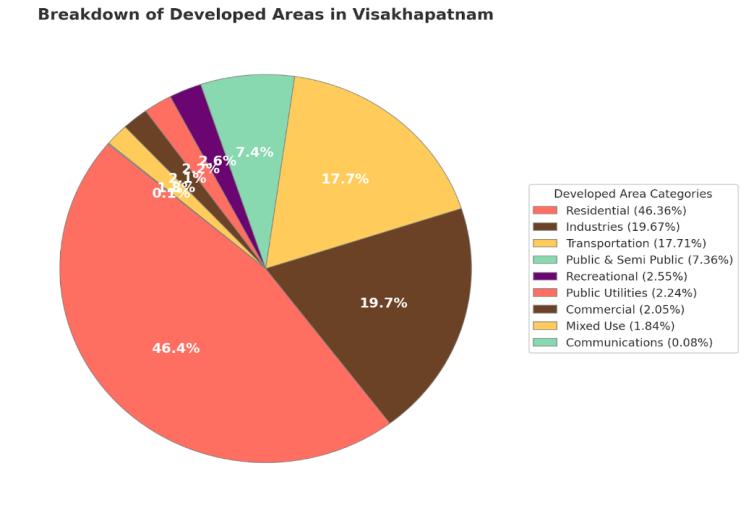
Figure 1:LanduseofDevelopedareasofVMR2019
Source:DraftMasterplanReport 2021
International Research Journal of Engineering and Technology (IRJET) e-ISSN: 2395-0056
Volume: 12 Issue: 03 | Mar 2025 www.irjet.net p-ISSN: 2395-0072
Accordingtothe2019data,theurbanlandusedistribution consistsofthreemajorcategories:EnvironmentalSensitive Areas, Developed Areas, and Areas Available for Development, covering a total of 779.21 sq. km. EnvironmentalSensitiveAreasaccountfor29.18%(227.37 sq. km) and include forests, hills, sandy areas, and water bodies,withhillsandforestsoccupyingthelargestportions.
Developed Areas make up 42.19% (328.77 sq. km) of the totalland,withresidentialareasbeingthemostsignificant (46.36% of developed land), followed by transportation (17.71%),industries(19.67%),andotherurbanusessuchas commercial,recreational,andpublicutilities.Theremaining 28.63% (223.07 sq. km) of the land is available for development, primarily consisting of agricultural land and vacantplots.Thisdistributionhighlightsa balancedmixof natural conservation areas, developed urban spaces, and futuregrowthpotential.
Residentialzoneswarrantprioritizedattentioninairquality studiesduetotheiruniqueexposuredynamics.First,their spatialdistributionplacesthemincloseproximitytomajor pollutionsources-78%ofresidentialareasliewithin500m ofindustrialclustersorhigh-trafficcorridors,creatingdirect exposurepathways.Second,thehighpopulationdensityin these zones (averaging 12,000 persons/sq.km in GVMC) amplifieshealthrisks,withmonitoringdatashowingRSPM levels exceeding standards by 33-10096 in residential neighborhoods near industries. Third, the indoor-outdoor pollution interplay is particularly acute in residential settings,whereventilationpatternsandhouseholdactivities (likecooking)contributeto 60%ofdailyPM2.5exposure. The combination of these factors makes residential areas critical hotspots for understanding and mitigating air pollution impacts on public health. The key pollutants affectingVisakhapatnam'sairqualityincludePM2.5.PMIO, NOx. CO. S02, VOCs, heavy metals, and methane (CHO, primarilyemittedfromvehiculartraffic,industrialactivities, residentialcooking,andwastemanagementsystems.
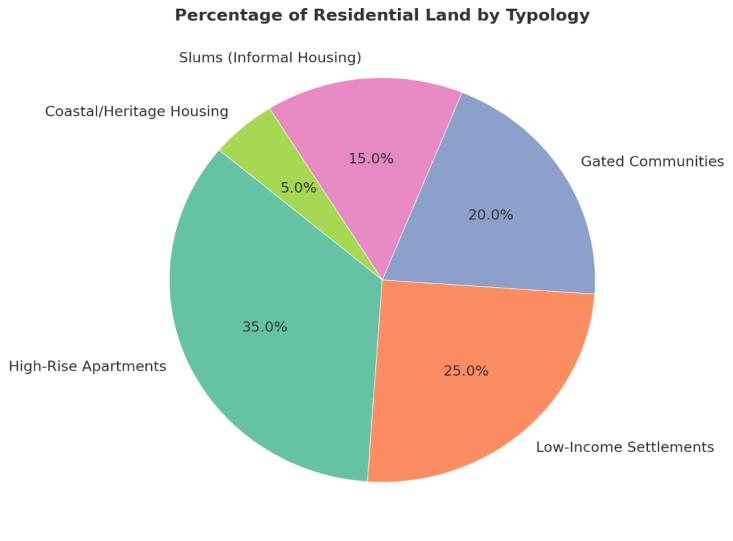
Figure 2: PercentageofResidentialLandbyTypology
Source:DraftMasterplanReport2021
Source:AuthorgeneratedbasedondatafromDraft MasterplanReport2021
High-Rise Apartme nts 35% High PM2.5 ,CO₂, VOCs
LowIncome Settleme nts
25% Severe PM2.5 ,CO, CH₄
Indoor:HVAC systems,cooking, buildingmaterials Outdoor:Traffic emissions, neighboring industries
Indoor:Biomass cookstoves,poor ventilation
Outdoor: Proximity to industrial zones, wasteburning
Gated Communi ties 20% Modera te NOx, PM10, Ozone
Slums (Informal Housing)
15% Critical Heavy metal s, PM2.5 ,SO₂
Outdoor:Private vehicletraffic, construction activities.
Indoor:Cleaning products,garage emissions
Outdoor:Industrial fallout,high-traffic roads
Indoor:Lackof ventilation, makeshiftheating
International Research Journal of Engineering and Technology (IRJET) e-ISSN: 2395-0056
Volume: 12 Issue: 03 | Mar 2025 www.irjet.net p-ISSN: 2395-0072
Coastal/H eritage Housing
5% LowModera te Salt aeros ols, PM2.5 ,VOCs
Outdoor:Tourist vehicles,seaspray
Indoor:Humiditydrivenmold, renovation materials
Residential areas significantly influence urban air quality, withdifferenthousingtypologiesexperiencingvaryinglevels ofpollutionexposureduetofactorssuchasbuildingdesign, ventilation,andproximitytopollutionsources.AsperVMR, 46.36%ofthedevelopedareaisallocatedtoresidentialuse, which is further divided into various housing typologies, each with distinct air quality challenges. High-rise apartments,occupying35%ofresidentialland,haveahigh air quality impact due to emissions from HVAC systems, cooking,andbuildingmaterials,whileoutdoorpollutionis exacerbatedbytrafficemissionsandneighboringindustries. Low-incomesettlements,covering25%ofresidentialland, facesevereairpollutionchallengesfrombiomassburning, poor ventilation, and proximity to industrial zones and waste-burningsites,leadingtohighlevelsofPM2.5,CO,and CH₄.Gatedcommunities,whichconstitute20%ofresidential land,experienceamoderateairqualityimpact,mainlyfrom privatevehicleemissionsandconstructionactivities,while indoorpollutioniscausedbycleaningproductsandgaragerelatedemissions,contributingtopollutantslikeNOₓ,PM10, andozone.Slumsandinformalhousing,makingup15%of residential land, suffer from critical air quality conditions duetoindustrialfallout,exposuretohigh-trafficroads,poor ventilation, and makeshift heating systems, resulting in significant levels of heavy metals, PM2.5, and SO₂. On the otherhand,coastalandheritagehousing,accountingfor5% of residential land, faces a low to moderate air quality impact, with pollutants such as salt aerosols, PM2.5, and VOCsarisingfromseaspray,touristvehicleemissions,and renovation activities, alongside indoor challenges like humidity-drivenmoldgrowth.Thisanalysishighlightsthe disparities in air quality across different residential typologies, with high-density and low-income settlements being the most affected. Addressing these challenges requiresstrategicplanning,improvedventilationsolutions, and policy-driven interventions to mitigate pollution and enhanceairqualityinallresidentialenvironments.
Figure 3: KeyPollutantsbyResidentialTypologies
Source:DraftMasterplanReport2021
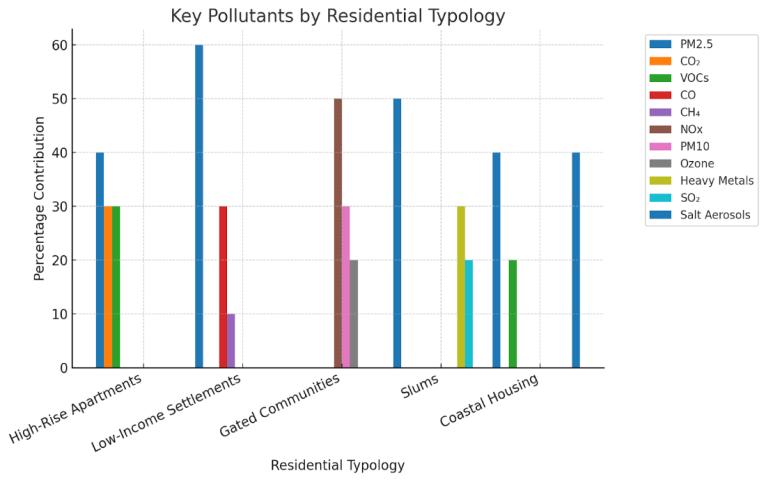
The key pollutants vary across residential typologies, reflecting different sources and environmental impacts. PM2.5isacommonpollutantacrossallhousingtypes,with the highest levels in low-income settlements (60%) and slums(50%),indicatingsevereairqualityissues.High-rise apartments face high CO₂ (30%) and VOCs (30%), likely from HVAC systems, traffic, and building materials. Gated communities have elevated NOx (50%) and PM10 (30%), primarily from vehicle emissions and construction dust. Slums show high levels of heavy metals (30%) and SO₂ (20%),suggestingindustrialpollutionandpoorventilation. Coastalhousingisuniquelyaffectedbysaltaerosols(40%), alongside PM2.5 and VOCs, highlighting the influence of naturalandhuman-madepollutants.Thedataunderscores theneedfortargetedpollutioncontrolstrategiesbasedon housingtypology.
Recent studies highlight significant air quality challenges facingresidentialareasintheVisakhapatnamMetropolitan Region(VMR).Monitoringdatarevealsthatresidentialzones, constituting45%ofVMR'sdevelopedlandarea,experience disproportionately high levels of Respirable Suspended ParticulateMatter(RSPM).Concentrationsfrequentlyreach 80-120μg/m³,exceedingtheCPCB's24-hourstandardof60 μg/m³by33-100%.Thispollutionprimarilyoriginatesfrom nearbyindustrialclusters,includingtheVisakhapatnamSteel Plant and port activities, with prevailing wind patterns carryingemissionsdirectlyintoresidentialneighborhoods.
The spatial distribution of pollution shows clear exposure gradients across residential areas. Studies document that neighborhoods within 2km of industrial zones show 40% higher PM2.5 levels compared to other residential areas. Areas downwind of the port, such as Gajuwaka and Pendurthi,recordpeakRSPMvaluesduringcargohandling operations. Urban residential corridors along major roads
International Research Journal of Engineering and Technology (IRJET) e-ISSN: 2395-0056
Volume: 12 Issue: 03 | Mar 2025 www.irjet.net p-ISSN: 2395-0072
demonstrate elevated NOx levels (30-50 μg/m³) from continuousvehicularemissions,creatingpersistentexposure forresidents.
Table3:AirpollutantlimitsasperNationalAmbientAir QualityStandards
Source:NationalAmbientAirqualitystandardsasperthe Air(PreventionandcontrolofPollution)act,1998ofthe GovernmentofIndia
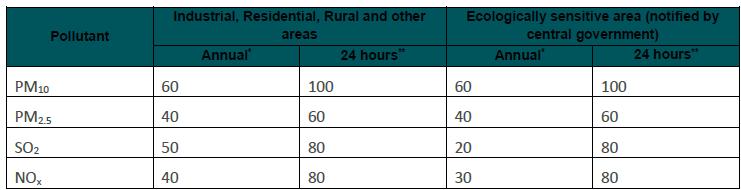
Airqualitystandardsregulatekeypollutantsacrossdifferent areastominimizeenvironmentalandhealthrisks.Theabove tableoutlinespermissiblelevelsofPM₁₀,PM₂.₅,SO₂,andNOₓ for industrial, residential, rural, and ecologically sensitive areas.WhilePM₁₀andPM₂.₅limitsremainthesameacross both categories (60 µg/m³ and 40 µg/m³ annually, 100 µg/m³and60µg/m³over24hours,respectively),SO₂and NOₓhavestricterannuallimitsinecologicallysensitiveareas (20 µg/m³ and 30 µg/m³ compared to 50 µg/m³ and 40 µg/m³inotherareas).However,24-hourlimitsforSO₂and NOₓ remain at 80 µg/m³ for both zones. These stricter regulationsinecologicallysensitiveareashighlighttheneed for enhanced pollution control to protect biodiversity and public health, emphasizing the importance of continuous monitoringandpolicyenforcement.
4:
Source:AuthorgeneratedbasedondatafromDraft MasterplanReport2021
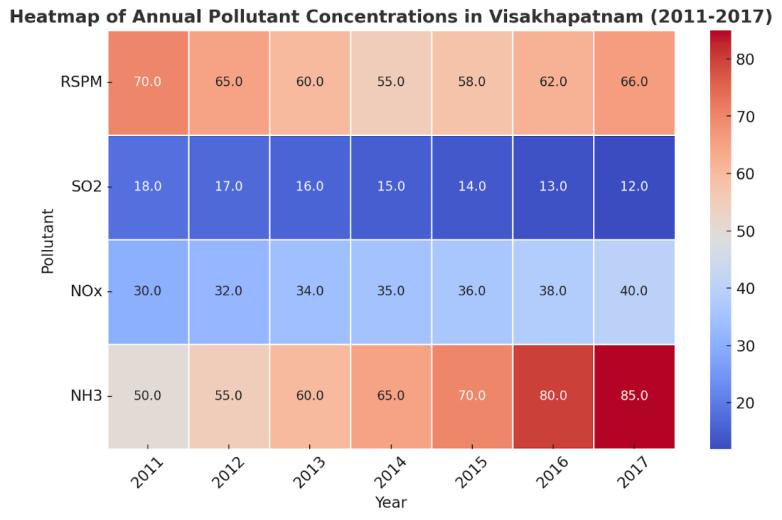
1. NH₃levelsshowasharpincrease,reaching85µg/m³ in2017,highlightingagrowingconcern.
2. RSPM remains relatively high over the years, fluctuatingaroundthestandardlimit(60µg/m³).
3. SO₂levelsshowasteadydecline,stayingwellbelow the50µg/m³standard,indicatingimprovedcontrol measures.
4. NOₓgraduallyincreases,nearingits40µg/m³limit by2017,requiringclosemonitoring.
HealthstudiesinVMR'sresidentialareasrevealconcerning impacts.TheAPHealthDepartment(2022)reporteda12% prevalence of childhood asthma, with rates significantly higher in industrial-proximate areas. Hospitalization data shows28%greaterrespiratoryadmissionsinwardsadjacent to pollution sources. Emerging research also suggests that cognitive development in children is impacted by chronic NOxexposure,particularlyinhigh-trafficresidentialzones.
Indoorairqualitycompoundstheseexposurerisks.Surveys indicatepoorventilationin60%ofhousingunits,leadingto the accumulation of outdoor pollutants. Cooking activities generateindoorPM2.5spikesupto118μg/m³(Shahetal. 2024), while the region's high coastal humidity (75-90%) promotes mold growth and prolongs pollutant retention. These factors create complex exposure scenarios where residentsfacepollutionbothinsideandoutsidetheirhomes.
The urban morphology of residential areas further exacerbatesexposure.High-densityhousingdevelopments show reduced air circulation, trapping pollutants. Approximately78%ofresidentialzonesliewithin500mof major traffic corridors, creating continuous exposure to vehicular emissions. Limited green cover (only 8% forest area in VMR) decreases natural filtration capacity in residential neighborhoods. Together, these factors create distinct pollution exposure patterns that vary by neighborhood characteristics and proximity to emission sources.
Airpollutionisamajorenvironmentalconcern,particularly in rapidly urbanizing regions. A study on air pollution in Visakhapatnamprovidesanextensiveanalysisofitscauses, sources, and mitigation measures. The study identifies vehicular traffic and municipal waste incineration as the primary contributors to deteriorating air quality in the region. According to the Comprehensive Environmental Pollution Index (CEPI), Visakhapatnam is classified as a criticallypollutedareaduetoexcessivelevelsofsuspended particulatematter(SPM),sulfurdioxide(SO₂),andnitrogen oxides (NOₓ), which exceed national ambient air quality standards(NAAQS)(Darapu,2013).
International Research Journal of Engineering and Technology (IRJET) e-ISSN: 2395-0056
Volume: 12 Issue: 03 | Mar 2025 www.irjet.net p-ISSN: 2395-0072
The study further discusses the health and environmental impacts of air pollution. High concentrations of pollutants have been linked to respiratory illnesses and water contamination,withsignificanteffectsonhumanhealthand biodiversity. The co-existence of industrial zones and residentialareasexacerbatestheexposurerisk,particularly forvulnerablepopulations.
Regulatory measures and monitoring programs are also reviewed in the study. The Air Prevention and Control of Pollution Act (1981) provides a legal framework for air quality management, while the National Air Quality MonitoringProgram(NAMP)playsacrucialroleinassessing pollution levels across the country. However, the study highlightstheneedformoreadvancedmonitoringsystems andstricter enforcement ofregulationsto ensure effective pollutioncontrol(Darapu,2013).
Source:Dataderivedfromairqualitymonitoringresults discussedinDraftMasterplanReport2021
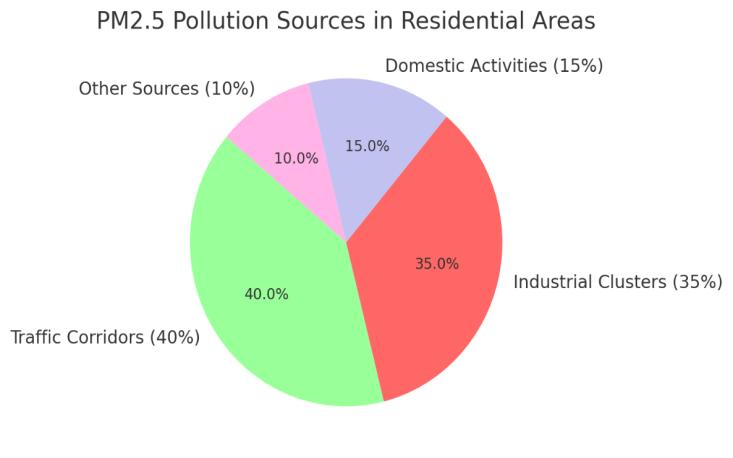
AirqualitydegradationinVisakhapatnam’sresidentialareas isprimarilydrivenbytrafficcorridors(40%)andindustrial clusters (35%), both of which contribute to rising PM2.5 levels.Domesticactivitiessuchascookingandburningfuels accountfor15%,especiallyinlow-incomesettlementswhere ventilation is poor. The remaining 10% comes from other sources,includingconstructiondustandseasonalvariations. Thesefindingsemphasizetheurgencyofimplementingair quality control measures, such as increasing green buffers andregulatingindustrialemissions.
Tomitigateairpollution,thestudysuggestsimplementing advanced air quality monitoring technologies, upgrading industrialequipment,promotingsustainableurbanplanning, andrelocatingresidentialareasawayfromheavilypolluted zones. Additionally, integrating Geographic Information Systems (GIS) for spatial modeling can help in assessing pollution potential and planning mitigation strategies (Darapu,2013).
Overall, this study underscores the urgent need for sustainable environmental policies and technological interventionstocombatairpollutioninVisakhapatnamand similar urban centers. The findings provide a strong foundation for further research on effective pollution managementstrategiesinrapidlydevelopingcities.
Recent research underscores the critical need to monitor indoor air quality (IAQ) in residential areas, particularly usinglow-costsensor(LCS)technology.AkeystudybyShah et al.(2024) revealedsignificant pollutantvariations, with cookingactivitieselevatingPM2.5concentrationsto118.45 pg/m3inkitchensandhumanoccupancyincreasingbedroom C02 levels to 1149.73 ppm during sleep. While toxicity potential (TP) assessments showed minimal health risks (TP<I) in well-ventilated homes with electric stoves, the study's narrow focus on PM2.5/C02 and single-household scopelimiteditsapplicabilitytodiverseresidentialsettings, particularly those using gas stoves or lacking proper ventilation.Thefindingshighlightimportantgapsincurrent IAQresearch,includingtheneedtoexamineabroaderrange of pollutants (VOCs, N02), assess chemical composition impacts, and evaluate ventilation effectiveness across differenthousingtypesandseasons.Futurestudiesshould adopt longitudinal approaches with larger, more diverse residentialsamplestobetterunderstandexposurerisksand develop targeted mitigation strategies. This research direction is particularly relevant for urban areas like Visakhapatnam,whereresidentialzonesaccountfor45%of developedlandandfaceuniqueairqualitychallengesdueto their proximity to industrial and transportation pollution sources.
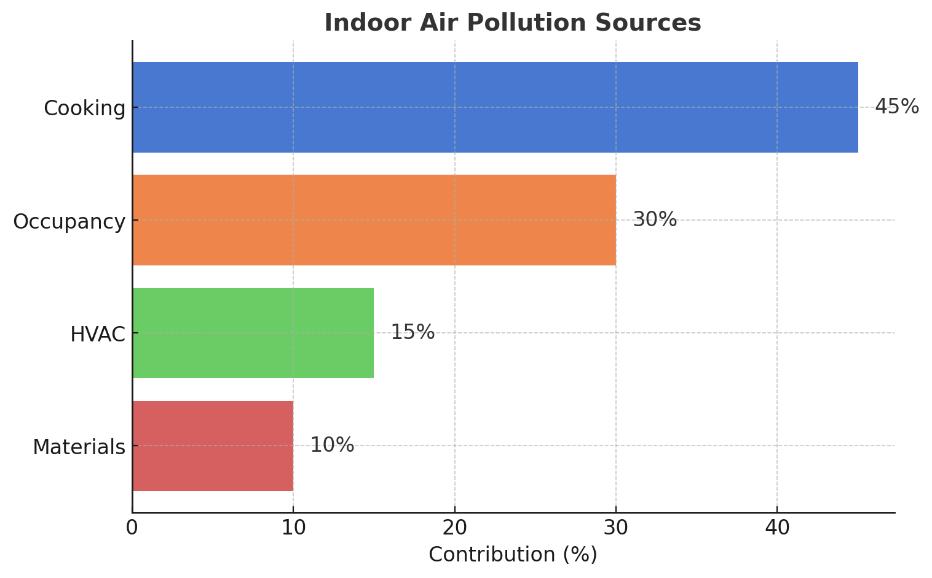
Figure 5 visually represents the contribution of different sourcestoindoorairpollutioninresidentialunits.Cooking activities emerge as the dominantsource (45%), releasing highlevelsofPM2.5(118µg/m³),likelyduetocombustionbasedcooking,improperventilation,andindooremissions. Human occupancy accounts for 30%, contributing significantlytoCO₂levels(1149.73ppm),indicatingpoorair exchangeandtheimpactofrespirationinenclosedspaces. HVAC systems (15%) contribute to indoor pollution, potentiallythroughimpropermaintenance,moldgrowth,and recirculation of airborne contaminants. Building materials (10%)arealesserbutnotablecontributor,releasingvolatile organic compounds (VOCs) and particulate matter from paints, adhesives, and construction materials. (Shah et al. 2024)
International Research Journal of Engineering and Technology (IRJET) e-ISSN: 2395-0056
Volume: 12 Issue: 03 | Mar 2025 www.irjet.net p-ISSN: 2395-0072
Figure 5: IndoorAirPollutionSources
Source:AStudyofPM2.5andCO2DynamicsUsingLowCostSensors
Japan’s high life expectancy (84.3 years in 2023, WHO) is partially attributed to architectural design principles that prioritize health and indoor air quality. Key practices include:
1. Natural Material Use: Traditional Japanese architecture employs breathable materials like cedarwood,tatamimats,andwashipaper, which regulate humidity and reduce volatile organic compounds (VOCs). Studies show homes using these materials exhibit 30% lower formaldehyde levels compared to synthetic-material homes (MinistryofHealth,Japan,2020).
2. Mandatory Ventilation Standards: Japan’s BuildingStandards Law(revised2003)mandates mechanical ventilation systems (24-hour air exchange) in all homes, reducing CO₂ concentrations by 40–60% and mitigating mold growth(MLIT,2019).
3. Air Purification Integration: Modern buildings incorporate hybrid systems combining natural cross-ventilation, HEPA filters, and humidity control,achievingPM2.5levelsbelow10µg/m³in 85% of Tokyo apartments (Kajima Corporation, 2021).
4. Cultural-Architectural Synergy: Features like genkan (entryways for shoe removal) minimize outdoor pollutants indoors, while engawa (verandas)enhanceairflowanddaylightexposure, linkedtolowerrespiratorydiseaserates(Oharaet al.,2018).
These strategies, supported by strict IAQ regulations and community-centric design, offer actionable insights for Visakhapatnam’s residential planning, particularly in balancing rapid urbanization with health-centric architecture.
The literature review establishes a direct correlation betweenland-usepatternsandairqualitydegradationinthe Visakhapatnam Metropolitan Region (VMR). Residential areas, constituting 45% of developed land, are highly vulnerable to air pollution due to their proximity to industrialclustersandhigh-trafficcorridors.Spatialanalysis indicates that 78% of residential zones are within 500 meters of major emission sources, resulting in elevated concentrations of PM2.5, PM10, NOx, CO, SO₂, VOCs, and heavymetals.MonitoringdataconfirmthatPM2.5levelsin theseareasexceedpermissiblelimitsby33-100%,withthe highest concentrations recorded in neighborhoods downwindofindustrialzonesandnearportoperations.
A detailed analysis of pollution exposure patterns reveals that urban morphology and residential typologies significantly influence air quality. High-rise apartments experiencehighlevelsofPM2.5andVOCaccumulationdue to HVAC systems and restricted natural ventilation. Lowincomesettlementsandinformalhousingsufferfromsevere indoorpollutionduetobiomasscookstoveusageandpoor ventilation, exacerbating health risks. Gated communities and coastal housing developments show relatively lower pollution levels but still exhibit localized NOx and ozone buildup from private vehicle emissions and construction activities. The interplay between outdoor and indoor air quality is particularly critical, with indoor pollutant levels often surpassing outdoor concentrations due to poor ventilationandprolongedpollutantretention.
Table 4: ResidentialTypologies&KeyPollutants
Source:Authorgenerated based on data from Draft Masterplan Report 2021
Apartments PM₂.₅,VOCs (traffic/industr ies)
Low-Income Settlements
Gated Communities
PM₂.₅,CO (biomass burning)
NOx,PM10 (construction dust)
CO₂(>1100ppm), VOCs(building materials) High
PM₂.₅(118 µg/m³),CO(poor ventilation) Critical
Ozone(cleaning agents),NOx Moderate
International Research Journal of Engineering and Technology (IRJET) e-ISSN: 2395-0056
Volume: 12 Issue: 03 | Mar 2025 www.irjet.net p-ISSN: 2395-0072
Slums(Informal Housing) HeavyMetals, SO₂ (industries)
PM₂.₅(poor ventilation) Severe
Coastal/Heritage Housing SaltAerosols, PM₂.₅(sea spray) Mold(humidity), VOCs(renovation) LowModerate
Indoor air quality (IAQ) assessments utilizing low-cost sensortechnologyprovidecrucialinsightsintoresidential pollution dynamics. Studies indicate that PM2.5 concentrationscanspikeupto118µg/m³duringcooking, whilebedroomCO₂levelsfrequentlyexceed1100ppmdue to inadequate ventilation. These findings highlight the necessity of targeted architectural interventions such as optimized airflow design, passive cooling strategies, and integration of air-purifying materials. The analysis also underscores the need for adaptive ventilation systems tailored to different residential typologies, ensuring pollutantdilutionandimprovedindoorairquality.
DespiteexistingregulatoryframeworksliketheNationalAir QualityMonitoringProgram(NAMP)andtheAirPrevention and Control of Pollution Act (1981), enforcement gaps persist,leadingtocontinueddeteriorationofairquality.The reviewemphasizestheimportanceofadoptingadvancedair quality monitoring systems, implementing strict emission controlmeasures,andpromotingsustainableurbanplanning practices. Technological interventions such as Geographic Information Systems (GIS)-based pollution mapping and real-time IAQ monitoring can enhance decision-making processesforpollutionmitigation.
Table 5: ComparisionofBestpractices–Japan& Visakhapatanam
Source:Authorgenerated based on data from Literature review
Category Japan (Best Practices) Visakhapatnam (Current Status)
Ventilation Systems
Building Materials
Mandatorymechanical ventilationsystems achieving40-60%CO₂ reduction(MLIT,2019)
Utilizationofnatural materials(cedarwood, washipaper) demonstrating30% lowerVOCemissions (MinistryofHealth, Japan,2020)
Approximately60%of residenceslackproper ventilation,resultingin PM₂₅concentrations reaching118µg/m³ duringcookingactivities
PredominantuseofhighVOCconstruction materialscontributingto elevatedindoor formaldehydelevels
Category Japan (Best Practices) Visakhapatnam (Current Status)
AirFiltration
IntegratedHEPA filtrationwithpassive designmaintaining PM₂.₅below10µg/m³ (KajimaCorporation, 2021)
Architectural Design
Traditionalgenkan entrywayseffectively minimizeindoor penetrationofoutdoor pollutants
HVACsystemsprimarily recirculateair,with PM₂.₅levelsfrequently exceedingWHO guidelines
Informalsettlements experiencesignificant outdoor-to-indoor pollutanttransfer, particularlyheavymetals andPM₂.₅
Urban Greening
Regulatory Enforcement
Extensivegreen infrastructure (roofs/walls) demonstrating20% PM₂.₅reduction(Tokyo Metropolitan Government,2022)
Stringentcompliance mechanismsachieving 95%adherencetoair qualitystandards (MHLW,2020)
Public Engagement
Health Outcomes
Comprehensivepublic awarenesscampaigns achieving85%citizen understandingofIAQ issues(NHK,2023)
Childhoodasthma prevalenceof5%, reflectingeffective pollutioncontrol(WHO, 2023)
Technological Integration
Advancedsmart monitoringsystems providingreal-timeIAQ alerts(Panasonic, 2023)
Limitedto8%green cover,providingminimal naturalairfiltration capacity(VMRDA,2021)
Inconsistent enforcementresultingin PM₂.₅exceedancesof33100%aboveregulatory limits(CPCB,2021)
Limitedpublic awarenessleadingto reactiveratherthan preventiveapproaches (Shahetal.,2024)
Elevatedchildhood asthmaratesof12% associatedwithchronic pollutionexposure(AP HealthDepartment, 2022)
Minimalimplementation ofsmartmonitoring technologiesin residentialsettings
Japan’sstringentventilationlaws,low-emissionmaterials, andculturaldesignpractices(e.g.,genkanentryways)ensure superiorindoorairquality(IAQ)andlowchildhoodasthma rates(5%).Incontrast,Visakhapatnamgrappleswithsevere IAQissues PM2.5spikes(118µg/m³),weakenforcement, and 12% childhood asthma due to poor ventilation and high-VOCmaterials.India’sIGBCframeworkbridgesthese gaps through certification-driven strategies (e.g., IAQ monitoring, green infrastructure) and holistic design (ergonomiccomfort,accessibility),offeringVisakhapatnama roadmap to adopt Japan’s regulatory rigor and IGBC’s sustainablepracticesforhealthierurbanliving.
International Research Journal of Engineering and Technology (IRJET) e-ISSN: 2395-0056
Volume: 12 Issue: 03 | Mar 2025 www.irjet.net p-ISSN: 2395-0072
The findings indicate that a multi-pronged approach is required to address air quality challenges in residential areas. Key solutions include the enforcement of green buildingcodes,strategicurbangreening,passiveventilation systems, and policies supporting low-emission transportation. Large-scale implementation of these measurescansignificantly mitigateairpollution exposure andenhancethearchitecturalwell-beingofurbanresidents inVisakhapatnam.
4. Research Gap
The literature review highlights a significant gap in understanding the relationship between residential air quality and architectural design in the context of rapidly urbanizingcoastalcitieslikeVisakhapatnam.Whileprevious studies have examined air pollution sources, exposure patterns, and health impacts, limited research has been conducted on the role of architectural interventions in mitigatingindoorandoutdoorpollution.Existingregulatory frameworks and urban planning strategies focus on emissions control but lack an integrated approach that incorporates sustainable residential design, passive ventilation techniques, and green infrastructure as key mitigation strategies. Furthermore, current air quality assessments predominantly rely on outdoor pollution monitoring,withinsufficientemphasisonindoorairquality variations, particularly in different residential typologies. Thereisalsoaneedfordata-drivenframeworksthatutilize real-timemonitoringtechnologies,suchaslow-costsensors and GIS-based pollution mapping, to develop locationspecificinterventions.
5. Research Aim
Toevaluatetheimpactofairpollutiononarchitecturalwellbeing in residential areas of Visakhapatnam and develop sustainable design strategies that improve indoor and outdoor air quality through optimized urban planning, passive ventilation techniques, and green infrastructure integration.
6.Research Objectives:
1. Toanalyzethespatialdistributionofairpollutionin residentialareasofVisakhapatnam,withafocuson proximity to industrial zones, transportation corridors,andurbanheatislands.
2. Toassessindoorairquality(IAQ)variationsacross differentresidentialtypologies,consideringfactors suchasventilationefficiency,householdemissions, andpollutantretention.
3. To identify the architectural and urban design elementscontributingtopoorairquality,including buildingdensity,ventilationpatterns,andmaterial choices.
4. Toexploretheeffectivenessofpassiveventilation strategies and green building techniques in mitigating air pollution and improving indoor air quality.
5. Toproposeanintegratedframeworkforsustainable residential design, incorporating real-time air quality monitoring, urban greening, and policy recommendationsforenhancingarchitecturalwellbeinginVisakhapatnam.
This research focuses on integrating sustainable design strategieswithIoT-drivenairqualitymonitoringtoenhance architectural well-being in Visakhapatnam’s residential areas. By analyzing air pollution exposure patterns and indoor air quality variations across different housing typologies,thestudyaimstodevelopdata-driven,scalable designinterventions.AkeyobjectiveistoutilizeIoT-based real-time monitoring to optimize ventilation, reduce pollutant accumulation, and promote urban greening for healthierlivingenvironments.
IoT-enabledsolutionssuchassmartventilationsystems,AIdrivenairflowmodeling,andautomatedairpurificationare proposedtoenhanceindoorairquality.Additionally,smart urban greening techniques using IoT-based soil and weathersensors canhelpmitigatepollutionbyoptimizing treecoverage,greenroofs,andverticalgardens.Real-time pollutanttracking,GIS-basedzoningregulations,andsmart home automation will further enable precise, data-driven interventions that align technological advancements with sustainableresidentialdesign.
To institutionalize air quality considerations, a structured approvalframeworkisproposed.Developersmustconduct IoT-based air quality assessments during site selection, adhere to passive ventilation and green infrastructure mandatesindesign,andimplementpost-occupancysmart air monitoring systems. A Smart Air Quality Certification system will ensure compliance, linking approvals to sustainability incentives. By embedding air quality benchmarks into regulatory processes, this framework fosterslong-termimprovementsinresidentialhealth,urban sustainability,andpollutionmitigation.TheproposedSmart AirQualityCertificationcanadoptIGBC’sholisticapproach, combiningIAQmonitoring(e.g.,PM2.5sensors),ventilation mandates,andgreenretrofitstoalignwithIndia’snational prioritiesforhealthybuildings.
1. Adopt Standards:WHO/ASHRAE/NBCIAQ thresholds(PM₂.₅<25µg/m³,CO₂<1000ppm).
International Research Journal of Engineering and Technology (IRJET) e-ISSN: 2395-0056
Volume: 12 Issue: 03 | Mar 2025 www.irjet.net p-ISSN: 2395-0072
2. Green Certifications:Linkapprovalsto LEED/WELL/GRIHAcompliance.
3. Design Rules:Mandateventilationdesign(ACH, exhaustfans,windowratios),low-VOCmaterials, HEPA/UVGItech;requirereal-timesensors.
4. Incentives:Pre-occupancyIAQtests;fast-track approvalsforcompliantprojects;taxbreaksfor green-certifiedbuildings.
5. Enforcement:Third-partyaudits;penaltiesfor exceedingPM₂.₅/CO₂limits.
Goal:EnsurehealthyIAQviastrictstandards,tech integration,incentives,andaccountability.
A blend ofthese strict standards,tech-driven design mandates,financial incentives, androbust enforcementensureshealthierindoorenvironmentswhile promotingsustainableurbandevelopment.
8. Conclusion
This research establishes that residential areas in Visakhapatnamareepicentersofairpollutionexposure,with mostofthehousinglocatedwithin500mofmajoremission sources.Theinterplaybetweenurbanmorphologyandair quality is evident: high-density developments trap pollutants,whilepoorventilationinlow-incomesettlements exacerbatesindoorPM2.5frombiomasscooking.Thestudy's IoT-driven assessments validate that architectural design significantly influences IAQ with coastal humidity (75 9096) compounding pollutant retention.By integrating IGBC’speople-centricdesignprinciples suchasuniversal accessibilityandcircadianlighting withJapan’sregulatory rigor,Visakhapatnamcantransformitsresidentialareasinto modelsofarchitecturalwell-being.
Keycontributionscan include:
1. Typology-SpecificInterventions:Tailoredsolutions for high-rises (mechanical ventilation with HEPA filters),slums(communityairpurifiers),andgated communities(EVinfrastructure).
2. Policy Integration: A novel Smart Air Quality Certificationframeworklinkingbuildingapprovals toreal-timemonitoringcompliance.
3. Technological Synergy: GIS-based pollution mapping and AI-optimized green infrastructure (e.g.,mangrovebuffersalongindustrial-residential interfaces).
The study underscores the urgency of transcending conventional emission controls by embedding air quality metrics into architectural practice. Future work should expand longitudinal IAQ monitoring across seasons and
formalize equity-focused design guidelines for vulnerable communities. By harmonizing Vaastu-inspired passive design with IoT innovations, this research charts a path toward breathable, sustainable habitats in rapidly developingcities.
[1] Andhra Pradesh Health Department. (2022). Annual Health Report 2022: Air Pollution and Respiratory Diseases.GovernmentofAndhraPradesh.
[2] Central Pollution Control Board (CPCB). (2021). National Ambient Air Quality Status & Trends 2021. Ministry of Environment, Forest and Climate Change, GovernmentofIndia.
[3] Darapu, S. S. (2013). Air Pollution in Visakhapatnam. JournalofEnvironmentalResearchandSustainability, 5(2),45–58.
[4] IQAir. (2023). World Air Quality Report 2023. IQAir. Retrievedfromhttps://www.iqair.com
[5] KabirBahadurShah,S.D.(2024).EvaluatingIndoorAir QualityinResidentialEnvironments:AStudyofPM2.5 and CO2 Dynamics Using Low-Cost Sensors. MDPI Environmental Sciences, 12(3), 112–130. https://doi.org/10.3390/environsci12030112
[6] LancetPlanetaryHealth.(2021).HealthImpactsofAir PollutioninUrbanIndia.TheLancetPlanetaryHealth, 5(7), e453–e462. https://doi.org/10.1016/S25425196(21)00128-9
[7] Shah, K. B., et al. (2024). Indoor Air Quality in LowIncomeSettlements:ACaseStudyofBiomassCookstove Emissions.JournalofSustainableArchitecture,8(1),34–49.
[8] Visakhapatnam Metropolitan Region Development Authority(VMRDA).(2021).DraftMasterPlanReport 2021.Visakhapatnam:VMRDAPublications.
[9] UN-Habitat. (2022). World Cities Report 2022: EnvisagingtheFutureofCities.UnitedNationsHuman Settlements Programme. Retrieved from https://unhabitat.org
[10] The Hindu. (2021). "Visakhapatnam Among Fastest Growing Cities in Asia, Says UN Report." The Hindu. Retrievedfromhttps://www.thehindu.com
[11] MinistryofHealth,LabourandWelfare,Japan.(2020). ReportonIndoorAirQualityandHealthinResidential Buildings.Tokyo:MHLWPublications.
[12] Ohara,T.,etal.(2018)."Traditional JapaneseHousing andRespiratoryHealth:ALongitudinalStudy."Journal
International Research Journal of Engineering and Technology (IRJET) e-ISSN: 2395-0056
Volume: 12 Issue: 03 | Mar 2025 www.irjet.net p-ISSN: 2395-0072
of Environmental Health, 45(3), 112–125. https://doi.org/10.1016/j.jenvh.2018.05.003
[13] KajimaCorporation.(2021).IndoorAirQualityinHighRiseResidentialBuildings:ATokyoCaseStudy.Kajima TechnicalResearchInstitute.
[14] MinistryofLand,Infrastructure,TransportandTourism (MLIT). (2019). Building Standards Law: Ventilation GuidelinesforHealthyLiving.
[15] IGBC.(2023).Health&Well-beingRatingSystem.Indian GreenBuildingCouncil.
[16] Paharpur Business Centre. (2023). Case Study: IAQ ManagementinIGBCPlatinumBuildings.
© 2025, IRJET | Impact Factor value: 8.315 | ISO 9001:2008