
International Research Journal of Engineering and Technology (IRJET) e-ISSN: 2395-0056
Volume: 13 Issue: 02 | Feb 2026 www.irjet.net p-ISSN: 2395-0072
International Research Journal of Engineering and Technology (IRJET) e-ISSN: 2395-0056
Volume: 13 Issue: 02 | Feb 2026 www.irjet.net p-ISSN: 2395-0072
V.Varshini1, V.Pallavi2, K. Vishnu Kumar3, M.Sahithi4
1234Department of Information Technology, TKR College of Engineering and Technology, Telangana, India
Abstract - Peanut farming is highly vulnerable to pest attacks, whichleadtosignificantyieldlossesandreducedcrop quality. Traditional pest detection methods rely on manual observation, which is time-consuming, inaccurate, and often unable to identify early-stage infestations. To address this challenge, this project presents an Enhanced Pest ManagementSystem forPeanutFarmingusingConvolutional Neural Networks (CNN). The system uses deep learning techniques to analyse leaf images, identify pest-infected regions, andclassifypesttypes withhighaccuracy.Farmersor userscanuploadpeanutplantimagesthroughtheapplication, and the CNN model processes these images to detect the presence of pests. The system generates a prediction along with confidence levels, enabling early interventionand timely pest control. Additionally, the platform stores image data, prediction results, and timestamps, allowing continuous monitoring of crop health. The model is trained on a curated dataset of peanut crop pests, ensuring reliable detection even under varying lighting and environmental conditions. By integrating deep learning with an easy-to-use web interface, this solution provides a fast, accurate, and scalable approach topestmanagement.Thesystemenhancesdecisionmakingfor farmers, reduces reliance on manual inspection, and contributes to improved yield and sustainable agricultural practices.
Key Words: Peanut Farming, Pest Detection, Convolutional Neural Network, Deep Learning, Image Classification, Agriculture Automation
1. INTRODUCTION
Agriculture plays a vital role in sustaining human and livestock populations worldwide and remains a key contributor to national economies. In recent years, the agricultural sector has increasingly adopted advanced technologies such as Artificial Intelligence (AI) and the InternetofThings(IoT)toenhanceproductivity,efficiency, andsustainability.Agriculturealsoservesasamajorsource of raw materials used in the production of food products, chemicals, and pharmaceuticals. Although the total agriculturallandareaexpandedbyonlyabout15%fromthe 1960stotheearly2000s,globalagriculturaloutputnearly tripled due to the adoption of fertilizers, pesticides, improvedcropvarieties,andprecisionfarmingtechniques.
However,inrecentdecades,thegrowthrateofagricultural production has slowed due to challenges such as climate change, population growth, urbanization, and labor shortages.Amongthesechallenges,pestinfestationremains
oneofthemostcriticalfactorsaffectingcropproductivity. Pests, insects, and microbial diseases significantly reduce crop yield and quality, resulting in economic losses for farmers. Even small improvements in pest detection and control can lead to substantial gains in productivity and profitability. This study focuses on the application of machinelearningandConvolutionalNeuralNetworks(CNN) foreffectivepestdetectioninpeanutfarming,asCNNmodels are highly suitable for image classification, segmentation, andobjectrecognitiontasks.
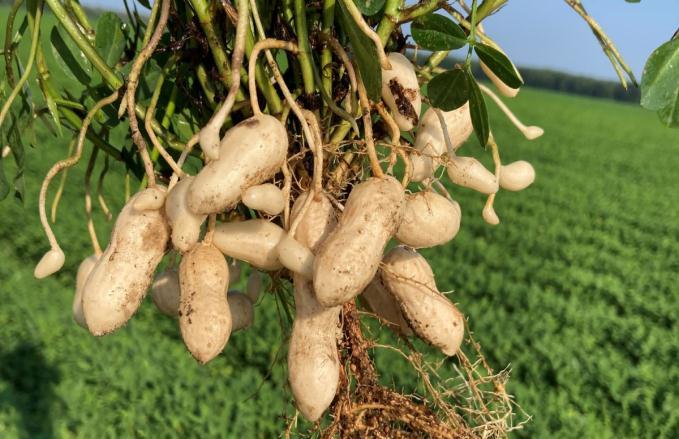
Peanut (groundnut) farming plays a vital role in the agricultural economy, especially in countries where it is a major source of edible oil and farmer income. However, peanutcropsarehighlyvulnerabletoawiderangeofpests such as aphids, leaf miners, thrips, and caterpillars. These pests cause severe damage to leaves, stems, and pods, leadingtosignificantyieldlossesandreducedcropquality. Traditional pest management methods rely heavily on manual field inspection and blanket pesticide application. Theseapproachesaretime-consuming,labour-intensive,and often inaccurate, resulting in delayed pest detection and excessive chemical usage. Overuse of pesticides not only increases production costs but also harms soil health, beneficial insects, and the environment. Hence, there is a strongneedforanintelligent,precise,andeco-friendlypest management system that can assist farmers in identifying pestsearlyandtakingtimelyaction.
International Research Journal of Engineering and Technology (IRJET) e-ISSN: 2395-0056
Volume: 13 Issue: 02 | Feb 2026 www.irjet.net p-ISSN: 2395-0072
ConvolutionalNeuralNetworks(CNN),apowerfuldeep learningtechnique,hasemergedasaneffectivesolutionfor image-basedpestdetectioninagriculture.CNNsarecapable of automatically extracting meaningful features from crop images,suchastexture,shape,and colourpatterns,which are critical for distinguishing between healthy leaves and pest-infestedones.Inenhancedpestmanagementforpeanut farming, CNN models analyse images of peanut leaves captured using smartphones, cameras, or drones. The systemaccuratelyclassifiesdifferentpesttypesandassesses the severity of infestation in real time. This enables early diagnosis, targeted pesticide application, and timely decision-making.ByintegratingCNN-basedpestdetection with smart farming practices, farmers can reduce crop losses, minimize chemical usage, and improve overall productivity, leading to more sustainable and profitable peanutfarming.
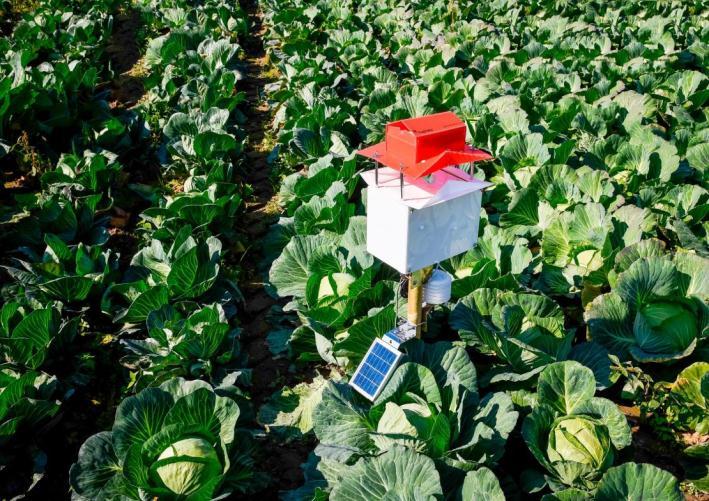
Theproposedsystemintroducesanadvanceddouble-layer ConvolutionalNeuralNetwork(CNN)toautomaticallydetect and classify pest infestations in peanut crops with high accuracy.Insteadofrelyingonmanualinspection,thesystem processesimagesofpeanutleavescapturedbyfarmersand analyzesthemthroughtwospecializedCNNlayers.Thefirst layerfocusesonextractingfine,localfeaturessuchassmall spots, bites, and texture changes, while the second layer captureslarge-scalepatternsand overallleafstructure.By combining these multi-scale features through a fusion mechanism,themodelbecomesmorerobustandcapableof identifyingpestsevenunderchallengingconditionslikepoor lighting, complex backgrounds, and partial occlusion. A preprocessing module enhances image quality, and a
classification module predicts pest type along with confidence levels. In addition to accurate detection, the systemincludesaknowledgebasethatprovidespest-specific information, preventive measures, and treatment recommendationsbasedonthepredictionresult.Adatabase storesalluserimages,predictions,andtimestamps,enabling farmers to track pest trends over time. The system is accessiblethroughauser-friendlyinterfacewherefarmers can upload images and instantly receive results. By leveraging deep learning, feature fusion, and intelligent decision support, the proposed system offers a powerful, automatedsolutiontoimprovepeanutcrophealth,reduce manual effort, and support smarter pest management practices.
ThesystemarchitectureforEnhancedPestManagementin PeanutFarmingusingCNNisdesignedasasequentialand intelligentpipelinethatensuresaccuratepestdetectionand decision support. The process begins with the image acquisition module, where images of peanut leaves are captured using smartphones, digital cameras, or dronemountedcameras.Theseimagesarethenforwardedtothe preprocessing module, which performs noise removal, resizing,normalization,andimageenhancementtoimprove data quality. The processed images are fed into the CNNbased feature extraction and classification module, where deepconvolutionallayersautomaticallylearnvisualpatterns relatedtopestpresenceandseverity.ThetrainedCNNmodel classifiestheimagesintohealthyorpest-infectedcategories andidentifiesthespecificpesttype.Theclassificationresults are sent to the decision support module, which provides actionableinsightssuchaspestalerts,recommendedcontrol measures,andoptimalpesticideusage.Finally,theoutputis displayedthroughafarmer-friendlyinterface,enablingrealtimemonitoring,earlyintervention,reducedchemicalusage, andimprovedcropyieldinpeanutfarming.
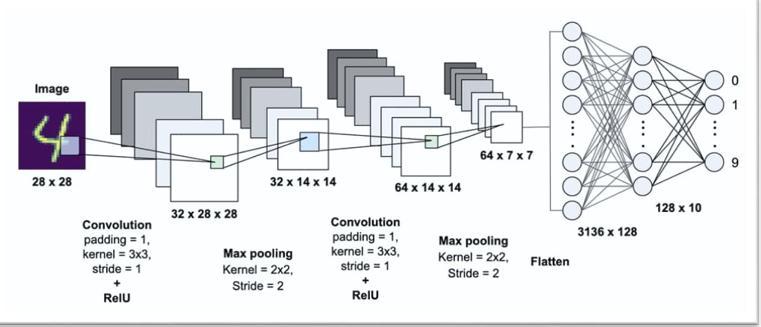
Fig -3: System Architecture
Theproposedsystemintroducesanintelligentpestdetection modulebasedonConvolutionalNeuralNetworks(CNN)to automatically identify pests affecting peanut crops. High-
International Research Journal of Engineering and Technology (IRJET) e-ISSN: 2395-0056
Volume: 13 Issue: 02 | Feb 2026 www.irjet.net p-ISSN: 2395-0072
resolution images of peanut leaves are captured using smartphones,fieldcameras,ordronesandpassedthrough preprocessing steps such as resizing, noise removal, and normalization.TheCNNmodellearnsdiscriminativefeatures fromtheseimagesandaccuratelyclassifiesthemintohealthy orpest-infestedcategories,alongwithidentifyingthespecific pest type. This automated approach ensures early pest detection, reduces dependency on manual inspection, and improves detection accuracy even under varying field conditions.
BasedontheCNNclassificationresults,theproposedsystem integratesasmartdecisionsupportmechanismthatprovides real-timealertsandpestmanagementrecommendationsto farmers. Instead of blanket pesticide spraying, the system suggests targeted and optimized control measures, minimizingchemicalusageandenvironmentalimpact.The resultsandrecommendationsaredisplayedthroughasimple, farmer-friendlyinterface,enablingquickunderstandingand action. Overall, the proposed system enhances crop productivity,lowersoperationalcosts,promoteseco-friendly farmingpractices,andsupportssustainablepeanutfarming throughintelligentautomation.
It describes the practical implementation of the proposed ConvolutionalNeuralNetwork(CNN)–basedpestdetection and classification system for peanut farming. The implementationfocusesonconvertingtheconceptualdesign andarchitectureintoaworkingsystemcapableofidentifying, classifying,andpredictingpestspeciesfromimageswithhigh accuracy.Themethodologyfollowsamodularandsystematic approach, ensuring effective data handling, robust model training,accurateprediction,anduser-friendlydeployment. The completesystem is divided into well-defined modules suchasdataacquisition,preprocessing,modelconstruction, training, evaluation, deployment, and result visualization, enablingeasytesting,validation,andfutureenhancements.
Thesystemisimplementedusingalayeredarchitectureto ensure scalability, maintainability, and performance. The architectureconsistsofthefollowinglayers: PresentationLayer–Web-baseduserinterfaceApplication Layer – Model inference and request handling Machine Learning Layer – CNN model training and prediction Data Layer – Dataset storage and preprocessing pipeline DeploymentLayer–Flask/Django-basedwebapplicationthis layered design ensures clear separation of responsibilities andsmoothinteractionbetweencomponents.
The frontend provides an interactive and user-friendly interface for farmers and agricultural stakeholders. Key functionalitiesinclude:Imageuploadfacilityforpestimages. Display of detected pest name and classification result. 12 Navigation pages such as Home, Abstract, Detection, and TechnicalDetails.ResponsivedesignusingHTML,CSS,and Bootstrap for accessibility across devices. The frontend communicates securely with the backend using HTTP requestsanddisplaysrealtimeresultsreturnedbytheCNN model
Thebackendactsasabridgebetweenthefrontendandthe trainedCNNmodel.Implementationdetails:Developedusing Python with Flask/Django framework. Handles image uploads and input validation. Preprocesses images before passingthemtothemodel.InvokesthetrainedCNNmodel forprediction.Returnsclassificationresultstothefrontend. Thislayerensuresefficientrequesthandling,smoothmodel inference,andsecuredataflow.
The experimental results demonstrate that the proposed CNN-basedpestmanagementsystemperformseffectivelyin detectingandclassifyingpestsinpeanutcrops.Thetrained CNN model achieved high classification accuracy, with improved precision and recall values, indicating reliable identification of both healthy and pest-infested leaves. Performance evaluation using metrics such as accuracy, precision,recall,F1-score,andconfusionmatrixshowsthat the system minimizes false positives and false negatives, ensuringdependablepestdetection.Themodelalsoexhibits robust performance under varyinglighting conditions and background noise, validating its suitability for real-field deployment.Overall,theresultsconfirmthattheproposed systemenhancesearlypestdetection,reducescropdamage, andsupportstimely,precisepestcontroldecisions,leadingto improvedyieldandsustainablepeanutfarming.
Thisprojectsuccessfullydemonstratestheeffectivenessof CNN-basedpestdetectioninenhancingpestmanagementfor peanut farming. By automating the identification and classificationofpestsfromleafimages,theproposedsystem overcomesthelimitationsoftraditionalmanualinspection methods. The integration of image preprocessing, deep learning-based feature extraction, and intelligent classification enables early and accurate pest detection, reducing crop losses and unnecessary pesticide usage. Furthermore, the decision support mechanism assists farmersintakingtimelyandtargetedpestcontrolmeasures,
International Research Journal of Engineering and Technology (IRJET) e-ISSN: 2395-0056
Volume: 13 Issue: 02 | Feb 2026 www.irjet.net p-ISSN: 2395-0072
promotingeco-friendlyandsustainableagriculturalpractices. Overall, the system contributes to improved crop productivity, cost efficiency, and the adoption of smart farmingtechnologiesinmodernpeanutcultivation.
The future scope of the proposed CNN-based pest management system can be extended by integrating IoT sensorsanddrone-basedimagingforcontinuousandlargescalefieldmonitoring.Advanceddeeplearningmodelsand transfer learning techniques can be employed to improve detectionaccuracyacrossdifferentpestspecies,cropgrowth stages,andenvironmentalconditions.Thesystemcanalso be enhanced with real-time weather data and soil information to predict pest outbreaks and recommend preventivemeasures.Additionally,deployingthemodelasa mobileapplicationorcloud-basedplatformwouldmakeit moreaccessibletofarmers,enablinginstantpestdiagnosis and advisory services. These enhancements will further strengthenprecisionagriculturepractices,reducechemical dependency,andsupportsustainableandintelligentpeanut farminginthefuture.
Therearemanypeoplewhohelpedusdirectlyorindirectly inthesuccessful completion ofour project,andwewould liketotakethisopportunitytoexpressoursinceregratitude toallofthem.Weareextremelythankfulandindebtedtoour project supervisor, Mrs. Y. Uma, Assistant Professor, Department of Information Technology, TKR College of Engineering and Technology, for her constant guidance, encouragement,andmoralsupportthroughouttheproject. WeextendourheartfeltthankstoDr.N.satyanarayana,Head oftheDepartment,DepartmentofInformationTechnology, forhiscontinuousencouragementandsupport.Wearealso sincerelygrateful toDr.D.V.RaviShankar,Principal,TKR College of Engineering and Technology, for his timely supportandvaluablesuggestionsduringthecourseofthe project. Finally, we would like to thank all the faculty and staff of the Department of Information Technology, along withourparentsandfriends,whosupportedusdirectlyor indirectlyincompletingthisprojectsuccessfully.
[1] Mohanty,S.P.,Hughes,D.P.,&Salathé,M.,“Usingdeep learning for image-based plant disease detection,” Frontiers in Plant Science, vol. 7, pp. 1–10, 2016. DOI:https://doi.org/10.3389/fpls.2016.01419
[2] Ferentinos, K. P., “Deep learning models for plant disease detection and diagnosis,” Computers and ElectronicsinAgriculture,vol.145,pp.311–318,2018. DOI:https://doi.org/10.1016/j.compag.2018.01.009
[3] Lu,Y.,Yi,S.,Zeng,N.,Liu,Y.,&Zhang,Y.,“Identification of rice diseases using deep convolutional neural networks,” Neurocomputing, vol. 267, pp. 378–384, 2017.
DOI:https://doi.org/10.1016/j.neucom.2017.06.023
[4] Picon, A., Alvarez-Gila, A., Seitz, M., Ortiz-Barredo, A., Echazarra, J., & Johannes, A., “Crop conditional convolutionalneuralnetworksformassivemulti-crop plant disease classification over cell phone acquired images,”ComputersandElectronicsinAgriculture,vol. 167,2019.
DOI:https://doi.org/10.1016/j.compag.2019.105093