
International Research Journal of Engineering and Technology (IRJET) e-ISSN:2395-0056
Volume: 12 Issue: 03 | Mar 2025 www.irjet.net p-ISSN:2395-0072
International Research Journal of Engineering and Technology (IRJET) e-ISSN:2395-0056
Volume: 12 Issue: 03 | Mar 2025 www.irjet.net p-ISSN:2395-0072
Dr. S. Venkatanarayanan (Prof /EEE)1 , A N.Nagarjun2 , M.Prabhakar raj3 , S.Ram kailash4 , S. Vinoth kumar5
1 Prof /EEE, Department of Electricals & Electronics Engineering, K.L.N. College of Engineering, Tamil Nadu, India 2, 3, 4, 5 UG Scholar, Department of Electricals & Electronics Engineering, K.L.N. College of Engineering, Tamil Nadu, India
Abstract - Energy auditing in MSME clusters identifies energy inefficiencies, helping businesses reduce consumption and costs. By upgrading equipment and improving processes, MSMEs can save energy, cut expenses, and lower their environmental impact. Audits also offer access to government incentives, promoting sustainableoperationsandlong-termsavings.
Keywords- Energy auditing, MSME clusters, Energy inefficiencies, Consumption reduction, Cost savings, Equipment upgrades, Process improvement, Environmentalimpact,Governmentincentives,Sustainable operations
Energy auditing in MSME (Micro, Small, and Medium Enterprises) clusters is a crucial process aimed at optimizing energyuse, enhancing efficiency,and reducing operationalcostswithinindustriesthatareoftenresourceconstrained. MSMEs, which form the backbone of many economies, typically operate with limited access to advanced technologies and often face challenges in managing energy consumption effectively. Given the growing concerns over energy conservation, cost management, and environmental sustainability, energy auditing has become an essential tool for improving the competitiveness of MSMEs while supporting their sustainablegrowth.
The energy audit process in MSME clusters involves a systematic examination of the energy use patterns across variousindustries,identifyingareasofenergywastage,and recommending energy-efficient solutions. The audit encompasses evaluating existing energy infrastructure, machinery, lighting systems, heating, and cooling processes, as well as production methods. By applying analyticaltoolssuchasloadanalysis,energymodeling,and thermal imaging, the audit provides an in-depth understanding of energy usage and its impact on overall operationalefficiency.
ThemainaimofenergyauditinginMSMEclusters istopromotetheadoptionofenergy-efficienttechnologies and practices that lead to cost savings, reduced carbon footprints,andimprovedsustainability.Inaddition,energy audits enable MSMEs to comply with environmental
regulations, access energy-saving incentives, and gain a competitive advantage in the marketplace. Despite the benefits,theimplementationofenergy-savingmeasuresin MSMEs may face challenges such as financial constraints and limited technical expertise. Nonetheless, the importance of energy audits in driving operational efficiencyandsustainabilityremainsparamountforMSMEs aimingforlong-termsuccess.
TheproposedmethodofenergyauditinginMSMEclusters typically involves several key steps to systematically identify inefficiencies and optimize energy consumption. Here’sabreakdownoftheprocess:
2.1 Pre-Audit Preparation:
Data Collection: Gather historical data on energy usage, includingelectricity,fuel,andwaterconsumption.
Objective Setting: Define the specific goals of the audit (e.g., cost reduction, efficiency improvement, carbon footprintreduction).
Team Formation: Form an audit team with experts in energy management, industrial processes, and sustainability.
2.2 On-Site Evaluation:
Walkthrough Assessment:Conductavisualinspectionof the facility, including machinery, lighting, HVAC systems, andinsulation.
Energy Metering: Use energy meters to collect real-time dataonelectricityandfuelusageinvarioussectionsofthe facility.
Interviews: Engage with employees and operators to understandenergy-relatedpracticesandidentifypotential inefficiencies.
2.3 EnergyConsumption Analysis:
Baseline Energy Profile: Create an energy baseline by analyzing current energy consumption patterns and comparingthemwithindustrybenchmarks.
International Research Journal of Engineering and Technology (IRJET) e-ISSN:2395-0056
Volume: 12 Issue: 03 | Mar 2025 www.irjet.net p-ISSN:2395-0072
Identify Key Energy Consumers: Pinpoint high-energyconsuming equipment or processes, such as motors, compressors,andheatingsystems.
Loss Identification: Identify areas where energy losses occur, such as in equipment malfunctions, improper insulation,orairleaks.
2.4 EnergyEfficiencyRecommendations:
Process Optimization: Suggest improvements in production processes that reduce energy use (e.g., optimizingmachineruntimes,reducingidletimes).
Equipment Upgrades: Recommend energy-efficient alternatives for outdated machinery or lighting systems (e.g.,LEDlighting,high-efficiencymotors).
Automation & Control Systems:Proposetheinstallation of energy management systems to monitor and control energyconsumptioninreal-time.
2.5 Cost-BenefitAnalysis:
Investment vs. Savings: Assess the cost of implementing energy-savingmeasuresagainsttheexpectedsavingsover time.
Payback Period: Calculate the payback period for proposed investments and evaluate the return on investment(ROI).
2.6 Report & Implementation:
Audit Report: Provide a detailed audit report with findings, recommended measures, cost savings estimates, andimplementationtimelines.
Implementation Plan: Develop a step-by-step plan for applying recommended improvements, including prioritizationbasedoncost,impact,andfeasibility.
Monitoring & Review: Suggest periodic follow-up audits to track energy performance improvements and ensure continuedefficiency.
3.1
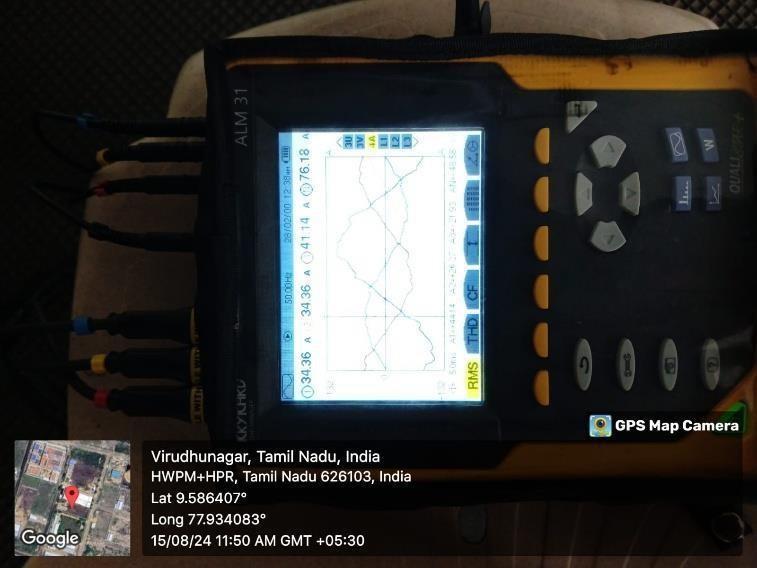
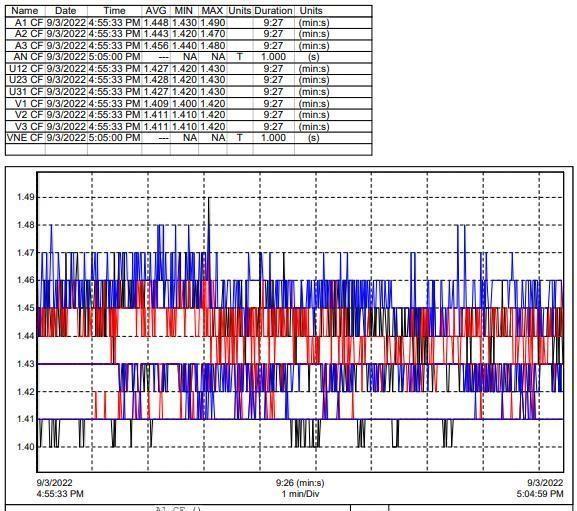
The Krykard ALM36 playsacrucialroleinenergy auditingbyprovidingprecise,real-timedata andin-depth analysis of energy consumption patterns across various processes and equipment. During an energy audit, the system’sabilitytocollectandmonitordataonparameters like voltage, current, power factor, and load enables auditors to gain a comprehensive understanding of the overall energy usage in a facility. This continuous monitoringhelpstrackenergyconsumptionoverdifferent time frames, including peak and off-peak hours, which is essentialforidentifyinghigh-energy-consumingareasand pinpointinginefficiencies.
Once data is collected, the ALM36’s advanced analyticstoolsprocessthisinformationtouncoverenergy wastage, equipment inefficiencies, and areas that require optimization. For instance, the system can highlight machines that use more energy than necessary, suggest improvements for power factor correction, or identify processes that could be streamlined to reduce consumption.Thisdata-drivenanalysisenablesauditorsto targetspecificareaswhereenergy-savingmeasurescanbe implemented,makingtheauditprocessmoreaccurateand effective.
In addition to its monitoring and analysis capabilities,theALM36generatesdetailedenergyreports, providing insights into energy usage trends, cost breakdowns, and areas of inefficiency. These reports becomeavaluablepartoftheenergyauditdocumentation, helping businesses understand their energy consumption in greater detail. Auditors can use these reports to offer clear, actionable recommendations, such as equipment upgrades, process changes, or the adoption of energyefficient practices, ultimately helping businesses reduce energycostsandimproveoverallefficiency.
International Research Journal of Engineering and Technology (IRJET) e-ISSN:2395-0056
Volume: 12 Issue: 03 | Mar 2025 www.irjet.net p-ISSN:2395-0072
3.2 THERMAL IMAGER:
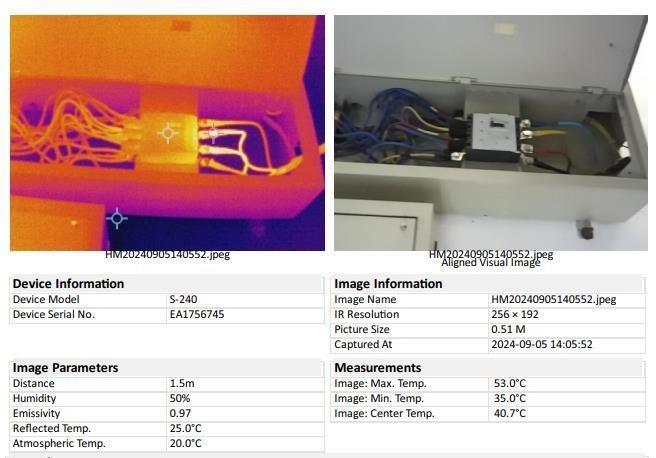
FIG3.2THERMALGRAPH
3.2.1 InfraredRadiationDetection:
All objects emit infrared radiation as a result of their temperature. Hotter objects emit more infrared radiation,whilecoolerobjectsemitless.
A thermal imager's infrared sensor detects this radiation, capturing the heat emitted by various surfaces in its field of view. The sensor is sensitive to the infrared energy in the wavelength range typically between8to14micrometers(theinfraredspectrum).
3.2.2 SensorConversion:
The infrared radiation is absorbed by the detector array (a specialized sensor array), which is typically made of materials like gallium arsenide (GaAs) or amorphoussilicon.
Theinfraredenergyisthenconvertedintoanelectrical signal. This step involves detecting the temperature variationsofthescene,asinfraredenergycorresponds totheobject'stemperature.
3.2.3 Image Processing:
The electrical signals from the sensor are sent to a processorinsidethethermalimager.
The processor then converts these signals into a thermal image(orthermogram),wheredifferenttemperaturesare representedbyvaryingcolors.Thehigherthetemperature, the"warmer"thecolor(e.g.,red,yellow,orwhite),andthe coolerthetemperature,the"colder"thecolor(e.g.,blueor purple).
3.2.4 Displayingthe Thermal Image:
The processed thermal data is displayed on the thermal imager’s screen as a visual image, showing temperature variationsacrossthescannedarea.
Each pixel in the thermal image corresponds to a specific temperature reading in that area, creating a clear representationofheatdistribution.
3.2.5 Temperature
The thermal imager can also provide precise temperature measurementsforspecificpointsintheimage.Byplacinga cursor or reticle over a spot on the thermal image, the devicewilldisplaytheexacttemperatureofthatpoint.
3.2.6
To ensure accurate measurements, thermal imagers are calibrated using known temperature sources (such as blackbodyradiationsources).
Some advanced thermal cameras offer emissivity adjustments, which account for the material type and surface finish of objects. Different materials emit infrared radiation differently, so emissivity calibration ensures accuracyacrossvarioussurfaces
4.1
Performing a business energy audit allows a company to takestockofitsenergyperformanceandtoimplementaset ofessentialactionstoreduceitsenergyconsumption.How does an energy audit take place? Here is an energy audit guidewithallthestepstomakeyourdiagnosisasprofitable aspossible.
4.2 Identify Problems:
An energy audit can also help to identify any issues that yourequipmentmighthave.Forexample,theauditorcould findsmallleaksinyourcompressedairsystem.Theseleaks wouldcostyouasignificantamountofmoneyifyoudidn’t know about them until a major problem presented itself laterdowntheline.
International Research Journal of Engineering and Technology (IRJET) e-ISSN:2395-0056
Volume: 12 Issue: 03 | Mar 2025 www.irjet.net p-ISSN:2395-0072
4.3 Increased Employee Comfort:
During youraudit,youmight learnabout changesthat you can make regarding insulation and air sealing. Completing these enhancements will help create a more reliable and more efficiently cooled or heated space for you and your employees. In turn, more comfortableemployeestendtobe moreproductive,so not only will you save on energy costs, but you may alsoimproveoverallprofitabilityforyourbusiness.
4.4 Personalized Recommendations:
Working with an energy expert can help you learn about new energy-efficient technologies you wouldn’t have otherwise known about. The professional will customizeaplanjustforyourbusiness,recommending whichupgrades will give you the most return on your investment. These might include updated lighting systems,anewHVACsystem,
4.5 Show Environmental Concern:
Bytakingstepstobemoreenergyefficient,youwillbe showing your employees and clients that your companycaresabouttheimpactthatyou’remakingon the environment. This may help your each those customers who are looking to work with an environmentallyconsciousbusiness.
Quality, and ease of availability. It is ideal for applications such as machine control applications, measurementdevices,studypurpose,andsoon.
5.1 Theformula forcalculating harmonic lossesis
P=I^(2)R Where,
P = Power loss in watts I = Harmonic current R = Conductor'sresistance.
5.2 Theformula forcalculatingVoltageis
Voltage(v)=IRWhere, V=VoltageI=CurrentR=Resistance
5.3 TheformulaforcalculatingFrequency is
Frequency(F)=1/TWhere, F=FrequencyT=Period
5.4 The formulaforcalculatingPowerFactor is
PowerFactor(PF)=P/SWhere, P=Activeorrealpowerinwatts(W)S=Apparent

International Research Journal of Engineering and Technology (IRJET) e-ISSN:2395-0056
Volume: 12 Issue: 03 | Mar 2025 www.irjet.net p-ISSN:2395-0072


6. SUSTAINABLE DEVELOPMENT GOAL:
SDG 7: Affordable and Clean Energy Target 7.1: Universal AccesstoEnergy
Goal: Ensure universal access to affordable, reliable, and modernenergyservicesforall.
Focus: Providing access to electricity and clean cooking solutions,especiallyinruralandunderservedareas.
Example: Expanding the reach of renewable energy solutions, such as solar panels or biogas, to remote communitiesthatlackaccesstotraditionalenergygrids.
Target 7.2:Increase the Share of Renewable Energy
Goal:Increasetheshareofrenewableenergyintheglobal energymixby2030.
Focus: Encouraging the use of renewable sources like wind,solar, geothermal, and hydropowerto replacefossil fuels.
Example: Supporting the transition to clean energy in industries, cities, andcountries by investing in renewable energyinfrastructure.
Target 7.3:ImproveEnergyEfficiency
Goal: Double the global rate of improvement in energy efficiencyby2030.
Focus: Reducing energy consumption while maintaining or improving performance in sectors such as industry, transport,andresidentialbuildings.
Example: Implementing energy-efficient technologies in manufacturing and construction, like LED lighting, smart grids,andefficientHVACsystems.
Target 7.4: Enhanced International Cooperation Goal: Enhance international cooperation to facilitate access to clean energy research and technology, especially for developingcountries.
Focus: Promoting knowledge-sharing, capacity building, and the transfer of energy-efficient technologies to countriesthatneedthemmost.
Example: Providing financial support or technology transfers to developing nations to help them implement renewableenergyprojects.
Target7.5:ExpandInfrastructure and Technology
Goal: Expand infrastructure and upgrade technology for supplying modern and sustainable energy services in developingcountries.
International Research Journal of Engineering and Technology (IRJET) e-ISSN:2395-0056
Volume: 12 Issue: 03 | Mar 2025 www.irjet.net p-ISSN:2395-0072
Focus: Strengthening the energy infrastructure in developing countries to improve energy access and reliability.
Example:Buildingorupgradingenergygrids,establishing clean energy hubs, and providing support for decentralizedenergysolutionslikemicrogrids.
7.CONCLUSION:
Overall, energy auditing in MSME clusters plays a pivotal role in fostering sustainable business practices, reducing energy consumption, and cutting operational costs. By identifyinginefficienciesandimplementing energy-saving measures,MSMEscanachievesignificantfinancialsavings, enhance their competitiveness, and contribute to environmental sustainability. Energy audits also support theachievementofglobal SustainableDevelopmentGoals (SDGs), particularly those related to affordable and clean energy (SDG 7), responsible consumption and production (SDG12),andclimateaction(SDG13).
8.REFERENCES:
1. Singh, R., & Kumar, A. (2019). Energy audit and managementinsmallscaleindustries:Acasestudy.
*International Journal of Engineering Trends and Technology,66*(4),234-238.
2. Gupta. A.,& Srivastava S (2019).Energy audit and managementinsmallscaleindustries:Areview.
*International Journal of Scientific Research and EngineeringDevelopment,2*(6),67-72.
3. Khan, A., & Ahmed, S. (2019). Energy audit and conservation in small scale industries: A case study of a food processing unit.*International Journal of Advanced EngineeringResearchandScience,6*(11),120-124.
4. “Energy audit and its impact on MSME sector" (2022)Author: A. K. Kotharietal. This paper explores the roleofenergyauditsinimprovingenergyefficiencywithin the MSME sector and presents case studies of successful energy-savinginitiatives.
5 Energyauditofanindustryforenergyconservationand economical operations" (2023)Authors: V. Unni Krishnan, SyamPrasad,AbdulAzeez,andV.A.AfreediKinatingal.The study outlines the methodology for conducting energy auditsandhowtheycanleadtosubstantialenergy
6 "Energy Audit: A Case Study of an Industrial Facility" Authors:A.Bhattacharya,P.Kumar,R.GuptaPublished in: Elsevier(EnergyReports)
7."Energy Auditing Methodology and Analysis for Residential Buildings" Authors: J. Lee, S. Kim, M. Park Publishedin:Springer(EnergyEfficiencyJournal)
8."Optimization of Energy Audits in Manufacturing Plants Using Data Analytics" Authors: H. Singh, A. Sharma Published in: IEEE Transactions on Industry Applications
9."The Role of Energy Audits in Improving Building Energy Performance" Authors: T. Brown, L. Green, D. WhitePublishedin:Wiley(InternationalJournalofEnergy Research)