
International Research Journal of Engineering and Technology (IRJET) e-ISSN: 2395-0056
Volume: 12 Issue: 01 | Jan 2025 www.irjet.net p-ISSN: 2395-0072
International Research Journal of Engineering and Technology (IRJET) e-ISSN: 2395-0056
Volume: 12 Issue: 01 | Jan 2025 www.irjet.net p-ISSN: 2395-0072
Stephanie Tomasik1 , Peter Fuhr2
1 University of Tennessee Knoxville, Dept. of Electrical and Computer Engineering, Knoxville, Tennessee, 37996 2Oak Ridge National Laboratory, One Bethel Valley Rd., Oak Ridge, Tennessee, 37831 USA
Abstract – Exoskeletons have evolved from early medical prototypestoadvancedsystemscapableofaddressingphysical demands in various industries. This report explores the potential of active exoskeleton technology within the utility sector, focusing on its application for linemen who face significant risks of work-related musculoskeletal disorders (WMSDs). By analyzing existing literature on exoskeletons across industries such as construction, manufacturing, and military, the study identifies a gap in utility-specific applications. Task-specific design features like gravity compensation, limb support, and advanced safety measures, improve exoskeletons’ potential to alleviate physical strain, reduce workplace injuries, and enhance productivity. This review emphasizes the need for targeted research and development to optimize exoskeleton designs for the utility sector to provide benefits for workers, companies, and the broader community.
Key Words: Utility lineworkers, exoskeletons, musculoskeletaldisorders
1.INTRODUCTION
HistoryofExoskeletons
From the fantasy of science fiction to a tangible reality, exoskeletons have transitioned from conceptual dreams to groundbreaking technologies transforming industries. Exoskeletons are categorized into two main types: passive and active. Passive exoskeletons rely on mechanical support systems, such as springs or counterweights,toredistributeloadsandreducestrainon theuser’sbodywithoutrequiringexternalpower[1].These systemsareoftenlight,cost-effective,andusedforrepetitive tasks like lifting in industrial settings[1], [2]. Active exoskeletons, on the other hand, incorporate powered components such as motors, hydraulics, or pneumatic actuatorstoassistandimprovehumanmovement[3].These systemsaredesignedtoprovideadditionalstrength,reduce fatigue, and improve performance in demanding tasks, making them suitable for both medical rehabilitation and high-intensityoccupationalapplications[2].
Exoskeleton technology has evolved significantly overthedecades,transitioningfromheavyandcumbersome designstoinnovative,lightweightsystemswithawiderange of applications. Beginning in the 1960s, early prototypes
focused on medical applications of exoskeletons[2], [4]. Many projects focused on gait assistance with notable contributions from the Mihajlo Pupin Institute and the University of Wisconsin-Madison[2]. In 1965, General ElectricproposedHardiman,apoweredexoskeletonaimed at amplifying human strength to lift heavy loads[2]. The Hardiman project ultimately faced design challenges with excessive weight and vibrations which halted further progressonthesuit[5].Despitenotcomingtofruition,the research from this project, among others, was still able to pavethewayforfuturedesigns.
Followingtheearlydesignsofthe1960s,militaryfocuseddesignsbyRaytheonandLockheedMartin,suchas theXOSandHULCexoskeletons,wereintroducedtoenhance soldiers’strengthandenduranceduringcombatandlogistics tasks[2]. A few years later, the 2010s saw developments suchastheWyssInstitute’stextile-basedexosuitforwalking assistanceintroducingasoftstyleofroboticassistance[2]. WhileWyssInstitute’ssoftwearableroboticdevicewasstill focused on medical applications, industrial and military applicationsalsobegantoflourish.In2021,Frenchstartup HMTintroducedapoweredexoskeletonforoverheadtasks and heavy lifting with the idea that workers can do more work for longer with the wearable machines[6]. The progressionofexoskeletontechnologieshaspusheddesigns to address needs outside of the medical industry to find solutionsacrossvarioussectors.
Work-relatedmusculoskeletaldisorders(WMSDs) areamongthemostcommonoccupationalinjuries,resulting fromrepetitivemotions,prolongedpostures,orliftingheavy loads[8],[9],[10].Theseinjuriesoftenaffecttheback,neck, shoulders,andarmswhichcanleadtochronicpain,reduced productivity,andincreasedhealthcarecosts[9],[10],[11]. Exoskeletons offer a promising solution to mitigate these risks by providing mechanical assistance and reducing physicalstrainonworkers.
International Research Journal of Engineering and Technology (IRJET) e-ISSN: 2395-0056
Volume: 12 Issue: 1 | Jan 2025 www.irjet.net p-ISSN: 2395-0072
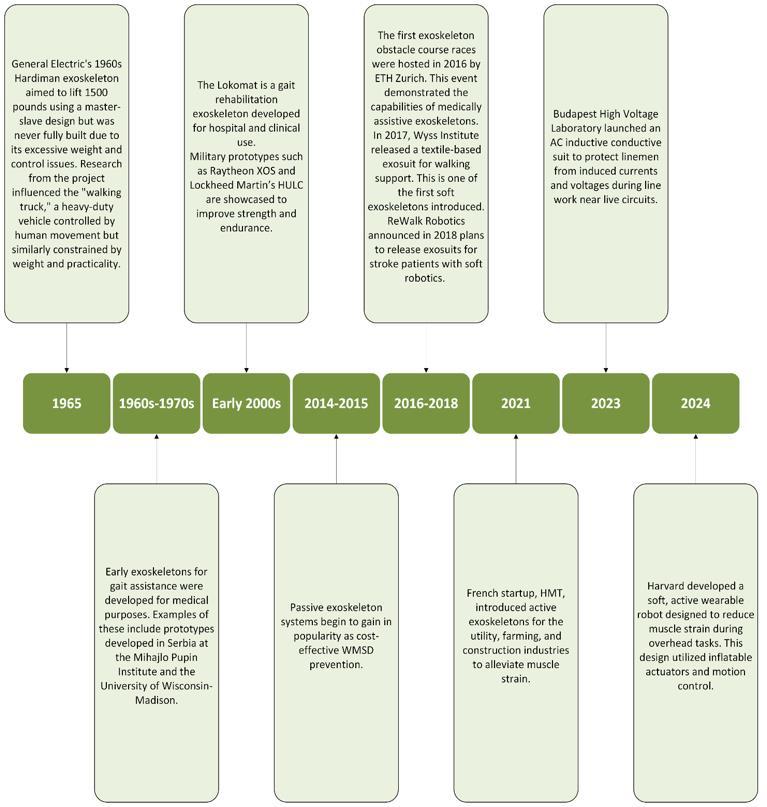
Figure1.Keymilestonesinthedevelopmentand applicationofexoskeletontechnology[2],[6],[7].
These technologies can address WMSDs through functionalities such as limb support and gravity compensation to improvethe ergonomicsrequired by the worker[12],[13],[14],[15],[16].Limbsupportsystemshelp stabilizeandreducethemusculareffortrequiredfortasks like overhead work, while gravity compensation devices assistwithliftingheavyobjectsbyredistributingtheweight and reducing the load the user’s body experiences. These features are highly applicable to physically demanding industries like construction, manufacturing, military[17], andutilities.
Inadditiontoimprovingergonomics,exoskeletons can incorporate protective designs to improve safety conditions.AnexampleistheACinductionsuitdevelopedby theHighVoltageLaboratoryatBudapestUniversitythatwas designed to protect linemen from induced currents and voltagesduringliveworknearenergizedcircuits[18].Such innovationsindicatethepotentialforwearabletechnologies toreduceworkplaceinjuries.
The advancements in exoskeleton technology, combined with their capacity to address WMSDs and improvesafety,showthegrowingimportanceofcontinued researchanddevelopmentacrossarangeofindustries.To further explore the potential of exoskeletons in the utility sector,thisstudyevaluatesaselectionofarticlesandreports toanalyzerelevantliterature,focusingonhowexoskeletons are currently utilized in the industrial space and the gaps thatexistfortheirapplicationinutilitywork.
A systematic approach was used to identify and analyze relevant literature regarding the applications of exoskeletons. The source selection process began with a broadreviewofgeneralexoskeletonprojects,models,and designs.Thisinitialfocusincludedmedical,industrial,and militaryapplicationstounderstandthecurrentlandscapeof these technologies. From there, the search was refined to emphasize industrial applications, narrowing the scope furthertomanufacturing,construction,military,andutility industry articles. This approach allowed the analysis to captureboththebreadthandpotentialofthesetechnologies inphysicallydemandingroles.
Applications
Manyrecentadvancementsinexoskeletontechnology have focused on general industry or specific physically demanding occupations. Examples include Harvard’s soft, active exoskeleton which uses motion prediction and inflatableactuatorstoassistwithoverheadwork[7],orthe agriculturalexoskeletondevelopedinRussiain2021,which integratestouchsensingtoimprovehumanintentprediction accuracy[19]. While these projects showcase the growing capabilities of active exoskeletons, they also show a significant gap of a lack of focus on the utility sector. Comparedtoindustrieslikeconstructionormanufacturing, the utility sector has received relatively little attention in exoskeletondevelopment.Giventheuniquechallengesand risks associated with utility work, this lack of targeted solutionsrepresentsamissedopportunitytoimprovesafety andqualityoflifeforutilityworkers.
Potential Benefits to Workers, Utility Companies, and Ratepayers
Lineworkers perform a wide variety of physically demandingmovementsandtasksaspartoftheirjob,many ofwhichareassociatedwithahighriskofWMSDs[11],[20]. Tasks such as hoisting feeder arms, lifting insulators and utilitypolecomponents,andperformingoverheadworkfor mounts, cables, and other power system devices place significantstrainontheback,neck,andshoulders[8],[10]. Additionally,repetitivemovementslikepulling,pushing,and grippingwhileworkingwithcables,cuttingwire,orclimbing ladders can lead to chronic pain and fatigue in the hands, forearms,andlegs[8],[9],[10].
International Research Journal of Engineering and Technology (IRJET) e-ISSN: 2395-0056
Volume: 12 Issue: 1 | Jan 2025 www.irjet.net p-ISSN: 2395-0072
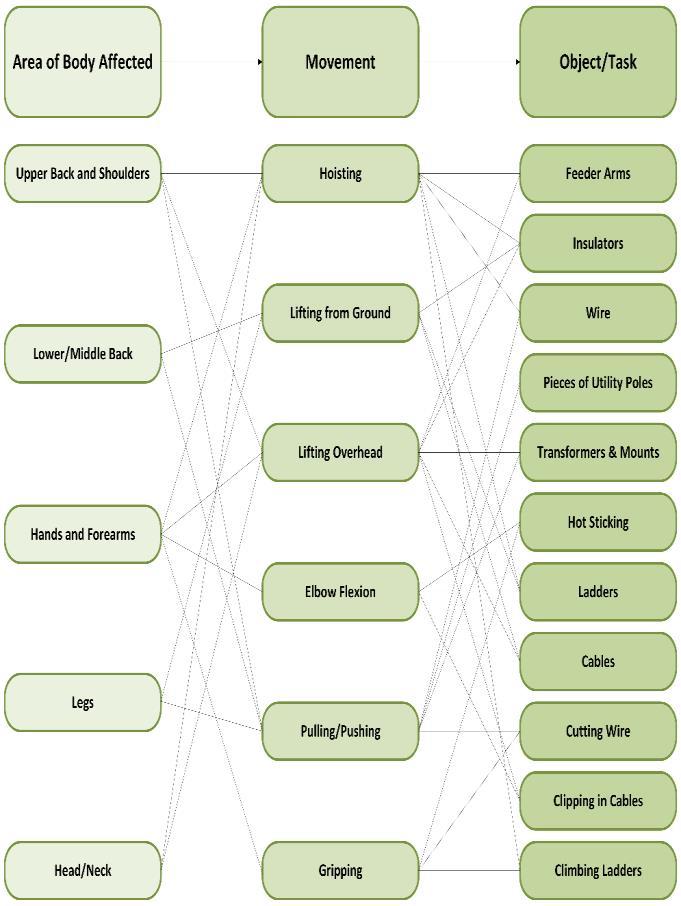
2.Mappingthephysicaldemandsoflinemen andaffectedareasofthebody.
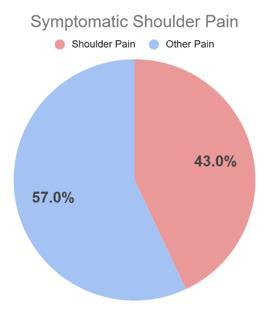
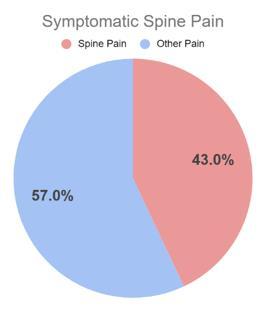
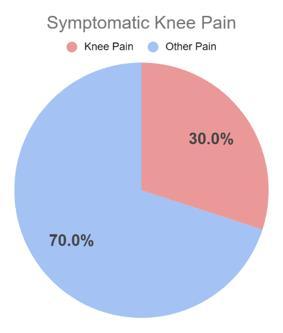
According to a 2008 study, 70% of linemen reported experiencing symptomatic pain from WMSDs, with 43% citing shoulder pain, 43% reporting spine pain, and 30% reportingkneepain[9].TheseWMSDstatisticsforlinemen conveytheneedforergonomicinterventionstailoredtothe task-specific demands of utility work. Developing active exoskeleton technology specifically for this field could alleviate these injuries by providing limb support, gravity compensation for lifting, and improved stability for repetitiveorprolongedtasks.
3.
Forutilitycompanies,adoptingexoskeletonscouldlead to reduced worker absenteeism, fewer workers’ compensation claims, and improved overall efficiency in completing work[11], [20]. By minimizing injury-related downtime and improving productivity, companies can optimize operational costs and maintain more reliable service.Forratepayers,thesebenefitstranslatetofeweror shorter disruptions, cost savings passed down through reduced operational expenses, and a safer workforce for theircommunity.
Designing an exoskeleton for linemen involves addressingmanyconsiderationstoprovidefunctionalityand safety.ResearchbytheDepartmentofPhysicalTherapyin SaoCarlos,Brazilindicatedthatthereareadiverserangeof activities for utility workers, each with their own WMSD hazards[10]. Trying to create an exoskeleton that can performeverytaskwouldbealargefeatsothesuitswould needtobetask-specificfortheworker.Adesignchallenge coordinatedbyHarryRomanin2012outlinedcriticalfactors suchaspowersourceselection,safetyandfireprotections, balance,dexterity,easeofdeployment,andenvironmental exposures[3].Whiletheseconsiderationsmayinitiallyseem daunting,task-specificdesignofthesuitsallowsfortargeted solutions by focusing on the most essential features and compromisingonothers[21],[22],[23].
Additionally, intent recognition is also critical for functionality and user acceptance of this technology. Buildingontheneedfortask-specificdesign,incorporating advanced intent recognition systems can improve the usabilityofthesystem[7].In2024,astudyonultrasoundassisted intent recognition demonstrated how the exoskeletoncanprovideprecisecontrolandinteractionwith the user, providing a more intuitive experience[7]. These advancementsallowexoskeletonstorespondaccuratelyto the user’s movements which is crucial for tasks requiring dexterity. By integrating intent recognition with other considerationslikeliftingor overheadwork,exoskeletons havethepotentialtobecomethelatestnecessitytoutility workers.
Severalindustriesalreadyadoptingexoskeletonshave facedchallengesthatcouldalsobeapplicabletotheutility sector.Accordingtoastudyconductedin2019,construction workers raised concerns about safety, usability, and the durability of the system in a real-world environment[13]. Riskssuchasgettingcaughtonotherobjectsorinabilityto balance were noted. These concerns could be particularly concerningtheutilityindustrywherelinemenoftenworkin dynamic and sensitive environments. Compatibility with personalprotectiveequipment(PPE)isanotherissue[13]. The exoskeleton may interfere with items like fall-arrest harnessesorinsulationgloves.
International Research Journal of Engineering and Technology (IRJET) e-ISSN: 2395-0056
Volume: 12 Issue: 1 | Jan 2025 www.irjet.net p-ISSN: 2395-0072
Additional adoption barriers can also include user acceptance and comfort [13], [22]. Discomfort from the weight of the device, the fit, or excessively warm environment were common reasons for abandonment duringtesting[13].Acceptancealsodependson howwell thedevicealignswith jobrequirements.If an exoskeleton inhibitsmotionorrequiresextensiveadjustments,theyare lesslikelytobeusedconsistently.Trainingandfamiliarity aremethodstoincreaseacceptanceandeffectiveness.
Lastly, cost is another significant barrier to adoption. Thereisimportanceindemonstratingaprofitableoutcome tojustifytheupfrontcostsofthepurchaseandmaintenance of the devices. Industry companies must see the clear productivity or safety benefits to consider implementing such a system. For the utility sector, overcoming these barrierswillrequiretargeteddesign,adequatetraining,and safety protections before wearable technology is justifiable[22].
Exoskeletons represent an evolving landscape in technology that bridges human and machine capabilities. Fromearlymedicalprototypestomodernindustrialdesigns, their potential to mitigate WMSDs and improve safety is significant.Thereareunderutilizedopportunitiesforactive exoskeletonstopenetratetheutilitysector,solvingunique needslinemenfaceinthephysicalstrainontheirwork.By focusing on task-specific features such as gravity compensation,limbsupport,andadvancedsafetymeasures, these systems can benefit the workers, companies, and ratepayersalike.
Adoption of such systems requires addressing user comfort,safetyintegration,andcostjustification.Drawing lessonsfromotherindustries,utility-focusedexoskeletons mustprioritizecompatibilitywithexistingPPEandextensive user training. As research and technology continue to advance, the utility sector could lead in leveraging exoskeletoninnovationstoimprovewellbeing,productivity, andefficiency.
[1] A.Voilque,J.Masood,JC.Fauroux,L.Sabourin,andO. Guezet, 2019 Wearable Robotics Association Conference (WearRAcon).IEEE,2019.
[2] “ABriefHistoryofRoboticExoskeletons.”[Online]. Available: https://www.eduexo.com/resources/articles/exoskeletonhistory/
[3] H. T. Roman, “CLASSROOM CHALLENGE A SUPER SUITDESIGNCHALLENGE.”
[4] M. I. Al-Khiami, S. M. Lindhard, and S. Wandahl, “Charting the Exoskeleton Industry: A Comprehensive
InsightintoDynamicsandTrends,”in IOPConferenceSeries: EarthandEnvironmentalScience,InstituteofPhysics,2024. doi:10.1088/1755-1315/1389/1/012014.
[5] “ExoskeletonsHistory-part3.”Accessed:Dec.09, 2024. [Online]. Available: https://www.mechatech.co.uk/journal/exoskeletonshistory-part-31/
[6] “French start-up makes exoskeletons to support staff in physical roles.” Accessed: Dec. 09, 2024. [Online]. Available: https://www.connexionfrance.com/practical/french-startup-makes-exoskeletons-to-support-staff-in-physicalroles/417756
[7] Y.M.Zhou etal.,“Aportableinflatablesoftwearable robot to assist the shoulder during industrial work,” Sci Robot, vol. 9, no. 91, Jun. 2024, doi: 10.1126/scirobotics.adi2377.
[8] T.L.Doolittle,O.SpurlinErgometrics,A.Personnel ResearchKarlKaiyala,andD.Sovern,“PHYSICALDEMANDS OFLINEWORKERS,”1988.
[9] M. Cs, A. Jf, M.-J. Lc, and C. Hjcg, “Musculoskeletal symptoms among energy distribution network linemen Sintomas musculoesqueléticos em eletricistas de rede de distribuiçãodeenergia”.
[10] C.Moriguchi etal.,“PosturesandMovementsinthe MostCommonTasksofPowerLineWorkers.”
[11] A. Noor et al., “Prevalence of musculoskeletal disorderinelectricitylinemanincityFaisalabad,Pakistan”, doi:10.17352/amm.
[12] S. A. Peláez, O. D. Martínez-Bernal, R. Muñoz, I. F. Mondragón, and C. R. Zea, "A comparative muscular assessment of the exoskeleton in a scaffold building operation:Casestudy," Ingeniería y Competitividad,vol.24, no.2,e21311393,Dec.2022,doi:10.25100/iyc.v24i2.11393.
[13] S.Kim etal.,“PotentialofExoskeletonTechnologies toEnhanceSafety,Health,andPerformanceinConstruction: IndustryPerspectivesandFutureResearchDirections,” IISE TransOccupErgonHumFactors,vol.7,no.3–4,pp.185–191, Oct.2019,doi:10.1080/24725838.2018.1561557.
[14] T.Butler,“ExoskeletonTechnologyMakingWorkers Safer and More Productive.” [Online]. Available: www.asse.org
[15] M.P.deLooze,T.Bosch,F.Krause,K.S.Stadler,and L.W.O’Sullivan,“Exoskeletonsforindustrialapplicationand theirpotentialeffectsonphysicalworkload,”May03,2016, Taylor and Francis Ltd. doi: 10.1080/00140139.2015.1081988.
International Research Journal of Engineering and Technology (IRJET) e-ISSN: 2395-0056
Volume: 12 Issue: 1 | Jan 2025 www.irjet.net p-ISSN: 2395-0072
[16] K. Huysamen, M. de Looze, T. Bosch, J. Ortiz, S. Toxiri, and L. W. O’Sullivan, “Assessment of an active industrial exoskeleton toaiddynamicliftingandlowering manual handling tasks,” Appl Ergon, vol. 68, pp. 125–131, Apr.2018,doi:10.1016/j.apergo.2017.11.004
[17] “TheUSArmy’sVisionofSoldiersinExoskeletons Lives On.” [Online]. Available: https://www.wired.com/story/the-us-armys-vision-of-anexoskeleton-fut...
[18] E. Ramirez-Bettoni and B. Nemeth, “AC Induction Conductive Suit-A New Way of Protecting Linemen in the Vicinity of Energized Parts,” in IEEE IAS Electrical Safety Workshop, IEEE Computer Society, 2022. doi: 10.1109/ESW49146.2022.9925028.
[19] A. V. Borisov, V. L. Borisova, L. V. Konchina, M. G. Kulikova, and K. S. Maslova, “Application of active exoskeletons with touch sensing, electric drives, energy recuperators and gravity compensators in agricultural technologies,” in IOP Conference Series: Earth and Environmental Science,IOPPublishingLtd,Mar.2021.doi: 10.1088/1755-1315/699/1/012019.
[20] V.Padmanathan,L.Joseph,B.Omar,andR.Nawawi, “Prevalence of musculoskeletal disorders and related occupationalcausativefactorsamongelectricitylinemen:A narrative review,” 2016, Walter de Gruyter GmbH. doi: 10.13075/ijomeh.1896.00659.
[21] J.Howard,V.V.Murashov,B.D.Lowe,andM.L.Lu, “Industrialexoskeletons:Needforinterventioneffectiveness research,” Am J Ind Med, vol. 63, no. 3, pp. 201–208, Mar. 2020,doi:10.1002/ajim.23080.
[22] S.A.Elprama,B.Vanderborght, andA.Jacobs,“An industrialexoskeletonuseracceptanceframeworkbasedon aliteraturereviewofempiricalstudies,” ApplErgon,vol.100, Apr.2022,doi:10.1016/j.apergo.2021.103615.
[23] R. Govaerts et al., “The impact of an active and passive industrial back exoskeleton on functional performance,” Ergonomics,vol.67,no.5,pp.597–618,2024, doi:10.1080/00140139.2023.2236817.