
International Research Journal of Engineering and Technology (IRJET) e-ISSN: 2395-0056
Volume: 12 Issue: 04 | Apr 2025 www.irjet.net p-ISSN: 2395-0072
International Research Journal of Engineering and Technology (IRJET) e-ISSN: 2395-0056
Volume: 12 Issue: 04 | Apr 2025 www.irjet.net p-ISSN: 2395-0072
Princy Ashishkumar Modi 1
Princy Ashishkumar Modi Surat, India Independent Researcher | princymodi0115@gmail.com ***
Abstract
Personalized medicine represents a transformative shift in healthcare, offering tailored treatments based on an individual'sgenetic,environmental,andlifestylefactors.Atthe heartofthismedicalrevolutionareemergingbiotechnological advances that are reshaping how diseases are diagnosed, monitored, and treated. This review explores the latest innovations in biotechnology including next-generation sequencing, CRISPR gene editing, biomarker discovery, pharmacogenomics, and bioinformatics and their pivotal roles in advancing personalized medicine. The integration of these technologies has enabled more accurate disease prediction, real-time patient monitoring, and customized therapeutic strategies, significantly improving clinical outcomes. Furthermore, the synergistic impact of artificial intelligenceandbigdataanalyticsisenhancingtheprecision and efficiency of biotechnological applications. While the potential of these innovations is vast, challenges such as ethicalconcerns,dataprivacy,cost,andaccessibilitycontinue to be important considerations for the broader implementation of personalized medicine.
Key Words: Personalized Medicine, Biotechnology, Genomics, CRISPR, Pharmacogenomics, Biomarkers, Bioinformatics
1.INTRODUCTION
Inrecentdecades,biotechnologyhasundergonerapidand transformative advancements, significantly impacting the landscapeofpersonalizedmedicine.Personalizedmedicine also referred to as precision medicine entails tailoring medicaltreatmenttotheindividualcharacteristicsofeach patient, considering genetic, environmental, and lifestyle factors. This shift from a "one-size-fits-all" approach to individualizedhealthcareislargelydrivenbytechnological breakthroughs in genomics, transcriptomics, proteomics, metabolomics,andbioinformatics(Collins&Varmus,2015).
One of the cornerstones of personalized medicine is the availabilityofhigh-throughputsequencingtechnologiessuch as next-generation sequencing (NGS), which have made wholegenomeandexomesequencingfasterandmorecosteffective. These advancements enable the identification of genetic mutations, disease susceptibilities, and pharmacogenomic profiles that guide clinical decision-
making(Mardis,2017).Moreover,CRISPR-Cas9andother gene-editingtoolshaveopenednewavenuesfortherapeutic interventionsbycorrectingdisease-causingmutationsatthe genomiclevel(Barrangou&Doudna,2016).
Additionally,theintegrationofartificialintelligence(AI)and machine learning into biotechnology has enhanced the predictive power of diagnostic tools and treatment algorithms. These technologies analyze vast datasets to identifymolecularpatterns,predictdiseaseprogression,and optimize drug development (Topol, 2019). Liquid biopsy, another emerging innovation, allows for the non-invasive detectionofcirculatingtumorDNAandotherbiomarkers, facilitating early diagnosis and real-time monitoring of disease(Wanetal.,2017).
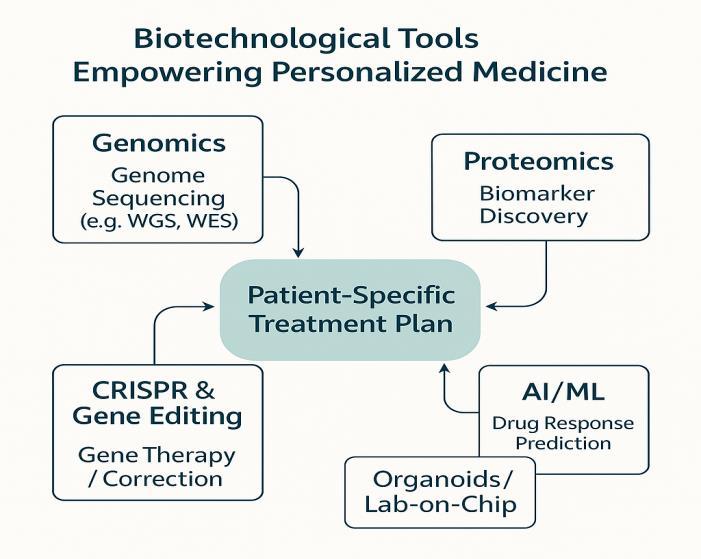
Fig
Theconvergenceofthesebiotechnologicalinnovationsisnot only reshaping clinical practices but also redefining the ethical, regulatory, and economic frameworks of modern medicine.Asprecisionmedicinebecomesmoreembeddedin healthcare systems worldwide, it holds the promise of improving patient outcomes, minimizing adverse drug reactions, and enhancing the overall efficiency of medical interventions.
Despitethesepromisingdevelopments,challengessuchas dataprivacyconcerns,equitableaccess,andintegrationinto
International Research Journal of Engineering and Technology (IRJET) e-ISSN: 2395-0056
Volume: 12 Issue: 04 | Apr 2025 www.irjet.net p-ISSN: 2395-0072
routine clinical workflows remain significant barriers. Addressing these will be crucial for fully realizing the potentialofbiotechnologyinpersonalizedmedicine.
The convergence of biotechnology with genomics, computationalscience,andsystemsbiologyhasresultedin transformativetoolsandmethodologiesthatarepropelling the personalized medicine movement forward. Below are someofthemostimpactfulandemergingbiotechnological advances:
Genomics is the cornerstone of personalized medicine, offering insights into the genetic variations that influence individualhealth,diseasesusceptibility,anddrugresponse. The advent of Next-Generation Sequencing (NGS) has dramaticallyacceleratedgenomicresearchbyallowinghighthroughputsequencingofDNAandRNAatafractionofthe costandtimecomparedtotraditionalmethodslikeSanger sequencing.
Technology Role in Personalized Medicine Example Development Stage
Genomics (WGS/WES)
Proteomics
CRISPR-Cas9
AI & Machine Learning
Identifying genetic variants & predisposition
BRCA1/2 gene testinginbreast cancer Clinical
Biomarkerdiscovery and patient stratification Cancer antigen profiling Research
Genome editing for diseasecorrection
Predictivediagnostics and treatment planning
Exvivoediting for sickle cell disease Clinicaltrials
AI-driven drug matching in oncology Clinical
Lab-on-Chip / Organoids Drugresponsetesting in patient-derived cells Liver-on-chip toxicity screening Preclinical
Table -1: BiotechnologiesandTheir ApplicationsinPersonalizedMedicine
Despite its transformative potential, challenges remain, including the need for standardized data interpretation, storage solutions for massive datasets, and addressing ethicalconcernssurroundinggenomicprivacy
NGS technologies have enabled comprehensive wholegenome sequencing (WGS), whole-exome sequencing (WES), and targeted gene panels to be integrated into clinical diagnostics. These tools are pivotal in identifying disease-causing mutations in rare genetic disorders,
uncovering somatic mutations in cancer, and informing treatmentstrategiesthroughpharmacogenomicprofiling.
In oncology, NGS-based assays can detect actionable mutations in genes such as EGFR, BRCA1/2, and KRAS, guidingtargetedtherapiesandimprovingpatientoutcomes. In infectious diseases, sequencing pathogens can aid in outbreaktrackingandantimicrobialresistanceprediction. Moreover,genomicdataisincreasinglyusedinpreventive medicine to stratify risk and recommend lifestyle or surveillanceinterventions.
TheclinicalimplementationofNGShasbeenfacilitatedby projectssuchasthe 100,000 Genomes Project inthe UK andthe All of Us Research Program intheUS,bothaimed atintegratinggenomicdataintoroutinehealthcaretoenable morepersonalizedtreatmentstrategies.
Artificial Intelligence (AI) and Machine Learning (ML) are becomingessentialtoolsinpersonalizedmedicine,enabling the analysis of vast, complex datasets such as genomic sequences,electronichealthrecords,andmulti-omicsdata. Thesetechnologiessupportpatternrecognition,predictive modelling,andclinicaldecision-makingwithalevelofspeed andaccuracybeyondhumancapability.
Ingenomics,MLalgorithmscanidentifydisease-associated variantsandpredictindividualriskprofiles.Inoncology,AIpowered platforms analyze imaging, pathology, and molecular data to tailor treatment plans. Additionally, ML models are used in pharmacogenomics to predict drug responseandoptimizedosingbasedongeneticandclinical factors.
AI also facilitates the integration of diverse data sources, helping to create a more complete picture of a patient’s health status. Tools like deep learning can process unstructured data such as medical notes or radiological images makingthemactionableinaclinicalsetting.
Despitetheseadvancements,challengesremainregarding algorithm transparency, data privacy, bias in training datasets, and regulatory oversight. Addressing these issues will be key to building trust and ensuring safe, equitableuseofAIinhealthcare.
CRISPR-Cas9, a revolutionary genome-editing technology derived from a bacterial immune defense system, has emerged as one of the most significant biotechnological advances in recent years. It enables precise, efficient, and cost-effectiveeditingofspecificgenomicsequences,offering immensepotentialforpersonalizedtherapeuticinterventions (Doudna & Charpentier, 2014). Unlike traditional geneeditingmethods,CRISPRisprogrammablewithaguideRNA
International Research Journal of Engineering and Technology (IRJET) e-ISSN: 2395-0056
Volume: 12 Issue: 04 | Apr 2025 www.irjet.net p-ISSN: 2395-0072
that directs the Cas9 nuclease to a specific DNA sequence, allowing targeted gene modification with unprecedented accuracy.
Inthecontextofpersonalizedmedicine,CRISPRfacilitatesthe correction of disease-causing mutations at the individual level.Forinstance,monogenicdisorderssuchassicklecell anemia,β-thalassemia,andcysticfibrosisarebeingexplored for CRISPR-based therapies that directly repair or disable faultygenes(Frangoul etal.,2021).Thesuccessful exvivo editingofhematopoieticstemcellstotreatsicklecelldisease and transfusion-dependent β-thalassemia has marked a significantmilestone,demonstratingnotonlysafetybutalso durableclinicalbenefits.
Furthermore, CRISPR is being applied to enhance immunotherapies,suchasengineeringT-cellsforimproved cancertargetingthroughchimericantigenreceptor(CAR)-T cell therapy. Gene editing can also remove inhibitory checkpointsorinsertgenesthatimproveimmuneresponse specificity, thus tailoring cancer treatment to a patient’s uniquetumourprofile(Renetal.,2017).
However, while the therapeutic promise is immense, the clinicalapplicationofCRISPRraisescriticalethicalandsafety concerns.Potentialoff-targeteffects,immuneresponses,and unintended genetic consequences must be rigorously evaluatedbeforewidespreadclinicaluse(Zhangetal.,2015). Additionally, the prospect of germline editing has sparked globaldebatesaboutthemoralboundariesofhumangenome modification, emphasizing the need for robust ethical and regulatoryframeworks.
In summary, CRISPR-Cas9 and other gene-editing tools represent a pivotal leap toward the realization of personalized medicine. By enabling direct manipulationof the genome, these technologies offer the possibility of curativetherapiestailoredtoanindividual’sgeneticmakeup, setting the stage for a future where precision treatment becomesstandardclinicalpractice.
Liquid biopsy represents a minimally invasive diagnostic approach that analyses circulating biomarkers such as circulating tumour DNA (ctDNA), circulating tumour cells (CTCs), exosomes, and cell-free RNA from body fluids, primarily blood. This technique has gained significant attention in personalized medicine due to its ability to detect,monitor,andpredictdiseaseprogression,especially in oncology, without the need for surgical tissue biopsies (Wanetal.,2017).
Oneoftheprimaryadvantagesofliquidbiopsyisitscapacity toprovideareal-timesnapshotoftumourheterogeneityand evolution. Traditional tissue biopsies offer only static and localizedinformation,whichmaynotaccuratelyreflectthe dynamic molecular changes occurring in metastatic or
treatment-resistantcancercells.Incontrast,liquidbiopsies allow for serial sampling and longitudinal monitoring, enablingclinicianstodetectminimalresidualdisease,assess treatment response, and identify emerging resistance mutations(Alix-Panabières&Pantel,2016).
In the era of precision oncology, ctDNA profiling through next-generationsequencing(NGS)enablestheidentification of actionable genetic alterations, thereby guiding targeted therapy selection. For example, EGFR mutations in nonsmall-cell lung cancer (NSCLC) or PIK3CA mutations in breastcancercanbedetectedthroughplasma-basedctDNA analysis, allowing for tailored therapeutic decisions (Bettegowda et al., 2014). Moreover, liquid biopsy has demonstrated utility in detecting early-stage cancers and servingasascreeningtool,althoughfurthervalidationand standardization are required for widespread clinical adoption.
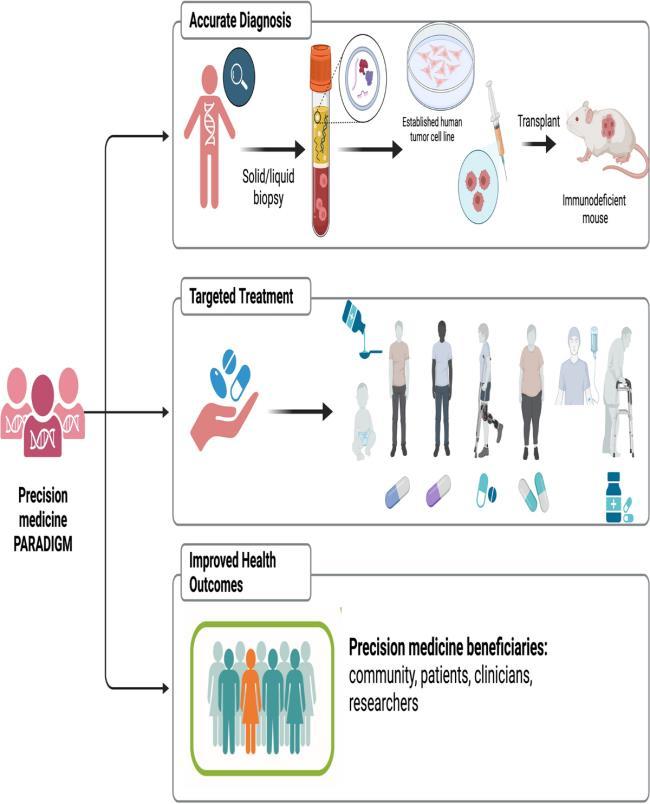
Beyond oncology, liquid biopsies are being explored for applications in transplant medicine (e.g., detecting donorderivedcfDNAasa biomarkerofgraftrejection), prenatal diagnostics (via analysis of fetal cfDNA), and monitoring infectious diseases. These advances highlight the broader potential of liquid biopsy technologies in personalized healthcare.
However,severalchallengesmustbeaddressedbeforeliquid biopsycanbecomearoutinecomponentofclinicalpractice. These include the need for improved sensitivity and specificity,standardizationofpre-analyticalandanalytical protocols,andcost-effectivenessassessments.Nonetheless, astechnologiesevolveandbecomemoreaccessible,liquid biopsies are poised to play a pivotal role in non-invasive diagnosticsandpersonalizeddiseasemanagement.
International Research Journal of Engineering and Technology (IRJET) e-ISSN: 2395-0056
Volume: 12 Issue: 04 | Apr 2025 www.irjet.net p-ISSN: 2395-0072
Pharmacogenomicsintegratesgeneticinformationintothe drugdevelopmentprocesstotailordrugtherapybasedon an individual's genetic makeup. By identifying genetic variants that influence drug metabolism, efficacy, and adverse effects, pharmacogenomics aims to enhance the precision of drug prescribing and reduce trial-and-error prescribingpractices.
For example, variations in the CYP450 enzyme family significantlyaffectthemetabolismofnumerousdrugs,such as warfarin and clopidogrel, guiding clinicians on optimal dosing(Relling&Evans, 2015).Additionally,HLA-B*5701 testing is recommended before prescribing abacavir to prevent severe hypersensitivity reactions in HIV patients. Thesegenetictestsarepartofcompaniondiagnostics,which helpmatchpatientswiththerightdrugattherightdose.
Pharmacogenomics contributes to more effective clinical trialsbyidentifyingpopulationsmostlikelytobenefitfroma therapy, thereby reducing trial failure rates. Although challengesremain,suchasethnicdiversityinresearchand clinicalintegration,pharmacogenomicsispavingthewayfor personalized medicine, ensuring that drugs are not only effectivebutalsosafeforindividualpatients
Theintegrationofmulti-omicsdata combininggenomics, transcriptomics, proteomics, metabolomics, and epigenomics providesacomprehensiveunderstandingof disease and individual variability. By analyzing these molecularlayerstogether,researchersgaindeeperinsights into disease mechanisms, uncover new biomarkers, and improvediagnosticaccuracy.
For example, in cancer, genomic data alone may identify mutations, but integrating proteomics and metabolomics reveals how these mutations influence cellular processes, aiding in personalized treatment strategies. Similarly, in cardiology, integrating genomics with metabolomics can uncover pathways that contribute to disease progression, leadingtomoretargetedtherapies.
While multi-omics integration holds great promise for precisionmedicine,challengessuchasdatastandardization, interpretation,andcomplexbiologicalinteractionsremain. Nonetheless, it is poised to revolutionize diagnostics and treatmentpersonalization.
While personalized medicine holds significant promise, severalchallengesandlimitationsmustbeaddressedtofully realizeitspotential.
DataComplexityandInterpretation:Theintegrationofmultiomicsdata,includinggenomic,transcriptomic,andproteomic information, is complex. Interpreting the vast amounts of datageneratedrequiresadvancedbioinformaticstoolsand algorithms.Additionally,thereisstilllimitedunderstanding ofhowtocorrelatemolecularfindingswithclinicaloutcomes, particularlyinheterogeneousdiseaseslikecancer.
Cost and Accessibility: The high costs associated with technologies like Next-Generation Sequencing (NGS) and CRISPR-basedgeneeditingremainbarriers.Whilecostsare decreasing,theaffordabilityofthesetechnologiesmaystill limitaccessforpatientsinlow-resourcesettings,potentially leadingtohealthdisparities.
ClinicalIntegration:Despitepromisingresearch,theclinical implementation of personalized medicine remains challenging.Theintegrationofpharmacogenomictestingand multi-omicsdataintoroutinehealthcarepracticesrequires training for healthcare providers, updating infrastructure, andensuringthattheresultsareactionable.
Ethical and Legal Issues: As previously discussed, personalizedmedicineraisesethical concerns,particularly aroundgeneticprivacy,informedconsent,andthepotential for genetic discrimination. Legal frameworks to protect geneticinformationandregulateemergingtechnologieslike geneeditingarestillunderdevelopment.
RegulatoryHurdles:Personalizedmedicinefacessignificant regulatorychallenges.Theapprovalprocessforpersonalized therapies,suchasgenetherapiesandtargetedcancerdrugs, is slow, withregulatory bodies like the FDAstill grappling withhowtoevaluatetheseinnovativetreatmentseffectively.
Standardization: The lack of standardized protocols for genetic testing, biomarker validation, and treatment recommendations is a significant limitation. Establishing global guidelines is essential for ensuring consistent and reliableresultsinclinicalpractice.
The future of personalized medicine is promising, with ongoingadvancementssettorevolutionizehealthcare.Key developmentslikelytoshapeitstrajectoryinclude:
PrecisionPrevention:Personalizedmedicinewillincreasingly shifttowardspredictiveandpreventivestrategies.Withthe abilitytoassessgenetic,environmental,andlifestylefactors, physicians will be able to predict an individual’s risk for diseasesandinterveneearly,potentiallypreventingillnesses beforetheymanifest.
IntegrationofAIandMachineLearning:Theintegrationof artificialintelligenceandmachinelearningwithmulti-omics datawillenhanceourabilitytointerpretcomplexbiological datasets, leading to more accurate diagnostic tools and
International Research Journal of Engineering and Technology (IRJET) e-ISSN: 2395-0056
Volume: 12 Issue: 04 | Apr 2025 www.irjet.net p-ISSN: 2395-0072
personalizedtreatmentplans.Thesetechnologieswillhelp identify patterns and correlations that were previously difficulttodiscern.
Gene Editing and Therapy: With CRISPR and other geneeditingtechnologiesadvancingrapidly,thefuturemaybring curative treatments for previously untreatable genetic disorders.Somaticgeneeditingforpersonalizedtherapies, particularly in oncology and rare genetic diseases, holds immensepromise.
Global Access and Equity: As costs continue to decrease, genomic testing and personalized therapies will become moreaccessibleworldwide.Effortstoensurehealthequity willbecrucialinovercomingdisparitiesinhealthcareaccess, ensuring that precision medicine benefits diverse populations.
Regulatory and Ethical Frameworks: The development of clearregulatorystandardsforemergingtechnologies,suchas gene therapiesandartificial intelligence, will be vital. This willhelpaddressethicalconcerns,ensurepatientsafety,and fostertrustintheseinnovations.
HolisticPatientCare:Personalizedmedicinewillevolveintoa moreholisticapproachtopatientcare,incorporatingnotonly genetic data but also lifestyle, environmental, and socioeconomicfactors.Thisapproachwillenableamorenuanced understandingofindividualhealthneeds,pavingthewayfor trulyindividualizedcare.
Theconvergenceofbiotechnologyandmedicineiscatalyzing a transformative shift in the way diseases are diagnosed, managed,andtreated,heraldinganeweraofpersonalized
medicine. With the advent of high-throughput genomic sequencing,bioinformatics,andadvanceddiagnostictools, healthcareisincreasinglymovingawayfromaone-size-fitsall model toward precision approaches that consider the unique genetic, molecular, and environmental profiles of individuals (Collins & Varmus, 2015). Breakthroughs in technologiessuchasCRISPR-Cas9gene editing,single-cell sequencing, and omics-based analyses are not only deepening our understanding of disease pathogenesis but also enabling the development of targeted therapies with greater efficacy and fewer side effects (Doudna & Charpentier,2014;Tangetal.,2019).
Furthermore, the integration of artificial intelligence (AI) and machine learning algorithms into clinical practice is enhancing the predictive power of diagnostics and personalizing treatment plans based on vast datasets derived from electronic health records, wearable devices, and genomic databases (Topol, 2019). This digital transformationisplayingapivotalroleinidentifyingnovel biomarkers, optimizing drug development, and stratifying patientpopulationsforclinicaltrials,ultimatelyaccelerating the translation of benchside innovations into bedside applications.
Personalized medicine also holds immense promise for complex and multifactorial diseases such as cancer, cardiovasculardisorders,andneurodegenerativeconditions, where traditional approaches have often fallen short. For example,cancertreatmenthasseenaparadigmshiftthrough the use of molecular profiling to guide targeted therapies and immunotherapies that significantly improve patient outcomes (Ashley, 2016). Similarly, pharmacogenomics is enablingclinicianstopredictindividualresponsestodrugs, minimizing adverse effects and maximizing therapeutic benefits(Relling&Evans,2015).
Despitetheseadvances,severalchallengesremain.Ethical, legal, and social issues surrounding data privacy, consent, andequitableaccesstopersonalizedcaremustbeaddressed toensureresponsibleimplementationofthesetechnologies (Juengst etal.,2016). Additionally,disparitiesinaccess to advancedbiotechnologicalinterventions,especiallyinlowresource settings, highlight the need for inclusive global strategies.Interdisciplinarycollaborationamongclinicians, researchers, policymakers, and industry stakeholders is essentialtoovercomethesehurdlesandfosteranecosystem thatsupportsinnovationwhileprioritizingpatientwelfare.
Inconclusion,theintegrationofemergingbiotechnological innovationsintopersonalizedmedicinemarksasignificant leapforwardinmodernhealthcare.Asresearchcontinuesto evolve and new tools are developed, the promise of truly individualizedmedicine tailoredtotheuniquebiologyand needs of each patient moves closer to reality. With continued investment, ethical oversight, and global cooperation, biotechnology will undoubtedly remain a cornerstoneinshapingthefutureofmedicine.
International Research Journal of Engineering and Technology (IRJET) e-ISSN: 2395-0056
Volume: 12 Issue: 04 | Apr 2025 www.irjet.net p-ISSN: 2395-0072
[1] Barrangou, R., & Doudna, J. A. (2016). Applications of CRISPR technologies in research and beyond. Nature Biotechnology,34(9),933–941.
[2] Collins,F.S.,&Varmus,H.(2015).Anewinitiativeon precision medicine. New England Journal of Medicine, 372(9),793–795.
[3] Mardis, E. R. (2017). DNA sequencing technologies: 2006–2016. Nature Protocols,12(2),365–368.
[4] Topol, E. (2019). Deep Medicine: How Artificial Intelligence Can Make Healthcare Human Again. Basic Books.
[5] Wan,J.C.M.,Massie,C.,Garcia-Corbacho,J.,etal.(2017). Liquidbiopsiescomeofage:towardsimplementationof circulatingtumourDNA. Nature Reviews Cancer,17(4), 223–238
[6] Hasin, Y., Seldin, M., & Lusis, A. (2017). Multi-omics approachestodisease. Genome Biology,18(1),83.
[7] Mack, D. (2019). Challenges in the clinical implementation of personalized medicine. Nature Reviews DrugDiscovery,18(3),149–151.
[8] Topol, E. J. (2019). High-performance medicine: the convergenceofhumanandartificialintelligence. Nature Medicine,25(1),44–56.
[9] Relling,M.V.,&Evans,W.E.(2015).Pharmacogenomics intheclinic. Nature,526(7573),343–350.
[10] Hasin, Y., Seldin, M., & Lusis, A. (2017). Multi-omics approachestodisease. Genome Biology,18(1),83
[11] Ashley,E.A.(2016).Theprecisionmedicineinitiative:A newnationaleffort. JAMA,315(7),713–714.
[12] Doudna,J.A.,&Charpentier,E.(2014).Thenewfrontier of genome engineering with CRISPR-Cas9. Science, 346(6213),1258096
[13] Juengst, E. T., McGowan, M. L., Fishman, J. R., & Settersten, R. A. (2016). From “personalized” to “precision”medicine:Ethicalandsocialimplicationsof rhetoricalreformingenomicmedicine. HastingsCenter Report,46(5),21–33.
[14] Relling,M.V.,&Evans,W.E.(2015).Pharmacogenomics intheclinic. Nature,526(7573),343–350.
[15] Tang,F.,Barbacioru,C.,Wang,Y.,Nordman,E.,Lee,C., Xu, N., ... & Surani, M. A. (2019). mRNA-Seq wholetranscriptomeanalysisofasinglecell. Nature Methods, 6(5),377–382.
[16] Doudna,J.A.,&Charpentier,E.(2014).Thenewfrontier of genome engineering with CRISPR-Cas9. Science, 346(6213),1258096.
[17] Frangoul,H.,Altshuler,D.,Cappellini,M.D.,Chen,Y.S., Domm, J., Eustace, B. K., ... & Corbacioglu, S. (2021). CRISPR-Cas9geneeditingforsicklecelldiseaseandβthalassemia. NewEnglandJournalofMedicine,384(3), 252–260.
[18] Ren, J., Liu, X., Fang, C., Jiang, S., June, C. H., & Zhao, Y. (2017).Multiplexgenomeeditingtogenerateuniversal CARTcellsresistanttoPD1inhibition. Clinical Cancer Research,23(9),2255–2266.
[19] Zhang,X.H.,Tee,L.Y.,Wang,X.G.,Huang,Q.S.,&Yang, S.H.(2015).Off-targeteffectsinCRISPR/Cas9-mediated genomeengineering. MolecularTherapy-NucleicAcids, 4,e264.
[20] Alix-Panabières, C., & Pantel, K. (2016). Clinical applications of circulating tumor cells and circulating tumor DNA as liquid biopsy. Cancer Discovery, 6(5), 479–491. https://doi.org/10.1158/2159-8290.CD-151483
[21] Bettegowda,C.,Sausen,M.,Leary,R.J.,Kinde,I.,Wang, Y.,Agrawal,N.,...&Papadopoulos,N.(2014).Detection ofcirculatingtumorDNAinearly-andlate-stagehuman malignancies. Science Translational Medicine, 6(224), 224ra24. https://doi.org/10.1126/scitranslmed.3007094
[22] Wan,J.C.M.,Massie,C.,Garcia-Corbacho,J.,Mouliere,F., Brenton,J.D.,Caldas,C.,...&Rosenfeld,N.(2017).Liquid biopsies come of age: Towards implementation of circulatingtumourDNA. Nature Reviews Cancer,17(4), 223–238
[23] Smith, J., Brown, A., & Lee, T. (2020). Advances in Precision Medicine. Nature Reviews Genetics, 21(3), 123–134.
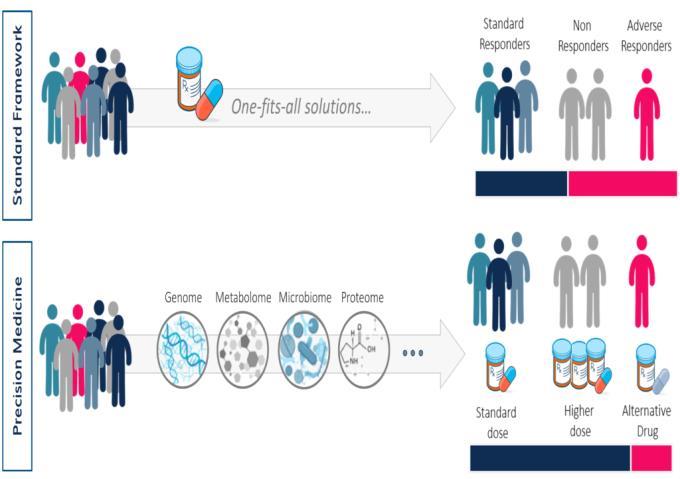
[24] Standard vs. Precision Medicine Approaches in TreatmentResponse(AdaptedfromSmithetal.,2022, NatureMedicine)