
International Research Journal of Engineering and Technology (IRJET) e-ISSN: 2395-0056
Volume: 12 Issue: 05 | May 2025 www.irjet.net p-ISSN: 2395-0072
International Research Journal of Engineering and Technology (IRJET) e-ISSN: 2395-0056
Volume: 12 Issue: 05 | May 2025 www.irjet.net p-ISSN: 2395-0072
Harshad Hirani1 , Prof. Aakash Suthar2
1M.E. Student, L J University
2Professor, Dept. of Civil Engineering, L J University, Gujarat, India
Abstract - Nonetheless, the staircase is often overlooked in design, which could influence the seismic performance of buildings. In this study, various kinds of staircases have been examined. I have examined three types of staircases. This study has investigated the effects of an earthquake on different kinds of staircases. The staircase is generally not regarded as a main structural element in building design and is viewed merely as a secondary structural element. A key element of the structure is the staircase. Consequently, if not considered during analysis and design, the structure is at risk of suffering damage. In this section, we analyze the staircase models for different styles of staircases to observe how seismic impacts on buildings vary with the addition of more staircases to an existing framework. To analyze using the response spectrum method. The analysis is performed using ETABS software. The linear response spectrum analysis of the models was carried out using the ETAB 21 software, following IS: 1893 (Part-1) - 2016 and IS: 456 - 2000 standards.
Key Words : Story Displacement, Story Drifts, Response spectrumanalysis,Halfturnstaircase,Open-wellstaircase analysiswithETABS
1.INTRODUCTION
An earthquake acts quite differently since it is an unplanned occurrence. Unlike other load types such as gravity and wind loads, the force generated by an earthquake is distinct. The most vulnerable part of the three-dimensional structure is hit. The building has numerous flaws due to inadequate design and construction, which can greatly endanger individuals and their belongings. Due to its functional importance, the staircase serves as a vital part of secondary structural systemsand is one of the essential elements of a building. Thestaircasefeaturesdistinctdesignsfornon-seismicand seismic conditions due to the complex modeling of the structure. From a geometric viewpoint, a stair consists of an inclined component (beams and slabs) and a brief column. These elements contribute to the rigidity of the structure. This indicates that the influence of a staircase mustnotbeoverlookedwhenevaluatinganddesigningRC framestructures.
Theresponsespectrummethodisawell-knownstructural engineeringapproachforevaluatingtheseismicreactionof buildings and various structures, offering an estimate of the structure's response to ground motion by accounting forthesystem'sdynamiccharacteristics.
The response spectrum displays the highest response ofa dynamic system across various vibration frequencies. A target design spectrum, often derived from building regulations or specific design standards, is then aligned with the response spectrum of the ground motion. The design spectrum outlines the anticipated reaction of the structure to ground motion at different frequencies. The dynamicbehaviorofthestructureisrepresentedasasetof idealized mass, stiffness, and damping components. A modal analysis is conducted to determine the natural frequencies, mode shapes, and modal masses of the structure. Mode Superposition: By applying the superposition principle, the responses for each mode are initially determined separately and subsequently merged. Taking into account the modal mass and participation factor of each mode, the contribution of the overall responsefromeachmodeisassignedaweight.
• The main objective of this study is to check the kind of performance a building can give when designedasperIndianStandardCodes.
• Toinvestigatehowvariousstaircasetypesaffecta structurethatissubjecttoseismicforces.
• To study the shear wall at different location subjectedtoseismicforce.
• Toinvestigatethestructuralmembersclosetothe staircase’sseismicresponsetoseismicloads.
International Research Journal of Engineering and Technology (IRJET) e-ISSN: 2395-0056
Volume: 12 Issue: 05 | May 2025 www.irjet.net p-ISSN: 2395-0072
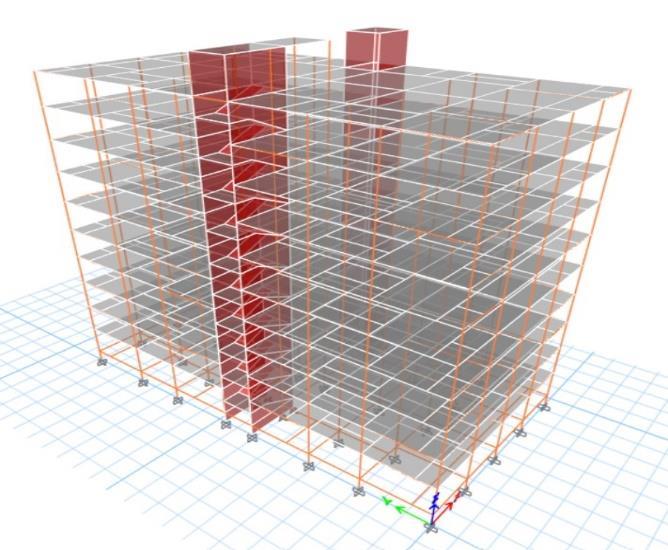
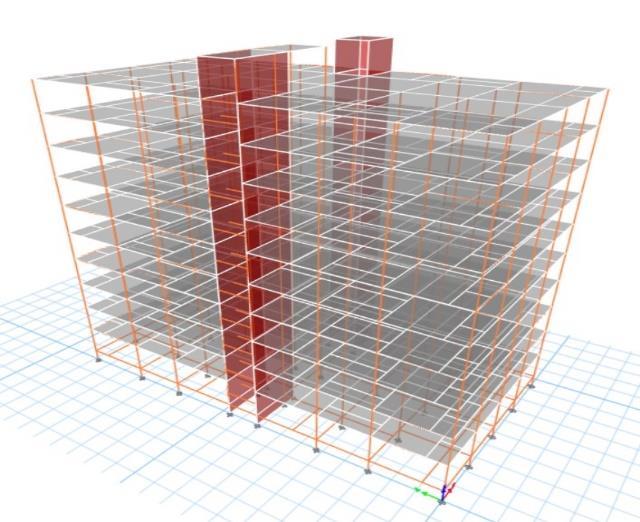
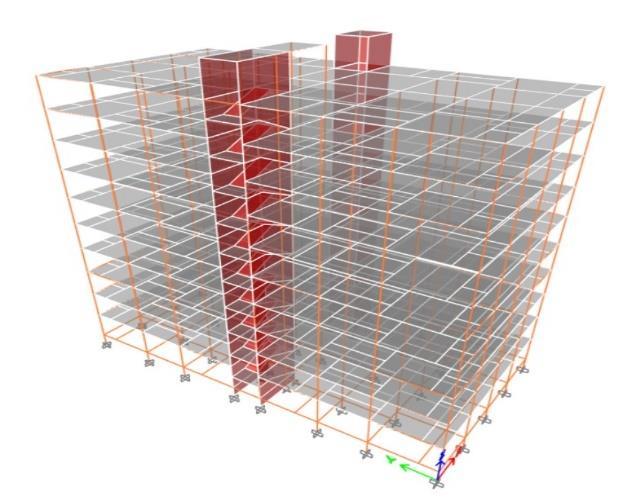
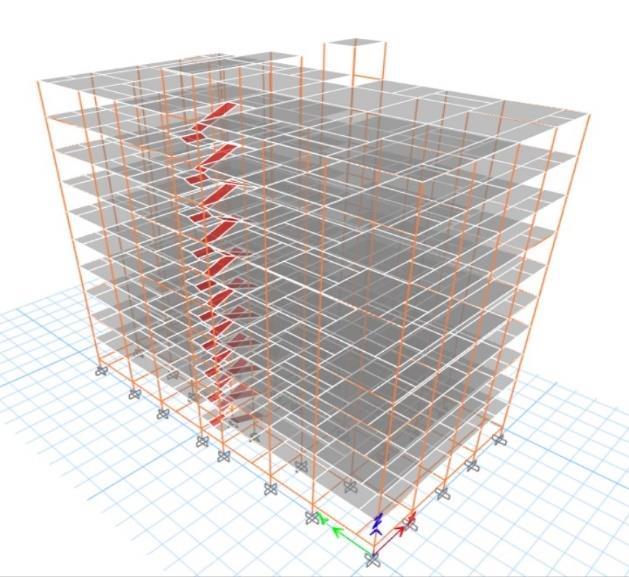
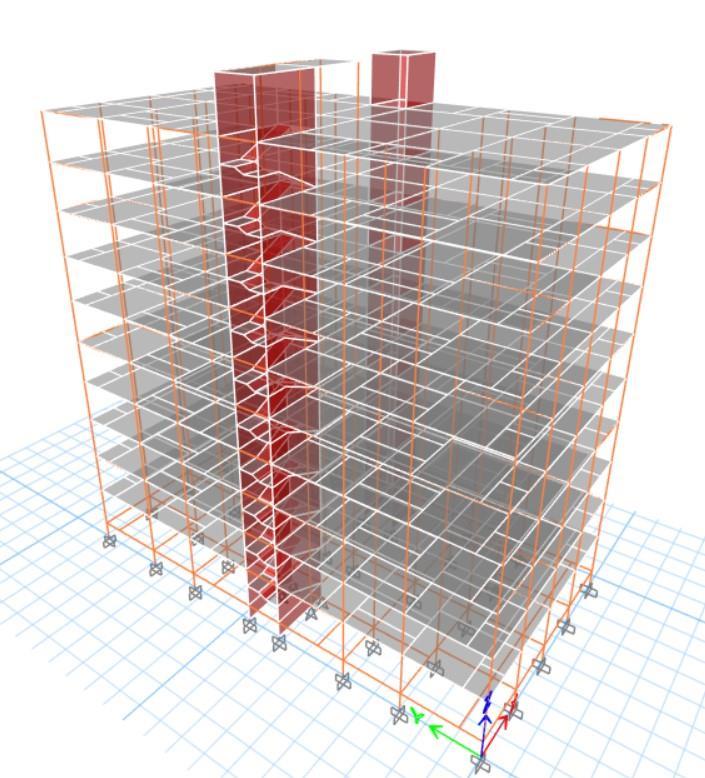
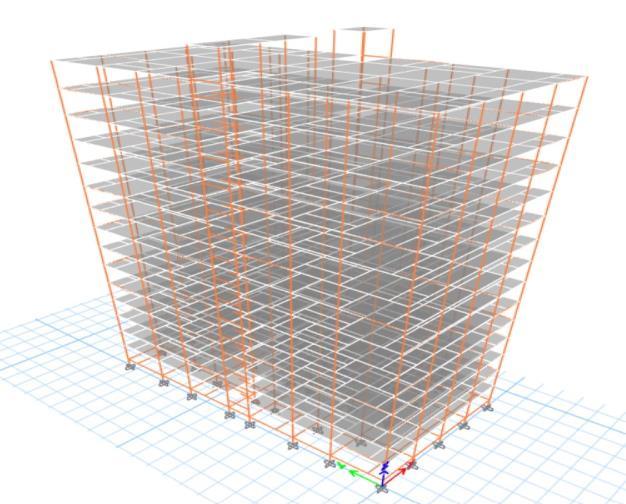
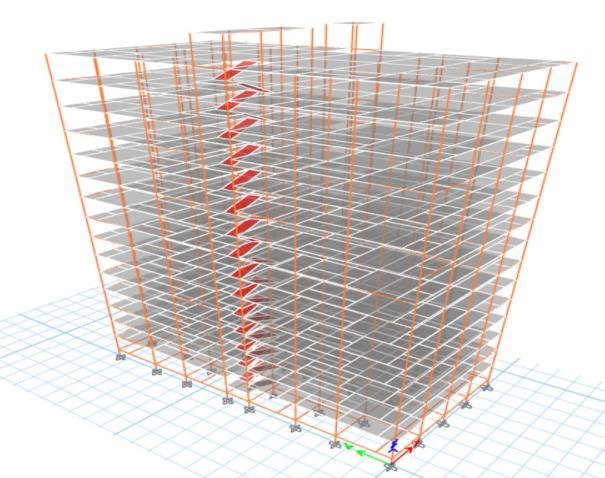
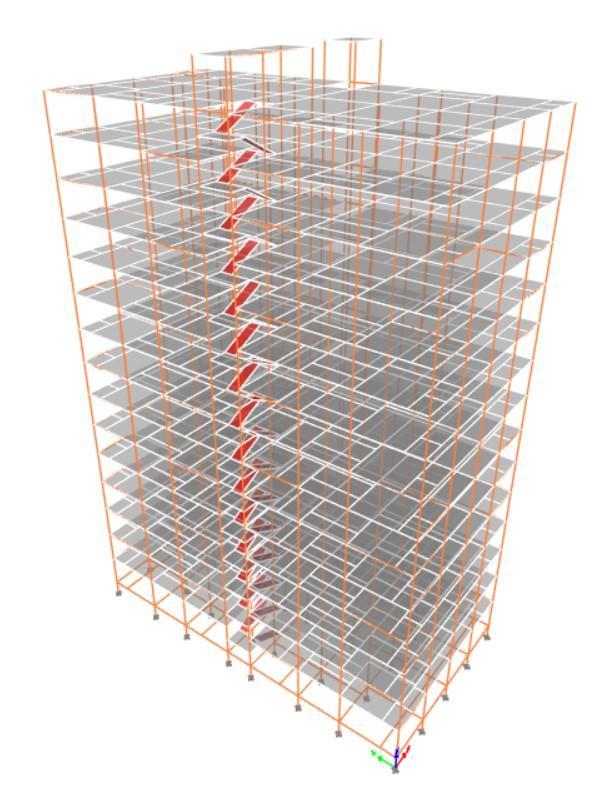
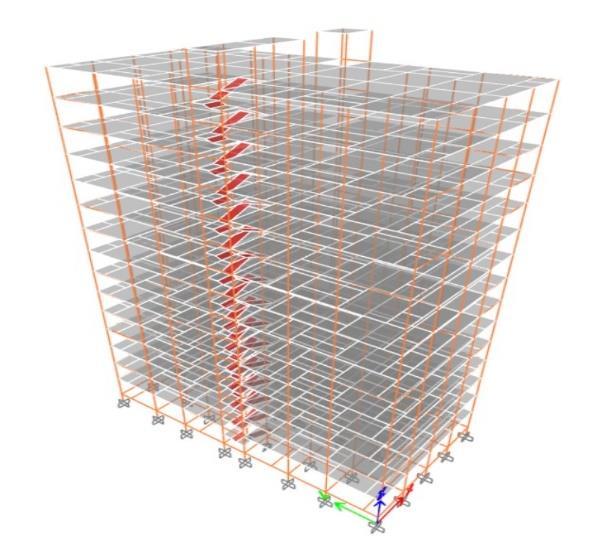
This chapter addresses the specifics of various types of staircase structures in multi-storey buildings utilizing the response spectrum method via ETABS software. In all structures,seismiczoneIIIisconsidered,andthesoiltype assumedforanalysisismedium.
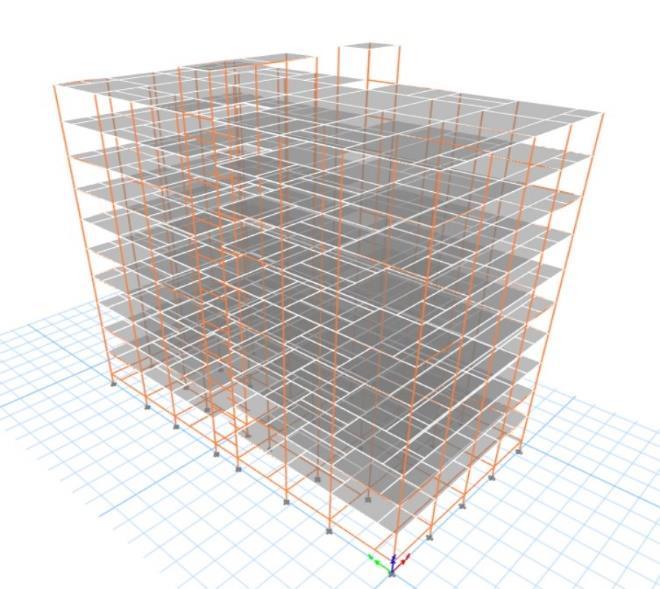
Table -1: List of Model For G +9 Story
Model Number Number Of Storey Type of staircase
M0 G+9 Withoutstaircase
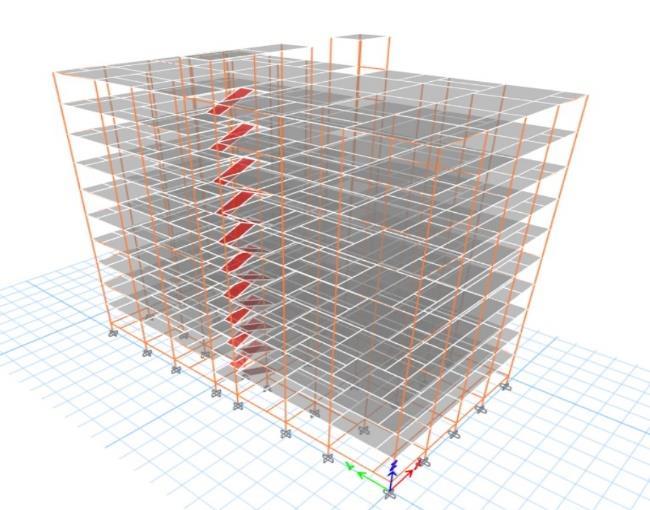
M1 G+9 HalfTurn
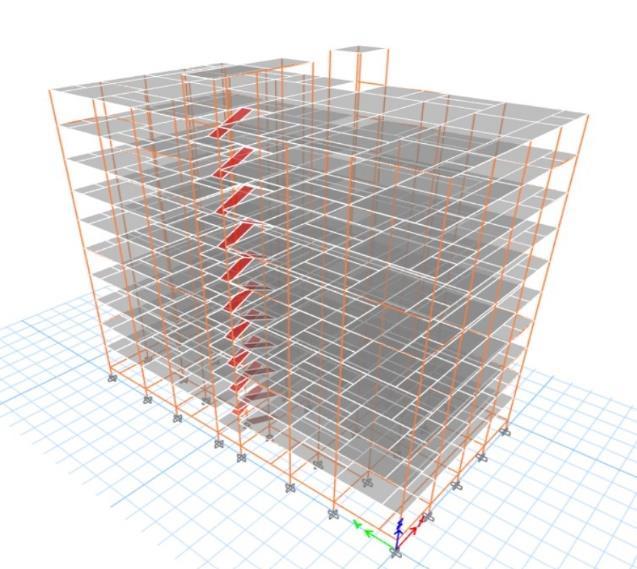
M2 G+9 OpenWell
M3 G+9 OpenWellwithQuarter TurnLanding
M4 G+9 Withoutstaircasewith Shearwall
M5 G+9 HalfTurnwithShearwall
M6 G+9 OpenWellwithShear wall
M7 G+9 OpenWellwithQuarter TurnLandingwithShear wall
Table -2: List of Model For G+ 14 Story
Model Number Number Of Storey Type of staircase
M8 G+14 Withoutstaircase
M9 G+14 HalfTurn
M10 G+14 OpenWell
M11 G+14 OpenWellwithQuarter TurnLanding
M12 G+14 Withoutstaircasewith Shearwall
M13 G+14 HalfTurnwithShearwall
M14 G+14 OpenWellwithShear wall
M15 G+14
OpenWellwithQuarter TurnLandingwithShear wall
Table -3: Parameters of Building NumberofStorey G+9andG+14
ingrid(X–Dir.)
+ 9)
+ 14)
International Research Journal of Engineering and Technology (IRJET) e-ISSN: 2395-0056
Volume: 12 Issue: 05 | May 2025 www.irjet.net p-ISSN: 2395-0072
International Research Journal of Engineering and Technology (IRJET) e-ISSN: 2395-0056
Volume: 12 Issue: 05 | May 2025 www.irjet.net p-ISSN: 2395-0072
International Research Journal of Engineering and Technology (IRJET) e-ISSN: 2395-0056
Volume: 12 Issue: 05 | May 2025 www.irjet.net p-ISSN: 2395-0072
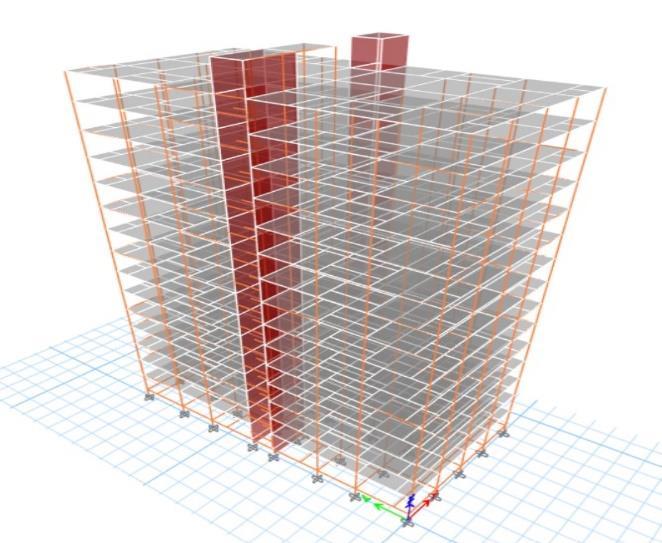
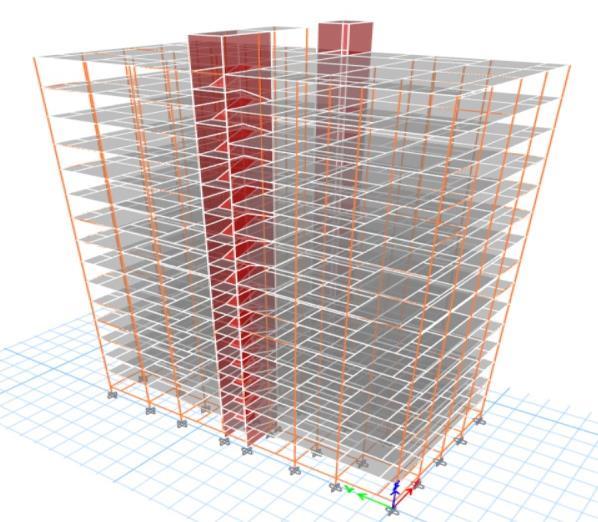

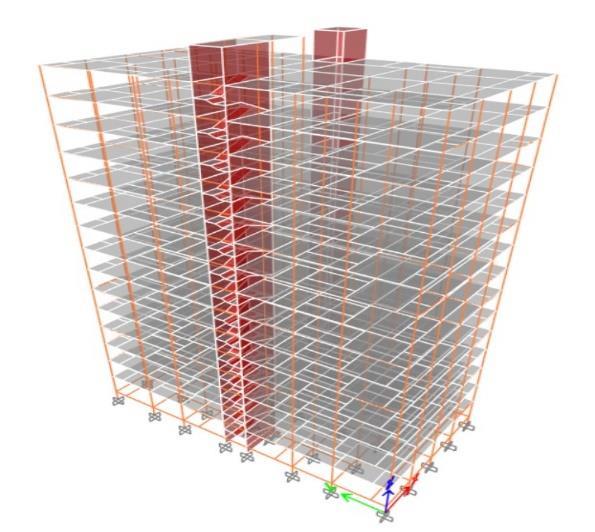
Chart -1:GraphofMaximumStoryDisplacementinXDirectionof Model–0,1,2,3
Chart -2:GraphofMaximumStoryDisplacementinYDirectionof Model–0,1,2,3
International Research Journal of Engineering and Technology (IRJET) e-ISSN: 2395-0056
Volume: 12 Issue: 05 | May 2025 www.irjet.net p-ISSN: 2395-0072
Chart -3:GraphofMaximumStoryDriftsinX–Direction Model–0,1,2,3
Chart -6: GraphofMaximumStoryDisplacementinY–DirectionModel–4,5,6,7
0.00E+00 1.00E-07 2.00E-07 3.00E-07 4.00E-07 5.00E-07 6.00E-07 7.00E-07 8.00E-07 9.00E-07
Chart -4:GraphofMaximumStoryDriftsin Y–Direction Model–0,1,2,3
Chart -7: GraphofMaximumStoryDriftsinX–Direction Model–4,5,6,7
0.00E+00 2.00E-07 4.00E-07 6.00E-07 8.00E-07 1.00E-06 1.20E-06
Chart -5: GraphofMaximumStoryDisplacementinX–DirectionModel–4,5,6,7
Chart -8: GraphofMaximumStoryDriftsinY–Direction Model–4,5,6,7
2025, IRJET | Impact Factor value: 8.315 | ISO 9001:2008 Certified Journal | Page
International Research Journal of Engineering and Technology (IRJET) e-ISSN: 2395-0056
Volume: 12 Issue: 05 | May 2025 www.irjet.net p-ISSN: 2395-0072
7.00E-07
6.00E-07
4.00E-07 5.00E-07
3.00E-07
2.00E-07
1.00E-07
0.00E+00
Chart -9: GraphofMaximumStoryDisplacementinX–DirectionModel–8,9,10,11
Chart -12: GraphofMaximumStoryDriftsinY–Direction Model–8,9,10,11
0.002 0.004 0.006 0.008 0.01 0.012 0.014 0.016
Chart -10: GraphofMaximumStoryDisplacementinY–DirectionModel–8,9,10,11
Chart -13: GraphofMaximumStoryDisplacementinX–DirectionModel–12,13,14,15
0.00E+00
Chart -11: GraphofMaximumStoryDriftsinX–Direction Model–8,9,10,11
0 0.002 0.004 0.006 0.008 0.01 0.012 0.014 0.016 0.018 0.02
Chart -14: GraphofMaximumStoryDisplacementinY–DirectionModel–12,13,14,15
2025, IRJET | Impact Factor value: 8.315 | ISO 9001:2008 Certified Journal | Page690
International Research Journal of Engineering and Technology (IRJET) e-ISSN: 2395-0056
Volume: 12 Issue: 05 | May 2025 www.irjet.net p-ISSN: 2395-0072
5.00E-07
4.50E-07
0.00E+00 5.00E-08 1.00E-07 1.50E-07 2.00E-07 2.50E-07 3.00E-07 3.50E-07 4.00E-07
Chart -15: GraphofMaximumStoryDriftsinX–Direction Model–12,13,14,15
7.00E-07
0.00E+00 1.00E-07 2.00E-07 3.00E-07 4.00E-07 5.00E-07 6.00E-07
Chart -16: GraphofMaximumStoryDriftsinY–Direction Model–12,13,14,15
From the study, it is observed that the maximum story displacement value in X - direction and Ydirection of Model -M2 and the minimum storey displacement value of Model -M0, the storey displacement value of Model -M1 and Model -M3 ismoderateinY-direction.
The study determined that Model-M2 displayed thehighestmaximumStorydriftsvaluecompared toModel-M0,Model-M1andModel-M3inBothX andY-direction,thestoreydriftsvalueofModelM1 and Model -M3 is moderate in Y direction, Both X and Y - direction the maximum Storey driftsis1stslab.
From the study, it is observed that the maximum storydisplacementvalueinX-directionof Model -M5 and the minimum storey displacement value of Model -M4, the maximum storey displacement value of Model -M7 and the minimum storey displacement value of Model -M6 in Y - direction, So overall the displacement order is M5 > M6 > M7>M4inX-directionandM7>M5≈M4>M6 inY-direction.
The study concluded that Model-M6 has a maximum Story drifts and Model-M4 has a minimumstoreydriftsinX-directionandModelM4hasamaximumStorydriftsandModel-M5has a minimum storey drifts in Y – direction, Storey driftincreasesfromthebasetoaroundthe2ndor 1st slab, after which it starts decreasing towards thetopinbothXandY–direction.
From the study, it is observed that the maximum story displacement value in X - direction and Ydirectionof Model - M9andtheminimumstorey displacement value of Model -M8, the storey displacement value of Model -M10 and ModelM11ismoderateinbothXandY-direction.
The study determined that Model-M9 displayed thehighestmaximumStorydriftsvaluecompared to Model-M8, Model -M10 and Model -M11 in BothXandY-direction,thestoreydriftsvalueof Model-M10andModel-M11ismoderateinXand Y - direction, Both X and Y - direction the maximumStoreydriftsis2ndslab.
From the study, it is observed that the maximum storydisplacementvalueinX-directionof Model -M13andtheminimumstoreydisplacementvalue ofModel-M12,themaximumstoreydisplacement value of Model -M15 and the minimum storey displacementvalueofModel-M12inY-direction.
The study concluded that Model-M12 has a maximum Story drifts and Model-M15 has a minimumstoreydriftsinX-directionandModelM12 has a maximum Story drifts and Model-M13 has a minimum storey drifts in Y - direction, Storeydriftincreasesfromthebasetoaroundthe 2nd or 3rd slab, after which it starts decreasing towardsthetopinbothXandY–direction.
1. International Conference on Trends and Challenges in Concrete Structures Ghaziabad, UP, India December 19-21, 2013. Effect of Staircase on RC Frame StructuresUnderSeismicLoad.
International Research Journal of Engineering and Technology (IRJET) e-ISSN: 2395-0056
Volume: 12 Issue: 05 | May 2025 www.irjet.net p-ISSN: 2395-0072
2. International Journal of Research eISSN: 2348-6848 & pISSN:2348-795XVol-5SpecialIssue-13,Heldon23rd & 24th February 2018, Comparative Study of G+5 RC BuildingwithandwithoutStaircaseModelatDifferent Location.
3. International Conference on Contemporary Iran on Civil Engineering .Architecture and Urban DevelopmentIranTehran-August16,2017.Effectsof staircase on the seismic performance of reinforced concrete frame buildings considering the position of thestaircase.
4. N Shyamananda Singh et al. / International Journal of EngineeringScienceand Technology(IJEST).Effectsof Staircase on The Seismic Performance of RCC Frame Building.
5. Chintan Raghwani & Rajeshkumar Suthar. Effect of Staircase on a Structure Subjected to Seismic Forces. International Journal of Advances in Engineering and Management(IJAEM),Volume4,Issue5May2022.
6. International Research Journal of Engineering and Technology(IRJET),e-ISSN:2395-0056,p-ISSN:23950072, Volume: 07 Issue: 05, May 2020, Seismic Effect onStaircaseinPerformanceofRCFrameBuilding.
7. InternationalJournalforResearchinAppliedScience& Engineering Technology (IJRASET), ISSN: 2321-9653; IC Value: 45.98; SJ Impact Factor: 7.177, Volume 7 Issue V, May 2019- Available at www.ijraset.com, Effect of Staircase on a Structure Subjected to Seismic Forces.
8. Earthq Eng & Eng Vib (June 2013) Volume 12: 209219, DOI: 10.1007/s11803-013-0164-2, Seismic performanceanalysisanddesignsuggestionfor frame buildingswithcast-in-placestaircases.
9. Engineering Failure Analysis 33 (2013) 490–496, Earthquake response analysis for stairs about frame structure.
10. Architecture Civil Engineering Environment, No. 4/2018,EffectsofStaircaseonTheSeismicBehaviorof RCMomentFrameBuildings.
11. IS 1893:2016, IS Criteria for earthquake Resistant DesignofStructures.
12. IS 875:2015, IS Code of Practice for Design Loads (Otherthanearthquake)forbuildingsandStructures.
2025, IRJET | Impact Factor value: 8.315 |