
International Research Journal of Engineering and Technology (IRJET) e-ISSN: 2395-0056
Volume: 12 Issue: 03 | Mar 2025 www.irjet.net p-ISSN: 2395-0072
International Research Journal of Engineering and Technology (IRJET) e-ISSN: 2395-0056
Volume: 12 Issue: 03 | Mar 2025 www.irjet.net p-ISSN: 2395-0072
Anaswara K M1 , Reshmi K C2
1 Student, Dept. Architecture and Planning, Govt, Engineering College, Thrissur, Kerala, India
2 Asst Prof, Dept. Architecture and Planning, Govt, Engineering College, Thrissur, Kerala, India
Abstract - Ecotourism has been a sustainable tourism method that supports environmental protection while ensuring socio-economic gains for local communities. This research paper discusses how ecotourism is related to conservation, specifically the contribution of sustainable tourism towards the preservation of such vulnerable ecosystems. The study reviews existing literature on ecotourism, the conservation of mangroves, and India's prevailing conservation policies and programs. To create a viable ecotourism model, best practices of successful ecotourism operations globally are analyzed, and essential planning and conservation strategies that can be appliedtothestudyareaareidentified.Site-specificanalysisis carriedouttoevaluatemangroveconditions,tourismfacilities, andconservationeffortsthroughsurveysandinterviewswith stakeholders.
Theresearchemphasizesthatthoughecotourismcanpromote conservation,poor infrastructure,absenceofregulation,and limitedcommunityinvolvementconstrainitseffectiveness.The research concludes with strategic proposals for ecotourism development such as environmentally friendly tourism infrastructure, sustainable visitor management, and community-ledconservation activities.
Key Words: Ecotourism,Mangroves,conservation,
Ecotourismisasustainabletypeoftravelthatofferstourists worthwhile experiences in natural environments, emphasizing environmental preservation, community service,andeducation. Itisanessentialtacticforprotecting biodiversity, advancing cultural heritage, and creating favorableeconomicconditionsfornearbycommunities. By combining ecotourism with conservation initiatives, it is made sure that travel-related activities enhance environmental preservation rather than worsen it. Ecotourism promotes the conservation of natural ecosystems such as coral reefs, mangroves, forests, grasslands,etc.
Mangroves are salt-tolerant plants found in tropical and subtropicalintertidalregionsworldwide.Theseregionsare called mangrove ecosystems. Mangroves are breeding, feeding,andnurserygroundsformanyestuarineandmarine organisms, including finfish and shellfish. Although mangroveforestscoverlessthan0.5%oftheoceans,they storemorethan14%oftheircarbon[3].
Indiahasamangroveforestcoverof4991sq.Km,occupying only3.2%ofglobalmangroveforests.Sundarbanshavethe largestmangrovecover,occupying43%andGujarathasthe second largest cover with 23% of the total cover in India. The two areas alone occupy 66% of the mangrove cover, surprisinglyinadverseconditionsofhighenergytidalcoast, experiencing two extreme situations [7]. The Goshree Islands in Kochi, Kerala, are known for their ecological significance and the presence of mangrove ecosystems. However, the increasing pressure from urbanization and fishingactivitieshasledtoenvironmentaldegradationinthe region. Recognizing the importance of mangroves in ensuring ecological balance and supporting livelihoods, it becomesessentialtostudythestatusofmangrovesonthe Goshree Islands and explore sustainable conservation practices
Ecotourism-integratedconservation will help mitigate the challengesandimprovepeople'sawarenessthroughproper ecotourism development. This study explores integrated ecotourism planning as a tool for conservation while ensuringcommunityparticipationandsustainableeconomic opportunities. Implementing low-impact tourism infrastructure,mangroverestoration,sustainabletransport, andeco-friendlypoliciescancreateGoshreeIslands
1.1
To develop an ecotourism-integrated conservation planningforGoshreeIslands
1.2 Objective
• To study the concept of ecotourism, methods, principles,androleofecotourisminconservation
• To study the environmental importance of Mangrove and the current scenario of mangrove conservationinIndia
• Toidentifymethodsandtoolsfrombestpracticesof ecotourismplanningandconservation
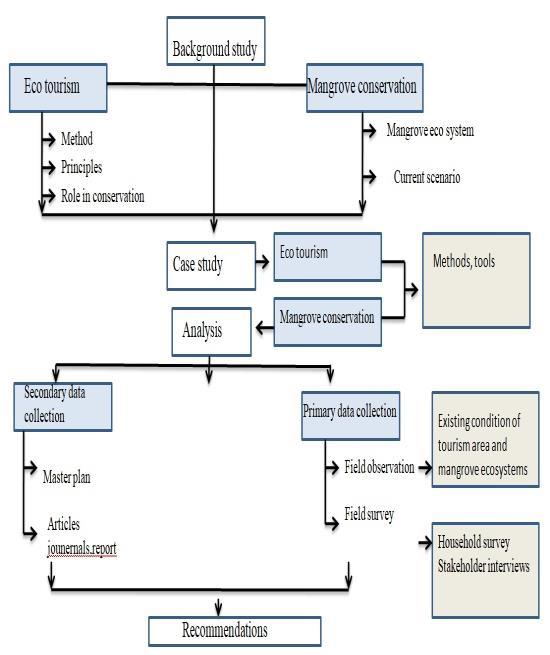
• Assessexisting studyarea conditions andanalyze ecotourism planning through surveys and interviews.
• To provide strategic recommendations for the ecotourism-integrated conservation planning for GoshreeIsland.
International Research Journal of Engineering and Technology (IRJET) e-ISSN: 2395-0056
Volume: 12 Issue: 03 | Mar 2025 www.irjet.net p-ISSN: 2395-0072
2.1 Ecotourism
Eco-tourism is defined in different ways “traveling to relativelyundisturbedoruncontaminatednaturalareaswith thespecificobjectiveofstudying,admiring,andenjoyingthe scenery and its wild plants and animals, as well as any existing cultural manifestations (both past and present) foundintheseareas”(Boo1990:xiv).
“Ecotourismislow-impactnaturetourismthatcontributesto the maintenance of species and habitats either directly throughacontributiontoconservationand/orindirectlyby providingrevenuetothelocalcommunitysufficientforlocal peopletovalueandthereforeprotect,theirwildlifeheritage area as a source of income “(Goodwin 1996: 288) and “responsible travel to natural areas which conserves the environment and improves the welfare of local people”(Western1993:8).Theecotourismdevelopmentis mainly concentrated on the for fundamental pilers which include[1]:
1. Minimumenvironmentalimpact;
2. Minimumimpacton–andmaximumrespectfor–hostcultures;
3. Maximum economic benefits to the hostcountry’s grassroots;and
4. Maximum‘recreational’satisfactiontoparticipating tourists
Eco-tourism exists in various types based on the activity involved.It is mainly classified into Nature-based tourism, adventure tourism, culture, and voluntourism. It mainly focusesonthevisitorexperienceandtheirinvolvementinthe activity.
Ecotourismisalow-impact,non-consumptive,andlocally controlled form of nature-based tourism that is primarily centeredonlearningaboutnaturefirsthandandisethically operated to be of low impact, non-consumptive, and controlled(control,benefits,andscale).Itisnormallyfound innaturalplaces,andoughttocontributetotheprotectionof suchplaces.
Italsoassistsin
HabitatConservation–Ecotourismproducesincomethat maybedirectedtowardhabitatpreservation,conservationof threatenedspecies,andecologicallysustainablelanduse.
•Local Community Participation – Involving local communities in ecotourism makes them economically benefit, relieving reliance on environmentally destructive practicessuchasdeforestationorhunting.
•Education & Consciousness – Tourists learn about conservationproblems,generatingafeelingofobligationto preservenature.
•Sustainable Infrastructure – Low-impact tourism facilities, nature trails, and eco-lodges support the conservation of the natural surroundings while providing accommodationtotourists.
•Policy&Governance–Conservationpolicieslikecarrying capacity restrictions and eco-certifications help prevent degradationoftheenvironmentthroughtourism.
Mangrovesarewoodyvegetationthatoccursontropical andmildtemperatecoasts,wheretheyformtheworld'ssole tall tree forests. Mangroves have developed specifically to growinhostileenvironmentswhereotherplantspeciesare unable to. This is a structurally simple forest system that yieldsmorebiomassinestuaryandintertidalareasthanany othermarinesystemontheEarth.Itsstandingcropisalso thehighest.Withviviparousgermination,highlydeveloped aerial roots, salt control, and nutrient conservation, it is physically as well as functionally distinct. Referred to by manynames,suchas"Coastalwoodland,""Oceanicrainforest "and" Tidal Forest, "mangroves are the only “blue carbon" foreststhatoccurinthesea.
It is a limited kind of forest in the globe that has just 73 species of trees, covering 15.2 million hectares in 123 nations3.Mangrovesarespecialcoastalbiomesthataremade upofsmallshrubsortreesthatlineshorelines,growingwell insaltysediments thatmaybepermanentlysubmergedin water.Theyoccurintropicalandsubtropicalareasonlyand mostlyalong protectedcoastlines, where conditions in the environmentsupporttheirsurvivalandgrowth
International Research Journal of Engineering and Technology (IRJET) e-ISSN: 2395-0056
Volume: 12 Issue: 03 | Mar 2025 www.irjet.net p-ISSN: 2395-0072
In FAO's Global Forest ResourcesAssessment(FRA2020), theFAOanalyzedglobalmangrovecoverandconcludedthat mangrove forests cover 14.72 Mha in 113 countries. The distributionhereishighlyuneven.SouthandSoutheastAsia account for 36.2% (5.33 Mha) of global mangrove cover, followed by South America with 2.12 Mha, Western and CentralAfricawith2.30Mha,NorthandCentralAmericawith 2.55Mha,andOceaniawith1.26Mha.[14]
In India, the whole mangrove ecosystem is generally classifiedintothreeregions:(i)theEastCoast,(ii)theWest Coast,and(iii)Andaman&NicobarIslands,togetherwiththe Lakshadweep atoll (Dagar et al., 1991)4. The East Coast boastsnolessthan40speciesofmangrovesspreadacross14 families and 22 genera. On the West Coast, there are 27 speciesdistributedover11familiesand16genera.Andaman &NicobarIslandshave38speciesfrom13familiesand19 genera. There is limited coverage of Mangroves in Lakshadweep by 3 species. Among the 13 States/Union Territories, there is the highest mangrove diversity in Andaman&NicobarIslandswhereexceptionalspeciessuch as Rhizophora lamarckii, Lumnitzera littorea, Sonneratia ovata, S. lanceolata, S. urama, and S. gulngai exclusively exist[14]
Importanceofmangroveecosystem:
Mangrovesarekeyecosystemsthatensurebiodiversityby being nurseries to juvenile fish, prawns, and crabs. Supportingarecord1,533species(UNEP2023),theyharbor protected environments which safeguard marine species frompredatorsaswellasharshenvironmentalconditions. Mangrove ecosystems ensure ecological equilibrium by providingfeedinggrounds,habitats,andbreedinggrounds forthedifferentspecies.
Mangroves support coastal economies by providing food itemslikefish,molluscs,andcrustaceanstolocaldietsand livelihoods. Their economic value is between USD 33,000 andUSD57,000perhectareperyear.Theyalsooffertimber, firewood,charcoal,androofingmaterialstobothsmall-and large-scale fisheries, contributing to food security and job creation.
Inadditiontoeconomicvalue,mangrovesareofculturaland historical importance, associated with local heritage and traditions. Mangroves facilitate research and education, providing knowledge of biodiversity and environmental processes. As natural buffers, mangroves reduce flood hazards, stabilize shorelines, and defend coastal infrastructureagainsterosionandstorms,providinglongtermresilienceforcoastalcommunities.
Mangrovesprovidevariousbenefitstothepeopleaswellas theenvironment.Theyactasacarbonsinktostorecarbon and it is also known as the blue carbon Mangroves for sustainable development goals. It acts like a biodiversity
hotspot,protectsthesoilfromcoastalerosion,improvesthe waterquality,andprovidesnaturalresourcesforthepeople.
Theroleofmangrovesiscloselyalignedwithseveralofthe UnitedNations’SustainableDevelopmentGoals(SDGs):
SDG1:NoPoverty,andSDG2:Zerohunger
SDG6:CleanWaterandSanitation
SDG8:DecentworkandEconomicgrowth
SDG13:ClimateAction
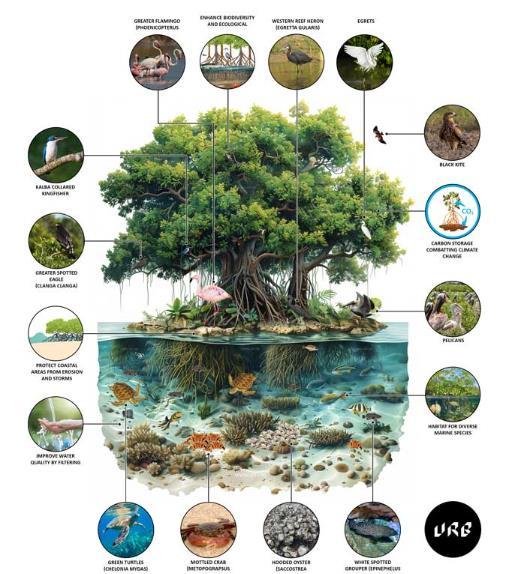
Fig -1:Ecosystemservicesofmangrove
Source:https://urb.ae/projects/dubaimangroves/
SDG14:Lifebelowwater
SDG15:LifeonLand
India's mangrove ecosystemsare protected via various initiatives. For promoting the utilization of wetlands and indigenouslivelihoods,Indiahasadoptedthenature-based solution(NbS)strategyinUnionBudget2023.Itinitiatedthe "Mangrove Initiative for Shoreline Habitats and Tangible Income(MISHTI)"and"AmritDarohar."
InIndia,itisimplementedundervariousplansandprograms, including the National Action Plan on Climate Change (NAPCC)missionsandtheMahatmaGandhiNationalRural EmploymentScheme(MGNREGA)[17]. "Actionstoprotect, sustainably manage, and restore natural or modified ecosystemsthataddresssocietalchallengeseffectivelyand adaptively, while simultaneously providing benefits to biodiversity and human well-being," is the way the IUCN definesNbS.Byharnessingthenature-tourismopportunities of Ramsar Sites across the nation, the program intends to
International Research Journal of Engineering and Technology (IRJET) e-ISSN: 2395-0056
Volume: 12 Issue: 03 | Mar 2025 www.irjet.net p-ISSN: 2395-0072
enhancethequalityoflifeofresidentsinthosecommunities [4].
Itisalsoprotectedunderthe:
CoastalRegulationZone(CRZ)Notification(2019) undertheEnvironment(Protection)Act,1986
TheWildLife(Protection) Act,1972
TheIndianForestAct,1927
TheBiologicalDiversityAct,2002
National mangrove mission
MangrovesfortheFuture(MFF)Program
Conservation and Management of Mangroves and Coral Reefs ‘under the National Coastal Mission Programme.
The Paris Agreement
TheMangrove Breakthrough.
Ecotourism is used as a tool for conservation planning in differentcitieshereconsiderthebestpracticesofMangrove conservation which include the case of Karnataka and Andaman and Nicobar Islands. Ecotourism case studies of WonerjoandKadalundi-VallikkunuCommunityReserve.
The mangrove conservation in Karnataka aims at the restorationofmorethan300hectaresoflandinKarwarand Honnavar. The project supports the biodiversity and livelihoods of locals through the inclusion of Indigenous groupsandlocalgovernment.Conservationmethodsinvolve protected areas, regulated fishing quotas, and limited tourism.Affectedsitesarekeptclosedfornaturalregrowth, andmatureareasarecheckedfortheleastenvironmental effect. This process guarantees ecological balance and economicprosperity.[16]
With about 615 sq. km of mangroves, the Andaman and NicobarIslandsfocusonenvironmentalstability,economic dividends, and mitigation of disaster risk. Conservation involvesbufferzones(20malongmajorcreeks,10malong minor creeks), and brushwood barriers to avoid seed washoutandafforestationdrives.Developmentisprohibited insensitiveareas,andvisitoreducationsuchasmangrove interpretation centers and watchtowers encourage responsible eco-tourism. This ensures long-term sustainability.[2]
Wonorejo Mangrove Ecotourism, Surabaya spans 700 hectares,WonorejoMangroveEcotourismstrikesabalance between conservation, tourism, research, and education.
Zoningmeasurestoavoidinterferingwithprotectedareas consistoflimitedconservationzones,eco-trails,andbuffer zonesfromurbanization.Developmentswithinthevicinity of the ecotourism area require Environmental Impact Assessments (EIA). Regulated by Regional Regulation Number 3 of 2007, the program supports sustainable tourismwhilemaintainingecologicalintegrity.[9]
Kadalundi-VallikkunnuCommunityReserve(KVCR),Kerala SituatedontheothersideoftheKadalundiestuaryinKerala, KVCR is a prototype of sustainable eco-tourism. The area boastsapicturesqueriver,mangroveislands,andavariety ofbirdspeciessuchasGulls,Terns,andPlovers.Eco-tourism offers guided country boat trips for bird watching and wildlifespotting,inadditiontofishingtours.Handledbythe CommunityResourceManagementCommittee(CRMC),the project provides for local involvement with licensed boatmen adhering to eco-friendly guidelines. This model effectivelycombinesconservation,tourism,andcommunity development[15]
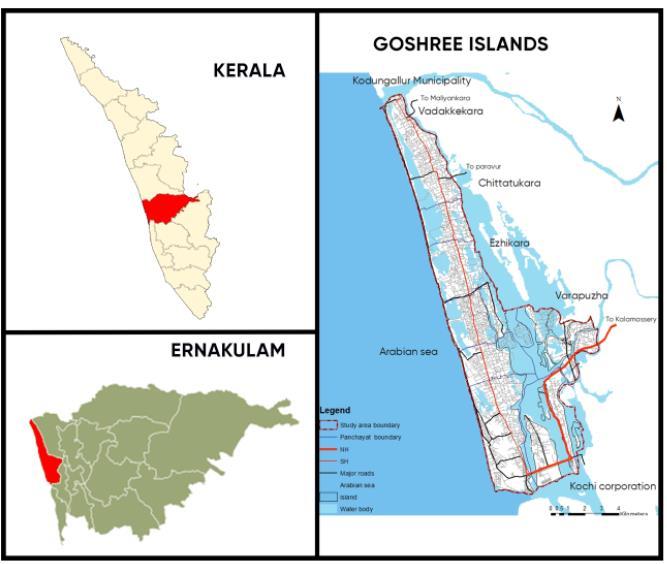
The study area chosen for the current study is Vypin Kuzhuppilly, Edavanakad, Pallipuram, Nayarambalam, Njarakkal,Elamkunnapuzha,Mulavukadand,Kadamakkudy They are one of the groups of islands that belong to the CochinestuaryintheSouthIndianstateofKerala(Figure-2). PuthuvypeIsland,BolgattyIsland,andVallarPadamIslands are prominent landforms within the Cochin estuary, grappling with dense populations and a host of environmentalissuessuchascoastalerosionandincreasing sea levels caused by both human activities and natural phenomena.
Thestudyarealiesbetween10°12°and9º55"latitudeand 76°10°and76°18°longitudealongtheArabianSeaonthe westcoastofKochi.Itconsistsofthenarrowstripofcoastal sandbarlyingbetweentheAzhikodeBarmouthonthenorth and the KochiBar mouth onthe south and several islands lying in the backwaters east of it. The total area is 106.84 Km².TheseislandslieclosetoKochi,thefastest-growingcity inKerala.
The occupation of majority of the people are fishing the presenceofwaterbodieslikeVembandkayal,Periyarand other canals which create the fisheries wealth and they mainlydependonthemfortheirlivelihood.
© 2025, IRJET | Impact Factor value: 8.315 | ISO 9001:2008 Certified Journal | Page1324
International Research Journal of Engineering and Technology (IRJET) e-ISSN: 2395-0056
Volume: 12 Issue: 03 | Mar 2025 www.irjet.net p-ISSN: 2395-0072
Thestudyregioncomprisesanareaofmangroveof2.93km square.Itprovidesasignificantshareofthemangrovecover intheErnakulamdistrict.Theyexperiencealossofmangrove coverthroughouttheyearduetoinfrastructuredevelopment andanincreaseinAquaculture.Theseareascanbeseenfrom the several studies carried out in the study region. Approximately40%ofmangroveareahasbeenlostinrecent years.Thereisanurgentconservationneedfortheexisting mangrove cover. Mangrove islands in Kochi are being threatened more and more by population pressure, aquaculture activities, and mangrove environment conversion into new shrimp ponds. Industrial effluent discharge,oilspillage,tidalstorms,dredgingforlandfilland port construction, industrial estate, and housing estate constructionformanhavecausedmangrovedestructionin Kochi[9].
In Kerala, there are 18 true mangrove species and 49 associates among them Mangrove species present in the studyareaareAcanthusilicifolius Bruguieragymnorrhiza, Rhizophoramucronate,Bruguieracylindrica,Kandeliacandel , Sonneratia caseolaris ,Rhizophora apiculate, Bruguiera sexangular,Acrostichumaureum,Excoecariaagalloch[8]
A higher area of mangrove can be seen in Elamkunnapuzha panchayat. The coastal region extending from Elamkunnapuzha and Nayarambalam shows the mangrovepatchesinhigherconcentration.The Puthuvype areainElamkunnapuzhahas200haofmangroveforest.The Mulavukadu panchayat is also the major location of mangrove patches due to the coastal ecosystem. However, this area is facing a threat due to the infrastructure developmentandconversionoflandtoshrimpfarming.
Study location in Kochi has picturesque beaches such as Cherai, Kuzhuppilly, Puthuvype, and Munambam, which
provide scenic beauty and a peaceful environment, and MunambamFishing
Harbor for local fishing practices. Some ayurvedic retreat centers also operate primarily in Cherai Beach which welcomestheinternational visitoraswell.Thestudyarea has several natural features which invite tourism to the region.Somehistoricallyimportantplacesarealsoavailable overtheregionwhichwereconstructedduringthetimeof the Portuguese. Kadamakkudy island is filled with backwater, paddy fields, and green areas the region facilitates village tourism and draws international and domestictravelerstoo.Theprimaryactivityoftheregionis fishingitisalsobeingturnedintotourismincertainpartsof theregionanditfacilitatesaquatourismandoffersfishing and boating services to the visitors they also serve traditionalfoodtothevisitorsforpromotingthecultureof theregion.Thisregionhashighpotentialwithaspreading beachof24kmandnature-basedtourismdestinations.
Aqua farms are the prime eco-tourism attraction in the locality.Whichprovidesthetouristswithanopportunityto experience the fishing and boat services offered in the locality.Italsoenablesthemtoprovidemoreinformationon the traditional fish-catching method and the various varietiesoffishthere.VypinIslandboastsanaturallocaleby thenameofpoyil whichencouragesaquafarmand paddy field
Thisregionattractedalargenumberofmigratorybirdsas wellasthelocalbirds.ValiyaKadamakkudy,thePuthuvypee LNGsite,andtheCMFRIsitearetheprincipalbird-watching sites. The migratory birds can be best seen during the monthsofNovembertoFebruary.Thereareapproximately 500speciesofbirds-residentandmigratory-whichinhabit the green tropical forests, many freshwater and brackish lakes,andwaterloggedpaddyfieldsoftheregion.Mangrove zonesavailableinPuthuvypeenandCheraiaretheprimary birdhotspotsbecauseoftheirnaturalhabitat.Italsoinvites touristsandbirdenthusiaststothisarea.
TheGhosreeIslandsareanecologicallysensitiveareawith diversenaturalcharacteristics. Itsmajorconcernwasthe presence of thick mangrove forests and the diversity that accompaniesthem. Migratoryandnativebirdsarepresent inthehotspotsofthestudyareabecauseofthehighdensity ofmangrovesandwetland habitats.Theislandssupporta diverse range of mangrove species, fish, bird, and other organisms. Duetotherichnessinwaterbodiesanddiversity in ecosystems, this coast region has a high potential to developecotourism.
However, pollution, land reclamation, development of infrastructure, and shrimp aquaculture are the primary reasonsforthedegradationofmangrovestatus.So,thereisa needforstrictrulesandregulations
International Research Journal of Engineering and Technology (IRJET) e-ISSN: 2395-0056
Volume: 12 Issue: 03 | Mar 2025 www.irjet.net p-ISSN: 2395-0072
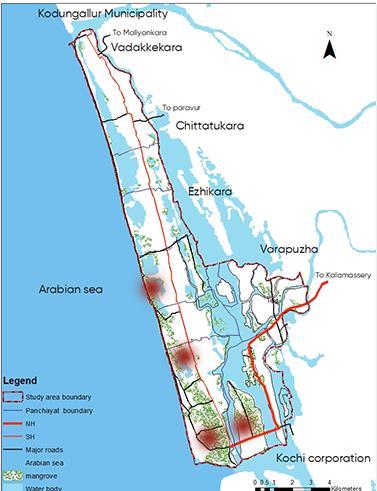
Fig -3: identifiedareaofmangroveloss
Regionsofmangrovedeclinedeterminedbyprimarysurvey and stakeholder interviews is highlighted in fig- 3. Land conversion and trash disposal are the two biggest issues facingmangroves.
mainly on private vehicles. It also considered the future expandedrootofwatermetrorootswhichwillstartinafew months. From that, it is analyzed that areas are well connected.Butthereisalackofpublictransportfacilitiesto reachthetownareas. So,thetouristdestinationcurrently facingparkingissuesandcongestion.
.
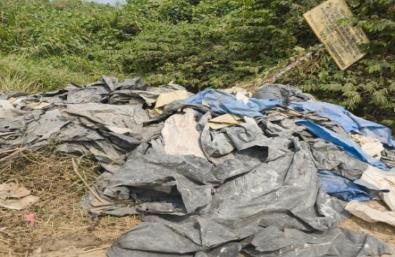
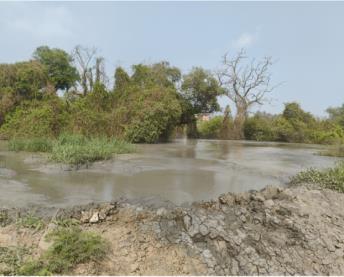
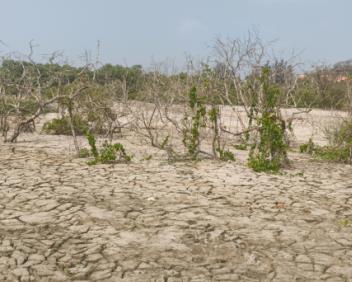

Fig -4: Identifiedissuesfacedinthestudyarea
3.1 Proximity analysis of tourism infrastructure
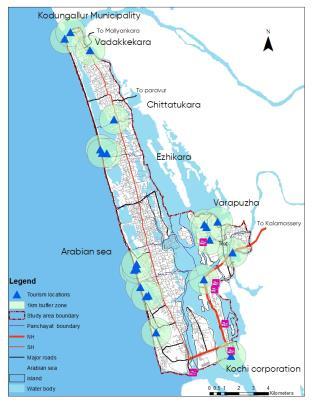
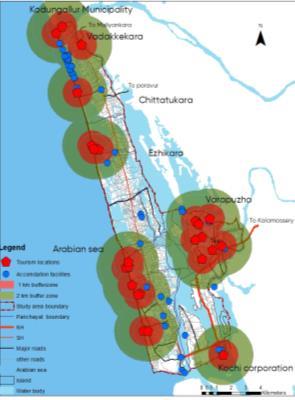
Goshree Island consists of numerous tourist destinations which attract domestic and international tourists as well. Through the field survey it is identified that most of the touristdestinationinthestudyareaismainlyattractedby the domestic tourist. The main challenge faced by the current tourist destination is the lack of infrastructure. Considering the proximity analysis of the accessibility to tourist destinations most of the area is well connected by road and water transport but there is a lack of public transportfacilitiesinsomeareas.Whichleadstodepending
Accommodationfacilitiesarealsoavailablewithin1kmand2 km from the tourist destinations. So, Tourists can easily assembletoaccommodationfacilitiesbutthereis alackof medicalfacilitiesnearthedestinations.
Mangrove ecosystems play a crucial role in coastal protection, biodiversity conservation, and sustainable livelihoods. However, rapid urbanization, climate change, and unregulated tourism pose significant threats to their survival.Thisstudyexaminedtheintersectionofecotourism and mangrove conservation, analyzing existing literature, governmentschemesinIndia,andthestatusofmangroves andtourisminfrastructureatthechosensite.Thefindings highlightboththepotentialandchallengesofecotourismas a conservation tool. While various policies and initiatives aimtoprotectmangroves,gapsinenforcement,inadequate infrastructure, and lack of community engagement hinder effective implementation Through this research, it is examined that Goshree Island comprises various types of coastalecosystemsthatshouldbepreservedandrecovered. The native people of this region are totally reliant on the surroundingenvironmentfortheirlivelihoodmostofthem arefishermen.Thecrisscrossedwaterbodiesofthisregion are utilized by the people for transportation purposes as wellasfishing.Atthetimeofthefieldsurvey,itisobserved that most of the population in the area is aware of the significanceoftheecosystemandbiodiversity.Thereexistsa varietyoffloraandfaunahereitwillassistinenhancingthe ecotourismdevelopmentinthisregion.
International Research Journal of Engineering and Technology (IRJET) e-ISSN: 2395-0056
Volume: 12 Issue: 03 | Mar 2025 www.irjet.net p-ISSN: 2395-0072
Themangrove ecosystemin thearea isunderthreatfrom urbanization, land conversion, etc. Thus, ecotourism developmentassistsinraisingawarenessandprotectionof presentmangrovesystems.Thesewetlandsandmangroves are the home for the animals, mollusks, fishes, and birds. Thus, they can generate interest to the environmentalists and ecotourists which also assists in generating the economic value to the areas. Thereby it can assist in enhancing the livelihood and basic infrastructure of the region.
Basedonthesurveyfromthefield,itisstudiedthatmostof thepeoplearereadytobeinvolvedinecotourismactivities and support the construction of environment friendly infrastructure.People'sparticipationindecision-makingand activities contributes to the development of the people as well as enhances their knowledge to be a part of conservationactivities.
Intensifying conservation regulations, encouraging responsible tourism processes, and engaging local communitiesinecotourismactivitiesarenecessarytoensure abalancebetweeneconomicgrowthandtheprotectionof ecological systems. Sustainable tourism investments in infrastructure, more stringent regulation systems, and ongoing monitoring of mangrovehealthcan help improve conservation.
These are some recommendations for ecotourism developmentinthisregion.
Create mangrove conservation areas with nature trails to inform tourists about the environmental significanceofmangroves.
Enforce rigorous environmental laws to restrict humanintrusionandavoidhabitatloss.
Encourage community-based conservation initiatives, engaging residents and fishermen in mangroveregenerationactivities.
Construct floating or stilted accommodation from eco-friendly materials to avoid harming the environment.
Organize eco-tourism boat tours and kayaking in the backwaters, using non-motorized or electric boatstoavoidpollution.
Implement restricted boating zones to protect sensitivemangroveareasandnestinggroundsfor wildlife.
Organize guided birdwatching and nature photography tours to attract eco-conscious travelers.
Set up eco-interpretation centers that give informationonmangroveecosystems,conservation issues,andecotourismadvantages.
Conducteducationalworkshopsandfieldtripsfor students and researchers to raise conservation awareness.
Implementelectricshuttleservicesorbicyclehire forenvironmentallyfriendlylocaltransport.
Setupnaturetrailsandcyclingroutestopromote low-impacttourismactivities.
Create buffer zone for tourism activities, conservationetc.
Moving forward, a comprehensive approach integrating policy reforms, scientific research, and community-driven initiativesisnecessarytoensurethelong-termsustainability ofmangrove ecosystems.Future researchshouldfocuson assessing ecotourism's long-term ecological and socioeconomic impacts on mangroves. By fostering a synergy betweenconservationandtourism,Indiacanprotectitsvital mangrove forests while promoting sustainable economic growth.
I sincerely appreciate the support from Mrs. Dr.Rani Varghese,DepartmentofMarineBiology,Microbiologyand biochemistryCochinUniversityofScienceandtechnology, Kochi for providing the necessary facilities and research materials. Special thanks to Mr. Manoj Kumar I B (Environmentalist)andMurukesanTP(Environmentalist).
[1] Fennell,D.A.(2014). Ecotourism.Routledge.
[2] Mangroves of A & N Island (2012), Department of environmentandforest
[3] Alongi, D. M., Murdiyarso, D., Fourqurean, J. W., Kauffman,J.B.,Hutahaean,A.,Crooks,S.,...&Wagey,T. (2016). Indonesia’s blue carbon: a globally significant and vulnerable sink for seagrass and mangrove carbon. Wetlands ecologyand management, 24,3-13.
[4] Cohen-Shacham,E.,Walters,G.,Janzen,C.,&Maginnis,S. (2016). Nature-based solutions to address global societalchallenges. IUCN:Gland, Switzerland, 97,20162036
[5] Ghosh,A.,Schmidt,S.,Fickert,T.,&Nüsser,M.(2015). The Indian Sundarban mangrove forests: history, utilization,conservationstrategies,andlocalperception. Diversity, 7(2),149-169.
International Research Journal of Engineering and Technology (IRJET) e-ISSN: 2395-0056
Volume: 12 Issue: 03 | Mar 2025 www.irjet.net p-ISSN: 2395-0072
[6] Hema,M.,&IndiraDevi,P.(2014).Factorsofmangrove destructionandmanagementofmangroveecosystemof Kerala,India. JournalofAquaticBiologyandFisheries, 2, 184-196
[7] Kathiresan,K.(2018).MangroveforestsofIndia. Current science,976-981.
[8] Rani,V.,Nandan,S.B.,&Schwing,P.T.(2021).Carbon sourcecharacterisationandhistoricalcarbonburialin threemangroveecosystemsontheSouthWestcoastof India.Catena,197,104980
[9] Setiawan, W., Harianto, S. P., & Qurniati, R. (2017). Ecotourism development to preserve mangrove conservation effort: AcasestudyinMargasariVillage, DistrictofEastLampung,Indonesia. Indo-PacificJournal ofOcean Life, 1(1),14-19.
[10] Satheeshkumar,P.,Manjusha,U.,&Pillai,N.G.K.(2011). Conservation of mangrove forest covers in Kochi coastCurrent Science, 101(10),1400-1400.
[11] DraftCZMPreportErnakulam2023
[12] DraftMasterplanGIDA(2030)
[13] Satereportofforestcover2021
[14] Statereportofforestcover2023
[15] https://kvcrkadalundi.org/
[16] https://www.oneearth.org/six-projects-restoring-vitalmangrove-forests-around-the-world/
[17] https://pib.gov.in/PressReleaseIframePage.aspx?PRID= 2002625