
International Research Journal of Engineering and Technology (IRJET) e-ISSN:2395-0056
Volume:12Issue:01|Jan2025 www.irjet.net p-ISSN:2395-0072

International Research Journal of Engineering and Technology (IRJET) e-ISSN:2395-0056
Volume:12Issue:01|Jan2025 www.irjet.net p-ISSN:2395-0072
Nujaba Binte Kabir1, Imran Ebne Amin2
1,2 Assistant Professor, Dept. of Architecture, Ahsanullah University of Science & Technology, Dhaka, Bangladesh ***
ABSTRACT
An important cultural and architectural legacy, the Sultanate Mosque of Bengal best captures the magnificence and historical relevance of the Bengal Sultanate era. Like many other historical sites, it is also vulnerable to the combined risk of natural disasters and manmade threats, both of which could seriously compromise its structural and cultural integrity. Heritage buildings like the Nine Dome Mosques in Bangladesh have great historical and cultural value. These sites show local identificationand architectural inventiveness. Climate change makes these sites more prone to natural calamities. Among these natural calamities are floods and earthquakes; rising sea levels; tropical cyclones; super cyclones; storms; tidal surges; waterlogging; salinity; dampness; and other such occurrences. These natural disasters endanger the historical validity and structural integrityofcertainsites.Successfulpreservationofsuchsites depends on combining more traditional conservation techniques with modern disaster risk management (DRM) strategies. This study explores different strategies for disaster risk reduction (DRR) and management from the Nine Dome Mosque as its central point. To increase the durability of cultural assets in sites vulnerable to natural catastrophes, this case study shows useful strategies including structural reinforcement, community participation,andtechnologicalintegration.Examiningpast challenges and reaction plans helps one to emphasize these techniques. Among the suggestions are improvements in disaster readiness, encouragement of government funding, and use of modern technology developments in preservation projectstogetherwithtraditionalculturalknowledge.
Keywords: Disaster management, Cultural heritage preservation, Nine Dome Mosque, Sultanate Mosque of Bengal.Architecture
1.INTRODUCTION
Cultural heritage, encompassing tangible structures and intangible traditions, represents the collective identity of societies. Many of historical and cultural sites of Bangladesh showcase the nation's distinct architectural
tradition and date back hundreds of years. Not just for their architectural and artistic qualities but also for their socio-culturalandspiritualvalue,historicalsitesincluding mosques,temples,and fortificationsarepriceless.Modern studyhasfocusedonthejunctionofdisastermanagement and cultural preservation since growing natural and manmade hazards call for attention. Rich collection of these sites abounds in Bangladesh. Natural events as well as human-generated risks are progressively endangering the sites regarded as cultural legacy all throughout the world. Among the sites most likely to be damaged are historical buildings and monuments that not only reflect architectural skill but also cultural identity. Found in Bangladesh, the Sultanate Mosque of Bengal is a perfect illustration of a site that requires both immediate and long-term preservation effort to ensure its ongoing existence.Giventhatthemosqueisanotablearchitectural landmark from the era of the Bengal Sultanate, it is quite important in the local cultural legacy. Among these is the NineDomeMosque,a15th-centuryconstructionprojectin BagerhatnowidentifiedasaUNESCOWorldHeritagesite. ItisalsoagreatillustrationoftheIslamicarchitecturethat wasmostcommonthroughouttheBengalSultanate.
Bangladesh's geographical location exposes it to regular natural disasters such floods, cyclones, and earthquakes, thereby helping one to better understand historical cultural interactions, architectural achievements, and religious history. These occurrences put great strain on historical sites, which can suffer from less structural integrity because of age and lack of modern reinforcements. Using the Nine Dome Mosque as a paradigm for cultural preservation in such surroundings, this article concentrates on preventative measures to shielditfromnaturaldisasters.
Themosquehasgreatpreservationdifficultiesconsidering thearea'ssensitivitytonaturalcalamitiesincludingfloods, cyclones, and earthquakes. Furthermore, industrialization and urbanization have put more pressure on efforts at cultural preservation, which emphasizes the need of having sensible disaster plans. In response, disaster risk
International Research Journal of Engineering and Technology (IRJET) e-ISSN:2395-0056
management (DRM) is becoming increasingly important forpreservationofsitesofculturallegacy.
Focusingonboththescientificandhumansidesofdisaster risk management, this research investigates how DRM mighthelpto preservethecultural legacyoftheSultanate Mosque of Bengal. This study intends to establish a DRM framework thatcan be especiallyappliedespeciallytothe SultanateMosque,consideringitsparticularvulnerabilities and cultural relevance by synthesizing lessons from severalworldwidecasestudies.
With an emphasis on the Nine Dome Mosque, this paper attempts to present a thorough review of practical methods for protecting cultural heritage buildings from natural calamities. In order to provide insights into the preservationofheritagesitesinBangladesh,thestudywill look at both the difficulties and suggested protection strategies.
2.1ObjectivesoftheResearch:
To Identify Risks and Threats: Analyzing both natural and anthropogenic hazards including human activity and climate change-induced disasters that affect the Nine Dome Mosque and other Sultanate-era mosques in Bengal would helponeidentifythem.
To Evaluate Preservation Techniques: Examine conventional conservation techniques and evaluate their success in maintaining architectural and cultural integrity of historical structuressuchastheNineDomeMosque.
To Explore Disaster Risk Reduction (DRR) Strategies: Investigate contemporary DRM techniques, including structural reinforcements, community involvement, and technical developments, to guarantee the longevity and sustainability of cultural legacy sites: modern DRM approaches include structural reinforcements, community involvement, and technologicaldevelopments
To Develop Integrated Preservation Plans: Suggest a framework combining new DRM techniques with traditional knowledge to reduce hazards and improve the long-term mosque preservation.
Volume:12Issue:01|Jan2025 www.irjet.net p-ISSN:2395-0072 © 2025, IRJET | Impact Factor value: 8.315 |
To Enhance Community and Government Participation: Emphasize the need of community involvement, official assistance, and financing in the maintenance of historical buildingsanddisastercontrolinitiatives.
To Document and Share Best Practices
Historical Preservation Efforts for Heritage Sites: The United Nations Educational, Scientific, and Cultural Organization (UNESCO) has established a number of agreements and guidelines that emphasize the importance of incorporating cultural assets into disaster risk management procedures (UNESCO, 2010). The framework recommends a multidisciplinary approach in acknowledgement of the need for cooperationbetweenconservationists,lawmakers, engineers,andlocalresidentsinordertoconserve heritage treasures. Following this principle is crucial for places like Bangladesh's Nine Dome Mosque, which is constantly threatened by the existence of environmental and climatic vulnerabilities.
The Nine Dome Mosque: The Nine Dome Mosque, which is an example relic from the Sultanate period in Bengal and exemplifies mediaeval Islamic architecture, is significant both historicallyandculturallybyvirtueofitspresence. It is a reflection of the combination of Persian, Arabic, and indigenous architectural traditions, and it was constructed during the reign of Sultan NasiruddinMahmudShah(1435–1459).Asymbol of Bengal's Islamic heritage and socio-political history, the mosque is significant not only for its architectural significance but also for its role as a symbol.
Threats to Cultural Heritage Sites in Bangladesh: In Bangladesh, the following are threatstoculturalheritagesites: Floods,cyclones, and earthquakes are only some of the natural calamities that Bangladesh is extremely vulnerabletobecauseofits geographicalposition. As a result of waterlogging, saline intrusion, and severerains,theNineDomeMosquehassustained significant damage, according to the findings of scientific studies. In addition, the degradation of
International Research Journal of Engineering and Technology (IRJET) e-ISSN:2395-0056
Volume:12Issue:01|Jan2025 www.irjet.net
thesiteismadeworsebyartificialthreats,suchas urbanization and tourism that is not regulated. According to a research published by ICOMOS (2018),thevulnerabilities ofheritagesitescan be broken down into three distinct categories: structural, environmental, and socio-economic. These issues are exemplified by the Nine Dome Mosque, which has been neglected in terms of basic maintenance and has not received adequate community awareness, both of which contribute to its degradation. The implementation of specific disaster management methods is necessary in ordertoaddressthesemultiplehazards.
Disaster Management Strategies for Heritage Preservation in Bangladesh: The implementation of disaster management strategies for the preservation of heritage in Bangladesh Frameworks for effective disaster management incorporate mitigation, readiness, response, and recovery into their operations. When it comes to the protection of heritage sites, the first step that should be taken is risk assessment.InthecaseoftheNineDomeMosque, structural evaluations that make use of noninvasive technology such as ground-penetrating radar and laser scanning can uncover problems withoutinflictinganyadditionalharm.Reinforcing structureswithmaterialsthatarecompatiblewith the original fabric is a common component of post-disasterrecoverytechniques.
The Sultanate Mosque may be found in the very center of Bengal, which is a region that had a well-deserved reputation for being particularly susceptible to natural disasters. As a result of the strong monsoon rains, the regionissubjecttoseasonalflooding,andthereisalsothe possibility of cyclones and storms occurring. Even though they occur less frequently, earthquakes still pose a substantial risk, particularly in areas where conventional building practices might not be adequately prepared to withstandtheeffectsofseismicactivity.
Stone and brick were one of the conventional building elements that were utilized in the construction of the SultanateMosque,whichwascompletedduringtheBengal
p-ISSN:2395-0072
Sultanateperiod(aboutthe15thcentury).Thesematerials have become less durable over the course of time, particularly as a consequence of the high humidity, flooding,andtemperaturevariationsthataretypicalinthe region. Additionally, the foundation of the mosque is susceptible to erosion as a result of water surges and soil displacement. This is because the foundation was not constructed to deal with the threats of floods that are present in modern times. In addition, the elaborate carvings and decorations that are seen on the walls and doors of the mosque are susceptible to being harmed by water infiltration and excessive moisture content, both of whichcanleadtodegradation.
In light of these considerations, the Sultanate Mosque is notonlya monumentofcultural significance, butitisalso onethatisalwaysindangerofbeingdestroyedbynatural calamities. Understanding these dangers and putting into action solutions that are shown to be effective in minimizing potential damage should be the primary focus ofpreservationefforts.
There are 4 nine dome mosques have been found in the coastal belt of Bangladesh. They are located in Bagerhat, Barishal, Khulna and Faridpur. The Nine Dome Mosque is aniconicstructureinBangladesh,knownforitsdistinctive architecture featuring nine domes, slender pillars, and intricateterracottadesigns.ConstructedbyKhanJahanAli inthemid-15thcentury,itremainsasignificantsymbol of Islamicheritageintheregion.(Table01)(Fig1-4)
International Research Journal of Engineering and Technology (IRJET) e-ISSN:2395-0056
Volume:12Issue:01|Jan2025 www.irjet.net p-ISSN:2395-0072
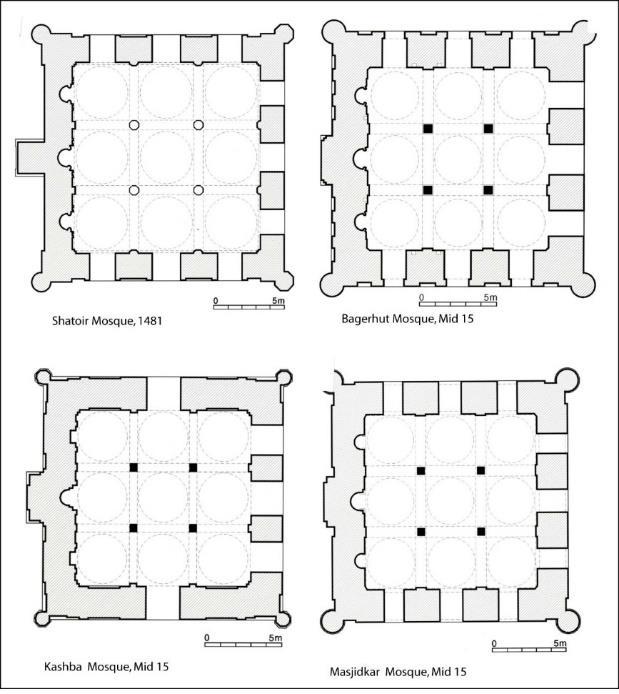
Fig-1:4Ninesquaremosquesinthecorpus(Hassan, 2007).
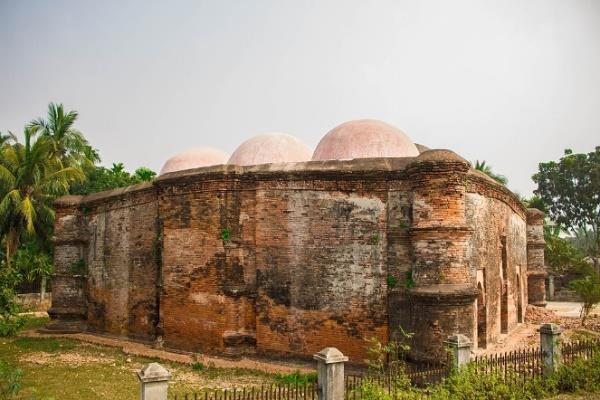
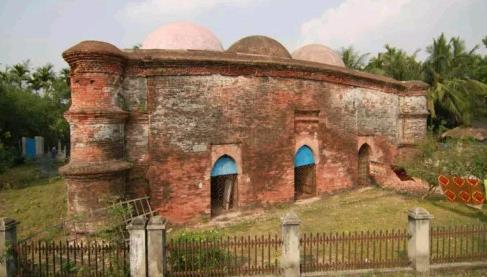
Fig-2: Masjidkarmosque,Koyra,Khulna (https://www.jagonews24.com/country/news/845631)
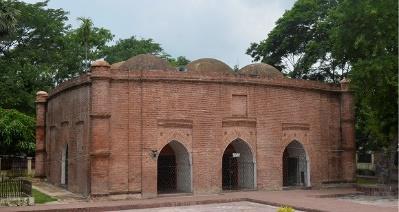
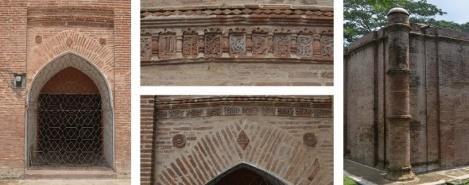
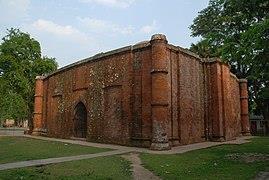
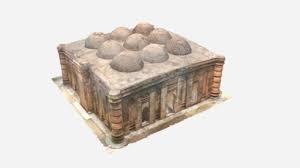
Fig-3:KasbamosqueBarishal(https://studyresearch.net/kasba-mosque-gauranadi/cultural-heritage/)
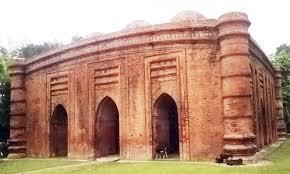
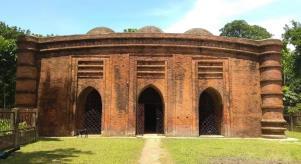
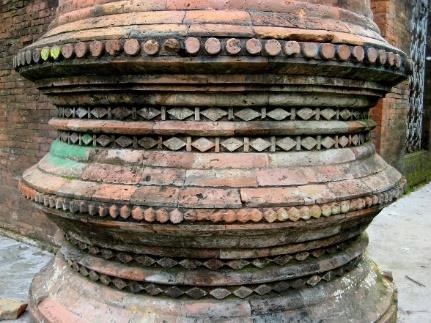
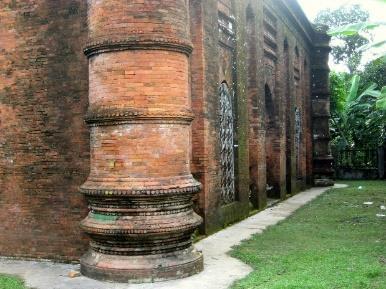
Fig-4: BagerhutmosqueBagerhut (https://www.cholozai.com/location/nine-dome-mosquebagerhat)
4.3 The Importance of Cultural Heritage Preservation
The conservation of cultural assets encompasses not only the maintenance of physical edifices but also the safeguarding of the intangible cultural identity linked to those locations. Cultural heritage sites, such as the
© 2025, IRJET | Impact Factor value: 8.315 | ISO 9001:2008 Certified Journal | Page282
International Research Journal of Engineering and Technology (IRJET) e-ISSN:2395-0056
Volume:12Issue:01|Jan2025 www.irjet.net
Sultanate Mosque, possess profound emotional and historical importance for local populations, frequently symbolizingcenturiesofreligious,architectural,andsocial evolution. The destruction of these sites would result in the eradication of essential cultural narratives, artistic expressions, and traditions that link previous generations tothecontemporaryday.
In addition to its cultural significance, these sites substantially enhance local economies, chiefly via tourism and education. Visitors to the Sultanate Mosque come to enjoyitsarchitecturalgrandeurandtoestablishalinkwith thehistoryandcultureitreflects.Asthus,thepreservation of the mosque serves both cultural and financial goals.
Policiesfordisastermanagementthatstresstheprotection of cultural assets help to preserve the intangible benefits connected to these locations thereby guaranteeing their continuation in teaching, motivating, and unifying communities.
5.1Site-SpecificRiskAssessment
It is imperative to conduct a comprehensive risk assessment of the Nine Dome Mosque in order to comprehend its distinctive vulnerabilities. This incorporates structural analysis to pinpoint vulnerable areas, including foundation issues, weathered materials, andfractures.
i. The use of digital modelling and Geographic Information Systems (GIS) to monitor structural integrity and map environmental hazards.
ii. The process of examining historical earthquake and flood data to establish risk levelsandpotentialfuturehazards.
i. Strengthening the foundation with materials fitforthemosque'soriginaldesignwillhelpto improve resistance against water intrusion andseismicactivity.
ii. Protective Roofing and Drainage Systems: Covering the mosque from strong rain and humidity with weatherproof layers Furthermorehelpingtoavoidwatergathering
p-ISSN:2395-0072
around the construction are better drainage systems.
iii. Applying protective coatings on terracotta designs will help to guarantee historical authenticity by shielding them from humidity anddegradation.
5.3DevelopingaDisasterManagementPlan
The mosque has to create a site-specific disaster management plan. This covers plans for many kinds of calamities, giving building integrity and moveable objects toppriority.
i. Training local communities and volunteers in emergency response to save historical sites after natural disasters helps to ensure their preservation. This includes teaching them fundamental methods for artefact stabilizationanddamagedocumentation.
ii. Frequent Drills and Emergency Plans: Organizing frequent drills with government officials, local employees, and emergency responders.Fastreactionguaranteedbyclear protocols helps to reduce harm in an emergency.
Immediate Activation of Plans: Intheeventofanatural disaster,gettingthedisaster managementplanintoaction asquicklyaspossibleisabsolutelynecessary.
i. The Removal of Artefacts and Documents: If there is sufficient time, it is necessary to remove significant artefacts and historical documents that are stored within or around themosqueandrelocatethemtomoresecure locations. Action lists that are prioritized ensure that the most important items are securedfirst.
ii. Documentation of Damage: The process of recordingthefirstdamagethroughtheuseof fast documentation technologies such as photographyor3Dscanning.Thisinformation ishelpfulinguiding restorationeffortsaftera disaster. In the event of a natural disaster, getting the disaster management plan into action as quickly as possible is absolutely necessary.
International Research Journal of Engineering and Technology (IRJET) e-ISSN:2395-0056
Volume:12Issue:01|Jan2025 www.irjet.net p-ISSN:2395-0072
iii. Temporary Stabilization: In situations when the structure has been compromised, it is necessarytoestablishemergencystabilization procedures in order to prevent any more damage from occurring until a complete restorationcanbecarriedout.
6.1 Planning for Damage Assessment and Restoration
Followingadisaster,extensivedamageassessmentisdone toidentifytherequiredrestorationstrategy.
i. Multidisciplinary Team: Engaging architects, engineers, historians, and conservators will help to product thorough repairplanidolizationthehistoricalrelevance ofthemosque.
ii. Methods of Restoring: Restoringthemosque with conventional materials and procedures guarantees that the repairs complement its historical authenticity. Resilience must be added to balance historical truth in ethical issues.
CHALLENGES IN HERITAGE PROTECTION FOR THENINEDOMEMOSQUE
7.1FundingConstraints
Getting sufficient money for the preservation of the mosque is one of the key challenges. Recommended fixes consistin:
i. Working with private companies and charities, public-private partnerships help tofundinitiativesforpreservation.
ii. International Grants and UNESCO help making use of help from various international agencies emphasizing the preservationoflegacyincludingUNESCO.
7.2.LegislativeandPolicyIssues
The present heritage policies of Bangladesh might not sufficiently address the special requirements of DRR for cultural assets. Strengthening laws to include heritage preservation in national disaster management systems guaranteesongoingprotection.
7.3AdviceforConservingtheNineDomeMosque
i. Enhanced Government and Community Involvement: For historical monuments, the government and local community should actively participate in disaster preparedness andreaction.
ii. Advanced Training Programs: Stabilizing artefacts and controlling structural integrity areamongtheskillsparticulartoculturalsite management during disaster that local officialsandvolunteersshouldlearn.
iii. Constant Monitoring and Technological Integration: Frequent updates of disaster management strategies and application of technology to track changes in the surroundings
The preservation of cultural heritage sites such as the Sultanate Mosque of Bengal requires the implementation of disaster risk management as a vital component. When contemporary scientific approaches are combined with traditional conservation practices, it is possible to protect the mosque from the dangers that are posed by natural calamities while yet preserving the cultural relevance of the building. The purpose of this study is to create a comprehensive framework for disaster management that can be applied to the Sultanate Mosque. The framework was developed by drawing on lessons learnt from global case studies. The Sultanate Mosque may be conserved for future generations by conducting an efficient risk assessment, taking measures to mitigate the risk, and engagingthecommunity.Thiswillensurethatthemosque continues to serve as a symbol of Bengal's rich cultural history.
[1] A. Naqi, Architecture of the Khan-e-Jahan style: context andinfluence, 2003.
[2] D. Afroz, Vulnerability of Heritage Sites to Climatic Extreme Events: Khalifatabaad Ancient Mosque, International Journal of Conservation Science, 15(3), 2024pp.1371-1388
[3] D. H.R. Spennemann, K. Graham, The importance of heritage preservation in natural disaster situations, International Journal of Risk Assessment and Management, Vol.7,Nos.6/7,2007
International Research Journal of Engineering and Technology (IRJET) e-ISSN:2395-0056
Volume:12Issue:01|Jan2025 www.irjet.net p-ISSN:2395-0072
[4] Hassan, P, Sultanate Mosques and Continuity in Bengal, 6.58-74. 1989. http://www.jstor.org/stable/1602281
[5]Hassan,P, The Early Muslim Architecture in Bangladesh: Sultans and Mosques, London. New York: I.B.Tauris. 2007.
[6] K. Chmutina, R. Jigyasu, L. Bosher, Understanding the impacts of climate change on cultural heritage buildings: a case of York, UK, Presented at the CIB World Building Congress: Intelligent Built Environment for Life, Tampere,Finland,May30-Jun3rd,pp.188-198.
[7]L.Min, Disaster risk management of cultural heritage: A global scale analysis of characteristics, multiple hazards, lessons learned from historical disasters, and issues in current DRR measures in world heritage sites, International Journal of Disaster Risk Reduction, 110 (2024)104633, (http://creativecommons.org/licenses/by-nc/4.0/).
[8]M.Madhury,L.Sarker, Heritage Values and Community Perception: A Look into the Historic Ruins of Dinajpur Rajbari, Nakhara:JournalofEnvironmentalDesignand Planning (2024) Volume 23(1), Article 401 DOI: https://doi.org/10.54028/NJ202423401
[9] M. Sladic, Strategy for Protection of Cultural Heritage Exposed to the Natural and Man-Made Activity Disasters in Serbia, JournalofCivilEngineeringandArchitecture,18 (2024)223-235,doi:10.17265/1934-7359/2024.05.003
[10]N.Ahmed, DiscovertheMonumentsofBangladesh, 1984,UniversityPress.
[11]N.B.Kabir, TheGrammarofSultanateMosqueinBengal Architecture, M.Phil dissertation, Hong Kong: Department of Architecture, The Chinese University of Hong Kong, 2009.
[12] Q.Z. MOWLA, Disaster Risk Reduction in Architectural Heritage of Urban Areas, Pratnatattva Journal of the Dept.ofArchaeologyJahangirnagarUniversity,Vol.25, June2019:195-202ISSN1560-7593
[13] S.H. Tariq, M.A. Jinia, The contextual issues in the Islamic architecture of Bengal mosques, GlobalJournalAlThaqafah, 3(1), 2013, pp. 41-48, DOI: 10.7187/GJAT322013.03.01. .
© 2025, IRJET | Impact Factor value: 8.315 | ISO 9001:2008 Certified Journal | Page285