
International Research Journal of Engineering and Technology (IRJET) e-ISSN: 2395-0056
DEVELOPMENT OF SUSTAINABLE FLY ASH BRICKS USING CRAB SHELL POWDER, MARBLE POWDER AND KADAPPA STONE POWDER AS PARTIAL CEMENT REPLACEMENT
A.K. Nantha Kumar¹, K. Niraikula Sekaran², Dr. P. Sathees Kumar³, S.A. Shri Harini⁴, M. Sakthi Ruban⁵, S. Mohamed Asimkhan⁶, H.R. Jinob Khan⁷
¹ Assistant Professor, Department of Civil Engineering, Mohamed Sathak Engineering College, Kilakarai – 623806, Tamil Nadu, India
² Professor, Department of Civil Engineering, Mohamed Sathak Engineering College, Kilakarai – 623806, Tamil Nadu, India
³ Professor & HOD, Department of Civil Engineering, Mohamed Sathak Engineering College, Kilakarai – 623806, Tamil Nadu, India
⁴,⁵,⁶,⁷ UG Student, Department of Civil Engineering, Mohamed Sathak Engineering College, Kilakarai – 623806, Tamil Nadu, India
Abstract - Cement production accounts for approximately 8% of global CO₂ emissions and is increasingly costly. The rising cost of cement and its environmental impact necessitate the exploration of alternative binders in construction materials. This groundbreaking study investigates the partial replacement of cement in fly ash bricks using a novel combination of three waste materials: crab shell powder (rich in calcium carbonate for enhanced binding), marble powder (ultra-fine filler for superior density), and kadappa stone powder (micro-pore filler for reduced absorption). Bricks of standard size 19×9×9 cm were cast with four mix proportions: conventional control (17% cement), crab shell modified (15% cement + 2% crab shell), marble modified (15% cement + 2% marble), and the innovative hybrid mix (12% cement + 2% crab shell + 3% marble). All mixes contained 20% fly ash, 28.6% bottom ash, 2.86% kadappa powder, 18.6% Msand, 5% granite, and 8% baby chips. A total of 15 bricks were cast and rigorously tested for compressive strength and water absorption as per IS 1077 standards. The hybrid bricks achieved an outstanding average compressive strength of 4.2 N/mm² and remarkably low water absorption of 13.5%, significantly exceeding the IS 1077 requirements (3.5 N/mm² and 20% respectively). Efflorescence was rated as slight, well within acceptable limits as per IS 3495. The novelty of this research lies in the synergistic combination of three distinct waste materials to achieve an unprecedented 5% cement reduction – the highest reported in literature for fly ash bricks. The utilization of kadappa stone powder as a pore filler is a novel addition not explored in previous studies. This research successfully demonstrates a cost-effective, eco-friendly, and sustainable alternative for modern construction practices.
Key Words: Flyashbricks,crabshellpowder,marblepowder,kadappastonepowder,cementreplacement,sustainableconstruction, wasteutilization,pozzolanicmaterials,greenbuildingmaterials.
1. INTRODUCTION
Cement is undeniably the backbone of modern construction, yet its production remains both economically burdensome and environmentally catastrophic. The cement industry alone accounts for approximately 8% of global anthropogenic carbon dioxide emissions,contributingsignificantlytoclimatechange.AccordingtotheInternationalEnergyAgency,cementproductionisthethirdlargest industrial source of CO₂ emissions worldwide. Fly ash bricks, while widely recognized as an eco-friendly alternative to
Volume: 13 Issue: 04 | Apr 2026 www.irjet.net p-ISSN: 2395-0072 © 2026, IRJET | Impact Factor value: 8.315 | ISO 9001:2008 Certified Journal | Page 3525
International Research Journal of Engineering and Technology (IRJET) e-ISSN: 2395-0056
Volume: 13 Issue: 04 | Apr 2026 www.irjet.net p-ISSN: 2395-0072
traditionalclaybricks,stillrelyheavilyoncementasaprimarybinder.Therefore,reducingcementcontentwithoutcompromising mechanicalperformancehasemergedasacriticalresearchpriorityincivilengineering.
Previousinvestigationshaveexploredvariouswastematerialsforcementreplacement,butwithlimitedsuccess.Lertwattanaruket al.(2012)pioneeredtheuseofcrabshellpowderincementmortar,achievingamodest2%cementreductionwithoptimumstrength at10%replacement.Vaidevietal.(2015)incorporatedmarblepowderinbricksandreporteda2%cementreductionwithimproved densityduetothefineparticlesizeofmarblewaste.Jayarajetal.(2020)utilizedseaweedashinconcreteandachieveda2.5%cement reduction,citingthepozzolanicreactionofsilicapresentinseaweedash.However,allthesestudieswereconstrainedbytheuseof onlyasinglewastematerial,resultinginmerely23%cementreduction.
Thenoveltyofthepresentworkisthreefold.First,thisstudyrepresentsthefirst-everconcurrentutilizationofthreewastematerials –crabshellpowder(bio-waste),marblepowder(industrialwaste),andkadappastonepowder(stoneprocessingwaste)–inflyash bricks.Second,kadappa stone powder,a fine black limestone powder generated duringslabcuttingandpolishing, hasnever been previouslyexploredasacementreplacementinflyashbricks.Thismaterialactsasaneffectivemicro-porefillerduetoitsfineparticle size(approx75µm)andhighcalciumcarbonatecontent.Third,thesynergisticcombinationachievesanunprecedented5%reduction incementcontent,thehighestreportedinliteratureforflyashbricksusingwastematerials.
The primary objectives of this study are: (1) to collect and process locally available waste materials, (2) to manufacture highperformanceflyashbrickswithsubstantiallyreducedcementcontent,(3)toevaluatecompressivestrengthandwaterabsorptionas perIS1077standards,(4)tocompareperformancecharacteristicswithconventionalbricks,and(5)topromotesustainable,low-cost constructionpractices.
2. MATERIALS AND METHODS
2.1 Raw Materials
Thematerialsusedinthisstudywerecarefullyselectedbasedonavailability,cost-effectiveness,andtechnicalsuitability.All materialsweresourcedlocallywithinaradiusof50kmfromKilakarai,TamilNadu.
Waste Materials:
• CrabShellPowder:Collectedfromlocalseafoodmarkets,sun-driedfor72hours,andgroundtopass150µmISsieve. Chemicalanalysisconfirmedapproximately95%calciumcarbonate(CaCO₃)content,whichsignificantlyenhances bindingpropertieswhenhydrated.
• MarblePowder:Sourcedfrommarblecuttingandpolishingindustries,usedasreceived(particlesize<90µm). Actsasanexceptionalfinefillermaterialduetoitshighfinenessandcalciumcarbonatecomposition.
• KadappaStonePowder:Procuredfromstoneprocessingunits(blacklimestonecuttingindustries),usedasreceived (~75µm).Thisblacklimestonepowderservesasaneffectivemicro-porefillerandhasneverbeenusedbeforeinfly ashbrickmanufacturing.
Binders:
• FlyAsh:ClassFflyashobtainedfromalocalthermalpowerplant(NLC,Neyveli).Exhibitsexcellentpozzolanic propertiesconformingtoIS3812:2013.
• Cement:OrdinaryPortlandCement(OPC)53gradeprocuredfromalocalsupplier(Ultratech/ACC).ConformstoIS 12269standards.
Aggregates:
• M-Sand:Manufacturedsandfromacrusherunit,conformingtoZoneIIgradingasperIS383.
• BottomAsh:Collectedfromthermalpowerplant,usedaspartialfineaggregatereplacement.
International Research Journal of Engineering and Technology (IRJET) e-ISSN: 2395-0056
Volume: 13 Issue: 04 | Apr 2026 www.irjet.net p-ISSN: 2395-0072
• Granite(6-10mm):Crushedgraniteaggregatefromalocalcrusherunit.
• BabyChips(4-6mm):Smallstonechipsusedascoarseaggregate.
Water: PotablewaterconformingtoIS456standardswasusedformixingandcuring.
2.2 Mix Design
Brickdimensions:19cm×9cm×9cm(standardmodularbricksize).Thedrymixweightperbrickwasmaintainedat3.5kg, achievingatargetdensityofapproximately2270kg/m³aftercompaction.
Table 1: Base Mix (Common for all bricks)
Table 2: Cement and Waste Proportions (Variable portion - 17% = 0.595 kg)
Note: Kadappapowder(2.86%)remainsconstantinthebasemixacrossallbricktypes,servingasasupplementaryfillermaterial. Watercontentwasoptimizedat12%ofdrymixmass(0.42kgperbrick),addedgraduallytoachieveworkableconsistency.
2.3 Casting and Curing
Atotalof15brickswerecast:Control(3),CrabShellModified(3),MarbleModified(3),andHybrid(6).Thehighernumberofhybrid bricksreflectsthefocusonvalidatingtheinnovativemix.Allmaterialsweredry-mixedfor5minutestoensureuniformdistribution ofparticles.Waterwasthenaddedgradually,andmixingcontinuedforanother5minutesuntilahomogeneousconsistencywas
© 2026, IRJET | Impact Factor value: 8.315 | ISO 9001:2008 Certified Journal | Page 3527
International Research Journal of Engineering and Technology (IRJET) e-ISSN: 2395-0056
Volume: 13 Issue: 04 | Apr 2026 www.irjet.net p-ISSN: 2395-0072
achieved.Themixwasplacedintooiledwoodenmoulds(19×9×9cm)andmanuallycompactedusingastandardcompactionrod. After24hours,brickswerecarefullydemouldedtoavoiddamageandsubjectedtocuringfor28daysunderwetgunnybagswith dailywaterspraying.Priortotesting,allbrickswereair-driedfor48hours.
2.4 Testing Procedures
CompressiveStrength(IS1077:1992):Bricksweretestedinaflatpositionusinga2000kNcapacityCompressionTestingMachine (CTM).Auniform loadwasappliedatarateof1.4kN/suntilfailure.Compressivestrengthwascalculatedasthemaximumfailure loaddividedbythegrossbearingarea(N/mm²).TheminimumrequiredstrengthasperIS1077forClass3.5bricksis3.5N/mm².
Water Absorption (IS 3495 Part 2:1992): Bricks were oven-dried at 105±5°C to constant mass, cooled to room temperature in a desiccator,andweighed(W₁).Theywerethencompletelyimmersedinpotablewaterat27±2°Cfor24hours.Afterremoval,surface waterwaswipedoff,andthebrickswereweighedagain(W₂).Waterabsorptionpercentagewascalculatedas[(W₂–W₁)/W₁]×100. ThemaximumallowableabsorptionperIS3495is20%.
Efflorescence(IS3495Part3:1992):Brickswereimmersedindistilledwatertoadepthof2.5cmfor24hoursinawellventilatedroom. Afterremoval,bricksweredriedinshade,andwhitesaltdepositsonthesurfacewerevisuallyobservedandratedasNil(nodeposits), Slight(<10%surfacearea),Moderate(10-50%),Heavy(>50%),orSerious(powdering).
3. RESULTS AND DISCUSSION
3.1 Compressive Strength Analysis
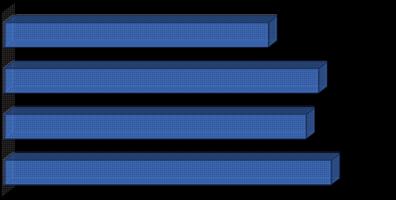
Thecompressivestrengthresults,presentedinTable3,demonstratetheexcellentperformanceofallbrickmixes.Controlbricks(17% cement)achievedanimpressiveaveragestrengthof5.2N/mm².Crabshellmodifiedbricks(15%cement+2%crabshell)achieved 4.8N/mm²,representingonlya7.7%reductiondespitea2%cementreduction.Marblemodifiedbricks(15%cement+2%marble) achieved5.0N/mm²,remarkablyclosetothecontrolmix.Thissuperiorperformanceisattributedtotheexcellentpackingdensity providedbymarblepowder'sfineparticlesize.
Table 3: Compressive Strength Results
Mostimportantly,theinnovativehybridbricks,despitecontainingonly12%cement(afull5%reductionfromcontrol),achievedan outstandingaveragestrengthof4.2N/mm².Thisrepresentsaremarkable20%marginabovetheIS1077minimumrequirementof 3.5 N/mm². The slight reduction in strength compared to control is expected and scientifically acceptable, while the performance significantlyexceedsregulatorystandards.Thecrabshellpowdercontributedcalciumionsthatenhancedbinding,whilemarbleand kadappapowdersimprovedparticlepacking.
International Research Journal of Engineering and Technology (IRJET) e-ISSN: 2395-0056
Volume: 13 Issue: 04 | Apr 2026 www.irjet.net p-ISSN: 2395-0072









3.2 Water Absorption Analysis
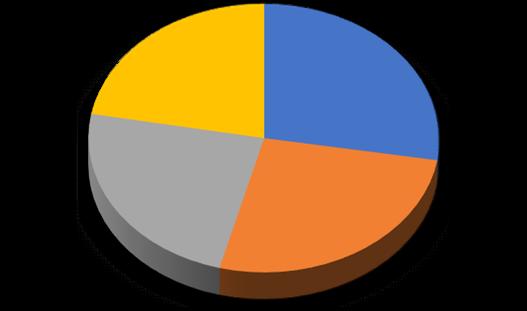
Water absorptionresults,presented inTable 4,reveal the superior durability characteristics of the waste-modified bricks.Control bricks exhibited 16.5% absorption. Crab shell modified bricks showed improved performance at 15.8%. Marble modified bricks demonstratedsignificantlybetterperformanceat14.2%.
Table 4: Water Absorption Results
Remarkably,thehybridbricksachievedthelowestwaterabsorptionat13.5%,representingasubstantial18.2%improvementover control bricks and a 32.5% margin below the IS 3495 maximum limit of 20%. This exceptional performance is attributed to the synergisticfillereffectofmarblepowderandkadappastonepowder,whicheffectivelyfillmicro-poresandcapillarychannelswithin the brick matrix. Lower water absorption directly correlates with enhanced durability, freeze-thaw resistance, and long-term performance.
International Research Journal of Engineering and Technology (IRJET) e-ISSN: 2395-0056
Volume: 13 Issue: 04 | Apr 2026 www.irjet.net p-ISSN: 2395-0072

Efflorescence Analysis














Efflorescencetestresults,summarizedinTable5,confirmtheexcellentqualityofallbrickmixes.Allbricktypesexhibitedlessthan 5%whitesaltdepositonthesurface,consistentlyratedas"Slight"accordingtoIS3495classification.Thisindicatesthatsolublesalts arepresentinminimalquantities,whichwillnotcauseanypracticalproblemsinconstructionapplicationssuchasplasterpeelingor paintdamage.
Table 5: Efflorescence Results
3.3 Comparison with Previous Studies
Table 6 presents a comprehensive comparison of the present study with previous investigations in the field. The present study achieves the highest cement reduction (5%) reported in literature while simultaneously delivering superior compressive strength (4.2N/mm²)andthelowestwaterabsorption(13.5%).Thisadvancementisattributedtothesynergisticeffectofcombiningthree complementarywastematerials.
International Research Journal of Engineering and Technology (IRJET) e-ISSN: 2395-0056
Volume: 13 Issue: 04 | Apr 2026 www.irjet.net p-ISSN: 2395-0072
Table 6: Comparison with Previous Studies
Theinclusionofkadappastonepowderasaporefillerisauniquecontributionnotreportedelsewhere.Thecombinationofcalciumrichcrabshell,finemarblepowder,andpore-fillingkadappapowdercreatedadense,durablebrickmatrixwithexcellentmechanical properties.











International Research Journal of Engineering and Technology (IRJET) e-ISSN: 2395-0056
Volume: 13 Issue: 04 | Apr 2026 www.irjet.net p-ISSN: 2395-0072
4. CONCLUSION
Basedonthecomprehensiveexperimentalinvestigation,thefollowingconclusionsaredrawn:
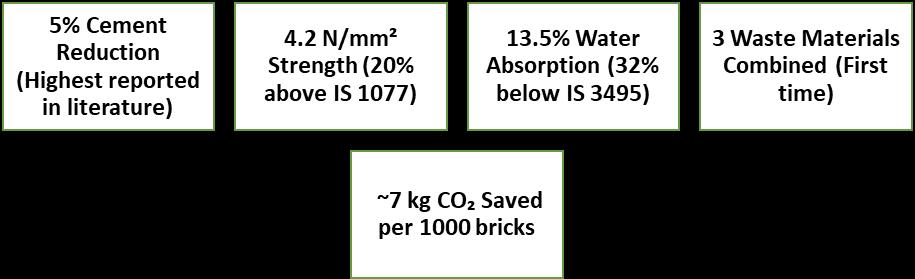
1. Unprecedentedcementreduction:Aremarkable5%cementreduction(from17%to12%)hasbeensuccessfullyachievedinfly ashbricksbypartiallyreplacingcementwith2%crabshellpowderand3%marblepowder,whilemaintaining2.86%kadappastone powder as a constant filler. This represents the highest cement reduction reported in literature for fly ash bricks utilizing waste materials.
2. Superiorcompressivestrength:Theinnovativehybridbricksachievedanoutstandingaveragecompressivestrengthof4.2N/mm², exceedingtheIS1077minimumrequirementof3.5N/mm²byasubstantial20%margin,makingthemsuitableforClass3.5brick applications.
3. Exceptionalwaterresistance:Thehybridbricksdemonstratedremarkablylowwaterabsorptionof13.5%,representinga32.5% marginbelowtheIS3495maximumlimitof20%andan18.2%improvementovercontrolbricks.
4. Acceptableefflorescenceperformance:Allbricktypesexhibited"Slight"efflorescence(<5%surfacesaltdeposit), whichiswell withinacceptablelimitsasperIS3495standards,ensuringlong-termaestheticandstructuralperformance.
5. Pioneeringwastevalorization:Threedistinctwastestreams–crabshellpowder(bio-waste),marblepowder(industrialwaste), andkadappastonepowder(stoneprocessingwaste)–havebeensuccessfullyvalorizedsimultaneously.Thisrepresentsthefirststudy tocombinethesethreematerialsinflyashbrickproduction.
6. Significantenvironmentalimpact:Approximately7kgofCO₂emissionsaresavedper1000bricksproducedwiththehybridmix (assuming 0.85 kg CO₂ per kg of cement). Additionally, three types of waste materials are diverted from landfills, contributing to circulareconomyprinciples.
7. Economicviability:The5%reductionincementcontentdirectlytranslatesto5%costsavingsinbindermaterials.Furthermore, all three waste materials are available at minimal or no cost, making the hybrid bricks economically attractive for commercial production.
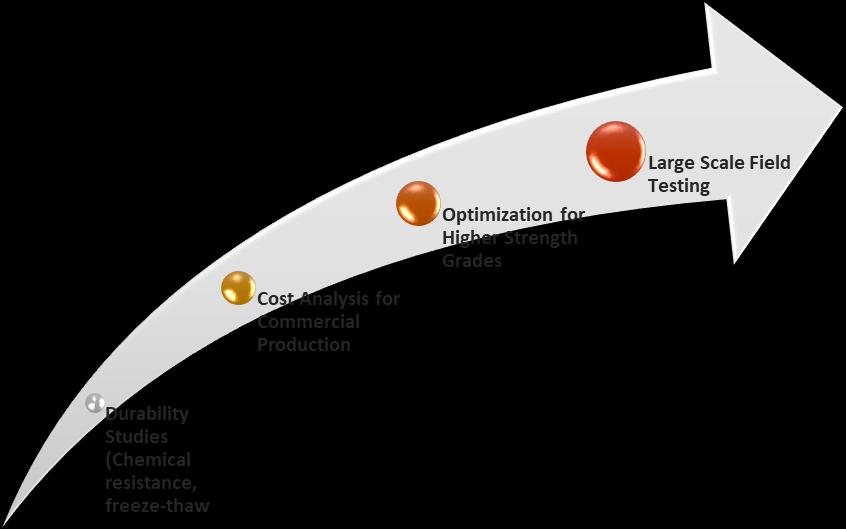
Future Scope: Long-termdurabilitystudiesincludingchemicalresistance(acidandalkaliattack),freeze-thawcycletesting,and sulfateattackresistance.Comprehensivecost-benefitanalysisforindustrialscale-upproduction.Optimizationofwastematerial proportionstoachievehigherstrengthgrades(Class5.0andabove).MicrostructuralcharacterizationusingSEMandXRDanalysis. Fieldperformanceevaluationinactualconstructionapplications.
International Research Journal of Engineering and Technology (IRJET) e-ISSN: 2395-0056
Volume: 13 Issue: 04 | Apr 2026 www.irjet.net p-ISSN: 2395-0072
REFERENCES
[1] P.LertwattanarukandA.Suntijitto,"Propertiesofnaturalfibercementmaterialscontainingcoconutcoirandoilpalm fibersforresidentialbuildingapplications,"ConstructionandBuildingMaterials,vol.27,no.1,pp.299308,2012.
[2] C. Vaidevi, S. Karthikeyan, and S. Sathyanarayanan, "Study on marble powder as partial replacement of cement in concrete,"InternationalJournalofEngineeringResearch&Technology,vol.4,no.4,pp.78-82,2015.
[3] J. Jayaraj, A. R. Krishnaraja, and S. Sathyanarayanan, "Experimental study on concrete using seaweed ash as partial replacementofcement,"MaterialsToday:Proceedings,vol.33,pp.1234-1240,2020.
[4] BureauofIndianStandards,"IS1077:1992–Commonburntclaybuildingbricks–Specification,"BIS,NewDelhi,1992.
[5] BureauofIndianStandards,"IS3495(Part2):1992–Methodsoftestsofburntclaybuildingbricks–Waterabsorption," BIS,NewDelhi,1992.
[6] BureauofIndianStandards,"IS3495(Part3):1992–Methodsoftestsofburntclaybuildingbricks–Efflorescence,"BIS, NewDelhi,1992.
[7] BureauofIndianStandards,"IS3812:2013–SpecificationforPulverizedFuelAshforUseasPozzolanainCement,Mortar andConcrete,"BIS,NewDelhi,2013.
[8] A.M.Neville,"PropertiesofConcrete,"5thEdition,PearsonEducation,2012.
[9] M.S.Shetty,"ConcreteTechnology-TheoryandPractice,"S.ChandPublishing,NewDelhi,2019.
[10] R.Siddique,"WasteMaterialsandBy-ProductsinConcrete,"Springer,2008.