
International Research Journal of Engineering and Technology (IRJET) e-ISSN: 2395-0056
Volume: 13 Issue: 04 | Apr 2026 www.irjet.net p-ISSN: 2395-0072

International Research Journal of Engineering and Technology (IRJET) e-ISSN: 2395-0056
Volume: 13 Issue: 04 | Apr 2026 www.irjet.net p-ISSN: 2395-0072
Dr. M. Madhuri1, A. Sai Ganesh2, B. SrinivasaRao3, P. Sailu4, S. Janaki Devi5
1Associate Professor, Department of Civil Engineering, Sanketika Vidya Parishad Engineering College, Andhra Pradesh, India
2,3,4,5B. Tech Students, Department of Civil Engineering, Sanketika Vidya Parishad Engineering College, Andhra Pradesh, India ***
Abstract - Cracks in concrete reduce durability and service life. This project investigates self-healing concrete using Bacillus subtilis bacteria and eggshell powder as a partial replacement ofcement inM30 grade concrete designedasper IS 10262:2019 & IS 456:2000. Eggshell powder was used at 5%, 10%, and 15%, while the bacterial dosage was kept constant at 2% to promote Microbial Induced Calcite Precipitation (MICP) for crack healing. Five concrete mixes were prepared, including a control mix and a bacteria-only mix. Compressive strength tests were conducted at 7, 14, 21, and 28 days, along with water absorption and self-healing observation to evaluate strength, durability, and self-healing performance.
Key Words: Self-healing concrete, Bacillus subtilis, Microbial Induced Calcite Precipitation (MICP), Eggshell powder (ESP), Compressive strength
1. INTRODUCTION
Concreteisthemostwidelyusedconstructionmaterialdue toitshighcompressivestrengthanddurability.However,the formation of micro-cracks in concrete is unavoidable and leads to reduced durability, permeability issues, and increasedmaintenancecosts.Conventionalrepairmethods aretime-consumingandexpensive.Self-healingconcreteis anadvancedmaterialthatcanautomaticallyrepaircracks without external intervention. The use of Bacillus subtilis bacteria promotes Microbial Induced Calcite Precipitation (MICP),whichresultsintheformationofcalciumcarbonate that seals cracks. Eggshell powder is a calcium-rich waste materialandcanbeeffectivelyusedasapartialreplacement ofcementtoenhancesustainability.Thisprojectfocuseson developingself-healingandeco-friendlyM30gradeconcrete usingbacteriaandeggshellpowder.
• The study is limited to M30 grade concrete only. Othergradesofconcretearenotconsideredinthis investigation.
• Cementispartiallyreplacedwitheggshellpowderat 5%,10%,and15%byweight.Replacement levels beyond15%arenotincludedinthisstudy.
• Aconstant2% Bacillussubtilis dosageismaintained forallconcretemixes.Theeffectofvaryingbacterial percentagesisnotconsidered.
• Workability is evaluated using slump test, while strength assessment is restricted to compressive strengthtesting.
• Durabilityperformanceisexaminedthroughwater absorption test and self-healing observation only. Long-termdurabilitytestsarebeyondthescopeof thisproject.
• To design and proportion M30 grade concrete in compliancewithIS10262:2019&IS456:2000.
• To develop self-healing concrete through the incorporationof Bacillus subtilis bacteria.
• To investigate the effect of eggshell powder as a partialreplacementofcementontheperformance ofconcrete.
• Toevaluatetheworkabilitycharacteristicsoffresh concreteusingstandardtests.
• Toassessthecompressivestrengthdevelopmentat 7,14,21,and28daysofcuring.
• Toexaminetheself-healingefficiencyanddurability characteristicsofbacterialconcrete.
YeongYuTanetal.(2018)-Studiedtheutilizationofeggshell powder(ESP)inconcreteunderdifferentcuringconditions. ESPwasusedasapartialreplacementofcementat5%,10%, 15%, and 20%. The study revealed that strength and durability improved under proper curing conditions, and waterabsorptionwasreduced.However,higherpercentages ofESPledtoareductioninstrength,especiallyinaggressive environments.Theoptimumreplacementlevelwasfoundto bearound10%ESP.
AshfaqueAhmedJhatialetal.(2019)-Investigatedtheeffect ofeggshellpowderasasupplementarycementitiousmaterial in concrete. ESP was added at 5%, 10%, and 15% replacementlevelswithdifferentfineness(50µmand100 µm). The results showed that maximum compressive strengthwasachievedat10%replacement.Finerparticlesof
International Research Journal of Engineering and Technology (IRJET) e-ISSN: 2395-0056
Volume: 13 Issue: 04 | Apr 2026 www.irjet.net p-ISSN: 2395-0072
ESPimprovedparticlepacking,resultinginbetterstrength performance.Thus,10%ESPwasidentifiedastheoptimum value.
S.MohdArifetal.(2021)-Conductedanexperimentalstudy on high-strengthconcrete using eggshell powder.ESP was used at 0%, 5%, 10%, and 15% replacement levels. The resultsindicatedthatthehighestcompressivestrength(68.4 MPaat28days)wasachievedat10%ESP.However,itwas observedthatworkabilitydecreasedwithanincreaseinESP content.Therefore,10%ESPwasconsideredtheoptimum replacementlevel.
Safiuddinetal.(2022)-Carriedoutastudyonself-healing concreteusingBacillussubtilis.Thebacteriawereaddedat 2%,3%,4%,and6%dosagesbyweightofcement.Thestudy found that crack healing occurred within 48 hours for 2% dosageand32hoursfor3%dosage.Bothcompressiveand tensilestrengthsimprovedwithbacterialaddition,buthigher percentages were less effective. The optimum dosage was foundtobe2–3%bacteria.
Adil etal.(2024)- Investigatedself-healingconcreteusing Bacillussubtiliswithbacterialsolutiondosagesof60mL,75 mL,and90mLpercube.Theresultsshowedthatmaximum compressivestrengthwasachievedat75mLdosage,while bettercrackhealingperformancewasobservedat90ml.This indicatesatrade-offbetweenstrengthandhealingefficiency, with75mLconsideredoptimalforstrength.
Balteetal.(2024)-Performedanexperimentalinvestigation onself-healingconcreteusingBacillussubtilisat3%and6% dosages.Theresultsshowedthatbothmixesexhibitedhigher strength compared to the control mix. However, the 6% dosage, although increasing strength, negatively affected workability and increased cost. Therefore, 3% bacterial dosagewasconsideredmorepracticalandefficient.
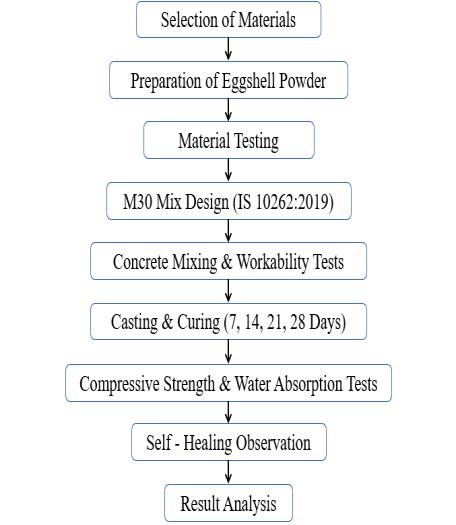
Flow Chart -1: MethodologyoftheProject
3.1 Materials used:
• Cement: OPC 53 grade cement was used as the primarybindingmaterial.
• FineAggregate:Cleannaturalriversandwasused asfineaggregate.
• CoarseAggregate:Crushedangularaggregatesof20 mmand10mmsizeswereused.
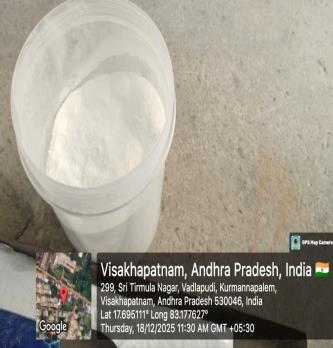
• Eggshell Powder: Finely ground eggshell powder passing 75-micron sieve was used as partial replacementofcement.
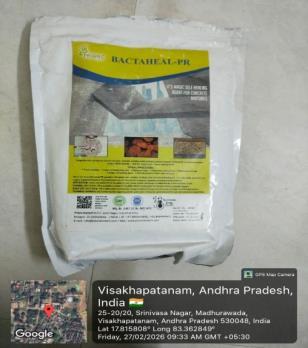
• Bacillussubtilis:Bacillussubtilisbacteriawasused asabio-admixtureforself-healingofcracks.
• Water: Potable water was used for mixing and curingofconcrete.
3.2 Tests on Materials:

Flow Chart -2:TestonMaterials
3.3 Mix Design:
MixDesigniscarriedoutinB.I.SMethod(BureauofIndian Standards)AsperIS10262:2019&IS456:2000
MIXDESIGNPROCEDUREFORTHECONCRETEOFGRADE M30:
1.TargetStrength
f’ck=(fck+ks)or(fck+x)
fck=Targetmeancompressivestrengthat28days
K=1.65
S=5N/mm2standarddeviation(IS-10262-2019,table-2
P.No:3)
International Research Journal of Engineering and Technology (IRJET) e-ISSN: 2395-0056
Volume: 13 Issue: 04 | Apr 2026 www.irjet.net p-ISSN: 2395-0072
Table -1:MaterialProportionsperm³
X=factorbasedongradeofconcreteaspertable-1
X=6.5(IS-10262-209,Table-2P.No:3)
f’ck1=30+(1.65×5)=38.25N/mm^2
f’ck2=30+6.5=36.5N/mm^2
f’ck1>f’ck2
38.25>36.5N/mm2
f’ck=38.25N/mm2
2.Watercementratio:
UsingIS-456-2000,table–3&5,P.No:20
Watercementratio=0.45(severerange)
3.Watercontent:
UsingIS-10262,Table-4,P.No:5
20mmcoarseaggregate=186kg(for50mmslump)
100mmslump:
Forevery25mm–add3%(IS-10262-2019,cl:5.30)
186+6%=197.16kg
4.Calculationofcementcontent:
Watercementratio=watercontent/cementcontent
Cement=watercontent/watercementratio
Cement=197.16kg/0.45=438.13kg
Minimumcementcontent=320kg(IS:456:2000,P.No:20) 437.78>320kg
5.Aggregateproportion(coarseaggregate&fineaggregate):
IS-10262-2019,Table–5,P.No:6,cl:5.51
Zone-2-0.62(W/C-0.5)
Every0.05decreaseincrease0.01 (W/C-0.5)=(0.45-0.50)=0
0.62+0.01=0.63kg
Coarseaggregate=0.630kg
Volumeoffineaggregate=1-0.630=0.370kg
Fineaggregate=0.370kg
6.Mixcalculation:
a)Volumeofconcrete–1m^3
b)Volumeofcement(mass/sp.gravity)×(1/1000) =438.13/(3.15*1000)=0.139m^3
c)VolumeofWater=197.16/(1×1000)=0.197m^3
d)Volumeofallinaggregate:1-(b+c)=1-(0.139+0.197)= 0.664kg
e)Massofcoarseaggregate:
Volumeofallinaggregate×Volumeofcoarseaggregate×Sp. Gravity of coarse aggregate × 1000 = 0.664×0.630×2.73×1000=1142.01kg
f)Massoffineaggregate:
Volumeofallinaggregate×Volumeoffineaggregate×Sp.
Gravityoffineaggregate×1000=0.664×0.370×2.65×1000 =651.05kg
7.Summary:
Cement=438.13kg/m^3
Water=197.16kg/m^3
Fineaggregate=651.05kg/m^3
Coarseaggregate=1142.01kg/m^3
The results obtained from the experimental investigation carriedoutinthisstudy.Theresultsoftestsconductedon materials, fresh concrete, and hardened concrete are presented in tabular form for better understanding and comparison.
4.1
Thepropertiesofmaterialssuchascement,fineaggregate, andcoarseaggregateweredeterminedthroughlaboratory testing.Theresultsobtainedfromthesetestsarepresented below.
Table -2:ResultsofMaterialsTests
Theworkabilityoffreshconcretemixeswasdeterminedby conductingtheslumptestinaccordancewithIS1199:1959. The test was carried out for all concrete mixes including control mix, bacterial concrete, and eggshell powder incorporatedbacterialconcrete.
International Research Journal of Engineering and Technology (IRJET)
Volume: 13 Issue: 04 | Apr 2026 www.irjet.net
Table -3:SlumpTestResults
4.3 Tests on Hardened Concrete:
The hardened properties of concrete were evaluated by conducting laboratory tests on cured concrete specimens. Thesetestswerecarriedouttodeterminethestrengthand durability characteristics of the concrete mixes. The hardened concrete tests conducted in this study include compressivestrengthtest,waterabsorptiontest,andselfhealingobservation.Theresultsobtainedfromthesetests arepresentedinthefollowingsections.
a)CompressiveStrengthTest:
Thecompressivestrengthtestwasconductedonconcrete cubespecimensafter7,14,21and28daysofcuringusinga CompressionTestingMachine(CTM)inaccordancewithIS 516:1959. The results obtained for different mixes are presentedinthefollowingtableandbarchart.
Table -4:CompressiveStrengthResults
b)WaterAbsorptionTest:
Thewaterabsorptiontestwasconductedon28-daycured concrete cube specimens to evaluate the permeability characteristics of different concrete mixes. The test was performed for all mixes including control mix, bacterial concrete, and eggshell powder incorporated bacterial concrete in order to compare their water absorption behaviour.
Thepercentageofwaterabsorptionwascalculatedusingthe followingformula:
WaterAbsorption(%)=(W₂-W₁)/W₁×100
International Research Journal of Engineering and Technology (IRJET) e-ISSN: 2395-0056
Volume: 13 Issue: 04 | Apr 2026 www.irjet.net p-ISSN: 2395-0072
This study focused on the development of self-healing concreteusingBacillussubtilisbacteriaandeggshellpowder as a partial replacement of cement. The experimental investigation was carried out to evaluate the fresh and hardenedpropertiesofconcreteaswellasthecrackhealing capability. The slump test results showed that the workabilityofconcreteslightlydecreasedwiththeincrease in eggshell powder content, but all mixes exhibited acceptable workability. The compressive strength results indicated that bacterial concrete showed strength comparabletothecontrolmix,whilethemixcontaining10% eggshell powder with bacteria exhibited better strength among the modified mixes. The water absorption results revealedreducedpermeabilityinbacterialconcretemixes, indicatingimproveddurability.Theself-healingobservation confirmed that bacterial concrete was able to heal cracks overtimeduetocalciumcarbonateprecipitationproduced bybacterialactivity. Overall,theincorporationofbacteria andeggshellpowderenhancestheself-healingcapabilityof concreteandpromotessustainableconstructionbyutilizing wastematerials.
c)Self-HealingObservationTest:
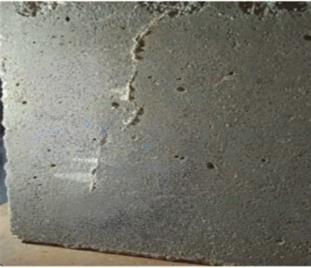
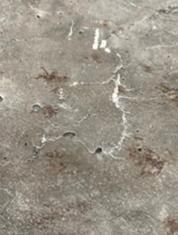
Self-healingbehaviourofconcretewasobservedbyinducing cracks in cube specimens after 7 days of curing using a Compression Testing Machine (CTM). The crack locations were markedwithpaintto facilitateeasymonitoring.The specimenswerethenkeptundercuringconditionsandthe crackhealingprocesswasvisuallyobservedat7,14,21and 28daysaftercrackinduction.
[1]A.M.NevillePropertiesofConcrete,2011. [2]M.S.Shetty,ConcreteTechnology,2018. [3]IS456:2000,PlainandReinforcedConcrete. [4]IS10262:2019,ConcreteMixDesign. [5]IS383:2016,AggregatesforConcrete. [6]IS2386(Part1):1963,AggregateTesting. [7]IS516:1959,StrengthofConcrete. [8]IS1199:1959,SamplingofConcrete. [9]H.M.Jonkers,Self-HealingConcrete,2011. [10]W.DeMuyncketal.,MICPReview,2010. [11]V.Achaletal.,MicrobialConcrete,2011. [12]P.G.Karthick &S.Mohan,Eggshell PowderConcrete, 2017.