
International Research Journal of Engineering and Technology (IRJET) e-ISSN:2395-0056
Volume: 12 Issue: 05 | May 2025 www.irjet.net p-ISSN:2395-0072
International Research Journal of Engineering and Technology (IRJET) e-ISSN:2395-0056
Volume: 12 Issue: 05 | May 2025 www.irjet.net p-ISSN:2395-0072
J. Shankar1 , G. Mallesham2 , and Surender Reddy Salkuti3
1,2Department of Electrical Engineering, University College of Engineering, Osmania University, Hyderabad, Telangana, India
3Department of Railroad and Electrical Engineering, Woosong University, Daejeon 34606 Korea
ABSTRACT:
Essentially, it is significant to supply the consumer with reliable and sufficient power. Since, power quality is measured by the consistency in frequency and power flow between control areas. The main objectives of load frequency control (LFC) are to regulate the electrical power supply in multi-area power system and change the system frequency and tieline load. A number of modern control techniques are adopted to implement a reliable stabilizing controller. An attempt has been undertaken aiming at investigating the load frequency control problem in a power system consisting of the dynamic performance of Load Frequency Control (LFC) in three-area interconnected hydrothermal reheat and wind power system by the use of bio-inspired based algorithm The performance of LFC has to be tuned properly so that its performance can be optimized. However, most of the tuning processes are performed through trial and error until the best performance is achieved. The proposed approach has superior feature, including easy implementation, stable convergence characteristics and very good computational performances efficiency. The main objective is to obtain a stable, robust and controlled system under 1%, 2% and 5% step load disturbance, by tuning the PI controller using Genetic algorithm (GA). The algorithm evaluates controller parameter using cost function such as Integral Time multiplied by Square Error (ITSE). The three-area interconnected power plant under consideration is implemented in MATLAB and simulation is carried out to get the optimum values of controller parameters. From simulation results obtained via Simulink (MATLAB), the frequency variations in each area, tie-line power fluctuation profile as well as the convergence trend for each algorithm has been analyzed in this paper. Besides various system parameters such as percentage overshoot, settling time, rise time and steady state error, different performance indices have also been computed. The experimental results demonstrated the comparison of the proposed system performance (GA-PI) with conventional controller of PI for the same investigated power system. The results proved that the GA based PI controller achieves better response than conventional PI controller.
Keywords: Proportional Integral (PI) Controllers, Genetic Algorithm (GA), Optimization Techniques, Area Control Error (ACE), Load Frequency Control, Load Interconnected system, Tie-Line Power and Automatic Generation Control (AGC)
1 INTRODUCTION:
In modern times, the growing population and rising demand for electricity make conventional sources of energy inadequate to meet the growth. Thus, tie lines are required to establish a connection between various independent conventional sources in order to tackle this problem. The loads could be shared amongst the various sources and could withstand changes in the power system with ease because to their interconnectedness. The frequency of the system is impacted even though there is a greater chance of benefit from connecting between various places when there is load variation. Iftheload varies orchangesfor whateverreasonwhilethesingle energy sourceis operating, onlythatenergy source's frequency is impacted. However, when many energy sources are operating, all variations in load in any part of thepowersystemaffectnotjustthefrequencybutalsothepowerdeliveredacrossthetieline.Becausethemaincontroller previously depended on the governor's action to restore the system's operating frequency to its pre-disturbance value, thereisstillasteadystatefrequencyerror.Consequently,anadditionalcontrollerisemployed,whichraisesthesystem's order while eradicating the steady-stateerror. This controller is referred to as a secondary or integrated controller. Becauseitdeliverselectricityinamorereliableandimprovedform,LFCisessentialtothefunctioningandmanagementof thepowersystem.
RestoringthesystemtielinepowerandfrequencytotheirbaselinelevelsbeforethedisruptionisoneofLFC'smost significant responsibilities. Controllingthe generatingunits' usablepowerwill helpachievethis[1-4].Everyone isaware of the continual fluctuations in the load during the day. During a power system's steady-stateoperation, kinetic energy
International Research Journal of Engineering and Technology (IRJET) e-ISSN:2395-0056
Volume: 12 Issue: 05 | May 2025 www.irjet.net p-ISSN:2395-0072
that is stored in the generator prime mover set modifies the load demand, resulting in a proportional shift in speed and frequency. A review and a state-of-the-art assessment of the AGC of power systems have been published in [5-6], respectively.There,severalapproachestosolvingtheAGCissuehavebeeninvestigated.Thus,loadfrequencyregulationis crucialtotheelectricalsystem'ssafeoperation[7–10].ThemostrecentadvancementsinLFCtechniquesandmethodology forvariousconventionalandrenewableenergy-basedpowersystemsarethoughttobefoundintheAutomaticGeneration Control(AGC).
Itaddressesbothsingle- andmulti-area powersystemsfallingintothesetwogroups.Apowersystemoughttobe regulated and restricted to a specific degree of deviation [11–15]. Better control strategies, including PID controllers combinedwithsoftcomputingandoptimizationtechniques,havebeendevelopedonautomaticgenerationcontrol(AGC)/ load frequency control studies toincreasetransient responsiveness [16–20]. Control perspectives concerning frequency andpowercontrolhavealsobeenfeatured.Thecombinedactionsofunstructuredandself-organizedsystemsareknown as swarm intelligence [21–25]. The major problem in any AGC, which has been addressed here, is frequency control. A proportionalintegral(PI)controllerisoptimizedbyaGeneticAlgorithm(GA)forfrequencymanagementinanAGC-Multi Areastructurewhichisexposedtofluctuationsinadditiontoloadchanges[26-29].
TheReheatthermal,wind,andhydroelectriccomponentsofthesystemhaverespectivepoweroutputsof2000MW, 35MW,and2000MW.Througha tieline,theseplants transferpower. Tominimizeframework andanalytic approaches, models are constructed using a linear approach. A transfer function model for the wind power plant is created based on the assumption of a constant wind speed, and the wind power plant, which has a nominal rating of 35 MW, is further connected tothe threeArea Networks[30-31].Figs.4and5depicttheblock diagramandpictorial representationofthe connectionsbetweenthethreepowersystems.Thelistofvariouscharacteristicsofathermal-wind-hydropowersystemis displayedinTable1.Thethree-areanetworkislinkedtoawindpowerfacilitywithanominalratingof35MW.Ithaslong beenassumedthatwindfarmsarealwaysinoperation.TherearethreeseparatePIcontrollersineverysystem.Foreach ofthethreeplants,transferfunctionmodelshavebeendevelopedtodofrequencyresponseanalysis.TheReheatthermal structureofthesystemwasdevelopedwithconsiderationfortherestrictionsofbothgeneratingrateandreheatthermal [32–33]. The wind power system's transfer function model shows the hydro unit, the Wind Energy Conversion System (WECS), the generic speed governing system model, and the wind power plant constructed under the assumption of constantwindspeed.
Table:1ParametersofSimulatedSystem
Parametric Specifications of the Simulated Reheat Thermal and Hydro Power Plant
Pr 2000Mw
Kr 0.5
Tg 0.08sec
Tt 0.3sec
f 50Hz
Kp 120Hz/p.uMw
Tr 10sec
Ptiemax 200Mw
Tp 20sec
H 5sec
Pr 35Mw
D 0.00833p.u.Mw/Hz
R 2.4Hz/p.u.Mw
Parametric Wind Power Plant Simulation Specifications
International Research Journal of Engineering and Technology (IRJET) e-ISSN:2395-0056
Volume: 12 Issue: 05 | May 2025 www.irjet.net p-ISSN:2395-0072
2.1 Thermal Power Station:
The highly pressurized steam in a thermal power plant is used to recover thermal potential energy, which is then used to power a generator. The first unit in the Simulink model in Fig. 1 is the governor, which regulates the quantity ofsteamthatenterstheturbine.Thefollowingisarepresentationofagovernor'stransferfunction: ( ) ( )
Theturbineexpandswiththepressurizedsteamthatentersthroughasteaminletvalve.Thetransferfunctionofthesteam turbinecanberepresentedasfollows: ( ) ( )
The Steam exhaustion and an increase in moisture content are caused by the expansion of steam inside a turbine. Consequently, in order to remove any remaining moisture, the steam produced by the steam turbine needs to be heated again.Acommonapproachtoexpressthetransferfunctionofaconventionalre-heaterisas ( ) ( )
The turbine is mechanically coupled to an electric generator. Such a generator's transfer function can be expressed as follows:

2.2 Hydro Power Station:
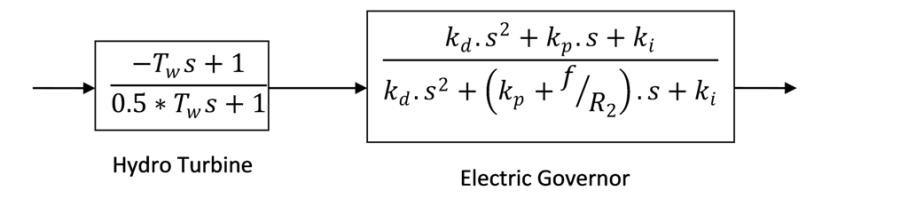
Wateriskept in hydroelectric power plantsto a height known asthe "head." When the dammed water isforced to flow downward via the penstock and into the turbine, its potential energy is transformed into kinetic energy, which powerstheturbinetoproduceelectricity.ThehydrogovernoristheinitialblockintheSimulinkmodelofa hydroelectric powerplantofFig.2.Ahydroelectricplantgovernor'stransferrolecanbeexpressedasfollows:
Thehydraulicturbine'stransferfunctionis ( ) ( )
International Research Journal of Engineering and Technology (IRJET) e-ISSN:2395-0056
Volume: 12 Issue: 05 | May 2025 www.irjet.net p-ISSN:2395-0072
TransferfunctionofhydraulicGovernoris,
Thetwo-pole-one-zerotransferfunctionillustratedbelowcanbeusedtoexplainthedynamicoperationoftheWind EnergyConversionSystem(WECS):WindEnergyConversionSystem(WECS)naturalfrequenciesanddampingratiosare determinedbythepolesofthetransferfunction,whereTϵandTptaretheparasiticandmaintimeconstants,respectively. It adds new dynamics, like oscillations, settling time, and overshoot, that might affect how the system behaves. The mathematicalmodelblockinFig.3'sSimulinkmodelthatrepresentsawindturbineplantistheWECS.
Bychoosingthesuitablenaturalfrequencyωn anddampingfactorγ,thewindenergyconversionsystem'ssecondorderdynamicsmaybeobtained,whichinturnprovidesthecontrollersettings.
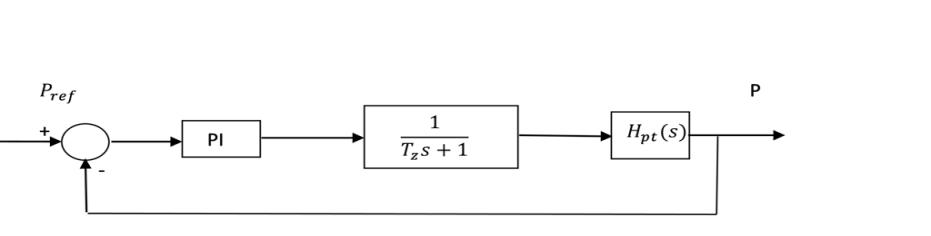
TheIntegralTimeSquareError(ITSE)waschosenastheperformanceindex,whichcanbewrittenas:
International Research Journal of Engineering and Technology (IRJET) e-ISSN:2395-0056
Volume: 12 Issue: 05 | May 2025 www.irjet.net p-ISSN:2395-0072
Fig.4Agraphicalrepresentationofthreedistinctyetlinkedregionsviaatie-line
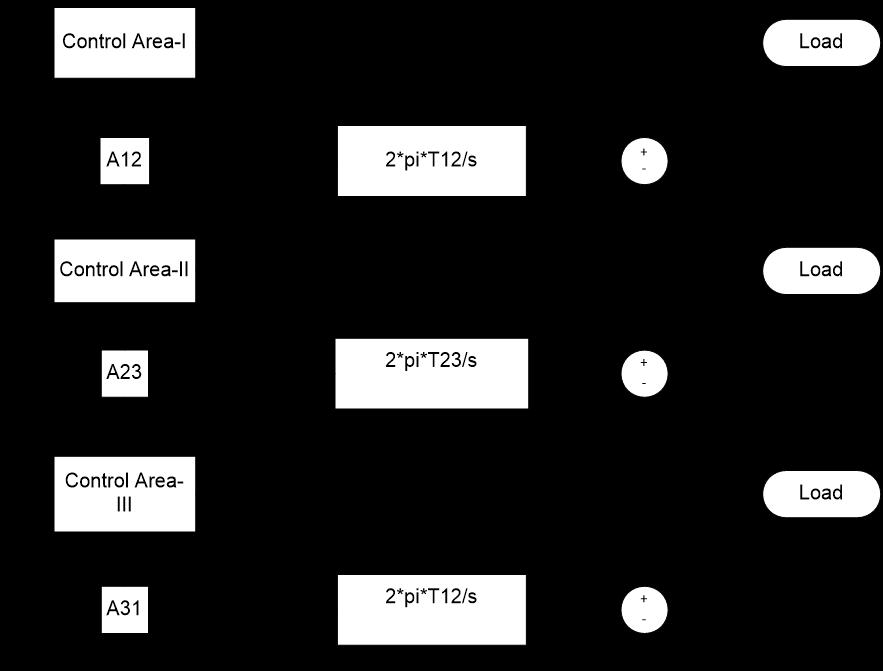
Fig.5BlockschematicIllustrationofathree-areasystemwhichisinterconnected


3 CONTROL METHODLOGY
3.1 Proportional Integral (PI) Controller

Through themitigationoftheindividual'sdisadvantages,the PIcontroller isutilized,which combinesthe benefitsof the integralandproportionalcontrollers.Equation(10)provides theconventionalPIcontroller'stransferfunction,whereKp andKistandforthecontroller'sparameters.
Equation (11) also illustrates the PI controller's time domain representation. where the error-caused response, u(t), is givenbye(t).
International Research Journal of Engineering and Technology (IRJET) e-ISSN:2395-0056
Volume: 12 Issue: 05 | May 2025 www.irjet.net p-ISSN:2395-0072
Genetic Algorithm (GA) is a computational abstraction of natural evolution that can be used to solve some optimization problems proposed by Holland in 1975. It is a repetitive search procedure that operates on a set of strings called chromosomes. The implementation of this algorithm is briefly listed in the following process [34-36]. GA solves optimization problems by exploitation of random search. When searching a large space GA may offer significant benefits overthetraditionaloptimizationtechniques InthisproblemGAisusedtooptimizethegainsofconventionalPIcontroller performanceindexasfitnessfunctions.
Here, addresses to employ an optimal PI controller for frequency regulation of AGC system, the main issues are tuning the optimal values to solve by GA through an objective function [Eq. (9)]. PI tuned GA controller automatically specifiedwithobjectivefunctions,whichisformulatedandcalculatethecontroller’sperformanceintermsoftime-domain boundsontheresponseofclosed-loop.AGA(showninFig.8)hasenhancedtheappearanceofthecomputersystemand workswithoutdetail.Itdependsontheevolutionaryoperators’reactionssuchasreproduction,cross-over,andmutation. Within a GA, the issue is investigated and initialized by population, development, exercise measurement, population fitnessselection,andreproductionandprovidesthebestsolutionfitness.
Reproduction: creates new generation of chromosomes, fitness proportionate reproduction is achieved through roulette wheelselection.
Crossover: allows information to be exchanged between individuals in the population. Two parent strings are selected randomlyandanewchildstringiscreatedbycombiningrandomsub-stringfromtwoparentstrings.
Mutation: random alteration of bits in a string which flips a bit from 1 to 0 or vice versa. By the end of mutation new generationiscompleteandprocessisrepeatedforevaluationofnewfitness.
Initializethechromosomestringsofpopulation.
Decodethestringsandassessthem.
Choosethebeststrings.
Copythebeststringsandpastethemonthenon-selectedstrings.
Combineanddevelopittogenerateoffstrings.
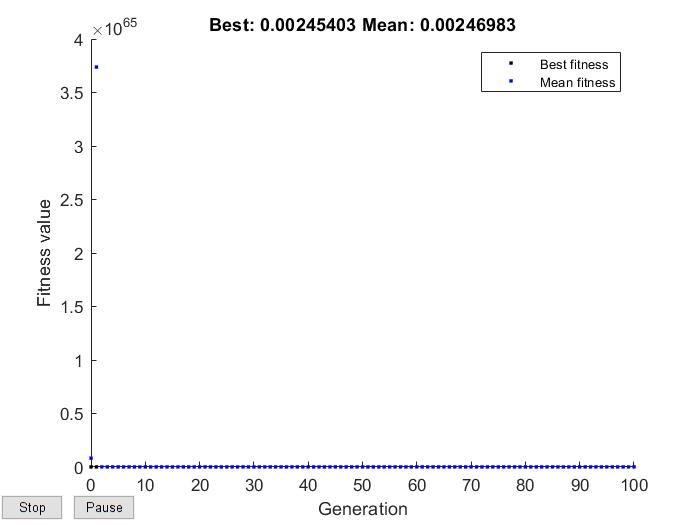
Updatethegeneticcycleandstoptheprocess.ThevaluesofGAparametersaresetaccordingtotable2.
International Research Journal of Engineering and Technology (IRJET) e-ISSN:2395-0056
Volume: 12 Issue: 05 | May 2025 www.irjet.net p-ISSN:2395-0072
GAParameters
Populationsize 50
Problemdimension
Theoptimizationissues,PIControllers,andloadfrequencyregulationreceivedalotofattention.Itiswellknown that the power system maintains system parameters within permissible bounds and can sustain itsload while operating normally.Ontheotherside,thesystemvariablesareimpactedbyanabruptbreakdowninthepowersystem.Controllers must be utilized to overcome this issue. The principal control loop of a power system is considered an extra controller. Utilizing the error signal from the power system, the PI controller which functions as a secondary controller in the currentstudy calculatesthepropercontrolsignaltogenerate.
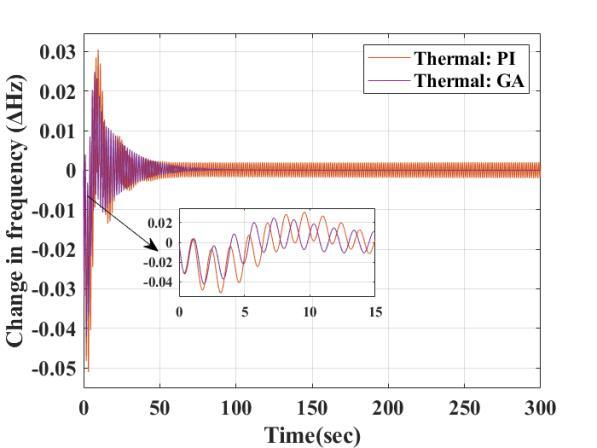
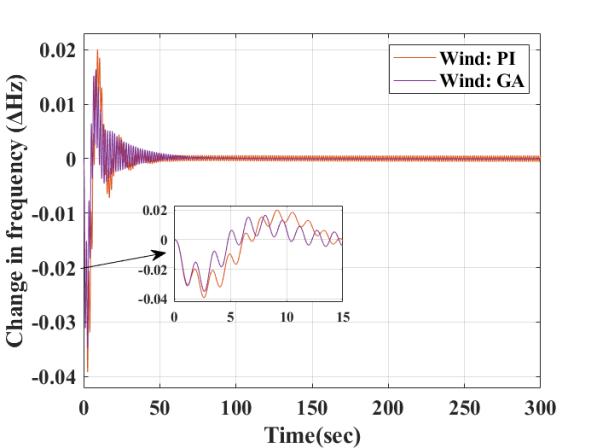
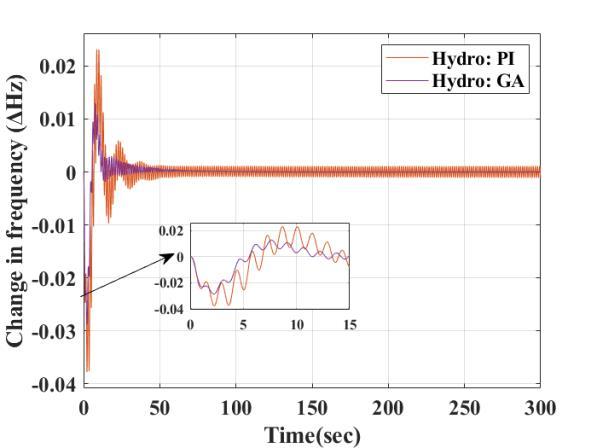
Frequency Responses: Todemonstratetheimprovements,asinglearea(Area1)ischosenforbothmodelsandtheGA optimizedPIcontroller’sfrequencyresponse(boldline)isrepresentedintablewiththeDefaultPIcontroller’sfrequency characteristics.AscanbeseenfromFigures6,8and10GAoptimizedPIcontrollerhaslowerdeviationsfromthe nominal frequencyvalue(50Hz).Thesystem’sfrequencybecomessteady,fromtheloaddisturbancesof1%,2%and5%whereas the default PI controller has a more prominent undershoot and overshoot steady-state error and settling time to its frequencycharacteristics.ItalsobecomesstablemuchlaterthantheGA-optimizedcontroller.
Tie-line Control: When we take a look at the tie-line power exchange between areas 1 and 3, the GA optimized PI controller affected the system. It proves that the tuned controller remarkably eliminated the initial oscillations and also greatly improved the overshoot and undershoot characteristics of the tie-line power exchange signal. The exchange between areas stopped much earlier, whereas the default PI controller performed not upto the mark in all the aforementioned signal characteristics. The controller of the model imposed showed much less improvement in initial oscillations when tuned with the proposed GA but the characteristic of the signal got almost totally eliminated with less timerequiredtoceasethetie-linepowerexchangebetweenareas1and3comparedtothedefaultPIcontroller.Thiscan beobservedinFigures6,810.
Thepowersystemusesthecontrolsignalthatthecontrollergeneratesasareferencesignal.Thesystemfrequency andtie-linepowerflow error-connectedassociatedregionsarecombinedlinearlytoformtheerrorsignal.Thus,a multiareareheatpowersystemwasplannedandimplementedusingtheMATLAB/Simulinkenvironment,anditwasexamined in this work. To assess the superior performance of the suggested method, a PI controller and step load perturbations (SLPs)of1%,2%,and5%inArea1areemployedtosimulatethenecessarypowersystem.AnindependentMATLABfile contains the optimization algorithm that is developed and used to modify the controller's parameters. In this simulated scenario,theGAmethodisconsideredforoptimizingthegainvaluesofthecontrollerparameters.
In this Scenario The recommended controllers are applied to a 0.01 percent increase in load demand across the threeregionsinMATLAB/Simulinktomimictherecommendedmodel. Figures6and7depict,respectively,thefrequency variations, Tie-line power variations, and Area Control Error fluctuations of the Reheat thermal area, wind area, and hydropower area for the system dynamic reactions. The GA-tuned controller has a quicker settling time than the conventional PI controller, but it has better peak overshoots and peak undershoots. In the end, the developed controller outperformstheothercontrollersintermsofdynamicresponsiveness. Withthesefactorsanddynamicreactionsinmind, thepowertransferdeviationviathetieline,frequencyoffset,andAreaControlErrorwerecomputedateachofthethree locations. As a result, for the closed-loop system, the observed system responses, tie-line power flow, and area control errors are displayed in Figs. 6 and 7. The suggested GA-PI Controller has a substantially shorter settling time and overshootsthanthetraditionalPIcontroller.
International Research Journal of Engineering and Technology (IRJET) e-ISSN:2395-0056
Volume: 12 Issue: 05 | May 2025 www.irjet.net p-ISSN:2395-0072
Figures6and7forthefrequencyvariations,tie-linepower,andareacontrolerrorallclearlyshowthis.Itisclear that, in comparison to the other areas, area-1's frequency deviation has the largest undershoot peak. In contrast to the otherareas,ithastheleastamountofovershootpeak.Whencomparedtotheotherareasofthevalues,area-1exhibitsa positiveovershootpeakinrelationtothetie-linepowerflow.Asaresult,therecommendedGA-PIcontrolleroutperforms theconventionalPIControllerfortheMultiAreaPowerSystem.Asummaryofthecontrollers'gainsisshownintable3.
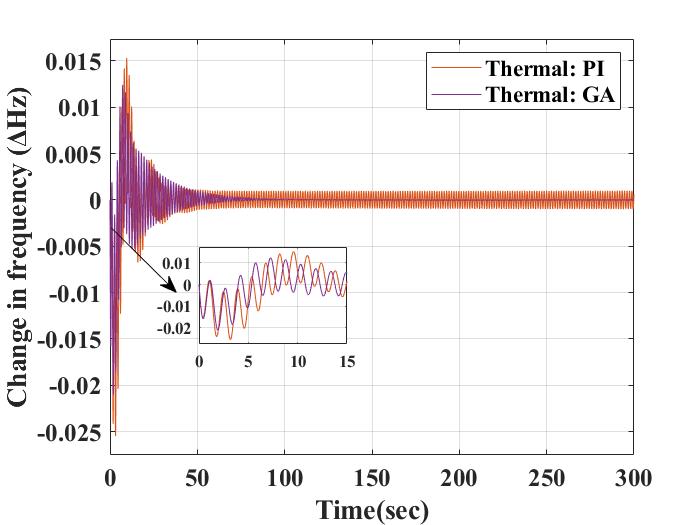
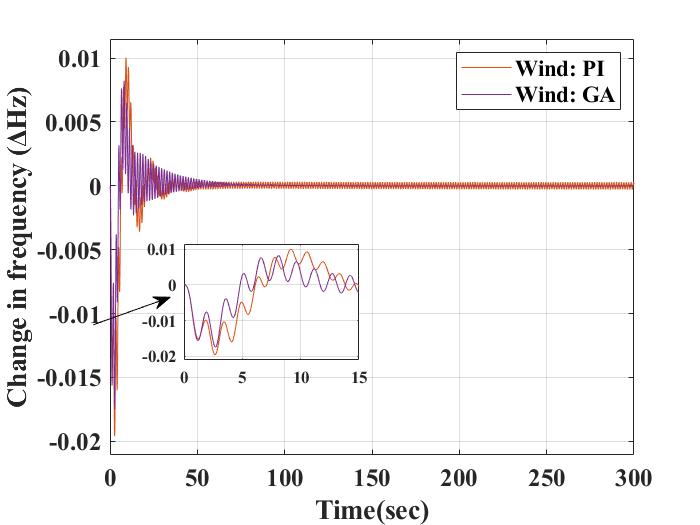
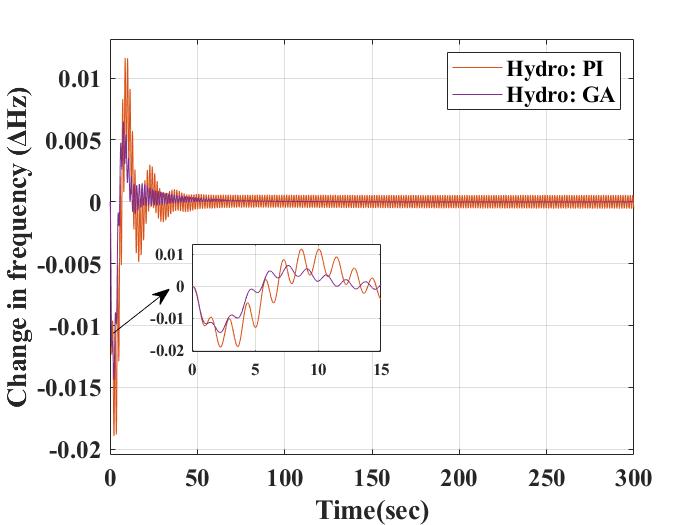
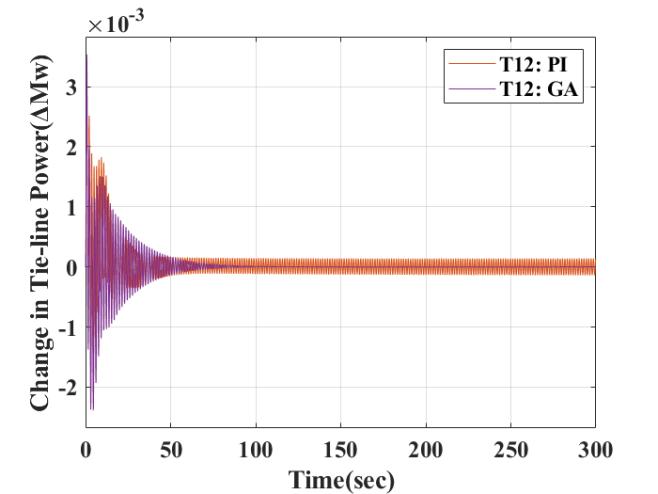
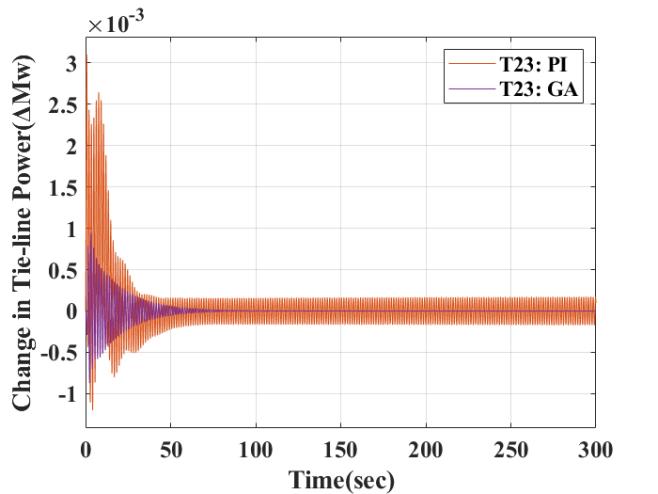
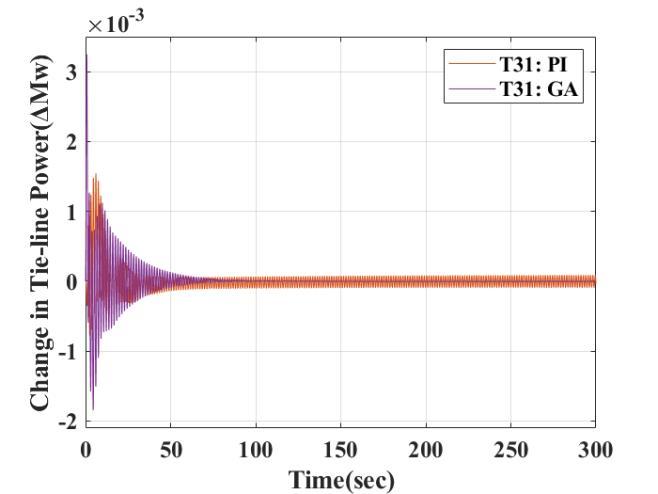
Figure 6: Evaluation of 1% Change in load in AREA-1; (i) Variations in Area-1 frequency, (ii) Variations in Area-2 frequency, (iii) Variations in Area-3 frequency, and (iv) Variations in Area-1 and Area-2 Tie-Line Power (v) Variation in Area-2andArea-3Tie-LinePower(vi)VariationintheTie-LinePowerbetweenAreas1and3
International Research Journal of Engineering and Technology (IRJET) e-ISSN:2395-0056
Volume: 12 Issue: 05 | May 2025 www.irjet.net p-ISSN:2395-0072
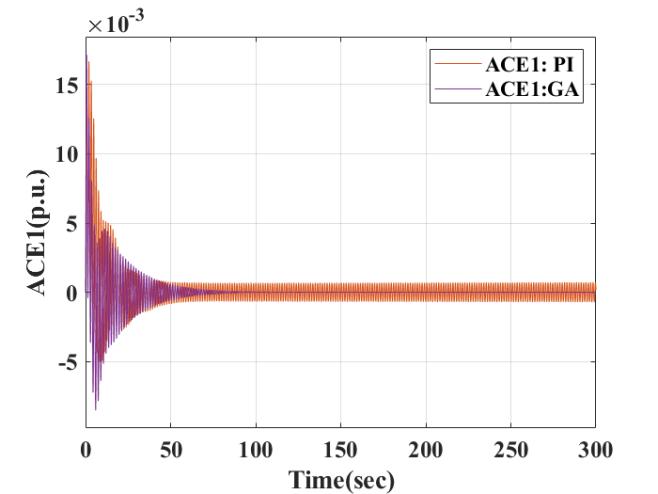
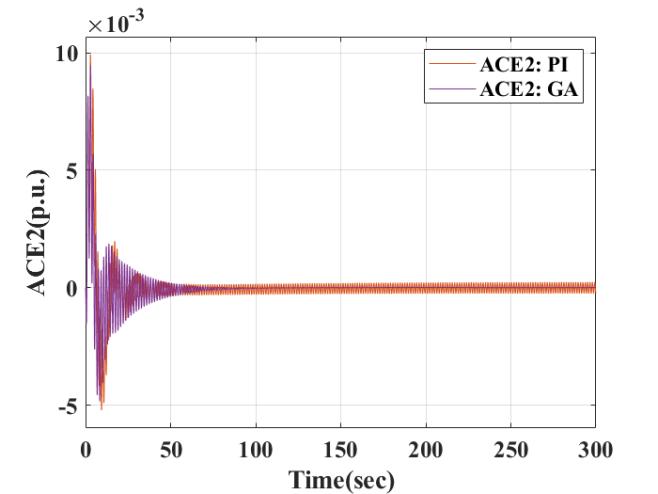
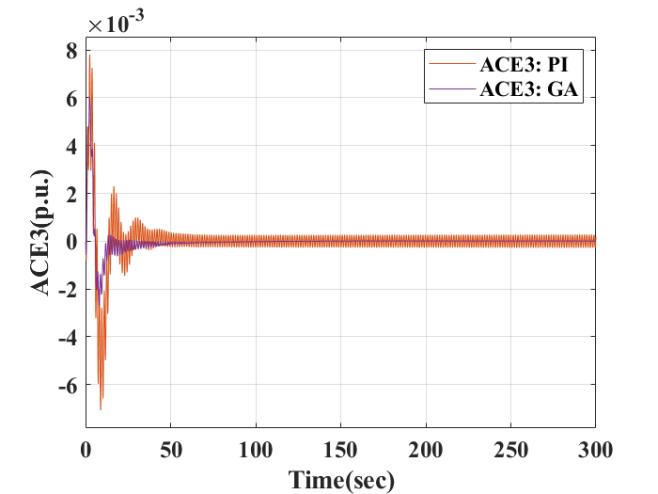
Fig.7 Theattainmentofa1%ChangeinloadinAREA-1;AreaControlErrorsforAreas1through3areshownin(vii),(viii), and(ix)respectively.
Table:3SteadyStateError,PeakUnderShoot,PeakOverShoot,andSettlingTimeComparisonValuesfor1%Variation LoadinArea-1
International Research Journal of Engineering and Technology (IRJET) e-ISSN:2395-0056
Volume: 12 Issue: 05 | May 2025 www.irjet.net p-ISSN:2395-0072
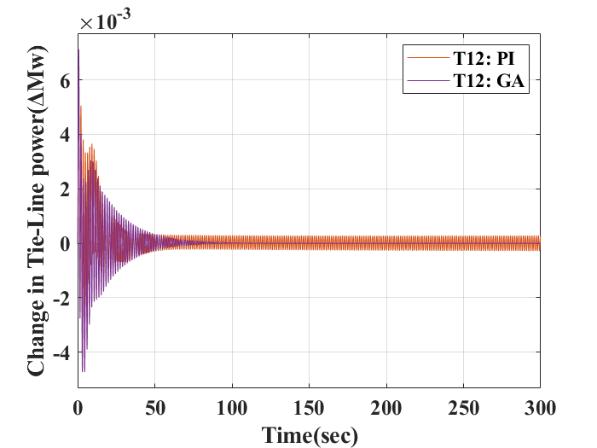
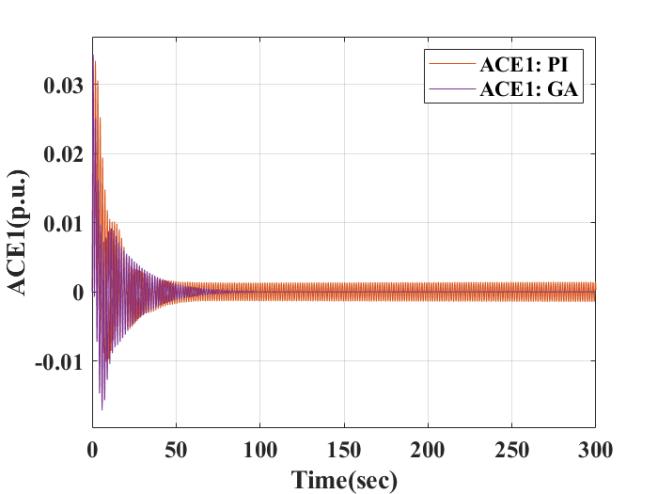
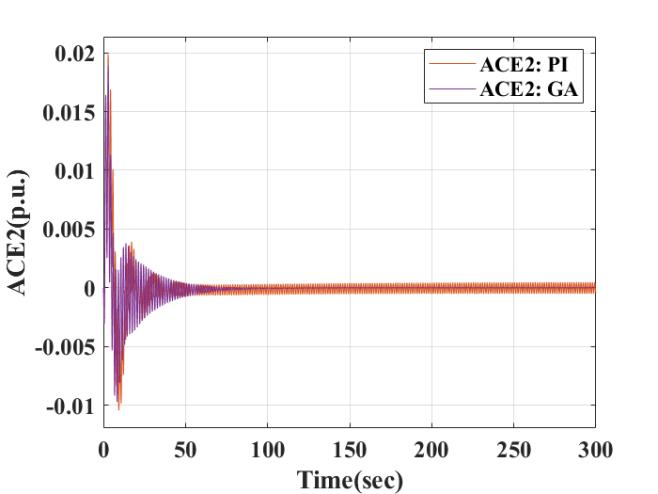
In this Situation To observe the robustness of the system, the given model is simulated in MATLAB/Simulink with thesuggestedcontrollersappliedtoa0.02percentincreaseinloaddemandacrossthethreeareas.Figs.8and9showthe frequency deviations, Tie-line power flow, and Area Control Error for the Reheat thermal zone, wind area, and hydro region, respectively, which reflect the system dynamic responses. The GA-PI Controller has better peak overshoots and peakundershootsaswellassteadystateeventhoughitsettlesfasterthanthePIcontroller.Table4displaysthefrequency deviation,tie-linepowerdeviations,andareacontrolerrorforthewind,hydro,andreheatthermalzones,respectively,as indicators of the system dynamic reactions. The GA-PI Controller outperforms the PI Controller in terms of steady state error, peak overshoots, and peak undershoots, even though it settles faster. In terms of dynamic reactivity, the designed controllerfinallyperformsbetterthantheothercontrollers.
International Research Journal of Engineering and Technology (IRJET) e-ISSN:2395-0056
Volume: 12 Issue: 05 | May 2025 www.irjet.net p-ISSN:2395-0072
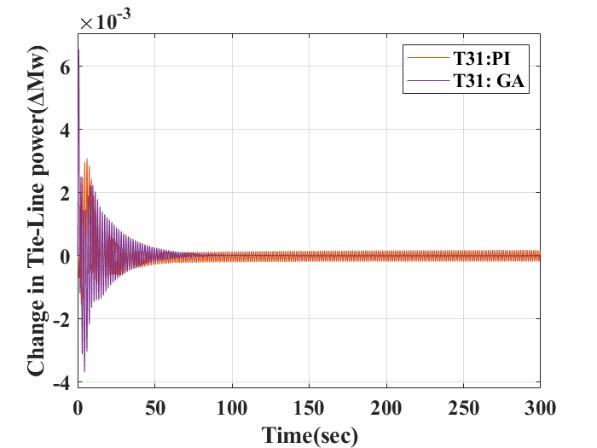
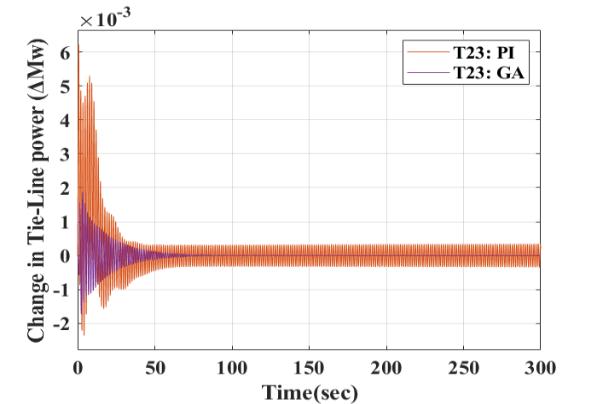
Fig. 8. Evaluation of 2% Change in load in AREA-; (i) Variations in Area-1 frequency, (ii) Variations in Area-2 frequency, (iii) Variations in Area-3 frequency, and (iv) Variations in Area-1 and Area-2 Tie-Line Power (v) Tie-line power change betweenArea-2andArea-3(vi)Tie-linepowerchangebetweenArea-3andArea-1;
International Research Journal of Engineering and Technology (IRJET) e-ISSN:2395-0056
Volume: 12 Issue: 05 | May 2025 www.irjet.net p-ISSN:2395-0072
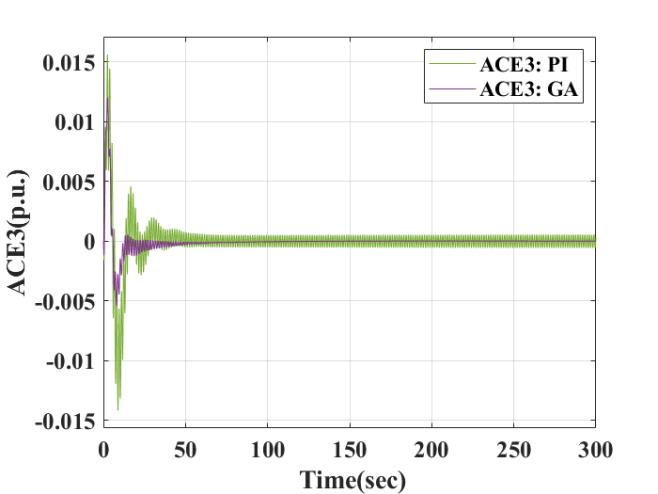
Fig.9.Theattainmentofa2%ChangeinloadinAREA-1;AreaControlErrorsforAreas1through3areshownin(vii),(viii), and(ix)respectively.
Table:4ComparisonvaluesofSteadyStateError,PeakOverShoot,PeakUnderShootandSettlingTimefor2%Change LoadinArea-1
Inthiscase,toobservetherobustnessofthesystem,thegivenmodelissimulatedinMATLAB/Simulinkwiththe suggestedcontrollersappliedtoa 0.02percentincreaseinloaddemandacrossthethreeareas.Figs.10and11 showthe frequencydeviations,Tie-linepowerflow,andregionControl ErrorfortheReheat thermal zone,windregion, andhydro area, respectively, which reflect the system's dynamic responses. The GA-PI Controller has better peak overshoots and peak undershoots as well as asteady state, even though it settles faster than the PI controller. Table 5 displays the frequency deviation, tie-line power deviations, and area control error for the wind, hydro, and reheat thermal zones, respectively,asindicatorsofthesystem'sdynamicreactions.TheGA-PIControlleroutperformsthePIControllerinterms of steady-stateerror, peak overshoots and undershoots, and settling time. In terms of dynamic reactivity, the designed controllerfinallyperformsbetterthantheothercontrollers.
International Research Journal of Engineering and Technology (IRJET) e-ISSN:2395-0056
Volume: 12 Issue: 05 | May 2025 www.irjet.net p-ISSN:2395-0072
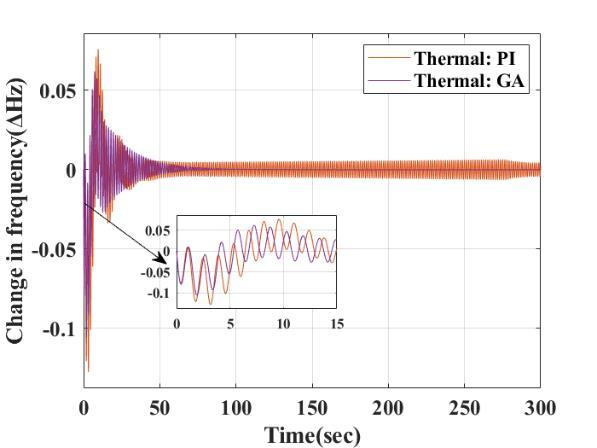
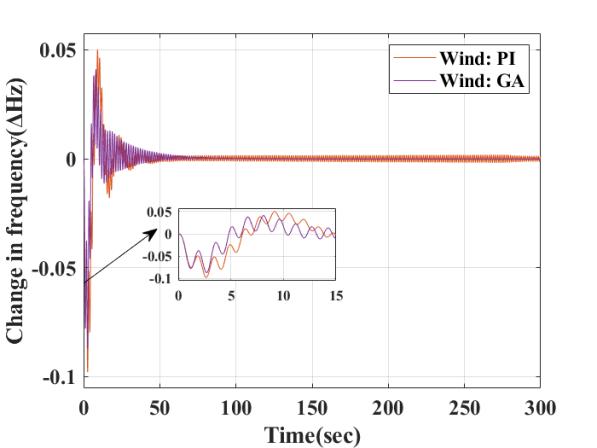
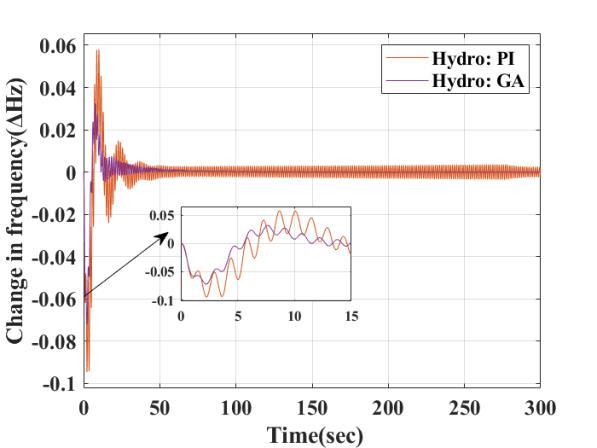
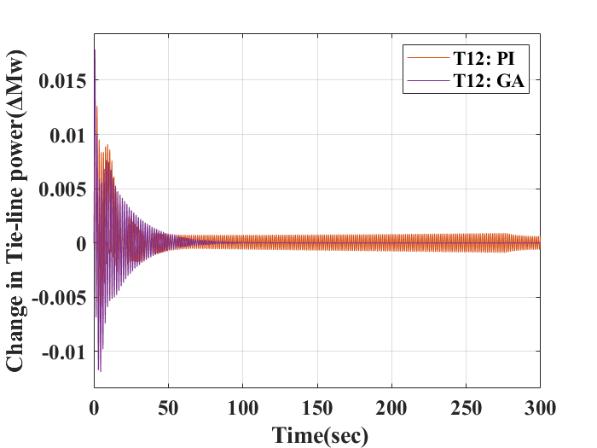
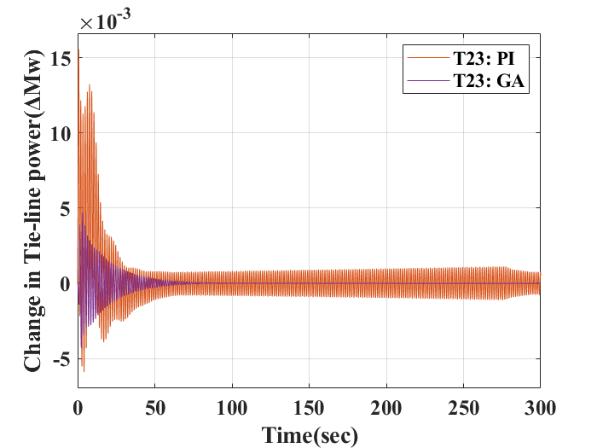
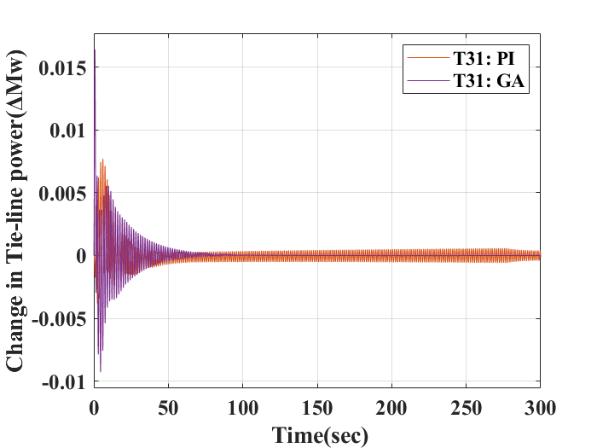
Fig.10.Evaluationof5%ChangeinloadinAREA-1;(i)VariationsinArea-1frequency,(ii)VariationsinArea-2frequency, (iii) Variations in Area-3 frequency, and (iv) Variations in Area-1 and Area-2 Tie-Line Power (v) Tie-line power change betweenArea-2andArea-3(vi)Tie-linepowerchangebetweenArea-3andArea-1;
International Research Journal of Engineering and Technology (IRJET) e-ISSN:2395-0056
Volume: 12 Issue: 05 | May 2025 www.irjet.net p-ISSN:2395-0072
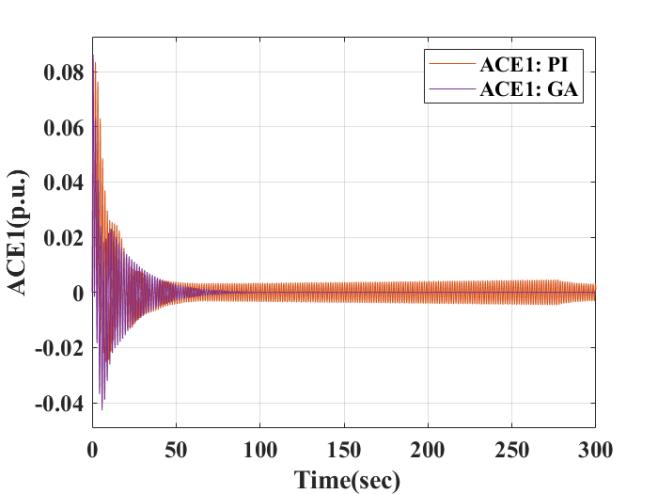
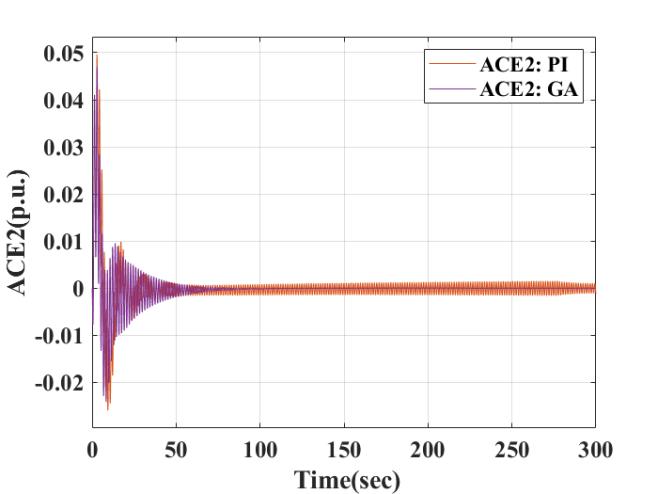
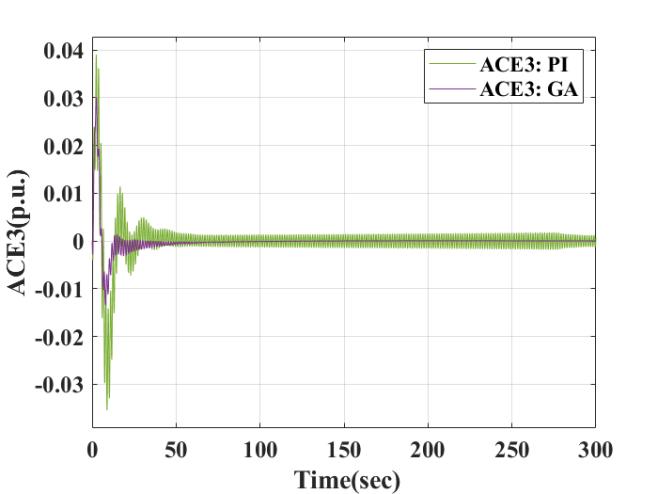
Fig.11 Theattainmentofa5%ChangeinloadinAREA-1;AreaControlErrorsforAreas1through3areshownin(vii), (viii),and(ix)respectively.
Table:5ComparisonvaluesofSteadyStateError,PeakOverShoot,PeakUnderShootandSettlingTimefor5%Change LoadinArea-1
Volume: 12 Issue: 05 | May 2025 www.irjet.net p-ISSN:2395-0072
ThedesignofLoadFrequencyControl(LFC)formulti-areaThermal-Wind-Hydropowersystemsispresentedin this study. When there is a disruption in the load, control performance is improved by using a proportional integral (PI) controller.ThePIController'sgainsettingsareoptimizedbyexperimentingwiththeITSEobjectivefunction.IntheReheat thermal area (Area 1), the efficacy of the PI controllers is analyzed and compared for 1%, 2%, and 5% Step Load interruption.TheaforementionedsystememploysanoptimizedintegratedcontrollerforitsAGCintheeventofanabrupt disruption in load. The type of controller plays a role in the performance of the LFC system. PI controller yields the best performance but introduces more parameters to be optimized and hence increases the complexity in terms of optimization.UtilizingGAallowsustosolvehigh-order,nonlinearproblemswithoutworryingmuchaboutthenumberof variables.DuetotheGAnature,introducingmultiplevariablesispossibleandthealgorithmwilliterateovereachvariable accordingtotheparametersthatitissettorun.
No matter the controller type and the optimization technique, the LFC system’s frequency response was much better. When PI Controller is imposed, it takes the system a long time to regain the nominal frequency, and also the frequency value deviates much more during the transient state compared to the system. The regular controllers may or may not show sufficient results in regaining the nominal system frequency within the desired time limit or damping the oscillations during and after the external disturbances. Most papers considering GA application is LFC do have a high numberofpopulationsissizeswithahighnumberofiterationsasterminationconditions.Inthispaper,resultshavebeen obtainedwithmuchlesspopulationsizeandwithfeweriterations.UtilizingGAallowsthesystemtoreactmuchquickerto suchdisturbances,lowersettlingtime,andincreasetheundershootandovershootparametersofthefrequency.
ITSEhasbeenintroducedasthecostfunctionhavebeenexecutedtoselectthebestIAEvalue-bearingGArun.This greatlyaffectsthe required timefora GA runto completeandthe parametersselected for theGAyieldedsufficientwith different load conditions. The algorithm presented in this paper can be utilized to obtain better optimized PI controller gains in a much shorter time for GA applications. Comparisons between PI and GA-PI controllers are used in order to betteroptimizethegainvaluesofPIcontrollers.Whencomparedtothepowersystemresponseequippedwithastandard PI controller, it is shown that the GA-PI controller efficiently reduces the electromechanical oscillations, settling time, steady state error, peak over, and undershoots. by using several improved algorithms to include additional renewable energysourcesintothelinkedpowersystemproblem.
THREEAREASYSTEMParameters
Tg
Tt
TimeConstantofGovernor
TimeConstantofTurbine
Tr TimeConstantofReheaterThermalPower
Tt WaterTimeConstant
Kp theelectricgovernorproportionalgain
U1
U2
U3
A12
A23
A31
∆Ptie12
∆Ptie23
∆Ptie31
T12
T23
ControloutputsfromArea-1'scontroller
ControlOutputsfromArea-2'scontroller
ControlOutputsfromthecontrollerofArea-3
ConstantsforsynchronizingcoefficientsofTie-Line-1
ConstantsforsynchronizingcoefficientsofTie-Line-2
ConstantsforsynchronizingcoefficientsofTie-Line-3
IncrementalshiftintielinepowerofTie-Line-1
IncrementalshiftintielinepowerofTie-Line-2
IncrementalshiftintielinepowerofTie-Line-3
CoefficientofsynchronizationofTie-Line-1
CoefficientofsynchronizationofTie-Line-2
International Research Journal of Engineering and Technology (IRJET) e-ISSN:2395-0056
Volume: 12 Issue: 05 | May 2025 www.irjet.net p-ISSN:2395-0072
T31
∆f1
∆f2
∆f3
CoefficientofsynchronizationofTie-Line-3
DeviationsinsystemfrequencyinArea-1
DeviationsinsystemfrequencyinArea-2
DeviationsinsystemfrequencyinArea-3
GainvalueofGovernor
GainValueofTurbine
CoefficientofreheatsteamTurbineConstant theelectricgovernorderivativegain theelectricgovernorintegralgains theparasitictimeconstant themaintimeconstant
[1]. N.E.Y. Kouba, M. Menaa, M. Hasni, M. Boudour, Load Frequency Control in multi-area power system based on Fuzzy Logic-PID Controller, in 2015 IEEE International Conference on Smart Energy Grid Engineering (SEGE), Oshawa,ON,Canada,2015.
[2]. Dola Gobinda Padhan, Somanath Majhi, “A new control scheme for PID load frequency controller of single-area andmulti-areapowersystems",ISATransactions,Volume52,Issue2,2013,Pages242-251,ISSN0019-0578,
[3]. D. H. Tungadio and Y. Sun, “Load frequency controllers considering renewable energy integration in power system,”EnergyReports,2019,vol.5,pp.436–453.
[4]. AsmaAziz,AmanThanOo,AlexStojcevski,"Analysisoffrequencysensitivewindplantpenetrationeffectonload frequency control of hybrid power system", International Journal of Electrical Power & Energy Systems, vol.99, pp.603-617,July2018.
[5]. Sarker,Md,Hasan,Kamrul.“LoadFrequencyControlinPowerSystem”.10.23-30.2016.
[6]. K. Jagatheesan and B. Anand, "Automatic generation control of three area hydro-thermal power systems with electric and mechanical governor," IEEE International Conference on Computational Intelligence and Computing Research,Coimbatore,India,2014,pp.1-6.
[7]. KothariD.P.,NagrathI.J.,2003.ModernPowerSystemAnalysis,TataMcGroHill,ThirdEdition.
[8]. WadhawaC.L.,2007.“ElectricPowerSystem”NewAgeInternationalPub.Edition.
[9]. ElgerdO.I.1971.ElectricEnergySystemTheory;AnIntroduction,McGroHill.
[10]. Z. A. Obaid, L. M. Cipcigan, L. Abrahim, and M. T. Muhssin, “Frequency control of future power systems: reviewingandevaluatingchallengesandnewcontrolmethods,”J.Mod.PowerSyst.CleanEnergy,2019,vol.7,no. 1,pp.9–25.
[11]. D. K. Gupta, R. Naresh and A. V. Jha, "Automatic Generation Control for Hybrid Hydro-Thermal System using Soft Computing Techniques," 2018 5th IEEE Uttar Pradesh Section International Conference on Electrical, ElectronicsandComputerEngineering(UPCON),Gorakhpur,2018,pp.1-6.
[12]. P. Anil Kumar, J. Shankar “Dynamic Analysis and Stability of the Load Frequency Control in Two Area PowerSystemwithSteamTurbine”havingISSN:2248-9622Vol.2,Issue6,November-December2012,pp.15731577.
International Research Journal of Engineering and Technology (IRJET) e-ISSN:2395-0056
Volume: 12 Issue: 05 | May 2025 www.irjet.net p-ISSN:2395-0072
[13]. AbdulLatif,S.M.SuhailHussain,DulalChandraDas,TahaSelimUstun,“State-of-the-artofcontrollersand soft computing techniques for regulated load frequency management of single/multi-area traditional and renewableenergy-basedpowersystems,AppliedEnergy,Volume266,2020,114858,ISSN0306-2619
[14]. M. Suman, M. Venu Gopala Rao, G. R. S. Naga Kumar and O. Chandra Sekhar, "Load frequency control of three-unit interconnected multimachine power system with PI and fuzzy controllers," 2014 International ConferenceonAdvancesinElectricalEngineering(ICAEE),Vellore,2014,pp.1-5.
[15]. Tshinavhe, Ntanganedzeni Ratshitanga, Mukovhe, Tsheme, Nomzamo. Review of Adaptive Load FrequencyControlStrategiesforImprovingWindPowerPlantIntegration,2024,pp1-6.
[16]. IrfanAhmedKhan,HazlieMukhlis,NurulafiqahNadzirahMansor,HazleeAzilIllias,LilikJamilatulAwalin, LiWang,“Newtrendsandfuturedirectionsinloadfrequencycontrolandflexiblepowersystem:Acomprehensive review”,AlexandriaEngineeringJournal,Volume71,2023,Pages263-308,ISSN1110-0168,
[17]. M.H.Soliman,H.E.A.Talaat,M.A.Attia,“Powersystemfrequencycontrolenhancementbyoptimizationof wind energy control system”, Ain Shams Eng. J. 12 (4) (Dec. 2021) 3711– 3723, https://doi.org/10.1016/J.ASEJ.2021.03.027
[18]. M.Beus andH. Pandzic,“Applicationof model predictivecontrol algorithmona hydroturbinegovernor control,”20thPowerSyst.Comput.Conf.PSCC2018,pp.1–7,2018,doi:10.23919/PSCC.2018.8442594.
[19]. Ram Babu, N., Bhagat,S.K., Saikia, L.C. et al.A Comprehensive Review of Recent Strategies on Automatic GenerationControl/LoadFrequencyControlinPowerSystems.ArchComputatMethodsEng30,543–572(2023). https://doi.org/10.1007/s11831-022-09810-y
[20]. Mohamed M. Ismail, Ahmed F. Bendary, Load Frequency Control for Multi Area Smart Grid based on AdvancedControlTechniques,AlexandriaEngineeringJournal,Volume57,Issue4,2018,Pages4021-4032,ISSN 1110-0168,https://doi.org/10.1016/j.aej.2018.11.004.
[21]. S.Prakash, S.K.Sinha, “Simulation based neuro-fuzzy hybrid intelligent PI control approach in fourarea loadfrequencycontrolofinterconnectedpowersystem,”Int.J.AppliedSoftComputing.23,152–164,2014.
[22]. M.Osman,M.ElhajandA. Salem,"LoadFrequencyControl in TwoArea Power SystemusingGA, SAand PSO Algorithms: A Comparative Study," 2021 31st Australasian Universities Power Engineering Conference (AUPEC),Perth,Australia,2021,pp.1-8,doi:10.1109/AUPEC52110.2021.9597705.
[23]. Mohammed Wadi, Abdulfetah Shobole, Wisam Elmasry, Ismail Kucuk,"Load frequency control in smart grids: A review of recent developments,Renewable and Sustainable Energy Reviews", Volume 189, Part A, 2024,114013,ISSN1364-0321,
[24]. A Khodabakhshian and R Hooshmand. A new pid controller design for automatic generation control of hydropowersystems.InternationalJournalofElectricalPower&EnergySystems,32(5):375–382,2010.
[25]. AsgharR,RigantiFulgineiF,WadoodH,SaeedS.AReviewofLoadFrequencyControlSchemesDeployed forWind-IntegratedPowerSystems. Sustainability.2023;15(10):8380.https://doi.org/10.3390/su15108380
[26]. P.Bhatt,R.Roy,S.P.Ghoshal,“GA/particleswarmintelligencebasedoptimizationof twospecific varieties of controller devices applied to two-area multi-units automatic generation control,” Int. J. Electrical Power & EnergySystems.32,299-310,2010.
[27]. M. M. Sati, D. Kumar, A. Singh, M. Raparthi, F. Y. Alghayadh and M. Soni, "Two-Area Power System with Automatic Generation Control Utilizing PID Control, FOPID, Particle Swarm Optimization, and Genetic Algorithms," 2024 Fourth International Conference on Advances in Electrical, Computing, Communication and Sustainable Technologies (ICAECT),Bhilai,India,2024,pp.1-6,doi:10.1109/ICAECT60202.2024.10469671
International Research Journal of Engineering and Technology (IRJET) e-ISSN:2395-0056
Volume: 12 Issue: 05 | May 2025 www.irjet.net p-ISSN:2395-0072
[28]. RamBabu,N.,Bhagat,S.K., Saikia,L.C. et al. AComprehensiveReviewof Recent Strategieson Automatic GenerationControl/LoadFrequencyControlinPowerSystems. Arch Computat Methods Eng 30,543–572(2023). https://doi.org/10.1007/s11831-022-09810-y
[29]. Feleke S, Pydi B, Satish R, Kotb H, Alenezi M, Shouran M. Frequency Stability Enhancement Using Differential-Evolution- and Genetic-Algorithm-Optimized Intelligent Controllers in Multiple Virtual Synchronous MachineSystems. Sustainability.2023;15(18):13892.https://doi.org/10.3390/su151813892
[30]. Nicolaos et.all Munteanu, Iulian. Optimal Control of Wind Energy Systems, Towards a Global Approach. 012008
[31]. PrabhaSKundurandOmPMalik.Powersystemstabilityandcontrol.McGraw-HillEducation,2022.
[32]. Le-RenChang-Chien,Wei-TingLin,andYao-ChingYin.Enhancingfrequencyresponsecontrolbydfigsin thehighwindpenetratedpowersystems.IEEEtransactionsonpowersystems,26(2):710–718,2010.
[33]. H. K. Shaker, H. E. Zoghbv, M. E. Bahgat and A. M. Abdel-Ghany, "Load Frequency Control for An Interconnected Multi Areas Power System Based on optimal Control Techniques," 2020 12th International Conference on Electrical Engineering (ICEENG), Cairo, Egypt, 2020, pp. 62-67, doi: 10.1109/ICEENG45378.2020.9171769.
[34]. Gachhadar A, Maharjan RK, Shrestha S, Adhikari NB, Qamar F, Kazmi SHA, Nguyen QN. Power Optimization in Multi-Tier Heterogeneous Networks Using Genetic Algorithm. Electronics. 2023; 12(8):1795. https://doi.org/10.3390/electronics12081795
[35]. A.Gupta,R.P.SainiandM.P.Sharma,“Modelingofthehybridenergysystem-PartI:Problemformulation andmodeldevelopment,”RenewableEnergy,vol.36,no.2,pp.459–465,2011.
[36]. Feleke S, Pydi B, Satish R, Kotb H, Alenezi M, Shouran M. Frequency Stability Enhancement Using Differential-Evolution- and Genetic-Algorithm-Optimized Intelligent Controllers in Multiple Virtual Synchronous MachineSystems. Sustainability.2023;15(18):13892.https://doi.org/10.3390/su151813892