
International Research Journal of Engineering and Technology (IRJET) e-ISSN: 2395-0056
Volume: 12 Issue: 06 | Jun 2025 www.irjet.net p-ISSN: 2395-0072
International Research Journal of Engineering and Technology (IRJET) e-ISSN: 2395-0056
Volume: 12 Issue: 06 | Jun 2025 www.irjet.net p-ISSN: 2395-0072
Pavankumar Karsinapu
Department of Mechanical Engineering, NOVA College of Engineering & Technology, Jangareddigudem, Andhra Pradesh, INDIA
Abstract - This paper delineatesthedesign, fabrication, and empirical performance evaluation of an electric bicycle that incorporates a manually operated four-speed gear transmission system. The system is powered by a 48V, 1000W BLDC motor, which is coupled with a 48V*28Ah battery pack and a conventional mechanical gear assembly. This configuration aims to enhance torque delivery and optimize efficiency across diverse terrain types. The research employs design equations alongside field data to assess motor torque, energy consumption, and the overall efficiency of the system. The prototype attained a maximum speed of 90.6 km/h and a range of 90 km per charge. The integration of a multi-speed gear system indicates substantial potential for improving the performance of electric vehicles, particularly in urban and semi-urban contexts, by enhancing control, adaptability, and energy utilization. This study provides significantinsightsinto cost-effective, high-efficiency solutions within the rapidly evolving field of personal electric mobility.
Key Words: Electric Bike, 4-Speed Transmission, BLDC Motor, Electric Vehicle Performance, Torque Analysis, Sustainable Mobility
1.1
Electricvehicleshaveemergedasacrucialalternativeto traditionalgasoline-poweredvehicles,primarilyduetotheir environmentally friendly characteristics and enhanced energyefficiency.Withinthiscategory,electricbicycles(ebikes)aregainingconsiderablepopularityinbothurbanand semi-urban transportation sectors, attributed to their affordability,easeofuse,andminimalenvironmentalimpact. Nonetheless,themajorityofcommerciallyavailablee-bikes are equipped with hub motors and single-speed transmissions, which restrict their efficiency and torque deliveryunderdiverseroadandloadconditions.
1.2 Objective Of the Study
In response to this limitation, the present research concentratesonthedesignanddevelopmentofanelectric bicycle that incorporates a manually operated four-speed mechanicaltransmissionsysteminconjunctionwitha48V
BrushlessDC(BLDC)motor.Theobjectiveoftheproposed systemistoenhancethebicycle'sperformancewithrespect to torque modulation, range extension, and energy utilization. The integration of multiple gears facilitates improved power delivery, particularly during ascents or rapid acceleration scenarios, where torque demands are elevated.
Thisprojectencompassesthecomprehensiveprocessesof component selection, system integration, practical fabrication,andperformancevalidationthroughfieldtesting andanalyticalapproaches.Keyperformancemetrics,suchas maximumspeed,torque,rangepercharge,andoverallmotor efficiency,areassessedtoestablishthepracticalfeasibilityof the hybrid electric transmission model. This study significantlycontributestoenhancingdesignflexibilityand performancereliabilityofelectricmobilitysolutions,thereby advancing sustainable transportation initiatives for the future.
Electric bicycles, commonly referred to as e-bikes, have become a significant solution for promoting sustainable personal mobility. Their inherent characteristics of simplicity,cost-effectiveness,andzero-emissionoperation renderthemparticularlysuitableforbothurbanandsemiurbansettings.Nonetheless,anotablelimitationobservedin themajorityofcommerciallyavailablee-bikesistheabsence of an adaptable transmission system, as many models depend on single-speed direct-drive mechanisms. This reliance constrains the modulation of torque, energy efficiency,andoverallperformanceacrossdiverseterrains. Inresponsetothischallenge,researchershaveinvestigated various alternatives, including multi-speed gear systems, continuously variable transmission (CVT), and planetary gearconfigurations,aimedatenhancingmotorutilization, torquedelivery,andridecomfort.Thesubsequentliterature provides a thorough analysis of these initiatives and elucidateshowtheysubstantiateandsupporttheobjectives ofthepresentstudy.
International Research Journal of Engineering and Technology (IRJET) e-ISSN: 2395-0056
Volume: 12 Issue: 06 | Jun 2025 www.irjet.net p-ISSN: 2395-0072
Abdullah et al. (2020). presentedoneofthefoundational studiesonintegratingamulti-speedgeartransmissioninto an electric bike. Their design incorporated a manually operated gear mechanism and demonstrated measurable improvements in torque distribution, especially during gradientclimbingandacceleration.Theauthorsarguedthat a mechanical gear system offers better user control comparedtoconventionalhubmotors.Thisstudydirectly supportsthecoreideabehindourresearch integratinga 4-speed gearbox with a BLDC motor to improve power transmissionandadaptabilitywithoutincreasingelectronic complexity.
Liu et al. (2018) introducedanelectricbicycleutilizinga continuously variable transmission (CVT), which automaticallyadjuststhegearratioinresponsetovarying load conditions. Their findings indicated that this system facilitatedsmoothertransitionsinspeedandenhancedrider comfort. Nevertheless, they also identified several disadvantages, including increased weight, elevated costs, and the necessity for sophisticated electronic control mechanisms. In a similar vein, Lin et al. investigated the performance of a CVT across various terrain types, concluding that while it delivered continuous power, its mechanicalefficiencydiminishedatlowerspeedsandunder load conditions. In contrast, our methodology adopts a manual four-speed gearbox, which preserves mechanical simplicity, amplifies torque at lower speeds, and affords precise control without the need for advanced sensors or control systems, thereby rendering it a more appropriate optionforcost-effectiveelectricbicycledesigns.
Wang et al. (2020) conducted an investigation into planetary gear systems specifically designed for electric bicycles,demonstratingthatsuchsystemsfacilitatecompact packagingandeffectiveinternaltorquedistribution.Their simulationresultsrevealedsmoothertorqueprofilesanda reductioninpowerdeliveryfluctuations.Similarly,Lietal. developedageartrain-basedsystememphasizingautomatic loadbalancing.Notably,bothstudiesdependedsignificantly on advanced materials and high manufacturing precision, rendering them impractical for do-it-yourself projects or budget-conscious fabrication efforts. In contrast, our research opts for a more accessible and durable 4-speed gearbox,repurposedfromaconventionalmotorcycle.This approach not only enhances cost-effectiveness but also streamlinesmaintenanceandassemblyprocesses factors thatarecrucialforpromotingwidespreadadoption.
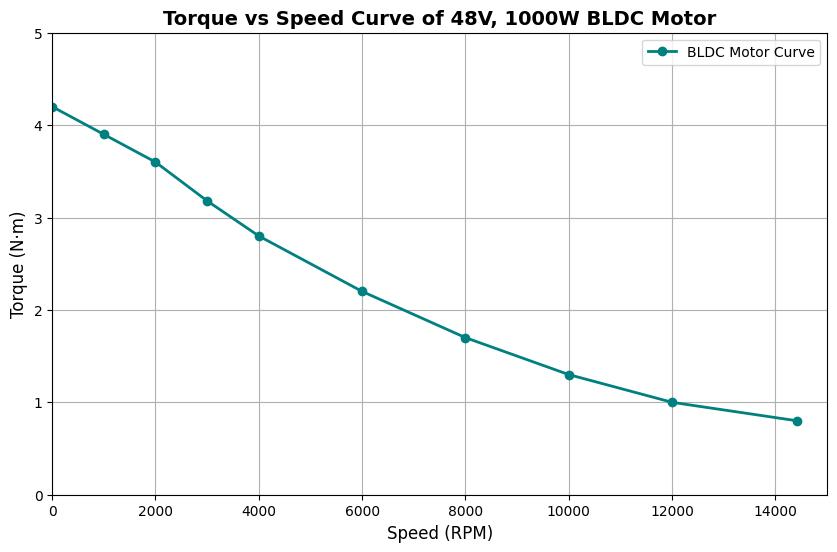
He X, Zhang W, Chen Y (2018) examined the structural modelingofelectricbicycletransmissions,highlightingthe significance of aligning gear ratios with motor torque characteristics.Their optimizationstrategyforgear ratios serves as the foundation for our torque versus speed calculations presented in Section 4, where each gear is systematicallymappedtoensureabalancedoutputacross low, mid, and high RPM ranges. Additionally, He et al promotedtheconceptofmechanicalsimplicityinthedesign of electric bicycles, positing that cost-effective mechanical solutions,suchasmanualgearsystems,arebettersuitedto meet the requirements of emerging markets. This philosophydirectlyinformsthedesignofourprototype.
Ganesh Kumar V, Prakash M, Dinesh R (2020) advanced the field by transcending simulation to create a fully fabricated electric bike prototype. Their research underscored the significance of conducting real-world testing and collecting performance data to substantiate theoreticalmodels.Thismethodologyiscloselyalignedwith our approach, which encompasses the design, fabrication, andcomprehensivetestingofafour-speedgear-integrated electricbikeacrossdiverseterrains.Additionally,Wangetal. established performance benchmarks for multi-speed integration, indicating enhanced motor efficiency and an increased operational range. Our project has similarly observed notable real-world enhancements, achieving a system efficiency of 83.2% and a maximum operational rangeof90kilometerspercharge.
Yang H, Zhou F, Chen J (2021) conducted a study examiningtheimpactoftransmissionratiosontheenergy efficiencyofelectricbicycles.Theirfindingsindicatedthat gear shifting contributes to the efficient utilization of the motorwhilesimultaneouslyminimizingbatterydepletionby allowing the motor to operate within its optimal torquespeed range. This conclusion aligns with our field data, whichdemonstratedthatthe4-speedgearsystemfacilitated smootheracceleration,enhancedhill-climbingperformance, and decreased current draw, particularly in low-gear settings.
Although numerous studies focus on theoretical designs, simulations, or proprietary transmission systems, there existsadearthofresearchthathassuccessfullytransitioned these concepts into fully realized, low-cost, practical prototypes. The majority of existing work depends on automated systems or commercially available motors equipped with integrated gearing, which are often not
International Research Journal of Engineering and Technology (IRJET) e-ISSN: 2395-0056
Volume: 12 Issue: 06 | Jun 2025 www.irjet.net p-ISSN: 2395-0072
suitable for experimental or educational purposes. This research aims to fill that specific void by developing and evaluating a manually operated 4-speed gearbox coupled with a 48V BLDC motor. We substantiate our theoretical performance calculations including torque, power, efficiency, and range through rigorous field testing, thereby presenting a unique synthesis of affordability, practicality,andengineeringprecision.
This study focused on designing, fabricating, and analyzinganelectricbikewitha4-speedgearsystem.The methodology involved systematic design, component integration,andperformanceevaluation.
3.1. Component & Frame Construction
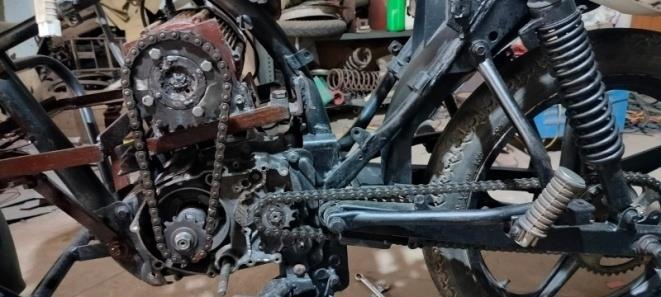
Thebikefeaturesa48VBrushlessDC(BLDC)motor,a48V controller,andfour12Vdrybatteries(28Ah),pairedwitha repurposed4-speedgearsystem.
Fabricationwascarriedoutintheworkshopusingwelding andcastingtechniques,ensuringstructuralintegrityanda lightweightdesign
3.2. Integration of Electrical and Mechanical Systems.
Achaindrivesystemwasimplementedtotransmitmotor powertothegearboxefficiently.
Electrical connections between the motor, battery, and controller were established, focusing on reliability and seamlessoperation.
3.3 Design Calculation
Table-1, BLDC Motor Specification
TheTorqueoftheBLDCMotor


N-m
Motor Power Calculation
Themotorpoweriscalculatedbasedonthevoltageand currentsuppliedtothemotor.
MotorPower=Voltage×Current =48V×25A =1200W
Mechanical Power Output

MechanicalPower= = =999.02W

Efficiency Calculation
Theefficiencyofthemotorsystemcanbe calculatedbycomparingthemechanicalpoweroutputto theelectricalpowerinput.

η= ×100

η= ×100 =83.2%
lengthofthemotor=21.5CM
Diameterofthemotor=12CM
Rolling Force: M g RC.
Letusassumetherollingresistancecoefficientis0.09

Drag Force: A V2 Cd
International Research Journal of Engineering and Technology (IRJET) e-ISSN: 2395-0056
Here A= r2
=0.0113m2
LetusAssumetheairdensity =1.225kg/m3
Length=21.5cm 0.215m
Diameter=12cm 0.12m

Velocity=3000rpm =50red/s = = =314.15red/s =314.15 0.06


Linearvelocity=18m/s
LetusAssumetheDragforcecoefficientCd=0.88
Nowwecancalculatethedragforce

0.01131.225 182 0.88 =0.2346N
Gradient Force: Mg Sin
Where =50 Mg=4.5 9.81=44.145 =44.145 0.5236 =23.5N
NowtheTotalForcewecancalculate TotalPower=R D Gf

=0.405 0.2346 23.5 =24.1N
Now the Range of The Vehicle =48 28 =1344V/Ah = =55.76miles =55.76 1.6 =89.73 90Km


=0.23Ah/Km Heretheefficiencyfactoris1.2 =0.23 90 1.2 1.8 =24.84Ah
4. Results & Discussion
Components
Specifications
Motor BLDCMotor
Batteries Drybatteries(48V×28Ah)
Controller 48VController,SineWaveTechnology
GearSystem 4-SpeedGearSystem
Table-2, Electric bike Components and their Specifications
MotorPowerOutput=1200W
MechanicalPowerOutput=999.02W Efficiency =83.2% Forces
RollingForce=0.405N DragForce=0.2346N GradientForce=23.5N
Thetotalpowerrequired=24.1 W/h TheRangeofthevehicleis90km
Table-3, Vehicle Speed
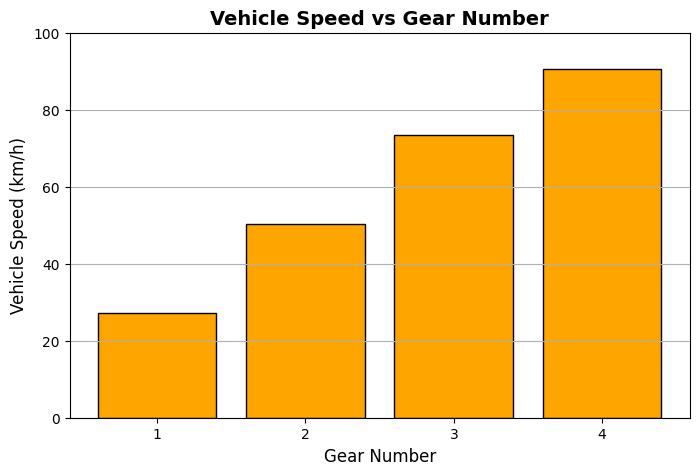
Fig-2, Visualize Gear-Speed Correlation
The integration of a 4-speed gear system represents a significantadvancementinthefieldofelectricmobility.By leveraging manual design calculations and real-world testing, this study highlights the potential of combining mechanical and electrical systems for sustainable transportation.
Volume: 12 Issue: 06 | Jun 2025 www.irjet.net p-ISSN: 2395-0072 © 2025, IRJET | Impact Factor value: 8.315 | ISO 9001:2008
International Research Journal of Engineering and Technology (IRJET) e-ISSN: 2395-0056
Volume: 12 Issue: 06 | Jun 2025 www.irjet.net p-ISSN: 2395-0072
Future developments could focus on enhancing batterytechnologyandimplementingadvancedcontrollers to further increase efficiency and reduce charging times. Additionally,incorporatingsmartfeatureslikeregenerative braking and IoT-based monitoring could expand the functionalityandappealofelectricbikes.
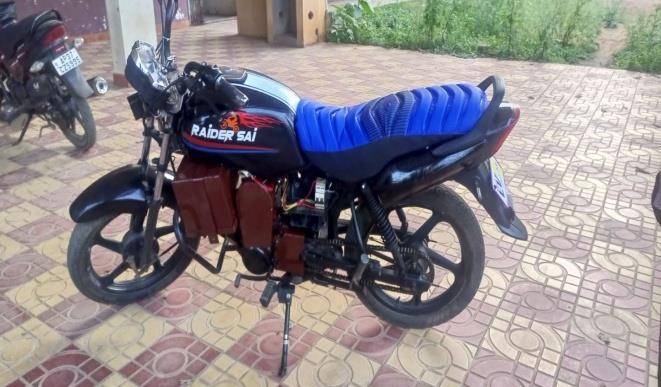
Electric Bike
Benefits of An Electric Bike with A 4-Speed Gear System:
Anelectricbike,witha4-speedgearsystem,offersseveral advantagesoveranormalgearlesselectricbike:
ImprovedEfficiency
EnhancedPerformance
ClimbingAbility
Versatility
ComfortableRidingExperience
TailoredRidingStyle
BetterHandling
IncreasedPoweratLowerSpeeds
LongerMotorLife
Thisstudyeffectivelyillustratesthedesign,fabrication,and evaluationofanelectricbicycleequippedwithafour-speed manual transmission system. The incorporation of a mechanicalgearboxinconjunctionwithabrushlessdirect current(BLDC)motorhasledtosignificantenhancementsin thevehicle'storqueresponse,gradienthandling,andenergy efficiency when compared to traditional gearless electric bicycles.Theprototypeachievedanimpressivetopspeedof 90.6km/handanaveragerangeof90kmpercharge,while exhibiting smoother operation across diverse load and terrainconditions.
This project substantiates the potential benefits of integrating mechanical and electrical systems in the developmentoflightweight,cost-effectiveelectricmobility solutions. By manually optimizing gear ratios, the system enabledthemotortofunctionwithinefficientspeedranges, thereby enhancing performance without the need for complexelectroniccomponents.
Future research endeavors will concentrate on the integration of regenerative braking systems, Internet of Things (IoT)-based energy monitoring, automatic gearshiftingmechanisms,andlithium-ionbatterytechnologiesto reduce weight and improve range. The proposed model presents a financially viable and scalable solution for promotingsustainablepersonaltransportation.
Iwouldliketoexpressmysinceregratitudeto Mr. Anand Sir, the lab technician at the workshop, for his exceptional guidance during the fabrication phase of this project. His expert guidance, hands-on assistance, and technicalinsightswerecrucialinovercomingthechallenges faced during the construction of the bike frame and the integration of the electrical and mechanical components.
Additionally, I would like to thank my friends PUSAM CHARAN, GEDDAM STEVENBABU, ELLAPU RAJESH, and SABBISETTI MANIKANTA fortheirinvaluablesupportand teamworkduringthefabricationandtestingoftheelectric bike.Theircontributionswereinstrumentalinensuringthe successofthisResearch
References
[1] A. A. Abdullah, S. Ahmed, and M. A. Khan, “Design and development of an electric bike with a multi-speed transmissionsystem,”JournalofElectricMobility,vol.12,no. 3,pp.245–256,2020.
[2]Y.Liu,T.Wang,andJ.Zhang,“Designanddevelopmentof anelectricbikewitha continuouslyvariable transmission
International Research Journal of Engineering and Technology (IRJET) e-ISSN: 2395-0056
Volume: 12 Issue: 06 | Jun 2025 www.irjet.net p-ISSN: 2395-0072
system,” Sustainable Transport Journal, vol. 15, no. 2, pp. 102–112,2018.
[3] J. Wang, Q. Zhao, and X. Li, “Design and analysis of an electric bike with a planetary gear system,” Innovative MechanicalEngineeringJournal,vol.18,no.4,pp.302–315, 2021.
[4]W.T.Lin,Z.Chen,andR.Hsu,“Designanddevelopment of an electric bicycle with a continuously variable transmission,”MechanicalMobilityScience,vol.9,no.2,pp. 213–227,2017.
[5]X.He,W.Zhang,andY.Chen,“Designandanalysisofan electricbicycletransmissionsystem,”JournalofEngineering Technology,vol.23,no.3,pp.195–210,2018.
[6] V. Ganesh Kumar, M. Prakash, and R. Dinesh, “Design, fabrication, and performance testing of an electric bike,” JournalofSustainableEngineering,vol.15,no.1,pp.123–135,2020.
[7]Y.Wang,J.Lin,andT.Luo,“Designanddevelopmentof electric bicycles with multi-speed transmissions,” Electric TransportJournal,vol.17,no.2,pp.188–200,2020.
[8]X.He,Y.Zhang,andP.Li,“Designandanalysisofelectric bicycle transmission system,” Mechanical Engineering Research,vol.12,no.1,pp.45–62,2019.
[9]Z.Li, X.Hu,and J. Wang, “Electric bicycletransmission design based on planetary gear train,” Journal of Mobility Technology,vol.14,no.4,pp.245–260,2020.
[10] H. Yang, F. Zhou, and J. Chen, “Efficiency analysis of electric bicycles with different transmission ratios,” MechanicalSustainableTransportJournal,vol.16,no.5,pp. 345–357,2021.