
International Research Journal of Engineering and Technology (IRJET) e-ISSN: 2395-0056
Volume: 13 Issue: 04 | Apr 2026 www.irjet.net p-ISSN: 2395-0072
DESIGN AND DEVELOPMENT OF MANUAL MULTIPURPOSE FOOD
PREPARATION MACHINE
Priyank M. Ghaskata1 , Jayesh D. Ramani2 , Vishal J. Rana3, Het G. Sakhiya4, Meet K. Radadiya5 , Uttam Singh F. Gohil6
1,4,5,6 Student (6th Semester- Mechanical Engg. Dept.) Tapi Diploma Engg. College, Surat, Gujarat, India-395006
2H.O.D (Mechanical Engg. Dept.) Tapi Diploma Engg. College, Surat, Gujarat, India-395006
3Lecturer (Mechanical Engg. Dept.) Tapi Diploma Engg. College, Surat, Gujarat, India-395006
Abstract - Most modern food preparation appliances rely heavily on electricity, which poses a significant challenge for vendors and households in rural areas prone to regular power cuts. This paper details the design and development of a manual multipurpose machine capable of performing dough kneading, chopping, and mixing/grinding without electrical power The system utilizes a hand-operated handle connected to a gear mechanism that drives multiple functional shafts simultaneously or individually By providing a portable, sturdy, and economic solution, this machine eliminates electricity costs and improves food preparation efficiency for small-scale vendors and rural users
Key Words: Manual Multipurpose Machine, Food Preparation, Bevel Gear, Powerless Solution, Rural Development, Mechanical Design
1. INTRODUCTION
In daily life, the majority of appliances used for food preparation are electricity-dependent While this is convenientinurbansettings,vendorsandsmallfoodstallsin ruralareasfacefrequentpowerinterruptionsthatstalltheir daily work Furthermore, using separate machines for different tasks like kneading and grinding is spaceconsumingandexpensive Thisprojectintroducesamanual multipurposemachinedesignedtoaddresstheseissuesby providingasingle,powerlesssolutionformultiplekitchen chores
2. LITERATURE REVIEW
2.1 “Quick-Return Mechanism Design and Analysis Projects”: [1]
This research paper includes basics of quick return mechanismindetail.Itincludesdetaileddesignandstudyon quick return mechanism, different types, design, their application in industry, etc. We also learned how it is beneficial for students to learn about the design, and differentparametersofquickreturnmechanism.
2.2 “A study on Quick Return Mechanisms in Shaper, Planner and Slotter machines”: [2]
This research paper includes detailed information about differenttypesofquickreturnmechanismusedinindustries and different machineries like shaper, planner, slotter. Detailedinformationaboutthismachines,theirapplication andusage.Alsohowquickreturnmechanismworksandis usedindifferentplaces.
2.3 “Analysing Bevel Gears for Efficient Power Transmission”: [3]
Thestudycomparesfourdifferentmaterials graycastiron, stainless steel, structural steel, and titanium alloy to determinetheirsuitabilityforefficientpowertransmission. Results show that structural steel exhibits the lowest deformationandstrain,makingitthemostsuitableamong the tested materials. The maximum stress observed occurrednearthetoothbase,acriticalareaingeardesign. Overall,theresearchhighlightstheimportanceofmaterial selectionandcomputationalsimulationinoptimizinggear design for strength and reliability. Through this research paper we learned about material selection for gear, and learnedaboutdifferentloadsandstressesthateffectgear life.
2.4 “Bevel Gear Design and Material Selection”: [4]
Thispaperfocusesonthegeometricdesign,modeling,and material selection of bevel gears using CAD and analysis methods.Theauthorspresentthetheoryandclassification of bevel gears (straight, spiral, hypoid), define the pitch surfaces and angles, and explain how gear geometry is derivedforintersectingshafts.Theythenselectappropriate materials considering strength, wear resistance, manufacturability andcomputesafetyfactorsandstresses forthegeardesigns.
2.5 “Design of Gear Drives with High Gear Ratio”: [5]
This research paper includes different factors to consider while designing the gear ratio. The work emphasizes strategiestominimizetransmissionerror,improvestiffness, andreducevibrationandnoiseunderhigh-ratioconditions. Through simulation and rigorous design methods, the
International Research Journal of Engineering and Technology (IRJET) e-ISSN: 2395-0056
Volume: 13 Issue: 04 | Apr 2026 www.irjet.net p-ISSN: 2395-0072
authorsidentifyconditionsandgeometricalconstraitsunder which these systems can operate reliably and efficiently. This contribution advances the understanding of how to design high-gear-ratio drives with improved dynamic behavior,offeringusefulguidanceforapplicationsrequiring compact,precise,androbustpowertransmission.
2.6 “The Optimal Design of Standard Gearsets”: [6]
This research paper shows details about how gearsets actuallywork,withconsideringdifferentimportantfactor. Fromthisresearchwegotinformationabouthowtodesign a gearset efficiently. It shows study about designs of differentgearsetlikespurgear,planetarygear,etc.Andhow tofitwholegearsetincompactorsmallareas.Overall,the paperoffersasystematicpathtowardcompact,reliablegear design by combining geometric, kinematic, and strength criteria.
2.7 “Design and Development of Manual Mixer”: [7]
Thepaperdescribesthedesign,development,andvalidation of a manual (hand-operated) mixer grinder intended for households in both rural and urban settings, especially whereelectricityisintermittentorunavailable.Theauthors conducted market surveys and ethnographic research to understand user needs, then used Quality Function Deployment (QFD) to translate those needs into technical designspecifications.Throughconceptualdesigntoolsand evaluationmethods(e.g.weightedranking),theyselectedan optimalconcept,andperformeddetaileddesignusingCATIA CAD software, considering material choice and manufacturability.Afull-scaleworkingprototypewasthen built.Testsinvolvedgrindingsoakeddal(150grams),using theprototype’sgearingmechanism:1000revolutionsofthe mixing unit for every 120 handle turns. The output was a fine-grainedpaste,demonstratingthatthemanualmixeris capable of producing adequate grinding performance without electric power. The paper concludes that such manually operated mixers, properly designed via user-centric design tools and manufactured with suitable materials, can provide effective alternatives to electric mixers, especially in areas with unreliable power or for energysavings.
2.8 “An Overview of Engineering Bearings, Types, and Applications”: [8]
Thispaperhighlightapplicationsofbearingacrosssectors such as automotive, aerospace, industrial machinery, construction,robotics,andinfrastructure.Finally,emerging trends suchassmartbearingswithembeddedsensorsfor predictive maintenance are identified, along with challenges like miniaturization, high speed, high load, environmental conditions, fatigue, and reliability. It has detailed information about history of bearings, that how they were manufactured before and now also, paper has informationaboutdifferenttypesofbearingwithitsusagein todaylifeofmodernindustrialization.
2.9 “Development of dough kneading machine for small and medium-sized enterprises”: [9]
Thisstudyreportsthe design,fabrication, andtestingof a motorized dough-kneading machine aimed at supporting smallandmedium‐scalefoodbusinesses.Themachineuses dualelectricmotorsmountedonthesameaxis oneabove andonebelow torotateinoppositedirections,improving kneadingefficiencybygeneratingbettermixingaction.The designersmodeledthemachineaccordingtolocallyrelevant specifications (materials, bowl size, motor ratings), then constructeditusingmildsteelfortheframe,aluminumfor thebowl,andstainlesssteelfordough-contactcomponents. Overall,themachineprovedsuitableforSMEs beingfairly simple,efficient,anddurable andoffersa goodbasisfor furtherrefinement(e.g.optimizingenergyuse,mixingtime, adjustingfordifferentdoughtypes).
2.10 “A study of bearing and its types”: [10]
Thispaperprovidesacomprehensiveoverviewofbearings asessentialmechanicalcomponentsthatfacilitaterelative motionbetweenmachinepartswhilesupportingloads.The authorsclassifybearingsintotwoprimarycategories:sliding bearingsandrollingbearings,eachwithdistinctoperational principles and applications. They delve into various subtypes, including hydrodynamic, boundary lubrication, hydrostatic, and thrust bearings, explaining their mechanisms and suitability for different operational conditions. The study emphasizes the importance of lubricationinreducingfrictionandwear,therebyenhancing the efficiency and lifespan of bearings. Additionally, the authorshighlightthesignificanceofmaterialselectionand design considerations in optimizing bearing performance. Thepaperservesasavaluableresourceforunderstanding thefundamentalaspectsofbearingsandtheircriticalrolein machineryandequipment.
3. DESIGN
3.1 3D design of machine
International Research Journal of Engineering and Technology (IRJET) e-ISSN: 2395-0056
Volume: 13 Issue: 04 | Apr 2026 www.irjet.net p-ISSN: 2395-0072
3.2 2D Design of machine
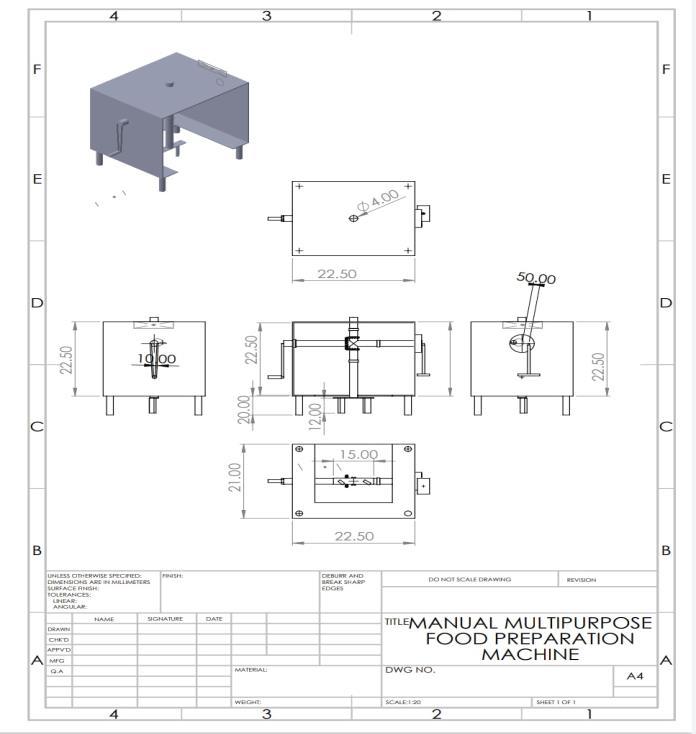
-2: 2DDesign
3.3 Design of Main body
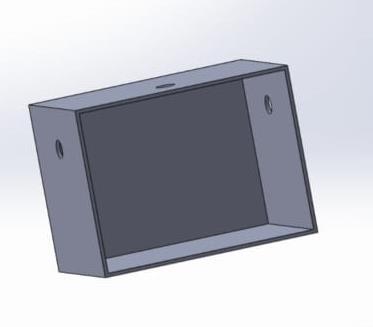
-3: 3Ddesignofmainbody
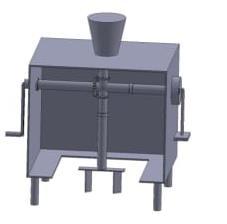
It is main outer body which supports and holds whole structureandwholemechanism.Ontopofthebodythereis mixergrindermechanism,onlefthandsidethereishandle to operate whole machine. On right hand side there is chopping/ mashing mechanism. And at bottom there is kneadingmechanism.
3.4 Mixer/ Grinder mechanism
Ontopofthebodythereismixer/grindermechanism.The capacityofjarisaround750mlto1 liter.Therearesetof gears which increases 1 rotation of handle to rotation of mixerblade.
3.5 Kneading mechanism
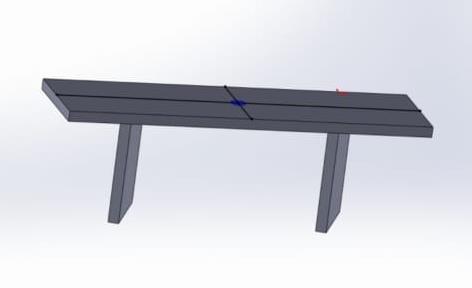
Fig -4: 3Ddesignofkneadingblade
On bottom of the machine there is kneading mechanism. Horizontal rotation of handle is converted into vertical rotationofkneading blades throughgearmechanism.The capacityofkneadingisaround2to4kgs.
3.6 Handle
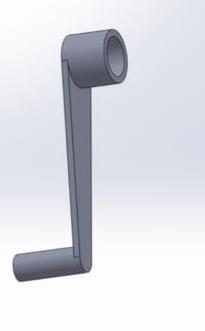
-5 :3Ddesignofhandle
International Research Journal of Engineering and Technology (IRJET) e-ISSN: 2395-0056
Volume: 13 Issue: 04 | Apr 2026 www.irjet.net p-ISSN: 2395-0072
HandleismadefromM.S.rod.Itisplacedonlefthandsideof themachine.Itisthenconnectedtothegearmechanismat thecenterofmachine.
3.7 Gear mechanism
Gearmechanisminthismachinecomprisesof4bevelgears. The main gear from handle to connect to vertical shaft of kneadingmechanism,horizontalshaftofmashing/chopping mechanism and the main gear of handle shaft is mounted withothergeartoincreasethegearratioformixergrinder.
4. ADVANTAGES
1. Noelectricityrequired
2. Cost-effective
3. Multi-functional
4. Portableanddurable
5. Suitableforruralapplications
5. CONCLUSIONS
This project is designed and developed for the manually operated multi-purpose machine that demonstrate an effectiveapproachtowardsimplifyingbasicfoodprocessing tasks such as mixing and kneading without relying on electricalenergy.
Themodelhasasinglemanualinput(handle)todrivethree shafts,showcasingefficientpowertransmission.Byutilizing asimplehand-operatedmechanism,thesystemiscapableof performing multiple operations simultaneously or individually,dependingontherequirement.Theinclusionof a dedicated shaft for mixing and another for kneading reflects thoughtful functional design, while the third open shaft provides flexibility for future modifications or additionalattachments.
Moreover, since the machine is manually powered, it eliminates electricity costs and minimizes environmental impact,makingiteco-friendly.
From a practical perspective, this machine can be highly beneficial for small-scale households, street vendors, and ruraluserswhorequireaffordableandportablesolutions.
Thedesignissimple,easytomaintain,anddoesnotrequire specialized skills to operate, which increases its usability acrossawiderangeofusers.
During the development process, various engineering concepts such as power transmission, shaft design, gear ratio, and material selection were applied, enhancing our understanding of real-world mechanical systems. The project also helped in improving problem-solving skills, teamwork,andhands-onfabricationexperience.
ACKNOWLEDGEMENT
Any piece of research, being a teamwork, is almost impossibletocompletewithoutthehelpofothersthestudy also becomes possible though the whole- hearted cooperationofmanypeopleandwell-wishers.Diminishingan artofimmensepleasuretosomerespected people helped and guided us. While performing the project, who are deserves our greatest gratitude. The completion of this projectgivesusmuchPleasure.Wewouldliketoshowour gratitudetoMr.J.D.RamaniandMr.V.J.Ranaforgivingusa good guideline for project throughout numerous consultations and expressing our deepest gratitude to all thosewhohavedirectlyandindirectlyguidedandhelpusin making of the project. In addition, a thank you to our professor,whointroducedustotheMethodologyofwork, and whose passion for the "underlying structures" had lasting effect? Many people, especially our team members itself, have made valuable suggestions on this proposal whichgaveusaninspirationtoimproveourproject.
REFERENCES
[1] “Quick-Return Mechanism Design and Analysis Projects” by Ron P. Podhorodeski, Scott B. Nokleby, and Jonathan D. Wittchen was published in the International JournalofMechanicalEngineeringEducation,Vol.32,No.2, pp.100–114.
[2] “A Study on Quick Return Mechanisms in Shaper, Planner and Slotter Machines” by K. Vinoth Kumar was published in the International Research Journal of EngineeringandTechnology(IRJET),Vol.7,Issue1,January 2020.
[3] "Analysing Bevel Gears for Efficient Power Transmission: A Study on Design, Simulation and Performance Assessment." East African Journal of Engineering,Vol.7.no.1,Feb.2024
[4] “Bevel Gear Design and Material Selection” by M.Ravi Sankara Varaprasad and G. Md. Javeed Basha was publishedintheJournalofCardiovascularDiseaseResearch, Vol.10,Issue4,inNovember2019.
[5] “Design of Gear Drives with High Gear Ratio” by Faydor L. Litvin, Alfonso Fuentes, Daniele Vecchiato, and IgnacioGonzalez-PerezwaspublishedasaNASAContractor Report(NASA/CR-2005-214002)inDecember2005.
[6] “The Optimal DesignofStandard Gearsets” byMichael Savage,JohnJ.Coy,andDennisP.Townsendwaspublished as a conference paper in Advanced Power Transmission Technologyin1983.
International Research Journal of Engineering and Technology (IRJET) e-ISSN: 2395-0056
Volume: 13 Issue: 04 | Apr 2026 www.irjet.net p-ISSN: 2395-0072
[7] “Design and Development of Manual Mixer”.Authors: UsharanjiniM.,RecmiThakuria,LohitH.S. Journal:RUASSASTech Journal. Volume & Issue: Vol. 16, Issue 1. PublicationYear:2017 Oladejo, Kolawole Adesola, Rahaman Abu, Nurudeen OlatundeAdekunle&DamilareVincentAdiasor,
[8] “An Overview of Engineering Bearings, Types, and Applications” by Danladi King Garba, Gift Oluwakemi Leinge,andMuhammadAhmadBaballewaspublishedinthe Global Journal of Research in Engineering & Computer Sciences,Vol.4,Issue4,July2024.
[9] “DevelopmentofDoughKneadingMachineforSmall and Medium-Sized Enterprises” by Oluwaseun Ojo, Anthony Oyerinde, Olufemi Sylvester Bamisaye, Joseph Adewole, and Temitope Adepoju was published in the Journal ofAppliedResearchinTechnology&Engineering, Vol.5,Issue1,pp.23–31(2023/2024).
[10] “A Study of Bearing and Its Types” by Chetan P. Chaudhari, Bhushan B. Thakare, Saurabh R. Patil, and Shrikant U. Gunjal was published in the International Journal of Advance Research in Science and Engineering (IJARSE),Vol.4,SpecialIssue(01),March2015.