
International Research Journal of Engineering and Technology (IRJET) e-ISSN:2395-0056
Volume: 13 Issue: 01 | Jan 2026 www.irjet.net p-ISSN:2395-0072
International Research Journal of Engineering and Technology (IRJET) e-ISSN:2395-0056
Volume: 13 Issue: 01 | Jan 2026 www.irjet.net p-ISSN:2395-0072
Mr. S. R. Pandit1, Mr. Kshitij Patil2, Mr. Vedant Vaidya3
1Assistant Professor, Department Of Instrumentation And Control, MVPS’s KBTCOE, Nashik, Maharashtra,India
2Student, Department Of Instrumentation And Control, MVPS’s KBTCOE, Nashik, Maharashtra, India
3Student, Department Of Instrumentation And Control, MVPS’s KBTCOE, Nashik, Maharashtra, India
Abstract - This paper details the hardware design and architectural implementation of a low-cost, wireless Condition Monitoring System (CMS) for induction motors. addressing the limitations of expensive, wired legacy systems, we propose a distributed dual-microcontroller architecture. The system utilizes an ESP32 based transmitter node to acquire real-time vibration, temperature,andcurrentdata,andtransmitsitviathe ESPNOW protocol to a central receiver. This paper focuses on the sensor integration, signal conditioning circuits, and the robust wireless communication framework required for reliableindustrialtelemetry
Key Words: Condition Monitoring, Industrial IoT, ESP32, ESP-NOW, Vibration Analysis, Wireless Sensor Network, Predictive Maintenance, Induction Motors.
1.INTRODUCTION
Theoperationalreliabilityofinductionmotorsiscriticalto industrial productivity. Failures in these machines are oftenprecededbygradualchangesinphysicalparameters such as vibration intensity, surface temperature, and current consumption. While Continuous Condition Monitoring (CCM) is the industry standard for predictive maintenance, commercial solutions are often costprohibitive for small-to-medium enterprises (SMEs) and requireinvasivewiring.
This study presents the design of a standalone Wireless Sensor Node (WSN) capable of retrofitting onto existing motors. The system prioritizes modularity, utilizing offthe-shelf components to reduce costs while maintaining sufficientaccuracyforfaultdetection.
The system adopts a Master-Slave topology to ensure that data acquisition is never interrupted by data processingtasks.
The Transmitter Node (On-Field): Responsible solely for high-speed sensor sampling and data packettransmission.
The Receiver Node (Base Station): Responsible fordataaggregation,display,andlogging.
This physical separation ensures that the critical sensing timing remains deterministic, unaffected by the latencyofuserinterfaceoperations.
The core of the transmitter node is the ESP32 microcontroller, selected for its high-performance dualcorearchitectureandmultipleAnalog-to-DigitalConverter (ADC)channels.
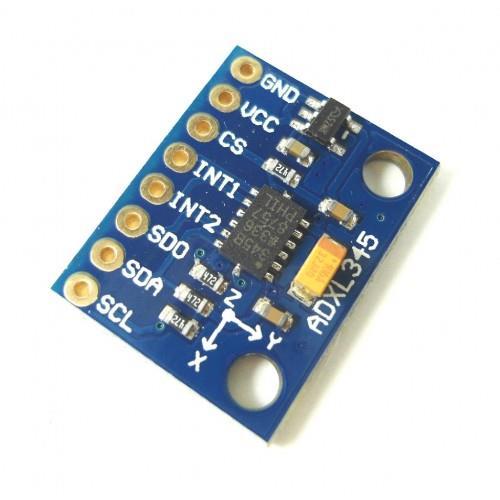
Vibrationistheearliestindicatorofmechanicalfaults(e.g., bearing wear, misalignment). We utilize the ADXL345, a MEMS-based 3-axis digital accelerometer. The sensor is configured for a measurement range of ±16g to capture high-intensity transient shocks. The ESP32 calculates the vibration magnitude vector (Vmag) using the Euclidean normofthethreeaxes(x,y,z).
International Research Journal of Engineering and Technology (IRJET) e-ISSN:2395-0056
Volume: 13 Issue: 01 | Jan 2026 www.irjet.net p-ISSN:2395-0072
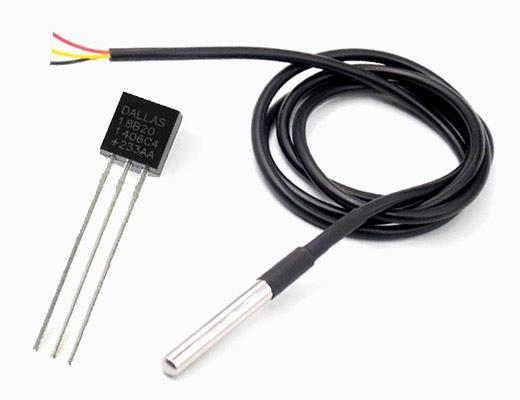
Motor overheating indicates overloading or ventilation failure. The DS18B20 digital thermometer was chosen for itsimmunitytonoiseoverlongcableruns.A4.7kΩpull-up resistorisrequiredonthedatalinetoensurestablesignal transitions. A waterproof, stainless-steel probe encapsulationis usedto mount the sensordirectlyagainst themotorstator.
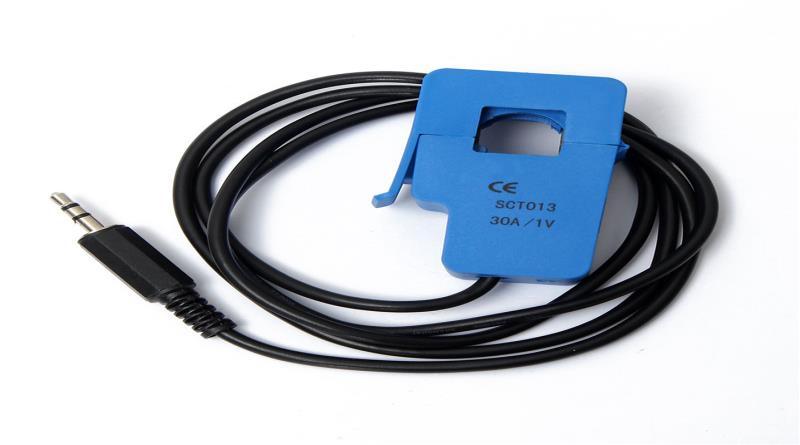
To detect electrical faults (e.g., phase imbalance, overloading), the system monitors AC current draw using an SCT-013-030 Non-Invasive Current Transformer (CT). The ESP32 ADC operates at 0-3.3V, but the CT outputs a pure AC signal (swinging positive and negative). A DC Biasing Circuit consisting of a voltage divider (two 10kΩ resistors)andabypasscapacitor(10μF)isimplementedto offset the signal to a center point of 1.65V, allowing the microcontrollertoreadthefullwavewithoutclipping Fig -3:SCT-013CurrentTransformer
Reliable data transmission in an electrically noisy motor environment is a significant challenge. Standard WiFi(HTTP/MQTT)introduceshighoverheadandlatency. To address this, the project utilizes ESP-NOW, a
connectionless communication protocol developed by Espressif.
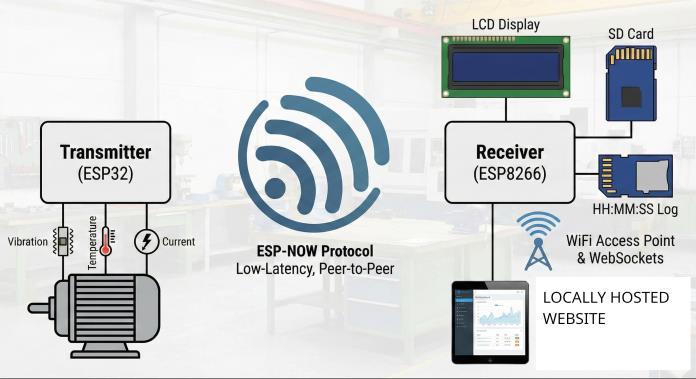
ESP-NOW uses low-level IEEE 802.11 Action Vendor
Frames. It bypasses the traditional network stack (OSI layers), allowing devices to talk directly via MAC address pairing. Data is serialized into a rigid C++ struct format containing the sensor values. This protocol reduces transmission latency to under 10 milliseconds and significantly lowers power consumption compared to standard WiFi, making it ideal for the battery-constrained transmitternode.
The hardware design presented successfully integrates multi-parametersensingintoacompact,wirelessunit.The useoftheESP32alongsidetheESP-NOWprotocolprovides a robustdatalinkthatfunctionsindependently ofexternal routerinfrastructure.Thisarchitecturelaysthefoundation for a reliable predictive maintenance system, capable of operating in offline industrial environments. Future work will focusonthedevelopmentofthereceiverbasestation, including the real-time web dashboard, data logging algorithms,anduserinterfacedesign.
International Research Journal of Engineering and Technology (IRJET) e-ISSN:2395-0056
[1] Espressif Systems, "ESP-NOW User Guide," 2024. [2] Analog Devices, "ADXL345 Digital Accelerometer Datasheet."
[3] OpenEnergyMonitor, "EmonLib: Electricity Monitoring Library."
[4] Maxim Integrated, "DS18B20 Programmable Resolution1-WireDigitalThermometer."
Volume: 13 Issue: 01 | Jan 2026 www.irjet.net p-ISSN:2395-0072 © 2026, IRJET | Impact Factor value: 8.315 | ISO 9001:2008 Certified Journal | Page 560