
International Research Journal of Engineering and Technology (IRJET) e-ISSN: 2395-0056
Volume: 13 Issue: 04 | Apr 2026 www.irjet.net p-ISSN: 2395-0072

International Research Journal of Engineering and Technology (IRJET) e-ISSN: 2395-0056
Volume: 13 Issue: 04 | Apr 2026 www.irjet.net p-ISSN: 2395-0072
Mr. B.S. Swami1
1
Mr. B.S. Swami (Lecturer in Mechanical Engineering Department, SPM Polytechnic, Kumathe, Solapur)
Abstract - A knuckle joint is a mechanical joint used to connect two rods subjected to tensile loads. It permits limited angular movement between the rods while transmitting axial force efficiently. This paper presents the design methodology ofa knuckle jointconsidering various mechanical parameters suchas tensile strength, shear strength, andcrushingstrength of materials. The design calculations are performed based on standard design procedures to ensure safety and reliability. The study includes determination of dimensions of rod, pin, eye, fork, and collar. The proposed design ensures that the joint is safe under different modes of failure such as tearing, shearing, and crushing. The results demonstrate that proper material selection and design considerations significantly improvethe performance and durabilityofthejoint.Thiswork isuseful for studentsand engineersinvolvedinmachinedesign and mechanical applications.
Key Words: Knuckle Joint, MachineDesign, TensileLoad, Shear Stress, Mechanical Joint, Design Analysis, Failure Modes
1.INTRODUCTION
Aknucklejointiswidelyusedinmechanicalapplicationsto connecttworodsthataresubjectedtotensileloads.Itallows slightangularmovementandiscommonlyusedinstructures suchastierods,suspensionsystems,andvalvemechanisms. The joint consists of components like eye, fork, pin, and collar.Theprimaryfunctionofaknucklejointistotransmit tensile force while allowing flexibility in alignment. It is designedtowithstandvariousstressessuchastensilestress, shearstress,andbearingstress.
1.1 Applications of Knuckle Joint
Tierodsinbridges,Suspensionlinks,Valvemechanismsand Agriculturalmachinery
1.2 Objectives of Study
i.Todesignasafeknucklejoint
ii.Todeterminedimensionsofdifferentcomponents
iii.Toanalyzefailuremodes
iv,Toensurestrengthandreliability
2. DESIGN METHODOLOGY
Thedesignofaknucklejointiscarriedouttosafelytransmit tensileloadbetweentworodswhileallowingslightangular movement.Themethodologyinvolvessystematiccalculation of dimensions based on strength criteria such as tensile, shear,andcrushingstresses.
Thefollowingassumptionsareconsideredduringdesign:
i.Theloadactingonthejointispurelyaxial(tensile).
ii.Thematerialusedishomogeneousandisotropic.
iii.Thestressesinducedarewithinpermissiblelimits.
iv.Effectsofstressconcentrationareneglectedforsimplicity.
2.2 Applications:
i.Jointsbetweentierodsinrooftrusses
ii.Jointsbetweenthelinksofasuspensionbridge
iii.Jointsinvalvemechanismofreciprocatingengine
iv.Fulcrumforthelevers
v.Jointsbetweenthelinksofabicyclechain
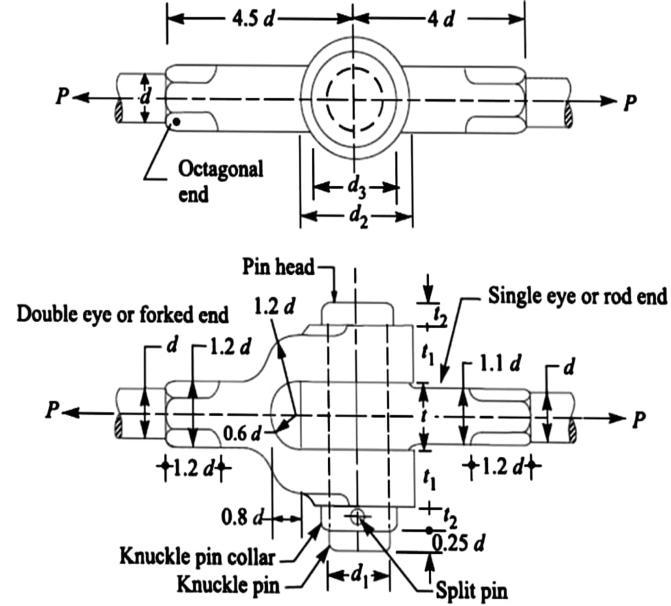
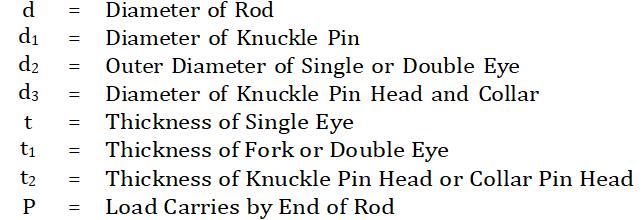
2.3 Design of Knuckle Joint:
International Research Journal of Engineering and Technology (IRJET) e-ISSN: 2395-0056
Volume: 13 Issue: 04 | Apr 2026 www.irjet.net p-ISSN: 2395-0072
International Research Journal of Engineering and Technology (IRJET) e-ISSN: 2395-0056
Volume: 13 Issue: 04 | Apr 2026 www.irjet.net p-ISSN: 2395-0072
2.4 Given Data
Loadactingonjoint,P=50kN
Permissibletensilestress,σₜ=75MPa
Permissibleshearstress,τ=60MPa
Permissiblecrushingstress,σc=120MPa
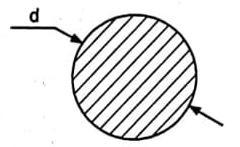
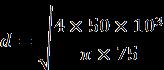
2.5 Design of Rod Diameter (d)
Therodissubjectedtotensilestress.Therefore,

ByRearranging,

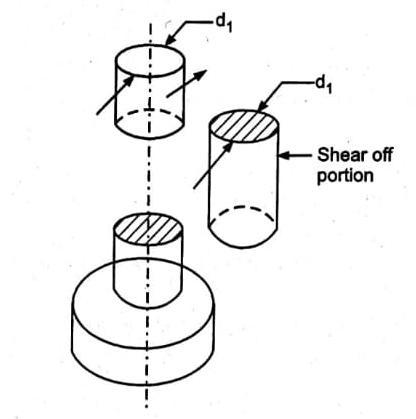
2.6 Design of Pin Diameter (dp)
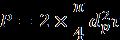
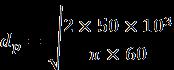
Thepinissubjectedtoshear.Consideringdoubleshear:


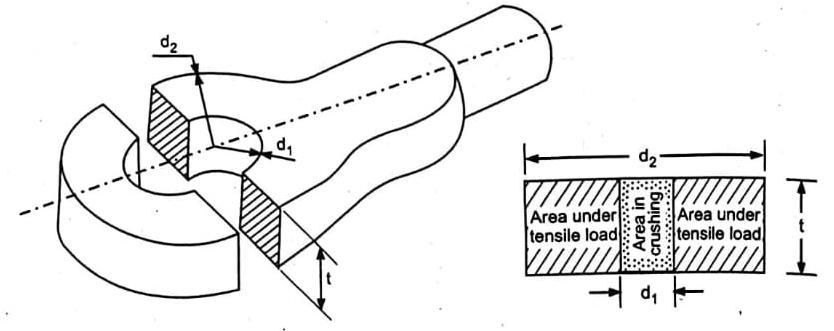
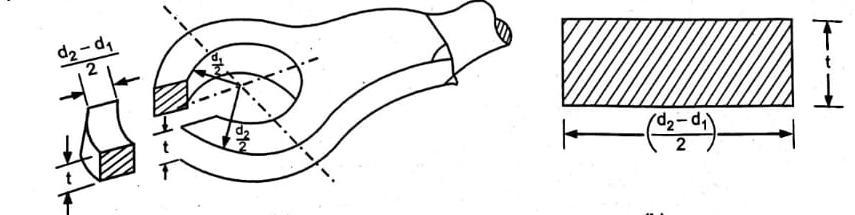
2.7 Design of Eye Thickness (t)
Theeyeissubjectedtocrushingandtearing.
Empiricalrelation:

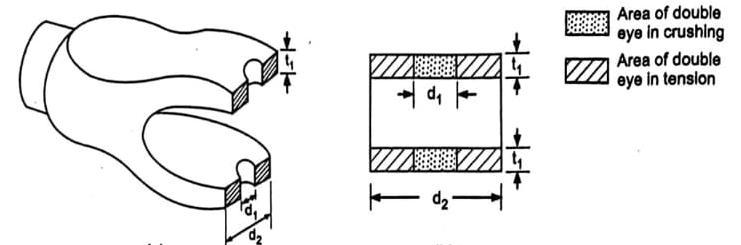
2.8 Design of Fork Thickness (t₁)
Eachforkarmcarrieshalftheload:

2.9 Design of Pin in Crushing

Checkwhetherinducedstressislessthanpermissiblevalue.
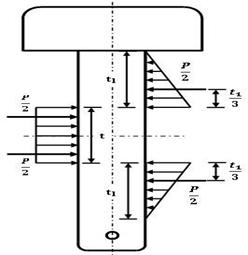
2.10 Design of Pin in Bending
Thepinissubjectedtobendingduetoclearancebetweeneye andfork.
Maximumbendingmoment:
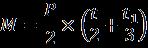
Checkbendingstress:

2.11 Failure Modes Considered
Theknucklejointischeckedagainstthefollowingfailures:
Tensilefailureofrod
Shearfailureofpin
Crushingfailureofpinandeye
Tearingfailureofeye
Shearfailureoffork
Bendingfailureofpin
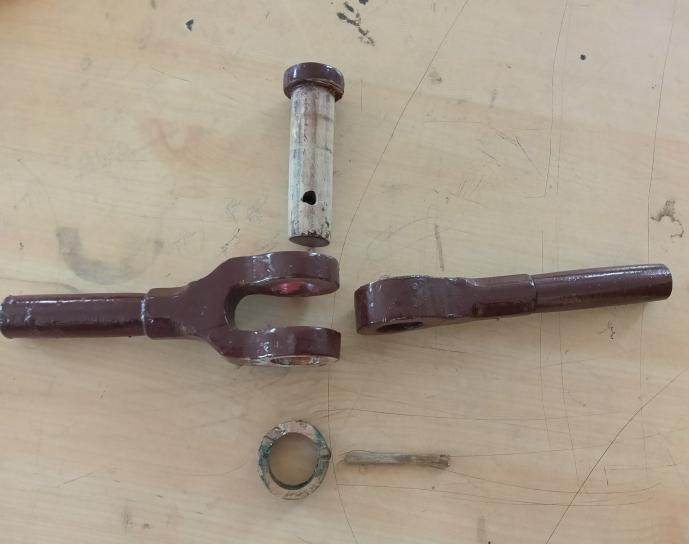
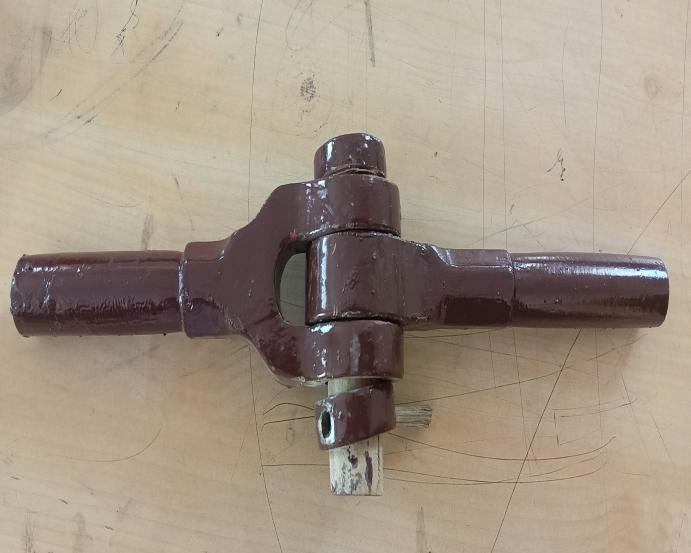
2.12 3D View of Knuckle Joint
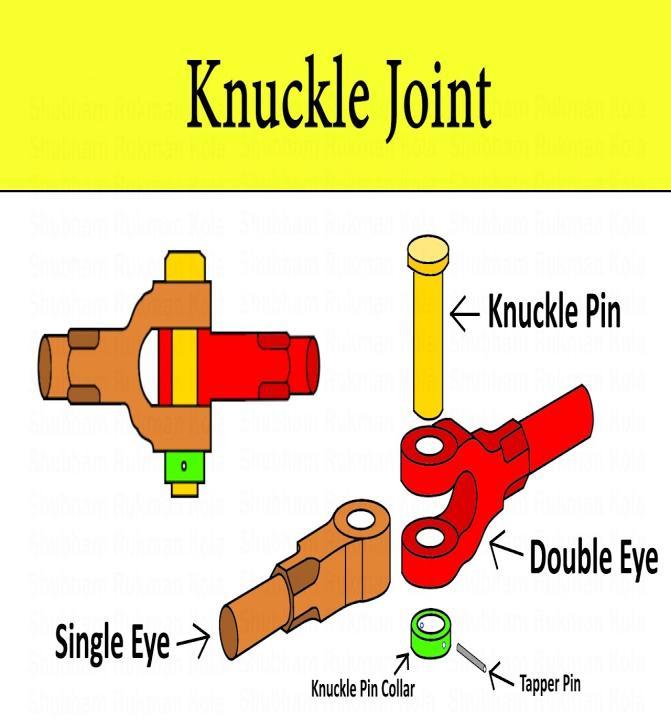
Fig. Details and Assembly of Knuckle Joint
International Research Journal of Engineering and Technology (IRJET) e-ISSN: 2395-0056
Volume: 13 Issue: 04 | Apr 2026 www.irjet.net p-ISSN: 2395-0072
3. Result and Discussion
Thecalculateddimensionsensurethattheknucklejointis safe under all loading conditions. The stresses induced in differentcomponentsarewithinpermissiblelimits.Proper factorofsafetyhasbeenconsideredtoavoidfailure. Thedesignconfirmsthat:
i.Pinissafeinshear
ii.Rodissafeintension
iii.Eyeandforkaresafeincrushing
4. Conclusion
The design of the knuckle joint has been successfully completedbasedonstandardmechanicaldesignprocedures. The joint is capable of safely transmitting the given load without failure. Proper consideration of different failure modes ensures reliability and durability. This study
highlightsthe importance of accurate designand material selectioninmachineelements.
[1] D. Sai Teja, S. Sai Nivas, D. Krishnaveni, “Design and Analysis of Knuckle Joint,” International Journal of Research and Development in Science and Technology, 2023.
[2] Sourav Das, Vishvendra Bartaria, Prashant Pandey, “AnalysisofKnuckleJointof30C8SteelforAutomobile Application,” International Journal of Engineering Research, 2014.
[3] K. S. Chang, P. S. Tang, "Integration of Design and Manufacturing of Structural Shape Optimization," Advances in engineering software, vol. 32, pp. 555-567, 2001.
[4] V A. Soloukhin,W. Posthumus, J.C.M.BrokkenZ ijp, J. Loos, and G. de With: Polymer, Vol. 43 (2002), pp. 6169.
[5] Shaikh J, vanka H, "Modeling and analysis of knuckle joint", international journal & magazine of engineering, technology, management and research,ISSN No: 23484845 vol. 2, issue 11, [2015], page no 292-298
[6] Bhandari,V.B., Design ofMachine Elements,McGrawHill
[7] Khurmi,R.S., Machine Design,S.ChandPublications
[8] PSGDesignDataBook,PSGCollegeofTechnology
[9] Shigley,J.E., MechanicalEngineeringDesign,McGrawHill

Mr.B.S.Swami (LecturerinMechanical EngineeringDepartment)
SPMPolytechnic,Kumathe, Solapur