
International Research Journal of Engineering and Technology (IRJET) e-ISSN: 2395-0056
Volume: 12 Issue: 03 | Mar 2025 www.irjet.net p-ISSN: 2395-0072
International Research Journal of Engineering and Technology (IRJET) e-ISSN: 2395-0056
Volume: 12 Issue: 03 | Mar 2025 www.irjet.net p-ISSN: 2395-0072
Carly Hampson A, Ms. Devipriya M*
Department of CSE, School of Computer Science and Engineering, Sathyabama Institute Of Science And Technology, Chennai– 600119, Tamil Nadu, India
Abstract - - Integrating a variety of data is necessary for diagnosing Autism Spectrum Disorder (ASD). Assessments of behaviour, scans of the brain using neuroimaging,andgenetic markers. A novel multimodal diagnosis model that is basedon Deep Diagram Convolutional Organizations(DeepGCN).Each data type is processed by the model. Separately, locating relevant features, and building a single graph representation that captures intermodal complex relationships. Deep GCN Following that, layers learn hierarchical representations by iteratively aggregating and fusing informationtoimprovethe accuracy of diagnostics by utilizing the insights that work together the proposed model uses behavioural,neuroimaging, and genetic data to provide a diagnosis framework for ASD that is both comprehensive and interpretable. Experiments used for validation show that the model works well for integrating multimodal data and enhancing diagnostic capabilities, making available promising headways in clinical choice emotionally supportive networks for chemical imbalance finding.
Key Words: Deep Learning, Autism Spectrum Disorder (ASD), Deep Diagram Convolutional Organizations (Deep GCN).
1.INTRODUCTION
Peoplewithautismspectrumdisorder(ASD)havedifferent socialinteractions.Behaveandcommunicate.Theprocessof diagnosingASDinvolvesexaminingavarietyofinformation, such as genetics, neuroimaging scans, and behavioural assessments data. Integration and interpretation are frequentlyproblematicfortraditionalmethods.Effectively fromthesediversesources.Accordingly,thispaperproposes anewapproachtoenhancingASDthatmakesuseofDeep GraphConvolutionalNetworks(DeepGCN)diagnosis.Deep GCNisabletoseparateanalyseeachtypeofdataandextract keyfeatures,andcombinethemintoasingleframeworkthat encapsulates intricate relationships between various modalities. By making use of these interconnected experiences, the proposed model intends to work on the precisionandcomprehensionofDiagnosisofASDThisstudy investigates the potential transformative power of Deep GCN.Clinicalproceduresbyprovidingamethodthatismore completeandeasiertounderstandfordiagnosingchemical imbalance,eventuallyplanningtofurtherdevelopresultsfor peopleinfluencedbyASD.
Persistent, stereotyped conduct is a hallmark of autism spectrum sickness (ASD), and early prognosis and interventioncannotablyenhancetheanalysisofpeoplewith thesituation.Thefasterremedyisobtained,thegreaterthe risk of improvement. However, currently, doctors decide whetherornotapatienthasASDbasedontheirconductand day by day functioning, which is a particularly subjective process. This has created a pressing need for an objective diagnosticapproachtohelpmedicaldoctorsmakeacorrect prognosis.Withtheimprovementofpresentdayscientific eraandsyntheticintelligence,machinelearningtechniques forreadingmagneticresonanceimaging(MRI)brainimages ofASDsufferershaveshowntopnotcheffects.Forinstance, one examine converted time collection statistics into electricityspectraldensityforspatialmapevaluation,using sparse auto encoders to reduce the size of the enter information into an assist vector system (SVM). Another methodistoconstructadeepneuralnetworkthattrainsa layeredsparseautoencodertostudypracticalconnectivity patternsfromamassiveproblemdatabase.
In addition, different studies have used auto encoders to examinepurposefulcomponentsofwhole-brainconnectivity andtransfermasteringmethodstocategorieslargedatasets with ASD. Recently, there was a big growth within the collectionofnon-imagingdatasets,whichincludesaffected person genome sequences, gender, and IQ, which play an importantroleinsidethediagnosisofdiseases.Combining visualized and non-visualized records using multimodal approaches can improve the overall performance of type algorithms. However, unvisualized facts is often highdimensional,proscribingthecompetenciesofconventional system gaining knowledge of methods. Deep gaining knowledge of gives the opportunity of combining multimodal facts for extra efficient prognosis of mental disorders.Forinstance,deepmasteringcanimprovemind age and gender estimates, whilst other methods integrate cross-sectionalandlongitudinalfunctionsestimatedusing mindMRI.However,non-graphicaldeeplearningstrategies are frequently limited to unmarried-pattern programs, which limits their performance. In reaction, graph neural networks (GNNs) had been proposed as a promising solution.Graphconvolutionalnetworks(GCNs)expandthe remodelfeaturefromEuclideanfactstonon-Euclideangraph information to enhance multimodal modelling. One study makes use of GCN to generate graph edges with visible
International Research Journal of Engineering and Technology (IRJET) e-ISSN: 2395-0056
Volume: 12 Issue: 03 | Mar 2025 www.irjet.net p-ISSN: 2395-0072
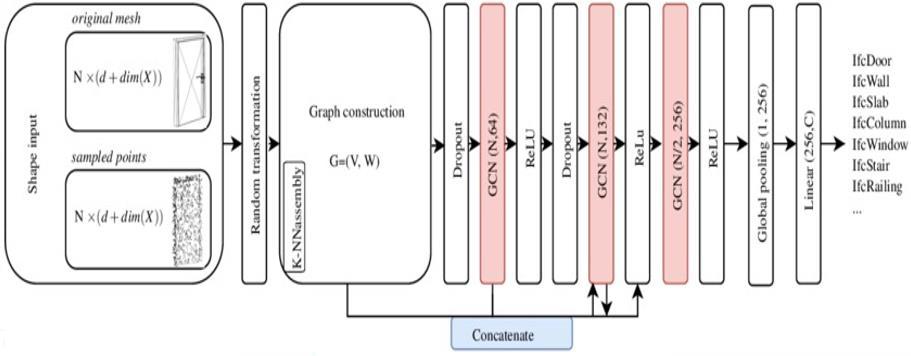
information including age and gender, thereby reaching distinctly excessive accuracy. Other tactics have proposed hierarchicalGCNarchitecturesandpairwisesubencodersto enhanceoverallperformance,atthesametimeasmethods thatusepassconnectionskeepawayfromoverfitting.Most presentworkhascentredonshallowGCNs,atthesametime asdeeperGCNarchitectures,includinggrowingthedepthsof convolutionalneuralnetworks(CNNs)forimageclass,were muchlessexploredinASDprognosis.
Thispaperpresentsaconcentrateonassessingseverityof autismspectrumdisorder(ASD)inchildrenmakinguseof speech signals using a Deep Neural Network (DNN) to analyseit.Theresearchersisolatedprosodic,acoustic,and speech-like characteristics for conversation recordings of children who speak Hebrew during a Chemical imbalance DemonstrativePerceptionScheduleanassessment(ADOS). Significant There were correlations between 21 of the 60 features and ADOS scores were found. Neural Network in Depth (DNN) techniques Neural Convolutional Network (CNN)LinearRegressionAssistanceSVRVectorRegression The research was carried out using a moderately little examplesizeof72kids.Theinformationwasrestrictedto speakers of Hebrew kids, which might influence the generalizability of the discoveries to additional languages andcultures[1].
ThestudyisonlyaboutchildreninRomania,whichmaylimit itsapplicabilitytodifferentlinguisticandculturalcontexts ModelwithTwoDiamondsandcentredonpeoplePlanning (HCD) Methodology The growth of proto-personas, schematics,andprototypeswithinteractiontheresearchis limitedtoRomanianyoungsters,whichmightinfluencethe generalizabilitytootherlinguisticandculturalcontexts[2].
Thisstudylooksinto the possibilityofusingmetricsfrom electroencephalography (EEG) to anticipate the symptom severity of the autism spectrum disorder making use of a public using the available data, the researchers-built EEG brain networks also, determined four kinds of EEG measurements.Theygenuinelycomparedthedifferencesin ASD children's brain networks with children who are typically developing (TD) and of varying severity. The research discovered that ASD children had high and low
levelsofautismdiagnosticlong-rangeobservationschedule (ADOS) scores were lower. increased anterior frontal connectivity, frontal-occipital connectivity alterations to networkpropertiesandconnectivitythedesignofEEGmind organizations Estimation of four types of EEG metrics the researchisbasedonafreelyaccessibledataset,whichmay restrictthevariationalso,generalizabilityoftheresults[3].
Avirtualreality-basedsystemforscreeningandutilizinga simulated approach to classifying Autism Spectrum Disorders(ASD)shoppingencounteranembodiedagentis interactedwithbyparticipants,also,theirsocialreactions arefollowedanddissectedutilizingtechniquesformachine learning the system is classified highly. Accuracy, demonstrating its capacity to lower the average sevenmonthdelayinreceivinganASDdiagnosis.Preventativecare is important for better support, and this tool offers a promising approach for convenient and objective mental imbalanceevaluationaugmentedreality(VR)reproduction ofagroupinteraction(shoppingexperience)Monitoringand recordingbehaviouralreactionsduringtheVRinteraction theresultsofthestudyarebasedonparticularscenariosin VR,andvariousscenarioscouldproducedifferentresults[4]. Computer-aided design is proposed in this paper grading systemforevaluatingautismseverityinchildrenaged12to 40months)usingfunctionalMRIthatistask-based(fMRI) whenspeechstimuliarepresented.TheBrainactivationin 157subjectsisthesubjectofastudysubjectswithautism classified as mild, based on, moderate, and severe groups ADOSratings.Theframeworkmakesuseofthesepatternsof brain activation to classify severity of autism, with significant relationships among brain hypo activity and levelsofseverity.FMRIwithtaskstomeasurehowactivethe brainis.Asareactiontoaspeech,obtainingfeaturesfrom fMRIinformationutilizingGeneralGLM-basedlinearmodels the study might be constrained by the low number of samplesinthegroupsofmoderateandseveretheaccuracy of the system is reliant upon the quality and fMRI data preparation[5].
Thedifficultiesofusingmachinelearningtoidentifyautism include: recognizing the many different manifestations of autism,selectingthemainsignsfromcomplexinformation likewayofbehavingrecordsorbrainscans,and ensuring thattheutilizeddataistrustworthyandfair.It'salsohardto understand why the machine makes certain choices and ensuring that it works well with new data from various locations people and additionally, protecting people's privacyisextremelyimportant.Doctorsarethelastneedto trustthesetoolsandbeabletousethemeasilyintheirdaily livesworktoassistindividualswithmentalimbalanceget the best consideration, Privacy Issues; Expensive and RestrictedAccess;ComplicatedModel;DataRequirements; AccuracyDifficulties.
International Research Journal of Engineering and Technology (IRJET) e-ISSN: 2395-0056
Volume: 12 Issue: 03 | Mar 2025 www.irjet.net p-ISSN: 2395-0072
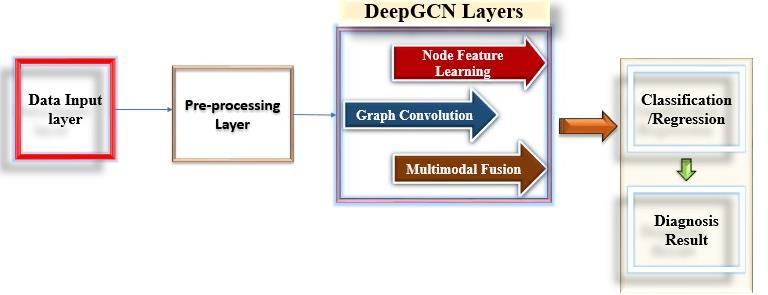
The goal of the Deep GCN objective model for multimodalautismspectrumdisorder(ASD)diagnosisisto integrate several data types, including behavioural assessments, brain scans, and genetic data, into a single framework. Deep Graph Convolutional Networks are intendedforuseinthismodel.(DeepGCN)toexamineand locatecrucialinformationfromeachtypeofdata.Themodel aims to bring these insights together to make diagnosing ASDmoreexactandfinish.Thegoalistomakeadevicethat assistsdoctorswithbetterdiagnosingASD,deviseindividual treatment strategies, and broaden our comprehension of autisminrelationtovarioustypesofinformation.
The proposed framework uses Profound Chart Convolutional Organizations (Deep GCN) to combine different information types like conduct appraisals, cerebrum genetic profiles and scans to improve autism spectrumdisorderdiagnosis.Bybringingthesevariousdata sources together into a single framework, Deep GCN is capable of analysing and identifying crucial ASD-related patterns. This the model learns from the whole data set, finding connections and correlations between various aspects of the symptoms of ASD. Then, it uses this informationtopredictwhetherandhowsevereASDwillbe inindividuals.Theframeworkexpectstoconveymoreexact andintensivediagnosticinformationthatenableshealthcare providers to increase making well-informed choices and ultimatelyelevatingthestandardofcareforpeopleimpacted byASD,Researchisbeingadvancedbycombiningvarious data sources, improving accuracy, and providing individualizedcare.
Deeplearningisaformofsyntheticintelligencethat mimics the complicated workings of the human mind by exploiting the multidimensional systems of the brain (additionallycalleddeepmindstructures).Deepmastering isthebasisforafewoftheAIapplicationsweuseeveryday. Theprimarydifferenceamongdeepmasteringanddevice getting to know is the fundamental layout of the neural network. Traditional "deep" system studying fashions use simpleneuralnetworkswithoneorlayersofcomputation. Typically,loadsorlotsoflayersspreadacrossthreeormore layers are used to educate deep mastering fashions. Deep getting to know models can use unsupervised gaining knowledge of, at the same time as supervised learning fashionsrequirecategorizedandstructuredinputstatistics to supply reliable effects. When deep getting to know fashionstrainthemselves,theycouldextractthecapabilities, components, and relationships had to produce correct effectsfromuncooked,unstructuredinformation.
These fashions can access their effects and refine themforgreateraccuracy.Manyapplicationsandservices that boom automation by using performing physical and analytical obligations without human intervention are powered with the aid of deep gaining knowledge of, a
subfield of facts technology. Voice-activated TV remotes, virtualassistants,generativeAI,self-ridingautomobiles,and credit score card fraud detection are only some of the everydaygoodsandofferingsmadefeasiblebymeansofthis e-book.UsingAIgovernancetocreateethicalAIpractices. Learn the building blocks and first-rate practices to assist your groups boost up the improvement of conscious AI. RelatedcontentGettheGenerativeAIeBookthroughsigning up.
The definition of the needs and the set order of a highdegreeofthedeviceareconnectedtothedescriptionof thesoftware'sgeneralcharacteristics.Manywebpagesand their interactions are described and designed during the architecturaldesignprocess.Importantsoftwareelements areidentified,brokendownintoconceptualrecordssystems andprocessingmodules,andtheconnectionsbetweenthem are explained. The following module is defined by the suggestedsystem.
a. Image acquisition
Imageacquisitionisthetermusedtodescribetheprocessof obtaining an image. Image from the sources. This can be achieved using a hardware system like as well as some encoders, sensors, and datasets. Occur during this procedure.
b. Pre-processing.
Enhancingdataisthemaingoalofimagepre-processinglike animagethatlessensunintentionaldistortionsorenhances some features; we can simply say that the unwelcome interferencewiththeimage.
c. Feature Extraction
Dimensionally, it is a step in the process of reduction in whichthefirstsetofrawdataisreducedtosmaller,more manageablegroups.
d. Segmentation.
Itisacourseoftransformationofpixelintomarkedpicture fromthepicture.Thisprocedureallowsyoutoprocessonly theessentialparts,nottheentireimage.
International Research Journal of Engineering and Technology (IRJET) e-ISSN: 2395-0056
Volume: 12 Issue: 03 | Mar 2025 www.irjet.net p-ISSN: 2395-0072
Thetask offiguringoutexactlywhatisintheimage?This procedure is going to occur because the model has been taught to recognize a variety of classes. For eg: you may prepare a module to identify the three distinct animals depictedintheimage.
Thisistheinitialscreengrabofthemoduleoutputforthis autism-basedproject.Theentirewebapplication'sgoalisto recognizeautism-basedobjectsbeforemovingontooutput fordifferentinputs(suchaudioandphotos).Thenextstepis to pre-process the GUI’s audio and images. This study assessed the findings' potential therapeutic implications, highlightedtheimportanceofspecificspeechcharacteristics, and examined how well a number of machine learning algorithmsidentifiedASDusingspeechpatterns.Here,we would want to discuss the importance of our results, the study's shortcomings and potential avenues for future investigation.IntermsofaccuracyandF1-score,ouranalysis showedthattheGradientBoostingmodelfaredbetterthan the other assessed approaches, suggesting that it is more adeptatcapturingcomplex,nonlinearinteractionsbetween features.
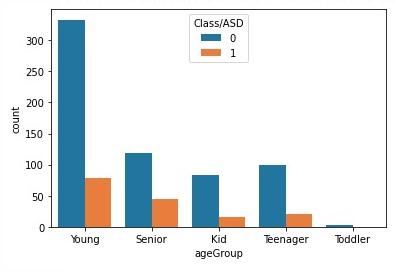
Given their ability to combine several decision trees for increased prediction accuracy while reducing overfitting, ensembleapproachessuchasGradientBoostingBentéjacet al.(2021),RandomForestBreiman(2001),andAdaBoost FreundandSchapire(1997)arewell-suitedforthecomplex taskofdiagnosingASDthroughspeech.Additionally,certain chromatic characteristics especially lower Chroma features as well as speech and articulation rates were found to be crucial in predicting ASD. In line with the literature that suggests unique prosodic behaviours in peoplewithASD,thesetraitsprobablycapturesubtletiesin speechdynamicsandthecharacteristicoftonalvariationof
ASD speech patterns, such as abnormal intonation and rhythm.Asghariandassociates(2021).
TABLES
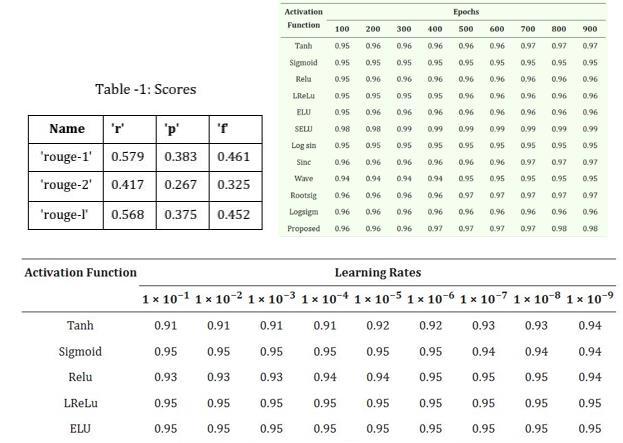
Tables of Rogue Table, Epoch Table, Activation Rate Table.
Accuracy Comparison of Rogue, Epoch and Proposed Function with others on different learning rates.
In conclusion, careful examination of the current approachesconsistentlydemonstratestheireffectivenessin addressing certain facets of autism spectrum condition. Thereisacleardrawback,though,whentheyhaveaccessto a greater number of variables for their techniques. We recognize this challenge, which is why we support the development. With an entirely new, specialized machine learningmodelcreatedespeciallytoaddresstheintricacies inawiderrangeofcharacteristicswesuggestamethodthat focusesoncreatingaparticularmachinelearningmodelthat has been improved to overcome obstacles and boost accuracy across a variety of factors. Our method aims to
International Research Journal of Engineering and Technology (IRJET) e-ISSN: 2395-0056
Volume: 12 Issue: 03 | Mar 2025 www.irjet.net p-ISSN: 2395-0072
overcometheinherentdifficultiesassociatedwithawider variety of factors in order to improve accuracy and close existingclassificationgaps. Ourmachinelearningsection's suggested method is centered on comprehending and forecasting the particular requirements and behaviors of peoplewithautismspectrumdisorders.
The system goals to offer caregivers with personalized insights and know-how, deliberating an expansion of statistics, together with sensory patterns, behavioural patterns, statement of the feature scale, and person responsestovariousadjustments.Inadditiontothesystem studying additives, this approach emphasizes the importance of implementing preventive measures tailormade to the unique wishes of individuals with ASD. It is about growing a supportive environment, encouraging a proactivetechniquetocontrollingcheckingoutconduct,and developing an intuitive interface that lets in caregivers to accessandmonitorabilitytriggers.Inaddition,wesuggest to encompass a nutrients counselling gadget and a counsellingmodule,takingintoconsiderationtheeffectof foodregimenandlife-styleonindividualswithASD.
[1] M. S. M. H. F. M. M. Bala, M.; Ali, “Efficient machine learningmodelsforearlystagedetectionofautismspectrum disorder,”2022.
[2]D.RoyandM.Dutta,“Asystematicreviewandresearch perspectiveonrecommendersystems,”2022.
[3] S. M. Mahedy Hasan, M. P. Uddin, M. A. Mamun, M. I. Sharif,A.Ulhaq,andG.Krishnamoorthy,“Amachinelearning framework for early-stage detection of autism spectrum disorders,”IEEEAccess,vol.11,pp.15038–15057,2023.
[4] Nurul Amirah Mashudi, Norulhusna Ahmad, Norliza MohdNoor,"Classificationofadultautisticspectrum disorder using machine learning approach", IAES InternationalJournalofArtificialIntelligence(IJ-AI)Vol.10, No.3,September2021,pp.743~751ISSN:2252-8938,DOI: 10.11591/ijai.v10.i3.pp743-751
[5] Kaushik Vakadkar, Diya Purkayastha, Deepa Krishnan, "DetectionofAutism Spectrum DisorderinChildren UsingMachineLearningTechniques"(2021)
[6] S. M. Suman Raja, “Analysis and detection of autism spectrum disorder using machinelearning techniques,” in InternationalConferenceonComputationalIntelligenceand DataScience(ICCIDS),2019.
[7]R.G.JaberAlwidian,AmmarElhassan,“Predictingautism spectrum disorder using machine learning technique,” in InternationalJournalofRecentTechnologyandEngineering (IJRTE),2020.
[8]UğurErkan,DangN.H.Thanh,"AutismSpectrum Disorder Detection with Machine Learning Methods",CurrentPsychiatryResearchandReviews, 2019,15,297-308.
[9]K.K.H..M.N.N..N.L..C.P.-P..R.A..D.R.D..E.Linstead, “Applications of supervised machine learning in autism spectrumdisorderresearch,”ReviewJournalofAutismand DevelopmentalDisorders,pp.1–5,2019.
[10] V. N. B. K. C. D. S. L. Maenner MJ, Yeargin-Allsopp M, “Development of a machine learning algorithm for the surveillance of autism spectrum disorder,” 2020 43rd International Convention on Information, Communication andElectronicTechnology(MIPRO),2016.
[11]MizanurRahman,MdSalahUddin,MdSamaunHasan, Apurba Ghosh, Sadia Afrin Boby, Arif Ahmed, Shah Muhammad Sadiur Rahman, and Shaikh Muhammad Allayear. Anatomical analysis between two languages alphabets: Visually typographic test transformation in morphologicalapproaches.InInternationalConferenceon AdvancesinComputingandDataSciences,pages330–339. Springer,2020
[12]SolvangIselinErtzgaard,NaalsundKristin,TønderSofie, Hansen Giske Sindberg, Hagan Tobias Bang, Mnyanyi Cosmas, Tronstad Tron Vedul, Nkya Aslam, and Øygarden Jon. Prevalence of hearing impairment among primary school children in the kilimanjaro region within tanzania. International Journal of Pediatric Otorhinolaryngology, 130:109797,2020.
[13]SignLanguageRecognitionandTranslationSystemsfor Enhanced Communication for the Hearing Impaired Kambhampati Sai Sindhu; Mehnaaz; Biradar Nikitha; PenumathsaLikhitaVarma;ChandrasekharUddagiri2024 1st International Conference on Cognitive, Green and UbiquitousComputing(IC-CGU)Year:2024
[14]ARobustSignLanguageandHandGestureRecognition SystemUsingConvolutionalNeuralNetworksSauravKumar; PratiyushKumar;PriyeshMishra;PragyaTewari20235th International Conference on Advances in Computing, Communication Control and Networking (ICAC3N) Year: 2022
[15] Indian Sign Language Recognition using Skin SegmentationandVisionTransformerAgrimaAgarwal;R. Sreemathy;MousamiTuruk;JayashreeJagdale;VishalKumar 2023 IEEE 20th India Council International Conference (INDICON)Year:2023
[16]M.Alper,"AugmentativeAlternativeandAssistive: Reimagining the History of Mobile Computing and Disability",IEEEAnnalsoftheHistoryofComputing, vol.37,no.1,pp.96-96,2023
International Research Journal of Engineering and Technology (IRJET) e-ISSN: 2395-0056
Volume: 12 Issue: 03 | Mar 2025 www.irjet.net p-ISSN: 2395-0072
[17] Gómez Domingo Marta and Badia Garganté Antoni, "Exploring the use of educational technology in primary education: Teachers’ perception of mobile technology learning impacts and applications’ use in the classroom",ComputersinHumanBehavior,vol.56,pp. 21-28,2020
[18] H Rimmer James, Lai Byron and Young Hui-ju, "Bending the Arc of Exercise and Recreation TechnologyTowardPeoplewithDisabilities",Archives of Physical Medicine and Rehabilitation, vol. 97, no. 9, pp. S247-S251,2021
[19]Y.Huang,R.ShadievandWHwang,"Investigating theeffectivenessofspeech-to-textrecognitionapplications on learning performance and cognitive load", Computers&Education,vol.101,pp.15-28,2019
[20] I. Ramli, N. Jamil, N. Seman and N. Ardi, "An ImprovedSyllabificationforaBetterMalayLanguageTextto-Speech Synthesis (TTS)", Procedia Computer Science,vol.76,pp.417-424,2020.

CarlyHampsonAisamotivatedstudent pursuingaBachelorofEngineering(B.E) in Computer Science and Engineering (CSE)atSathyabamaInstituteofScience andTechnology.Heispassionateabout exploringcutting-edgetechnologiesand theirreal-worldapplications.Withakeen interest in software development and problem-solving, Carly is dedicated to enhancinghistechnicalskillsandstaying updatedwiththelatestadvancementsin thefield.