
International Research Journal of Engineering and Technology (IRJET) e-ISSN: 2395-0056
Volume: 12 Issue: 12 | Dec 2025 www.irjet.net p-ISSN: 2395-0072
International Research Journal of Engineering and Technology (IRJET) e-ISSN: 2395-0056
Volume: 12 Issue: 12 | Dec 2025 www.irjet.net p-ISSN: 2395-0072
Md. Gous Azam1,Dr. Ashok Kumar2
1Research Scholar, Department of Computer Science, V.K.S.U., Ara
2Professor, Ex. Head Department of Physics, V.K.S.U., Ara
Abstract In recent years, owing to the rapid evolution of machine learning, especially deep learning, and its outstanding performance in the domain of image processing an increasing number of scholars are turning to convolutional neural networks (CNNs) to address image de noise challenges. To tackle image de noise issue, this paper introduces the implementation of a deep Generative Adversarial Network for image de-hazing. Unlike traditional de-hazing methods that rely on per-pixel loss, our approach leverages a perceptual loss function. This function captures high-level image features by utilizing pre-trained models from Image Net, effectively mitigating the shortcomings associated with per-pixel loss functions, particularly their sensitivity to minor variations in single pixels, even when the imagesareperceptuallysimilar.
Keywords Image De noise, Plant Village, Apple, GenerativeArtificialIntelligence,TransferLearning
Agriculture plays an important role in India's economy, with nearly half of the population depending on farming for their livelihood. The main aim of agricultural research is to improve the productivity and quality of food while minimizing costs and maximizing profits. The success of agricultural production relies on the effective integration offactorssuchasseeds,soil,andagrochemicals.Achieving high-quality and valuable products requires stringent quality control measures [1][2]. To ensure efficient productionandsurplusyields,continuousenhancementof agricultural practices and regular product value assessments remain essential. Plant diseases, however, posesignificantchallengesbydisruptingkeyprocesseslike photosynthesis, pollination, germination, transpiration, and fertilization, which hinders the plant's overall health and productivity Unforeseen environmental conditions often lead to the emergence of diseases caused by pathogens such as bacteria, viruses, and fungi. In India, a wide variety of crops are grown across different regions each with its own unique climate and seasonal variations. Early detection of diseases in plant leaves is particularly crucialinagriculture.Plantleafdiseasesareamajorfactor that contributes to reduced crop yields worldwide. Farmersfrequentlyfacesignificantproblemsincontrolling crop diseases, especially at advanced stages [3][4]. Accurate disease diagnosis is vital in agriculture as it
allows better management and timely interventions to preventsubstantial
crop losses. Therefore, early-stage disease detection remains essential to protect plants from harmful diseases and ensure healthier crops. Farmers require continuous monitoring of their plants to protect them from harmful diseases. However, this process is often expensive and time-consuming in real-world agriculture. To ensure accurate disease detection, image pre-processing plays an important role in improving the quality of images, which helps achieve better diagnostic outcomes. For effective disease identification through automated systems, highquality image processing is essential. Input images often suffer from excess noise due to environmental disturbances, and if the data is not properly cleaned, reliableresultscannotbeobtained[5][6].Whendistortionfree images are provided as input, diseases can be more effectively detected, allowing for timely and appropriate interventions. However, many existing research studies placelessemphasisonthepre-processingstage,leadingto suboptimal results. Ineffective pre-processing leads to various problems including degraded image quality, suppressed performance due to excessive noise, loss of crucial information, increased processing time and inaccurateanalysis.Toensureeffectiveautomatedanalysis ofplantdiseases,itisessentialthattheinputimagesareof highquality.High-qualityimagesallowforamoredetailed examination of the data, allowing the extraction of critical information.This,inturn,helpsidentifydiseasesearlyand implement appropriate solutions in a timely manner [7][8].Image de noising is a crucial aspect of image processing and computer vision dealing with noise during image-taking,transmission,orprocessing.Noiseisafactor that results in a decrease in image quality which directly disturbs the accuracy of image-based analysis and it furtheraffects the recognition,segmentation,and tracking tasks. Therefore, image de noising has been a major research topic, which has produced a number of techniques to deal with these challenges [9][10]. The traditionalmethodsofdenoisinghavesomeshortcomings like demanding high computational power, deficiency of the adaptation to various noise types and levels, and challenges in preserving image details and textures. In recent years, deep learning-based approaches have emergedasapromisingsolution,achievingstate-of-the-art performance in view of both quantitative metrics and visual quality. The effectiveness of deep learning methods
International Research Journal of Engineering and Technology (IRJET) e-ISSN: 2395-0056
Volume: 12 Issue: 12 | Dec 2025 www.irjet.net p-ISSN: 2395-0072
occursintheirabilitytolearncompleximagefeaturesand high-level representations directly from training data, eliminating the need for handcrafted features or assumptions about noise distribution. Additionally, deep learning models allow for end-to-end training, facilitating the simultaneous optimization of the de noising process and image representation. These methods can be broadly classified into two categories: discriminative models and generativemodels[11][12].
Convolutional Neural Networks (CNNs), a prominent type of discriminative model, are capable of mappingnoisyimagesdirectlytotheircleancounterparts. These models are trained to minimize the reconstruction error between the predicted clean images and their corresponding ground-truth versions. Typically, training involves paired datasets of clean and noisy images, with a separate model trained for each pair. CNN-based de noising methods have shown remarkable results across various datasets, such as the Plant Village dataset, consistently outperforming traditional de noising techniques by a significant margin. On the other hand, generative models adopt a different approach by learning theunderlyingprobabilitydistributionsofcleanandnoisy imagesandsamplingfromthesedistributionsbasedonthe observednoisyinput[13][14].
Vibrational Auto encoders (VAEs), a popular type of generative model, utilize a latent representation of images and a decoder to map this representation back to cleanimages.VAE-basedtechniquescangeneratemultiple plausible de noised outputs by sampling from the learned distribution,makingthemparticularlyusefulfortaskslike uncertaintyquantification.InadditiontoCNNs,otherdeep learning architectures have been explored for image de noising. Recurrent Neural Networks (RNNs) leverage temporal correlations between consecutive frames in video sequences to improve de noising performance. Generative Adversarial Networks (GANs) enhance de noising by incorporating an adversarial loss, encouraging theoutputimagestobeindistinguishablefromcleanones. Attention-based models further refine the de noising process by focusing on the most relevant regions and featureswithinanimage,therebyimprovingefficiencyand accuracy[15][16].
J. Wu, et al. (2024) presented plant PDN (point cloud de noising network) based on point cloud density gradient field learning to effectively solve the problems posed by plant point clouds [17]. PDN consisted of three main modules: the PDF (point density feature) exception module,theUOF (umbrellaoperatorfeature)computation module and the point DG (density gradient) estimation module. The effectiveness of PDN was assessed through experiments using point clouds of multiple plant species with different types of noise. Under many levels of
Gaussian noise, this method achieved a relative performance improvement of 7.6% to 19.3% compared to state-of-the-art baseline methods, attaining the best de noising performance. For different types of noise, the majority of these de noising results exceeded the baseline methods. Additionally, this method was 0.5 times faster than the baseline methods when processing point clouds withlownoiselevels,and8.6timesfasterforpointclouds withhighnoiselevels.
F. Aziz, et al. (2024) aimed to increase image quality using the DBPN (Deep Back-Projection Network) technique to improve the classification of plant pests with a CNN (Convolutional Neural Network) [18]. The dataset included3,150imagesofpestsfromninedifferentspecies. The classification process was carried out using a CNN model with four convolutional layers along with hyper parameter tuning, which achieved an accuracy of 94%. Evaluation results showed that the model performed well in terms of precision, recall, and F1-score for most pest classes, although the recall values for mites and sawflies were slightly lower. The application of DBPN to improve image quality resulted in a 10% increase in classification accuracy. This study demonstrated that better image quality helped the model more accurately recognize importantfeatures.
Z. Yang, et al. (2024) proposed TFEGAN, a new algorithm designed to create maize leaf disease images. TFEGANleveragedaTWEM(Two-WayExtractionModule) to improve the perceptual domain of the model and effectively reuse maize leaf disease features [19]. This algorithm used two well-trained GANs (Generative Adversarial Networks) to improve low-light and noisy maize leaf disease images. The low-light enhancement component used a double discriminator and selfregularization to balance global and local enhancement while constraining the distance between the input image and the de noising component. Moreover, the de noising part incorporated a strong coordinated attention mechanism and an environmental encoder to learn noise regions and their surrounding structures, resulting in betterlocalimagesandenablingmoreaccurateevaluation by the discriminant network. The generators of both networks were encapsulated by two discriminators and combinedwithabi-directionalfeatureextractionstructure to create normal maize leaf disease images. Experimental evaluations showed the performance of TFEGAN in improving the quality of maize leaf disease images under low-light and noisy conditions, highlighting its potential forpracticalapplications.
N.S. Rani, etal.(2024) proposed a deep semantic linearization model, PLM-Res-U-Net, designed to improve palm-leaf manuscripts [20]. PLM-Res-U-Net was a lightweight model composed of encoding and decoding blocks with skip connections. The model efficiently enhancedthequalityofpalmleafmanuscriptsbyretaining
International Research Journal of Engineering and Technology (IRJET) e-ISSN: 2395-0056
Volume: 12 Issue: 12 | Dec 2025 www.irjet.net p-ISSN: 2395-0072
the text strokes while removing degradations including uneven illumination, aging marks, brittleness, and background discolorations. Two datasets of palm leaf manuscript collections, featuring multiple degradation patterns and diverse textured backgrounds were used for experimentation.PLM-Res-U-Netwastrainedfromscratch for 50 epochs with a learning rate of Le −8 and three sampling strategies. The effectiveness of state-of-the-art deeplearningmodelsincludingResU net,Pspnet,U-Net++ and Signet, was also assessed using two different benchmark datasets. The analysis showed that the results obtained with the proposed PLM-Res-U-Netdemonstrated bothgeneralizabilityandcomputationalefficacy,achieving aDicescoreof0.986.
Y.-C. Chen, et al. (2024) introduced a MSMP-CNN (multi-scale and multi-pooling convolutional neural network)modeldevelopedtoidentifymangoleafdiseases using real-world images [21]. The proposed model underwent a pre-training phase, followed by transfer learning and fine-tuning, to optimize its performance. The model initially achieved an accuracy of 95% on its own. After enhancement through transfer learning and finetuning,theaccuracyimprovedtoanimpressive98.5%.To evaluate the classification performance with without transfer learning and fine-tuning, t-distributed stochastic neighbor embedding (t-SNE) plots were utilized. Additionally, CAM (class activation mapping) heat maps were employed to highlight class-specific regions of the images, helping verify whether the model focused on the appropriate parts of the image for disease identification. These findings highlighted the strong potential of the model, especially when combined with transfer learning and fine-tuning, for advancing mango leaf disease detection.
V. G. Bhujade, et al. (2024) introduced a new preprocessing method called the Optimization Assisted Cascaded Filtering Approach (OptCFA). In the proposed OptCFA model, the Gaussian Amended Bilateral Filter (GABF) was designed, where multilevel thresholds were calculated for the GABF outcomes [22]. The filter parameters were optimized using the Amended Pelican OptimizationAlgorithm(AmPel)forthefirststageofnoise removal. The outcomes were then cascaded with an Extended Savitzky-Golay Filter (E_SGF) for the second stageofnoiseremoval.TheproposedOptCFAmodelwasa unified method that integrated the GABF, AmPel, and E_SGFmethods.Intheresultssection,variousexistingpreprocessing filters such as the median, bilateral, and Gaussianfilterswereanalyzedforcomparison.
V.-D.Hoang,etal.(2023)presentedanewmethod thatcombinedanimagefilteringpre-processingtechnique with ViT (vision transformer) learning to solve the problem of plant insect pests and diseases recognition [23]. The proposed solution consisted of various stages: neural network-based image filtering, followed by passing
the results through a ViT module to extract feature maps, which were then fed into a multi-head network for classification.Themethodappliedimagefilteringasapreprocessing step to highlight features before passing the results to the ViT processing stage, rather than using the ViT directly on raw input images. Additionally, elementwise multiplication in the frequency domain was used to reduceprocessingtime,insteadofrelyingonconvolutional processing in the spatial domain. Experimental results showed that the image filtering pre-processing did not significantly increase the number of learning parameters orthetrainingtimecomparedtousingViTdirectly.
W. Chang, et al. (2022) suggested a CNN (convolutionalneuralnetwork)basediterativeframework, whichwasunfoldedintoadeepnetworkequippedwith an unsupervised learning strategy called regularized Noise2Noise[24].Theiterativeframeworkmathematically solved the de noising problem using the half-quadratic splitting and gradient descent methods, benefiting from the CNN's capacity and flexibility in exploiting image properties. Moreover, the regularized Noise2Noise provided a constraint that considered the difference between the ground truth corresponding to the input and the label. The iterative framework was tested on dynamic plant PET images and compared with three popular de noising methods. Experimental results showed that the iterativemethodeffectivelyimproveddenoisingefficiency, achieving an average signal-to-noise ratio of 34.93 and an averagecontrast-to-noise ratioof62.51,outperformingall thecomparedmethods.
H.Jin,etal.(2022)createdU-Net-likegeneratorby integrating convolutions with residual blocks and reorganization (reorg) methods to overcome the loss of texture detail data during image generation, simultaneously, the concatenation (concoct) method was used in the generator to retain more scale texture information [25]. To ensure the generated grape images werestructurallycompleteandtopreventmisalignmentof the petiole and leaf structures, a discriminator was developedwithaconvolutionblockandcapsulestructure. Convolutionwasusedtoextractgeneralfeatures,whilethe capsule structure encoded spatial information and the probability of the presence of spots. In subsequent experiments using the same raw data, Grape GAN was compared to WGAN and DCGAN. The results showed that GrapeGAN outperformed the comparative models, achievingaFID(FréchetInceptionDistance)of5.495anda NIMA(NeuralImageAssessment)scoreof4.937±1.515.
S. O. Oppong, et al. (2021) designed image preprocessing methods to improve specific features of an image that were important for further processing such as edgedetectionorobjectrecognition.Preprocessingplayed a main role in image processing applications by removing noise and either suppressing or highlighting certain attributes [26]. This study aimed to preprocess medicinal
International Research Journal of Engineering and Technology (IRJET) e-ISSN: 2395-0056
Volume: 12 Issue: 12 | Dec 2025 www.irjet.net p-ISSN: 2395-0072
plant leaf images by improving their quality using a combination of Homomorphic filtering and Contrast Limited Adaptive Histogram Equalization. This study also used the OTSU global thresholding algorithm to segment the image from its background. Performance metrics for both image enhancement and segmentation were used to assess the efficiency of the proposed method. The experiments conducted using MATLAB showed that the proposed method outperformed the Contrast Limited Adaptive Histogram Equalization in terms of Peak Signalto-Noise Ratio, Mean Squared Error, and Mean Absolute Error for image enhancement, as well as Jaccard Index, DICEIndexandMatthewsCorrelationCoefficientforimage segmentation.
Thisresearchworkisbasedontoimprovequality of the plant images. The Generative artificial intelligence based approach called GAN and transfer learning method called VGG166 is applied to improve quality of plant images.Thedetailedmethodologyisexplainedbelow:-
When training a machine learning model, the primary task istofine-tune itsparameterstofacilitatethe mappingofinputstodesiredoutputs,withacoreobjective of minimizing the model's loss. Modern neural networks are equipped with millions of parameters, demanding a substantialamountofdataforeffectivetraining.Insteadof seeking entirely new datasets, the practice of data augmentationcomesintoplay.Dataaugmentationinvolves introducing minor variations to existing images, including actions such as flips, rotations, translations, and more. In scenarios where datasets are smaller, augmentation techniques can be applied to all available images. In the caseoflargerdatasets,augmentationisexecutedon-the-fly for randomly selected images. It's worth noting that the utilization of data augmentation serves the additional purpose of preventing neural networks from learning irrelevant patterns, thereby improving the productivity in general.
Theprocessofflippinganimagebothhorizontally andverticallyresultsinthecreationofnewimages.
During cropping, random samples are taken from the original images, and these sections are resized to matchthesizeofthesourceimage.
The Convolutional layers serve as fundamental building blocks in a convolutional neural network (CNN). When working with high-dimensional data, like images, establishing full connections to all neurons is impractical. CNNs concentrate on square patches of the image and processthemthroughfiltersofthesamesize.Thesefilters traverse the entire image, generating the final activation maps. In the Convolutional Layer, neurons compute their outputs by connecting to localized areas of the input, calculating the dot product between their weights and the inputregion,dependingonthefiltersize.
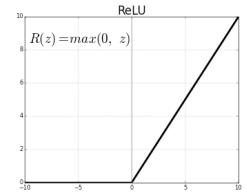
Non-linear activation functions are typically preferred when defining neural networks. The ReLU (Rectified Linear Unit) layer offers a non-linear activation function,whichisdefinedasfollows:
( ) ( )
In simpler terms, the activation function involves setting thresholdtozero.
Unlike some other activation functions, ReLU can be implemented by straightforwardly applying a thresholdatzerotoamatrixofactivations.
It's worth noting that with an exceedingly large learning rate, ReLU can potentially cause certain parts of the neural network to become "dead," meaning they may not activate beyond a specific level.
In the absence of the activation layer, the convolutional layerscouldessentiallyfunctionasasinglelayer.
International Research Journal of Engineering and Technology (IRJET) e-ISSN: 2395-0056
Volume: 12 Issue: 12 | Dec 2025 www.irjet.net p-ISSN: 2395-0072
A pooling layer is often inserted between successive convolutional layers in a CNN architecture. It serves to progressively decrease the number of parameters and computations within the network, as well asmitigateoverfitting.Thepoolinglayeroperatesoneach depthsliceoftheinputindependentlyandspatiallyresizes it. A typical configuration involves using 2x2 filters with a stride of 2, which down samples each depth slice by a factorof2inbothwidthandheight,neglecting75%ofthe activations.
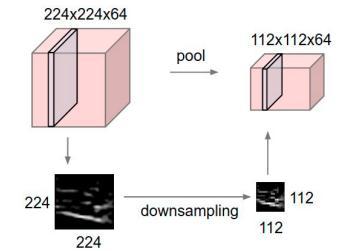
In Figure 3.2, the input volume with dimensions [224x224x64] undergoes pooling using a filter of size 2 and a stride of 2, resulting in an output volume with dimensions [112x112x64]. It's important to note that the depthofthevolumeremainsunchanged.
In deep neural networks, the number of parameters increases as the number of hidden layers grows. This enables the network to learn various features and relationships between input and output values. However, when there isn't enough data to train these networks,thelearnedrelationshipsmightbeinfluencedby noiseinthetrainingset,leadingtooverfitting.Tomitigate overfitting,severaltechniqueshavebeenintroduced,such asearlystopping during trainingoraveraging the outputs of different networks. However, these methods have limitations. Dropout is a method that addresses these issues. As the name implies, dropout involves randomly removing multiple neural units from the network. Each unit is retained with a probability 'p,' and typically, a probabilityof0.5iseffectiveinpractice.
Neural networkshavetheabilitytolearnfeatures on their own, without the need for handcrafted features, but they do require data normalization. Typically, data normalization is applied to the input data, as it aids in faster convergence. However, during the training process, asmodel parametersareupdated, the distribution of each layer's input may change, which can slow down training. Toaddressthisissue,normalizationwithinthe network is introduced to prevent such delays. Batch normalization was introduced to address this concern by normalizing eachtrainingmini-batch.Ithasproveneffectiveintraining deep learning models. However, when it comes to generating images, factors like contrast and color distribution become crucial. Batch normalization may not adequately address these aspects. Instance normalization independently normalizes the channels of each image batch.
The speed at which a network converges to the global optimum primarilyrelies on the activation function employed and the depth of the network. Greater network depth increases the computational effort before convergence. Nonetheless, various parameters can be adjusted as needed, such as learning rate, initial weights, optimizationfunctions,andmore.
Initializingweightshelpsmitigatethevanishingor exploding gradient issues, which can significantly prolong the network's convergence time. Initializing weights from a Gaussian distribution with a mean of 0 and a standard deviation of 1 has been shown to be effective, particularly whenusingReLUactivationfunctions.
Optimization algorithms are crucial for minimizing(ormaximizing)anobjectivefunction,whichis a mathematical function based on the model's internal parameters. These algorithms facilitate the adjustment of weightsandbiasestosteertheoutputtowardstheoptimal solution. In this context, the Adam optimizer is employed, which is a widely used and highly effective choice for neural networks. Adam is a hybrid algorithm that combinesthebenefitsofAdaGradandRMSprop,whilealso incorporating momentum, setting it apart from simple stochasticgradientdescent(SGD).
Machine learning and deep learning algorithms are fundamentally built on the concept of learning the optimal weights for each neuron. This process hinges on
International Research Journal of Engineering and Technology (IRJET) e-ISSN: 2395-0056
Volume: 12 Issue: 12 | Dec 2025 www.irjet.net p-ISSN: 2395-0072
the optimization of an "objective function" that quantifies how well the model performs concerning the expected outcomes. The primary goal is to minimize this loss function. It's worth noting that a single loss function is typically expected to generalize well across diverse datasets, although its effectiveness depends on factors such as the nature of the data, the chosen optimization function,andthespecificalgorithmemployed.
In the context of the proposed work, the primary aim is to establish a relationship between two sets of training samples, denoted as X and Y. This involves two functions and . These functions are accompanied by their respective discriminators, and . The data distributions are defined as ( )and ( )
The objective of the adversarial loss for G can be definedasfollows:
( ) ( )[ ( )] ( ) * ( ( ( )))+
G aims to minimize this loss, while D aims to maximize it. Therefore, the main aim is . The same objectiveappliestoestimatethefunctionF.
3.4.2.
Adversarialnetworks,duringtraining,canlearnto map both G and F to their respective targets, Y and X. Nevertheless, they may learn to map an image to any random image from the target domain, which means that it's not guaranteed that the individual input will be mapped to . To address this issue, network cycleconsistency is introduced. Therefore, it is necessary to satisfy the sequence ( ) ( ) and for input ( ) ( ) for the given input x. To ensure this behavior, a loss function called cycle consistency loss isintroduced,definedas: ( ) ( )[‖ ( ( ) )‖ ] ( )[‖ ( ( ) )‖ ]
3.4.3.
Whenperforminganimagetransformationtask,it hasbeenobservedthatifimplementedwithper-pixelloss, even minor differences between two perceptually similar images can result in significantly high loss. However, by usingperceptuallossinsteadofper-pixelloss,it'spossible to create high-quality images. In this approach, high-level featuresareextractedusingtheVGG-19network,whichis pertained on the Image Net dataset. The VGG network, whengivenanimage,canextractfeatureweightsthathelp
make the generated output image perceptually similar to the original target image. Featureextraction iscarried out from the second and fifth max-pool layers for both the sourceimageandproducedimages.
4.1.
The presented approach is simulated using Python3 and its deep learning (DL) libraries. The Google Cloud platform consisted of virtual machine (VM) with 1 vCPU,16GBRAMand1Nvidia-K80GPUof12GBVRAM,is adopted to implement the presented approach. Pytorch is exploitedforgeneratingtheprogram.
This work employs a convolutional neural network (CNN) algorithm and images of 256x256x3 are fedintothisalgorithm.Theseinputsareundergonefroma stride2convolutionlayer.Aseriesofconvolutionlayersis utilized in order to down sample these images which are later gone through a set of residual blocks. A set of transposeconvolutionsdeploystheoutputforup-sampling the pictures. At last, they are fed into a convolution layer and is execute similarly to the one implemented in neural formoftransfer.
4.1.2.
It is a neural network (NN), and plays a role of a classification algorithm. This algorithm majorly emphasized on distinguishing the images after retrieving them from the generator and which are real time images. The generator takes the precise results of classifying data for learning from and focuses on misleading the discriminator. Thus, the network framework adopted in thisdiscriminatorhassimilaritywithPatchGANalgorithm or Markovian discriminator. Several Conv-BatchNormLeakyRelu layers are deployed to develop this algorithm. Unlike the Patch GAN" discriminatory which utilizes 2 images, an image of 256x256x3 dimension is employed as input in this network and a value, used to illustrate its class, is generated. The training of this network is done using real time images and the images produced from the generator.
The batch size is set to 1 for the Adam Solver in ordertotrainthenetwork.Forprimaryfiftyepochs,itsets a learning rate to 0.0002 and 0 for a linear decay among rest of the epochs. Around seventy epochs having one thousand images are considered to train the framework. The NYU Depth dataset to gather these pictures. The multiplicationofcyclicloss isdone with .Thevalue of0.5isassignedto and0.9to ofAdamSolver.
International Research Journal of Engineering and Technology (IRJET) e-ISSN: 2395-0056
Volume: 12 Issue: 12 | Dec 2025 www.irjet.net p-ISSN: 2395-0072
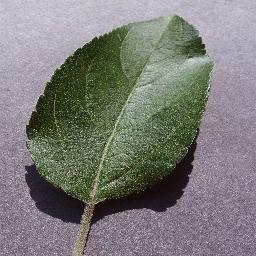
The dataset of apple is collected from kaggle and dataset has four classes which are Cider apple rust, Black rot,AppleScabandhealth.
Table 1: AppleBlackRotImages
Original Image Denoised Image
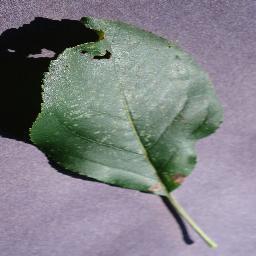
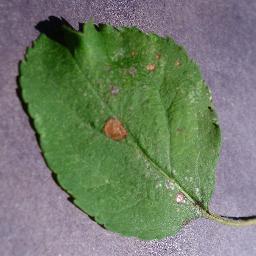
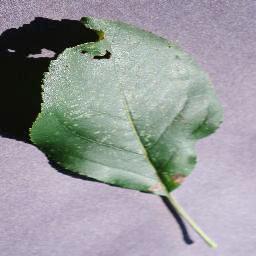
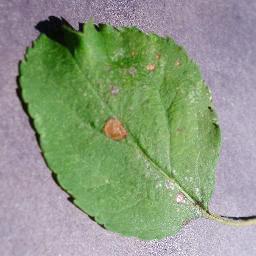
Table 2: AppleCiderImages
Original Image Denoised Images
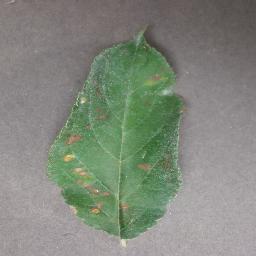
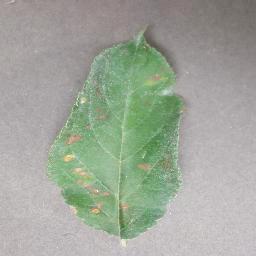
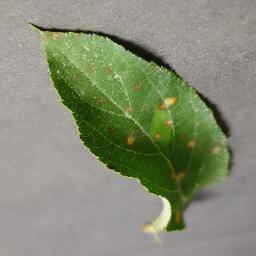
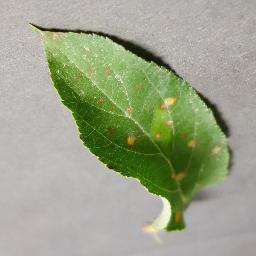
Table 3: AppleScrabImages
Original Image Denoised Images
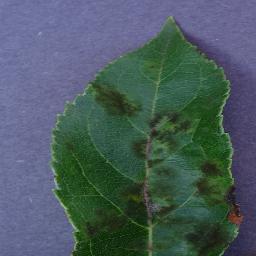
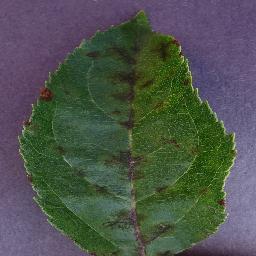
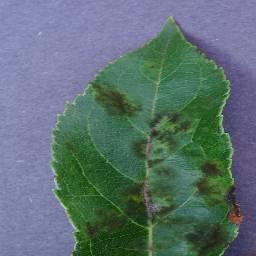
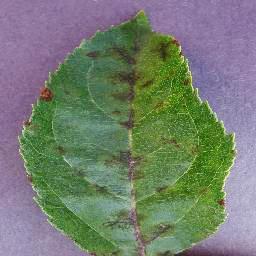
Table 4: ApplyhealthImages
Original Image Denoised Images
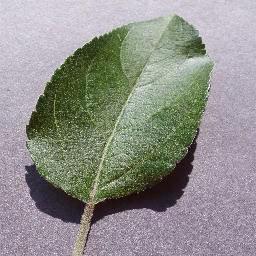
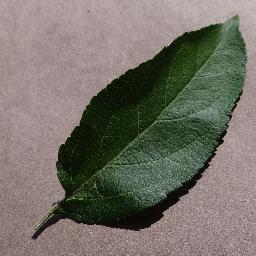
International Research Journal of Engineering and Technology (IRJET) e-ISSN: 2395-0056
Volume: 12 Issue: 12 | Dec 2025 www.irjet.net p-ISSN: 2395-0072
The proposed methodology leads to improve in thequalityofimage.Theimagequalityisquantifiedonthe basisofdiverseparameters.Theparameters,namelypeak signal-to-noise ratio (PSNR) and Structural Similarity Index(SSIM)aredeployedforcomputingthequalityofthe generatedpicture.
Asshowninfigure5,theSSIM valueofproposed model is analyzedanditshowsthatproposedmodelhasleastSSIM valueascomparedtoGaussianfilterandmedianfilter.The leastSSIMrepresentsthatimagesaredenoisedefficiently.
The existing work employs the addition of perceptual loss function (LF) due to which the quality of image is greatly affected. A deep-learning (DL) method is suggestedin thiswork forcreatinghazefree pictures,and no human intervention is required in it. Moreover, the cyclicframeworkutilizesalossyfunctionforenhancingan outputforspecificinputandensuringthenogenerationof otherkindsofoutputisdone.Accordingtoresultsattained quantitatively and qualitatively, the suggested method worksefficientlytode-hazetheimagesincomparisonwith the traditional methods. Furthermore, the supremacy of VGG19 algorithm is proved over the existing algorithm concerning perceptual-consistency loss values. The proposed model is implemented in python and proposed model show least SSIM, maximum PSNR as compared to GaussianfilterandMedianFilter.
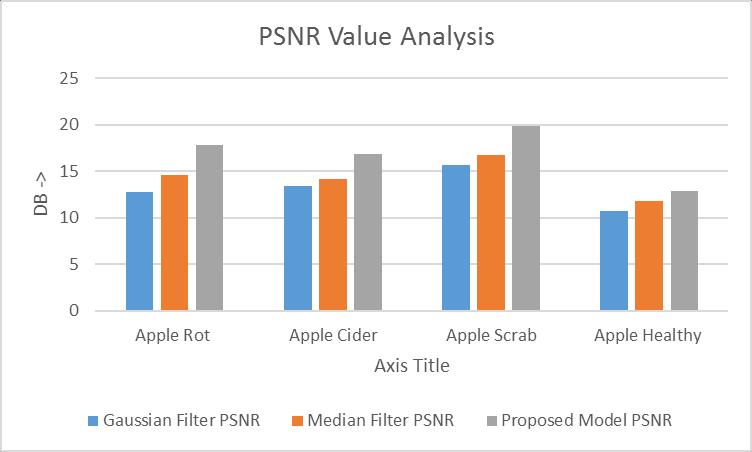
As shown in figure 4, the PSNR value of proposed model iscomparedwithexistingfilterslikeGaussianfilter and median filter for image denoising. It is analysed that proposed model has high PSNR value as compared to Gaussianandmedianfilter.
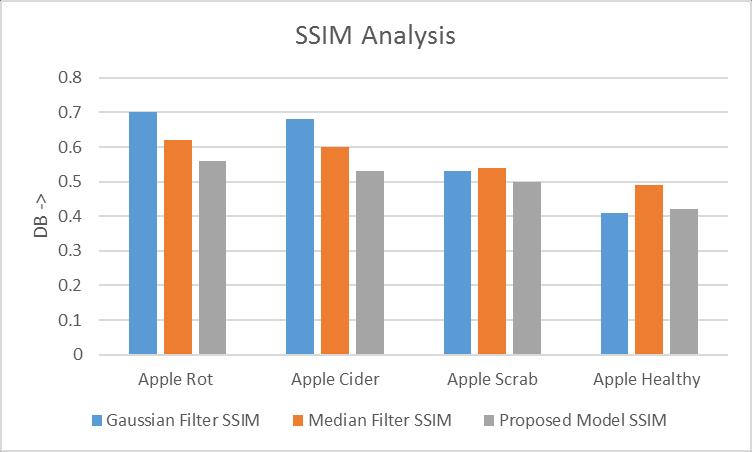
Figure 5: SSIMAnalysis
[1] DhannyaJ,Dr.SangeethaV,“EnhancingLeafImage Quality Using Deep Learning Denoising Techniques,”NanotechnologyPerceptions,vol.20, no.S2,Mar.2024,doi: https://doi.org/10.62441/nano-ntp.v20is2.32.
[2] G. S and M. Vennila S, "A Sequential Method for EnhancingtheImageQualityofRiceLeafDiseases byEmployingVariousPreprocessingTechniques," 2023 9th International Conference on Smart Structures and Systems (ICSSS), CHENNAI, India, 2023,pp.1-7,doi: 10.1109/ICSSS58085.2023.10407605.
[3] A. Shukla, K. Seethalakshmi, P. Hema and J. C. Musale, "An Effective Approach for Image Denoising Using Wavelet Transform Involving Deep Learning Techniques," 2023 4th InternationalConferenceonSmartElectronicsand Communication (ICOSEC), Trichy, India, 2023, pp. 1381-1386,doi: 10.1109/ICOSEC58147.2023.10275904.
[4] S. k. Veldurthi and K. Samalla, "Image denoising analysis by Deep Learning Algorithms," 2022 6th International Conference on Electronics, Communication and Aerospace Technology, Coimbatore, India, 2022, pp. 1307-1311, doi: 10.1109/ICECA55336.2022.10009403.
[5] A. Limshuebchuey, R. Duangsoithong and M. Saejia, "Comparison of Image Denoising using
International Research Journal of Engineering and Technology (IRJET) e-ISSN: 2395-0056
Volume: 12 Issue: 12 | Dec 2025 www.irjet.net p-ISSN: 2395-0072
Traditional Filter and Deep Learning Methods," 2020 17th International Conference on Electrical Engineering/Electronics,Computer, Telecommunications and Information Technology (ECTI-CON), Phuket, Thailand, 2020, pp. 193-196, doi:10.1109/ECTI-CON49241.2020.9158242.
[6] S. Ghose, N. Singh and P. Singh, "Image Denoising using Deep Learning: Convolutional Neural Network," 2020 10th International Conference on Cloud Computing, Data Science & Engineering (Confluence),Noida,India,2020,pp.511-517,doi: 10.1109/Confluence47617.2020.9057895.
[7] P. Maharjan, L. Li, Z. Li, N. Xu, C. Ma and Y. Li, "Improving Extreme Low-Light Image Denoising via Residual Learning," 2019 IEEE International Conference on Multimedia and Expo (ICME), Shanghai, China, 2019, pp. 916-921, doi: 10.1109/ICME.2019.00162.
[8] S. Kumari and K. Kumar, "Analysis of Image Enhancement and Deep Learning Techniques," 202310thInternationalConferenceonComputing for Sustainable Global Development (INDIACom), NewDelhi,India,2023,pp.1365-1370.
[9] L. Ding and W. Du, "Application Analysis of Image Enhancement Method in Deep Learning Image Recognition Scene," 2021 Third International Conference on Inventive Research in Computing Applications (ICIRCA), Coimbatore, India, 2021, pp.1459-1462,doi: 10.1109/ICIRCA51532.2021.9544905.
[10] C. Kang and S. Kang, “Self-Supervised Denoising Image Filter Based on Recursive Deep Neural Network Structure,” Sensors, vol. 21, no. 23, p. 7827,Nov.2021,doi: https://doi.org/10.3390/s21237827.
[11] A. E. Ilesanmi and T. O. Ilesanmi, “Methods for image denoising using convolutional neural network: a review,” Complex & Intelligent Systems,Jun.2021,doi: https://doi.org/10.1007/s40747-021-00428-4
[12] I. Patel, S. Patel, and A. Patel, “Analysis of Various Image Preprocessing Techniques for Denoising of FlowerImages,”InternationalJournalofComputer Sciences and Engineering, vol. 6, no. 5, pp. 1111–1117,May2018,doi: https://doi.org/10.26438/ijcse/v6i5.11111117
[13] A. A and B. N, "Impact of Image Pre-Processing in Image Quality and Segmentation for Banana Leaf DiseasePrediction,"2023InternationalConference on Sustainable Communication Networks and
Application(ICSCNA),Theni,India,2023,pp.13021307,doi:10.1109/ICSCNA58489.2023.10370581.
[14] A.Khandelwal,A.ShuklaandM.Sain,"ASurveyon AutomatedDiseaseDiagnosisandClassificationof Herbal Plants Using Digital Image Processing," 20236thInternationalConferenceonInformation Systems and Computer Networks (ISCON), Mathura, India, 2023, pp. 1-5, doi: 10.1109/ISCON57294.2023.10112042.
[15] A. Devaraj, K. Rathan, S. Jaahnavi and K. Indira, "Identification of Plant Disease using Image Processing Technique," 2019 International Conference on Communication and Signal Processing (ICCSP), Chennai, India, 2019, pp. 0749-0753,doi:10.1109/ICCSP.2019.8698056.
[16] Deepa, "A Pre-Processing Approach for Accurate Identification of Plant Diseases in leaves," 2018 InternationalConferenceonElectrical,Electronics, Communication, Computer, and Optimization Techniques (ICEECCOT), Msyuru, India, 2018, pp. 249-252,doi: 10.1109/ICEECCOT43722.2018.9001616.
[17] J. Wu, L. Xiang, H. You, L. Tang, and J. Gai, “PlantDenoising-Net (PDN): A plant point cloud denoisingnetworkbasedondensitygradientfield learning,” ISPRS Journal of Photogrammetry and RemoteSensing,vol.210,pp.282–299,Apr.2024, doi: https://doi.org/10.1016/j.isprsjprs.2024.03.010.
[18] F. Aziz, D. U. E. Saputri, S. Hadianti, D. N. Sulistyowati, S. Fauziah and N. A. Mayangky, "Image Enhancement with DBPN for Plant Pest Classification," 2024 International Conference on Information Technology Research and Innovation (ICITRI), Jakarta, Indonesia, 2024, pp. 208-211, doi:10.1109/ICITRI62858.2024.10698823.
[19] Z.Yang,S.Fang,andH.Huang,“Maizeleafdisease image enhancement algorithm using TFEGAN,” Crop Protection, vol. 182, pp. 106734–106734, May2024,doi: https://doi.org/10.1016/j.cropro.2024.106734.
[20] N. S. Rani, T. M. Akhilesh, B. J. Bipin Nair, K. S. Koushik, and E. B. Smith, “PLM-Res-U-Net: A light weight binarization model for enhancement of multi-textured palm leaf manuscript images,” Digital Applications in Archaeology and Cultural Heritage, vol. 34, p. e00360, Sep. 2024, doi: https://doi.org/10.1016/j.daach.2024.e00360.
[21] Y.-C.Chen,J.-C.Wang,M.-H.Lee,A.-C.Liu,andJ.-A. Jiang, “Enhanced detection of mango leaf diseases in field environments using MSMP-CNN and
© 2025, IRJET | Impact Factor value: 8.315 | ISO 9001:2008 Certified Journal | Page1050
International Research Journal of Engineering and Technology (IRJET) e-ISSN: 2395-0056
Volume: 12 Issue: 12 | Dec 2025 www.irjet.net p-ISSN: 2395-0072
transfer learning,” Computers and Electronics in Agriculture, vol. 227, p. 109636, Dec. 2024, doi: https://doi.org/10.1016/j.compag.2024.109636.
[22] V. G. Bhujade, Vijay Sambhe, and B. Banerjee, “Digitalimagenoiseremovaltowardssoybeanand cotton plant disease using image processing filters,”Expertsystemswithapplications,vol.246, pp. 123031–123031, Jul. 2024, doi: https://doi.org/10.1016/j.eswa.2023.123031
[23] V. -D. Hoang and T. -A. Pham, "Fusion of ViT Technique and Image Filtering in Deep Learning for Plant Pests and Diseases Recognition," 2023 International Conference on System Science and Engineering (ICSSE), Ho Chi Minh, Vietnam, 2023, pp.438-443,doi: 10.1109/ICSSE58758.2023.10227192.
[24] W. Chang, N. D’Ascenzo, E. Antonecchia, F. Zhou and Q. Xie, "A Convolutional Neural Network Based Iterative Framework for Plant PET Image Denoising," 2022 IEEE Nuclear Science Symposium and Medical Imaging Conference (NSS/MIC), Italy, 2022, pp. 1-5, doi: 10.1109/NSS/MIC44845.2022.10399090.
[25] H. Jin, Y. Li, J. Qi, J. Feng, D. Tian, and W. Mu, “GrapeGAN:Unsupervisedimageenhancementfor improved grape leaf disease recognition,” Computers and Electronics in Agriculture, vol. 198,p.107055,Jul.2022,doi: https://doi.org/10.1016/j.compag.2022.107055.
[26] S.O.Oppong,F.Twum,J.B.Hayfron-AcquahandY. M. Missah, "Hybrid Approach to Medicinal Plant Leaf Image Enhancement Using Contrast Limited Adaptive Histogram Equalization and Homomorphic Filter," 2021 International Conference on Electrical, Computer and Energy Technologies (ICECET), Cape Town, South Africa, 2021,pp.1-6,doi: 10.1109/ICECET52533.2021.9698460.
2025, IRJET | Impact Factor value: 8.315 | ISO 9001:2008