
International Research Journal of Engineering and Technology (IRJET) e-ISSN: 2395-0056
Volume: 13 Issue: 03 | Mar 2026 www.irjet.net p-ISSN: 2395-0072
International Research Journal of Engineering and Technology (IRJET) e-ISSN: 2395-0056
Volume: 13 Issue: 03 | Mar 2026 www.irjet.net p-ISSN: 2395-0072
Suraj Srivastav1 , Krishna Jaiswal2 , Ajeet Yadav3 , Devendra Pratap Singh4 , Rajan Shukla5
1,2,3,4Under Graduate Student, Civil Engineering, Buddha Institute of Technology, CL1, Sector-7, GIDA, Gorakhpur, Uttar Pradesh, 273209
5Assistant Professor, Department of Civil Engineering, Buddha Institute of Technology, CL1, Sector-7, GIDA, Gorakhpur, Uttar Pradesh, 273209 ***
Abstract - The Rapti river is an important freshwater resource for drinking, irrigation and ecological equilibrium. Yet, this river is facing growing pollution problems due to anthropogenic activities, industrial effluents and agricultural runoffs. This research focuses on the assessment of physiochemical parameters of the river water to understand the water quality. Parameters like pH, turbidity, hardness, alkalinity, chloride etc. were measured at some sites of the river. We suggest regular monitoring, efficient wastewater treatment, conservation of natural habitats and sustainable agriculturalpracticestoavertpollutionandtoensuretheriver water be potable and suitable for irrigation and other uses. This article underlines the necessity of integrated water resource management towards sustainable development and prevention of water quality degradation of Rapti River.
Key Words: Rapti River, water quality of Gorakhpur, pollution, environmentalassessment,waterparameters, water management, river pollution.
TheGorakhpurdistrictdependsontheRaptiRiverbecauseit delivers fundamental water supplies which support agriculturalactivities,industrialoperations,andhousehold needs. Human activities have created significant pollution threatswhichendangertheriver.TheRaptiRiverpollution affects both environmental systems and public health because it harms aquatic ecosystems and the human populationsthatdependontheriver.Theriverstartsinthe lower Himalayas and goes into the Gangetic plains, which supports diverse biological systems while serving as the mainwatersupplyfornearbycommunities.
Comprehensive water quality assessment requires investigationofrisinghumanactivitieswhichincludeurban development and agricultural expansion and industrial growthWaterqualityevaluationdetermineswhetherwater canbeusedfordrinking,irrigation,andindustrialpurposes. Thisstudyaimstoanalyzeselectedwaterqualityparameters at key locations along the RaptiRiver toassess thespatial variationinwaterqualityandpinpointsourcesofpollution.
Water quality parameters which include pH, dissolved oxygen (DO), turbidity, temperature, biochemical oxygen demand (BOD), chemical oxygen demand (COD), nitrates phosphates and microbial content help determine aquatic systemhealthandpollutantlevels.Theparametersenable identificationofcontaminationsourceswhiletheymonitor changesintimeandassistwatermanagementpolicies.
Sahni,P.&Varshney,D.1(2024)-Riverwaterhasserved as an essential resource since ancient times because peoplehaveuseditfordrinkingwaterandirrigationand hydropowergenerationandaquacultureandnavigation and transportation. The area supports economic development while providing habitats for human communitiesandsustainingvariousaquaticorganisms. TheYamunaRivernowfacesseverepollutionproblems becauseindustrializationandurbanizationandmining activities and sewage disposal and technological advancements have increased pollution levels. The contaminationoftheriversystemcreatesserioushealth hazardsforbothurbanandruralpopulationswhouseit astheirprimarywatersourceforhouseholdneedsand agriculturalpurposes.Theresearchstudydemonstrates that continuous pollution monitoring and effective treatment programs need to be established as urgent requirements for restoring and protecting the water qualityoftheYamunaRiverinIndia.
Yadav,D.&Pandey,G.3(2021)-ThecityofGorakhpur sitsonthebanksoftheRaptiRiverwhichflowsintothe Ami River at Sohgaura because the Ami River carries higher pollutionlevelsthanthe RaptiRiver. The Rapti RivercontinuesitscourseuntilitreachestheGhaghra RiveratKaparwarGhat.Researchersconductedastudy to evaluate the water quality of Rapti River through measurements of physical and chemical parameters which included pH and turbidity and total dissolved solids and dissolved oxygen and total hardness. The research results show that human activities which includeurbandevelopmentandconstructionworkand agriculturalpracticesanddischargeofuntreatedsewage and disposal of solid waste lead to significant
International Research Journal of Engineering and Technology (IRJET) e-ISSN: 2395-0056
Volume: 13 Issue: 03 | Mar 2026 www.irjet.net p-ISSN: 2395-0072
contamination and environmental degradation of the riverecosystem.
Pandit,P.&Fulekar,M.H.5(2017)-Thestudyassessed water quality across nine coastal regions of Gujarat, India, during the pre-monsoon season by measuring various physicochemical parameters. Principal Component Analysis (PCA) served as the statistical methodthatresearchersusedtoevaluateandinterpret their collected data. The results provide fundamental dataaboutenvironmentalconditionswhileshowinghow human activities affect coastal ecosystem health. This researchshowsthatPCAfunctionseffectivelyasadata simplificationtoolwhichenablesresearcherstoextract essentialinformationaboutwaterqualityforimproved environmentalmonitoringandmanagementinGujarat coastalareas.
Rai,A.4(2015)-TheAmiRivershowshigherpollution levels than the Rapti River which harms groundwater quality in the surrounding regions. Three study sites wereestablishedatKauriramwhichislocatedbeforethe AmimeetstheRaptiRiverandatMalavwhichislocated beforetheAmiRiverandatSohagaurawhichislocated after their confluence to examine water quality from shallow and deep hand pumps. The researchers conducted an analysis of physical properties and chemical composition and biological characteristics of groundwater which they collected from Indian Mark hand pumps situated near both rivers. The results demonstrate that pollution from the Ami River deteriorates groundwater quality in Sohagaura, which showsthatbetterriverwatermanagementpracticesare necessarytosafeguardlocalwaterresources.
Alam,JBetal.2(2007)-Researcherstestedwaterquality from multiple locations along the Surma River which flowsbetweenChattakandSunamganjduringboththe dryseasonandthemonsoonseason.Theriversection containstwoimportantindustrialfacilitieswhichinclude apapermillandacementfactorythatcouldaffectthe water quality of the river. The analysis showed that peopleshouldnotconsumetheriverwaterinthisarea becauseitneedstreatmenttobecomesafefordrinking. The water maintains sufficient quality for multiple surface water applications which demonstrates the requirement for effective management methods and pollution prevention measures to safeguard this importantresource.
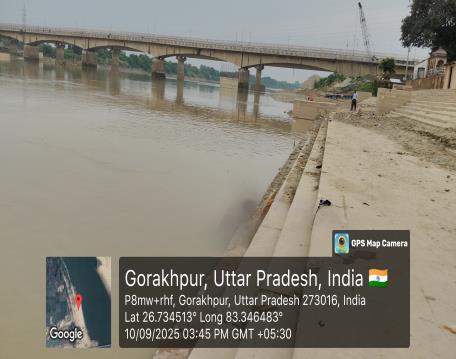
3.1 Sample collection: Wehavecollectedwatersample fromfourplaceswhicharepresentinGIDA,Gorakhpur,for testingtheirproperties.
•Rajghat
•Barhuan
•Mokshdham
•MuhamdpurMaphi
3.2 Selected Parameters: The water samples were analyzed for various physico-chemical parameters, including:
•pH
•Alkalinity
•Hardness
•Turbidity
•Acidity
•TotalDissolvedSolids
3.3ParametersAnalyzed:
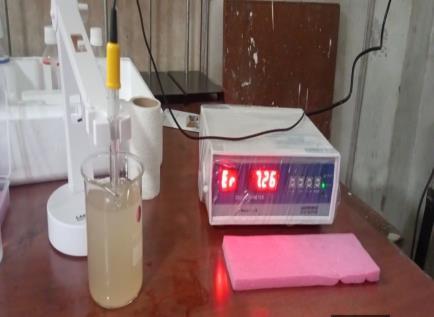
a) pH:
pHisameasureoftheacidityorbasicityofasolution.Inthe context of water quality, pH is an important parameter to measure.
•Inwaterqualitymonitoring,pHismeasuredto:
•Determinetheacidityorbasicityofthewater
•Assessthepotentialforcorrosionorscaling
• The acceptable pH range for drinking water is typically between6.5and8.5.
International Research Journal of Engineering and Technology (IRJET) e-ISSN: 2395-0056
Volume: 13 Issue: 03 | Mar 2026 www.irjet.net p-ISSN: 2395-0072
b) Alkalinity:
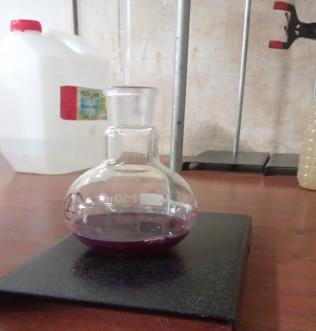
AlkalinityistheabilityofwatertoresistchangesinpHwhen acidsorbasesareadded.It'sameasureoftheconcentration ofbases,suchasbicarbonate(HCO3-),carbonate(CO32-), andhydroxide(OH-),thatcanneutralizehydrogenions(H+). Alkalinitylevelscanvarydependingonthewatersourceand location.
Low alkalinity: Less than 10 mg/L as CaCO3 (calcium carbonate)
Moderatealkalinity:10-50mg/LasCaCO3
Highalkalinity:Greaterthan50mg/LasCaCO3
The acceptable limit of alkalinity in drinking water is 200 mg/LasCaCO3(calciumcarbonate),accordingtoIS105002012¹.However,intheabsenceofanalternativesource,the permissiblelimitcanbeextendedto600mg/LasCaCO3².
c) Hardness:
Water hardness refers to the concentration of dissolved minerals, specifically calcium and magnesium, in water. These minerals can cause scaling, which can lead to problemsinplumbing,appliances,andindustrialequipment. Waterhardnessistypicallymeasuredin:
1. mg/L (milligrams per liter): This unit measures the concentrationofcalciumandmagnesiumionsinwater.
2.ppm(partspermillion):Thisunitisequivalenttomg/L.
3.DGH(degreesofgeneralhardness):Thisunitmeasures theconcentrationofcalciumandmagnesiumionsinwater, with1DGHequivalentto17.9mg/L.
4. Grains per gallon (GPG): This unit measures the concentrationofcalciumandmagnesiumionsinwater,with 1GPGequivalentto17.1mg/L.
Theacceptablelimitforwaterhardnessvariesdependingon theintendeduse:
Drinking water: 200-400mg/L(11.3-23.4GPG)
Industrial water: 100-500mg/L(5.7-29.2GPG)
High water hardness can cause:
Scaling: The formation of mineral deposits in pipes and appliances.
Corrosion: Thedegradationofpipesandequipmentdueto thepresenceofminerals.
Soap scum formation: Theformationofsoapscumonskin andsurfaces.
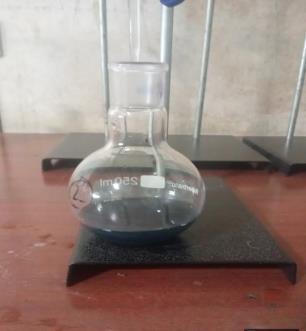
d) Turbidity: Turbidityreferstothecloudinessorhaziness ofwaterduetothepresenceofsuspendedparticles,suchas sediments, clay, silt, and other impurities. Turbidity can affecttheappearance,taste,andodorofwater,aswellasits safetyfordrinkingandotheruses.
Turbidityistypicallymeasuredin:
Nephelometric Turbidity Units (NTU): This is the most commonunitofmeasurementforturbidity.
Formazin Turbidity Units (FTU): This unit is similar to NTUbutusesadifferentcalibrationstandard.
WHO (World Health Organization): 5NTU
USEPA (United States Environmental Protection Agency):0.3-1NTU
BIS (Bureau of Indian Standards): 5NTU
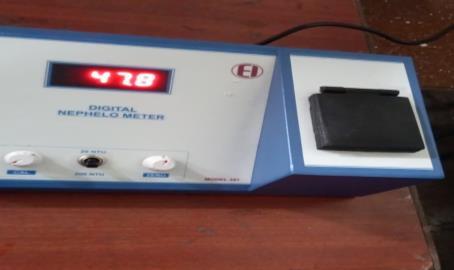
TurbidityTest
Volume: 13 Issue: 03 | Mar 2026 www.irjet.net
4. STANDARD VALUE:
Table 4.1: Water Quality Parameters Specified by BIS and WHO
5. RESULT & ANALYSIS
5.1 pH Test Result: -
Graph 5.1: pHvaluesacrossdifferentlocations
Table 5.1:pHValues
5.2 Alkalinity Test Result: -
Table 5.2:AlkalinityValues
Graph 5.2: -Alkalinityacrossdifferentlocations
5.3 Hardness Test Result: -
Graph5.3: Hardnessacrossdifferentlocations
International Research Journal of Engineering and Technology (IRJET) e-ISSN: 2395-0056
Volume: 13 Issue: 03 | Mar 2026 www.irjet.net p-ISSN: 2395-0072
Table 5.3 Hardnesslevel
5.6 TDS Test Result: -
Graph 5.6: TDSacrossdifferentlocation
Table 5.2:TDSValues
5.4 Acidity test Result: -
Graph 5.4: Acidityacrossdifferentlocations
Table 5.4:AcidityValues
5.5 Turbidity Test Result: -
Graph 5.5: Turbidityacrossdifferentlocations
TheevaluationofwaterqualityparametersintheRaptiRiver indicatedsubstantialfluctuationsinphysical,chemical,and biologicalattributes.Thefindingsshowthattheriverwateris polluted because it has high levels of turbidity, total suspended solids, biochemical oxygen demand, chemical oxygen demand, and total coliform. The Bureau of Indian StandardssaysthatthepH,hardness,alkalinity,andchloride levels were all within the acceptable range for drinking water. But the turbidity and bacteria levels were too high, whichcouldbebadforpeople'shealthTheRaptiRiverneeds ourhelpbecausewehavetomanagewastewaterina way, takecareofnaturalhabitatsandusefarmingmethodsthatdo notharmtheenvironment.Wehavetocheckthewaterofthe RaptiRiverallthetimetomakesureitissafeforpeopleto drink for farmers to use for irrigation and for things. The RaptiRiverisintroublebecauseofthingsthatpeoplehave done. The water of the Rapti River has a lot of things in it which is very bad for the environment and for people’s health.Weneedtodosomethingnowtostopthepollutionof the Rapti River and make its water clean again. These measures may include: Implementation of efficient wastewatertreatmentsystems
1.SahniandVarshney;J.Appl.Chem.Sci.Int.,vol.15,no.2, pp.1-15,2024;Articleno.JACSI.12328.
2.Md.J.B.Alam,etal.Int.J.Environ.Sci.Tech.,4(1):159167,2007ISSN:1735-1472
International Research Journal of Engineering and Technology (IRJET) e-ISSN: 2395-0056
Volume: 13 Issue: 03 | Mar 2026 www.irjet.net p-ISSN: 2395-0072
3. Km Divya Yadav, Prof. Govind Pandey (Professor) DepartmentofCivilEngineering
4. Madan Mohan Malaviya University of Technology GorakhpurU.P.India273010
5.AyushKumarRai;E.Moyoetal.Int.JournalofEngineering ResearchandApplications
6. ISSN: 2248-9622, Vol. 5, Issue 7, (Part - 4) July 2015, pp.57-61
7.IOSRJournalofBiotechnologyandBiochemistry(IOSRJBB)ISSN:2455-264X,Volume 8.3,Issue4(Jul.–Aug.2017),PP08-15www.iosrjournals.org
9. M. N. Uddin, M. S. Alam, M. N. Mobin and M. A. Miah; J. Environ.Sci.&NaturalResources,7(1):253–260,2014ISSN 1999-7361
10.PramodKumarVishwakarma;InternationalJournalof Engineering Research & Technology (IJERT) ISSN: 22780181Vol.2Issue12,December–2013
11.IJSRD-International Journal forScientificResearch& Development|Vol.3,Issue07,2015|ISSN(online):23210613
12. International Research Journal of Engineering and Technology(IRJET)e-ISSN:23950056Volume:05Issue:09 |Sep2018www.irjet.net
13.PrashantMehta:ArchivesofAppliedScienceResearch, 2012,4(1):497-507
14.GuptaN,PandeyP,HussainJ.Effectofphysicochemical and biological parameters on the quality ofriver waterof Narmada,MadhyaPradesh,India”WaterScience.2017
15. International Journal of Computer Sciences and EngineeringVol.7(1),Jan2019,E-ISSN:2347-2693
16. Gupta N, Yadav KK, Kumar V, Singh D. Assessment of Physicochemical Propertiesof Yamuna River inAgra City, InternationalJournalofChemtechResearch.2015;5(1):528 53126
17. Rout, Chadetrik, Arun, Lavaniya, Prakash, Divakar. Assessment of Physico-chemical Parameters of River YamunaatAgraRegionofUttarPradesh,India.International Research Journal of Environment Sciences. 2015; 4:23191414.
18.2020JETIRJune2020,Volume7,Issue6www.jetir.org (ISSN-2349-5162)



SurajSrivastav Student
DepartmentOfCivilEngineering
Buddha Institute of Technology, Gida, Gorakhpur
KrishnaJaiswal Student
DepartmentOfCivilEngineering
Buddha Institute of Technology, Gida, Gorakhpur
AjeetYadav Student
DepartmentOfCivilEngineering
Buddha Institute of Technology, Gida, Gorakhpur
DevendraPratapSingh Student
DepartmentOfCivilEngineering
Buddha Institute of Technology, Gida, Gorakhpur
RajanShukla
AssistantProfessor
DepartmentOfCivilEngineering
Buddha Institute of Technology, Gida, Gorakhpur
2026, IRJET | Impact Factor value: 8.315 | ISO 9001:2008
|