
International Research Journal of Engineering and Technology (IRJET) e-ISSN: 2395-0056
Volume: 12 Issue: 05 | May 2025 www.irjet.net p-ISSN: 2395-0072
International Research Journal of Engineering and Technology (IRJET) e-ISSN: 2395-0056
Volume: 12 Issue: 05 | May 2025 www.irjet.net p-ISSN: 2395-0072
Aditya Bansod1 , Prof. Salman Shaikh2
1M.E Student, Civil (Structural) Engineering, Sanmati Engineering College, Washim
2Professor, Department of Civil Engineering, Sanmati Engineering College, Washim *
Abstract - Recycled cellulosic pulp, derived from recycled paper waste and agricultural by-products, offers an ecofriendly alternative for concrete reinforcement. This sustainablematerialleveragesitsnaturalfibrousstructureto potentiallyimprovetheoverallperformanceofconcretewhile reducing environmental waste. Its inclusion in concrete formulations serve a dual purpose: enhancing material propertiesandcontributingtogreenerconstructionpractices.
In this study, we developed several concrete mixes by varying the amount of recycled cellulosic pulp and focused on assessing three key properties: compressive strength, split tensile strength, and water absorption. Compressive strength measurestheconcrete's abilitytowithstandload,splittensile strength reveals its resistance to cracking under tension, and the water absorption test determines how much water the concrete can soak up, an important factor in its long-term durability.
The findings indicate that a moderate incorporation of recycled pulp can improve split tensile strength, leading to a more resilient concrete. However, excessive pulp tends to increase porosity, thereby reducing compressive strength. These results highlight the importance of optimizing the recycled pulp content to balance strength and durability, paving the way toward more sustainable concrete practices.
Key Words: Recycled cellulosic pulp, Compressive strength, split tensile strength, Water absorption, Sustainable construction
Concreteisanessentialconstructionmaterial,prizedfor its robustness, longevity, and adaptability. Made from a blendofcement,water,andaggregates,itplaysacrucialrole inthedevelopmentofbuildings,bridges,roads,andvarious infrastructureprojects.However,withincreasingemphasis onsustainability,enhancingitscharacteristicshasbecome vitaltosecureitsrelevanceinfutureconstructionefforts.
Enhancingconcrete's durability resultsin longer-lasting structures thatcanresist weathering,chemicalattacks,and abrasion, reducing maintenance costs over time. Strengthening concrete also allows for taller and more resilient structures , expanding the possibilities for architects and engineers. Additionally, developing eco-
friendly concrete by incorporating recycled materials significantly lowers its environmental impact, supporting sustainableconstructionefforts.
A promising solution for making concrete more sustainableistheincorporationof recycledcellulosicpulp, obtainedfrom usedtextilesandcellulose-basedproducts. When processed into fibres , this material can reinforce concrete,enhancing tensilestrengthandcrackresistance. Not only does this improvement make concrete more durable, but it also addresses the issue of waste management , promoting a circular economy by repurposingdiscardedmaterials.
Tofullyharnessthebenefitsof recycledcellulosicpulp, comprehensive analysis is necessary. This includes characterizing fibre properties such as length, diameter, and tensile strength to understand their influence on concrete’s performance. Optimizing the mix design is crucial to ensure an ideal balance between strength and workability. Mechanical testing , including evaluations of compressive, tensilestrength,helpsdeterminetheoverall impact of fibre reinforcement. Additionally, assessing durability in different environmental conditions ensures long-term reliability, while conducting an environmental impact analysis highlights the advantages of waste reductionandresourceconservation.
Integrating recycledcellulosicpulp intoconcretepresents an effective strategy for achieving greener and more sustainable construction practices. By reinforcing mechanical properties while simultaneously supporting eco-friendly development , this innovation plays a crucial rolein buildingresilientinfrastructure.Astheconstruction industry continues to evolve, adopting innovative and sustainablematerials willcontributetoamoreefficientand environmentallyresponsiblefuture.
P. Packialakshmi and R. Aasha Jyothi conducted an experimental investigation on concrete incorporating OrdinaryPortlandCement(OPC)alongsidehyposludge.In theirstudy,10%oftheOPCwasconsistentlyreplacedwith hypo sludge, while wood ash was introduced in varying proportions, ranging from 0% to 30%, as an additional cement substitute. The objective was to evaluate the
International Research Journal of Engineering and Technology (IRJET) e-ISSN: 2395-0056
Volume: 12 Issue: 05 | May 2025 www.irjet.net p-ISSN: 2395-0072
influence of these materials on concrete properties, comparingthemodifiedmixturetoastandardM20control mix.Concretespecimensunderwenttestingforcompressive strength,tensilestrength,andflexuralstrengthafter28days ofcuring.
P. Bhargavi, S. Kavitha Karthikeyan, G. Sneha, and A. Vinothini emphasize the significance of cement in construction while also addressing concerns about the depletion of natural resources such as limestone and clay duetoitsproduction.Sinceindustriesgeneratesubstantial waste, identifying viable alternatives for cement replacement necessitates careful assessment of their chemical and physical properties. The paper industry, in particular,producesalargeamountofsolidwaste,which,if notproperlydisposedof,leadstocroplandcontamination andairpollution,especiallywhenincinerated.Papersludge contains silica, magnesium, and a significant amount of lime key components found in cement making it a promising substitute. By incorporating paper sludge into concrete, both disposal challenges and environmental pollutioncanbeeffectivelyreduced
Jil Tushar Sheth and Saransh Joshi (2011) describe Papercrete as a fibrous cement variant produced by shreddingpapermaterials suchasnewspapers,prints,and cardboard intoa pulpusingwater,thenblendingitwith Portlandcement.Insomeinstances,sandysoilisalsoadded as an additional component. The inherent strength of Papercretecomesfromhydrogenbondswithinthepaper’s microstructure. This dense mixture can be poured into molds and cast into different shapes and sizes, much like conventional concrete. Recognized for its sustainability, Papercretereducescementusagewhilemakinggooduseof recycled paper. Among its many benefits, it offers a low carbon footprint, efficient recycling of materials, minimal embodiedenergy,ahighstrength-to-weightratio,superior thermal insulation, enhanced sound absorption, aesthetic appeal,andcost-effectiveness.
Anil Kumar and Devika Rani (2016) highlight how increasing construction demands have escalated concrete consumption,leadingtoexcessiveuseofnaturalresources andmakingtheirconservationapriority.Ofthetotalwaste generated,anestimated10%-15%isclassifiedashazardous, growingatarateof2%-5%annually,whichcontributesto environmental pollution and affects living organisms. The utilization of such waste as an alternative construction material presents an effective and sustainable method of disposal. Their study specifically examines the strength properties, including compressive and tensile strength, of Paper Sludge Ash when used as a partial cement replacement.
F. S. Umrigar (2013) explored the application of hypo sludge and fly ash as viable substitutes for cement in concrete. The study involved replacing cement with these materialsinvaryingamounts,rangingfrom0%to40%by
volume, for M-25 and M-40 concrete mixes. The modified mixtureswereexaminedandcomparedwithconventional concrete to assess their performance. Additionally, a modulus of elasticity test was conducted after 56 days to evaluatetheirstructuralproperties.Thehyposludgeusedin theexperimentwassourcedfromJ.K.PapersMillPvt.Ltd
CementusedisOrdinaryPortlandCement(OPC43grade) and acts as the primary binder in the concrete mixture, providingthenecessarystrengthanddurabilitytothefinal product.
OPC is known for its high compressive strength, rapid settingtime,andcompatibilitywithvariousadmixtures.It conforms to standards such as IS: 8112-1989, ensuring consistencyandreliability.
Table -1: PhysicalpropertiesofCement
Locally available sand is used. Sand contributes to the concrete's workability and helps fill the voids between coarseaggregates,resultinginadenserandmorecohesive mixture.
Thesandmustbeclean,devoidoforganicimpurities,and exhibitawell-gradedparticlesizedistribution.Theselected sandadherestothespecificationsoutlinedinIS383-1970.
Table -2: PhysicalpropertiesofSand
Coarse aggregates used are locally available. Coarse aggregates provide bulk and strength to the concrete, formingtheskeletonofthemixture.
International Research Journal of Engineering and Technology (IRJET) e-ISSN: 2395-0056
Volume: 12 Issue: 05 | May 2025 www.irjet.net p-ISSN: 2395-0072
The aggregates must be clean, strong, and consistent in size.Theyshouldbefreefromharmfulsubstanceslikeclay, silt,andorganicmatter.Thecoarseaggregatesadheretothe specificationsoutlinedinIS383-1970.
Table -3: PhysicalpropertiesofCoarseAggregates
The water used must be clean, potable, and free from contaminants that could adversely affect the concrete's properties.
ThepHofthewatershouldbebetween6.0and8.0,andit shouldnotcontainharmfullevelsofchlorides,sulphates,or otherimpurities.
RecycledCellulosic pulpacts asan eco-friendlyadditive, derivedfromwastepaperproducts,aimedatenhancingthe mechanical properties of concrete, such as strength, flexibility,andcrackresistance.
The pulp is cleaned, shredded, and treated to achieve a formsuitableforconcretemixing.
4. METHODOLOGY
Concrete cubes of 150×150×150 mm and cylindrical specimenswithadiameterof150mmandaheightof300 mm were molded using an M20 design mix. In the preparationprocess,cementwaspartiallysubstitutedwith cellulosic pulp derived from waste paper at replacement levels of 5%, 10%, 15%,and 20% by weight.Compressive strengthtest,SplitTensilestrengthtest,WaterAbsorption testwasperformedonconcreteblockscontainingcellulosic pulp
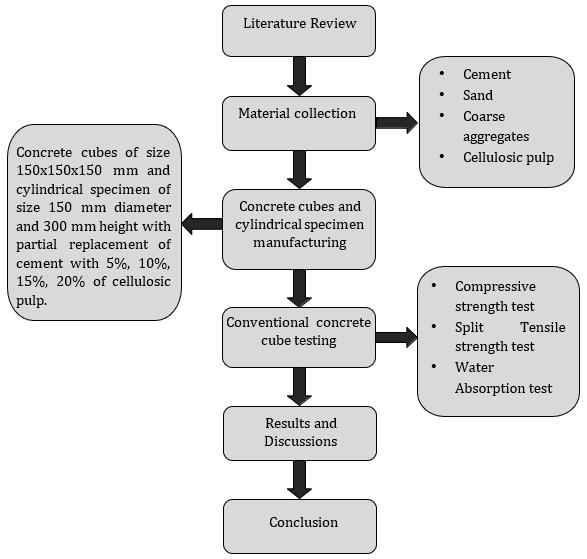
-1:Flowchartofprocessofproject
Concretecubesandcylindricalspecimenswereprepared by using mix design of M20 grade of concrete and after measuringthematerialaccuratelybyweight.Thematerials used were cement of OPC 43 grade, sand passing through 4.75mmsieve,coarseaggregateshavingsize10mmto20 mm.Thespecimensmadebypartiallyreplacingthecellulosic pulpwithcementatpercentagesof5%,10%,15%,20%.
Table -4: MixProportion
Placethedryingredients(cement,sand,coarseaggregate and cellulosic pulp) in a mixing container. Mix the dry ingredientsthoroughlytoachieveauniformdistribution.Add themeasuredquantityofwatergraduallywhilecontinuously mixinguntilahomogenousandworkablemixisobtained. FinenessModulus
International Research Journal of Engineering and Technology (IRJET) e-ISSN: 2395-0056
Volume: 12 Issue: 05 | May 2025 www.irjet.net p-ISSN: 2395-0072
4.1.3 Casting
• Mouldpreparation
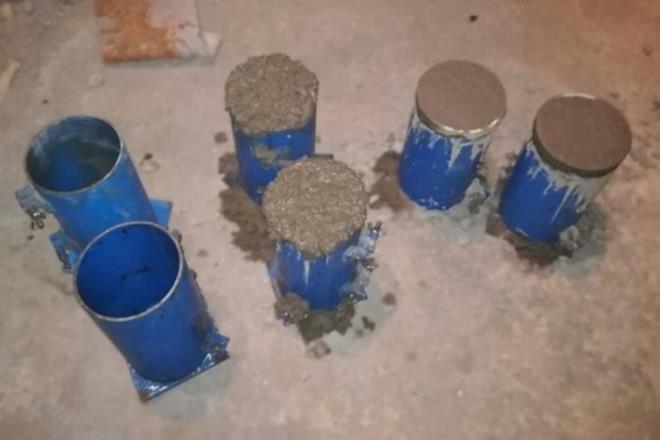
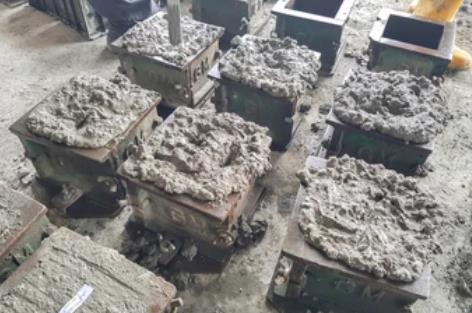
Usestandardsteelorwoodenmouldsofsize150*150*150 mmand150mmdiameterand300mmheight.Applyathin, even layer of mould release agent (such as mineral oil or grease) inside the moulds to prevent the concrete from sticking.
• FillingtheMoulds&Compaction
Positionthemouldsonastable,evensurface,ensuringitis freefromvibrations.Pourthefreshlymixedconcreteintothe moulds,thenuseastandard16mmdiametertampingrodto compact the mixture by tamping it 25 times for even distribution.Smooththetopsurfacewithastraightedgeor troweltoeliminateexcessconcrete.
4.1.4 Curing
• InitialCuring
Coverthefilledmouldsimmediatelywithadampclothto preventmoisturelossfromthesurface.Storethemouldsina controlledenvironmentwithatemperatureof23±2°Cfor24 hours.
• DemouldingandFinalCuring
After24hours,carefullydemouldtheconcreteblocksby loosening the sides of the moulds and gently lifting the
blocks.Submergethedemouldedconcreteblocksinacuring tanktoensureproperhydrationandstrengthdevelopment.
Concrete cubes of size 150*150*150 mm with cement partiallyreplacedwithcellulosicpulpincertainratioswere preparedandtestedforthefollowing:
4.2.1 Compressive strength test
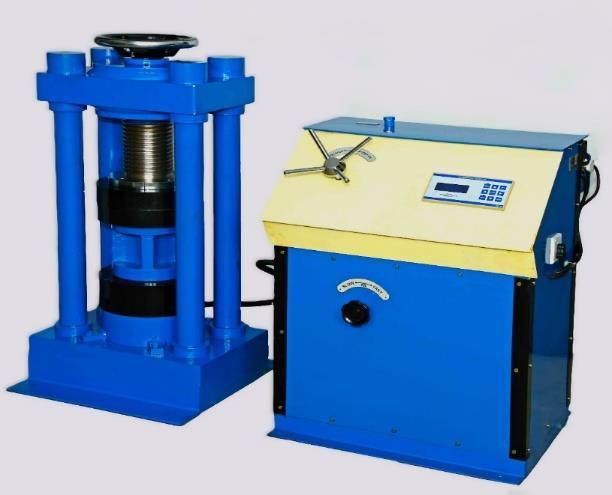
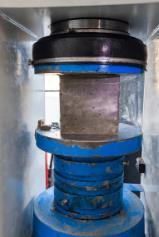
• Thecompressivestrengthtestisconductedtoassessthe crushingresistanceofconcretecubes.
• The cube specimens are positioned in a compressive strengthtestingmachine,andtheloadisgraduallyapplied.
• The maximum load applied to the specimens is to be recordedandtheappearanceofthespecimencubeandany unusualfeaturesinthetypeoffailureisnoted.
Compressivestrength= =

4.2.2
Concrete cylinders of size 150 mm diameter & 300 mm heightwerecastedandtestedforthesplittensilestrength test.
International Research Journal of Engineering and Technology (IRJET) e-ISSN: 2395-0056
Volume: 12 Issue: 05 | May 2025 www.irjet.net p-ISSN: 2395-0072
•Concretecylinderswereremovedfromthemouldafter24 hours and submerged in curing tank for 28 days to cure properly.
• After curing, cylinder specimens were taken out and let themdriedandcleanoffanysurfacemoisture.
• The cylindrical specimens were placed in compressive strengthtestingmachineandtheloadistobeapplied.
• The maximum load applied to the specimens is to be recordedwhenthespecimencylindergetssplits.
Splittensilestrength= where,

Pismaximumloadatfailure, Lislengthofcylindricalspecimen, Disdiameterofcylindricalspecimen.
4.2.3 Water absorption test
•Inthistest,thespecimensareweighedintheirdrystate beforebeingsubmergedinfreshwaterfor24hours
• After the immersion period, they are removed from the water, wiped dry with a cloth, and weighed in their wet condition.
• The variation in weight indicates the quantity of water absorbed by the specimen cubes, which is then used to computethepercentageofwaterabsorption.
•Lowerwaterabsorptionbythespecimensignifiesbetter concretequality

Waterabsorption(%)= x100 where,
W1=Weightofdryconcretecube(gm)
W2=Weightofwetconcretecube(gm)
5. RESULTS
5.1Compressive strength test
5.1.1 Compressive strength of cubes at 7 days
Table -5: Compressivestrengthofcubesat7days
Chart -2:Compressivestrengthofcubeat7days
Chart -3:Comparisonofaveragecompressivestrengthof variousproportionsat7days
5.1.2 Compressive strength of cubes at 28 days
Table -6: Compressivestrengthofcubesat28days
International Research Journal of Engineering and Technology (IRJET) e-ISSN: 2395-0056
Volume: 12 Issue: 05 | May 2025 www.irjet.net p-ISSN: 2395-0072
Chart -4:Compressivestrengthofcubeat28days
Chart -6:Comparisonofsplittensilestrengthof cylindricalspecimenvariousproportionsat28days
5.3 Water absorption test
5.3.1 Water absorption test on cube specimen
Table -8: Waterabsorptiontestoncubespecimen

Chart -5:Comparisonofaveragecompressivestrengthof variousproportionsat28days
5.2 Split tensile strength test
5.2.1 Split tensile strength on cylindrical specimen
Table -7: Splittensilestrengthoncylindricalspecimen
Chart -7:ComparisonofWaterabsorptionofcube specimenofvariousproportionsat28days
The concrete cubes and cylindrical specimens were prepared while partially replacing cement with cellulosic pulpatvariouspercentagebyweight(0%,5%,10%,15%, 20%).Various tests were conducted on these cubes and cylindersandthefollowingresultswereobserved.
International Research Journal of Engineering and Technology (IRJET) e-ISSN: 2395-0056
Volume: 12 Issue: 05 | May 2025 www.irjet.net p-ISSN: 2395-0072
6.1.1
• Thecompressivestrengthofthespecimensvariedwith thepercentageoftheaddedvariable.
• The 0% specimen showed strong and consistent compressive strength at 19.11 N/mm², while the 5% specimenhadaslightlylowerstrengthat19.06N/mm².
• The 10% specimen exhibited the highest compressive strengthat19.43N/mm².
• Conversely, the 15% and 20% specimens showed significant reductions in compressive strength at 17.10 N/mm²and13.46N/mm²respectively.
• The0%specimenservesasthebaselineforcomparing other specimens which is 28.66 N/mm2, and even small additions5%enhancethematerial'sstrengthwhichshows 28.77 N/mm2 , although not as significantly as the 10% addition.
• Thehighestaveragecompressivestrengthisobservedin the10%specimen,whichhasanaverageof29.18N/mm².
• However,asthepercentageofthevariableincreasesto 15%and20%,theaveragecompressivestrengthdecreases significantlyto25.68N/mm²and20.21N/mm²respectively.
• The0%Specimenexhibitedbaselinesplittensilestrength of2.80N/mm²andservesasareferenceforcomparingother specimens.
• A small addition (5% cellulosic pulp) enhances the material'sstrength.Splittensilestrengthimprovedto2.93 N/mm².
• The 10% Specimen achieved the highest split tensile strength of 3.12 N/mm². It suggests that a 10% mix ratio proportionisoptimalforenhancingstrength.
• Theresultsof15%and20%specimensare2.72N/mm² and2.48N/mm²respectively,whichindicates thatadding morethan10%negativelyimpactsthetensilestrength.
• Thehigherproportionsbeyond10%leadtoadeclinein tensilestrength.
• Theresultsindicatethatasthepercentageofthevariable in the specimen increases, the dry weight of the cube decreases.
• The amount of water absorbed by the specimens increases with the percentage, which means higher percentagespecimenstendtoabsorbmorewater.
• Thepercentageofwaterabsorbedshowsanincreasing trendfrom1.15%forthe0%specimento1.75%forthe20% specimen.
• Thissuggeststhatthematerialcompositionorstructure ofthespecimenswithhigherpercentagesallowsforgreater wateruptake,duetochangesinthematerial'spropertiesthat facilitatewaterabsorption.
Fromtheexperimentalinvestigationonconcretecubesand cylinderscreatedwithpartialreplacementofcellulosicpulp withcement,itcanbeconcludedthat,
• The 10% specimen shows the highest compressive strengthat19.43N/mm²,indicating optimal performance. The15%and20%specimensexhibitsignificantreductionsin compressive strength, suggesting that higher percentages weakenthematerial
• The10%mixratioproportionprovidesthehighestsplit tensilestrength,buthigherproportionsbeyond10%leadtoa declineintensilestrength.
• Thepercentageofwaterabsorbedshowsanincreasing trendfrom1.15%forthe0%specimento1.75%forthe20% specimen. This suggests that the material composition or structureofthespecimenswithhigherpercentagesallowsfor greaterwateruptake.
• Higherpercentagesofthevariableappeartonegatively impact the material's performance,likely due to increased porosity or other structural changes that weaken the material.
• The combined impact of cellulosic pulp of waste paper and cement can be analyzed under harsh environmental conditions.
• Theroleofadmixturesalongsidecellulosicpulpofwaste papercanbeexploredtounderstandtheireffects.
• Theuseofcellulosicpulpofwastepapercanbestudiedto meet durability needs, such as resistance to freeze-thaw cyclesandinitialsurfacewaterabsorption.
1) P Bhargavi, S Kavitha Karthikeyan, G Sneha, A Vinothini (2016) “Experimental Investigation on Usageof WastePaperSludge(WPS)inConcreteMaking”
2) Jil Tushar Sheth, Saransh Joshi(2011) “PaperCrete:A SustainableBuildingMaterial”
3) Prof. Jayesh Kumar Pitroda, Dr. L.B.Zala, Dr .F .S. Umrigar (2013)“UtilizationofHypoSludgebyEco-Efficient DevelopmentofRigidPavementinRuralRoads”
4) P.Packialakshmi,R.AashaJyothi (2016)“Experimental InvestigationonConcreteUsingHypoSludgeandWoodAsh”
5) Lenin Sundar M, Jeeva D and M Vadivel (2016) “ FlexuralBehaviorofConcreteUsingWastePaperSludgeAsh”
International Research Journal of Engineering and Technology (IRJET) e-ISSN: 2395-0056
Volume: 12 Issue: 05 | May 2025 www.irjet.net p-ISSN: 2395-0072
6) Anil Kumar, Devika (2016)“Performanceofconcrete usingpapersludgeashandfoundrysand”
7) IS:456-2000,IndianStandardCodeofPractice-Plainand reinforcedconcrete,BureauofIndianStandards(BIS),New Delhi,India
8) IS: 383-1970, Specifications for Coarse and Fine Aggregates from Natural Sources for Concrete, Bureau of IndianStandards(BIS),NewDelhi,India.
9) IS: 10262-2009,RecommendedGuidelinesforConcrete Mix Design, Bureau of Indian Standards (BIS), New Delhi, India.
10) IS:516-1959,IndianStandardCodeofPractice-Methods ofTestforStrengthofconcrete,BureauofIndianStandards (BIS),NewDelhi,India.
11) IS: 8112-1989, Specifications for 43-Grade Portland cement,BureauofIndianStandards,NewDelhi,India.
12) IS:5816-1999,MethodofTestSplittingTensileStrength ofConcrete[CED2:CementandConcrete],BureauofIndian Standards,NewDelhi,India.