
International Research Journal of Engineering and Technology (IRJET) e-ISSN: 2395-0056
Volume: 13 Issue: 03 | Mar 2026 www.irjet.net p-ISSN: 2395-0072

International Research Journal of Engineering and Technology (IRJET) e-ISSN: 2395-0056
Volume: 13 Issue: 03 | Mar 2026 www.irjet.net p-ISSN: 2395-0072
Mrs. Ananya Gawari¹, Rushikesh Gaikwad², Shubham Ghugarkar³, Dipendra Baghel´
¹Assistant Professor, Dept. of Electronics & Telecommunication Engineering, P.E.S’s Modern College of Engineering, Pune, Maharashtra, India ²³´ Student, Dept. of Electronics & Telecommunication Engineering, P.E.S’s Modern College of Engineering, Pune, Maharashtra, India ***
Abstract - Increasing amounts of organic waste originatingfromboth agricultural operations anddomestic sources have emerged as a serious environmental issue in recent decades. When such waste is mismanaged through practices like unregulated dumping or open-air incineration, the resulting release of toxic pollutants and greenhouse gases inflicts considerable damage on surrounding ecosystems [10, 16]. Traditional composting methods are further limited by their inherently slow processing timelines and their inability to reliably govern critical important parameters including thermal conditions,hydrationlevels,andoxygensupply leadingto erratic decomposition outcomes and inconsistent compost qualityacrossbatches[11,17].
In response to these documented limitations, this study presents COMPOSTCRAFT, an IoT-integrated, automated multi-chamber composting system engineered to elevate process efficiency while ensuring hygienic handling and operational consistency. At its core, the system employs an ESP32 microcontroller interfaced with an array of temperature, humidity, and gas-sensing modules that together enable uninterrupted, real-time monitoring throughout the decomposition cycle [5, 12]. This design philosophy aligns with a growing body of evidence indicating that the coupling of intelligent monitoring frameworks with IoT infrastructure yields measurable improvements in composting reliability and output quality [11,15].
The system design of COMPOSTCRAFT includes twofunctionally distinct processing chambers. The primary chamber is dedicated to the thermophilic decomposition phase, during which microbial activity peaks and active breakdown of organic material takes place. The secondary chamber, bycontrast,helps post-decompositioncoolingand material stabilization. The dual-chamber configuration draws upon foundational principles well-established within the domain of embedded automated composting technologies [17, 19], endowing the system with the capacitytoautomaticallygovernenvironmentconditions in a manner that perpetuates optimal microbial conditions across the entirety of the processing cycle. Through the
concurrent maintenance of thermophilic temperature ranges and the precise orchestration of aeration delivery, COMPOSTCRAFTachievesa meaningfulcondensationofthe overallcompostingtimeline toapproximately15 to 20 days representing a significant improvement in processing speed relative to what Traditional composting methods are capableofdelivering.
By sustaining thermophilic temperature ranges and implementing precise aeration control, COMPOSTCRAFT is capableofcompressingtheoverallcompostingtimelinetoa range of approximately 15 to 20 days a significant reduction compared to traditional methods. This finding is consistent with prior sensor-assisted composting research, which has established that environmental parameter regulation meaningfully accelerates organic decomposition rates [11, 18]. Beyond system efficiency, the system's embedded IoT connectivity infrastructure supports remote oversight, continuous data visualization, and end-to-end process transparency [15]. Together, these capabilities positionCOMPOSTCRAFTasaviableandadaptablesolution for decentralized, sustainable organic waste management atscale[20].
Smart composting using IoT, automated organic waste processing, dual-chamber composting unit, ESP32based controller, environmental parameter monitoring, and sustainable farming practices.
The imperative to effectively manage organic waste has grown increasingly urgent against a backdrop of rapid urban expansion, mounting population pressures, and intensifying agricultural productivity demands. Biodegradable materials originating from household, farming,andfood-processingoperationsareaccumulating at trajectories that progressively overwhelm established waste handling infrastructures while simultaneously generatingfar-reaching environmentalconsequences.The continued reliance on unregulated disposal pathways encompassing indiscriminate waste dumping and unsupervised decomposition perpetuates ecological harm
International Research Journal of Engineering and Technology (IRJET) e-ISSN: 2395-0056
Volume: 13 Issue: 03 | Mar 2026 www.irjet.net p-ISSN: 2395-0072
while forfeiting what represents a considerable opportunity for the recovery and productive reuse of valuableorganicresources.Thesecompoundingpressures underscorethecriticalimportanceoftransitioningtoward environmentally responsible waste management strategies [20]. Adding to this complexity, conventional compostingmethodsfrequentlyoperatewithoutadequate monitoring or process control, diminishing their overall effectiveness and amplifying their ecological footprint [11].
Widely practiced traditional techniques such as heap and open-pit composting are inherently constrained by sluggish decomposition rates and unpredictable variation in compost output quality. The root cause of these shortcomings lies in the inconsistent maintenance of essential environmental variables namely thermal conditions, aeration, and moisture levels throughout the composting cycle [11]. These methods depend disproportionatelyon manual inspectionandintermittent material turning, rendering them both labor – Intensive and operationally inefficient. When environment conditions fluctuate beyond acceptable thresholds, microbial communities become disrupted, stabilization timelines extend, and malodorous by-products frequently emergeduringactivedecompositionphases[17].
Growing recognition of these systemic shortcomings has prompted researchers to pivot decisively toward automated composting architectures enhanced through Internet of Things (IoT) integration as a viable route to strengthened process oversight and elevated operational productivity [4, 12]. These intelligent platforms harness the combined capabilities of embedded microcontrollers and spatially distributed sensor networks to perform uninterrupted acquisition of environmentally critical measurements spanning thermal conditions, relative humidity levels, and the concentration of gaseous emissionsthroughoutthedecompositionenvironment.
Complementing these technological advances, multichamber composting architectures have demonstrated considerable promise as a design strategy for optimizing decomposition outcomes. By physically partitioning the active decomposition stage from the subsequent curing and stabilization phase into dedicated compartments, thesesystemsaffordfar greaterregulatoryprecisionover each individual process stage, ultimately enhancing compost maturity and preserving nutrient content [17].
Central to high-performance composting is the thermophilicphase,during whichsustainedtemperatures within the 40°C to 65°C range not only accelerate microbial breakdown of organic substrates but also serve as an effective mechanism for pathogen elimination [3].
Continuous thermal and humidity monitoring within this phase is equally vital, as it sustains consistent microbial
performance while curbing nitrogen volatilization and limitinggreenhousegasoutput[12,18].
Synthesizing these mutually reinforcing streams of evidence, an automated, sensor-embedded, multi-stage composting platform of the caliber represented by COMPOSTCRAFT constitutes both a technically rigorous andenvironmentallypersuasiveresponsetothechallenge of organic waste processing at meaningful scale. The deliberate unification of continuous environmental sensing capabilities, a structurally differentiated dualchamber decomposition framework, and IoT-facilitated remoteconnectivityinfrastructuretogetherempowersthe system to deliver tightly governed decomposition dynamics, consistently reproducible compost output, and a demonstrably reduced ecological burden across its full operational lifecycle. Such engineered innovations advance the broader agenda of sustainable waste management and reinforce the growing momentum toward decentralized, community-level environmental stewardship[20].
A substantial body of research has examined the design and deployment of automated, IoT-supported composting technologies with the dual objective of maximizing process efficiency and minimizing adverse environmental outcomes. Systems that combine embedded microcontrollers with wireless sensor networks have demonstrated enhanced capacity for governing critical composting parameters particularly temperature and humidity thereby sustaining stable decomposition conditions across the full processing cycle [11, 12]. When evaluated against open composting practices, in-vessel configurations offer measurable advantages in thermal retention and odour containment, both of which contribute to accelerated organic breakdown and greater consistencyinfinalcompostquality[20].
The convergence of IoT infrastructure with capable microcontroller platforms most notably the ESP32 hasgivenrisetointelligentcompostingunitsthatsupport continuous real-time parameter tracking alongside cloudbased data archiving. These systems afford operators the ability to remotely observe environmental conditions and maintain comprehensive process records, thereby strengthening operational transparency and elevating overall compost output quality [5, 15]. Equally significant is the contribution of multi-compartment composting architectures, which structurally distinguish between the active decomposition phase and the subsequent curing stage.Thisdeliberatephysicalseparationhasbeenshown to accelerate overall cycle duration while simultaneously enhancing the stability and nutritional integrity of the resultingcompostmaterial[17,19].
International Research Journal of Engineering and Technology (IRJET) e-ISSN: 2395-0056
Volume: 13 Issue: 03 | Mar 2026 www.irjet.net p-ISSN: 2395-0072
Beyond temperature and moisture regulation, the continuous tracking of gaseous emissions represents an essential dimension of effective composting management. Activemonitoringofgasessuchasmethaneandammonia plays a pivotal role in preserving aerobic decomposition conditions and preventing the buildup of compounds that compromise both process performance and environmental safety [10]. Taken together, these converging technological developments reinforce the rationaleforengineeringautomated,sensor-driven,multistage composting platforms such as COMPOSTCRAFT as robust and scalable responses to the growing demandsoforganicwastemanagement.
The COMPOSTCRAFT system adopts a dual-chamber designphilosophytooptimizeoperationalthroughputand enable precise, stage-specific control over the composting process [17]. The first of these chambers functions as the primary processing unit, where incoming organic waste undergoes initial blending and thermal treatment. Within this chamber, thermophilic conditions are actively sustained across a temperature band of 40–65 °C a range empirically established as conducive to vigorous microbial proliferation and effective pathogen neutralization in organic substrates [3], [12]. Sustaining this critical thermal window carries profound operational importance, given that thermophilic microbial consortia possess a distinctive enzymatic capacity to drive accelerated degradation of biodegradable organic constituents, consequently achieving a marked compressionofthetotalcompostingduration.
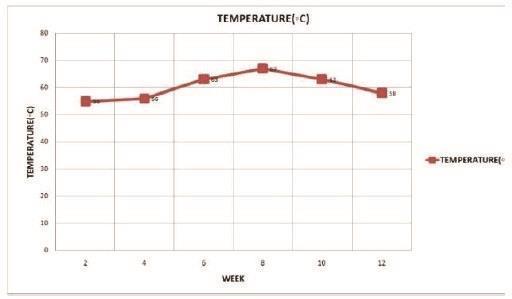
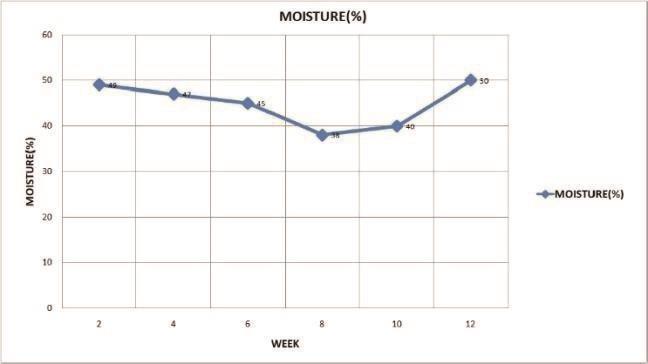
TABLE I: Experimentalobservationsoftemperature, moisturecontent,andcarbon-to-nitrogen(C/N)ratio recordedthroughoutthecompostingcycle.
Embedded within the first chamber are purposeengineered automated mixing assemblies and precisely regulatedaerationmechanisms,bothconfiguredtodeliver spatially uniform heat propagation and uninterrupted oxygen replenishment across the full extent of the compost mass These integrated components actively sustainaerobicmicrobialconditionswhilesimultaneously suppressing the generation of environmentally hazardous gases, including methane and ammonia [10]. The continuousagitationofcompostmaterialfurtherprevents the emergence of thermally deficient zones and promotes homogeneous decomposition across the entire substrate volume. The second chamber, by contrast, is exclusively allocated to the cooling and stabilization phase, wherein partially decomposed organic material undergoes structured curing alongside progressive moisture reduction processes that together advance compost maturity and optimize its final nutrient profile [17]. The deliberate architectural separation of active decompositionfrompost-processingstabilizationnotonly elevates overall system efficiency but also enables uninterrupted, continuous operation without necessitatingcyclicshutdowns[19].
At the core of the system's computational intelligence residesanESP32microcontroller,whichassumestherole of the principal processing node responsible for continuously ingesting live data streams from a strategicallydeployedarrayoftemperature,moisture,and gassensors distributedacrossbothcompostingchambers [5]. Drawing upon this uninterrupted flow of sensorgenerated feedback, the microcontroller automatically orchestrates a coordinated ensemble of actuators comprising heating pads, ventilation fans, mixing motors, and water pumps via relay-switched control circuits, therebyconstitutinga resilientandself-correctingclosedloop environmental regulation framework. This architectureensuresthatenvironmentalconditionswithin the system remain within optimal bounds across every phase of the composting cycle. Complementing this embedded control layer, IoT connectivity provisions facilitate remote system oversight, live parameter visualization, and web-accessible dashboards, empowering users to track composting progress irrespective of their physical location [15]. The seamless convergence of distributed sensor networks, embedded computational control, and IoT communication protocols yields a dependable and readily scalable composting platform well-suited to decentralized organic waste processing across residential, agricultural, and institutionaldeploymentcontexts.
International Research Journal of Engineering and Technology (IRJET) e-ISSN: 2395-0056
Volume: 13 Issue: 03 | Mar 2026 www.irjet.net p-ISSN: 2395-0072
3. Hardware and Software Design
3.1 Hardware Design
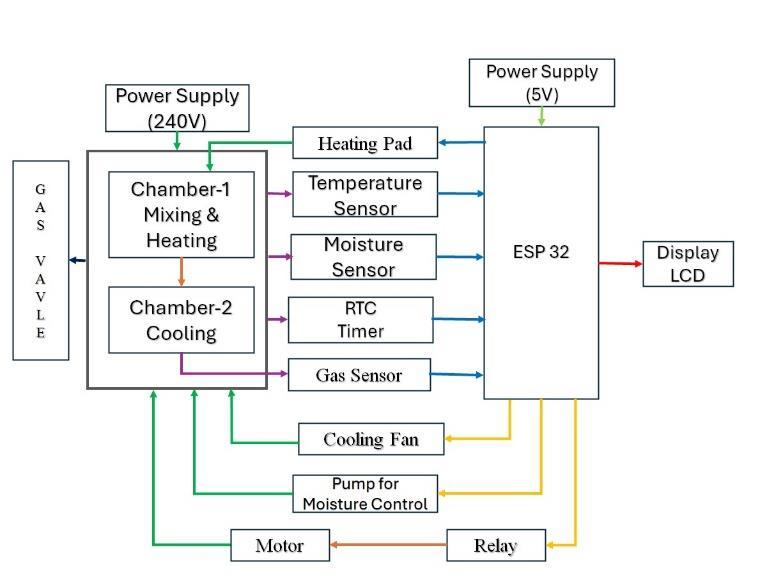
Thehardwareframeworkunderpinningthe OMPOSTCRAFT systemhasbeendeliberatelyengineeredtodeliverprecise environmental sensing and autonomous regulation of all
critical composting variables. Serving as the architectural cornerstone of this framework is the ESP32 microcontroller, a versatile platform that consolidates processing power, integrated Wi-Fi communication, and real-timecontrolexecutionwithinasingleembeddedunit [5]. All incoming sensor data converges at this central node, where threshold-based decision logic drives appropriate control responses across the system's actuatornetwork.
Thermal quantification is executed through strategically positioned DS18B20 digital temperature sensors, which deliver high-fidelity temperature measurements fundamentaltopreservingthermophilicconditionswithin the operationally indispensable 40–65 °C band. Undeviating adherence to this thermal envelope is nonnegotiable, as it simultaneously drives accelerated microbial catabolism of organic constituents and ensures reliable inactivation of pathogenic organisms harbored withinthecompostsubstrate.Functioninginparallelwith the thermal sensing infrastructure, a dedicated moisture evaluation module performs continuous assessment of substrate water content, maintaining hydration parameters within the empirically validated 35–45% range that underpins sustained and productive aerobic microbialecosystemfunction.
Gaseous compound detection is entrusted to the MQ-135 sensor array, which provides continuous surveillance for harmful volatile emissions principally ammonia and methane[2].Activegasmonitoringfulfillsadualfunction: preserving aerobic decomposition conditions and curtailing both malodorous outputs and greenhouse gas release into the surrounding environment. The actuation subsystem comprises four principal components a heating pad for thermal regulation, a mixing motor for ensuring compositional uniformity during decomposition, a coolingfanfor managedaeration,anda water pump for precisionmoisturedelivery.Eachactuatoroperatesunder relay-switched control signals issued directly by the ESP32, together enabling a fully automated and responsive environmental management capability throughoutthecompostingcycle

International Research Journal of Engineering and Technology (IRJET) e-ISSN: 2395-0056
Volume: 13 Issue: 03 | Mar 2026 www.irjet.net p-ISSN: 2395-0072
The software environment for COMPOSTCRAFT is built upon the Arduino IDE, selected for its adaptability and computationalefficiencyasaprogrammingframeworkfor ESP32-based embedded systems. Governing the system's operational behavior is a closed-loop feedback architecture, wherein continuously acquired sensor measurements directly inform and trigger actuator responsesinanongoing,dynamiccycle.
System execution is initiated upon the loading of organic waste into the primary processing chamber, after which sensor modules dedicated to temperature, moisture, and gaseous emissions commence uninterrupted data acquisition. Each incoming real-time measurement is evaluated against a set of predefined threshold parameters to ascertain whether environmental conditions have deviated beyond acceptable bounds and whether corrective intervention is warranted. When deviations are identified, the decision logic engine activatestheappropriateactuator whether theheating pad, cooling fan, mixing motor, or water pump to restoreconditionstotheiroptimaloperatingrange.
Parallel to this control layer, an IoT-enabled monitoring dashboard provides continuous visualization of composting parameters and overall system status. Sensor data is transmitted wirelessly via the ESP32's integrated Wi-Fi module to a dedicated web interface, where it is logged, analyzed, and made accessible for remote supervisory review [15]. The system further includes an automated alert mechanism that triggers notifications whenevermonitoredparametersbreachpredefinedsafety thresholds. Stage transition management is also embeddedwithinthesoftwarelogic,enablingautonomous migration of compost material from the thermophilic decompositionphasetothecuringandstabilizationphase uponcompletionofthedesignatedprocessinginterval.
This tightly coupled hardware–software integration together delivers a system characterized by precisely governeddecompositionconditions,substantiallyreduced dependence on manual oversight, optimized energy consumption, and reliably reproducible compost output quality.
The operational performance of COMPOSTCRAFT an IoT-Based Automated Multi-Chamber Composting Unit was evaluated through sustained experimental observation conducted across a diverse range of organic waste inputs, encompassing vegetable peels, cooked food residues, fruit scraps, and agricultural by-products. Evaluative criteria encompassed a broad and rigorously defined set of performance benchmarks, incorporating total cycle duration, stability and repeatability of thermal and hydration conditions, proficiency of odor mitigation
mechanisms, extent of compost maturation attained, characteristic energy utilization patterns, and aggregate system robustness under sustained operation. Spanning the full duration of the experimental period, sensorderived measurements were harvested without interruption through the IoT monitoring dashboard, providing the structured empirical foundation necessary for methodical performance appraisal and supporting the progressive calibration of operational parameters throughoutconsecutivecompostingruns.
A principal objective underlying the development of the proposed system was the substantial compression of composting timelines relative to conventional approaches such as open windrow or pit composting which characteristically demand several weeks to several months before complete organic breakdown and material stabilization are achieved. Experimental findings confirmed that COMPOSTCRAFT successfully condensed thecompostingcycletoarangeofapproximately15to20 days, with the precise duration varying as a function of organic waste composition and prevailing ambient environmentalconditions.
This marked acceleration in processing efficiency was attributable to the sustained maintenance of controlled thermophilic temperatures spanning 40–65 °C within Chamber 1. The coordinated action of automated thermal regulation and periodically actuated mechanical agitation intensified microbial metabolic activity while ensuring equitable heat distribution across the full volume of composting substrate. Equally instrumental was the dualchamber system design, which conferred a significant operational advantage by permitting the stabilization and curing stage to proceed concurrently and independently within Chamber 2 a configuration that eliminates processing bottlenecks and enables genuinely continuous compostthroughputwithoutcyclicinterruption.
Among the multitude of variables governing composting performance, thermal conditions and moisture content stand out as the most consequential determinants of microbial decomposition rates and ultimate compost quality. Throughout system operation, a stable thermophilic temperature band of 40–65 °C was reliably sustained within the active processing chamber. Highresolution digital measurements delivered by the DS18B20 temperature sensor provided the ESP32 controller with the precise input data required to automatically modulate both the heating pad and cooling fanindirectresponsetoevolvingreal-timeconditions.
International Research Journal of Engineering and Technology (IRJET) e-ISSN: 2395-0056
Volume: 13 Issue: 03 | Mar 2026 www.irjet.net p-ISSN: 2395-0072
Concurrently, substrate moisture content was maintained with precision within the 35–45% band a hydration envelope empirically validated as conducive to sustaining vigorousaerobicmicrobialproliferationthroughoutactive decomposition. Persistent moisture surveillance effectively precluded both excessive substrate desiccation and oversaturation, either extreme of which carries significant capacity to undermine decomposition kinetics and overall process performance. Whenever sensed moisturevalues descended beneath the established lower boundary, the automated water pump responded instantaneously to restore adequate hydration and reestablish biochemically favorable substrate conditions. The compounding operational dividends of this closedloop hydration management architecture were considerable: microbial metabolic throughput was meaningfully reinforced, the nucleation of oxygendepleted anaerobic microenvironments within the compost matrix was effectively suppressed, and spatially homogeneous decomposition progression was sustained acrossthefullextentofthesubstratevolume.
The unrelenting deployment of continuous real-time monitoring across both of these foundational process parameterstogetherproducedadramaticreductioninthe frequency and extent of manual corrective intervention, whilesimultaneouslysafeguardingstableandconsistently optimal physicochemical conditions throughout every stageofthecompostingcycle.
Odorproliferationandpestattractionrepresentpersistent operationalchallengesinconventionalcompostingsetups, particularly when deployed within urban settings or enclosed indoor environments. The COMPOSTCRAFT system addresses these concerns through its fully encloseddual-chamberstructure,which inconjunction withpreciselymanagedaerationcontrol provedhighly effectiveincurtailingtheescapeofmalodorous emissions duringactivedecomposition.
Continuous surveillance of internal gaseous conditions was performed by the MQ-135 sensor, which tracked the accumulation of volatile compounds principally ammoniaandmethane withinthecompostingchamber environment. Upon detection of gas concentrations surpassing established safety thresholds, the system automatically triggered ventilation actuators to restore aerobic conditions within the compost mass. By proactively preventing the onset of anaerobic microenvironments, the system achieved a marked suppression of methane generation and maintained ammonia concentrations within acceptable operational limits.
The practical outcome of this integrated gas management capability was a demonstrably reduced odor profile throughout system operation, alongside the effective eliminationofenvironmentalconditionsconducivetopest colonization. These characteristics together render COMPOSTCRAFT well-suited for deployment across a broad spectrum of settings including residential households, institutional facilities, and community composting initiatives where adherence to hygiene standards and environmental safety obligations is nonnegotiable.
The physicochemical quality of the compost produced by COMPOSTCRAFT was assessed through systematic evaluation of visual and structural attributes, encompassing coloration, texture, appearance, and compositionaluniformity.Theresultingmaterialexhibited a characteristicallydark browntoblack hue,a friableand loosely granular texture, and a complete absence of offensive odor all widely recognized indicators of thorough organic decomposition and successful material stabilization. Uninterrupted mechanical agitation sustained across the thermophilic processing phase guaranteed equitable propagation of thermal energy throughout the entire compost volume, simultaneously forestalling the emergence of temperature-deficient localizedzones astructuralweaknesscharacteristically endemic to static conventional composting configurations where it routinely obstructs spatially consistent organic breakdown. The purpose-dedicated stabilization stage housed within Chamber 2 provided a controlled environment for methodical, progressive thermal dissipation coupled with carefully incremental moisture recalibration complementary processes that operated synergistically to advance the biochemical maturation of the compost material while preserving the integrity and bioavailability of essential plant nutritive compounds withinthefinishedproduct.
The compost yielded by the system demonstrated a nutrient-rich composition rendering it directly applicable across agricultural production, horticultural, and nursery cultivation contexts. Furthermore, the consistency of output characteristics observed across repeated experimental cycles provides compelling evidence of the system's operational reliability and its capacity to deliver reproducibleresults afundamentalprerequisiteforany composting technology intended for practical, large-scale deployment.
Energy consumption characteristics were examined through detailed analysis of actuator duty cycles and aggregate system power draw throughout operational
International Research Journal of Engineering and Technology (IRJET) e-ISSN: 2395-0056
Volume: 13 Issue: 03 | Mar 2026 www.irjet.net p-ISSN: 2395-0072
periods. Findings revealed comparatively modest energy utilization, attributable primarily to the intelligent demand-responsivegovernanceofheatingandventilation components. In contrast to continuously operating configurations, the heating pad activated selectively and exclusively upon detection of internal temperatures receding beneath the lower boundary of the thermophilic operational range, while cooling fans and water pumps engaged intermittently in calibrated response to dynamicallyevolvingreal-timesensorinputs.
This event-driven, condition-contingent actuation philosophy proved highly effective in eliminating redundantenergyconsumption,therebymakingatangible contribution to the long-term sustainability credentials of the overall system. Extending beyond purely energetic considerations, the automated control architecture precipitated a profound reduction in the operational burden associated with continuous human supervisory presence. Once organic feedstock had been introduced into the primary processing chamber, the composting workflow progressed automatically and sequentially through each designated stage, demanding negligible manual engagement or corrective intervention throughout.
The addition of IoT-based monitoring functionality introduced a further dimension of operational value by affording users frictionless remote access to continuously updated temperature, moisture, and gaseous emission readings through an ergonomically designed web-based dashboard interface. The pairing of proactive automated alert notifications with uninterrupted longitudinal data logging substantially reinforced system-wide operational transparency while simultaneously establishing a comprehensive empirical record that underpins rigorous ongoing performance evaluation and helps timely diagnostic investigation when required. Together, the convergence of comprehensive automation with IoT connectivityyieldedasystemdistinguishedbyheightened operational dependability, materially reduced labor demands, and the consistent, repeatable production of high-quality compost output across successive processing cycles.
COMPOSTCRAFT an IoT-Based Automated MultiChamberCompostingUnit hasbeenengineeredwithan emphasis on compactness, scalability, and environmental adaptability, positioning it as a versatile solution across the full spectrum of organic waste generation contexts. The harmonious convergence of its sophisticated automated regulatory framework, structurally differentiated dual-chamber processing architecture, and perpetually active IoT-enabled monitoring infrastructure together endows the system with the operational
versatility necessary for successful deployment across an expansive continuum of applications extending from compact residential installations through to semiindustrial scale organic waste processing facilities. This intrinsic adaptability positions COMPOSTCRAFT as an exceptionally well-matched solution for advancing decentralized organic waste governance models, consequently driving a substantive and progressive diminution of institutional reliance upon large-scale centralizedwastemanagementinfrastructure.
Within residential contexts, a substantial proportion of daily waste streams comprises biodegradable organic materials encompassing vegetable trimmings, fruit remnants, kitchen food scraps, spent tea residues, and small-volume garden cuttings. When these organic fractions are channeled into conventional disposal pathways,theycontributeprogressivelytolandfillvolume expansion, localized odor nuisance, and amplified greenhouse gas liberation into the atmosphere. COMPOSTCRAFT presents a practical, hygienic, and technically robust mechanism for converting household kitchen waste into nutrient-dense compost within a condensedtimeframeofapproximately15to20days.The fullyenclosed dual-chamber structure effectivelycontains odorous emissions and establishes a physical barrier against pest ingress, rendering the system architecturally compatible with indoor installation or balcony-based deployment scenarios. Autonomous regulation of thermal andmoistureconditionssubstantiallydiminishestheneed for frequent manual agitation or supervisory attention, enabling straightforward and confident operation even among users with no prior composting experience. Through the integrated IoT dashboard interface, household occupants can remotely observe the progression of the composting process via continuously updated real-time data visualization. The nutrient-rich compost produced through this process can be productivelyredirectedtowardhomegardenbeds,terrace cultivation plots, and ornamental plant nutrition together fostering a culture of sustainable organic waste recyclingattheindividualhouseholdlevel.
Commercial food service establishments including restaurants, hostels, cafeterias, and community kitchen facilities generate substantial daily volumes of organic waste, comprising vegetable preparation discards, cooked food surplus, and raw ingredient remnants. The efficient management of these waste streams is operationally imperative for upholding sanitation standards and fulfillingapplicableenvironmentalregulatoryobligations.
International Research Journal of Engineering and Technology (IRJET) e-ISSN: 2395-0056
Volume: 13 Issue: 03 | Mar 2026 www.irjet.net p-ISSN: 2395-0072
COMPOSTCRAFT helps on-premises organic waste treatment, directly eliminating the logistical and financial burdens associated with external waste transportation and third-party disposal arrangements. The automated multi-chamber processing architecture accommodates continuous waste infeed without compromising the stability of prevailing composting conditions an operational characteristic of particular relevance in highthroughput waste generation environments. Persistent real-time surveillance of temperature, moisture, and gaseous emission parameters ensures safe system operation and maintains effective odor containment even underconditionsofelevatedorganicwasteinputvolume.
By accomplishing the conversion of organic waste into mature compost within a comparatively abbreviated processing cycle, food service operators and community kitchen managers are positioned to make meaningful contributions to circular economy objectives within their local operational contexts. The resulting compost product carries tangible redistributive value available for supply to proximate agricultural producers or integration into urban farming initiatives effectively transmuting whatwouldotherwiseconstituteadisposalliabilityintoa productive soil enrichment resource of quantifiable agronomicworth.
Agricultural operations yield considerable quantities of organic waste across diverse material categories encompassing harvested crop residues, spoiled or unmarketable produce, fallen foliage, and select animalderived by-products. Prevailing conventional disposal practices,particularlyopen-fieldburningandunregulated waste accumulation, impose well-documented adverse consequences upon soil structural integrity and ambient airquality.
COMPOSTCRAFT furnishes agricultural producers with a precisely governed and operationally efficient mechanism for transforming farm-generated organic waste into highgrade organic fertilizer. The thermophilic decomposition stage catalyzes accelerated organic breakdown while simultaneously executing effective pathogen load reduction, and the dedicated stabilization chamber subsequently advances compost maturity and optimizes thebalanceofplant-availablenutrientswithinthefinished material.
Forsmallholderfarmingoperations,thesystem'scompact physicalconfigurationdeliversanimmediatelydeployable on-site composting capability that progressively diminishes dependence upon externally procured syntheticchemicalfertilizers.Inthecontextoflarger-scale agricultural enterprises, the inherently modular system architecture accommodates operational expansion
through the sequential integration of additional processing units as throughput demands evolve. By systematically redirecting farm-generated organic waste back into the productive agricultural cycle as mature compost, farming systems stand to realize compounding benefits spanning enhanced soil biological health, measurably improved crop yield performance, and a strengthenedcommitmenttoenvironmentallysustainable landmanagementpractices.
Plant nurseries and landscaping operations routinely accumulate substantial volumes of green waste, encompassing pruned vegetation, plant cuttings, shed foliage, and residual soil material. The handling and disposal of these organic by-products frequently impose additionalfinancialburdensonfacilityoperations.
COMPOSTCRAFToffersapracticallycompellingresolution to this challenge by enabling nursery operators to transform accumulated green waste into nutrient-dense compostdirectlyapplicableaspottingmediaamendments, soil conditioners, and plant nutrition supplements. The system's automated environmental regulation sustains consistently stable decomposition conditions, yielding compost of reproducible quality that demonstrably supports vigorous plant development and robust root systemestablishment.
The system's deliberately compact physical footprint permits on-site installation within existing nursery premiseswithoutimposingsignificantspatialdemandson facilitylayout.Continuousonpremisecompostgeneration progressively reduces reliance on commercially procured fertilizers and soil amendments, while simultaneously advancing environmentally conscientious horticultural practices. Furthermore, the integrated IoT monitoring framework ensures dependable, largely autonomous systemoperation with minimal requirementforhands-on supervisory involvement an attribute that translates directly into measurable improvements in system efficiency and meaningful reductions in associated labor expenditure.
COMPOSTCRAFT stands as a persuasive testament to the transformative potential unlocked when IoT technology and industrial process automation are deliberately and thoughtfullyunified elevatingconventionalcomposting from a predominantly manual, output-inconsistent practice into a disciplined, hygienic, and environmentally accountableorganicwastemanagementmethodology.The unrelenting real-time surveillance of mission-critical environment conditions, operating in concert with a selfcorrecting closed-loop automated control architecture,
International Research Journal of Engineering and Technology (IRJET) e-ISSN: 2395-0056
Volume: 13 Issue: 03 | Mar 2026 www.irjet.net p-ISSN: 2395-0072
together guarantees the uninterrupted preservation of stable operational conditions across every discrete phase ofthecomposting workflow.Thedual-chamberstructural design confers a distinctly pronounced performance dividendthroughitsdeliberatephysicalsegregationofthe thermophilic decomposition stage from the ensuing stabilization phase a configuration that amplifies microbial metabolic intensity and dependably helps the generation of fully matured compost output within a substantially abbreviated processing window of approximately15to20days.
The autonomous, sensor-driven regulation of temperature, moisture, and aeration parameters perpetually sustains the exacting physicochemical conditions upon which productive aerobic microbial ecosystem function critically depends, while concurrently intercepting and correcting parameter excursions that would otherwise progressively erode composting process efficiency and compromise final product quality. The deployment of gas detection sensors in conjunction with controlledventilationactuationsubstantiallycurtailsodor generation and proactively suppresses the emergence of anaerobic microenvironments enhancements that elevate environmental safety and extend the system's viability to indoor and enclosed deployment scenarios. ContinuoussensordataacquisitionintegratedwithanIoTpowered monitoring dashboard further strengthens operational transparency, system dependability, and output consistency even when processing organically heterogeneouswastestreams.
Transcending purely process-oriented performance metrics, the system manifests noteworthy energy efficiency credentials through its event-responsive, condition-contingent actuator governance strategy an approach that systematically excises redundant power consumption while providing a durable foundation for environmentally responsible long-term operation. The modular and intrinsically scalable system architecture demonstrates remarkable deployment versatility, accommodating implementation across a heterogeneous range of operational environments from private residential households and commercial food service establishments through to agricultural production enterprisesandcommunity-scalecompostinginstallations without necessitating fundamental architectural reconfiguration.
Assessed from a holistic systems perspective, COMPOSTCRAFT meaningfully advances the overarching imperative of decentralized organic waste stewardship, progressively erodes institutional dependency upon landfill-baseddisposalinfrastructure,andactivelyenables the generation of nutrient-dense organic fertilizer as a tangible,recoverablematerialresource.Inachievingthese outcomes, the system gives concrete operational
expression to circular economy principles by forging a productive closed loop between organic waste generation streams and agricultural input supply chains, while sustainingaverifiablydiminishedenvironmentalfootprint acrosstheentiretyofitsoperationallifecycle.
[1] A. M. Anbarasi, M. Dhanalakshmi, and M. Mohan, “Smart Multi-Crop Irrigation System Using IoT,” International Journal of Innovative Research in Electrical, Electronics,InstrumentationandControlEngineering,vol. 10,no.4,pp.1–6,2023.
[2] P. Gopinath and R. Dhanalakshmi, “IoT-Based Organic Waste Composting System Using Smart Sensors,” International Journal of Science and Research (IJSR), vol. 12,no.7,pp.132–137,2023.
[3] M. A. Rahman, S. Hossain, and M. K. Hasan, “Temperature and Humidity Control for Accelerated Composting of Organic Waste,” IEEE Transactions on EnvironmentalEngineering,vol.10,no.3,pp.45–52,2022.
[4] S. B. Kamat and T. P. Deshmukh, “Design and Development of IoT-Based Waste Management and Compost Monitoring System,” International Research Journal of Engineering and Technology (IRJET), vol. 9, no. 11,pp.1565–1572,2022.
[5] P. S. Chavan, “IoT-Based Biodegradable Waste Converter Using ESP32,” International Journal of Advanced Research in Electrical, Electronics and Instrumentation Engineering, vol. 11, no. 9, pp. 895–902, 2022.
[6] W. C. Liu et al., “Image-Based Recognition and Processing System for Monitoring Water Levels in an Irrigation and Drainage Channel,” Paddy and Water Environment,vol.21,pp.417–431,2023.
[7] Y. Chikamoto et al., “Design and Implementation of a Video-Frame Localization System for a Drifting CameraBased Sewer Inspection System,” Sensors, vol. 23, p. 793, 2023.
[8] P. Roosipuu et al., “Monitoring and Control of Smart Urban Drainage Systems Using NB-IoT Cellular Sensor Networks,” Water Science and Technology, vol. 88, no. 2, pp.339–354,2023.
[9] A. A. Shirgaonkar et al., “Raspberry Pi and IoT Based Data Acquisition and Real-Time Remote Data Monitoring System,” International Journal for Research in Applied Science and Engineering Technology (IJRASET), vol. 11, no.3,pp.1201–1208,2023.
International Research Journal of Engineering and Technology (IRJET) e-ISSN: 2395-0056
Volume: 13 Issue: 03 | Mar 2026 www.irjet.net p-ISSN: 2395-0072
[10] P. M. Kumar et al., “Internet of Things for Secure Surveillance for Sewage Wastewater Treatment Systems,” EnvironmentalResearch,vol.203,pp.1–9,2022.
[11] K. S. Mishra et al., “Smart Compost Monitoring Using IoT and Wireless Sensor Networks,” Journal of EnvironmentalManagementandSustainability,vol.17,no. 4,pp.65–74,2022.
[12] A. T. Rahman and H. Singh, “IoT-Based Compost Temperature and Humidity Control for Urban Waste Management,” IEEE Access, vol. 9, pp. 112801–112810, 2021.
[13]N.K.Patel,R.Mehta,andP.Shah,“ComparativeStudy on Capacitive and Resistive Soil Moisture Sensors for Organic Waste Composting,” Measurement, vol. 195, p. 111087,2022.
[14]D. Y.Chenetal.,“Solar-AssistedIoTCompostingUnit forOff-GridAgriculturalApplications,”RenewableEnergy, vol.181,pp.680–693,2022.
[15]J.M.HuangandR.T.Chen,“DesignofSmartCompost Bin Using ESP32 and Blynk Application,” IEEE International Conference on Smart Computing and SustainableSystems(ICSCSS),pp.423–429,2022.
[16] L. Priyadarshini and A. Varma, “AI-Enabled Waste Management System Using CloudBased Data Analytics,” Journal of Cleaner Production, vol. 378, p. 135017, 2023. [17] V. Pawar, M. Kale, and S. Kshirsagar, “Automation of Two-Chamber Composting System Using Embedded Controllers,” International Journal of Innovative Technology and Exploring Engineering (IJITEE), vol. 10, no.12,pp.58–64,2021.
[18] K. G. Park and C. S. Lim, “IoT-Based Compost Decomposition Analysis Using Machine Learning,” International Journal of Emerging Trends in Engineering Research,vol.8,no.9,pp.5121–5127,2020.
[19] M. S. Patil and R. R. Kulkarni, “Design and Implementation of an IoT-Enabled Composting Reactor with Remote Monitoring,” IEEE International Conference onEmergingSmartComputingandInformatics(ESCI),pp. 812–817,2021.
[20] T. D. Joshi, “Sustainable Waste Management through Automated Smart Composters: Design, Control, and Evaluation,” Environmental Science and Technology Letters,vol.10,pp.225–232,2023.