
International Research Journal of Engineering and Technology (IRJET) e-ISSN: 2395-0056
Volume: 13 Issue: 01 | Jan 2026 www.irjet.net p-ISSN: 2395-0072
International Research Journal of Engineering and Technology (IRJET) e-ISSN: 2395-0056
Volume: 13 Issue: 01 | Jan 2026 www.irjet.net p-ISSN: 2395-0072
Ar.Krishma Kandel1
1 Architect, Baha Spatial Agency, Nepal
Abstract - Himalayan hill settlements in Nepal and India employ stone–timber wall systems that have evolved in response to climate, terrain, and earthquakes. This paper compares traditional wall construction in Jumla, Nepal and Uttarakhand, India, focusing on typologies such as Jumli stone masonry and timber-laced systems including KathKuni and Koti Banal. A comparative review of published documentation and the typical assemblies from case study on Jumla is used to identify structural features that influence seismic performance, including timber bands/courses, interlocking corners, and flexible connections that improve energy dissipation. The obtained results through literature studies of Uttarakhand architecture and case studies of Jumla are then analyzed. The study highlights vulnerabilities where continuous tying and wall-to-floor/roof anchorage are limited and where heavy roof terraces increase seismic demand. Based on the comparison, the paper proposes context-sensitive strengthening measures and demonstrates their application through a conceptual socio-cultural community center that retains vernacular materialitywhile improvingsafety.
Key Words: Vernacular architecture, stone masonry, timber lacing, Kath-Kuni, Koti Banal, Jumla, Uttarakhand,seismicresilience
Vernaculararchitecturecanbedefinedasatypeoflocalor regional construction, using traditional materials and resources from the area where the building is located. (Camilla, 2020) As such, it is always site-specific and acknowledges the geographical features and cultural values of its surroundings. It becomes unique to different parts of the world and thus serves as a strong identity markerformanynations.(Contributors,2024)
HillyregionsinNepalandIndiaareknownfortheirsteep slopes, extreme climatic variations, and rich traditional heritage which have resulted in the development of different wall constructions that are both functional and resilient. (Chawha Vrushali, Kamal Mohammad, 2024). Seismic activity and harsh winters are some common challenges faced by these regions hence construction methods should ensure durability, thermal comfort and safety. (Vernacular architecture of Nepal, 2022). This study seeks to compare traditional wall constructions in hilly areas between both countries with special reference to Nepalese techniques in relation to how they can be
employed in vernacular construction within Nepal towards making technology more adaptable towards earthquakes.(Sryahwapublications,2024)
ThemagnificenceofSinjaValley,wheretherichestgiftsof nature are scattered and where Nepalese culture is very much blended with natural beauty forming the most important highlights of Jumla. Nested around one river HimaofKarnalidistrict,Sinjawhichliesatanelevationof 2500mabovethesealevel andinhabitedbyJumlipeople who promote Khaas language as their indigenous language. (Sinja Valley: Historical legacy and challenges, 2024)
In India, earthquake resistance is ensured through ingenioususeoflocallyavailablematerialssuchastimber andstoneintechniquessuchasKathKuni,KotiBanaland Dhajji. Similarly, Nepal’s hilly areas have a variety of buildingtechniquesthatusesstone,mudandwoodtosuit thespecificneedsoftheterrainandclimate.Centuriesold traditionalwaysliketimber-lacedstonemasonryoruseof rammed earth walls provide lasting stability. (Lipika, 2021)
Starting from Tons-Yamuna river in the west, Uttarakhand, situated in north India reaches until Kali riverinthe east.Thestateisbounded bySupin, Tonsand Yamuna rivers to its west and Himachal Pradesh. SouthwardsitextendsuptowesternUttarPradeshplains while Tibet lies on its northern side. Its rich natural beauty, diverse flora andfaunaalongwithsacredtemples and monasteries have made it a popular destination for tourists, pilgrims, hermits, writers, environmentalists and naturalists.(Uttarakhandsummary,2022)
Theareahasseveraloldtemplesandbuildingsthatreflect the local culture as well as topography of land available materialsgeo-climaticconditionsandseismicactivity.The architectural stylesofGarhwal aswellas Kumaonregions within Uttarakhand are influenced by distinct languages spokenthere.
India is famous for its rich heritage which covers all aspects of life; be it culture, religion or cuisine among others. One significant aspect of this heritage is found in
International Research Journal of Engineering and Technology (IRJET) e-ISSN: 2395-0056
Volume: 13 Issue: 01 | Jan 2026 www.irjet.net p-ISSN: 2395-0072
the various architectural styles seen across the country whereeachregiondisplaysitsuniquecharacter.
Mughal architecture is not the only form of architecture found in India; there is also Dravidian, Buddhist and Islamic architecture. The term vernacular architecture includesthesetypesofbuildings.Oneexampleofthiskind of building is Kath-Kuni that originates from Himachal Pradesh located in India. Kath-Kuni means ‘corner’ (kuni) made with wood (kath). Since it was during the reigns of localkingsorsinceearly8thcentury.
Constructing buildings at high altitudes has been facilitated by using locally available materials. Traditional methods of construction in India’s hilly regions have adapted to stone, wood and mud for constructing strong weather-resistant earthquake-proof structures. Some techniquesinclude:
1. Kath Kuni: This method involves alternating layers of wood and stone. This utilizes stones, woods (usually deodar), and mud as basic elements. These layers make the structure flexible enough to withstand an earthquake. (S. K. Negi, H.K. Jein, Vandana Singh, 2017)
2. Koti Banal: It is suitable for massive multi-storeyed structures that are built with huge rocks and thick wooden beams. The materials used are large dressed stones, wood (typically Deodar or Pine), and mud. Thismakesitearthquakeresistant. (Smriti,2017)
Building Techniques
Humans have been able to come up with better ways of managingresources&ensuringthattheycanstilllivewell even under immense pressure. It is possible for a species thatdoesnothavemanyspecialfeaturesandthatexistson many different continents or islands to still be around today as proof that people are very good at overcoming long odds when it comes down to their own survival. (Smriti,2017)
The first assumption made concerning earthquake safety is that the integrity of structures is vitally important to safeguardinghumanlifeagainsttheeffectsofsuchnatural catastrophe. This idea was rapidly grasped by societies residinginseismicregionsleading toinnovationaimed at minimizing fatalities due to collapses.Forexample Dhajjidewari, Taq as well as other notable Kashmiri construction techniques use timber and stone available aroundthembutinaparticularmannersoastomakesure thatthe house remainsstanding even if thereis a tremor. The “Quetta bond” is another method employed towards thisend.
It may be assumed that some traditional buildings survivingseveral centuriesinearthquake-proneareasare
resistant against earthquake loads. If thoroughly examined, these structures can provide information on improvedlocalconstructionpracticeswhichmightthenbe incorporated into wider plans for regional development. (RautelaPiyoosh,JoshiChandraGirish,2008)
The design of Koti Banal is based on the practical application of wood, which offers many advantages as a building material. Wood's strength and light weight make it ideal for construction, as it reduces the energy released by ground acceleration compared to other materials. Additionally, wood-frame systems have the advantage of dissipating energy through greater flexibility than structures made from other materials. (Rautela Piyoosh, JoshiChandraGirish,2008)
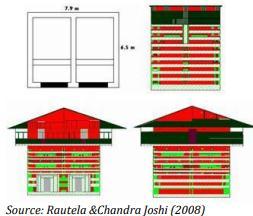
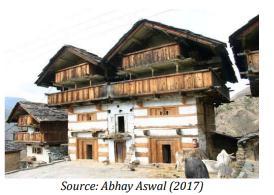
When an earthquake strikes, the forces acting upon a building are proportional to its mass and the ground acceleration. However, a building's response to an earthquakedependsonitsdimensionsandstiffness.Since a building's mass is typically concentrated near the top and bottom, these areas experience the greatest lateral forces during ground motion. To withstand these forces, walls must remain crack-free, and the entire structure mustbesecurelyanchoredtotheground.(Abhay,2017)
Koti Banal's design incorporates several unique features to enhance seismic resistance (Rautela Piyoosh, Joshi ChandraGirish,2008):
Symmetrical Mass and Rigidity Distribution: The mass and rigidity are distributed symmetrically, ensuringthatthepointsof earthquakeforcesand resistive forces coincide. This alignment prevents or significantly reduces torsion, enhancing shock resistance
Rectangular Girders: The primary girders are rectangular with a width-to-weight ratio of 2:3, making them suitable for bending. These girders arelargerthannecessaryforsafety,ensuringthat the structure meets space rigidity and strength requirements,furtherimprovingshockresistance.
International Research Journal of Engineering and Technology (IRJET) e-ISSN: 2395-0056
Volume: 13 Issue: 01 | Jan 2026 www.irjet.net p-ISSN: 2395-0072
Wooden Structures: Wood, when properly built and utilized, has minimal structural limits. Wooden structures have a higher strength-toweight ratio than steel and concrete, resulting in weakerinertialforcesduringaseismicevent.The architecture of Koti Banal uses various timber assembliestowithstandearthquakestressesfrom inertialforces.(Abhay,2017)
Elastic-Plastic Material: Wood is an elastic-plastic material capable of absorbing earthquake forces. Wooden components are joined using both housing and nailing techniques, creating semirigidjointsthatcombinethebenefitsofpinjoints and rigid junctions. This configuration supports significant loads and high ductility, allowing the structure to absorb considerable force before breaking.
Studiesshowthatthistypeofconstructionisprevalent in northern Uttarakhand and other regions in India and neighboring countries. Field research identifies three stylesofthisarchitecture:
1. ModifiedStyle
2. OriginalStyle
3. OriginalMorphologywithNewMaterials
1.2 Traditional Construction Techniques in Hilly, Nepal
ThetownofJumlainNepal'sKarnaliregionispopularly recognized for having an architectural heritage that is specific to it which is seen through its houses and buildings. This kind of architecture isunique becauseit is constructed from materials that are readily available around the area such as stones, woods and mud & also very strong type of structures which can be able to accommodate in any landform which experience difficult weather conditions like those of mountains areas. (Vernaculararchitectureofnepal.pptx,2022)
A common design for traditional houses in Jumla consistsofroofsthatslopedownandareeithercoveredin slate or with wooden shingles so that they can resist collapsing under the weight of snow. The buildings are also equipped with thick walls made up of stones to keep out cold from outside. Additionally there is incorporation of ornate carpentry work on some openings like doors & windows hence breaking monotony within design but enhancing beauty whenviewed at by people passing near them.
Generally the villages around Jumla are closely packed withresidencesindicatingacollectivelivelihood.Itserves also as a defense mechanism against environmental
conditions!.Mosttimestherearesharedspacesintegrated into the structures of the houses like courtyards or squareswherepeoplecancometogethersocially.(NHDPWelcome,2017)
One can see how much culture and religion play into everything when looking at these monasteries or temples throughout this little town called Jumla!! A lot of them have roofs that make one think immediately about Asia; they put plenty details such as animals figures for gods everywhere.
Ghumaurodhiisauniquestyleofhousingconstruction practiced by the Gurung and Magar communities in the hillyareasofNepal.Theseattractivecircular-shapedstone buildings with timber decorations are excellent examples ofanti-seismicconstruction.
The heartwood known as Agrakh was used by the natives in making important parts such as timber posts and rafters from trees close to them, something which theydidwithpride.NormallyGhumaurodhihousesstand elevated one or two floors elevated and have an excellent combination of timbers that create space for doorways, floors,andcross-ventilationsatdifferentelevations.Inthis sense, these houses are not just safe but also part and parcel of the cultural wealth that is found within the region.[ChaudharyDinesh]
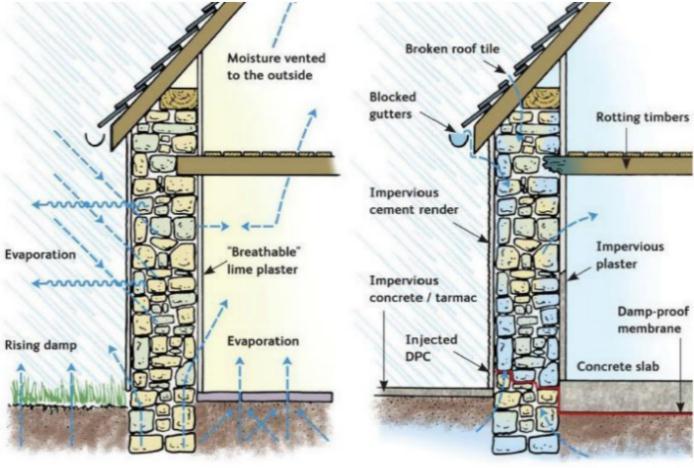
Stone wall constructiontechniques Stone Masonry:
- Dry Stone Masonry: It is used extensively in the mid-hill and hilly regions; dry stone masonry involves stacking stones without mortar [mud, concrete, and lime]. This technique is valued for its flexibility and abilitytoabsorbseismicshocks.
International Research Journal of Engineering and Technology (IRJET) e-ISSN: 2395-0056
Volume: 13 Issue: 01 | Jan 2026 www.irjet.net p-ISSN: 2395-0072
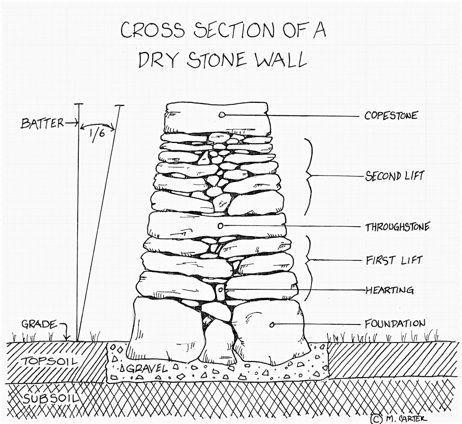
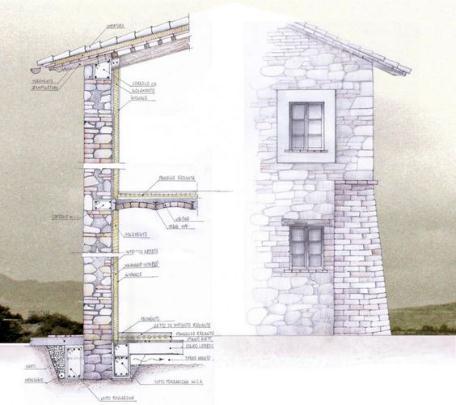
HillyNepal: Dry stone masonry
- Stone with Mud Mortar: It is common in residential buildings. This technique uses mud as a binder. It provides good thermal insulationbutrequiresregularmaintenance.
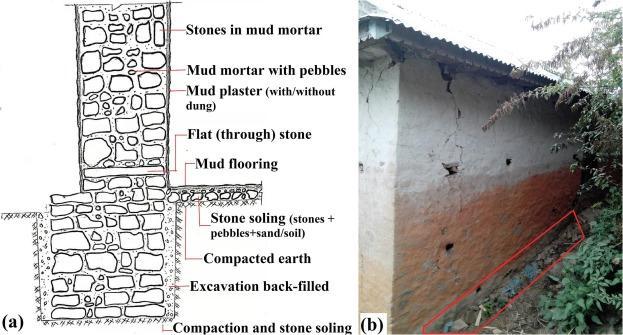
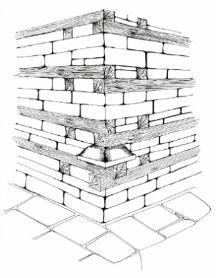
Timber-Laced Masonry: It is a hybrid technique where timber beams are integrated into stone or brick masonry toenhancestructuralflexibilityandearthquakeresistance.
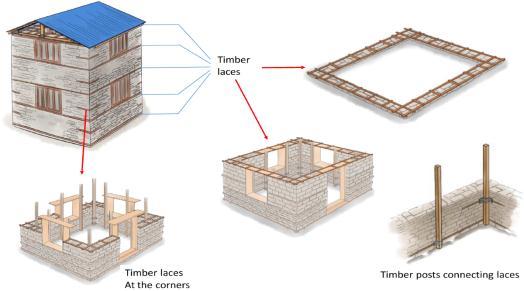
HillyNepal: Timber LacedMasonry
Adobe(MudBricks):Adobebricksaremadefroma mixtureofearth,straw,andwater,driedinthesun. This method is eco-friendly and provides excellent thermalmass.
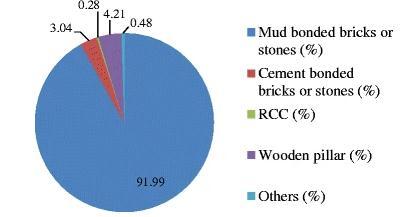
From the survey data, it is found that most of the houses of Jumla are constructed with mud bonded bricks or stones. The cement bonded bricks and stones are however being used as a replacement of mud mortarforthebetterstability.
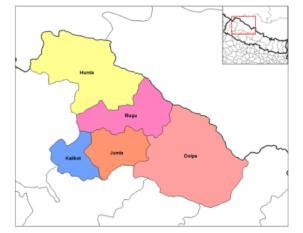
2. A Case of Hilly Nepal: Typical House in Jumla Jumla is one out of the ten district of Karnali, 6 no's province, with as its district headquarters in the MIdWestern Development Region of Nepal. Its cover an area 2,531km² and had a population 108,921 in 2011 Nepal census.Itelevationvariesfrom915mto4,679m.Jumlais an entirely mountainous region with no flat land except for narrow stripe alongside the beds of the various tributariesoftheKarnaliRiverwhichdraintheregion.The major rivers in Jumla are Hima, Tila and Jawa. (Jumla (town),2018)
International Research Journal of Engineering and Technology (IRJET) e-ISSN: 2395-0056
Volume: 13 Issue: 01 | Jan 2026 www.irjet.net p-ISSN: 2395-0072
The primary purpose of this dissertation is to understand Jumla religion within the context of Jumla culture. As Jumla religion can be distinguished into two separate tradition, which I have labeled -Jumla Brahmanism (Dharmic) and oracular religion (non- Dharmic), the bulk ofthisstudyisdevotedtoexploringtherolesandmeaning of these two traditions and their relationship to each other.
The climate of Jumla is found warm and temperate. The summers are much rainier than the winters in Jumla. The average annual temperature is13.5 °C in Jumla.Ina year, theaveragerainfallis766mm.InJumla,thewetseasonis comfortable and partly cloudy and the dry season is cool and mostly clear. Over the course of the year, the temperature typically varies from 25°F to 74°F and is rarelybelow 17°F orabove 79°F
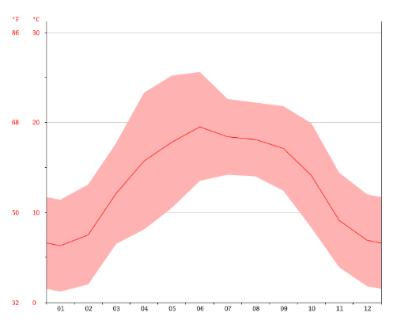
Socio Cultural Aspects of Jumla
Vernacular Architecture of Jumla is highly influenced by the social and the cultural aspects also merged with topography. In the figure below we can see the condition andculturalaspectsofJumla.
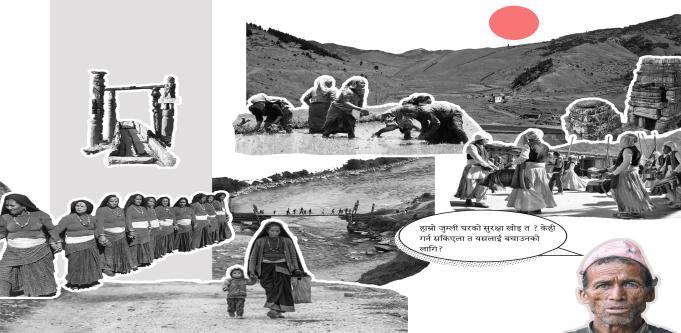
Jumla:ActivityMapping
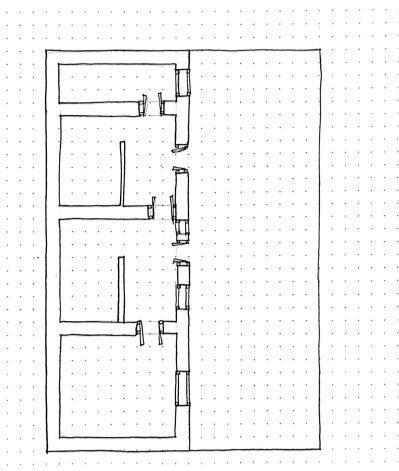
There are significant differences in the way the Jumli people settle and construct housing units as compared to other caste groups in Nepal. The rich may have their own spacious homesteads but this is not the case with most of the Jumlis who occupy what is known as extended family house which is a unit comprising two or more families living under one roof or within one compound, thereby forming a closely packed settlement. The long shape seen in these communal dwellings is referred to by locals as a “BADO” & contains several compartments called GHAR each having its entrance meant for a separate conjugal group. This term may also refer to several contiguous BADOs or PAGRIs of similar caste taken for granted belonging to one extended family. For instance, there are thirty-three DHEVALGAUN in seven different BADO at Dangibada hamlet of Suni-gaon village in Jarmi-tatopanichayat.(Dinesh,2020)
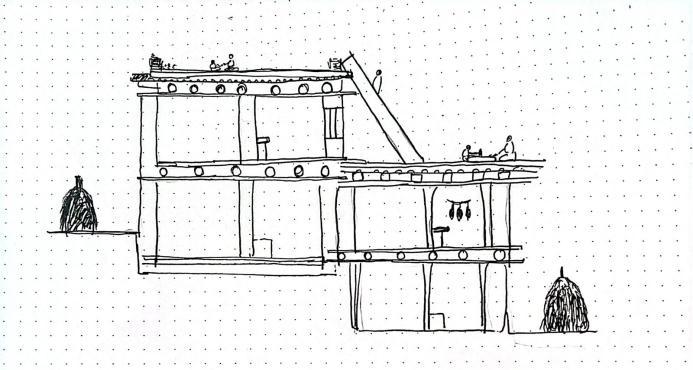
Even though they resemble some Bhotia homes, the architectureofatypicalJumlihomeremainsquitedistinct among other Pahari ethnic groups dwelling in the region. These houses are made using wood beams, stones and mud-mortar;theyalsohaveflatroofsmadeoutofpressed earth known locally as “THIRO” which are used to dry cereal crops and vegetables that have been stored or will be prepared for food. In addition, these flat surfaces offer strategiclocationsfromwherepeoplecanobservewhatis happening around them. (Dinesh, 2020) Most buildings face towards the sunny side (south) so as to receive maximumsunlight;attimes,theroofmaybelinkeddown ononesidethuscreatingspaceaboveceilingintendedfor extra provisions whose access is facilitated through such means as inclined holes or trapdoors on lower levels. A notched log ladder provides access between the top floor androof.[RautBalman]
InDHEVALGAUN,mosthouseshaveasimilarstructureon the first floor, which is found immediately above the ground. It comprises of three to four rooms arranged linearly with each other and one acting as a passage way. Normally these are the rooms where close family members sleep so as to get some heat but interestingly they first undress before lying in bed. Some extra spaces may be there to put on clothes while some people may alsousethemasbedrooms.Suchahousehastwofeatures only; one is that it is completely dark & the other one is that there can be light inside only when something is burnt there. This is because they burn pine-pitch faggots forillumination&duetolackofchimneysmokefillsupin thesekindsofhouses,turningJumlipeoplewholivethere into someone with face and hands covered by soot. [Raut Balman]
The lower storey comprises animal quarters called GOTH forcows,buffaloes,horses,etc.keptinthere.TheseGOTH units also act as venues for special communal and
International Research Journal of Engineering and Technology (IRJET) e-ISSN: 2395-0056
Volume: 13 Issue: 01 | Jan 2026 www.irjet.net p-ISSN: 2395-0072
religious functions such as bratabandha, marriage that require a Brahman (priest), etc. & for which guests assembleathome!.Besidestheyarescenesofsomesemiprivate singing gatherings too. Nearby, a small wooden shed called PIRE is used for drying chilies and as a place for menstruating women to stay during their five-day exclusionfromthehouse.[RautBalman]
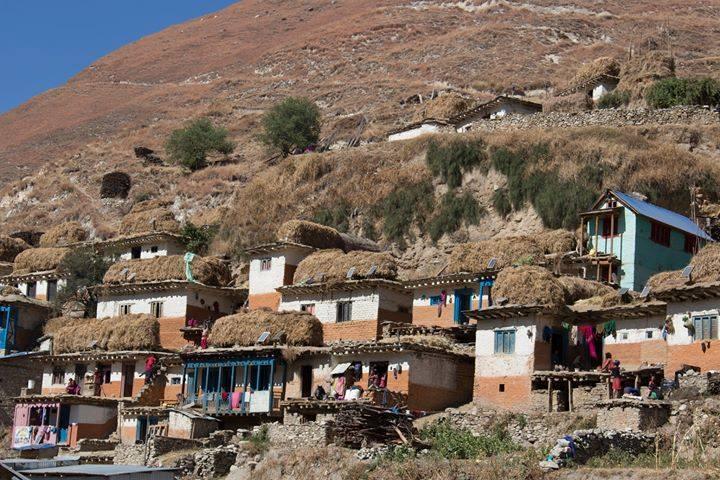
Jumla:Vernacular Architecture
Thisconceptoflocalarchitecturewhereone’sroofistaken as another’s Aagan is the unique feature in Jumla. However, this architecture is diminishing due to misconception created due to material and technology. Below we can see how BADO, a house acting as a roof as well as Aagan. The typical section shows how the architecture is merged into the topography while keeping inmindthesocialfunctions.
Another’s Agan
One’s Home
TypicalSection of BADO Ghar
Wall Construction Techniques
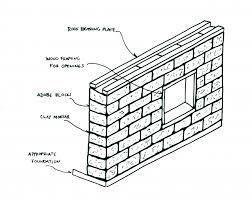
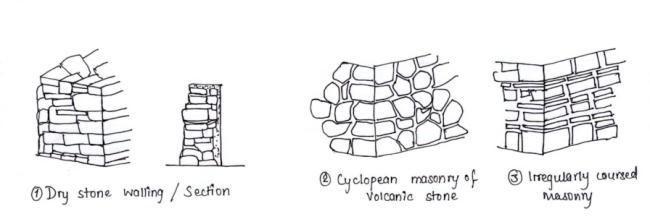
Thetypicalwallsectionshowshowthestoneswithmud mortarordrystonerubbleareplacedinsuchawaythey createtheinterlockingpropertieswithinthemselves.
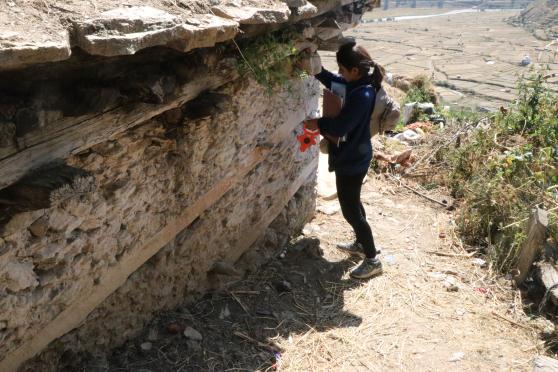
Typical Wall of BADO Ghar
Building Techniques
Typical Wall Construction Methods of BADO Ghar
The vernacular architecture in Jumla is a product of the application of passed down construction know-how over extended periods, and which takes into consideration the environment, resources, and way of life. (Dinesh, 2020) Below is an analysis of some primary construction techniqueswithinthelocalarchitecturalsettingofJumla
1. Stone Masonry
Techniques: The technique involves careful selection of stones which are arranged one on top the other without using cement just the way it was done since ages!. For binding agents most people prefer mud mortars because they like it that way; nevertheless through this type of practice they end up with thick wallsthatcankeepoffheatlossfromoccurringwithin thehouseoranyotherbuilding.
International Research Journal of Engineering and Technology (IRJET) e-ISSN: 2395-0056
Volume: 13 Issue: 01 | Jan 2026 www.irjet.net p-ISSN: 2395-0072
Construction: Thesetypesofstonesmaybeplacedin aninterlockingpatternsoastoincreasetheirstrength &makethemlastlonger.
2. Timber Framing
Techniques: It makes use of wooden beams obtained locally from forests to offer support for the overall structure load path analysis. These beams experience littleresistancetomovementbecausetheyjoinpoorly without being subjected any mechanical fastening device like nails also known as traditional joinery methods. Construction: This kind of wooden framework enhances strength but still keeps the houseflexibleenoughtosurviveearthquakesthatare commoninthisarea.(Association,2014)
3. Pounded Earth Roofs
Techniques: The roofs comprise level surfaces made bytampingdownearth Amethodwherelayersofsoil arecompressedtightlyuntilitformsimpermeableand long serving cover constitutes what roofing experts refertoaspoundedearthroofs.
Construction: Such roofs rest upon timber joists and serve several purposes which include sun drying of farm produce & keeping harvested food in safe place whilealsobeingusedsocially.
4. Layered Construction
Housesoftenconsistofmanyfloors,wheretheonesat the top are built with materials that are not heavy so astoreducethepressureonthelowersections.
Access to Upper Rooms: A set up where one could move straight up & also it does not effect on the strengthofthehousehasbeenemployed;forexample the first floor is accessed by a wooden ladder whose notchedlogsaremadeofwood.(Dinesh,2020)
5. Orientation and Layout
Inwhatwaysdothetwopartsdiffer?Thesouthfacing directionisnormally chosenwhilebuildinghousesso that they may receive maximum amount of sunlight which is very helpful in warming up the house especiallyduringwinteratJumlawheretherearelow temperatures.
Construction: It comprises of a courtyard located at the center & shared among several families thus enhancingunitywhilesavingonspace.
6. Earthen Floors
Expoundonhowthiscan beachieved: Thesekindsof floors may be made from hard-packed dirt or sticky naturalsoilwithorwithoutmixingsomelittleamount
of cow’s waste to make it stronger and prevent heat loss.
Construction: To have a solid clean surface, it requires regularsmoothing&general upkeepproceduresaredone onsuchkindoffloorsincludingwashingthem.
Building Materials
In Jumla, the building materials used for constructing houses are primarily local and traditional, reflecting the region's resources and environmental conditions. [Raut Balman]Here'sadetailedexplanationofmaterials:
1. Wooden Beams:
- Source:Localforestsprovidethewood.
- Usage:Usedasstructuralsupportsforthehouses.
2. Stone:
- Source:Collectedfromthesurroundingareas.
- Usage: Stones are used for the main walls of the houses,providingdurabilityandinsulation.
3. Mud Mortar:
- Source:Derivedfromthelocalsoil.
- Usage: Acts as a binding material to hold the stonestogetherinthewalls.
4. Pounded Earth:
- Source:Localearthiscompacted.
- Usage:Utilizedfortheflatroofs(thiro),whichare a distinctive feature of Jumli houses. These roofs are multifunctional, used for drying, storing, and preparinggrainsandvegetables.
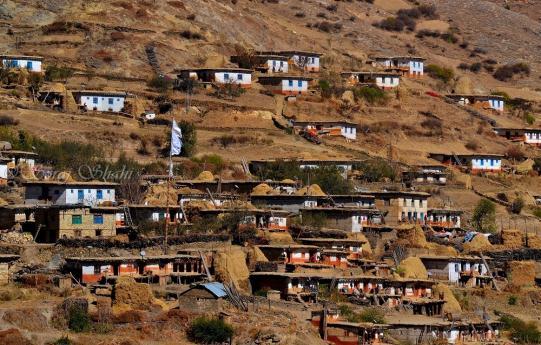
Jumla:Vernacular Architecture
Here’s the material mood board showing how and where the local materials are used within the village and their community.
International Research Journal of Engineering and Technology (IRJET) e-ISSN: 2395-0056
Volume: 13 Issue: 01 | Jan 2026 www.irjet.net p-ISSN: 2395-0072
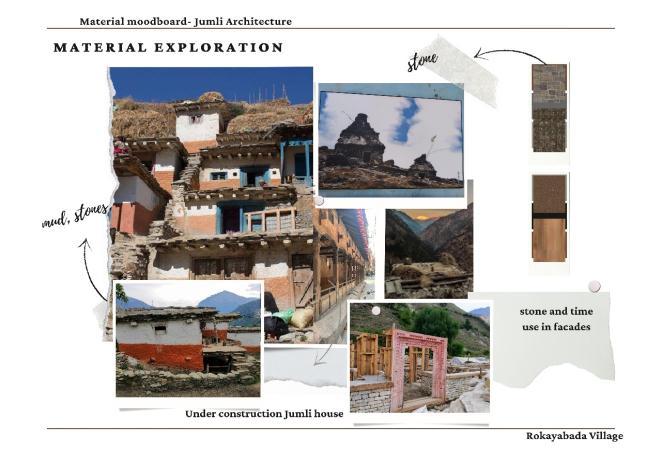
Jumla:Material
Here’s the comparison on the various aspects of vernacular architecture of Uttarakand and Nepal on the variouscriteria:
Nepal India
Materials
Construction Technology
Wood, Stone,Mud
Sillbands
LintelBands
Foundation
Vernacular Architecture
WallDetails
Connection and Joints
Kath kuni Architecture
Alternate layers of wood and stone
Beams connected with wall plate
Roof
Mudroofing above joists followed by timber planks
Timber, Stone, Tiles
Sillbands
Lintel Bands
Foundatio n
Bado House
Stone Binded with mud mortar
Mortise and Tenon joints in corner points
Tiles
Analysis of the construction techniques of Jumla and Uttarakand
The vernacular architecture of Jumla, when compared to thatofIndia,exhibitslowerseismicresistancedespitethe useofsimilarmaterials.Thisdisparitycanbeattributedto severalfactors:
- The structural integrity of the buildings in Jumla isgreatlycompromisedduetolackofappropriate lagging bands, as well as sill and lintel bands. On the other hand, Indian Kathkuni architecture strengthensthestonework byusingeverysecond course in joining together blocks with wood or stone thereby making it more resistant to earthquakes.
- The vernacular architecture of Jumla features roofs that often serve as additional living spaces (agan) for another house, resulting in substantial live loads on the structures. This heavy load adversely impacts the seismic resistivity of the buildings.
- The use of wooden beams and stone in Kathkuni architecture not only binds the materials more effectively but also allows for a more flexible and robust structure. The wooden layers provide elasticity, which is crucial for withstanding seismicforces.
Overall, the architectural techniques and structuraldesignsinJumlacontributetoitslower seismic resistance. Addressing these factors through the incorporation of proper lagging bands and reducing excessive live loads on roofs could enhance the earthquake resilience of buildingsintheregion
To enhance the seismic resistivity of vernacular architecture in Jumla while preserving its traditional essence, the following recommendationscanbeimplemented:
SillandLintelBands:Introducehorizontalsilland lintel bands at critical levels within the stone masonry. These bands will provide additional supportandbindthestoneworkeffectively.
International Research Journal of Engineering and Technology (IRJET) e-ISSN: 2395-0056
Volume: 13 Issue: 01 | Jan 2026 www.irjet.net p-ISSN: 2395-0072
2. Alternate Layering Technique:
Wood and Stone Layers: Adopt the Kathkuni techniqueofalternatinglayersofwoodandstone. This method enhances the binding of stones, increases the flexibility of the structure, and improvesoverallseismicperformance.
3. Reduction of Roof Live Load:
Lightweight Materials: Use lighter materials for the construction of roofs and upper stories to minimize the live load. This can significantly reduce the stress on the structural components duringanearthquake.
Separate Living Spaces: Design roofs that do not serve as additional living spaces to prevent excessive live loads. Separate agan spaces can be constructed adjacent to the main structure to distributetheloadmoreevenly.
4. Improved Structural Design:
Flexible Connections: Implement flexible connections between wooden beams and stone masonrytoallowforcontrolledmovementduring seismic events. This can be achieved through the use of traditional joinery techniques combined withmodernreinforcementmethods.
Foundation Reinforcement: Strengthen the foundation with reinforced concrete or stone bands to provide a stable base for the entire structure.
Recommendations
With the incorporation of all the recommendations here’s a conclusion taken out with the design of community center focusing on the better stability to earthquake forces.
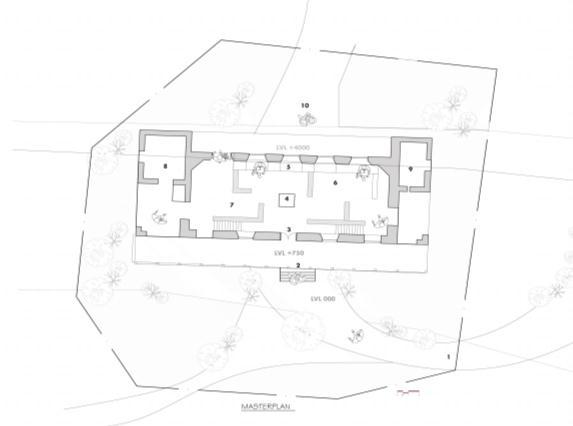
Legends
1. MainEntrance
2. EntrytoMuseum
3. MainGate
4. MajorDisplayZone
5. SeatingSpace
6. ExhibitionZone
7. Culturalexhibitionzone
8. WorkingZone
9. Maintenancezone
10. Exit
Jumla:Masterplan
The southern facade of community center has small openings and the spaces of entry focuses on the gallery spaceforthedisplayofcommunity art. The wall thatgets bulked are then treated with bitumen asphalt for the better damp proofing. Also the damp proofing layers are installedonflooringlevelsforthebetterwaterresistance.
First floor plan
Thefirstfloorplanhasthespaceforcommunitymeeting.
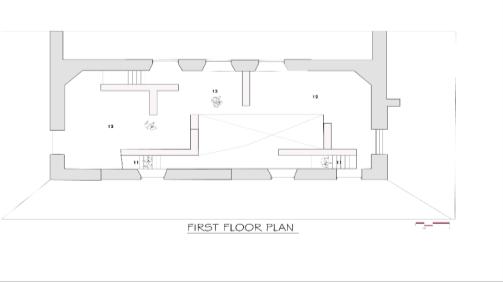
Legends
11. Staircase
12. CommunityMeeting
13. SpaceforCommunalActivity
Jumla:First floor plan
Second floor plan
The second floor plan has the space for community activity.
International Research Journal of Engineering and Technology (IRJET) e-ISSN: 2395-0056
Volume: 13 Issue: 01 | Jan 2026 www.irjet.net p-ISSN: 2395-0072
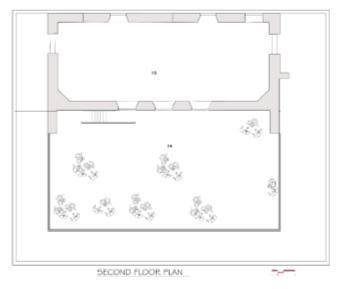
15. CommunityCelebration
Second Floor Plan
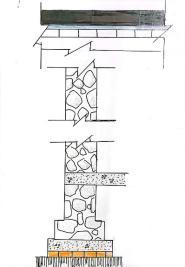
Wall Section
Below wall section shows how the modern interventions is adopted in the building design solving the existing problemofvernaculararchitectureofJumlaforthebetter stabilityandresistanceagainstseismicforces.
WallSection
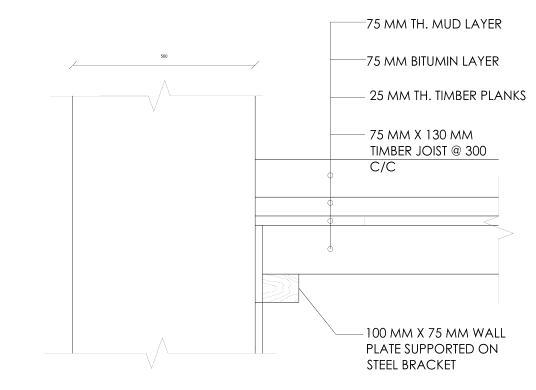
Flooring Details
The flooring details of the typical section shows the different laying layers of the mud, timber planks and also timber joists. These flooring are supported by wall plate supportedonsteelbracketinordertomaintainstability.A layerofbitumenisalsoaddedformaintainingsafety.
Jumla:Flooring Details
3D views
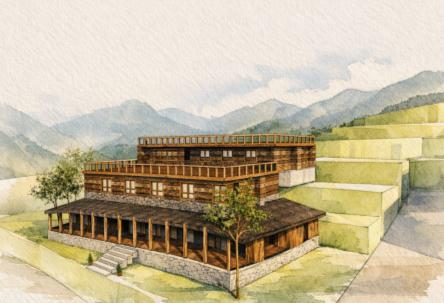
This design of community center shows an improvement on the vernacular architectural styles, making it more resistant to earthquakes and at the same time not losing the originality. With some necessary changes, this project has created a blend in both the vernacular architectural designwithamodernintervention.
Jumla:3D Views
This image reflects a community center designed in the vernacular architecture of Jumla, characterized by the followingfeatures:
1. Use of Local Materials: The building uses stone and wood i.e. traditional materials of Jumla, ensuring sustainability.
2. Flat Roof Design:Thestructurehasaflatroof,known as "thiro", a mud for roofing which is used for communalactivitiesandperformance.
3. Multiple Stories: The buildinghasmultiple stories, which is blend into contour and land topography of Jumla.
4. South-Facing Orientation: The design maximizes sunlightexposureforwarmthandenergyefficiency.
5. Seismic Resistance: Enhanced seismic resistance is achieved through horizontal and vertical reinforcement bands and the Kath-kuni technique of alternatingwoodandstonelayers.
So, this community center preserves the traditional architectural essence of Jumla while incorporating newsafetyfeaturesandinterventions
I am immensely grateful to my tutors Ar. Sadichchha Shrestha, Ar. Swasti Bhattarai for their guidance duringtheresearchandstudies.Iamthankful to Mr. Dipendra Rokaya for his valuable guidance during the site visit at Jumla, as well as Saraswoti Rokaya andRajBahadurKamifortheir helpinthemeasured drawing process. Their support and hard work have
International Research Journal of Engineering and Technology (IRJET) e-ISSN: 2395-0056
Volume: 13 Issue: 01 | Jan 2026 www.irjet.net p-ISSN: 2395-0072
contributed significantly to establish the depth and accuracyintheproject.
1. Association, G. D. (2014). Jumla Community DevelopmentProject-GovindaEV.
2. Camilla, G. (2020). What is vernacular architecture?
3. Chawha Vrushali, Kamal Mohammad. (2024). A study of planning, design and construction of buildings in hilly regions of India. American Journal of Civil Engineering and Architecture.
4. Contributors,W.(2024).
5. Dinesh, C. (2020). umlis(khas) socio-cultural centre. Issuu
6. Jumla (town). (2018, September 04). Retrieved January 11, 2019, from Wikipedia: https://en.wikipedia.org/wiki/Jumla_(town)
7. NHDP-Welcome.(2017).
8. Rautela Piyoosh, Joshi Chandra Girish. (2008). Earthquake-safe Koti Banal architecture of Uttarakhand,India. Academia
9. Sinja Valley: Historical legacy and challenges. (2024). GorakhaPatra
10. Smriti, S. (2017). Koti Banal Architecture of Uttarakhand: Indigenous Realities and CommunityInvolvement.
11. Sryahwapublications.(2024).
12. Uttarakhandsummary.(2022).
13. Vernaculararchitectureofnepal.(2022).
2026, IRJET | Impact Factor value: 8.315 | ISO 9001:2008