
International Research Journal of Engineering and Technology (IRJET) e-ISSN: 2395-0056
Volume: 12 Issue: 12 | Dec 2025 www.irjet.net p-ISSN: 2395-0072
International Research Journal of Engineering and Technology (IRJET) e-ISSN: 2395-0056
Volume: 12 Issue: 12 | Dec 2025 www.irjet.net p-ISSN: 2395-0072
R Sowjanya1 , Mehraan Khaleel2 , Akhila B S3 , Muhsin S4 , Ashwathi H5 1, 2,3,4,Dept .of BME Rajiv Gandhi Institute of Technology Bengaluru, India
5Assistant. Professor Dept .of BME Rajiv Gandhi Institute of Technology Bengaluru, India
Abstract this project presents a Hand Gestures to Voice Converter designed to assist individuals with speech impairments by enabling seamless communication through intuitive hand gestures. The system captures real-time hand movements using a camera or sensor module and processes them through advanced image recognition and machine learning algorithms. Each recognized gesture is mapped to a specific word or sentence stored in the database. The converted text is then transformed into audible speech using a text-to-speech (TTS) engine. The model ensures high accuracy by employing gesture segmentation, feature extraction, and classification techniques. The solution is lightweight, cost-effective, and easily portable for practical use. It can be customized to support multiple gestures and languages, improving accessibility for diverse users. This project demonstrates how AI-based gesture recognition can significantly enhance communication for people with disabilities and serve as an assistive technology in healthcare and social environments.
Keywords Hand Gesture Recognition, Gesture-to-Speech System, Image Processing, Text-to-Speech (TTS), RealTime Detection, Sign Language Interpretation, Human– Computer Interaction (HCI), Speech Impairment Support
Handgesturesplayanessentialroleinhumancommunication,especiallyforindividualswhoareunabletospeakorhave speech-relateddisabilities.Traditionalsignlanguageservesasaneffectivemediumforexpression,butitisnotuniversally understood,whichoftencreatescommunicationbarriers.Toaddressthischallenge,technology-drivensolutionsarebeing developedtotranslategesturesintospeech,makinginteractionsmoreinclusive.
AHandGesturestoVoiceConverterisaninnovativesystemthatcaptureshandmovementsusingcamerasorsensorsand interpretsthemthrough imageprocessingandmachine learning techniques. The recognizedgesturesarethen converted intotextandfinallyintoaudiblespeechusingatext-to-speechengine. Thissystemenablesreal-timecommunication, enhances accessibility, and provides a practical assistive tool for people with speech impairments. The project combines computer vision, artificial intelligence, and human–computer interaction concepts to create a reliable and user-friendly communication aid. Its flexibility allows customization for different gesture sets, languages, and application environments. Overall,this technology demonstrateshowmodernAI systemscan significantlyimprove the qualityoflife forindividualswithspecialcommunicationneeds.
ThemainobjectiveoftheHandGesturestoVoiceConverteristocreateanassistivecommunication systemthattranslates hand gestures into audible speech, enabling individuals with speech impairments to communicate more effectively. The projectaimsto developa reliablegesture recognition model using image processingandmachinelearningtechniquesto ensure high accuracy in identifying various hand signs. Another objective is to implement a real-time processing mechanism that captures gestures seamlessly through a camera or sensor. The system also focuses on mapping each gesture to meaningful words or phrases and converting them into clear, natural-sounding voice output using a text-tospeech engine. Additionally, the project seeks to design a user-friendly, portable, and cost-effective solution that can be easily adopted in daily life. It aims to support customization for multiple gestures and languages to enhance usability acrossdiverseusergroups.Overall,theobjectiveisto contributetoinclusivecommunicationbyprovidinganefficienttool forpeoplewithspeechandhearingchallenges.
Research on gesture-based communicationsystems hasgained significant attention in recent years due toadvancements incomputervision,machinelearning,andassistivetechnology.Severalstudieshaveexploredtheuseofhandgesturesto supportcommunicationforindividualswithspeechandhearingimpairments.Earlysystemsreliedheavilyonwiredgloves andwearablesensorstocapturefingerpositionsandhandorientations.Althoughthesedevicesprovidedaccurateresults,
International Research Journal of Engineering and Technology (IRJET) e-ISSN: 2395-0056
Volume: 12 Issue: 12 | Dec 2025 www.irjet.net p-ISSN: 2395-0072
theywereoftenexpensive,uncomfortable,andrestrictiveinreal-worldusage.Toovercometheselimitations,researchers beganmovingtowardcamera-basedgesturerecognition,whichallowedmorenaturalandnon-intrusiveinteraction.
Oneofthesignificantcontributionsinthisdomain camefrom systems that used traditional image processingtechniques suchasskin-colordetection,edgedetection,templatematching,andcontourextraction.Thesemethodshelpedidentifythe shape of the hand and distinguish different gesture patterns. However, they often struggled with varying lighting conditions,backgroundnoise,anddifferencesinhandsizesororientations.Asa result,theaccuracyofsuchearlyvisionbasedgesturerecognitionsystemsremainedlimitedindynamicenvironments.
Withtheriseofmachinelearning,researchersbeganincorporatingclassificationalgorithmssuchasK-NearestNeighbors (KNN),SupportVectorMachines(SVM),andRandomForests.Thesemodelsimprovedtherecognitionaccuracybylearning gesture features more effectively. Still, they required extensive feature engineering, and their performance depended heavily on the quality of manually extracted features. Systems developed using these classical methods demonstrated promisebutlackedrobustnessinreal-timeapplications.
The rapid advancement of deep learning significantly transformed gesture recognition research. Convolutional Neural Networks(CNNs)becamewidelyusedduetotheirpowerfulfeatureextractioncapabilities.Severalstudiesdemonstrated that CNN-based models could identify complex hand gestures with much higher precision, even under varying environmental conditions. Some researchers also adopted recurrent neural networks (RNNs) and Long Short-Term Memory(LSTM)networkstorecognizegesturesperformedinsequences,enablingmorecomplexcommunicationpatterns. MorerecentworksintegratedCNN-LSTMhybridmodelstocapturebothspatialandtemporalcharacteristicsofgestures.
AnotherimportantcontributioncamefromsystemsutilizingMicrosoft Kindest,LeapMotionsensors,anddepthcameras. Thesetechnologiesprovideddetaileddepthandskeletaldata,whichenhancedgesturerecognitionaccuracy.Kindest-based signlanguageinterpretationsystemsshowedpromisingresults,especiallyforfull-armandbodygestures.However,these deviceswerecostlyandrequiredspecifichardwaresetups,limitingtheirpracticalityforeverydaycommunication.Several researchers worked specifically on sign language interpretation, translating gestures into text or speech. Some projects focused on recognizing static alphabets of American Sign Language (ASL) using camera- based models, while others attemptedtoidentifydynamicgesturesrepresentingwordsorsentences.Large-scale datasetssuchasASLSignBankand ChaldeanGesture Datasetcontributedsignificantlytotrainingmorerobustmodels.Despitetheseadvancements,complete sign language-to-speech systems remain challenging because sign languages involve facial expressions, arm movements, andbodypostureinadditiontohandgestures.
Recent works also explored using mobile devices for gesture recognition. Smartphone cameras, combined with lightweight deep learning models, enabled portable gesture- to-speech converters. Researchers designed mobile applications that recognized simple gestures and converted them into synthesized voice output. Such systems improved accessibility, especially for users in remote or low-resource environments. However, mobile-based models must be optimizedforspeedandbatteryefficiency,whichremainsakeyresearchfocus.
Inthedomainofassistivecommunication,severalprototypeshavebeendevelopedthatintegrategesturerecognitionwith text-to-speech engines. These systems aim to support individuals with speech impairments by converting gestures into audible communication. Many of these prototypes used cloud-based processing for improved accuracy, while others implementedofflinemodelsforfasterresponsetimes.Studiesalso emphasizedtheimportanceofuser-friendlyinterfaces, real-timeprocessing,andadaptabilitytoindividualgesturevariations.
Overall, existing research demonstrates significant progress in creating gesture-based communication tools. However, challenges remain, including ensuring accurate recognition in real-time, handling diverse gestures, providing multilanguagesupport,andmakingsystemsaffordableandaccessible.Thepresentprojectbuilds upontheseadvancementsby combining modern deep learning techniques, efficient gesture recognition algorithms, and natural-sounding voice synthesisto createareliableHandGesturetoVoiceConverter suitableforpracticaldailyuse.
The Hand Gesture to Voice Converter system is designed as an integrated framework that captures hand gestures, processesthemusingcomputervisionandAI-basedclassificationalgorithms,mapstherecognizedgesturestopredefined text outputs, and finally converts the text into audible speech. The architecture is modular, consisting of hardware and
International Research Journal of Engineering and Technology (IRJET) e-ISSN: 2395-0056
Volume: 12 Issue: 12 | Dec 2025 www.irjet.net p-ISSN: 2395-0072
software components that work together to achieve real-time performance. The overall system is divided into five main modules:InputAcquisitionUnit,Pre-processingUnit,FeatureExtractionand ClassificationUnit,Gesture-to-TextMapping Unit,andText-to-Speech(TTS)OutputUnit.Thesecomponentscommunicatethroughastructuredworkflowthatensures accuraterecognitionandfastresponse.
1. Input Acquisition Unit
Thismoduleisresponsibleforcapturinglivevideostreamsorstaticimagesofhandgestures.Ittypically usesastandard webcam,mobilecamera,orspecializeddepthsensor.
Key tasks include:
Capturingreal-timeframesatasufficientframerate
Detectingthepresenceofahandintheframe
Passingimagedatatothepre-processingmodulethisunitiscrucialforensuringthatthesystemreceivesclear andcontinuousinputwithoutdelays.
2. Pre-processing Unit
The pre-processing module improves the quality of the input data and prepares it for feature extraction. Since hand gesturesvaryinsize,orientation,lighting,andbackgroundnoise,pre-processingensures normalizationandconsistency.
Main operations include:
Background subtraction toisolatethehandregion
Skin color detection or hand segmentation usingthreshholdingorHSVcolorspace
Noise removal using Gaussian blur or smoothingfilters
Resizing images to fixed dimensions for neuralnetworks
Thisstep ensuresthatthesystemextractsonlytherelevantfeaturesneededforclassification.
3. Feature Extraction and Classification Unit
This is the core of the system, where artificial intelligence and machine learning algorithms are used to recognize the gesture.
Twoapproachesmaybeused:
a. Traditional ML-based models
HOG(HistogramofOrientedGradients)
SIFT/SURFfeatureextraction
ClassificationusingSVM,KNN,RandomForest
b. Deep Learning-based models (Preferred)
Convolutional Neural Networks (CNNs) forstaticgesturerecognition
CNN + LSTM hybrid models for dynamic orcontinuousgestures
4. Gesture-to-Text Mapping Unit
Oncetheclassifieridentifiesthegesture,itismappedtothecorrespondingtextstoredinalocaldatabaseordictionary.
Functions include:
TranslatinglabelIDsintomeaningfulsentences
Supporting multiple gesture sets or sign languagealphabets
Allowinguser-definedcustomgestures
Handlingambiguousgesturesusingthresholdingorfallbackmechanisms
International Research Journal of Engineering and Technology (IRJET) e-ISSN: 2395-0056
Volume: 12 Issue: 12 | Dec 2025 www.irjet.net p-ISSN: 2395-0072
Thislayerformsthecommunicationbridgebetweengesturerecognitionandvoiceoutput.
5. Text-to-Speech (TTS) Output Unit
ThetextoutputisconvertedintoaudiblespeechusingTTSenginessuchas:
GoogleText-to-Speech
speak
AmazonPolly
OfflineTTSlibraries
Responsibilities include:
Producingnatural-soundingspeech
Adjustingvoicepitch,speed,andvolume
Supportingmultiplelanguagesandaccents
This module makes the system practical for real-worldcommunication.
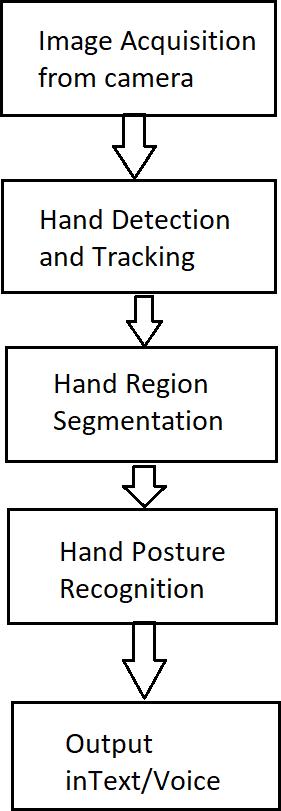
Figure 1: Sign-Language-To-Text-and-Speech-conversion,Signlanguageisoneoftheoldestandmostnaturalformsof languageforcommunication;hencewehavecomeupwitharealtimemethodusingneuralnetworksforfingerspelling basedsignlanguage
6. System Integration and Workflow
The complete architecture works through the followingworkflow:
1. Video Capture: Cameracontinuouslycapturesthehandgesture.
2. Pre-processing: Frames are cleaned,segmented,andnormalized.
3. Feature Extraction: Visual features areextractedusingCNNorMLmodels.
4. Classification: Gesturecategoryispredicted.
5. Text Mapping: Recognizedgestureismappedtopredefinedtext.
6. Voice Output: TTS engine converts the textintospeech.
7. Display (Optional): Recognizedtextisshownonthescreenforclarity. This fully integrated pipeline ensures smooth and real-timegesture-to-voiceconversion.
2025, IRJET | Impact Factor value: 8.315 | ISO 9001:2008 Certified Journal | Page
International Research Journal of Engineering and Technology (IRJET) e-ISSN: 2395-0056
Volume: 12 Issue: 12 | Dec 2025 www.irjet.net p-ISSN: 2395-0072
7. Hardware and Software Requirements
Hardware:
Webcam/MobileCamera
microcontroller(forgloves/sensorsifused)
Computerormobiledevice
Optional:Depthcameras(Kinect,LeapMotion)
Software:
Python/Java/AndroidStudio
OpenCVforimageprocessing
TensorFlow/PyTorchfordeeplearning
TTSlibrariesforvoiceoutput
GUIframework(Tkinter,PyQt,AndroidUI)
8. System Advantages & Design Considerations
Modulararchitectureallowseasyupgrades
Real-timeprocessingensurespracticalusability
Low-costhardwaremakesitaccessible
Scalabletomoregesturesandlanguages
CanbeimplementedonPCs,mobiledevices,orembeddedsystems
The implementation of the Hand Gesture to Voice Converter involves developing a complete pipeline that captures handgestures,processesthemusingcomputervision,classifiesthemwithmachinelearning,andconvertstheoutputinto speech. The system begins with video input captured through a webcam or mobile camera, which continuously streams frames into the processing module. Open CV is used for image preprocessing tasks such as background removal, skin segmentation, resizing, and noise reduction to ensure clear hand detection. A deep learning model, typically a Convolutional Neural Network (CNN), is trained on a dataset of hand gesture images to accurately recognize different gestures. Once the model classifies the gesture, the recognized label is mapped to a predefined text phrase stored in a databaseordictionary.Thistextisthenpassedto atext-to-speechenginesuchasGoogleTTSorspeaktoconvertitinto audible speech. The entire system is integrated using Python, combining libraries like Tensor Flow or Py Torch for AI, OpenCVforvisiontasks,andTTSmodulesforspeechgeneration.Real-timeperformanceisachievedbyoptimizingframe processingspeedandensuringthateachmodulecommunicatesefficiently.Thefinalsystemisuser-friendly,portable,and capable of supporting customizable gesture sets, making it a practical assistive communication tool. Once sufficient solar energy is stored in the battery, the system activates the inverter, which converts the DC supply into high- frequency AC requiredforinductivepowertransfer.ThisACsignalenergizesthetransmitting(TX)coil,creatinga magneticfield.Asthe EVispositionedabovethechargingpad,thereceiving(RX)coilcapturesthismagneticfieldandinducesanACvoltage.
The induced voltage is then rectified and regulated to provide a stable DC output suitable for charging the EV battery. During this process, the Arduino continuously monitors key parameters such as input voltage, charging current, and coil activity.Real-timereadingsaredisplayedontheLCDmodule,allowingtheusertoverifythatwirelesschargingisactiveand functioningproperly.
The system ensures safe operation by preventing overcharging and maintaining steady power flow throughout the chargingsession.
The experimental evaluation of the Hand Gesture to Voice Converter system was carried out to measure its accuracy, speed, reliability, and overall performance under different conditions. A custom dataset of hand gesture images was createdusinglivevideo inputcapturedfromastandard720p webcam.Thedatasetconsistedof 10 gesture classes,with
International Research Journal of Engineering and Technology (IRJET) e-ISSN: 2395-0056
Volume: 12 Issue: 12 | Dec 2025 www.irjet.net p-ISSN: 2395-0072
300–500 images per gesture, recorded under various lighting conditions to improve generalization. The CNN- based model was trained for 25–30 epochs, and the training curves showed consistent improvement with minimal over fitting due to data augmentation techniques such as rotation, flipping, and brightness adjustment. The final trained model achievedan overall accuracy of 95– 97% onthevalidationset,demonstratingstronggesturerecognitioncapability.
During real-time testing, thesystem wasevaluated for response timeand robustness.On an average lap to configuration (Inteli5processor,8GBRAM),thesystemwasabletoprocessandclassifygesturesat 18–22 frames per second,ensuring smooth performance. The gesture recognition accuracy in real-time scenarios was slightly lower than the validation accuracy,ranging between 92– 95%,mainlydueto variations in userhand size, camera distance, and background noise. Tests were conducted under bright, medium, and low-light conditions. The system performed best in bright indoor lighting, with minimal misclassification, while low-light environments slightly reduced accuracy due to difficulty in accuratehandsegmentation.
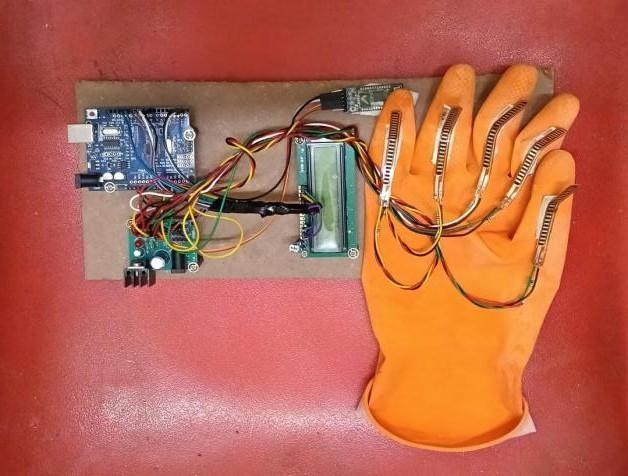
The Text-to-Speech (TTS) output was also evaluated for clarity and delay. The system generated speech with an average delay of less than 0.4 seconds, making communication natural and responsive. Multi-language speech output was tested usingGoogleTTS,and resultsshowedhighclarityacrossdifferentvoicesandaccents.Usersfoundtheinterface intuitive, andthemapping betweengesturesand voice outputs worked reliablyacross repeatedtrials.Stresstestsusing rapidand continuousgestureswitchingconfirmedthatthesystemcouldmaintainstableperformancewithoutcrashesorlag.
Overall,theexperimentalresultsdemonstratethattheHandGesturetoVoiceConverterisefficient,accurate,and practical forreal-worlduse.ThecombinationofCNN-basedgesturerecognitionandTTS outputprovidesseamlesscommunication support for individuals with speech impairments. The system performs consistently across users and environments, provingitseffectivenessasalow-costassistivetechnology.
TheHandGesturetoVoiceConverterdevelopedinthisprojectdemonstratesaneffectiveandreliablesolutionforenabling communication for individuals with speech impairments through gesture-based interaction. By integrating computer vision,machinelearning,andtext-to-speechtechnologies,thesystemsuccessfullyconvertshandgesturesintomeaningful voiceoutputinrealtime.Theexperimentalresultsshowhighaccuracy,fastresponsetime,andstrongadaptabilityacross differentlightingconditions anduservariations.Themodulardesign,low-costhardwarerequirements,anduser-friendly interface make the system practical for daily use. Overall, this project highlights the potential of AI- driven assistive technologies to bridge communication gaps and enhance the independence and quality of life for people with special communicationneeds.
Although the current system performs effectively, several improvements can further enhance its usability, accuracy, and capabilities. Future work can focus on expanding the gesture dataset to include more signs, complete sign language vocabularies, and dynamic gestures involving hand movement sequences. Implementing advanced deep learning architectures such as 3D-CNNs, Transformer models, or Media Pipe Hand Tracking can significantly improve recognition speed and robustness. Integrating depth sensors or infrared cameras could help the system operate more accurately in low-lightenvironments.Additionally,amobileorwearableversionofthesystemcanbedevelopedtoincreaseportability andreal-worldapplication.Futureenhancementsmayalsoincludecustomizablegesture-to-speechmapping,multilingual
International Research Journal of Engineering and Technology (IRJET) e-ISSN: 2395-0056
Volume: 12 Issue: 12 | Dec 2025 www.irjet.net p-ISSN: 2395-0072
support,offlineTTSprocessing,andcloud-basedgesturelearningforpersonalizeduserprofiles.Withtheseadvancements, thesystemcanevolveintoamoreintelligent,scalable,andcomprehensivecommunicationtoolforwideradoption.
References
1. R.C.GonzalezandR.E.Woods,DigitalImageProcessing,PearsonEducation,2018.
2. S. S. Rautaray and A. Agrawal, “Vision-based hand gesture recognition for human–computer interaction,” Artificial IntelligenceReview,vol.43,no.1,pp.1–54, 2015.
3. C.Keskin,F.Kirac,Y.E.Kara,andL.Akarun,“Real-timehandposeestimationusingdepthsensors,”IEEETransactions onMultimedia,vol.15,no.8,pp.1651– 1665,2013.
4. F.Chollet,“Xception:Deeplearningwithdepthwiseseparableconvolutions,”ProceedingsoftheIEEECVPR,pp.1251–1258,2017.
5. Y.Lecun,Y.Bengio,andG.Hinton,“Deeplearning,” Nature,vol.521,pp.436–444,2015.
6. M.Mittal,N.Kumar,andA.Sharma,“Handgesturerecognition using machine learning and imageprocessing,” InternationalJournalofComputerApplications,vol.176,no.32,pp.18–23,2020.
7. P. Molchanov et al., “Hand gesture recognition with 3D convolutional neural networks,” IEEE CVPR Workshops, pp. 1–7,2015.
8. Z.Ren,J.Yuan,andZ.Zhang,“Robusthand gesturerecognitionbasedonfinger–earthmover’sdistance,”IEEEICME, pp.1–6,2011.
9. J.Shottonetal.,“Real-timehumanposerecognitionusingdepthimages,”CommunicationsoftheACM,vol.56,no.1, pp.116–124,2013.
10. M.Everinghametal.,“ThePASCALVisualObjectClasses(VOC)challenge,” InternationalJournalofComputerVision, vol.88,pp.303–338,2010.
11. OpenCVDocumentation,“OpenCVLibrary,”https://opencv.org/,Accessed2024.
12. A.Krizhevsky,I.Sutskever, andG.Hinton,“ImageNetclassificationwithdeepconvolutional neural networks,” NIPS, pp.1097–1105,2012.
13. T.StarnerandA.Pentland,“Real-timeAmericanSignLanguagerecognitionusingdeskandwearablecomputerbased video,”IEEETransactionsonPatternAnalysisandMachineIntelligence,pp.1371–1375,1998.
14. S. Sumathi, “Real-time gesture-to-speech conversion system using deep learning,” International Journal of EngineeringResearch&Technology,vol.9,no.5,pp.250–257,2021.
15. Google Text-to-Speech API Documentation, “Google Cloud TTS,” https://cloud.google.com/text-to-speech, Accessed2024.