
International Research Journal of Engineering and Technology (IRJET) e-ISSN: 2395-0056
Volume: 12 Issue: 11 | Nov 2025 www.irjet.net p-ISSN: 2395-0072
International Research Journal of Engineering and Technology (IRJET) e-ISSN: 2395-0056
Volume: 12 Issue: 11 | Nov 2025 www.irjet.net p-ISSN: 2395-0072
Mr. Kaushik Waghmare1, Dr. A. P. Patil2
1Post Graduate Student, Dept. of Civil Engineering, Datta Meghe College of Engineering, Airoli, Navi-Mumbai 400708, Maharashtra, India
2 Assistant Professor, Dept. of Civil Engineering, Datta Meghe College of Engineering, Airoli, Navi-Mumbai 400708, Maharashtra, India ***
Abstract -Base isolation has become an accepted and effective approach to proactively addressing the issues associated with earthquake loads. In particular, baseisolation reduces floor accelerations and inter-storey drifts. This increases not only the safety of the structural and nonstructural components within the structure, but also allows the building to remain functional after a major seismic event. The performance of base isolation systems is determined predominantly by the linear and bilinearcharacteristicsofthe isolators. This paper compares the seismic performance of a base-isolated structure to a fixed-base building. A G+12storey building model was developed and analysed using ETABS 19 software, and employed Lead RubberBearings(LRB)tocreate a base-isolated structure. The analysis includes a comparison of various response parameters such as displacement, interstorey drift, storey shear, and storey acceleration. The LRB's isolator properties were modelled as linear, and a response spectrum analysis was conducted in accordance with IS 1893 (Part 6): 2022. The conclusion provides a summary of the findings from the study and provides suggestions for future research related to the enhanced seismic performance of base isolation systems and the continued refinement to seismic isolation design technology.
Key Words: Base Isolation, Lead Rubber Bearings (LRB), Response Spectrum Analysis, IS 1893 (Part 6): 2022
In recent years, the rise of tall and slender high-rise buildingshasmadethemincreasinglyvulnerabletolateral forces such as wind and earthquakes, requiring modern structural designs to focus on both strength and stability under these loads. Seismic design now emphasises understandinginelasticstructuralbehaviourtoensurelife safetyandcontrolledenergydissipationduringearthquakes. Amongvariousseismicprotectionmethods,baseisolation has proven highly effective in minimising earthquake damage. Originating in the early 20th century and widely adoptedsincethe1980sincountrieslikeJapan,theUSA,and NewZealand,baseisolationhasalsobeenimplementedin India,firstafterthe1993Killariearthquakeandnotablyin theBhujCivilHospitalfollowingthe2001Bhujearthquake.
In the last four decades, a significant amount of research work, both analytical and experimental, has been done to assesstheeffectivenessofbaseisolationsystemstoreduce dynamicseismicresponse.Thedeploymentofbaseisolation makesthebuildingmoreflexible,hencealargenaturaltime period. This, inturn,reduces the spectral accelerationand hencelateralseismicforce.However,toenhanceflexibility, thelateraldeflectionisincreased,whichhastobekeptwithin apermissiblelimit.Thus,therearecertainrequirementsthat baseisolationdevicesshouldfulfil.
In the case of seismic loading, the most popular way of quantifyingthedemandisbyusingtheresponsespectrum. Response spectrum is a plot of spectral parameters (acceleration, velocity or displacement) versus the time periodforsomegivenlevelofdamping.Assuch,thespectral parametersareseentobesomefunction(whichwecallthe responsespectrum)ofthetimeperiodofthestructureand the damping. The spectral parameters are used further to calculate the demand on the various components of the structure.Thus,itisconcludedthattheseismicdemandona structureisafunctionofitstimeperiodanddamping.
This research systematically evaluates the seismic performanceofbase-isolatedstructuresusingLeadRubber Bearings (LRBs) and conventional fixed-base structures. Followingasiteinvestigationandliteraturereviewonbase isolation and seismic design codes, identical structural models are developed for both systems to ensure a fair comparison.UsingETABS19,themodelsaredesignedand analyzedthroughresponsespectrumanalysisinaccordance with relevant seismic codes. Key parameters such as fundamental time period,base shear,storey displacement, storey drift, and diaphragm acceleration are compared to assessdifferencesinseismicresponse,deformationcontrol, andoverallstructuralperformance.
In conclusion, percentage changes in key parameters are calculatedtocomparetheperformanceofLRBbase-isolated andfixed-basesystems.Theresultshighlightimprovements
International Research Journal of Engineering and Technology (IRJET) e-ISSN: 2395-0056
Volume: 12 Issue: 11 | Nov 2025 www.irjet.net p-ISSN: 2395-0072
inseismicresilience,structuralsafety,andoccupantcomfort, demonstrating the suitability of this approach for critical infrastructure such as hospitals and data centres. The methodologyoffersarigorousandpracticalframeworkfor seismicperformanceassessment.
This study analyses structural models defined by their geometry,material properties,elementcross-sections,and loadingconditions,followingtheprovisionsofIS1893(Part 1): 2016, IS 875 (Part 3): 2015, and IS 16700: 2017. Parameters were selected to reflect recent advances in materials,modelling,andanalysistechniques.Thestructural modellingandanalysiswereconductedusingETABS2019,a finite element-based software well-suited for multi-storey buildings,offeringintegratedmodelling,analysis,anddesign capabilities,alongwithcleargraphicalandtabulatedoutput forinterpretationandreporting.
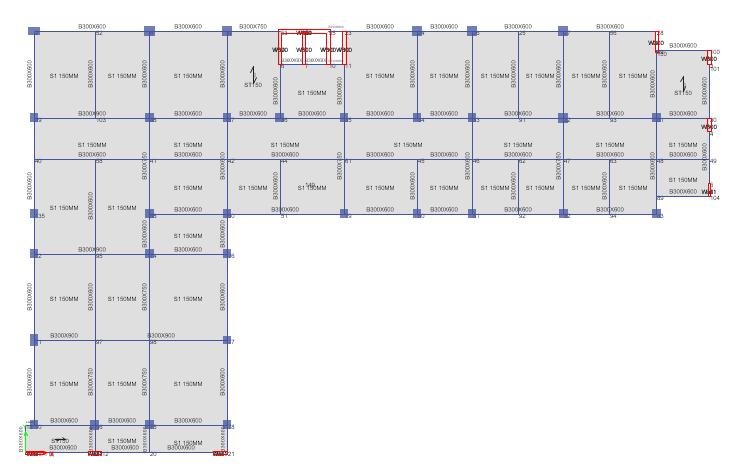
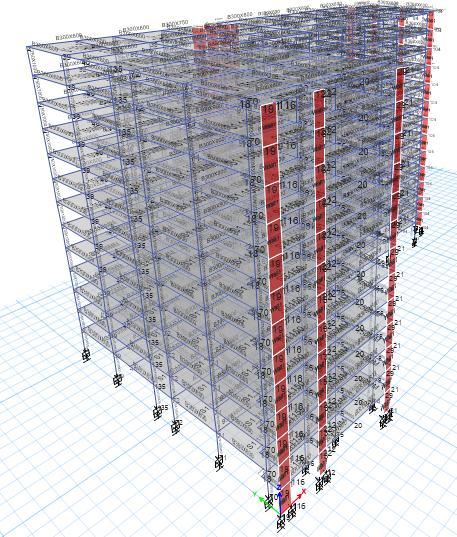
Table -1: InputDataParameter
Parameter
Value
NumberofStories 12
StoreyHeight 3m
PlanDimensions 36mts.X60mts.
Gradeofconcrete M30forbeamsandslabs M40forcolumnsandshearwalls
Longitudinal
Reinforcement Fe550
Confinement
Reinforcement Fe415
Seismiczone ZoneV
ImportanceFactor 1
ResponseReduction Factor FixBase=5
IsolatedStructure=2
DampingRatio 5%
SoilType TypeII(Medium)
StructuralSystem DualSystem:DuctileRCstructuralwalls withRCSMRFs
LocationofIsolation Layer Atthebaseofstructure
WindCoefficient
WindSpeedVb(m/s) 50 RiskCoefficient(k1 factor) 1 Terraincategory(k2) 2 Topography(k3 factor) 1
Importancefactor (k4) 1
Table -2: Typesofloads
International Research Journal of Engineering and Technology (IRJET) e-ISSN: 2395-0056
Volume: 12 Issue: 11 | Nov 2025 www.irjet.net p-ISSN: 2395-0072
Table -3: Membersandsizes Structural Element
A. EstablishDynamicParameters
Determineseismiczoneandzonefactor:
SeismicZone:V
ZoneFactor(Z):0.36
SeismicWeightonIsolationSystem(W):36555kN fromETABS
Identifysoiltype:
TypeII–MediumSoil
Selecttheresponsereductionfactor:
ForFixedBaseBuilding:R=5
ForIsolatedBuilding:R=2
Choosethetypeofisolator:
LeadRubberBearings:
LeadRubberBearings(LRB)arerubberbearingsmade upofalternatelayersofsteellaminatesandhotvulcanised rubberwithacylindricalcentralleadcore.
B. SetTargetPeriodandTargetDisplacement:
Formostbase-isolatedsystems,setthebuilding's periodto2-3seconds.
DefiningtheMaximumEffectiveNaturalPeriod(Teff, max)andMinimumEffectiveNaturalPeriod(Teff,min) at2.5and3.seconds,respectively.
C. Obtain Effective Stiffness, Effective Damping, and EstimateBaseShear:
Calculatetheeffectivestiffnessoftheisolator,asper CL.6.1.4ofIS-1893:Part6.
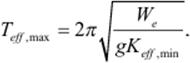
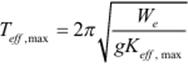
Keff_max= Keff_min= (36555/9.81)*(2π/3)2 (36555/9.81)*(2π/2.5)2 Keff_max =23.537kN/mm Keff_min =16.345kN/mm
Determinetheeffectivedampingrequired.
AssumeDampingRatioforthesystem,ζ=10% (Generallyconsideredbetween10-20)
Hencetheeffectivedampingcanbeestimatedas below, C=2*0.1*√(36555*23.537/9.81)= 59.23Kn-s/m
Estimatethebaseshearbasedontheeffectivestiffness anddamping.
DesignEarthquakeLateralForceforDesignof theComponentsofIsolationSystemandofthe StructuralElementsbelowthebaseasperCL. 6.1.5ofIS-1893:Part6:
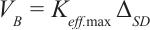
Vb =23.537*1000*0.159=3742.383Kn

Hence, Vs=3742.383/2=1871kn
TotalSeismicWeightonIsolationSystemWTotal=36555Kn
TotalStuffinessRequiredinIsolationSystem
KTotal=23.53Kn/m
TotalNumberofIsolatorspresentingroupn=36
TotalSeismicWeight: W=36555kN
∴StiffnessRequiredforgroup,Kreq=Ktotal*WG1/WTOTAL =23.53*36555/36555=23.53Kn/m
∴StiffnessRequiredperisolator, KG1=Kreq/n=23.537/36=1.430kN/mm
∴DampingRequiredperisolator,

CG1=2*0.1*√(36555*23.537*1000/9.81*36)=313kNs/m
Adetailedcomparisonoftheseismicresponsesforresponse spectrumanalysisoffixed-baseversusisolatedbuildingsis provided. This includes evaluating factors such as displacement, storey drift, acceleration, and force distribution:
Storeydisplacementreferstothehorizontalmovementor displacementofeachfloor(storey)ofabuildingrelativeto itsoriginalposition.Thisdisplacementistypicallymeasured duringseismiceventsorotherdynamicloadingconditions. Resultsarerepresentedintabularformatasbelow,
International Research Journal of Engineering and
Volume: 12 Issue: 11 | Nov 2025 www.irjet.net p-ISSN: 2395-0072
Chart -1:StoreyDisplacementsXDirection.
Chart -4:StoreyShearXDirection.
Chart -2:StoreyDisplacementsYDirection.
Chart -3:StoreyDriftXDirection.
Chart 5:StoreyShearYDirection.
B.ModalTimePeriods
Modal time periods represent the natural periods of vibrationofastructureinvariousmodes.Eachstructure has multiple modes of vibration, and each mode has an associated time period and mode shape. These time periodsarecrucialinseismicanalysisbecausetheyhelp predict how a structure will respond to different frequencies of earthquake ground motions. Modal time periodsdirectlyinfluencethespectralaccelerationvalues derived from the response spectrum. Shorter periods (higher frequencies) typically lead to higher spectral accelerations, indicating higher forces that the structure needs to withstand. Conversely, longer periods (lower frequencies) often correspond to lower spectral accelerations.TheTimeperiodsofthefixedandIsolated structuresarerepresentedinthefollowing
International Research Journal of Engineering and Technology (IRJET) e-ISSN: 2395-0056
Volume: 12 Issue: 11 | Nov 2025 www.irjet.net p-ISSN: 2395-0072
Table -4: ModalTimePeriod
[1] Tanwer M.T., Kazi T.A. and Desai M., 2019, A study on differenttypesofbaseisolationsystemoverfixedbased, InformationandCommunicationTechnology for Intelligent Systems (pp. 725-734). Springer, Singapore.
[2] Moniri H., 2017, Evaluation of seismic performance of reinforced concrete (RC) buildings under near-field earthquakes, International Journal of Advanced StructuralEngineering,9(1),pp.13-25
Modal 7 0.122 0.077
Modal 8 0.068 0.044
Modal 9 0.068 0.04
Modal 10 0.064 0.039
Modal 11 0.038 0.029
Modal 12 0.033 0.023
0 0.5 1 1.5 MODAL ANALYSIS
6.
Thisstudycomparestheseismicperformanceoffixed-base andLeadRubberBearing(LRB)base-isolatedmulti-storey buildings using IS 1893 (Part 6): 2022 and response spectrum analysis in ETABS 19. The results show significant improvements with base isolation, including reductionsof56–61%intop-storeydisplacement,55–60% in storey drift, 50–65% in storey shear, and 38–41% in storey acceleration. The fundamental time period increasedbyabout110%,shiftingthebuilding’sresponse away from dominant ground motion frequencies. These outcomes highlight the effectiveness of LRB isolation in enhancing seismic resilience, energy dissipation, and occupant safety, making it a reliable solution for critical structuresinhighseismiczones.
[3]IslamA.S., AhmadS.I., Jameel M.and Zamin M.J., 2012, SeismicBaseIsolationforbuildingsinregionsoflowto moderate seismicity: practical alternative design, Practice Periodical on Structural Design and Construction,17(1),pp.13-20.
[4]PatelK.andThakkarS.,2013,AnalysisofCFT,RCCand STEEL building subjected to lateral loading., Procedia Engineering,51,pp.259-265.
[5]MorettiS.,TrozzoA.,TerzicV.,Cimellar,G.P.andMahin S., 2014, Utilizing base-isolation systems to increase earthquake resiliency of healthcare and school building,ProcediaEconomicsandFinance,18,pp.969976.02040Zone1Zone3Zone4Zone3Decreasein Moment (%) Concrete Steel Composite ICAPSM 2021 Journal of Physics: Conference Series 2070 (2021) 012198 IOP Publishing doi:10.1088/17426596/2070/1/0121989
[6] IS 1893-1(2016), Criteria for Earthquake resistant DesignofStructures
[7]IS875:1987Part1&2,Codeofpracticefordesignloads (otherthanearthquake)forbuildingsandstructures.
[8]JamesMKelly&FarzadNaeim,DesignofSeismicIsolated Structure,JohnWiley&SonsInc.
[9]IS456:2000–PlainandReinforcedConcrete–Codeof Practice