
International Research Journal of Engineering and Technology (IRJET) e-ISSN: 2395-0056
Volume: 12 Issue: 03 | Mar 2025 www.irjet.net p-ISSN: 2395-0072
International Research Journal of Engineering and Technology (IRJET) e-ISSN: 2395-0056
Volume: 12 Issue: 03 | Mar 2025 www.irjet.net p-ISSN: 2395-0072
Dr Supriya Dinesh1 , Ankush Sanga2 , Aniruddha Gawande3, Atharva Bhondave4
1Professor, E&TC Engineering, JSPM’S Imperial College Of Engineering, Maharashtra, India 2,3,4Student, E&TC Engineering, JSPM’S Imperial College Of Engineering, Maharashtra, India
Abstract - In intensive care environments, monitoring coma patients with precision and reliability is crucial. Utilizing Li-Fi technology and IoT for patient monitoring allows continuous tracking of vital signs such as heart rate, body temperature, oxygen saturation, and respiratory rate. By integrating Li-Fi with IoT, the approach enhances patient safety and ensures continuous, reliable monitoring, representing a significant advancement in healthcare technology. The system uses the Arduino Mega to collect vital data from sensors and the ESP8266 esp- 01 for fast wireless transfer. Dataisstreamedin real-time to ThingSpeak, a cloudplatformforIoTanalytics,for processing and analysis. The Prototypes effectiveness is validated across various lighting conditions. Integrating LiFi with IoT offers a robust solution for continuous monitoring of coma patients, significantly improving healthcare quality and safety.
Key Words: Remote health monitoring, LiFi, IoT, Cloud telemedicine, healthcare support.
Healthcaresystemsrequirecontinuousmonitoringofcritical patients, especially coma patients, who are unable to communicatetheirphysicalconditions.Manualmonitoring ofsuchpatientsistime-consuming,pronetohumanerrors, and can delay emergency response. Traditional patient monitoring systems often rely on Wi-Fi-based communication protocols, which are vulnerable to electromagnetic interference (EMI) in hospital environments, posing risks to both patient safety and sensitive medical equipment. This creates a need for a reliable and automated patient monitoring system that providesreal-timedatawithoutinterference.
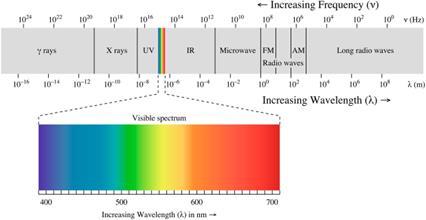
Li-Fi[1]technology,pioneeredbyHaraldHaasin2011,uses visiblelightfordatatransmission,emergingasapromising solutionforhealthcaresystems.UnlikeWi-Fi[2],Li-Fioffers faster,secure,andinterference-freecommunication,making itidealforhospitalenvironments.Thisprojectproposesa Cloud-BasedIoTComaPatientMonitoringSystemUtilizing Li-FiTechnologytocontinuouslymonitorpatientvitalssuch asheartrate,oxygensaturation,temperature,andmotion. ThesystemintegratesLi-FiwithIoT[3]toensureseamless data transmission locally and remotely via cloud[4] platforms.Additionally,Li-Fioperateswithinthevisiblelight spectrum(approximately400to700nm),whichsupportsa
broaderfrequencyrange(around4 × 1014 to7.5 × 1014 Hz) comparedto Wi-Fi’smicrowaverange(2.4GHzto5GHz), allowing for significantly higher data rates and enhanced coverageinwell-litareas.
The proposed model usesArduinoMega 2560asthecore con- troller to interface multiple biosensors, including MAX30100 for heart rate and SpO2, MPU6050 for motion detection, and DHT11 for temperature and humidity measurements.AnISD1820moduleprovidespre-recorded voicealerts,whicharetransmittedthroughLEDlightsignals andreceivedbyasolarpanel,establishingasound-basedLiFi communication link. Simultaneously, the ESP8266 - R1 Wi-FimoduleuploadssensordatatotheThingSpeakcloud platform, allowing remote access to patient information. Developing an efficient monitoring system presents challengessuchasensuringcontinuousoperation,reliable data transmission, and minimizing false alerts. The combinationofLi-FiandIoTcreatesadual-alertmechanism, enhancingsystemreliabilityandresponsetime.Thishybrid approach aims to reduce healthcare staff workload while enablingfasterandmoreaccuratepatientmonitoring.
Thispaperpresentsthedesign,workingmethodology,and theoreticalanalysisoftheproposedsystem,highlightingits potential to enhance patient care in healthcare environments.Byleveragingthehigh-speed,interferencefree nature of Li- Fi and the real-time data accessibility provided by IoT, the system ensures faster emergency responses and reduces the burden on healthcare professionals. Furthermore, the combination of cloud integrationanddual-alertmechanismsensurescontinuous monitoring,makingitareliablesolutionforcriticalpatient care.
International Research Journal of Engineering and Technology (IRJET) e-ISSN: 2395-0056
Volume: 12 Issue: 03 | Mar 2025 www.irjet.net p-ISSN: 2395-0072
TheintegrationofLightFidelity(Li-Fi)technologyinhealthcarehasevolvedprogressivelyoverrecentyears,addressing critical challenges in patient monitoring and data transmission.Initially,LiFiExperimentsinaHospital(May 2020)exploredthefeasibilityofLi-Fichannelmeasurements inaneurosurgeryroomatMotolUniversityHospital,Prague. ThestudydemonstratedthepotentialofmultiuserMIMOLiFi links, showcasing achievable data rates and setting the stageforpracticalLi-Fiimplementationinsensitivemedical environments. This foundational work proved Li-Fi’s capabilitytofunctionreliablywithinhospitalinfrastructure. [5]
Building on this, Health Care Assistive System in Hospital (November2022)introducedamoreappliedapproachby replacing traditional Wi-Fi-based monitoring with a Li-Fi system.IthighlightedLi-Fi’sadvantageinhigh-speeddata trans- mission,even in dynamicenvironmentsaffected by human movement. The system monitored clinical parameters such as temperature, pressure, pulse, hypoglycemia,andrespiration,ensuringdatawasprocessed anddisplayedinreal-time reducingthemanualworkload on healthcare professionals. This marked a shift from experimental data studies to practical implementations in livehospitalsettings.[6]
Subsequently,PerformanceEvaluationofSmartHealthcare MonitoringSystemUsingLi-FiTechnology(February2023) advancedtheconceptbyintegratingLi-FiwithIoTtoenable cloud-based monitoring. It demonstrated a dual-function system transmitting vital signs like heart rate and temperatureviaLi-Fitoacentralnursestation,whilealso uploadingthedatatoThingSpeakforremoteaccess.Email notifications were incorporated to alert doctors during critical events. This system was successfully tested on patientsatImamAl-SadiqHospital,BabylonCity,provingLiFi’s robustness under various channel conditions and environmentalnoise.[7]
Morerecently,LifiEnabledCloudBasedHealthMonitoring andMenaceDetectionSystemforWearableDevices(April 2024) expanded the scope to wearable devices, incorporating sensors for heart rate, temperature, gas detection,andbloodpressure.Itintroducedsecure,cloudbased data storage while maintaining real-time Li-Fi transmissiontostrategicallyplacedreceivers.Theresearch emphasizedthesystem’spotentialtoenhancepersonalized healthcare by ensuring long-term data accessibility and improvedsecurity acrucialsteptowardspatient-centric, data-drivenhealthcare.[8]
Finally,PatientHealthMonitoringSystemUsingLi-Fi(June 2024)presentedacutting-edgemodelcombiningLi-Fiwith Wi-Fi modules to create a hybrid, cloud-integrated monitoringsystem.Itfocusedonreal-timeupdatesofhealth parameters,utilizingMEMSaccelerometersandtemperature
sensors for continuous data collection. The system addressed practical challenges like manual monitoring fatigue by ensuring health data remains accessible to medicalprofessionalsremotelythroughtheUbidotscloud platform. This marked a shift towards intelligent, autonomouspatientmonitoringwithreliable,interferencefreeLi-Ficommunication.[8]
Collectively, these studies chart a clear trajectory from initialfeasibilityexperimentstofullyintegrated,cloud-based healthcare solutions. Each advancement addresses prior limitations, progressing towards faster, more secure, and accessiblemonitoringsystems.OurCloud-BasedIoTComa PatientMonitoringSystemUtilizingLi-FiTechnologybuilds directly on this foundation, incorporating real-time multisensor data col- lection, Li-Fi transmission, cloud storage, andalertsystemstoensurecontinuousmonitoringofcoma patients representingthenextstepinthistechnological evolution.
Comapatientsrequirecontinuousmonitoringduetotheir inability to respond to stimuli. Wi-Fi-based systems and traditionalmanualinspectionstakealotoftime,areproneto mistakes,andarevulnerabletoelectromagneticinterference (EMI), which increases the chance of missing important changes.Toguaranteeaccurate,continuouscareandlower the stress on medical staff, a real-time, interference-free monitoringsystemisnecessary.
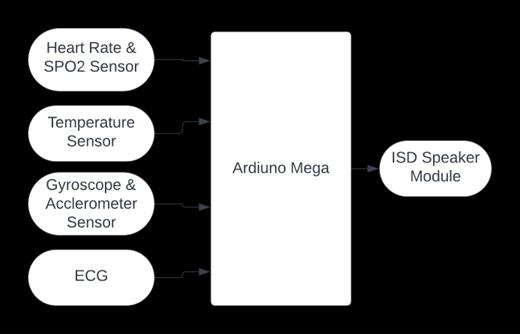
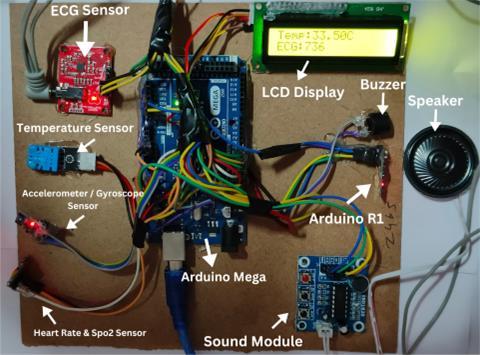
The Arduino Mega Setup serves as the core of the transmitter module. It integrates multiple sensors and modules to monitor patient vitals and trigger alerts when abnormal conditions are detected. The setup is explained below:
Heart Rate and SpO2 Sensor (MAX30100 I2C): Is connected to Arduino Mega to continuously measureheartrateandbloodoxygenlevels.Ithelps detectlowheartrateconditionsfortriggeringthe ISDmodule.Monitoringheartratevariability(HRV) iscrucialforcomapatients,asitreflectsautonomic nervous system disturbances that may indicate seizures, a common complication in post- cardiac arrestcases.[9]
International Research Journal of Engineering and Technology (IRJET) e-ISSN: 2395-0056
Volume: 12 Issue: 03 | Mar 2025 www.irjet.net p-ISSN: 2395-0072
Fig
Temperature Sensor (DHT11): Measures the patient’s body temperature and sends data to the ArduinoMegaforcontinuousmonitoring.
GyroscopeandAccelerometerSensor(MPU6050): tracks the patient’s body movements and orientation. It detects unusual movements or inactivity,contributingtothemonitoringsystem.
ECG(Electrocardiogram) Sensor: Records the electrical activity of the patient’s heart, helping trackcardiachealthandidentifyanyirregularities.
ISD1800 Module: This device is triggered by the Arduino Mega when a low heart rate condition is detected.Itplaysapre-recordedaudioalert(”LOW HEARTRATE”)tosignalanemergency.
Microphone connected to the ISD1800 module receivestheaudioalertandtransmitsitviatheLi-Fi transmitter,ensuringrapidcommunicationtothe receiversideforfurtherprocessing.
This transmitter setup ensures continuous patient monitoringwhileincorporatinganemergencyalertsystem using Li-Fi technology for faster, interference-free data transmission.
TheLi-Fisetupisdesignedtowirelesslytransmitemergency alertsfromthepatient’ssidetothenursestationusinglight signals.Thesetupfunctionsasfollows:
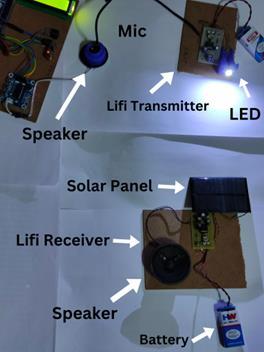
Microphone (Transmitter Side): It receives the audio alert triggered by the ISD1800 module and feeds the sound signal to the Li-Fi Transmitter module.
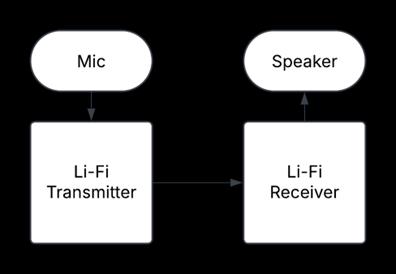
The Li-Fi transmitter converts the audio signal into light pulsesusingmodulationcircuitry.Thesoundisencodedinto rapidvariationsinlightintensity,wheretheLEDactsasa light emitter. If the LED is ON, a digital signal ’1’ is transmitted;ifOFF,adigitalsignal’0’istransmitted.Each LEDlightsourcefunctionsasa hubfordata transmission, enablinghigh-speedcommunication.[10]
• SolarPanel(ReceiverSide):Itcapturestheincoming lightpulsesandconvertsthemback into electrical signals.Thisactsasareceiver(Photo-diode)forthe light-baseddata.
Onthereceiverside,aphotodetector(lightsensor)captures theincominglightsignals.ItdetectstheLED’sONandOFF states,translatingthembackintobinarydata ’1’forlight and ’0’ for no light. This process, combined with signal processing equipment, ensures accurate, high-speed data retrievalfromthetransmittedlightbeam.[10]
• Speaker:Itispositionedatthenursestationwhich outputs the decoded audio alert, ensuring medical staffispromptlynotifiedincaseofanemergency.
Thissetupensuresfast,interference-free,andreliabledata transmission using Li-Fi technology, enhancing patient safetyandresponsetime.
The system was rigorously tested under various environmental and operational conditions to ensure consistentperformanceandaccuratedatatransmission.The transmitter (Tx) side integrates multiple sensors MAX30100 for heart rate and SpO2, MPU6050 for motion detection,DHT11fortemperature,andAD8232ECGsensor for heart activity monitoring. During initialization, the ArduinoMegaprocessesincomingdatafromthesesensors. To ensure the system starts properly, the LCD displays a welcome message:” Li-Fi Project,” followed by” System Initializing.” This ensures the user knows the setup is running. The ESP8266 R1 Wi-Fi module then attempts to establishaninternetconnection.Abuzzerbeepconfirmsa successfulconnection,ensuringdatacannowbetransmitted totheThingSpeakcloudplatformforremotemonitoring.
International Research Journal of Engineering and Technology (IRJET) e-ISSN: 2395-0056
Volume: 12 Issue: 03 | Mar 2025 www.irjet.net p-ISSN: 2395-0072
Oncethesystemisfullyoperational,real-timesensordatais displayedonthe16x2I2CLCD.Theheartrate,temperature, SpO2,andmotiondataupdatecontinuously.TheESP8266R1 handles cloud communication fetching and pushing data to the cloud platform. This ensures data is not only availablelocallyontheLCDbutalsoaccessibleremotelyby healthcare professionals, ensuring continuous monitoring fromanywhere.Thebeepsystemhelpsconfirmsuccessful datatransmission,reducinguncertaintyincommunication. This dual-layered data flow ensures that even if the cloud failstemporarily,thelocalLCDstillprovideslivereadingsfor immediatereference.
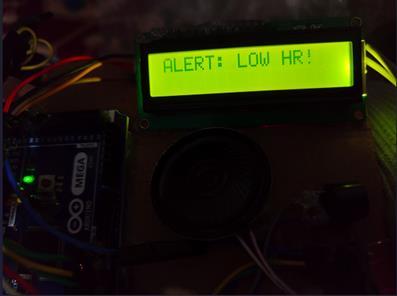
Thealertsystemisacriticalcomponentdesignedtorespond promptly to emergencies. If the heart rate falls below 70 BPMortheECGsensorfailstodetectanyinput indicating a potential heart failure or lead disconnection the LCD immediatelydisplays”LOWHR!”asshownintheimage.This visual alert ensures any nearby caregiver can quickly recognize the issue. Simultaneously, the ISD1820 voice recording mod- ule activates. It plays a pre-recorded messageindicatingtheemergency,whichistransmittedtoa microphone connected to the Li-Fi transmitter. This innovative setup converts the audio alert into modulated lightsignalsforwirelesstransmission.
On the receiver (Rx) side, the solar panel captures the incomingLi-Filightsignalandconvertsitbackintoelectrical signals. These signals are demodulated and passed to a speakeratthenursestation.Thesystemensuresthealertis loudlyannounced,evenifmedicalstaffareawayfromthe displayormonitoringsystem.Thisensuresthatthealertis not just confined to digital monitoring but also reaches human responders physically and audibly a crucial redundancy in critical care environments where every secondcounts.
The system’s complete data flow follows a structured and reliablepath:
1) Sensor data collected → Displayed on LCD (local feedback)
2) Sensordata→PushedtoThingSpeakcloud(remote monitoring)
3) Low HR/No ECG detected → ISD1820 voice alert triggered
4) ISD1820output→Microphone→Li-Fitransmitter →Solarpanel(Rx)
5) Signal demodulated → Speaker at nurse station announcesalert
Thismulti-layeredapproachensuresmaximumreliability combining cloud-based remote monitoring with local physicalalertsviaLi-Fitechnology.Thesystemminimizes human error, enhances response times, and ensures continuous monitoring, providing a strong foundation for futuremedicalalertsystemsincriticalcareenvironments.
ThesystemutilizesThingSpeak,anopen-sourceInternetof Things(IoT)platform,tocollect,store,andvisualizepatient data in real time. ThingSpeak supports up to 2 lakh data entries,providingamplestorageforcontinuousmonitoring
International Research Journal of Engineering and Technology (IRJET) e-ISSN: 2395-0056
Volume: 12 Issue: 03 | Mar 2025 www.irjet.net p-ISSN: 2395-0072
over extended periods. It allows easy configuration of multipledatafields,enablingthedisplayofvarioushealth parameters such as heart rate (BPM), SpO2, temperature, motion(X-axis,Y-axisfromMPU6050),andECGreadings. This data is plotted with time and date on the X-axis and correspond-ingsensorvaluesontheY-axis,offeringaclear, dynamicvisualizationofthepatient’svitalsigns.Thishelps healthcare professionals observe trends and identify anomaliesovertime.
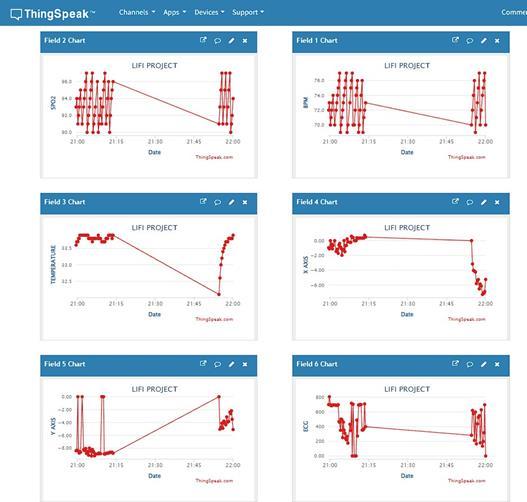
TheESP8266R1WiFimoduleactsasthebridgebetweenthe sensorsandtheThingSpeakplatform.Itcommunicatesusing HTTPGETrequests,pushingdatathroughThingSpeak’sAPI key.Eachsensor’sdataistransmittedtoitsrespectivefield in the cloud channel. After a successful connection, the modulesendsformatteddatastringscontainingBPM,SpO2, ECG, temperature, and motion values. ThingSpeak acknowledges each update, ensuring data integrity. The systemalsofeaturesabuzzerconfirmationtonethattriggers oncedataissuccessfullyuploaded,addinganextralayerof reassurancethatthedatatransmissionisreliable.
ThingSpeak stands out from other platforms due to its simplicity, extensive storage, and advanced data visualization tools. It supports live charts, field averaging, andMATLABanalysisintegrationfordeeperinsights.
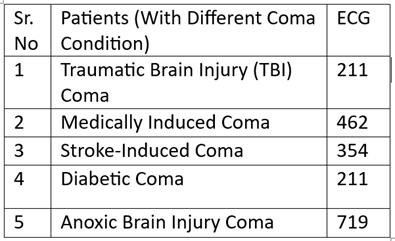
Thesystemwastestedondifferenttypesofcomatosepatient scenarios,eachreflectinguniqueECGpatternsandbehavior.
For traumatic brain injury (TBI) and anoxic brain injury cases, ECG values showed irregular spikes, indicating moments of cardiac stress or compensation a pattern missed by conventional heart rate (HR) sensors. Diabetic coma simulations produced low, steady ECG readings, matching the slowed heart activity caused by severe hypoglycemia.Meanwhile,stroke-inducedcomascenarios displayed moderate fluctuations, reflecting the brain’s partiallossofcontroloverautonomicfunctions.Medically induced coma setups exhibited stable, controlled ECG outputs, supporting the expected baseline rhythm maintainedduringsuchprocedures.Theobservationtable documented how different coma types demonstrated distinctiveECGbehavior,provingtheneedforcontinuous, type- specific monitoring rather than relying on generic pulse-basedreadings.
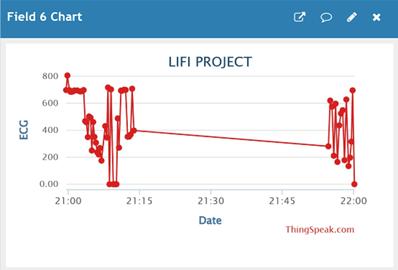
ECGmonitoringwasprioritizedovertraditionalheartrate sensorsduetoitshigheraccuracyandreliability.ArduinocompatibleheartratesensorslikeMAX30100oftenvaryin performance based on the manufacturer, leading to inconsistent readings under different conditions especiallywhensensorsfailtomaintainskincontact.ECG,on the other hand, captures the heart’s electrical activity
International Research Journal of Engineering and Technology (IRJET) e-ISSN: 2395-0056
Volume: 12 Issue: 03 | Mar 2025 www.irjet.net p-ISSN: 2395-0072
directly, providing a more detailed and accurate representationofcardiacbehavior.Thisensuresthatcritical changes, such as arrhythmias or flatlines, are detected instantly. The observation data supports this decision, showingthatECGoutputsremainedstableevenwhenheart rate sensors produced fluctuating or false readings. This furthervalidatesthesystem’sdesignchoicetorelyonECG forreal-timepatientconditionassessment.
Theimplementedresultsdemonstratethatthistechnology holds significant potential for deployment in hospital environments, providing a safer alternative to traditional Wi- Fi by eliminating electromagnetic interference (EMI). TheintegrationofArduinoMegaandArduinoESP8266-R1 forIoTfunctionality,combinedwithThingSpeakasacloudbaseddatabaseforreal-timemonitoring,ensuresefficient data handling and analysis. The Li-Fi system, acting as a reliablealertmechanism,ensuresimmediatenotificationat thenursestation,promotingfasterresponsetimesincritical situations. Additionally, this approach enhances patient safety,particularlyforthosevulnerabletoEMI,suchascoma patientsorindividualswithpacemakers.Withitslowlatency and high- speed data transfer, this setup lays the groundwork for more advanced, secure healthcare communicationsystems.
This project marks just the beginning of exploring Li-Fi technology in healthcare and beyond. Companies like Nav WirelessTechnologiesandgroupofprofessorsinNational University of San Juan, San Juan, Argentina have already demonstratedthepotentialofLi-Fiinprovidingconnectivity solutionsinruralregionsandremoteareaslikeLadakhand Las Liebres (Small town in Argentina) respectively [11], wheretraditionalnetworksstruggle.Movingforward,Li-Fi couldevolvefromaspecializedalertsystemtobecomingthe primary mode of data transmission in hospitals, enabling faster,safer,andinterference-freecommunicationforrealtimepatientmonitoring,telemedicine,andevenhigh-speed datasharingbetweenmedicaldevices.Withadvancements inLi-Fihardwareandinfrastructure,thevisionofanEMIfree,high-speed,andsecurewirelessenvironmentacrossall sectors from hospitals to smart cities can become a reality.
[1] H. Haas and C. Chen, “What is lifi?” in 2015 European ConferenceonOpticalCommunication(ECOC),2015,pp. 1–3.
[2] C.Zeyu,“6g,lifiandwifiwirelesssystems:Challenges, developmentandprospects,”in202118thInternational Computer Conference on Wavelet Active Media
TechnologyandInformationProcessing(IC-CWAMTIP), 2021,pp.322–325.
[3] IntroductiontotheInternetofThings,2018,pp.1–50.
[4] J.SurbiryalaandC.Rong,“Cloudcomputing:Historyand overview,”in2019IEEECloudSummit,2019,pp.1–7.
[5] S.M.Mana,P.Hellwig,J.Hilt,K.L.Bober,V.Jungnickel,K. Hirmanova,P.Chvojka,R.Janca,andS.Zvanovec,“Lifi experiments in a hospital,” in 2020 Optical Fiber Communications Conference and Exhibition (OFC), 2020,pp.1–3.
[6] R.Ramadevi,T.Kowsalya,D.Kumar,P.Nagarajan,andJ. Manikandan, “Health care assistive system in hospital for doctor to view the patient’s parameter in a cloud databaseusinglightfidelity,”in2022SixthInternational ConferenceonI-SMAC(IoTinSocial,Mobile,Analytics andCloud)(I-SMAC),2022,pp.264–267.
[7] M.R.Abdali,I.A.Murdas,H.A.Al-Sady,andZ.M.Baqir, “Performanceevaluationofsmarthealthcaremonitoring system using li- fi technology,” in 2023 Second International Conference on Advanced Computer Applications(ACA),2023,pp.135–141.
[8] U.JhananiShree,M.AnithaMary,P.Likshitha,K.Priya, andM.Priyadarshini,“Lifienabled cloud-basedhealth monitoringandmenacedetectionsystemforwearable devices,” in 2024 International Conference on Communication, Computing, and Internet of Things (IC3IoT),2024,pp.1–5.
[9] C.-W.Sung,J.-S.Shieh,W.-T.Chang,Y.-W.Lee,J.-H.Lyu, H.-N.Ong,W.-T.Chen,C.-H.Huang,W.-J.Chen,andF.-S. Jaw,“Machinelearninganalysisofheartratevariability forthedetectionofseizuresincomatosecardiacarrest survivors,” IEEE Access, vol. 8, pp. 160 515–160 525, 2020.
[10] H. Haas, “Lifi: Conceptions, misconceptions and opportunities,” in 2016 IEEE Photonics Conference (IPC),2016,pp.680–681.
[11] L.Mart´ınez,M.DiPaneGo´mez,L.Tejada,andS.Luna, “Thetechnologicallinktothecommunicationsserviceof an isolated rural population using the visible light communication,” in 2020 South American Colloquium onVisibleLightCommunications(SACVC),2020,pp.1–5.