
International Research Journal of Engineering and Technology (IRJET) e-ISSN: 2395-0056
Volume: 12 Issue: 10 | Oct 2025 www.irjet.net p-ISSN: 2395-0072
International Research Journal of Engineering and Technology (IRJET) e-ISSN: 2395-0056
Volume: 12 Issue: 10 | Oct 2025 www.irjet.net p-ISSN: 2395-0072
Akhil Paul1 , Dr. M S Nagaraja Gupta2
1PG Scholar, Dept. of Civil Engineering, EWIT, Bangalore 2Professor and Head, Dept. of Civil Engineering, EWIT, Bangalore
Abstract - The Karyambadi–Pulpally–Kenichira Road in Wayanad district, Kerala, serves as a vital corridor linking remote rural settlements to the broader state highway network. Over time, this stretch has undergone significant deterioration due to ageing pavement, heavy monsoonal rainfall, and weak subgrade conditions. This study presents a comprehensive geotechnical investigation undertaken to provide reliable design inputs for pavement rehabilitation using Bituminous Macadam (BM) and Bituminous Concrete (BC).Fieldworkincludednineboreholes,StandardPenetration Tests(SPT),pavementconditionsurveys, and thecollectionof soil samples. Laboratory testing comprised grain size distribution, Atterberg limits, compaction tests, specific gravity, shear strength, and California Bearing Ratio (CBR) analysis. Results indicated a heterogeneous subsoil profile dominated by clayey sands, silty clays, and lateritic soils, with medium to high plasticity and high optimum moisture contents. Soaked CBR values at several locations were below 5%, classifying the subgrade as weak under IRC: 37–2018 guidelines.Structuralrecommendationsincludeconservative pavement design with thicker sub-base and base layers, pile foundations forbridgelocationsunderlainby weakclays,and enhanced drainage systems to mitigate moisture-related failures. The findings provide critical guidance for designing durable,cost-effective,andsustainableroadinfrastructure in high-rainfall hilly terrains.
Key Words: Geotechnicalinvestigation,Subgradestrength, CBR,Pavementrehabilitation
1.
Roadnetworksplayavitalroleinenhancingconnectivity, promoting trade, and supporting socio-economic development, particularly in rural and hilly regions. In Kerala, where agriculture and tourism dominate the economy, reliable road infrastructure is essential for the mobility of people and goods. The Karyambadi–Pulpally–Kenichira Road in Wayanad district is a critical corridor linking remote settlements to the state highway network. However, this stretch has undergone significant deterioration over the years due to heavy rainfall, poor drainage, and subgrade failure, resulting in alligator cracking,potholes,andunsaferidingconditions[1],[2].
Conventionaloverlayorresurfacingmethodsareinadequate in such terrains, as they do not address the fundamental issueofweaksubgradesupport.HighrainfallinWayanad, exceeding6,900mmannually,causeswateringress,swelling of clayey soils, and erosion of lateritic layers, which acceleratepavementdistress(IMD,2020).Previousstudies havedemonstratedthatroadfailuresintropicalandhighrainfall environments are closely associated with soil plasticity, poor drainage, and inadequate pavement thickness[3].Toensuredurablerehabilitation,itbecomes essential to investigate the geotechnical characteristics of theunderlyingsoilsandtodesignpavementandfoundation systems based on site-specific data rather than generic assumptions[4],[5].
This study presents the results of a comprehensive geotechnical investigation carried out along an 8.6 km stretch of the Karyambadi–Pulpally–Kenichira Road. Field investigations included borehole drilling, Standard PenetrationTests(SPT),andpavementconditionsurveys. Laboratorytestsdeterminedindexproperties,compaction behaviour,andCalifornia BearingRatio(CBR)values.The findingsprovidecriticalinputforpavementrehabilitation, foundation recommendations for retaining walls and bridges,anddrainagedesign,ultimatelyensuringthelongtermperformanceofthisvitalruralcorridor[6],[8]
Thestrengthanddurabilityoftheunderlyingsoilsstrongly govern the performance of road pavements. Several researchers have highlighted that weak or highly variable subgrades are the primary causes of premature pavement distress. Boboc et al., [3] emphasised the significance of geotechnicalinvestigationsinrehabilitationprojects,noting that accurate subsurface characterisation is essential for identifying problematic soil layers and determining appropriatestructuralsolutions.
Lateriticandclayeysoils,whicharewidelydistributedacross tropicalregions,havebeenextensivelystudiedinthecontext of pavement construction. Amadi et al., [4] investigated lateritic soilsin Minna,Nigeria. Theyconcluded that while these soils could provide satisfactory strength when well compacted, their high plasticity and moisture sensitivity
International Research Journal of Engineering and Technology (IRJET) e-ISSN: 2395-0056
Volume: 12 Issue: 10 | Oct 2025 www.irjet.net p-ISSN: 2395-0072
oftenlimitperformance.Similarly,Olofinyoetal.[5]reported thatresidualsoilsinsouthwesternNigeriaexhibitedvariable engineering properties, necessitating stabilisation or increasedpavementthicknesstoensuredurability.Studiesin Indiaandothertropicalregionsalsohighlighttheimpactof high rainfall on lateritic soils, whichtend to soften rapidly undersaturatedconditions,resultinginreducedCalifornia Bearing Ratio (CBR) values and compromised subgrade performance[6]
Moisture ingress and drainage inadequacy have been identifiedasrecurringfactorsinpavementfailures.Fatobaet al. [7] observed that poor drainage and fluctuating groundwaterconditionsinOgunState,Nigeria,accelerated subgrade distress, making overlay solutions ineffective. Sandven and Solberg [8] emphasised the importance of integrating geotechnical and geophysical methods to map weak soils and quick-clay deposits in highway projects, therebyunderscoringthenecessityforthoroughsubsurface evaluationbeforepavementrehabilitation.
IntheIndiancontext,theIndianRoadsCongress[1]provides CBR-based design guidelines, recommending thicker base andsub-baselayersforsubgradeswithsoakedCBRvalues below5%.TheKeralaPWDManual[2]similarlystressessoil stabilisation and drainage measures, particularly in hilly terrains where lateritic and clayey soils dominate. With Wayanadreceivingover6,900mmofrainfallannually(IMD, 2020), the local soils are highly vulnerable to erosion and weakening,whichexacerbatespavementdeterioration.
Insummary,literatureindicatesthatwhilelateriticsoilsare commonlyused in roadconstruction, their performance is highly dependent on compaction, plasticity, and moisture control.Weaksubgradesandpoordrainageremaincritical challengesintropical,high-rainfallterrains,underscoringthe need for site-specific geotechnical investigations to design sustainablepavementandfoundationsolutions.
Themethodologyemployedinthisprojectwasdesignedto thoroughly evaluate the subsoil characteristics along the Kakkavayal–Kolavayal–Karyambadi–Kenichira–Pulpally Road in the Wayanad district. The approach consisted of sequentialstepsinvolvingsiteinspection,fieldinvestigation, laboratory testing, data analysis, and interpretation for designinput.
Soilinvestigationusingrotaryboringisasystematicprocess thataimstodeterminethesubsurfacecharacteristicsofsoil and rock layers to inform design decisions in civil engineering projects. Borehole investigations were conducted at six locations, with predefined intervals of approximately1.5metersorateverychangeinstratum.The drillingprocessispausedtocollectsoilsamples.Disturbed samplesareobtainedusingsplit-spoonsamplersandstored in labelled bags or containers for laboratory testing. In
cohesivesoils,undisturbedsamplesareretrievedusingthinwalledShelbytubes,whichallowformoreaccuratestrength andconsolidationtests.Simultaneously,in-situtestssuchas theSPTareperformedwithintheboreholes.
When hard strata or rock layers are encountered during drilling,rotarycoringisemployed.Adiamond-tippedcore barrel cuts through the rock, and the recovered cores are carefullyextractedandstoredincoreboxes.Thesecoresare subsequentlyanalysedforunconfinedcompressivestrength andclassifiedbasedonfactorssuchasrocktype,degreeof weathering,andthepresenceoffractures.Throughoutthe investigation, the depth of the groundwater table is monitoredbyobservingwaterinflowintotheborehole.
To investigate the pavement structure more closely and collect representative samples for testing, trial pits measuring1.0m×0.60mwereexcavated,withhalfofthe pitextendingontothecarriagewayandtheotherhalfinto theshoulder.Thepitsweredismantledcarefullytoexpose thefulldepthofthepavement,enablingaclearidentification of individual layers and their thicknesses. Disturbed soil samplesrequiredfortheCBRtestwerethencollectedfrom theexposedsubgradelevels,typicallybetween0.5mand1.0 m depth, since this is the critical layer that supports pavement loads. Sampling was conducted using hand shovels,augers,orsplit-spoonsamplers,dependingonthe fieldconditions.Carewastakentoensurethatthecollected samples were free from biological matter, oversized particles,anddebris,sothattheyaccuratelyrepresentedthe in-situsubgradematerial.Immediatelyaftercollection,the soil was placed in clean, airtight polythene bags or sealed containerstominimisechangesinnaturalmoisturecontent anddensity.Everysamplewascautiouslynamedwithdetails such as location, chainage, depth, trial pit or borehole number, and date of collection, ensuring traceability and reliability during subsequent testing. These soil samples were later conveyed to the laboratory for determining engineeringproperties,withaparticularfocusontheCBR test, which provides vital input for evaluating subgrade strengthandplanningpavementrehabilitationstrategies.
The tests conducted on disturbed and undisturbed soil samplesinclude:
1. GrainSizeDistribution(SieveAnalysis)
2. AtterbergLimits–including:
a. LiquidLimit(LL)
b. PlasticLimit(PL)
c. PlasticityIndex(PI=LL–PL)
3. MoistureContent
4. BulkDensityandDryDensity.
5. SpecificGravityofSoilParticles.
6. ShearStrengthCharacteristics.
7. CaliforniaBearingRatio(CBR)Test.
8. ProctorCompactionTests–
a. StandardProctorTest
b. ModifiedProctorTest
International Research Journal of Engineering and
Volume: 12 Issue: 10 | Oct 2025 www.irjet.net
OptimumMoistureContent(OMC)andMaximumDry Density(MDD).
Tests were conducted on soil samples from the pit in accordancewiththerelevantIndianStandardspecifications. All procedures followed the guidelines outlined in SP: 36 (Part-1), 1987, of the Bureau of Indian Standards (BIS), ensuringthereliabilityandconsistencyoftheresults.These tests provided essential information on the physical and chemicalpropertiesofthesoils,formingacriticalbasisfor evaluating their suitability for pavement and foundation design
Thesubsurfacedataacrosstheinvestigated8.6kmcorridor indicateaheterogeneousprofiledominatedbyclayeysands (SC), silty clays (CI/MH) and lateritic horizons, with intermittent weathered/hard rock at shallow to moderate depths(refusaldepthsandmeasuredUCSvalues).Standard PenetrationTest(SPT)‘N’valuesandlaboratoryindextests reveal a broad range of engineering behaviour, from very soft/low-strength fine-grained layers to medium–dense sandy units and competent rock (UCS: 41–55 N/mm², recorded at different boreholes). The dataset includes boreholelogsandindex-propertytables,grain-sizecurves, and Atterberg limits as given in Tables 1 and 2. The compactionresults(MDD/OMC)andsoakedCBRtestresults are presented in Table 3, Chart 1 and Chart 2. The soil samplescollectedfromtheboreholearegiveninFigure1.
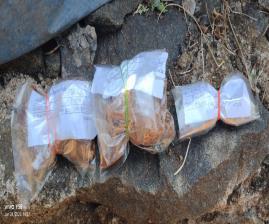
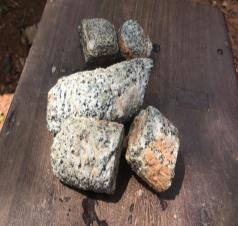
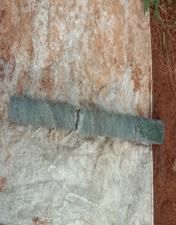
Table -1: SoiltypeandAtterberglimitsofcollectedsamples
Volume: 12 Issue: 10 | Oct 2025 www.irjet.net
International Research Journal of Engineering and Technology (IRJET)
Volume: 12 Issue: 10 | Oct 2025 www.irjet.net
Table -2: GrainSizedistributionandpropertiesofsoil
Theuppermost0–3miscommonlyclayeysandorlateritic crust;pocketsofinorganicsilts/high-plasticityclays(MH/CI) occuratshallowdepthsinsomeboreholes.Severalboreholes encountered weathered to hard rock between ~3–8 m; reportedunconfinedcompressivestrengths(UCS)forhard rock range from 41 to 55 N/mm², indicating generally competentrockforsocketingpiles.RecordedSPTN-values spanverylow(Napproximatelyfrom1–5)insoftclay/silt zonestomoderate/high(N>20)indensesand/weathered zones; several re-bounded/refusal readings indicate rock. Thiscontrastdemonstratesalternatingweakandcompetent layerswithinshortverticaldistances,whichisakeydesign concernforbothpavementsupportandfoundations.
Liquidlimitsrecordedinboreholesrangefromabout~29% upto53%,withplasticityindicescommonlyinthe~7–22% range(e.g.BH-5:LL≈53%,PI≈22%).Thesevaluesindicate medium to high plasticity in several fine-grained deposits, withcorrespondinglyhighersusceptibilitytovolumechanges (shrinkage–swelling) and reduced bearing capacity when saturated. Grain-size curves show dominance of sand fractionsinmanysamples(sand >finefractionsinclayeysand layers) but significant fines in silty/clayey units. The mixedtextureexplainsthevariableSPT/C.W.(consistency) results. High LL and PI in near-surface layers indicate a potential for swelling and strong moisture sensitivity; granular sandy bands are locally favourable but discontinuous.Pavementsubgradebehaviourwilltherefore vary along the alignment, as some stretches will be highly compressible/weak when wet, while others will be reasonablystable.
International Research Journal of Engineering and Technology (IRJET) e-ISSN: 2395-0056
Table -3: CaliforniaBearingRatiotest
Sample ID Test
I MDD, (MaximumDry UnitWeight) 1.66 g/cm3
OMC% 21
CBRat100% MDD 4
II MDD, (MaximumDry UnitWeight) 1.87 g/cm3
OMC% 16
IS-2720Part7-2020
IS-2720Part2-2020
IS-2720Part7-2020
IS-2720Part2-2020
CBRat100% MDD 9 IS2720-161987
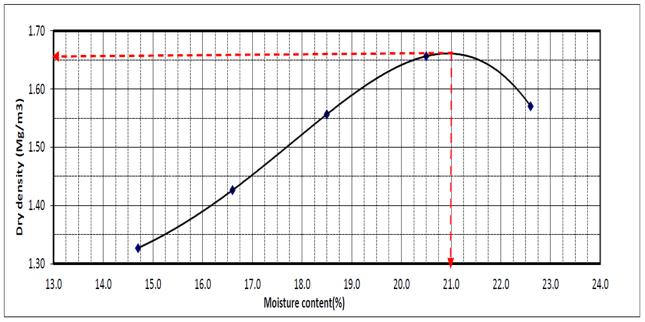
Chart -1:DryDensityv/sMoisturecontentforSampleI
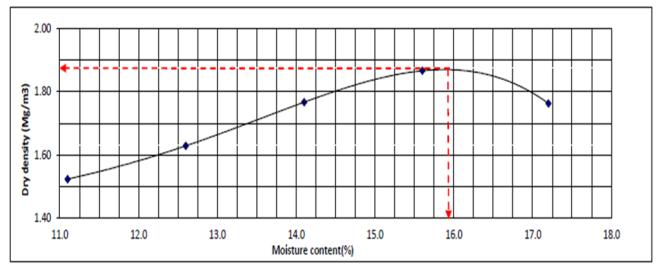
Chart -2:DryDensityv/sMoisturecontentforSampleII
ModifiedProctorresultsforrepresentativesamplesindicate MDDvaluesof~1.66–1.87g/cm³,withOMC≈rangingfrom 16%to21%.HigherMDDcorrelateswithhigherCBRinthe providedsamples(1.87g/cm³→9%CBRversus1.66g/cm³ →4%CBR),showingtypicaldependenceofstiffness/CBRon compaction.Nonetheless,eventhebettersample(CBR≈9%) ismarginalforbasesupport;severallocationsarewellbelow the acceptable base design thresholds, especially under soakedconditions.
The findings revealed that the subsoil profile varies significantlyacrossthealignment.Predominantly,thesoilis composed of silty clays and clayey sands, with occasional gravellylayersandweatheredrockstrataatdeeperlevels.
TheAtterberglimittestspresentedthatthefine-grainedsoils havemediumtohighplasticity,indicatingmoderateswelling and shrinkage tendencies, which can adversely affect subgradestabilityunderfluctuatingmoistureconditions.The resultsofthecompactiontestexposedthatthesoilsachievea moderateMDDwhilerequiringarelativelyhighOMC.This showsthatthesoilshaveabehaviourtoretainwaterandare prone to volume changes when exposed to variations in moisture.
TheSPTN-valuesrecordedacrosstheboreholeshighlighted variabilityinsoilconsistency,rangingfromsofttomedium stiff in clayey zones and medium dense to dense in sandy strata. At specific depths, refusal was encountered, confirming the presence of highly weathered rock and boulderystrata.Theseoutcomesproposethatwhilespecific stretchesareunderlainbycompetentmaterial suitablefor shallow foundations, other stretches will require strengtheningmeasuresbeforetheycansafelysustaindesign trafficloads.
The CBR test results, which form the cornerstone of pavementdesign,indicatedrelativelylowsubgradestrength, especially under soaked conditions. Soaked CBR values in severaltestlocationswerebelow5%,whichfallswithinthe weak subgrade category as per IRC:37–2018 recommendations. This reinforces the need for adequate pavementthicknessandtheprovisionofwell-drainingsubbaseandbaselayerstopreventprematurefailuressuchas rutting,cracking,andpotholing.Furthermore,thepresenceof a high groundwater table at some locations necessitates carefuldrainagedesign,includingsidedrains,cross-drainage structures,andsubsurfacedrainsincriticalstretches.
[1] Indian Roads Congress (IRC:37–2018). Guidelines for theDesignofFlexiblePavements.NewDelhi:IRC.
[2] Kerala Public WorksDepartment(2019). Kerala PWD Manual–RoadsandBridges.GovernmentofKerala.
[3] Boboc,V.,etal.(2017).SiteSoilInvestigationsforRoad Rehabilitation.ProcediaEngineering,189,304–311.
[4] Amadi,A.N.,etal.(2015).AssessmentofGeotechnical Properties of Lateritic Soils in Minna, North Central Nigeria for Road Design and Construction. Journal of GeotechnicalandGeologicalEngineering,33,125–135.
[5] Olofinyo,O.O.,etal.(2019).EngineeringPropertiesof ResidualSoilsinSouthwesternNigeria:Implicationsfor Road Foundation. Environmental Earth Sciences, 78, 507.
[6] Umar,I.H.,etal.(2024).SoilCharacterisationandCBR Modelling for Road Subgrades: A Case Study of Yobe
Volume: 12 Issue: 10 | Oct 2025 www.irjet.net p-ISSN: 2395-0072 © 2025, IRJET | Impact Factor value: 8.315 | ISO 9001:2008
International Research Journal of Engineering and Technology (IRJET) e-ISSN: 2395-0056
State, Nigeria. International Journal of Pavement Engineering.
[7] Fatoba, J. O., et al. (2015). Influence of Subgrade PropertiesonPavementFailuresinOgunState,Nigeria. ConstructionandBuildingMaterials,94,640–647.
[8] Sandven, R., Solberg, I.-L. (2014). Geophysical and Geotechnical Investigations for a Major Highway in a Quick-ClayArea.EngineeringGeology,181,15–27.
[9] IndianMeteorologicalDepartment(IMD,2020).Annual ClimateSummaryforKerala.
[10] IRC:SP:72–2015.GuidelinesfortheDesignofFlexible PavementsforLowVolumeRuralRoads.
Volume: 12 Issue: 10 | Oct 2025 www.irjet.net p-ISSN: 2395-0072 © 2025, IRJET | Impact Factor value: 8.315 | ISO 9001:2008 Certified