
International Research Journal of Engineering and Technology (IRJET) e-ISSN: 2395-0056
Volume: 12 Issue: 10 | Oct 2025 www.irjet.net p-ISSN: 2395-0072
International Research Journal of Engineering and Technology (IRJET) e-ISSN: 2395-0056
Volume: 12 Issue: 10 | Oct 2025 www.irjet.net p-ISSN: 2395-0072
Assistant Professor/Civil, JKKMCT , T.N Palayam Erode
ABSTRACT : Cement production contributes nearly 8% of global anthropogenic CO₂ emissions, making it a significant driver of climate change. Incorporating microsilica (silica fume) as a supplementary cementitious material (SCM) presents an effective strategy to develop sustainable, low-carbon, and high-performance concrete. This study explores the mechanical and environmental performance of concrete in which cement was partially replaced with microsilica at 5%, 10%, and 15% proportions. A Life Cycle Assessment (LCA) was carried out following ISO 14040/44 standards to evaluate embodied carbon, energy consumption, and associated environmental trade-offs. Experimental investigations included compressive, split tensile, and flexural strength tests, along with durability assessments such as rapid chloride permeability and sulphate resistance tests. The findings revealed that a 10% microsilica replacement level achieved optimal performance, resulting in a 20–25% reduction in CO₂ emissions and an approximate 15% improvement in compressive strength compared to conventional concrete. Additionally, microsilica-enhanced mixes demonstrated superior resistance to chloride ion penetration and sulphate attack, indicating enhanced durability. However, environmental benefits depend on efficient sourcing and transportation management of microsilica, as these factors influence overall embodied emissions. The study concludes that partial cement replacement with microsilica is a practical and environmentally sustainable approach to reduce the carbon footprint of the construction sector while simultaneously improving structural performance and durability. Thus, microsilica-modified concrete can play a pivotal role in achieving global sustainability targets for green construction materials and carbon-neutral infrastructure.
Keywords : Microsilica, Silica Fume, Carbon Footprint, Supplementary Cementitious Material, Life Cycle Assessment (LCA), Sustainable Concrete, Cement
Replacement,EnvironmentalTrade-off,Durability,CO₂EmissionReduction
1. INTRODUCTION
The demand for cement continues to rise with global infrastructure development, leading to significant environmental impacts. The production of one tonne of cement emits approximately 0.8–0.9 tonnes of CO₂ due to calcination and hightemperature kiln operations. In this context, utilizing industrial by-products such as microsilica (silica fume) as a partial cement replacement has emerged as an effective strategy to reduce both environmental impact and improve concrete performance.Microsilicaisaby-productoftheferro-siliconindustry,richinamorphousSiO₂,andhighlypozzolanicinnature. Its ultra-fine particle size enhances packing density, reduces permeability, and improves long-term strength and durability. However, while microsilica is recognized for its mechanical benefits, its environmental trade-offs such as the energy requiredforcollection,processing,andtransportation arelessstudied.Therefore,thisresearchaimstoevaluatethecarbon footprintreduction potential ofmicrosilica-blendedconcrete whileassessingtheassociated environmental and performance trade-offsthroughalife-cycle-basedapproach.
2.
Toquantifythereductionincarbonfootprintachievedthroughpartialcementreplacementwithmicrosilica.
Toanalyzethemechanicalanddurabilityperformanceofmicrosilica-basedconcretemixes.
ToperformacomparativeLifeCycleAssessment(LCA)ofnormalandmicrosilicaconcrete.
Toevaluatetrade-offsbetweenenvironmental benefits, cost, and performan
International Research Journal of Engineering and Technology (IRJET) e-ISSN: 2395-0056
Volume: 12 Issue: 10 | Oct 2025 www.irjet.net p-ISSN: 2395-0072
3.1 Materials
Cement:OrdinaryPortlandCement(OPC43/53grade).
Microsilica:Collectedfromaferro-siliconindustry,characterizedforchemicalcomposition(SiO₂content>90%).
Aggregates:LocallyavailablecoarseandfineaggregatesconformingtoIS383:2016.
Water:PotablewaterasperIS456:2000.
Material Collection and Preparation (microsilica)
3.1 Mix Proportion
Permeability and Strength Testing
Environmental Impact Assessment


MixproportionandbatchingguidebasedontheM30designIgaveearlier.Itincludes:to(fromthepreviousreply):targetW/C =0.45,water=192kg/m³,bindertotal=426.7kg/m³(cement+microsilica),FA=605kg/m³,CA=1145kg/m³.Specific
© 2025, IRJET | Impact Factor value: 8.315 | ISO 9001:2008 Certified Journal | Page871
International Research Journal of Engineering and Technology (IRJET) e-ISSN: 2395-0056
Volume: 12 Issue: 10 | Oct 2025 www.irjet.net p-ISSN: 2395-0072
gravities:cement3.15,microsilica2.20,FA2.65,CA2.70.Waterabsorptions:FA1.0%,CA0.5%.Superplasticizer (recommended)=~1.0%oftotalbinder(Ishow1.0%asexample).Inclusion:Insomecases,shreddedplasticfiberswillbe introducedtoenhancetensilestrengthandcrackresistance.
TABLE 1- Mix Proportion
4.TESTING AND EVALUATION
CompressiveStrengthTest
SplitTensileStrengthTest
FlexuralStrengthTest
DurabilityTests
4.1 Compressive Strength Test
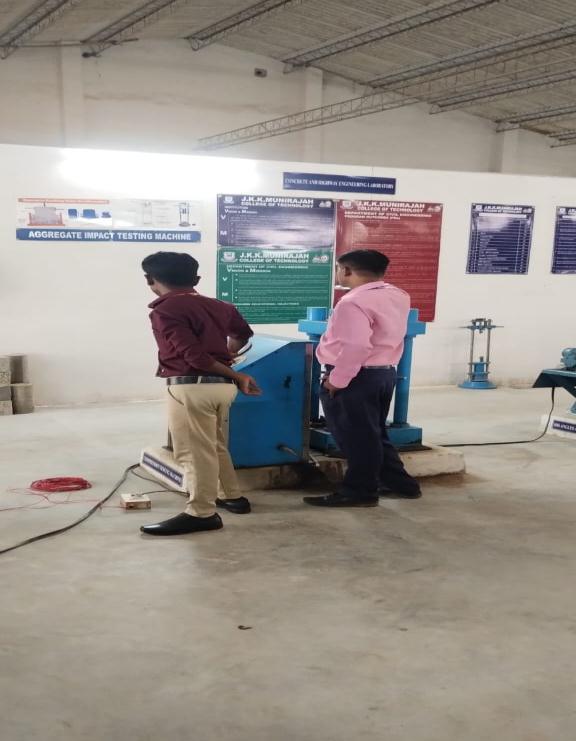
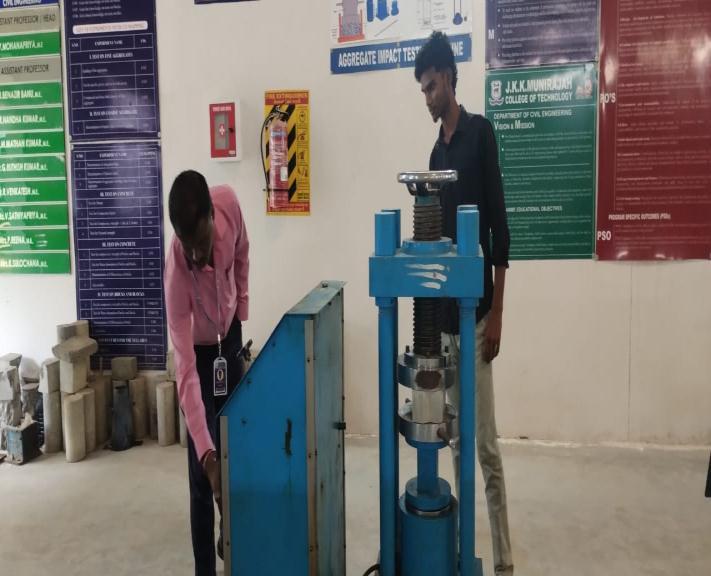
cast concrete cubes of size 150 mm × 150 mm × 150 mm using standard mix proportions. Remove the specimens from the mouldsafter24 ±0.5hours. Immersethespecimens in clean,fresh waterforcuringat27± 2 °C.Take outspecimensafter 7 and 28 days of curing. Wipe the surface dry and place the cube centrally on the CTM platen. Apply load continuously and uniformlyattherateof140kg/cm²/minuteuntilthespecimenfails.Notedownthemaximumloadatfailure.
TABLE 2- Compressive Strength Test
International Research Journal of Engineering and Technology (IRJET) e-ISSN: 2395-0056
Volume: 12 Issue: 10 | Oct 2025 www.irjet.net p-ISSN: 2395-0072
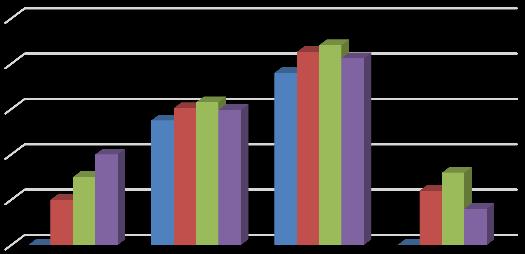
1- CompressiveStrengthTest
4.2 Split Tensile Strength Test
Objective:Tomeasuretensilecapacityofconcretewithmicrosilicaaddition.
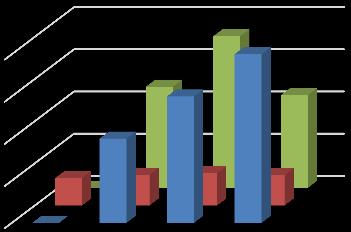
Test Name: Split Tensile Strength Test, Test Standard: IS 5816:1999, Specimen Type: Concrete Cylinder, Specimen Size: 150 mm Diameter × 300 mm Height, Curing Period: 7 Days and 28 Days, Testing Machine: Compression Testing Machine(CTM), 2000kNCapacity,LoadingRate:1.2to2.4N/mm²perminute
TABLE 3- Split Tensile Strength Test
2025, IRJET | Impact Factor value: 8.315 |
International Research Journal of Engineering and Technology (IRJET) e-ISSN: 2395-0056
Volume: 12 Issue: 10 | Oct 2025 www.irjet.net p-ISSN: 2395-0072
Cast3prisms(minimum)permix(0%,10%,15%,20%microsilica).Labelspecimensclearly.Curespecimensinwaterat27±2 °Cfortherequiredage(commonly28days;youmayalsotestat7,28,90daysasrelevant). Beforetest,measurewidth and depth atmidspan(averageoftwomeasurements).Measurespan (cleardistancebetweensupportrollers). Placespecimen onsupports;align loading rollerscorrectlyforthird-pointorcenterload.Applyloadatconstant ratesothatfailure occursin approximately 2–5minutes (followthestandard loadingrate).Record ultimateload (N). Compute usingtheappropriate formula.Reportindividualresults,average,andstandarddeviation.
International Research Journal of Engineering and Technology (IRJET) e-ISSN: 2395-0056
Volume: 12 Issue: 10 | Oct 2025 www.irjet.net p-ISSN: 2395-0072
(a) Water Absorption Test
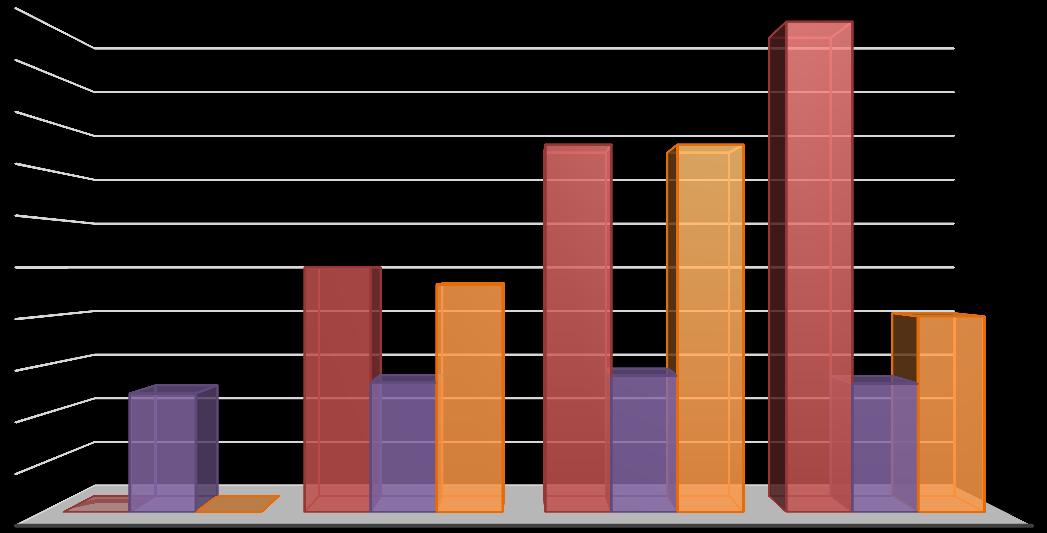
Objective: To assess permeability and pore structure. After 28 days of curing, remove the concrete specimens from water. Wipeoffthesurfacemoistureusingacleandrycloth.Weigheachspecimenimmediately recordthisastheWetWeight(W₁). Placethespecimensinaventilatedovenat105±5°Cfor24hours.Afterovendrying,coolthespecimenstoroomtemperature andweighagain recordthisastheDryWeight(W₂).CalculatetheWaterAbsorption(%)usingtheformula:
International Research Journal of Engineering and Technology (IRJET) e-ISSN: 2395-0056
Volume: 12 Issue: 10 | Oct 2025 www.irjet.net p-ISSN: 2395-0072

4- WaterAbsorptionTest
(b) Acid Resistance Test (H₂SO₄ Solution Immersion)
Test Duration: 28Days
Acid Concentration: 5%SulphuricAcidSolution
TABLE 6- WaterAbsorptionTest
5- AcidResistanceTest
International Research Journal of Engineering and Technology (IRJET) e-ISSN: 2395-0056
Volume: 12 Issue: 10 | Oct 2025 www.irjet.net p-ISSN: 2395-0072

International Research Journal of Engineering and Technology (IRJET) e-ISSN: 2395-0056
Volume: 12 Issue: 10 | Oct 2025 www.irjet.net p-ISSN: 2395-0072
5.1 Reduction in Carbon Footprint
Replacing a portion of cement with microsilica directly reduces the amount of clinker required, thus reducing CO₂ emissionsfrombothcalcinationandfuelconsumption.
By replacing 20% of cement with microsilica, the total CO₂ emission per cubic metre of concrete is reduced by approximately17–18%,withoutsignificantlycompromisingstrength.
5.2 Utilization of Industrial Waste
Microsilicaisa by-product oftheferrosiliconandsiliconmetalindustries.Itsuse:
Divertswastefromlandfillsandgasscrubbingsystems.
Preventsdisposalandenvironmentalcontamination.
Convertsindustrialwasteintoavaluableconstructionresource.
Thus,microsilicaalignswith circular economy principles turningapollutantintoasustainablerawmaterial.
5.3 Enhanced Durability = Longer Service Life
Concretewithmicrosilicashows:
Reduced permeability towaterandchlorideions.
Improved resistance tosulphateattackandalkali–silicareaction(ASR).
Dense microstructure duetopozzolanicreactionandporerefinement.
These improvements extend the service life of structures, reducing long-term maintenance and reconstruction needs,whichindirectlyreduceslife-cycleCO₂emissions.
5.4 Improved Strength and Material Efficiency
Duetohighfinenessandpozzolanicactivity,microsilicaenhances:
Compressive strength by 10–20%,
Flexural strength by 8–15%,
Tensilestrengthby5–10%, (dependingonreplacementlevels).
Higherstrengthallows section size reduction or less concrete volume forthesameloadcapacity,resultinginmaterialand emissionsavings.
5.5. Summary of Environmental Advantages
Environmental Aspect Impact with Microsilica
Cementproduction
CO₂emissions
Wastemanagement
Energyuse
Durability
Naturalresourcedepletion
Circulareconomy
Reducedclinkerdemand(10–20%)
Upto17–20%reductionperm³ofconcrete
Productiveutilizationofindustrialby-product
Lowerembodiedenergyperm³
Increasedlifespanreduceslife-cyclefootprint
Decreasedlimestone&fueluse
Promotesreuseofindustrialwastestreams
International Research Journal of Engineering and Technology (IRJET) e-ISSN: 2395-0056
Volume: 12 Issue: 10 | Oct 2025 www.irjet.net p-ISSN: 2395-0072
Trade-Off Discussion
Workability
Microsilicadecreasesworkabilityduetohighsurfacearea→mustusesuperplasticizer.
Cost Materialcostmayslightlyincrease,butoffsetbyreducedcementandlongerservicelife.
Availability Limitedlocalsupplymayrestrictlarge-scaleuse.
Mixsensitivity Requirescarefulcontrolofwater,SPdosage,andcuring.
I. From The Test Results And Environmental Assessment:
TheOptimumReplacementLevel OfMicrosilica WasFoundToBeBetween10%And15%,WhereTheCompressive, Flexural,AndSplitTensileStrengthsShowedNotableImprovementComparedToConventionalConcrete.
At 20% Replacement, Strength Remained Satisfactory, While Co₂ Emissions Were Reduced By Nearly 17–18% Per CubicMetreOfConcrete,HighlightingSubstantialEnvironmentalBenefits.
MicrosilicaAdditionAlsoImprovedDurabilityCharacteristicsByReducingPermeabilityAndEnhancingResistanceTo SulphateAttack,TherebyExtendingTheServiceLifeOfConcreteStructures.
II. Environmentally, The Use Of Microsilica:
ReducesClinkerConsumptionAndThusTheCarbonFootprintOfCementProduction.
UtilizesIndustrialBy-Products,PromotingWasteRecyclingAndSustainableMaterialManagement.
ConservesNaturalResourcesAndLowersEmbodiedEnergyInConcreteProduction.
Microsilica-Modified Concrete Is A Viable, Eco-Friendly Alternative To Conventional Concrete. It Achieves A Balance Between Mechanical Performance And Environmental Sustainability, Aligning With Global Efforts To Minimize The Environmental Impact Of Construction Materials. This Approach Supports The Development Of Green Concrete TechnologiesAndContributesEffectivelyToAchievingSustainableConstructionPracticesAndCarbonNeutralityGoalsIn TheCivilEngineeringIndustry.
7. REFERENCES
1.FaseyemiV.Ajileye,“InvestigationsonMicrosilica(SilicaFume)AsPartialCementReplacementinConcrete,”GlobalJournals ofResearchinEngineering,Vol.12(E1),2012,pp.17-23. EngineeringResearch
2.Arihant S. Baid & S. D. Bhole, “Effect of Micro-Silica on Mechanical Properties of Concrete,” International Journal of EngineeringResearch&Technology(IJERT),Vol.02,Issue08,August2013.
IJERT
3. Samuel Cameli Fernandes, Rodrigo Paz Barros, Andrezza de Souza Ferreira & Laerte Melo Barros, “Production of high strengthconcreteusingsuperplasticizerandadditionofmicrosilica,”Research,SocietyandDevelopment,Vol.9No.12(2020). DOI:10.33448/rsd-v9i12.11380.RSDJournal
International Research Journal of Engineering and Technology (IRJET) e-ISSN: 2395-0056
4.“Flexuralstrengthofsilicafume,flyash,andmetakaolinofhardenedcementpasteafterexposuretoelevatedtemperatures,” JournalofThermalAnalysisandCalorimetry,Vol.147(2022),pp.7159-7169.SpringerLink
5.Hadi Faghihmaleki & Hossien Nazari, “Laboratory study of metakaolin and microsilica effect on the performance of highstrengthconcretecontainingFortafibers,”AdvancesinBridgeEngineering,Vol.4,Article11(2023).
6.“Investigation of the Cementing Efficiency of Fly Ash Activated by Microsilica in Low-Cement Concrete,” Materials, Vol. 16(21),6859(2023).MDPI
Volume: 12 Issue: 10 | Oct 2025 www.irjet.net p-ISSN: 2395-0072 © 2025, IRJET | Impact Factor value: 8.315 | ISO 9001:2008 Certified Journal | Page880