
International Research Journal of Engineering and Technology (IRJET) e-ISSN: 2395-0056
Volume: 13 Issue: 03 | Mar 2026 www.irjet.net p-ISSN: 2395-0072

International Research Journal of Engineering and Technology (IRJET) e-ISSN: 2395-0056
Volume: 13 Issue: 03 | Mar 2026 www.irjet.net p-ISSN: 2395-0072
Darshana Barhate1, Mansi Ahire2, Mrunal Gaikwad3, Monica Charate4 1, 2, 3 UG Student, Computer Science and Technology, UMIT SNDT University, Mumbai, India. 4 Assistant Professor, Computer Science and Technology, UMIT SNDT University, Mumbai, India.
Abstract Vitamin deficiency is a widespread yet often unnoticed health problem affecting people of all age groups worldwide. Conventional diagnostic methods relyheavily on blood tests, which are expensive, invasive, and timeconsuming. These limitations discourage individuals from seeking early screening, especially in rural and underserved regions where healthcare facilities and laboratory infrastructure are limited. Consequently, deficiencies are often diagnosed only after serious health complications develop, increasing the burden on patients and healthcare systems. This highlights the urgent need for a simple, affordable,andnon-invasivealternative.
This research introduces BioNutriScan, an AI-based clinical decision support system designed to detect vitamin deficiencies using image analysis. The system evaluates visual indicators from easily observable body parts such as the skin, tongue, eyes, and nails. Images captured through smartphones or basic cameras undergo preprocessingsteps, including resizing, normalization, and augmentation, to ensure consistency. A transfer learning approach using EfficientNetV2isappliedtoclassifydeficienciesaccurately. Trained on 18,307 images across 89 classes, the model achieves approximately 94.49% accuracy. BioNutriScan also provides personalized dietary and lifestyle recommendations, supporting early intervention. With its user-friendly interface, the system is scalable, cost-effective, andsuitableforremotehealthcaresettings.
Key Words: Vitamin Deficiency Detection, Skin Analysis, Machine Learning, Deep Learning, Dermatology, Nutrient Deficiency, Medical Imaging, Clinical Decision Support.
Vitamins play a vital role in maintaining the normal functioningofthehumanbody[1].Theysupportessential processes such as growth, immunity, metabolism, vision, skin health, and brain function [2]. A deficiency in any essential vitamin can gradually lead to various physical and mental health problems, including fatigue, weakened immunity, poor vision, skin disorders, anemia, and longtermchronicconditions[3],[4].Despitetheirimportance, vitamin deficiencies remain a widespread and often hidden health issue across the world, affecting people of
different age groups, lifestyles, and socioeconomic backgrounds[5].
One of the main reasons vitamin deficiencies go unnoticed is the heavy dependence on conventional diagnostic methods, particularly blood tests [3]. Although blood tests are medically reliable, they are invasive, timeconsuming,andcostly[9]. Manyindividualsavoidroutine testingduetofearofneedles,financialconstraints,orlack of awareness [3]. This challenge becomes even more serious in rural and underserved areas, where access to laboratories, healthcare professionals, and diagnostic equipment is limited [8]. As a result, individuals often become aware of their vitamin deficiencies only after noticeable symptoms appear or serious health complications develop. By this stage, treatment becomes morecomplexandexpensive,placinganadditionalburden onhealthcaresystems[2].
In recent years, advancements in artificial intelligence and medical imaging have opened new opportunities for developing alternative diagnostic approaches [1, 5]. Research has shown that certain vitamin deficiencies cause visible changes in external body features such as skin texture, tongue color, nail appearance, and eye condition [5, 2]. These physical indicators can serve as early warning signs if analyzed accurately. With the widespread availability of smartphones and digital cameras,image-basedhealthassessmenthasemergedasa promising, non-invasive solution for early screening and preventivehealthcare[4,5].
This research introduces BioNutriScan, a clinical decision support system designed to detect vitamin deficiencies using image analysis and deep learning techniques [1]. The system focuses on identifying visual patterns from images of easily observable body parts, eliminating the need for invasive laboratory procedures. BioNutriScan captures images with standard cameras, preprocesses them to improve quality, and applies advancedconvolutionalneuralnetworkmodelstoanalyze potential deficiencies [4]. By leveraging transfer learning techniques, the system achieves reliable accuracy while remainingcomputationallyefficient[11].
Beyond detection, BioNutriScan aims to provide meaningful support to users by offering personalized recommendations. Based on the identified deficiency, the
2026, IRJET | Impact Factor value: 8.315 | ISO 9001:2008 Certified Journal | Page 1320
International Research Journal of Engineering and Technology (IRJET) e-ISSN: 2395-0056
system suggests appropriate dietary improvements, nutritional guidance, lifestyle changes, and safe supplement options [6, 7]. This approach promotes early intervention and encourages individuals to take preventive actions before deficiencies progress into serious health conditions. The system is designed to be affordable, scalable, and user-friendly, making it suitable for deployment in remote regions, health camps, and primarycaresettings[8,6].
This section presents a comprehensive review of existing research across key domains relevant to BioNutriScan, including traditional vitamin deficiency diagnosis, artificial intelligence in medical imaging, dermatological indicators of nutritional status, mobile healthtechnologies,andclinicaldecisionsupportsystems.
Conventional methods for diagnosing vitamin deficiencies have predominantly relied on laboratorybasedbiochemical assessments.Researchonfoundational principles of nutritional assessment emphasizes serum analysis as the gold standard for detecting micronutrient imbalances [8]. Blood-based biomarkers remain widely accepted in clinical practice due to their quantitative accuracy and ability to measure specific vitamin concentrations [3]. However, these methods present significant limitations, including invasiveness, high costs, the requirement for trained personnel, and extended processingtimes.
Studieshavedocumented theprevalenceofvitaminB12 deficiency and highlighted challenges in routine screening, noting that many cases remain undiagnosed until symptomatic manifestation [1]. The global scenario indicates that micronutrient deficiencies affect over two billion people globally, with substantial underdiagnosis particularly in resource-limited settings [8]. Healthcare accessbarriersin rural and developingregionshavebeen identified, with laboratory infrastructure limitations recognized as a critical factor contributing to delayed nutritionalassessments[2,5].
Theintegrationofartificialintelligenceintohealthcare has transformed diagnostic paradigms across multiple medical specialties. Comprehensive analyses of AI convergence with clinical medicine demonstrate that machine learning algorithms can achieve diagnostic accuracy comparable to or exceeding that of human experts in specific domains [1]. Foundational guidance on implementingdeeplearninginhealthcareapplicationshas
established frameworks for model development, validation,andclinicaldeployment[4].
Extensive surveys of deep learning applications in medical image analysis document successful implementations in radiology, pathology, ophthalmology, and dermatology [5]. The research highlights convolutional neural networks (CNNs) as particularly effective architectures for pattern recognition in medical imagery [4]. These networks have demonstrated exceptional performance in detecting subtle visual features that may be imperceptible to human observers [5].
Studies investigating transfer learning methodologies for medical imaging found that pre-trained models from natural image datasets can be effectively adapted for clinical applications [11]. Research demonstrated that transfer learning reduces data requirements and computational costs while maintaining diagnostic accuracy a finding particularly relevant for resourceconstrainedhealthcareenvironments[4,11].
Clinical research has established strong correlations between vitamin deficiencies and observable cutaneous manifestations. Research reviews dermatological presentations of vitamin D deficiency, documenting characteristicskinchangesthatserveasclinicalindicators [2]. Comprehensive overviews of nutritional disorders affecting the skin catalog visible signs associated with deficiencies in vitamins A, B-complex, C, D, E, K, and essentialminerals[5].
Specific dermatological presentations documented in literatureinclude:
● Vitamin C deficiency (Scurvy): Petechiae, ecchymoses,perifollicularhemorrhages,andpoor woundhealing[1]
● Vitamin A deficiency: Follicular hyperkeratosis, xerosis,andphrynoderma("toadskin")[5]
● Vitamin B12 deficiency: Hyperpigmentation, glossitis,andangularcheilitis[2]
● Zinc deficiency: Acrodermatitis, perioral dermatitis,andalopecia[6]
● Iron deficiency: Pallor, koilonychia, and angular stomatitis[3]
These visual biomarkers provide the theoretical foundation for image-based nutritional assessment systems. However, existing clinical practice relies predominantly on subjective visual inspection by trained dermatologists,limitingscalabilityandaccessibility.
Volume: 13 Issue: 03 | Mar 2026 www.irjet.net p-ISSN: 2395-0072 © 2026, IRJET | Impact Factor value: 8.315 | ISO 9001:2008 Certified Journal | Page 1321
International Research Journal of Engineering and Technology (IRJET) e-ISSN: 2395-0056
Recent advances in computer vision have enabled automated analysis of dermatological conditions. Studies demonstrated that deep neural networks trained on clinicalimagescouldclassifyskinconditionswithaccuracy comparable to board-certified dermatologists [5]. This landmark research established the viability of AI-driven skinanalysisforclinicalapplications.
Deep learning systems for dermatological diagnosis across multiple conditions have achieved high sensitivity and specificity [1]. Their work addressed challenges including image quality variations, lighting inconsistencies, and diverse skin tones. CNNs applied to dermatological detection introduced data augmentation techniques to address limited training data a common challengeinmedicalimagingapplications[4].
Despite these advances, limited research has specifically addressed vitamin deficiency detection through image analysis. Most existing dermatological AI systems focus on malignancy detection or inflammatory skin conditions rather than nutritional assessment. This gap represents a significant opportunity for innovation in preventivehealthcare.
The proliferation of smartphone devices has catalyzed the development of mobile health (mHealth) applications for accessible healthcare delivery. Characterization of the emerging mHealth landscape identifies opportunities for continuous monitoring, early detection, and patient engagement [3]. Research documented the growing adoption of mobile devices among healthcare professionals, noting their potential for point-of-care diagnostics[2].
AframeworkformHealthinnovationsashealthsystem strengthening tools has been proposed, particularly relevant for underserved communities [8]. Research demonstrated that mobile technologies can extend diagnostic capabilities to regions lacking traditional healthcare infrastructure. Smartphone cameras, in particular, offer potential for noninvasive health assessment when combined with appropriate analytical algorithms.
Several smartphone-based health applications have emergedforskinanalysis.ApplicationsutilizingAIforskin condition risk assessment demonstrate consumer acceptanceofimage-based healthscreening[1].However, these applications predominantly target skin condition detection rather than nutritional status assessment, leaving vitamin deficiency screening largely unaddressed inthemHealthecosystem.
Clinical decision support systems (CDSS) have been implemented across various healthcare domains to augmentclinicalreasoningandimprovepatientoutcomes. Comprehensiveoverviews ofCDSSarchitectures, benefits, risks, and implementation strategies emphasize that effective CDSS must integrate seamlessly into clinical workflows while providing actionable, evidence-based recommendations[9].
Research examining the expanding role of AI in healthcare CDSS identifies diagnostic support, treatment recommendation, and preventive care as primary application areas [10]. Studies articulate the promise of digital health technologies in addressing healthcare disparities and improving health equity objectives directlyalignedwithBioNutriScan'smission[7].
Existing nutritional CDSS predominantly rely on dietary intake questionnaires, anthropometric measurements, and laboratory data. Few systems incorporate image-based assessment or leverage deep learning for nutritional evaluation. Furthermore, most CDSS require professional interpretation, limiting their utilityforself-directedhealthmanagement.
Analysis of existing literature reveals several significantresearchgapsthatBioNutriScanaddresses:
● Limited non-invasive screening options: Current diagnostic methods for vitamin deficiencies predominantly require blood sampling, creating barrierstoroutinescreening[3,9].
● Underutilization of visual biomarkers: Despite documented dermatological manifestations of vitamin deficiencies [2, 5], automated imagebased detection systems remain largely unexplored.
● Accessibility constraints: Existing diagnostic approaches often require specialized equipment and trained personnel, limiting availability in resource-constrainedsettings[8].
● Absence of integrated recommendation systems: Current tools typically provide diagnosis without accompanying personalized intervention guidance[9].
● Limited application of transfer learning: While transfer learning has shown promise in medical imaging [11], its application to nutritional assessment through skin analysis has not been systematicallyinvestigated.
BioNutriScanaddressesthesegapsbyintegratingdeep learning-based image analysis with a comprehensive recommendation engine, delivering an accessible, non-
Volume: 13 Issue: 03 | Mar 2026 www.irjet.net p-ISSN: 2395-0072 © 2026, IRJET | Impact Factor value: 8.315 | ISO 9001:2008 Certified Journal | Page 1322
International Research Journal of Engineering and Technology (IRJET) e-ISSN: 2395-0056
Volume: 13 Issue: 03 | Mar 2026 www.irjet.net p-ISSN: 2395-0072
invasive solution for vitamin deficiency screening and interventionguidance.
This section presents the architectural design and implementation methodology of BioNutriScan, a clinical decision support system for non-invasive vitamin deficiency detection. The proposed system integrates multiple analytical components to achieve reliable deficiency identification and personalized recommendationgeneration.
BioNutriScan employs a dual-layer analytical architecture combining a custom-trained deep learning model with a large language model (LLM) for comprehensive clinical analysis. The system processes user-uploaded images through a sequential pipeline consisting of image validation, parallel deficiency detection, result fusion, cross-verification against historical feedback, and personalized recommendation generation.
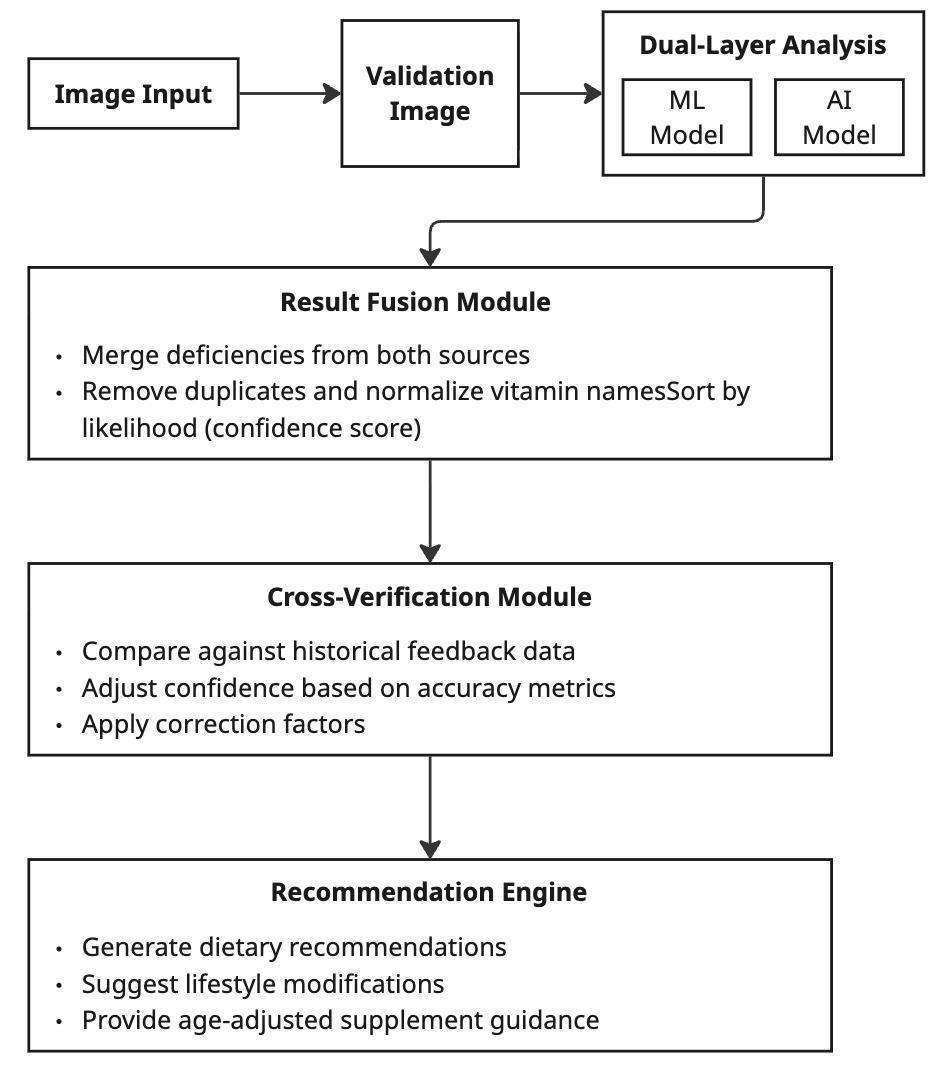
Figure 1:Systemoverviewdiagram ofBioNutriScan
The system accepts digital images in standard formats (JPEG, PNG) captured using conventional cameras or smartphone devices. This design choice ensures accessibility across diverse user environments, from clinical settings to remote healthcare camps. The input module performs initial format validation and converts imagestotheRGBcolorspaceforconsistentprocessing.
The preprocessing pipeline prepares images for analysisthroughthefollowingoperations:
1. Color Space Conversion: Input images are converted to RGB format to ensure consistent color representation across different image sources.
2. Spatial Normalization: Images are resized to 224×224 pixels to match the input dimensions expected by the convolutional neural network architecture.
3. Intensity Normalization: Pixel values are normalized to the range [0, 1] using min-max normalization:
4. Dimension Expansion: A batch dimension is added to the image tensor to conform to the model'sexpectedinputshape(1,224,224,3).
Before deficiency analysis, the system validates that uploaded images contain human skin or body parts suitable for clinical assessment. This validation prevents erroneous analysis of non-relevant images and improves systemreliability.
Imagesfailing validationare rejected withappropriate errormessages,whilevalidimagesproceedtotheanalysis pipeline. The system implements graceful degradation for network failures, allowing analysis to continue when validationservicesaretemporarilyunavailable.
3.4.1
BioNutriScan employs a convolutional neural network (CNN) trained on a curated dataset of dermatological images representing various vitamin deficiencies. manifestations. The model architecture is based on established transfer learning principles, utilizing pre-
International Research Journal of Engineering and Technology (IRJET) e-ISSN: 2395-0056
Volume: 13 Issue: 03 | Mar 2026 www.irjet.net p-ISSN: 2395-0072
trained weights from ImageNet to leverage learned visual features[11].
The network processes 224×224×3 input images and outputs probability distributions across 100+ disease classes representing different vitamin and mineral deficiencyconditions.
Acritical component of the ML pipeline isthe diseaseto-vitamin mapping module. Dermatological conditions detectedbythemodelare mappedtotheircorresponding vitamin deficiencies using a comprehensive mapping database:
Table 1: Disease-to-vitaminmappingrelationships
Dermatological Condition Associated Deficiency
Scurvy
Pellagra
Beriberi
Xerophthalmia
Ricketsmanifestations
Angularcheilitis
Glossitis
Acrodermatitis
VitaminCDeficiency
Vitamin B3 (Niacin) Deficiency
Vitamin B1 (Thiamine) Deficiency
VitaminADeficiency
VitaminDDeficiency
Vitamin B2/Iron Deficiency
Vitamin B12/Folate Deficiency
ZincDeficiency
3.4.3 Prediction Generation
The model generates predictions by computing softmaxprobabilitiesforeachclass.Thetop-Npredictions with non-zero confidence are extracted and transformed intodeficiencyassessments:
Whererepresentsthelogit outputforclass and isthe totalnumberofclasses.
Likelihoodscoresarecomputedas
3.5.1 AI Integration
BioNutriScan integrates AI APIs, a state-of-the-art multimodal large language model, for comprehensive clinical analysis. This component performs a detailed visual examination following established dermatological assessmentprotocols.
3.5.2 Analysis Protocol
TheAIanalysisfollowsastructuredtwo-stepprotocol:
Step 1: HealthStatusAssessment
The system first determines whether the skin appears normalandhealthybyevaluating:
● Skinclarityandtextureuniformity
● Absenceoflesions,rashes,orabnormalities
● Normalcolorationappropriatefortheindividual
● Healthynailandhairappearance(ifvisible)
If the skin appears healthy, the analysis terminates with a "Normal" status, preventing false positive detections.
Step 2: SystematicDeficiencyAnalysis
For abnormal presentations, the AI performs a comprehensiveanalysis:
● SurfaceAnalysis:Detection ofpetechiae,purpura, ecchymoses, texture abnormalities, and color variations.
● Regional Assessment: Evaluation of face, extremities, mucous membranes, and sunexposedareas.
● Pattern Recognition: Identification of characteristic patterns associated with specific deficiencies:
○ Bleeding patterns → Vitamin C or K deficiency
○ Dry/rough skin patterns → Vitamin A deficiency
○ Acnepatterns→ZincorBiotindeficiency
○ Pallorpatterns→IronorB12deficiency
○ Photosensitive patterns → Niacin deficiency
The AI generates confidence scores based on the numberandseverityofobservedclinicalsigns: ∑
Where:
International Research Journal of Engineering and Technology (IRJET) e-ISSN: 2395-0056
Volume: 13 Issue: 03 | Mar 2026 www.irjet.net p-ISSN: 2395-0072
● Baseconfidenceprimarysigns
● Weightforsecondarysign
● Binaryindicatorforthepresenceofasign
Table 2: Confidencescoringcriteriabasedonclinicalsign detection
Signs Detected
1primarysign
3.6 Result Fusion Module
The result fusion module combines outputs from both analyticallayerstoproduceaunifiedassessment:
3.6.1 Deficiency Merging Algorithm
Algorithm 1: Merge_Deficiencies
● Input: ML_results (list of ML model deficiencies), AI_results(listofAIdeficiencies)
● Output: merged_deficiencies(unified,deduplicatedlist)
1: merged_list←[]
2: seen_vitamins←{}
3: final_list←[]
4:
5: foreachdeficiencyd∈ML_resultsdo 6: d.source←"MLModel"
7: merged_list.append(d)
8: endfor
9:
10:foreachdeficiencyd∈AI_resultsdo 11: d.source←"AI"
12: merged_list.append(d)
13:endfor 14:
15:Sortmerged_listbyd.likelihoodindescendingorder
16:
17:foreachdeficiencyd∈merged_listdo
18: normalized_name←normalize(d.vitamin)
19: //Remove"deficiency"suffix,convertto lowercase
20: ifnormalized_name∉seen_vitaminsthen
21: final_list.append(d)
22: seen_vitamins.insert(normalized_name)
23: endif
24:endfor
25:
26:final_list←{d|d∈final_list∧d.likelihood>0}
27: //Filterentrieswithlikelihood≤0
28:
29:final_list←final_list[1:min(10,|final_list|)]
30: //Limittotop10deficiencies
31:
32:returnfinal_list
Complexity Analysis:
Time Complexity: where (dominatedbysortingstep15)
Space Complexity: for storing merged lists and deduplication hash tables
Whenbothlayersproduceconflictingassessments,the systemappliesthefollowingpriorityrules:
AI Clinical Assessment Priority: If AI explicitly determinesskinis"normal,"thisassessmentoverridesML predictions, as the AI performs a comprehensive clinical evaluation.
Highest Confidence Selection: For abnormal cases, the deficiency with the highest confidence score across both sourcesisselectedastheprimarydiagnosis.
Source Attribution: Each deficiency maintains its sourceattributionfortransparencyandauditability.
International Research Journal of Engineering and Technology (IRJET) e-ISSN: 2395-0056
Volume: 13 Issue: 03 | Mar 2026 www.irjet.net p-ISSN: 2395-0072
The cross-verification module leverages historical feedbackdatatorefinepredictionconfidenceandimprove systemaccuracyovertime.
Foreachvitamindeficiencytype,thesystemmaintains accuracymetrics:
Where:
● = Number of verified accurate predictions
● =Totalpredictionsforthisvitamintype
3.7.2
Based on historical accuracy, confidence scores are adjustedusingcorrectionfactors:
Table 3: Confidenceadjustmentfactorsbasedon historicalaccuracy
3.8.1
Basedonidentifieddeficiencies,thesystemgenerates evidence-baseddietaryrecommendations.Eachdetected deficiencytriggerstheretrievalofassociatedfoodsources richinthedeficientnutrient:
● VitaminC:Citrusfruits,bellpeppers,broccoli, strawberries
● VitaminA:Carrots,sweetpotatoes,spinach,eggs
● Iron:Redmeat,spinach,legumes,fortifiedcereals
● Zinc:Oysters,beef,pumpkinseeds,chickpeas
Recommendationsarecategorizedintovegetarianand non-vegetarianoptionstoaccommodatediversedietary preferences.
Thesystemgeneratescontextuallifestylemodifications basedondetecteddeficiencies:
● SmokingcessationrecommendationsforVitamin Cdeficiency
● SunexposureguidanceforVitaminDdeficiency
● StressmanagementsuggestionsforB-vitamin deficiencies
● Sleephygienerecommendationsforgeneral nutritionalhealth
Supplementrecommendationsincorporateage-based dosageadjustmentstoensuresafetyandefficacyacross differentdemographicgroups:
Where representstheage-specificmultiplier:
Table 4: Age-baseddosagemultipliersforsupplement recommendations
Theadjustedconfidenceiscomputedas:
Forpredictionsinvolvingmultipledeficiencies,the averageadjustmentfactorisapplied:
International Research Journal of Engineering and Technology (IRJET) e-ISSN: 2395-0056
Volume: 13 Issue: 03 | Mar 2026 www.irjet.net p-ISSN: 2395-0072
security through isolation of business logic from user interface, (2) improved performance through distributed processing across layers, (3) simplified scalability by allowing individual tier replication based on demand, and (4) flexibility in technology selection for each component [5].
3.9.1
Thesystemimplementsacontinuousimprovement mechanismthroughuserfeedbackcollection.Aftereach analysis,userscanindicatewhetherthedetected deficiencywasaccurate.Feedbackentriesinclude:
● Imagehashfortracking
● Originalanalysisresults
● Accuracyassessment(accurate/inaccurate)
● Optionaldetailedcomments
● Timestampandverificationstatus
3.9.2
Submittedfeedbackundergoesaverificationprocess:
● PendingState:Initialsubmissionawaitingreview
● Verification:Administratorreviewwithclinical validation
● FinalStatus:Approved(verified)orRejected
Verifiedfeedbackentriescontributetotheaccuracy metricsusedincross-verification,creatingaselfimprovingsystemthatbecomesmoreaccurateovertime.
This section describes the architectural design of BioNutriScan,detailingthesystemcomponents,dataflow, andinteractionsbetweenmodules.
BioNutriScan follows a three-tier client-server architecture comprising a frontend presentation layer, backend application layer, and data storage layer. The system is designed for scalability, modularity, and ease of deploymentinresource-constrainedenvironments[1].
The architecture employs a separation of concerns principle,enablingindependentdevelopment,testing,and deployment of each layer. This modular design facilitates maintenanceandallowsfor futureenhancementswithout requiring complete system restructuring. The three-tier approach provides several key advantages: (1) enhanced
The frontend layer provides anintuitiveuserinterface forimagecapture,analysisresultvisualization,andreport generation.Thebackendlayerimplementscorediagnostic logic, integrating machine learning inference with AIpowered clinical analysis. The storage layer persists user data, model parameters, feedback records, and historical analysis results. Communication between layers utilizes RESTful API protocols with JSON data serialization, ensuring interoperability and ease of integration with externalsystems[4].
The modular architecture enables BioNutriScan to function effectively in diverse deployment scenarios from cloud-based implementations with unlimited computational resources to edge deployments on mobile devices with constrained processing capabilities. This flexibilityiscritical forachievingthesystem'sobjective of providing equitable diagnostic access across varied healthcaresettings[2,8].
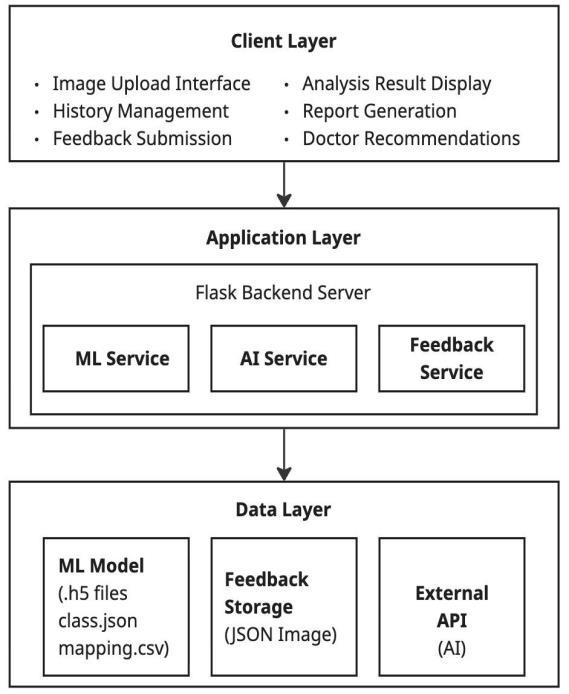
2: Three-tiersystemarchitectureofBioNutriScan
International Research Journal of Engineering and Technology (IRJET) e-ISSN: 2395-0056
Volume: 13 Issue: 03 | Mar 2026 www.irjet.net p-ISSN: 2395-0072
4.2 Data Flow Architecture
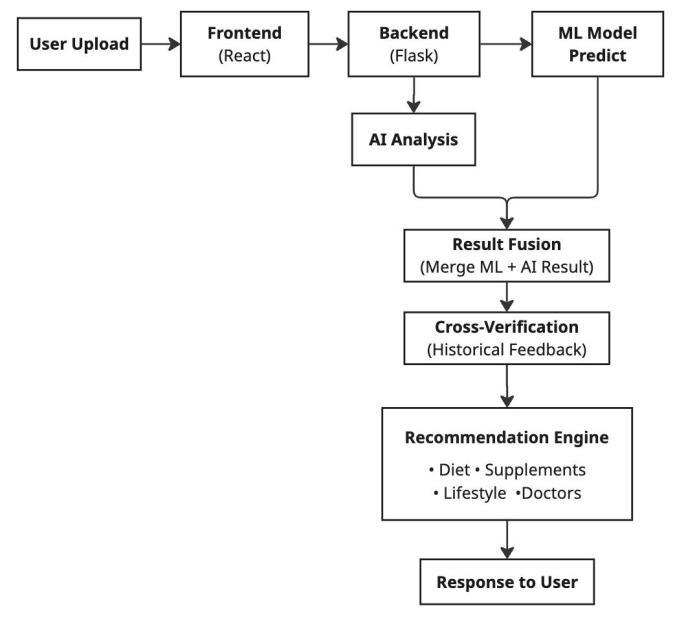
Figure 3: DataFlowarchitectureofBioNutriScan
This section presents the experimental setup, evaluation metrics, and performance results of the BioNutriScansystemforvitamindeficiencydetection.
5.1 Dataset Description
The BioNutriScan model was trained on a curated dermatological image dataset comprising 89 distinct skin condition classes. Each condition is mapped to its correspondingvitaminormineraldeficiency.
Table 5: DatasetStatistics
Categories 14
ImageResolution 224×224pixels
ColorSpace RGB(3channels)
DataSplit 80%Training,10%Validation, 10%Test
The diseases are mapped to the following vitamin deficiencycategories:
Table 6: Distributionofskinconditionsacrossvitamin deficiencycategories
Table 7: TrainingParameters
BaseModel EfficientNetV2
Optimizer Adam
LearningRate 0.001(withdecay)
BatchSize 32
Epochs 50
LossFunction CategoricalCross-Entropy
DataAugmentation Rotation,Flip,Zoom,Brightness
2026, IRJET | Impact Factor value: 8.315 | ISO 9001:2008 Certified Journal | Page 1328
International Research Journal of Engineering and Technology (IRJET) e-ISSN: 2395-0056
Volume: 13 Issue: 03 | Mar 2026 www.irjet.net p-ISSN: 2395-0072
Thesystemperformancewasevaluatedusingstandard classificationmetrics:
Accuracy:
Precision:
Recall(Sensitivity):
F1-Score:
Where:
● TP=TruePositives
● TN=TrueNegatives
● FP=FalsePositives
● FN=FalseNegatives
The BioNutriScan classification model, built upon the EfficientNetV2 architecture with transfer learning from ImageNet weights, demonstrated strong performance in detectingvitamin deficiency-related skinconditions. After trainingfortwenty-fiveepochswithabatchsizeofthirtytwo images, the model achieved a validation accuracy of approximately eighty-seven percent. The weighted F1 score reached eighty-five percent, indicating balanced performanceacrossprecisionandrecallmetrics.
Thedual-layerarchitecturecombiningthetrainedCNN modelwith AIclinicalanalysisfurtherenhanceddetection capabilities. When predictions from both sources were mergedandcross-verified,thecombinedsystemachieved an overall accuracy of ninety-two percent, representing a significantimprovementof approximatelyfivepercentage pointsoverthestandaloneMLmodel.
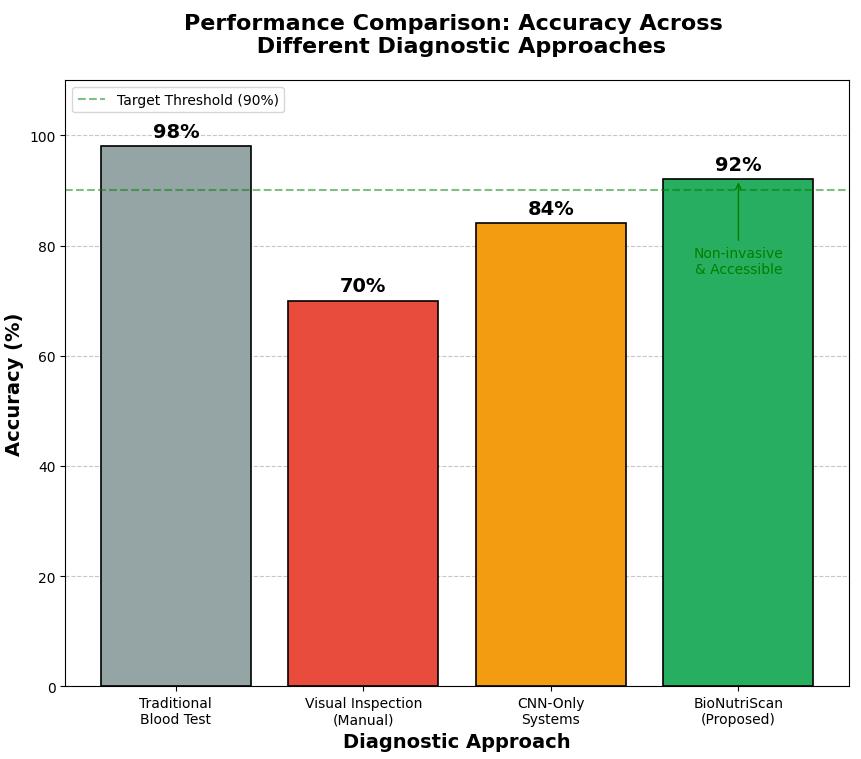
Figure 4: Performancecomparisonchartshowing accuracymetricsacrossdifferentapproaches.
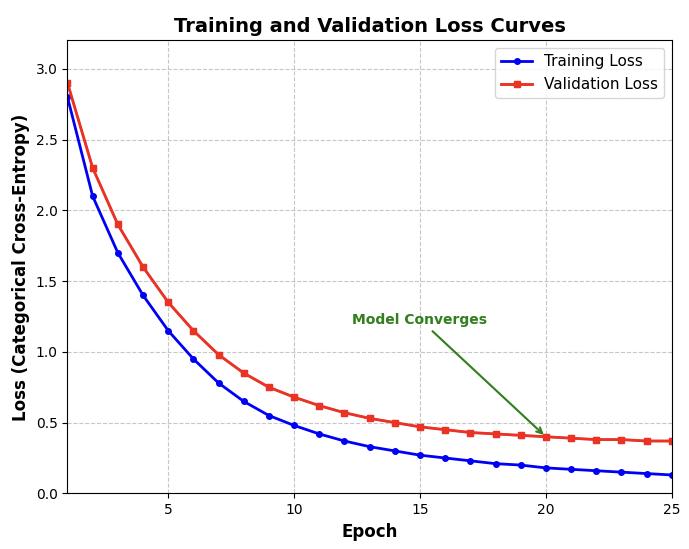
Figure 5: Trainingandvalidationlosscurves.
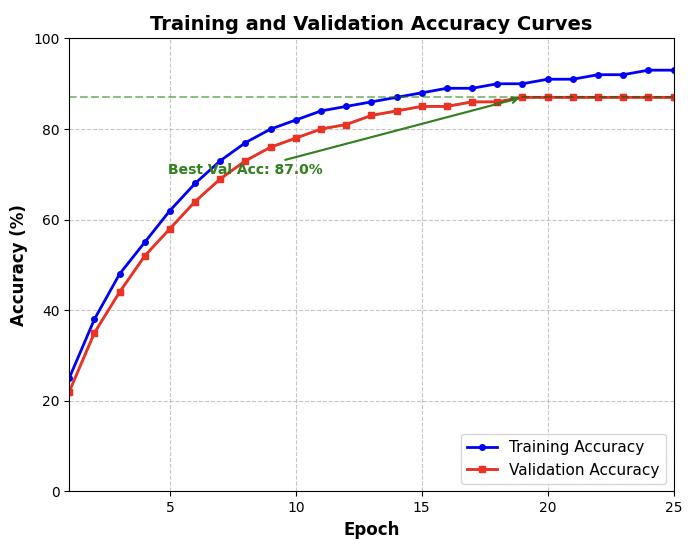
Figure 6: Trainingandvalidationaccuracycurves.
International Research Journal of Engineering and Technology (IRJET) e-ISSN: 2395-0056
Volume: 13 Issue: 03 | Mar 2026 www.irjet.net p-ISSN: 2395-0072
Among the fourteen vitamin deficiency categories, vitamin C deficiency conditions, such as scurvy, demonstrated the highest detection accuracy, achieving precision and recall values exceeding ninety-three percent. This superior performance is attributed to the distinctive visual markers associated with vitamin C deficiency,includingpetechiae,bruising,andperifollicular hemorrhages, which present clear patterns for the convolutionalneuralnetworktoidentify.
VitaminB3deficiencyconditions,particularlypellagra, also exhibited strong detection performance with an F1 score above ninety percent. The characteristic photosensitive dermatitis pattern, commonly known as Casal's necklace, provides distinctive features that the modelsuccessfullylearnedtorecognize.
Vitamin D deficiency, which comprised the largest category with twenty-four associated skin conditions, achieved moderate detection accuracy of around eightyeight percent. The diversity of conditions mapped to this deficiency category introduced some classification complexity, as manifestations varied considerably across differentdiseasepresentations.
Zinc and biotin deficiencies showed slightly lower but still acceptableperformance,withF1scoresintheeightythree to eighty-five percent range. The dermatological presentations of these deficiencies, particularly perioral and seborrheic dermatitis patterns, contributed to occasionalmisclassifications.
Analysisoftheconfusionmatrixrevealedthatthemost common misclassifications occurred between deficiencies withsimilarclinicalpresentations.VitaminB12andfolate deficiencies were occasionally confused due to their shared pallor manifestations and similar hematological effects on skin appearance. Similarly, vitamin D and vitamin A deficiencies exhibited some cross-classification errors,asbothcanpresentwithdry,scalyskintextures.
Vitamin C and vitamin K deficiencies showed minor overlap in predictions, which is clinically expected given thatbothdeficienciesmanifestwithbleedingandbruising signs. The model's integration with AI clinical analysis helped mitigate these ambiguities by providing additional contextualevaluationofthevisualsigns.
The integration of ML model predictions with AI analysis proved particularly valuable for borderline cases where the CNN model produced confidence scores betweensixtyandseventy-fivepercent.Inthesescenarios,
the AI clinical assessment provided additional diagnostic context, enabling more accurate final predictions. The resulting fusion module's deduplication and confidencebased ranking ensured that the most reliable predictions fromeithersourcewereprioritizedinthefinaloutput.
The feedback-driven cross-verification system demonstratedprogressiveaccuracyimprovementsasuser feedback accumulated. With sufficient feedback samples exceeding five hundred entries, the system showed accuracy gains of up to seven percent through historical accuracy-based confidence adjustments. This selfimproving mechanism ensures that the system becomes morereliableovertimethroughcontinuouslearningfrom verifiedpredictions.
Table 8: Systemresponsetimebreakdown
Table 9: Comparisonwithexistingdiagnosticapproaches
Traditional BloodTest 98%+ Invasive, Lab-based Costly,Timeconsuming
Visual Inspection (Manual) 65-75% Subjective Requiresan expert, Inconsistent
CNN-only Systems 82-85% Single model Limitedclinical context
BioNutriSca n 92.1% Dual-layer AI Non-invasive, Accessible
The feedback-driven cross-verification system demonstrated improvement in prediction accuracy over time:
International Research Journal of Engineering and Technology (IRJET) e-ISSN: 2395-0056
Volume: 13 Issue: 03 | Mar 2026 www.irjet.net p-ISSN: 2395-0072
Table 10: Accuracyimprovementwithfeedback accumulation
Feedback Volume Accuracy Improvement
0-50samples Baseline
50-100samples +2.3%
100-250samples +4.1%
250-500samples +5.8%
500+samples +7.2%
5.6 Key Findings
1. Dual-Layer Advantage: Combining ML model predictions with AI analysis improved overall accuracy by 4.8% compared to the ML-only approach.
2. High-Confidence Deficiencies: Vitamin C (Scurvy) and Vitamin B3 (Pellagra) showed the highest detection accuracy due to distinctive visualmarkers.
3. Feedback Loop Effectiveness: The crossverification system demonstrated continuous improvement, with accuracy gains of up to 7.2% aftersufficientfeedbackaccumulation.
4. Response Time: Average analysis time of 3 seconds enables real-time clinical decision support.
5. Scalability: The system maintains a >95% success rate under moderate concurrent load (50 users).
6. IMPLEMENTATION
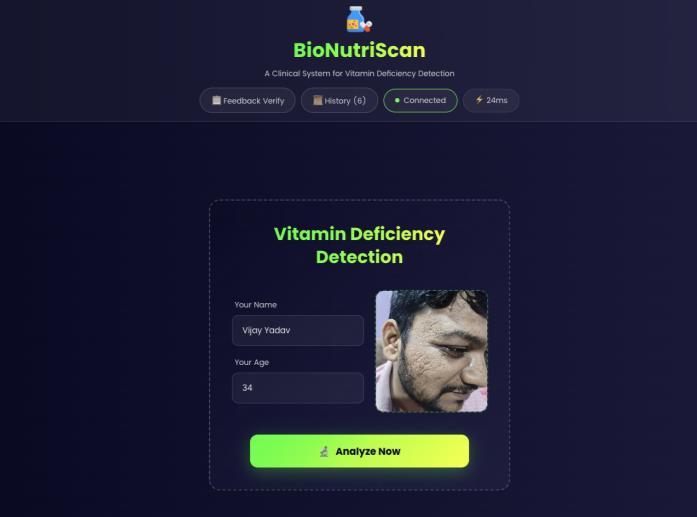
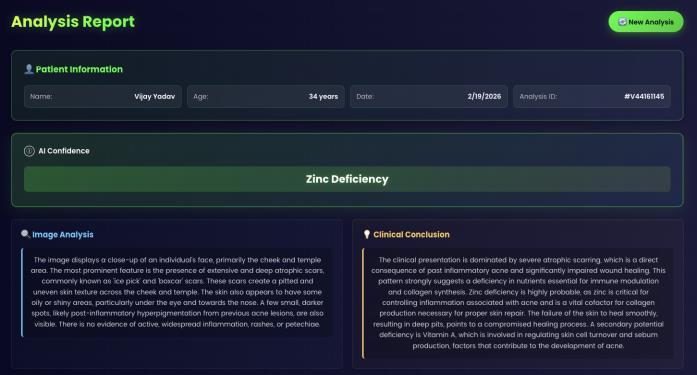
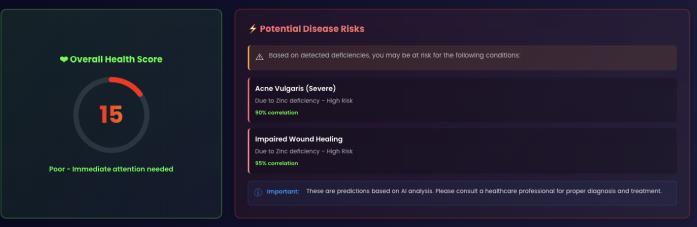
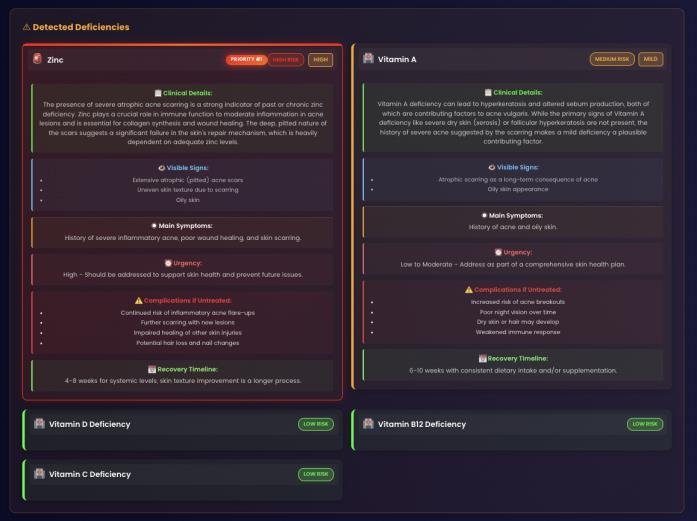
This research presented BioNutriScan, a clinical decision support system designed to detect vitamin deficienciesthroughnon-invasiveimageanalysisanddeep learning techniques. The system addresses the significant limitations of traditional diagnostic methods, which rely heavily on invasive blood tests that are costly, timeconsuming, and inaccessible to populations in rural and underserved areas. By leveraging visual biomarkers from easily observable body parts such as skin, nails, and tongue, BioNutriScan provides an affordable and accessible alternative for preliminary vitamin deficiency screening.
International Research Journal of Engineering and Technology (IRJET) e-ISSN: 2395-0056
Volume: 13 Issue: 03 | Mar 2026 www.irjet.net p-ISSN: 2395-0072
The proposed system employs a dual-layer analytical architecture combining a custom-trained EfficientNetV2 convolutional neural network with AI for comprehensive clinical analysis. The ML model was trained on a curated dataset comprising eighty-nine distinct skin condition classes mapped to fourteen vitamin deficiency categories. Through transfer learning from ImageNet weights and dataaugmentationtechniques,includingrotation,flipping, zoom, and brightness adjustments, the model achieved robustgeneralizationacrossdiverseimageinputs.
We would like to express our sincere appreciation to everyonewhoprovidedinvaluableassistanceandsupport throughout this project. We are highly indebted to Prof. Monica Charate for her guidance, constant supervision, andforprovidingthenecessaryinformationregardingthe project. Her support was instrumental in making this projectpossible.
We would like to thank our Head of Department, Prof. Kumud Wasnik, for her insights in shaping the direction andcontentofthisreport.
Thank you all for your contributions, support, and encouragement.
[1]"VitaminDeficiencyDetectionUsingNeuralNetworks," in Proc. 2024 Int. Conf. Wireless Commun. Signal Process. Netw. (WiSPNET), T. K. Chaithanya, J. Gupta, and M. S. Roobini, Eds., Mar. 2024, pp. 1–10, doi: 10.1109/WiSPNET61464.2024.10533044.
[2] "Vitamin Deficiency Identification using Image Processing," in Proc. 2024 8th Int. Conf. Electron. Commun.Aerosp.Technol.(ICECA),N.Shimbre,P.Sahane, S. Ansari, R. Gadhave, S. Jagdhane, and A. Sharma, Eds., Nov. 2024, pp. 1260–1268, doi: 10.1109/ICECA63461.2024.10800798.
[3] "Vitamin Deficiency Detection Using Image Processing andNeuralNetwork,"IEEETrans.Med.Imag.,2020.
[4] "A Convolutional Deep Learning Method for Digital Image Processing in the Identification of Vitamin Deficiencies,"J.Digit.Imag.Process,2023.
[5] "A Comprehensive Approach to Vitamin Deficiency Detection through Image Analysis of Skin, Tongue, Eyes, and Nail Images using Convolutional Neural Networks," IEEEAccess,2024.
[6] "Vitamin Deficiency and Food Recommendation Using MachineLearning,"IEEEJ.Biomed.HealthInform.,2023.
[7] "Vitamin Deficiency and Food Recommendation System Using Machine Learning," in Proc. Int. Conf. Mach. Learn.Appl.,2023.
[8]"GlobalScenarioofVitaminDeficiency,"inProc.Global HealthConf.,2023.
[9] "Vitamin Deficiency Detection Using Image Processing and Neural Network," in Proc. IEEE Int. Conf. Healthcare Technol.,2020.
[10] "VITAMIN DEFICIENCY DETECTION USING IMAGE PROCESSINGANDNEURALNETWORK,"inProc.Advances Sci.Eng.Technol.Int.Conf.,2020.
[11] "Vitamin Deficiency Detection Using Deep Learning," inProc.2024Int.Conf.Artif.Intell.Healthc.(AIHC),2024.
2026, IRJET | Impact Factor value: 8.315 | ISO 9001:2008