
International Research Journal of Engineering and Technology (IRJET) e-ISSN: 2395-0056
Volume: 12 Issue: 04 | Apr 2025 www.irjet.net p-ISSN: 2395-0072
International Research Journal of Engineering and Technology (IRJET) e-ISSN: 2395-0056
Volume: 12 Issue: 04 | Apr 2025 www.irjet.net p-ISSN: 2395-0072
Pratik Prakash
Student, Electronics and Communication Engineering VIT Bhopal University
Abstract - Railwayinfrastructureplaysavitalroleinthe transportation system, requiring regular monitoring to prevent accidents caused by track cracks. This paper presents the design and development of an autonomous RailwayTrackCrackDetectionBotusingSTM32F103C8T6 asthecentralcontroller.Thesystememploysanultrasonic sensor to detect major cracks on the railway track by continuouslymeasuringthesurfacedistance.Upondetecting asignificantcrack,thebotautomaticallyhaltsandtransmits thereal-timelocationusingaGSMmoduleintegratedwith GPSdataacquisition.Additionally,anESP32-CAMmoduleis deployed to provide live video streaming and manual movementcontrolsviaaweb-baseduserinterface,enabling remote intervention if needed. The bot is programmed to startmovingautomaticallyuponactivation,ensuringinitial autonomousoperation.Themotordrivercircuit,controlled through GPIO pins of the STM32 microcontroller, enables forward, backward, and directional movement based on commandsreceivedordetectionevents.Emphasisisplaced onrobustcommunicationbetweenmodules,precisecrack classification, and real-time alerting to minimize human inspectioneffortandenhancerailwaysafety.Theproposed system demonstrates an efficient, low-cost, and scalable solution for proactive railway track maintenance. Future enhancements may include machine learning-based crack severity analysis and multi-sensor fusion to improve detectionreliabilityundervariousenvironmentalconditions.
Key Words: Railway Track Monitoring, Crack Detection, STM32F103C8T6, Ultrasonic Sensor, GSM Module, GPS Tracking,ESP32-CAM,AutonomousBot
1.INTRODUCTION
Railwaytransportationsystemsformthebackboneofmany nations'economicandsocialdevelopment.Themaintenance ofrailwaytracksiscrucialtoensurethesafetyandefficiency oftrainoperations.Cracksorstructuraldefectsinrailway trackscanleadtocatastrophicaccidents,resultinginlossof life and property. Therefore, the early detection of track faultsisa majorresearchfocus [1].Traditional inspection methods often involve manual labor, which is timeconsuming,expensive,andpronetohumanerror.Toaddress these limitations, automation and real-time monitoring solutionsareincreasinglybeingexplored.
ThispaperproposesasmartRailwayTrackCrackDetection BotusingtheSTM32F103C8T6microcontrollerasthecore processing unit. The bot utilizes an ultrasonic sensor to monitortrackconditionscontinuouslyandidentifiesmajor cracksbasedonpredefinedthresholdvalues.AGSMmodule isusedtotransmitalertsalongwithGPS-basedlocationdata whenever a critical defect is detected. Furthermore, an ESP32-CAM module enables live video streaming and provides manual control features via a wireless web interface,enhancingthebot'sflexibilityindifficultterrains.
The bot is designed for autonomous operation, with the capabilitytostartmovementautomaticallyuponactivation. In the event of a major crack detection, the bot halts and transmits critical information to a remote monitoring station. By integrating real-time sensing, wireless communication, and manual control functionalities, the proposed system aims to provide a cost-effective and scalablesolutionforenhancingrailwaysafety.Thisresearch builds upon earlier studies [2][3], improving upon limitations through the integration of modern microcontrollersandIoTmodules.
Railwaytransportationplaysavitalroleinthemovementof goods and passengers due to its cost-effectiveness and efficiency. However, track-related failures such as cracks, misalignments, or deformations are among the leading causesofrailwayaccidents.Traditionalmanualinspection methodsaretime-consuming,labor-intensive,andoftenfail to detect defects promptly, especially in remote or less accessible areas. This delay in detection can lead to catastrophic accidents, loss of life, and major financial setbacks. Moreover, most existing systems lack real-time monitoring and automated alert mechanisms, making it difficult to ensure continuous track health surveillance. Therefore, there is a significant need for an autonomous, real-time,andefficientrailwaytrackmonitoringsystemthat canautomaticallydetecttrackcracks,locatethemaccurately using GPS technology, and alert authorities through GSM communication. Additionally, live video surveillance is essentialforremotemonitoringandmanualcontrolduring critical inspection activities. This project aims to address thesechallengesbydevelopingalow-cost,reliablerobotic solution using STM32 microcontroller, ultrasonic sensors, GPS, GSM, and ESP32-CAM modules for integrated crack
International Research Journal of Engineering and Technology (IRJET) e-ISSN: 2395-0056
Volume: 12 Issue: 04 | Apr 2025 www.irjet.net p-ISSN: 2395-0072
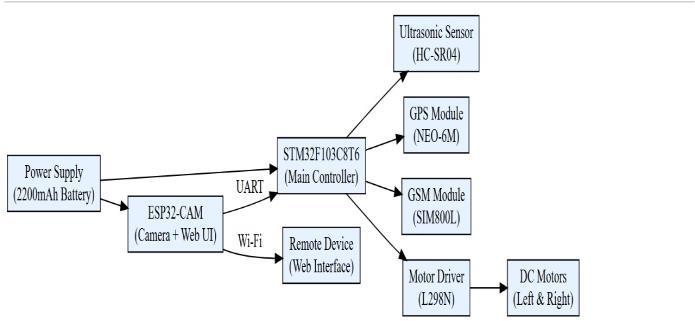
TheproposedsystemisanautonomousRailwayTrackCrack DetectionBotdesignedtoautomaticallymonitoranddetect cracks on railway tracks. The bot is built around the STM32F103C8T6 microcontroller, interfaced with an ultrasonic sensor for crack detection, a GPS module for acquiringpreciselocationcoordinates,anda GSMmodule forsendingreal-timealertswhenamajorcrackisdetected. Inadditiontoautonomousoperation,thebotisintegrated with an ESP32-CAM module that provides a live video streamandmanualcontrolbuttonsthroughawebinterface, allowingremotemonitoringandnavigationifrequired.The robot starts moving automatically on track power-up and continuously monitors for track irregularities. Upon detectinga critical crack basedonpre-definedthresholds, the system halts the bot, captures the GPS location, and transmitsthecrackdetailsviaGSMtoconcernedauthorities. TheESP32-CAMinterfaceenablestheoperatortomanually adjustthebot'spositionthroughUART-basedcommandsif needed.Thissystemminimizeshumanintervention,ensures real-time detection and reporting, and enhances railway tracksafetywithminimalinfrastructurecosts.Bycombining hardware sensors with live video surveillance and communicationtechnologies,theproposedsystemprovides an effective, scalable, and reliable solution for early crack detectionandpreventionofrailwayaccidents.
2. OPERATION OF SYSTEM
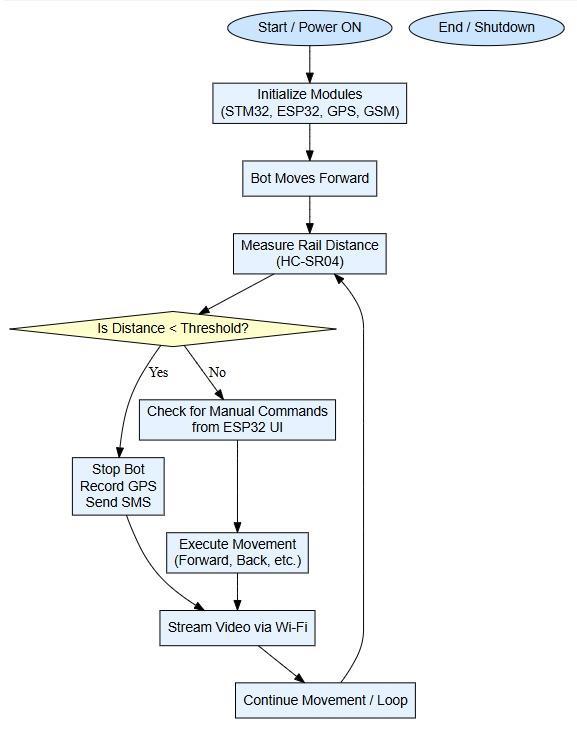
The operation of the Railway Track Crack Detection Bot begins with the automatic activation of its motors once poweredon.TheSTM32F103C8T6microcontrollercontrols the movement of the bot, maintaining a steady forward motion along the railway track. An ultrasonic sensor
mounted on the bot continuously measures the distance betweenthebotandthesurfaceofthetrack.Ifasignificant dip or gap indicative of a major crack is detected, the bot immediately halts its movement. Simultaneously, the GPS module fetches the current location coordinates. These coordinates,alongwithapredefinedcrackalertmessage,are sentviatheGSMmoduletoaregisteredmobilenumberor controlcenter.
Inparallel,theESP32-CAMmoduleprovidesalivevideofeed of the track ahead, which can be accessed through a web interface.Thewebinterfacealsoofferscontrolbuttonsfor manual navigation, allowing an operator to move the bot forward, backward, left, or right if manual inspection is needed. Communication between the ESP32-CAM and STM32 is achieved through UART serial commands. All modulesoperateonasharedgroundtomaintainconsistent electrical potential, ensuring reliable operation. The integrationofautomaticcrackdetectionwithmanualremote controlandreal-timevideomonitoringmakestheoperation efficient,flexible,andhighlyreliableforrailwaymaintenance applications.
The flowchart drawn below describes the step by step procedureinvolvedintheworkingofourModel.
International Research Journal of Engineering and Technology (IRJET) e-ISSN: 2395-0056
Volume: 12 Issue: 04 | Apr 2025 www.irjet.net p-ISSN: 2395-0072
3.1 STM32F103C8T6 Microcontroller:
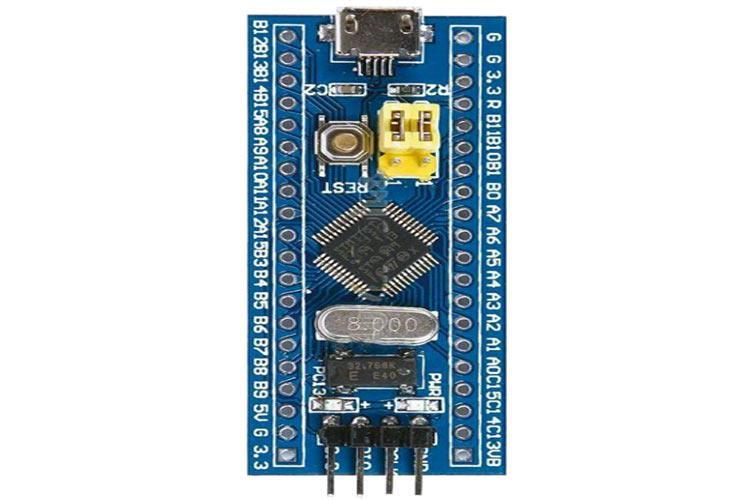
The STM32F103C8T6 is a 32-bit ARM Cortex-M3-based microcontrolleroperatingat72MHz.Itfeatures64KBFlash memory,20KBSRAM,multipleUARTs,andPWMoutputs.In this project, it controls the entire system, processes ultrasonicsensordata,handlesUARTcommunicationwith GPS,GSM,andESP32-CAM,andmanagesmotoroperations basedoncrackdetectionormanualcommands.
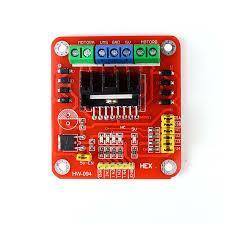
3.2 L298N Motor Driver Module:
The L298N is a dual H-Bridge motor driver IC capable of drivingtwoDCmotorssimultaneouslyinbothforwardand reverse directions. It receives low-current signals from STM32andusesanexternalpowersupplytocontrolhighcurrent motors, allowing smooth movement and speed controlviaPWM.
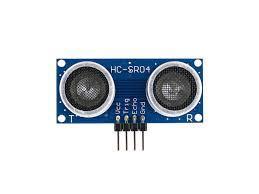
3.3 Ultrasonic Sensor (HC-SR04):
The HC-SR04 ultrasonic sensor measures distance by emitting ultrasonic waves and measuring their echo time after bouncing off surfaces. It detects cracks on railway tracks by measuring sudden gaps and comparing them to predefinedthresholds,identifyingwhetheracrackisminor, mild,ormajor.
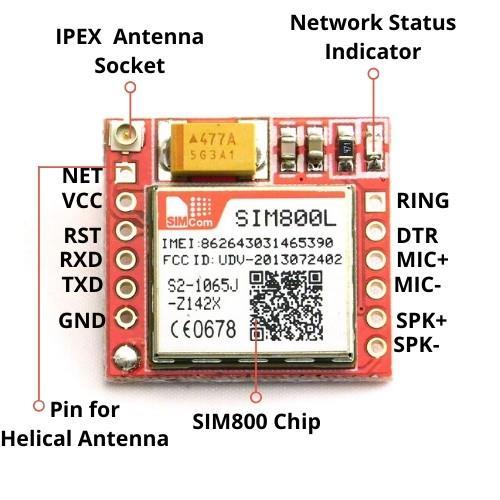
3.4 GSM Module (SIM800L):
The SIM800L is a quad-band GSM module that provides cellularconnectivityforSMScommunication.Upondetection ofamajorcrack,STM32instructstheSIM800Ltosendatext message containing the crack location (latitude and longitude) to a predefined mobile number, alerting authorities.
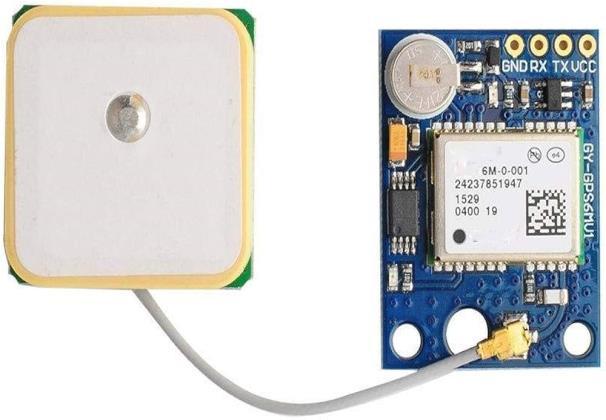
3.5 GPS Module (NEO-6M):
TheNEO-6MGPS module providesreal-timegeographical location data through UART communication. It constantly updatesthelatitudeandlongitudecoordinates.Incaseofa major crack detection, these coordinates are sent via the GSMmoduletoensurepreciseincidentreporting.
International Research Journal of Engineering and Technology (IRJET) e-ISSN: 2395-0056
Volume: 12 Issue: 04 | Apr 2025 www.irjet.net p-ISSN: 2395-0072
3.6 ESP32-CAM Module:
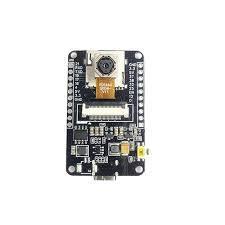
The ESP32-CAM module features an onboard camera and Wi-Ficapability.Ithostsalocalwebserverthatstreamslive video from the bot's front and provides control buttons (forward, backward, left, right, stop). Commands are transmittedtotheSTM32usingUARTformanualoperation.
4
This project successfully demonstrates the design and implementation of a smart railway track crack detection system using the STM32F103C8T6 microcontroller, ultrasonicsensing,GPStracking,GSMcommunication,and manualcontrolthroughanESP32-CAM-basedwebinterface. Thesystemautomaticallyidentifiesmajorcracksonrailway tracksinreal-timeandpromptlysendslocation-basedalerts to the concerned authorities via GSM. The integration of ultrasonicsensorsprovidesanefficientandlow-costmethod forcrackdetection,whiletheGPSensurespreciselocation tracking. The manual override through the ESP32-CAM offersflexibilityinnavigationandmonitoringvialivevideo feed. This project not only improves railway safety by enablingearlycrackdetectionbutalsoreducestherisk of accidentscausedbyundetectedtrackfailures.Overall,the
proposedsystemprovestobearobust,scalable,andcosteffective solution for modern railway monitoring applications,pavingthewayforfurtherenhancementsusing advancedIoTandAItechnologies.
Theproposedrailwaytrackcrackdetectionsystemcanbe further enhanced in multiple ways to achieve higher reliabilityand widerapplication.Inthefuture,thesystem canbeupgradedbyintegratingmoreadvancedsensorssuch as LIDAR or thermal imaging cameras for better crack analysis.Machinelearningmodelscanbeembeddedonthe STM32 microcontroller using TensorFlow Lite to enable real-time classification of crack severity with higher accuracy. Additionally, the communication system can be upgradedfromGSMto4G/5GorLoRaforfasterandlongerrange data transmission. Solar-powered modules can be incorporatedtomakethesystemenergy-efficientforremote trackmonitoring.Autonomouspathplanningandobstacle avoidance algorithms can also be added to make the bot completelyself-navigating.Furthermore,cloudconnectivity andmobileappintegrationcanprovidecentralizedreal-time monitoring, data storage, and analytics, helping railway authorities in predictive maintenance and efficient track management.
6.REFERENCES:
[1]A.KumarandB.Bhattacharya,"AutomaticDetectionof Cracks in Railway Tracks Using Image Processing," International Journal of Computer Applications,vol.172,no. 6,pp.1-5,2017.
[2]P.Sharma,S.Dey,andR.Rautaray,"RailwayTrackCrack Detection Using Ultrasonic and Infrared Sensors," International Journal of Engineering Research & Technology (IJERT),vol.8,no.6,pp.321-325,2019.
[3] S. Singh and M. Chauhan, "Development of IoT-based Real-TimeRailwayTrackMonitoringSystem," International Research Journal of Engineering and Technology (IRJET),vol. 7,no.5,pp.1256-1260,2020.
[4]R.ZhangandP.Guo,"IntelligentMonitoringSystemfor High-Speed Railway Track Based on Sensors and GSM Technology," IEEE Sensors Journal,vol.18,no.11,pp.45684575,2018.