
International Research Journal of Engineering and Technology (IRJET) e-ISSN: 2395-0056
Volume: 13 Issue: 03 | Mar 2026 www.irjet.net p-ISSN: 2395-0072

International Research Journal of Engineering and Technology (IRJET) e-ISSN: 2395-0056
Volume: 13 Issue: 03 | Mar 2026 www.irjet.net p-ISSN: 2395-0072
Mr. K. Sanjay kumar1 , Mr. Irshad Ahmed2 , Mr. V.Ajay3Student, Lecturer, 1 Assistant Professor, Department of Electronics communication Engineering, Ms. Jane Carlene St. peters institute of higher education and research, Tamilnadu India ***
Abstract - The worldwide transition to renewable energy has established solar power as an essential elementofustainabledevelopment.Nonetheless,theaccumulat ionofdustonphotovoltaic panels poses a significant obstacle, potentially diminishing energy output by as much as 50% in dry regions. This project introduces an innovative automatic solar panel cleaning system that effectively tackles this vital maintenance challenge through Adriano-based automation. The system employs mechanical brushing combined with controlled water spraying to ensure optimal panel efficiency with minimal human involvement. Our prototype features servo motors for brush movement, a diaphragm water pump to dislodge dust, and limit switches to ensure operational safety. The Adriano microcontroller coordinates these components to execute cleaning cycles that can be scheduled or triggered by sensors. Field tests revealed a 25–40% increase in energy output following cleaning, utilizing only 200ml of water per cycle substantially less than traditional manual methods. The system’s affordability (under ₹5,000 per unit) and scalability render it appropriate for both residential setups and large-scale solar farms. This project advances sustainable energy objectives by preserving optimal solar panel performance, minimizing water usage, and eliminating the risks associated with manual cleaning. Future developments may incorporate IOT capabilities for remote monitoring and AI-driven cleaning schedules. The successful deployment of this system supports India’s renewable energy ambitions while providing a practical solution to one of the most enduring operational challenges in solar energy.
Keywords - Adriano control, Automated cleaning, Dust mitigation, Renewable energy efficiency, Solar panel maintenance
The growing use of solar energy as a renewable power source encounters considerable obstacles due to environmental factors, especially dust accumulation on photovoltaic surfaces. In tropical nations such as India, where solar energy potentials particularly high, particulate matter resulting from dry conditions and industrial emissions can diminish panel efficiency by 30–50% within just a month of exposure. Conventional cleaning techniques are insufficient; manual cleaning is labor- intensive and poses risks for rooftop installations, while water-dependent. These challenges highlight the
urgentneedforautomatedandefficientcleaningsolutions that can sustain solar panel performance without excessive water consumption or the need for human intervention. Our automatic solar panel cleaning system offersatechnologicalsolutiontotheseissues.Thissystem utilizes microcontroller automation to ensure regular 2 andthoroughcleaningatalowoperationalcost.Centralto its function is an Adriano Uno board, which orchestrates the movement of cleaning brushes across the panel surfaces and activates targeted water sprays to dislodge stubborndebris.Thedesignfeaturesfail-safemechanisms, including limit switches, to prevent mechanical over travel,therebysafeguardingboththecleaningsystemand the solar panels from potential damage. This method presentsseveralbenefitscomparedtoexistingsolutions:it operates without the need for continuous water flow like traditional spray systems, avoids the high expenses associated with robotic cleaners, and ensures consistent cleaning quality, unlike manual methods that can vary basedonhumaneffort.Thesignificanceofthisinnovation extends beyond technical performance. By maintaining optimalpanelefficiency,thesystemdirectlycontributesto higher renewable energy output and reduced carbon emissions. Its water-efficient operation makes it suitable for arid regions where both solar potential and water scarcity coexist. The modular design allows adaptation to variouspanelconfigurations,fromsmallresidentialsetups qato large solar farms. Furthermore, the project demonstrates how affordable microcontroller technology can solve real-world engineering challenges, providing a blueprint for sustainable innovation in renewable energy maintenance.
Thecreationofourautomaticsolarpanelcleaningsystem adhered to a systematic engineering methodology that included design, prototyping, and performance assessment. The process commenced with an in-depth analysis of requirements, pinpointing essential parameters such as cleaning efficiency (minimum 80% dust removal), water usage (less than 250ml per cycle), and energy consumption (under 20Wh per operation). These criteria informed the selection of components and the development of the system architecture, ensuring a well-roundedperformanceacrossallspecifiedmetrics[5]. Theselectionofcomponentswasbasedoncomprehensive technical specifications and performance metrics. The solar panel subsystem features mono crystalline
International
Volume: 13 Issue: 03 | Mar 2026 www.irjet.net p-ISSN: 2395-0072
photovoltaic modules with a total capacity of 50W, selected for their optimal balance of efficiency and cost. The wind energy subsystem includes a horizontal-axis wind turbine with a rated capacity of 45W, utilizing a BLDC motor as its generator. Energy storage is 3 facilitated by a 12V 100Ah lithium-ion battery bank, chosen for its favorable energy density and longevity. Power conversion and conditioning are managed by a 500W pure sine wave inverter along with suitable charge controllers for both solar and wind inputs[6].The mechanical design phase concentrated on developing a robust yet lightweight cleaning mechanism. We engineered a rail-mounted brush system featuring nylon bristles, which provide gentle yet effective surface cleaning.Thebrushassemblyisconnectedtoagearmotor that facilitates its movement across panel surfaces, with waternozzles strategically positioned at 45° angles to ensure optimal spray coverage. Aluminum rails offer structural support while being resistant to outdoor corrosion.Fortheelectroniccomponents,weoptedforan Adriano Uncas the control hub due to its reliability, input/output capabilities, and vast developer community. This board interfaces with an L298N motor driver to enable precise control of the brush movement and a 5V relay module to activate the water pump. The implementation of the circuit necessitated meticulous planning to guarantee safe power distribution and signal integrity.ThemotorcontrolcircuitconnectstheAdriano’s PWMpinstotheL298Ndriver,whichsupplies12Vpower to the gear motor. A distinct circuit manages the 12V diaphragmpumpviatherelaymodule,withontoisolation inplacetoshieldthe microcontrollerfrom voltagespikes. Limit switches are connected to the Adriano input pins with pull-up resistors, providing positional feedback to prevent over travel .All connections are waterproofed to endureoutdoorconditions[7].Thesoftwaredevelopment phase created the intelligence that governs the system's operation. The Adriano sketch initialize spins and parametersinthesetup()function,thenexecutescleaning cycles within the loop() function. Key functions include move_ forward and move backward() for brush movement, along with activate pump () for timed water spraying. The program utilizes miles()- based timing for scheduled operations and is designed to accommodate future sensor inputs through a modular code structure. Error handling routines are in place to motor current draw, allowing forth detection of stalls or obstructions. The assembly of the prototype integrated these components into a cohesive operational system. We installed rails along the perimeter of a test solar panel, securing them with brackets designed to resist UV damage. The brush assembly is connected to aiming belt powered by a gear motor, facilitating smooth linear movement. All electronic components are housed in a weatherproof enclosure equipped with cable glands to preventwateringress.Thetestingprocesswasconducted in stages, beginning with the validation of individual subsystems (such as motor movement and pump
functionality) and progressing to assess integrated performanceundervaryingdustconditions.
Theautomaticsolarpanelcleaningsystemisdeveloped usingseveralhardwarecomponentsthatworktogetherto detect dust accumulation and perform the cleaning operation automatically. These hardware components are responsible for sensing environmental conditions, processing data, controlling the cleaning mechanism, and providing monitoring capabilities. The major hardware components used in this system include the Adriano Uno R4 Wi-Fi controller, LDR sensor, relay modules, water pump,wipermotor,limitswitches,I2CLCDdisplay,DC-DC buck converter, and 12V battery power supply. Each of these components plays an important role in the overall operationofthesystem.TheAdrianocontrolleractsasthe main processing unit that receives sensor inputs and controls the operation of the pump and motor through relay modules. The LDR sensor measures sunlight intensity and helps determine whether the solar panel surface requires cleaning. Relay modules are used to switch high-power devices such as the pump and motor. The cleaning mechanism consists of a water pump that sprays water onto the solar panel and a wiper motor that moves a cleaning blade across the panel surface. Limit switches are used to detect the position of the wiper mechanismandcontrolitsmovement.TheI2CLCDdisplay provides real-time system information, while the DC-DC buck converter regulates voltage levels. Finally, the 12V battery power supply provides the electrical energy requiredtooperatethesystem
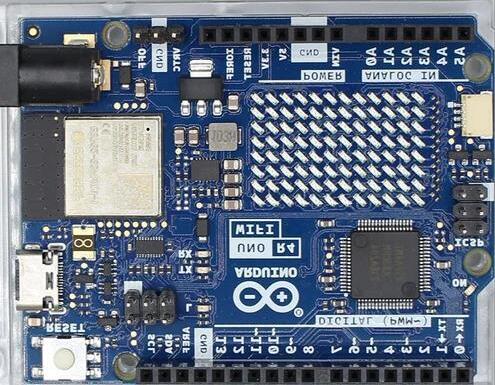
TheArduinoUnoR4WiFiisthecentralcontrolunitofthe proposed automatic solar panel cleaning system. It is a microcontrollerdevelopmentboardbasedontheRenesas RA4M1 microcontroller, which is designed for embedded system applications. The board includes built-in WiFi connectivity, allowing it to connect to internet-based platforms such as the Blynk IoT platform for remote monitoring and control.In this project, the Arduino controllercontinuouslymonitorstheinputsignalfromthe LDR sensor to determine the sunlight intensity falling on the solar panel surface. The sensor values are processed bytheArduinoandcomparedwithapredefinedthreshold
International Research Journal of Engineering and Technology (IRJET) e-ISSN: 2395-0056
Volume: 13 Issue: 03 | Mar 2026 www.irjet.net p-ISSN: 2395-0072
value programmed into the system. If the detected light intensity falls below this threshold value, the Arduino interprets this condition as an indication of dust accumulationonthepanelsurface.
Once dustaccumulationisdetected, theArduinoactivates the cleaning mechanism by sending control signals to the relay modules connected to the water pump and wiper motor. The controller first activates the water pump to spray water onto the solar panel surface. After spraying water for a short duration, the controller activates the wipermotortoremovethedustparticlesfromthepanel.
The Arduino also receives input signals from the limit switchesinstalledatbothendsofthepanel.Thesesignals allow the controller to reverse the motor direction when thewiperreachestheendofthecleaningpath.Inaddition to controlling the cleaning process, the Arduino Uno R4 WiFi also sends system data such as sensor values, pump status, and motor status to the Blynk mobile application throughitsWiFimodule.Thisallowsuserstomonitorthe systemremotely.
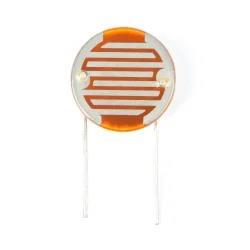
The Light Dependent Resistor (LDR) is a type of photoresistorthatisusedtomeasuretheintensityoflight. The resistance of the LDR changes according to the amount of light falling on its surface. When the light intensity increases, the resistance of the LDR decreases. When the light intensity decreases, the resistance increases
In the proposed solar panel cleaning system, the LDR sensorisusedtodetectthesunlightintensityreachingthe surfaceofthesolarpanel.Whenthesolarpanel surfaceis clean, the sensor receives maximum sunlight and produces a higher voltage output. However, when dust or dirt accumulates on the solar panel surface, the sunlight reaching the panel decreases. This reduction in light intensitycausesthesensoroutputvoltagetodecrease. The Arduino microcontroller continuously monitors the sensor output. If the sensor reading falls below the predefined threshold value, the system assumes that dust accumulation has occurred and initiates the cleaning process. The LDR sensor is widely used in light sensing
applications because it is simple, low-cost, and easy to interfacewithmicrocontrollers.
Relay Module
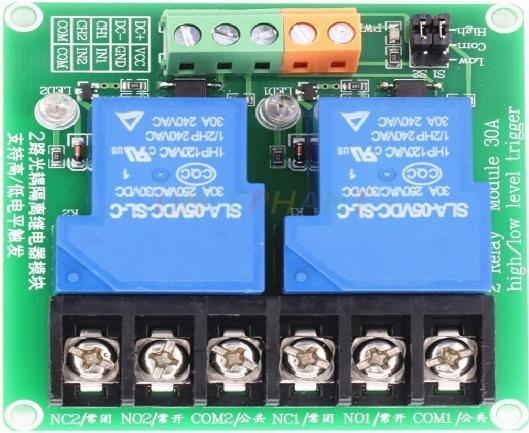
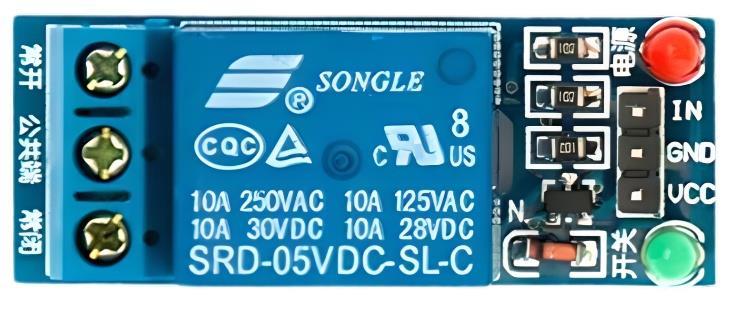
Relay modules are electrical switching devices that allow low-power control circuits to operate high-power electrical devices. A relay consists of an electromagnetic coil and a switching contact. When the coil is energized, the switch changes its position and completes the circuit connectedtothedevice.
Inthisproject,relaymodulesareusedtocontrolthewater pump and wiper motor. The Arduino microcontroller operates at a low voltage and cannot directly drive highpower devices. Therefore, relay modules are used as an interfacebetweenthemicrocontrollerandthesedevices.
When the Arduino sends a control signal to the relay module, the relay activates and allows electrical current from the battery to flow to the connected device. This allows the pump and motor to operate. Relay modules provide electrical isolation between the microcontroller and high-power circuits, which improves system safety andreliability.
In the proposed solar panel cleaning system, the LDR sensorisusedtodetectthesunlightintensityreachingthe surfaceofthesolarpanel.Whenthesolarpanel surfaceis clean, the sensor receives maximum sunlight and produces a higher voltage output. However, when dust or dirt accumulates on the solar panel surface, the sunlight reaching the panel decreases. This reduction in light intensitycausesthesensoroutputvoltagetodecrease.
International Research Journal of Engineering and Technology (IRJET) e-ISSN: 2395-0056
Volume: 13 Issue: 03 | Mar 2026 www.irjet.net p-ISSN: 2395-0072
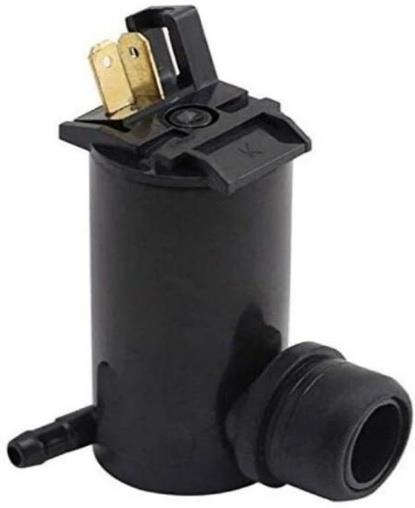
The water pump is used to spray water onto the solar panel surface during the cleaning process. Dust and dirt particlesthataccumulateonthepanelsurfacecanbecome firmly attached over time. Spraying water onto the panel helps loosen these particles and makes it easier for the cleaningmechanismtoremovethem.
The pump used in this system operates using a 12V DC power supply. When the Arduino detects dust accumulation through the LDR sensor, it activates the relayconnectedtothepump.Thepumpthendrawswater from a small storage tank and sprays it onto the panel surfacethroughapipeornozzle.
The water spraying process usually lasts for a short duration to avoid unnecessary water consumption. Once the water spraying is completed, the Arduino controller activates the wiper motor to remove the loosened dust particles.
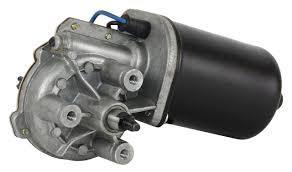
The wiper motor is an essential component of the solar panel cleaning mechanism used in the proposed system. Its primary function is to move the cleaning wiper across thesurfaceofthesolarpanelinordertoremovedust,dirt, andothercontaminantsthataccumulateonthepanelover time. The presence of dust particles on the solar panel surface reduces the amount of sunlight reaching the photovoltaic cells, which directly affects the energy generation efficiency. Therefore, the wiper motor plays a
critical role in ensuring that the panel surface remains cleanandcapableofreceivingmaximumsunlight.
In this project, a 12V DC wiper motor is used to drive the cleaningmechanism.Wipermotorsarecommonlyusedin automobile windshield wiper systems because they provide high torque and reliable operation. These characteristicsmakethemsuitableformovingmechanical cleaning devices such as brushes or wipers across flat surfaceslikesolarpanels.
When the Arduino controller detects a decrease in sunlight intensity from the LDR sensor, it initiates the cleaningprocessbyactivatingtherelaymoduleconnected to the water pump. After the water spraying process is completed, the Arduino activates the relay connected to the wiper motor. Once the motor is activated, it rotates and drives the cleaning wiper across the solar panel surface. The mechanical movement of the wiper removes thelooseneddustparticlesfromthepanel.
The wiper motor is designed to provide smooth and controlled motion across the panel. The direction of the motor is controlled using limit switches placed at both ends ofthepanel. Whenthe wiper reachesone end ofthe panel, the limit switch sends a signal to the Arduino controller,whichreversesthedirectionofthemotor.This allows the wiper to move back across the panel surface andcompletethecleaningcycle.Theuseofawipermotor ensures effective mechanical cleaning and improves the overallefficiencyofthesolarpanelsystem.
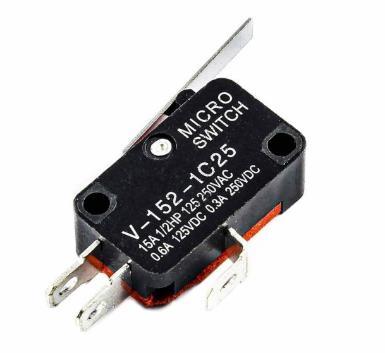
Limit switches are electromechanical devices used to detect the position or movement of mechanical components in automated systems. They act as position sensors that provide feedback to the control unit when a moving part reaches a predetermined point. In the proposedautomaticsolarpanelcleaningsystem,twolimit switches are used to control the movement of the wiper motor and ensure that the cleaning mechanism operates safelyandefficiently.
The limit switches are installed at both ends of the solar panelcleaningpath.Theseswitchesarepositionedinsuch
Volume: 13 Issue: 03 | Mar 2026 www.irjet.net p-ISSN: 2395-0072
a way that when the cleaning wiper reaches either end of the solar panel surface, it physically presses the corresponding limit switch. Once the switch is pressed, it sends an electrical signal to the Arduino Uno R4 WiFi microcontroller,indicatingthatthewiperhasreachedthe endofitstravelpath.
TheArduinocontrollercontinuouslymonitorsthestateof the limit switches while the wiper motor is operating. When the wiper reaches the first limit switch located at one end of the solar panel, the switch is activated and sendsasignaltothecontroller.Uponreceivingthissignal, the Arduino immediately changes the direction of the wiper motor through the relay module. As a result, the motor rotates in the opposite direction and moves the wiperbackacrossthesolarpanelsurface.
Similarly,whenthewiperreachesthesecondlimitswitch locatedattheoppositeendofthesolarpanel,theswitchis activatedagainandsendsanothersignaltothecontroller. This process allows the Arduino to control the forward and reverse movement of the wiper motor, ensuring that theentiresurfaceofthesolarpaneliscleanedproperly.
The use of limit switches provides several important advantages in the solar panel cleaning system. First, they helpensurethatthecleaningwipercoverstheentirepanel surface, which improves the overall cleaning efficiency. Second, they provide a position feedback mechanism that allowsthecontrollertopreciselycontrolthemovementof themotor.Third,theyprotectthemechanicalcomponents from damage by preventing the motor from moving the wiper beyond tWithout limit switches, the motor would continuerotatingevenafterthewiperreachestheedgeof the panel. This could lead to excessive mechanical stress, damage to the wiper mechanism, or failure of the motor. Limit switches are widely used in automation systems because they are simple, reliable, and easy to integrate with microcontrollers. They operate using a simple contact mechanism that opens or closes an electrical circuitwhentheswitchispressed.
In the proposed system, the limit switches play a crucial role in ensuring that the cleaning process is performed smoothly and accurately. By providing real-time position feedback to the Arduino controller, they enable precise control of the wiper motor and contribute to the safe and efficient operation of the automatic solar panel cleaning system.
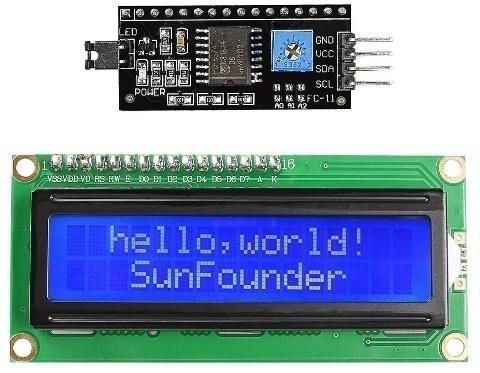
TheI2CLCDdisplayisanimportantoutputdeviceusedin the proposed automatic solar panel cleaning system to provide real-time information about the operation of the system.Thedisplayhelpsuserseasilyobservethecurrent working status of the system without needing to access the IoT monitoring platform. By displaying system parameters directly on the device, the LCD improves the usability and convenience of the system during operation andmaintenance.
A Liquid Crystal Display (LCD) is commonly used in embedded systems to display text, numbers, and system messages. In this project, a 16×2 LCD display is used, which means the display can show 16 characters per line andtwolinesoftextatatime.TheLCDusedinthisproject isequippedwithanI2Cinterfacemodule,whichsimplifies the connection between the LCD and the Arduino controller. Normally, a standard LCD requires multiple data and control pins to communicate with the microcontroller. However, by using the I2C interface, the number of required connections is reduced significantly. The I2C communication protocol uses only two signal lines,namely:
Inadditiontothesetwocommunicationlines,theLCDalso requires power connections such as VCC (5V) and GND. The use of the I2C interface helps reduce wiring complexity and allows more Arduino pins to remain availableforothercomponentsinthesystem.TheI2CLCD display is connected to the Arduino Uno R4 WiFi controller, which sends data to the display based on the current system conditions. The Arduino continuously updates the LCD screen with relevant information obtainedfromthesensorsandcontrolsystem.Thisallows users to monitor the system status directly from the device.
By displaying these parameters on the LCD screen, users can quickly understand the current state of the system. For example, when the sunlight intensity detected by the LDR sensor falls below the threshold value, the LCD display may show a message indicating that the cleaning process has started. Similarly, when the water pump is activated, the display will show that the pump is operating.
International Research Journal of Engineering and Technology (IRJET) e-ISSN: 2395-0056
Volume: 13 Issue: 03 | Mar 2026 www.irjet.net p-ISSN: 2395-0072
The LCD also provides useful feedback during system testing and troubleshooting. Engineers or technicians can easily observe the sensor readings and system responses while developing or maintaining the system. This makes the LCD display an important diagnostic tool for monitoringthebehaviorofthesystem.
Overall, the I2C LCD display plays a significant role in improving the user interface and monitoring capability of the automatic solar panel cleaning system. By providing clear and real-time information about system operations, itenhancessystemtransparencyandallowsusersto easilytracktheperformanceofthecleaningmechanism.
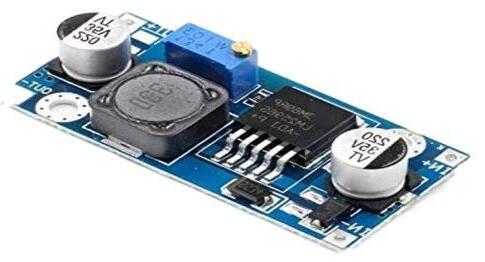
The DC-DC buck converter is an important component used in the proposed automatic solar panel cleaning system to regulate and reduce the input voltage to a suitable level for electronic components. In this system, the main power source is a 12V battery, which provides sufficientvoltageforhigh-powerdevicessuchasthewater pump and the wiper motor. However, electronic components such as the Arduino Uno R4 WiFi microcontroller, LDR sensor, limit switches, and I2C LCD display require a much lower operating voltage, typically 5V. Supplying a higher voltage directly to these componentscoulddamagethem.Therefore,aDC-DCbuck converter is used to step down the voltage from 12V to a regulated5Voutput.
A buck converter is a type of switching voltage regulator designed to efficiently convert a higher DC voltage into a lowerDCvoltage.Itoperatesusingelectroniccomponents such as switching transistors, inductors, capacitors, and diodes to regulate the output voltage. Unlike traditional linearvoltageregulators,whichdissipateexcessenergyas heat, buck converters use a switching mechanism that significantlyimprovesefficiency.Thisallowstheconverter to reduce voltage with minimal power loss and heat generation.
In the proposed system, the 12V battery output is connected to the input terminals of the buck converter. The converter then regulates and converts this voltage
into a stable 5V output, which is supplied to the Arduino controller and other low-power components. The output voltage of many buck converters can be adjusted using a small potentiometer, allowing precise control of the outputvoltagelevel.
Providingastableandregulatedvoltageisveryimportant for the proper operation of microcontrollers and sensors. Microcontrollers such as the Arduino Uno R4 WiFi are sensitivetovoltagefluctuationsandmustoperatewithina specific voltage range. If the voltage supplied to the controller exceeds the recommended limit, it may cause overheatingorpermanentdamagetothecircuit.Similarly, sensors such as the LDR and display modules require stable voltage to provide accurate readings and reliable operation.
The buck converter also helps improve the overall efficiencyofthesystem.Sincethesystemis powered bya battery, minimizing power loss is essential to extend the operating time of the system. Buck converters are known fortheirhighefficiency,oftenachievingefficienciesabove 85–90%, which makes them ideal for battery-powered applications.
Another advantage of using a buck converter is its ability tomaintainaconstantoutputvoltageevenwhentheinput voltagevariesslightly.Asthebatterydischargesovertime, itsvoltagemayfluctuate.Thebuckconvertercompensates for these variations and ensures that the output voltage remains stable at 5V. This helps maintain consistent performanceofthemicrocontroller.
Insummary,theDC-DCbuckconverterplaysacrucialrole in the proposed solar panel cleaning system by safely regulating the voltage supplied to sensitive electronic components. It ensures efficient power conversion, protects the control circuitry from excessive voltage, reduces energy loss, and improves the reliability and performanceoftheentiresystem.
Volume: 13 Issue: 03 | Mar 2026 www.irjet.net p-ISSN: 2395-0072
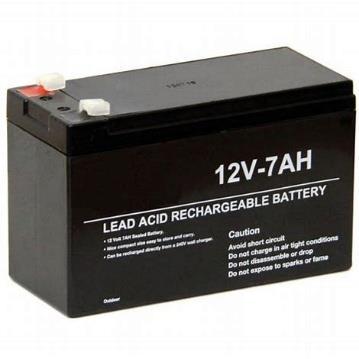
Thebatterypowersupplyisanessentialcomponentofthe proposedautomaticsolarpanelcleaningsystembecauseit provides the electrical energy required to operate all the hardwarecomponentsinthesystem.Inthisproject,a12V 7Ah rechargeable battery is used as the main power source. The battery supplies power to both high-power components, such as the A12V battery is commonly used inembeddedandautomationsystemsbecauseitprovides sufficient voltage and current to operate motors, pumps, and electronic circuits. The 7Ah (Ampere-hour) rating of the battery indicates its energy storage capacity. It means that the battery can theoretically supply 7 amperes of current for one hour, or a smaller current for a longer duration. This capacity allows the system to operate for extendedperiodswithoutrequiringfrequentrecharging.
In the proposed solar panel cleaning system, the battery directlysuppliespowertohigh-powerdevicessuchasthe water pump and wiper motor. These components require higher current to operate, especially during the cleaning process when the pump sprays water and the motor moves the cleaning wiper across the solar panel surface. The battery provides sufficient current to ensure smooth and reliable operation of these mechanical components. The connection between the battery and these devices is controlled through relay modules, which allow the Arduino controller to turn the devices ON or OFF as required.
The battery also provides power to the DC-DC buck converter, which regulates the voltage for the control circuitry.SincetheArduinocontrollerandsensorsoperate at a lower voltage of 5V, the buck converter reduces the battery voltage from 12V to 5V. This regulated output voltage is then supplied to the Arduino Uno R4 WiFi microcontroller, LDR sensor, limit switches, and the I2C LCD display. By using a buck converter, the system ensures that sensitive electronic components receive stableandsafeoperatingvoltage.
One of the major advantages of using a rechargeable battery in this system is that it allows the system to operate independently without requiring a continuous connection to the electrical grid. This makes the system suitable for installations in remote areas where grid powermaynotbeeasilyavailable.Thebatterycanalsobe recharged using solar energy from the solar panels themselves, which further improves the energy efficiency andsustainabilityofthesystem.
Anotherbenefitofthebatterypowersupplyisitsabilityto provide stable and reliable power during system operation. Unlike some power sources that may fluctuate due to external factors, a battery provides a consistent voltage output that ensures proper operation of the microcontroller and other electronic components. This
helpspreventunexpectedsystemfailuresor malfunctions duringthecleaningprocess.
The12V7Ahbatterycapacityalsoensuresthatthesystem can operate for a long period before needing to be recharged. Since the cleaning process does not run continuouslyandonlyactivateswhendustaccumulationis detected, the battery consumption remains relatively low. This allows the system to function efficiently while conservingenergy.
Insummary,thebatterypowersupplyplaysacrucialrole in the proposed solar panel cleaning system by providing reliable and stable energy for both high-power and lowpower components. It enables the system to operate independently, supports energy-efficient operation, and ensures continuous performance of the cleaning mechanism. The use of a rechargeable 12V 7Ah battery makes the system suitable for practical deployment in solar panel installations where reliable and portable powerisrequired
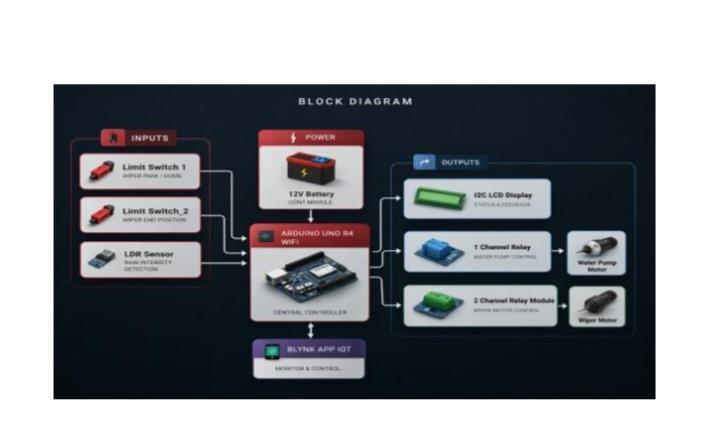
The block diagram of the proposed automatic solar panel cleaning system represents the overall architecture and interaction between the different functional units of the system. It illustrates how the various hardware components are interconnected to detect dust accumulation and perform the cleaning operation automatically. The system mainly consists of the power supply unit, sensor unit, control unit, switching unit, cleaning mechanism, position detection unit, and IoT monitoringsystem.Eachoftheseunitsperformsaspecific function and together they form an intelligent system capable of maintaining the cleanliness of the solar panel surface.
The power supply unit provides the necessary electrical energy for the operation of the entire system. In the proposeddesign,a12Vbatteryisusedasthemainpower
Volume: 13 Issue: 03 | Mar 2026 www.irjet.net p-ISSN: 2395-0072
source, which supplies power to high-power components such as the water pump and the wiper motor. Since the Arduino controller and sensors require a lower operating voltage, a DC-DC buck converter is used to step down the voltage from 12V to 5V. This regulated voltage is then suppliedtotheArduinoUnoR4WiFimicrocontroller,LDR sensor,limitswitches,andrelaymodulesto ensurestable andsafeoperationoftheelectroniccomponents.
The sensor unit consists of an LDR (Light Dependent Resistor)sensor,whichisusedtomeasuretheintensityof sunlight falling on the surface of the solar panel. The resistance of the LDR varies depending on the amount of light detected. When the solar panel surface is clean, the sensorreceiveshigherlightintensity.However,whendust accumulates on the panel surface, it blocks sunlight and reduces the detected light intensity. The LDR sensor converts this variation in light intensity into an electrical signal that is sent to the Arduino microcontroller for furtherprocessing.
The Arduino Uno R4 WiFi microcontroller acts as the central control unit of the system. It continuously reads thesensordatafromtheLDRsensorandcomparesitwith apredefinedthresholdvalueprogrammedinthesystem.If thedetectedlightintensityfallsbelowthethresholdvalue, the controller interprets this condition as an indication thatdusthasaccumulatedonthesolarpanelsurface.Once this condition is detected, the Arduino initiates the cleaning process by activating the relay modules connectedtothepumpandmotor.
Theswitchingunitconsists ofrelaymodules,whichactas electronic switches used to control high-power devices. The Arduino microcontroller cannot directly power devices such as pumps and motors due to current limitations. Therefore, relay modules are used as an interfacebetweenthemicrocontrollerandthesedevices.
To control the movement of the wiper motor, the system usestwolimitswitchesplacedattheedgesofthecleaning path. These switches detect the position of the wiper during its movement. When the wiper reaches one end of thesolarpanel,thecorrespondinglimitswitchisactivated andsendsasignaltotheArduinocontroller.Basedonthis signal, the controller reverses the direction of the motor, allowingthewipertomove backacrossthepanelsurface. This forward and reverse movement ensures that the entiresolarpanelsurfaceiscleanedeffectively.
In addition to the automatic cleaning operation, the system also incorporates IoT-based monitoring using the Blynk platform. The Arduino Uno R4 WiFi controller connects to the internet through its built-in WiFi module and sends system data to the Blynk cloud platform. Through the Blynk mobile application, users can monitor
important system parameters such as LDR sensor values, pumpoperationstatus,andwipermotormovementinreal time.Userscanalsomanuallycontrolthepumpormotorif necessarythroughthemobileapplication.
Overall, the block diagram of the proposed system clearly illustrates the interaction between the various componentsinvolvedintheautomaticsolarpanelcleaning system. It demonstrates how the sensor, controller, switching devices, cleaning mechanism, and IoT monitoring platform work together to detect dust accumulation, perform automatic cleaning, and ensure efficientsolarpanelperformance.
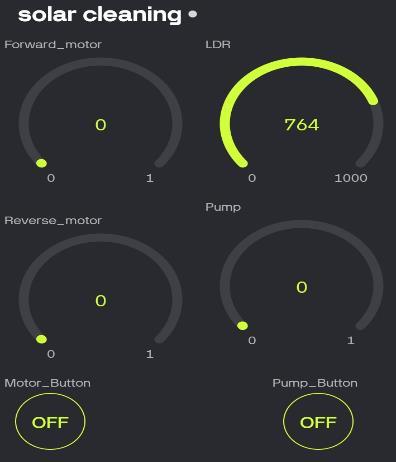
The proposed automatic solar panel cleaning system is integrated with the Blynk IoT platform to enable remote monitoring and control of the system. The integration of IoTtechnologyenhancesthefunctionalityofthesystemby allowinguserstoobservesystemperformanceandcontrol certain operations from a mobile device. In this project, the Arduino Uno R4 WiFi microcontroller uses its built-in WiFi capability to connect to the internet and communicatewiththeBlynkcloudserver.
TheBlynkplatformactsasabridgebetweenthehardware systemandthemobileapplication.TheArduinocontroller continuouslycollectsdatafromtheconnectedsensorsand system components and transmits this information to the Blynk cloud through a WiFi network. The data is then displayed in real time on the Blynk mobile application, which provides a graphical interface for monitoring systemparameters.
Duringtheexperimentaltestingofthesystem,theArduino controller successfully transmitted important information such as the LDR sensor readings, water pump status, wiper motor operation, and overall cleaning process
Volume: 13 Issue: 03 | Mar 2026 www.irjet.net p-ISSN: 2395-0072
status to the Blynk platform. The mobile application displayed these parameters clearly through widgets such as value displays, indicators, and status labels. This allowed users to observe the system performance from anywhereusingtheirsmartphones.
One of the key parameters monitored through the Blynk application is the LDR sensor value, which represents the sunlight intensity detected on the solar panel surface. By observing this value, users can understand the lighting conditions affecting the panel. When dust accumulates on the panel surface, the sunlight intensity detected by the LDR decreases, and the system automatically initiates the cleaningprocess.
TheBlynkapplicationalsodisplaysthestatusofthewater pump used in the cleaning process. When the Arduino controller activates the pump through the relay module, the Blynk platform updates the pump status in real time, allowing users to see whether the pump is currently operatingorturnedoff.
Similarly, the operation of the wiper motor is also monitored through the Blynk platform. The application indicates when the motor starts moving the cleaning wiper across the solar panel surface and when the cleaning process is completed. This real-time feedback helps users understand the behavior of the cleaning mechanismduringsystemoperation.
AnotherimportantfeatureprovidedbytheBlynkplatform is the ability to manually control certain system components. Through the mobile application interface, users can manually activate the water pump or wiper motor if necessary. This feature provides flexibility in situations where the user may want to initiate cleaning even when the automatic threshold condition is not met. For example, if the panel appears dirty even though the sensor reading is still above the threshold value, the user canstartthecleaningprocessremotely.
TheIoTintegrationalsoimprovessystemaccessibilityand monitoring efficiency. Instead of physically checking the system, users can monitor the performance of the solar panel cleaning system from any location with internet access.Thisisespeciallyusefulforsolarpanelinstallations locatedinremoteareasorlargesolarfarmswheremanual inspectionmaybedifficult.
The experimental results confirmed that the Blynk IoT platform successfully received and displayed sensor data from the Arduino controller. The real-time monitoring capability allowed users to track system performance effectivelyandverifythecorrectoperationofthecleaning mechanism.
Overall, the integration of the Blynk IoT platform significantly enhances the functionality of the automatic solar panel cleaning system. It enables real-time
monitoring, remote control, and improved system management, making the system more intelligent, userfriendly, and suitable for modern solar energy applications.
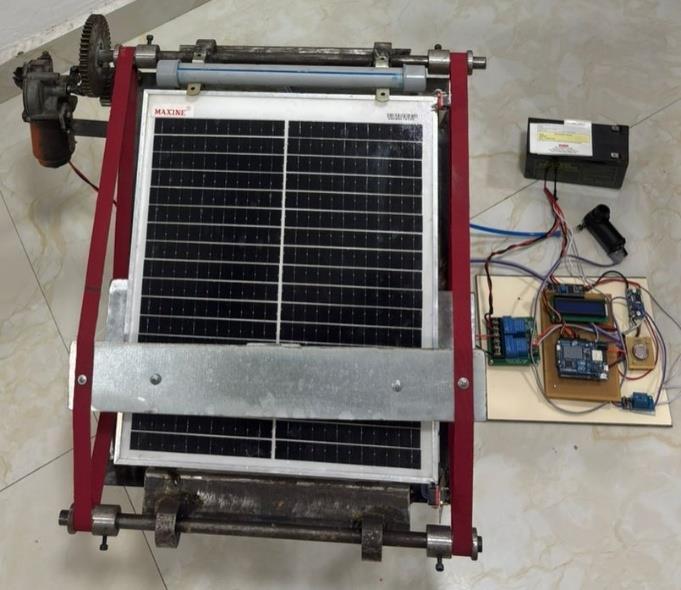
The experimental setup of the proposed solar panel cleaningsystemconsists ofseveral hardwarecomponents assembled together to simulate the operation of an automated solar panel maintenance system. A solar panel model or flat surface is used to represent the solar panel onwhichdustaccumulationcanoccur.
ThemaincontrolunitusedinthesetupistheArduinoUno R4WiFimicrocontroller,whichprocessessensordataand controls the cleaning mechanism. The LDR sensor is positioned near the solar panel surface to detect the intensity of sunlight reaching the panel. When dust or other particles accumulate on the panel surface, the amountofsunlightdetectedbytheLDRsensordecreases.
A 12V water pump connected through a relay module is used to spray water onto the solar panel surface during thecleaningprocess.Thewaterhelpsloosendustparticles attached to the panel surface. After spraying water, a 12V wipermotordrivesacleaningwiperthatmovesacrossthe panelsurfacetoremovethelooseneddust.
Two limit switches are installed at both ends of the solar panel cleaning path to detect the position of the wiper mechanism. These switches provide feedback to the Arduino controller so that the direction of the motor can bereversedwhenthewiperreachestheedgeofthepanel.
The system is powered using a 12V 7Ah rechargeable battery, and a DC-DC buck converter is used to provide a regulated5VsupplytotheArduinocontrollerandsensors. The system is also connected to the Blynk IoT platform, whichallowsuserstomonitorsensorreadingsanddevice statusthroughamobileapplication.
Volume: 13 Issue: 03 | Mar 2026 www.irjet.net p-ISSN: 2395-0072
This project effectively illustrates that cost effective automation can address one of the most enduring challenges in solar energy efficiency loss due to dust buildup. Our Adriano-based cleaning system provides dependable, water-efficient maintenance at a significantly lower cost compared to traditional solutions. Technical indicates energyoutputimprovementsof25– 40%, while the economic analysis reveals a strong return on investment across residential, commercial, and utilityscale applications. The importance of the system goes beyond its technical features. Ensuring the optimal performanceofsolarpanelsplaysavitalroleinpromoting renewable energy adoption and achieving carbon reduction targets. The design philosophy utilizing straightforward, durable components in an innovative arrangement serves as a model for sustainable engineering solutions globally. Future research avenues include the integration of IOT for intelligent monitoring and the exploration of advanced materials to extend service life. As solar energy becomes increasingly significant in global electricity generation, maintenance technologies like ours will be essential in optimizing the potentialofrenewableenergy.Thisprojectnotonlyoffers a practical solution for immediate application but also establishes a foundation for continuous innovation in renewableenergymaintenancesystems.
We would like to express our profound gratitude to St. Peter’sInstituteofHigherEducationandResearch,Avadi, Chennai, for providing us with the opportunity and resourcestocompletethisprojectsuccessfully.Weextend oursincere thankstoDr.I. Manju,M.E., Ph.D.,Head ofthe Department of Electronics and Communication Engineering ,for her continuous motivation, valuable feedback, and constant support throughout the course of thiswork.
Our heartfelt thanks go to our project supervisor, Ms.Jane CarlineM,M.E.,,forherpatientguidance,technicaladvice, andencouragementduringeveryphaseoftheproject.Her expertise and timely suggestions were instrumental in transforming our concept into a practical working model. We also wish to thank all the faculty members and laboratory staff of the Department of ECE for their kind cooperation and assistance during the fabrication and testingofourprototype.
Finally, we owe special gratitude to our families and friends for their encouragement, understanding, and moral support throughout this endeavour. Their faith in our efforts kept us motivated to complete this project successfully.
Wearedeeplygrateful tooursupervisor,Ms.JaneCarline M for her encouragement, helpful suggestions, and continuoussupportduringeverystageoftheproject.
We also extend our thanks to all faculty members and staffoftheDepartmentofECEforTheir cooperation, and toourfriendsandfamiliesfortheir motivationand moral supportinCompletingthisworksuccessfully.
[1]Ahmed, S., Rahman, M. and Hasan, K. (2021) Development of an Automated Solar Panel Cleaning System Using Microcontroller Technology, International Journal of Electronics and Communication Engineering, vol.15,no.2.
[2] Lee, J., Kim, H. and Park, D. (2021) Design of an Embedded Solar Panel Cleaning System Using SensorBased Automation, Journal of Sensors and Embedded Systems,vol.9,no.3.
[3]Gupta,R.,Sharma,P.andSingh,A.(2021)Automated Solar Panel Cleaning Mechanism for Improving Photovoltaic Efficiency, International Journal of RenewableEnergyResearch,vol.11,no.4.
[4] Mousavi, S., Mohammadi, M. and Ghaderi, A. (2022) Introducing a New Method for Automatic Cleaning of Photovoltaic Panels Using Robotic Technology, RenewableEnergySystemsJournal,vol.7,no.1
[5] Kumar, S., Patel, R. and Shah, D. (2022) IoT Based Smart Solar Panel Monitoring and Cleaning System, International Journal of Engineering Research and Technology(IJERT),vol.11,no.6.
[6] Wang, Y., Chen, L. and Li, X. (2022) Smart SensorBased Cleaning System for Solar Photovoltaic Modules, JournalofRenewableEnergyEngineering,vol.14,no.5.
[7]Najmi,S.,Dupont,R.andDubois,P.(2023)Reviewon SolarPanelCleaningSystemsandTechniques,Renewable EnergyEngineeringReview,vol.18,no.2.
[8] Singarapu, S. and Reddy, P. (2023) Smart IoT Based Solar Panel Cleaning System Using Microcontroller, International Journal of Smart Energy Systems, vol. 12, no.4.
[9]Anber, M., Hassan, A. and Saleh, R. (2024) Impact of IoT-Based Automatic Solar Panel Cleaner on Energy Efficiency of Photovoltaic Systems, International Journal ofLow-CarbonTechnologies,vol.19.
[10] Rao, K., Kumar, V. and Sharma, P. (2024) Design of IoT Based Solar Array Cleaning System with Real-Time
International Research Journal of Engineering and Technology (IRJET) e-ISSN: 2395-0056
Volume: 13 Issue: 03 | Mar 2026 www.irjet.net p-ISSN: 2395-0072
Monitoring, International Journal of Electrical and ComputerEngineering,vol.14,no.2.
[11] Subha, K., Sandhiya, R. and Priyanka, R. (2025) Design and Development of Smart IoT-Based Solar Panel Cleaning System, Journal of Scientific Research and Reports,vol.31,no.12.
[12] Oufettoul, H., Boulkroune, A. and Saadi, M. (2025) A Novel Solar Panel Cleaning System for Improved Photovoltaic Efficiency, Energy Conversion Research Journal,vol.10,no.3
[13] Al-Marri, A. and Al-Hajri, M. (2025) Optimizing the Cleaning Plan of Solar PV Systems for Improved Energy Production,SolarEnergyEngineeringJournal,vol.21,no. 1
[14]Boopathy, E., Kumar, N. and Rajan, M. (2025) Intelligent Robotic System for Efficient Solar Panel Cleaning and Maintenance, Journal of Renewable Energy Technologies,vol.13,no.2.
[15]Singh,P.,Verma,A.andTiwari,R.(2025)IoTEnabled Solar Panel Cleaning Robot with Automated Monitoring System, International Journal of Innovative Research in EngineeringandTechnology,vol.14,no.7.