
International Research Journal of Engineering and Technology (IRJET) e-ISSN: 2395-0056
Volume: 12 Issue: 03 | Mar 2025 www.irjet.net p-ISSN: 2395-0072
International Research Journal of Engineering and Technology (IRJET) e-ISSN: 2395-0056
Volume: 12 Issue: 03 | Mar 2025 www.irjet.net p-ISSN: 2395-0072
Katta
Sreeja1 , Lekkala Sathwika2 , Gubba Varshith3 , Dr. A. S. Narasimha Raju 4
1B. Tech Student, Dept of Computer Science and Engineering (Data Science), Institute of Aeronautical Engineering, Telangana, India
2B. Tech Student, Dept. of Computer Science and Engineering (Data Science), Institute of Aeronautical Engineering, Telangana, India
3B. Tech Student, Dept of Computer Science and Engineering (Data Science), Institute of Aeronautical Engineering, Telangana, India
4Assistant Professor, Dept of Computer Science and Engineering (Data Science), Institute of Aeronautical Engineering, Telangana, India
Abstract - Dietary suggestions specific to each person’s needs are becomingmore andmore significant as the market for individualized health solutions expands. This study presents the Automated Dietary Recommendation System (ADRS), which generates customized meal recommendations by using a Random Forest classifier. To provide the best dietary recommendations, the algorithm takes into considerationanumberofuser-specificparameters,including dietary preferences, allergies, and medical problems. The system predicts appropriate food products that correspond with users’ health objectives by training the Random Forest model on a dataset that includes food nutrients and user health profiles. Classification accuracy and user satisfaction measures are used to assess the model’s performance, and the findings indicate that the model can produce nutritional recommendations that are both accurate and effective. Our ADRS provides a flexible and scalable solution that may help users keep a balanced and healthy diet.
Key Words: Diet, BMI, Calories, Diseases, Machine Learning, Random Forest.
1.INTRODUCTION
In recent years, the rising prevalence of lifestyle-related diseases such as obesity, diabetes, and cardiovascular conditions has significantly increased the demand for personalized health management solutions. Among the variousstrategiestoaddressthesehealthchallenges,dietary interventionsplayacrucialroleinpreventingandmanaging chronic diseases. However, designing a suitable diet that alignswithanindividual’shealthprofile,preferences,and dietary restrictions is often complex and requires expert guidance.Traditionaldietaryrecommendationmethodstend tobemanualandtimeconsuming,lackingtheabilitytoscale fordiverseindividualrequirements.Withtheadvancements inArtificialIntelligence(AI)andMachineLearning(ML),the opportunitytoautomateandpersonalizedietaryplanning hasemergedasapromisingsolutiontothesechallenges.
Inthisresearch,weintroduceanAutomatedDietary RecommendationSystem(ADRS),utilizingmachinelearning
techniques, particularly the Random Forest classifier, to provide personalized meal suggestions based on userspecifichealthdata.TheRandomForestalgorithm,known foritsrobustnessandclassificationaccuracy,isemployedto analyzeandpredictoptimaldietaryoptionsbasedonarange of factors such as age, gender, medical conditions, and individualpreferences.Thisapproachallowsthesystemto generatetailoreddietplansthatareadaptabletotheuser’s unique needs, contributing to improved health outcomes. The primary objectives of this study are to develop an automated system that delivers personalized meal recommendations,toemploytheRandomForestclassifier foraccuratefooditempredictions,andtoassessthesystem’s performance in terms of classification accuracy, user satisfaction, and its potential to promote healthier eating habits. This research aims to provide an effective and scalable solution that can assist users in maintaining a balancedandhealthydiet.Therestofthepaperisstructured as follows: a review of existing dietary recommendation systemsisprovided,followedbyadetailedexplanation of the methodology and dataset used. The results and performanceevaluationarethenpresented,andthepaper concludeswithadiscussiononthesystem’spotentialimpact andfuturedevelopments
[1],”ANovelTime-AwareFoodRecommenderSystemBased onDeepLearningandGraphClustering” buildsa smarter, morepersonalized waytorecommendfood.Itcom- bines whatuserslikewiththeactualcontentofthefood,whilealso considering factors like the time of day, social circles, and trust networks. The goal is to provide healthier and more tailoredfoodsuggestions.However,manyexistingsystems fallshortbyignoringkeyfactorsliketheingredientsinfood, how people’s preferences change over time, and the challenge of recommending food to new users or for new items.Theseissuesmakeithardertooffertrulypersonalized andeffectiverecommendationsforhealthiereating.
[2],”ApplicationsofArtificialIntelligence,MachineLearning, andDeepLearninginNutrition:ASystematicReview”looks
International Research Journal of Engineering and Technology (IRJET) e-ISSN: 2395-0056
Volume: 12 Issue: 03 | Mar 2025 www.irjet.net p-ISSN: 2395-0072
at how AI specifically machine learning (ML) and deep learning(DL),isbeingemployedinthesubjectofnutrition.It addresses topics including diet analysis, individualized advice,andusingwearablesandappstopromotebehaviour change.Thestudydoespointoutseveraldifficulties,though, includingtherequirementforbetter,moreprecisedatain ordertotrainAImodelsandthepossibilityofbiasifthedata isn’tsufficientlyvaried.
[3],”InnovativeFoodRecommendationSystems:A Machine Learning Approach” focuses on advancing food recommendationsystemsbymovingfromsingle-objectiveto many-objectiveoptimizationmodels,whichallowsformore balanced suggestions. The paper also introduces a unified method that combines temporal-dependent graph neural networkswithdataaugmentationtoimproveaccuracyand robustness. How- ever, it does not consider potential scalabilitychallengesorthecomputationalcomplexitiesthat could arise when implementing these techniques in realworldsettings.
[4],”DietRecommendationSystemUsingMachine Learning” focuses on developing a personalized diet recommendationsystemthatutilizesmachinelearningand deep learning techniques. The primary goal is to address varioushealthissuesandimproveaccuracytoenhancethe user experience and contribute to better public health outcomes.However,thestudyhassomelimitations,suchas dependingonbasicinputdataandevaluationmetrics,which maynotaccountforimportantaspectslikeculturaldietary preferences.Additionally,thecomplexityofthealgorithms versus their interpretability might hinder the system’s generalizability and affect users’ trust in its recommendations.
[5],”Personalized Diet Recommendation System UsingMachineLearning”focusesondevelopingamachine learning-basedsystemthatprovidescustomizednutrition adviceby utilizingcontent-based filteringtechniques. The objective is to equip users with intuitive interfaces that deliver real-time insights, helping them make informed dietarychoicesandimprovetheiroverallhealth.However, the system may encounter challenges, such as a lack of diversity in data sources, which could compromise the quality of recommendations. Additionally, ensuring longterm user engagement and effectively addressing various dietary restrictions and health conditions may be challenging.
[6],”Exploring the Impact of Personalized Nutritional Approaches on Metabolism and Immunity: A Systematic Review of Various Nutrients and Dietary Patterns” examines how individualized dietary strategies affect metabolism and immune function. The aim was to enhance health outcomes by tailoring nutrition recommendationsbasedoneachperson’suniqueneedsand genetic characteristics. However, the study’s applicability
maybelimited,asitfocusesonspecificnutrientsanddietary patterns, potentially missing the wider effects of other dietaryfactorsonmetabolismandimmunity.
Data Processing
Data Processing
Random Forest
User Input Data
Disease based food filter
Weekly Diet Plan Generator
Display/Export Plan
3.1 Introduction
A diet suggestion system is intended to provide individualized meal plans by considering each person’s uniquehealthrequirementsaswellasthenutritionalvalue ofdifferentfoods.Theapproachstartsbycompilingdetailed information about food items, their classifications (e.g., vegetarian or non-vegetarian), and their suitability for illnesses such as high cholesterol, diabetes, and hypertension.[4] User-specific data is also gathered, includingheight,weight,age,andanycurrentmedicalissues. This information serves as the basis for creating diet regimensthatarespecifictothehealthneedsofeachuser. The data is processed and ready for machine learning analysis after this information is gathered. This entails employingone-hotencodingtoconvertcategoricaldatalike food categories and disease compatibility into numerical representations.Tomakesurethatsuggestionsmatchthe user’sdietaryrequirements,thesystemevaluateseachfood item’scompatibilityforarangeofmedicalproblems.[5]In ordertofurthercategorizeandtailorthedietarysuggestions according to weight categories and medical problems, the
International Research Journal of Engineering and Technology (IRJET) e-ISSN: 2395-0056
Volume: 12 Issue: 03 | Mar 2025 www.irjet.net p-ISSN: 2395-0072
user’sBodyMassIndex(BMI)isalsocomputedusingtheir height and weight. Based on the user’s health profile, the system then predicts suitable lunch selections using a Random Forest classifier. The method creates a comprehensive weekly food plan with suggestions for breakfast, lunch, snacks, and dinner Data Processing Random Forest User Input Data Disease based food filter Weekly Diet Plan Generator Display/Export Plan Data Collection when lunch selections are chosen. These meal plans are meticulously designed to promote balanced nutrition and guarantee compatibility with the user’s medicalcircumstances.Userscanexportthemealplanfor convenience, and the system can incorporate feedback to improvefuturerecommendations,makingtheprocessmore refinedandresponsiveovertime.[6]
3.2
The dataset allows for tailored diet advice by includingarangeoffooditemspecificsinadditiontouser health information. ”Age,” ”Height,” ”Weight,” and ”BMI” (bodymassindex)areimportantuser-specificvariablesthat are utilized to divide people into categories like ”Weight Gain”or”WeightLoss.”[7]Eachrowcontainsthename,type (vegetarianornonvegetarian),andingredientspecifications of a specific food item that is linked to it by a ”Food ID.” Furthermore, the dataset contains columns with binary values (0 or 1) that indicate the food’s compatibility for particular medical problems, such as ”HypertensionFriendly,” ”Cholesterol-Friendly,” and ”Heart DiseaseFriendly.”[8]Additionally,itindicateswhetherafooditemis highinspecificvitamins,suchas”vitaminC,””vitaminA,”or ”vitaminB12.”Thisrichsetofattributesenablesthesystem to filter and recommend foods that align with individual healthrequirementsanddietaryneeds.
Datapreprocessingisacrucialstepindevelopingan accurate and efficient diet recommendation system. It involves structuring raw data so that it can be effectively analyzed and used for generating recommendations. The processbeginsbyorganizingcategoricalinformation,such asdietarypreferencesandhealthconditions,intoaformat that the system can understand.[8] Missing or incomplete data, such as gaps in user profiles or missing nutritional values, are carefully managed to prevent inaccuracies in recommendations.Ensuringnumericalvalues,includingage, weight, and BMI, are correctly formatted and free from inconsistenciesfurtherimprovesdatareliability.Toenhance thequalityofanalysis,unnecessaryorduplicateentriesare removed, keeping the dataset clean and relevant. Additionally,standardizing numerical data helpsmaintain uniformity,ensuringnosingleattributedisproportionately affectsthesystem'spredictions.[9]Oncethedataisrefined, itissplitintotrainingandtestingsets,allowingthesystem tolearnfrompastpatternsandimproveitsabilitytomake
accurate dietary suggestions. This structured approach ensures that users receive reliable and well-suited recommendations based on their individual needs.[10] Effectivedatapreprocessingnotonlyimprovestheaccuracy of the diet recommendation system but also enhances its efficiency in handling diverse user inputs. By refining and structuring the data, the system can better recognize patternsandcorrelationsbetweendietaryhabitsandhealth conditions.Thisensuresthatpersonalizedrecommendations arebothrelevantandbeneficialforusers[11].Moreover,a well-preprocessed dataset minimizes errors and biases, leadingtoamorebalancedandinclusiverecommendation system.Asthesystemcontinuouslylearnsfromnewdata, maintainingarobustpreprocessingstrategyensureslongtermreliabilityandadaptabilitytoevolvingdietarytrends anduserpreferences.
•Basedonauser’sdietarydataandhealthprofile, theRandomForestalgorithmplaysacrucialroleinthediet recommendationsystem’sabilitytoanticipateappropriate meal alternatives, especially lunch. A machine learning techniquecalledRandomForestbuildsseveraldecisiontrees duringtrainingandthencombinestheirresultstoprovidea final prediction.[12] The model improves accuracy and lowersthepossibilityofoverfitting,whichcanhappenwitha singledecisiontree,byemployinganensembletechnique. Thismakesitasolidoptionforintricatepredictiontaskslike suggestingacustomizeddiet.
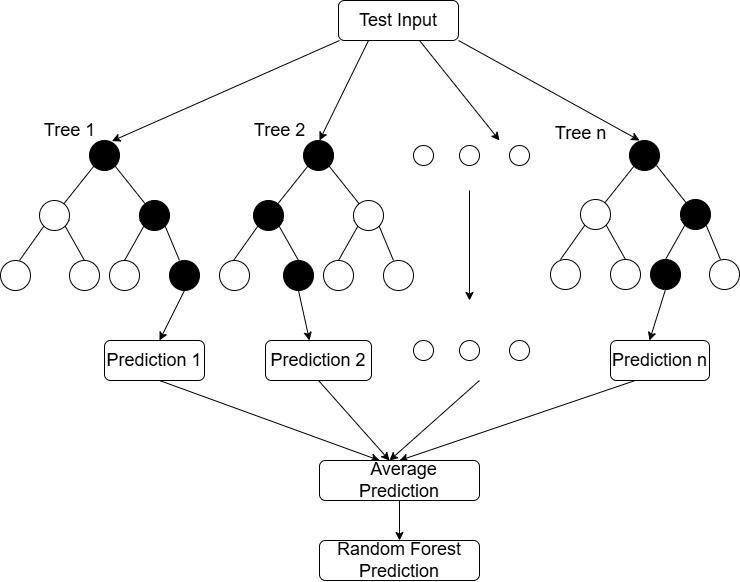
• A dataset comprising information about food items, including the food’s name, kind (vegetarian or nonvegetarian), and suitability for several medical conditionsincludingdiabetes,hypertension,andcholesterol, is used to train the Random Forest model. User-specific healthinformationisalsoprovided,includingdiseasetype andBMI.[13]Theuser’slunchpreferenceisthetargetvari
International Research Journal of Engineering and Technology (IRJET) e-ISSN: 2395-0056
Volume: 12 Issue: 03 | Mar 2025 www.irjet.net p-ISSN: 2395-0072
able, and the input attributes are encoded for use in the model. Essentially, the algorithm is trained to forecast a user’s optimal lunch choice based on their dietary preferencesandoverallhealth.
•Aftertraining,themodelsuggeststhebestlunch selectionbasedontheuser’shealthprofile,includingdisease kindandBMIcategory.AftereachRandomForestdecision tree has assessed the input features, the most frequently recommended lunch option across all trees is chosen in a majorityvotetomakethefinalprediction.[14]Theadviceis more accurate thanks to this ensemble approach, which guarantees forecast reliability and takes individual tree variationsintoaccount.
• The Random Forest model’s performance is assessedbythesystemusingmetricsincludingclassification reports, confusion matrix, and accuracy. These metrics evaluatehowsuccessfullythealgorithmusesuserprofilesto suggest appropriate lunch selections. This assessment guarantees that the model can be relied upon to offer pertinentmeal choicesandthatthe recommendationsare correct.
• Additionally, new data such as more user commentsormodificationstothedataset canbeusedto retrain the Random Forest model on a regular basis. This featureenablesthemodeltoevolveovertime,guaranteeing thatthedietarysuggestionsstayapplicableandcustomized eveniftheuser’spreferencesorhealthstatechange.[15]All thingsconsidered,thedietrecommendationsystem’susage of Random Forest offers a data-driven, individualized approach to meal planning, providing consumers with recommendationsthatarespecificallydesignedtoimprove theirhealth.
Inordertocreatepersonalizedmealplansthatare suited to each person’s health requirements, the diet recommendationsystem mustfirstcollectuser input.The user’s name, age, height, weight, and any current medical conditions such as diabetes, high blood pressure, or cholesterolproblemsareamongthecriticalhealthdatathat thesystemgathersfromthem.Theuser’sBodyMassIndex (BMI),whichaidsinclassifyingthemasunderweight,normal weight,oroverweight,dependsonthisinformation.Filtering foodselectionstomeettheuser’suniquenutritionalneedsis greatlyaidedbythisBMIclassificationinconjunctionwith their medical condition. To ensure that meals are both nourishingandsuitablefortheirhealthstatus,apersonwith diabetes, for instance, would be given different food alternativesthansomeonewithouttheillness.Thealgorithm matchesuserswithappropriatefooditemsfromthedataset after processing their health and BMI data. The meal selections are thoughtfully chosen to satisfy the user’s nutritionalrequirementsaswellastheirdietarypreferences.
For example, users with high cholesterol might be given adviceforlow-fatfoods, whilethose with diabeteswill be givenmealoptionsthathelpcontrolbloodsugarlevels.The techniqueguaranteesacustomizedstrategythatencourages healthy eating and enhances general wellbeing by customizing meal plans based on each person’s health profile. The diet advice process is based on this individualized data input, which enables the system to provideefficientandhealthconsciousmealplanning.
Acrucial partofthediet suggestionsystem isthe ”diseasebasedfoodfilter,”whichmakessurethatthemeals thatarerecommendedarecustomizedtotheuser’sunique medicalcircumstances.Forinstance,peoplewithdiabetes willbegivenmealrecommendationsthatarehighinfiber andlowinsugar,whilepeoplewithhighcholesterolwould begivenrecommendationsforheart-healthy,low-fatfoods. Thisfilteringstep’smaingoalistofavorfoodsthatprovide nutritional advantages and steer clear of foods that could worsen the user’s condition. Every food item is classified accordingtoitscompatibilityfordifferenthealthconditions; for example, it may be branded ”cholesterol-friendly” or ”diabetes-friendly.”Thealgorithmcreatesalistofsafeand healthyfoodsbycomparingtheuser’smedicalprofilewith thesecategories.Theusermaymaintainahealthy,balanced dietthatiscustomizedtotheirownhealthproblemsthanks tothispersonalizedfilteringprocess,whichguaranteesthat the suggested meals not only satisfy their general dietary demandsbutalsoaidinthemaintenanceorimprovementof theirhealthcondition.
Volume: 12 Issue: 03 | Mar 2025 www.irjet.net p-ISSN: 2395-0072
The Weekly Diet Plan Generator is designed to createcustomizedmealplanstailoredtoindividualhealth profiles,dietarypreferences,andspecificmedicalconditions. Theprocessstartsbycollectingessentialuserinformation suchasage,weight,height,andanyexistinghealthconcerns likediabetesor hypertension.This data isthenutilized to compute the user’s Body Mass Index (BMI), which helps categorizethemintovariousweightclassifications,including underweight,normalweight,andoverweight.OncetheBMI isestablished,thegeneratorfiltersfoodoptionsthatalign with the user’s dietary requirements, ensuring that each meal is both nutritionally balanced and suitable for any medical issues. For instance, users with diabetes receive meal options that are low in sugar, while those with high cholesterolmightbeofferedmealsthatarelowinsaturated fat. After filtering the food options, the system crafts a comprehensiveweeklymealplan,outliningbreakfast,lunch, snacks, and dinner for each day. The selected meals are varied and designed to avoid repetition while providing a well-roundeddistributionofnutrients.Theprimarygoalis todeliverapersonalizedandhealth-orienteddietplanthat supportstheuser’swellnessobjectiveswhilemaintainingan enjoyablevarietythroughouttheweek.
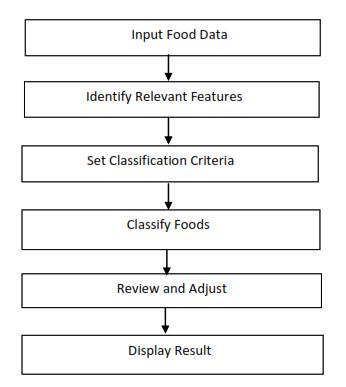
ThefirststepintheDisplay/ExportPlanprocedure is to provide customers the choice to export their weekly dietplanasaCSVfileorviewitintheconsole.Theplanis structured and displayed in the console for instant evaluationifusersdecidetodisplayit.ThesystemalsoInput Food Data Identify Relevant Features Set Classification Criteria Classify Foods Review and Adjust Display Result creates the diet plan for CSV format and asks the user to provide a filename and place for saving if they choose to export.Aconfirmationmessagewiththefile’slocationand the successful export are shown after the file has been successfully saved. This procedure guarantees that consumersmaysimplyobtainandmanagetheirweeklydiet plan,whichistailoredtotheirindividualinterests.
Based on four important inputs age, height, weight, and particular illnesses or health conditions individualizednutritionrecommendationswereproduced for each person using the Random Forest algorithm. The model included customized guidance on daily calorie requirements, the distribution of macronutrients (fats, proteins,andcarbs),andrecommendedfoods.Forinstance, a 70 kg, 35-year-old person was given a meal plan with a dailygoalof2200kcal,whichwasdividedinto50Because weight is used to calculate basal metabolic rate (BMR), whichdeterminescaloricrequirements,featureimportance analysis showed that weight was the most important
elementindeterminingdietaryneeds.Additionally,certain dietary changes, such as suggesting low sugar diets for peoplewithdiabetes,wereinfluencedbyhealthconcerns. Heightandagemadelittlebut significantcontributions to adjustingtotalenergyandnutritionalrequirements.Crossvalidation and out-of-bag (OOB) error rates were used to validate the model’s performance, and it showed good generalizationacrossvarioususerprofiles.Theaccuracyand stability of the model were further enhanced by hyperparameter tuning, which included changing the tree depthandaddingmoredecisiontrees.TheRandomForest model outperformed baseline approaches such as logistic regression in managing intricate relationships between variables, yielding more precise and sophisticated dietary suggestions.
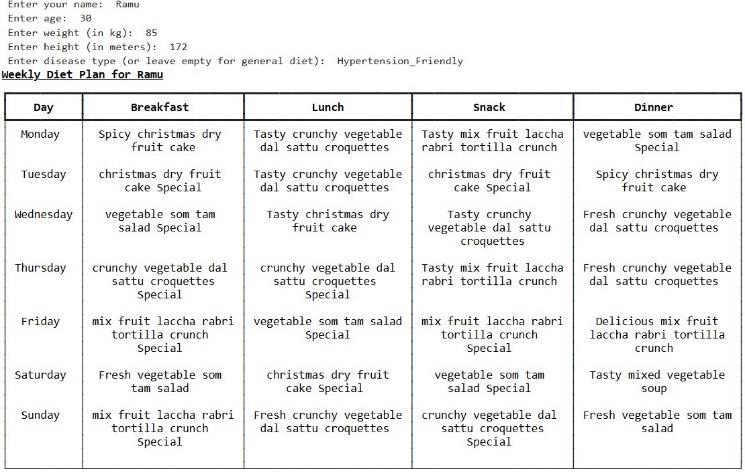
Theoutputpresentsapersonalizedweeklydietplan tailored to an individual's age, weight, height, and health condition, specifically focusing on a hypertension-friendly diet. It includes structured meal recommendations for breakfast, lunch, snacks, and dinner, ensuring a wellbalanced intake of essential nutrients. The diet recommendationsystemutilizesaRandomForestmodelto analyzeuserinputsandclassifysuitablemealoptionsbased on dietary needs. By leveraging ensemble learning, the modelenhancestheaccuracyofmealselection,promoting healthier eating habits. This system can be applied to personalizednutritionplanningandhealthcare,withfuture improvements such as adaptive meal recommendations basedonuserfeedback.
International Research Journal of Engineering and Technology (IRJET) e-ISSN: 2395-0056
Volume: 12 Issue: 03 | Mar 2025 www.irjet.net p-ISSN: 2395-0072

Thegraphrepresentsthedistributionofmacronutrients carbohydrates,proteins,andfats acrossaweek.Eachbar corresponds to a day, with different colors indicating the proportionofeachmacronutrient.Carbohydratesmakeup thelargestportion,followedbyproteinsandfats,ensuringa balanceddietaryintake.Thisvisualizationhelpsinassessing nutritional consistency and identifying trends in nutrient consumption. By maintaining an appropriate ratio of macronutrients, the diet supports optimal health and wellbeing. Such analysis is useful for personalized meal planninganddietaryrecommendations.
Thedietrecommendationsystemdevelopedusing deeplearningeffectivelypersonalizesdietaryplansbasedon individualinputs,includingage,weight,height,andspecific health conditions. By analyzing these factors, the system generatescomprehensiveweeklymealplansthatencompass breakfast, lunch, snacks, and dinner. This personalized approach not only addresses nutritional needs but also considers dietary restrictions, ensuring that users receive balanced and appropriate meals tailored to their unique circumstances. Incorporating a diverse dataset allows the system to provide varied meal options that emphasize essentialnutrientswhilepromotingculinaryenjoyment.The model’s ability to adapt to specific health goals such as weightmanagementordiseasemanagement enhancesits practicalityanduserengagement
Furthermore,thesystemencouragesuserstolearn about nutrition, fostering informed decision-making and promotinghealthierlifestylechoices.Lookingforward,the potential for expanding this system is significant. By integratingadditionalvariableslikephysicalactivitylevels and real-time health data from wearable devices, the recommendations can become even more dynamic and responsive. Continuous learning from user feedback will further refine the model, enhancing its effectiveness and user satisfaction. Overall, this deep learning-based diet recommendation system represents a valuable tool in personalized nutrition, contributing to improved health
outcomes and empowering individuals on their dietary journeys.
Thedietrecommendationsystemhassignificantpotential for future advancements by incorporating emerging technologieslikeartificialintelligenceanddeeplearning.By leveragingadvancedmachinelearningmodels,thesystem canenhanceitspredictivecapabilities,offeringevenmore preciseandpersonalizeddietarysuggestions.Additionally, integrating real-time data from wearable health devices, suchasfitnesstrackersandsmartwatches,canprovideusers with dynamic recommendations based on their daily physical activity, sleep patterns, and other health metrics. Thisrealtimeadaptationwillallowuserstoreceivedietary guidancethatalignscloselywiththeircurrentlifestyleand healthconditions.
Anotherpromisingdirectionforfuturedevelopment is the integration of a comprehensive food database that includesregionalandculturallydiversemealoptions.This enhancement will ensure that users from different backgrounds receive recommendations that are both nutritionally balanced and culturally relevant. Moreover, incorporatingnaturallanguageprocessing(NLP)capabilities can improve user interactions by allowing voice or textbasedqueriesformealplanning.Thisfeaturewillmakethe system more accessible and user-friendly, enabling individuals to receive dietary recommendations through simpleconversations.
Furthermore, future advancements can focus on expanding the system’s capabilities beyond general diet recommendationstoincludecondition-specificdietaryplans. Forexample,integratingmedicaldataandcollaboratingwith healthcare professionals can help tailor meal plans for individuals with chronic diseases like diabetes, hypertension, or heart conditions. Additionally, incorporatingsustainabilityfactors,suchasrecommending eco-friendly food choices, can promote environmentally consciouseatinghabits.Astechnologycontinuestoevolve, the diet recommendation system can become an essential toolinpromotinghealthierlifestylesandimprovingoverall well-being.
[1]T.N.TrangTran,M.Atas,A.Felfernig,andM.Stettinger, “Anoverviewofrecommendersystemsinthehealthyfood domain,”J.Intell.Inf.Syst.,vol.50,no.3,pp.501–526,Jun. 2018.
[2] C. Chensi, L. Feng, T. Hai, S. Deshou, S. Wenjie, L. Weizhong,Z.Yiming,B.Xiaochen,andX.Zhi,“Deeplearning anditsapplicationsinbiomedicine,”GenomicsProteomics Bioinf.,vol.16,no.1,pp.17–32,2018.
International Research Journal of Engineering and Technology (IRJET) e-ISSN: 2395-0056
Volume: 12 Issue: 03 | Mar 2025 www.irjet.net p-ISSN: 2395-0072
[3]J.Mariapun,C.-W.Ng,andN.N.Hairi,“Thegradualshift ofoverweight,obesity,andabdominalobesitytowardsthe poorinamultiethnicdevelopingcountry:Findingsfromthe Malaysian National health and morbidity surveys,” J. Epidemiol.,vol.28,no.6,pp.279–286,Jun.2018.
[4]M.Raut,K.Prabhu,R.Fatehpuria,S.Bangar,andS.Sahu, “A personalized diet recommendation system using fuzzy ontology,”Int.J.Eng.Sci.Invention,vol.7,no.3,pp.51–55, 2018.
[5] N. Leipold, M. Lurz, and M. Bohm, “Nutrilize a personalized nutrition recommender system: An enable study,”HealthRecSys,vol.3,no.4,pp.4–10,2018.
[6]V.Jaiswal,“Anewapproachforrecommendinghealthy dietusingpredictivedataminingalgorithm,”Int.J.Res.Anal. Rev.,vol.6,no.2,pp.58–65,2019.
[7]H.Sch¨afer,M.Elahi,D.Elsweiler,G.Groh,M.Harvey,B. Ludwig,F.Ricci,andA.Said,“Usernutritionmodelingand recommendation:Balancingsimplicityandcomplexity,”in Proc.AdjunctPublication25thConf.UserModeling,Adapt. Pers.(UMAP),2017,pp.9–12.
[8] H. Dinc ¸er, S. Y¨ uksel, and L. Mart´ ınez, “Balanced scorecard-basedanalysisaboutEuropeanenergyinvestment policies:Ahybridhesitantfuzzydecision-makingapproach withQualityFunctionDeployment,”ExpertSyst.Appl.,vol. 115,pp.152–171,Jan.2019.
[9]F.Rehman,O.Khalid,N.Haq,A.R.Khan,andK.B.Sajjad, “Diet right: A smart food recommendation system,” KSII Trans. Internet Inf. Syst., vol. 11, no. 6, Jun. 29, 2017, doi: 10.3837/tiis.2017.06.006.
[10] S. Norouzi, A. K. Ghalibaf, and S. Sistani, “A mobile applicationformanagingdiabeticpatients’nutrition:Afood recommendersystem,”Arch.IranianMed.,vol.21,no.10,pp. 466–472,2018.
[11]M.Raut,K.Prabhu,R.Fatehpuria,S.Bangar,andS.Sahu, “A personalized diet recommendation system using fuzzy ontology,”Int.J.Eng.Sci.Invention,vol.7,no.3,pp.51–55, 2018.
[12]P.Maiyaporn,P.Phathrajarin,andP.Suphakant,“Food recommendation system using clustering analysis for diabeticpatients,”inProc.Int.Conf.Inf.Sci.Appl.,vol.6,no. 2,2010,pp.5–14.
[13]R.YeraToledo,A.A.Alzahrani,andL.Martinez,“Afood recommender system considering nutritional information anduserpreferences,”IEEEAccess,vol.7,pp.96695–96711, 2019.
[14]V.Jaiswal,“Anewapproachforrecommendinghealthy dietusingpredictivedataminingalgorithm,”Int.J.Res.Anal. Rev.,vol.6,no.2,pp.58–65,2019.
[15] N. Leipold, M. Lurz, and M. Bohm, “Nutrilize a personalized nutrition recommender system: An enable study,”HealthRecSys,vol.3,no.4,pp.4–10,2018.