
International Research Journal of Engineering and Technology (IRJET) e-ISSN: 2395-0056
Volume: 13 Issue: 03 | Mar 2026 www.irjet.net p-ISSN: 2395-0072
International Research Journal of Engineering and Technology (IRJET) e-ISSN: 2395-0056
Volume: 13 Issue: 03 | Mar 2026 www.irjet.net p-ISSN: 2395-0072
REEYA BHANDARI1 , SANJANA DAWRE2 , SNEHA SHEWALE3 , SAMRUDDHI WALIMBE4 ,PROF.RADHIKA NANDA5
1, 2,3, 4 UG Student, Dept. of Computer Engineering, BharatCollegeOf Engineering (Affiliation of Mumbai University), Badlapur, Maharashtra, India
5 HOD ,Dept. of Computer Engineering, BharatCollegeOf Engineering (Affiliation of Mumbai University), Badlapur,Maharashtra,India *** -
Abstract - Driver fatigue is a major cause of car accidents, especially when driving long distances or at night. This paper suggests an anti-sleep alarm system that uses an infrared sensor to keep an eye on how often people blink to find out when they are tired. The sensor keeps track of when the eyes close and sends the information to a microcontroller for analysis. The system sees that the eye is drowsy if it stays closed for longer than a certain amount of time. A buzzer and LED lights quickly make an alert to get the driver's attention again. The system is meant to be easy to use, portable, and cheap for real-time use. Tests in the lab show that it can quickly and accurately detect drowsiness. This method can help make driving safer and lower the number of accidents.
Keywords: Fatigue Detection, Eye Blink Monitoring, Infrared Sensor, Microcontroller, Alert System, Road Safety, EmbeddedSystem
1. INTRODUCTION
Road safety remains a critical global concern, with driver fatigue being one of the major causes of traffic accidents [1]. Reduced alertness due to tiredness slows reaction time, decreases concentration, and affects decision-making ability, significantly increasing the risk of collisions [2]. Factors such as long driving hours, night travel, and insufficient rest further worsen this condition, making fatigue detection an important research area for improving transportation safety [3].
In recent years, various approaches have been developed to identify drowsiness in drivers. Vision-based techniques analyzefacialfeaturessuchaseyeclosure,blink rate,andheadmovementto evaluatealertnesslevels[4]. Other methods involve wearable devices that monitor physiological signals like heart rate and brain activity to detect fatigue [5]. These techniques have contributed significantly to driver safety, but many systems are complex or expensive, limiting their practicalusage.
This paper presents the design and development of an Anti-Sleep Alarm System that detects early signs of driver drowsiness and provides immediate alerts [6]. The proposed system uses an infrared eye blink sensor to monitor eye activityandamicrocontrollertoprocessthedata [7]. When prolonged eye closure is detected, thesystemtriggersan alertusingabuzzerandLEDindicators toregainthedriver’sattention[8].
Research Objectives
• To develop an effective solution to reduce accidentscausedbydriverdrowsiness[9]
• Todesignaportableorwearableanti-sleepdetectionsystemusingeyeblinksensingtechnology[10]
• To evaluate system performance through real-timetestingandanalysis[11]
• Tostudyusercomfort,reliability,andadaptabilityoftheproposedsystem[12]
Driverdrowsinessdetectionhasbeenwidelystudiedduetoitsstrongimpactonroadsafety.Researchshowsthatfatiguerelatedaccidentsaccountforasignificantportionofroadincidents,highlightingtheneedfor effectivedetectionsystems [1]. Existing studies classify drowsiness detection techniques into three main categories: behavioral, physiological, and vehicle-basedapproaches[2].Behavioral-basedmethodsareamongthemostcommonlyusedtechniques,astheymonitor visible signs such as eye blinking, eye closure, yawning, and head movement [3]. Eye blink detection, in particular, has
International Research Journal of Engineering and Technology (IRJET) e-ISSN: 2395-0056
Volume: 13 Issue: 03 | Mar 2026 www.irjet.net p-ISSN: 2395-0072
proven to be a reliable indicator of fatigue, with high detection accuracy when appropriate thresholds are applied [4]. Manysystemsusecamera-basedimageprocessingtotrackthesefeatures,although theirperformancecanbeaffectedby lightingconditionsandheadorientation.
Physiological approaches involve monitoring biological signals such as electroencephalogram (EEG), electrocardiogram (ECG), and electrooculogram (EoG) to detect early signs of fatigue [5]. These methods provide high accuracy since body signalschange before visiblesymptoms appear. However, theyrequire wearable sensors, making them lesspractical for everyday use due to discomfort and higher cost.Vehicle-based techniques analyze driving patterns such as steering movement, lane deviation, and vehicle speed to identify abnormal behavior [6]. While these systems are non-intrusive, theyoftendetectdrowsinessonlyafterdriving performancehasalreadybeenaffected, whichmaybetoolatetoprevent accidents.
Recentresearchhasfocusedondevelopingsimpleandcost-effectivesolutionsusingembeddedsystemsandsensors.Eye
The development of an anti-sleep alarm system for drivers involves the integration of both hardware and software elementstoachievecontinuous monitoringand timelyalertgeneration. Thehardwaresection mainlyconsists ofsensing devices,controlunits,andalertcomponentsthatworktogethertodetectdrowsiness.Ontheotherhand,thesoftwarepart includesprogrammingplatformsandinterfacingtechniquesrequiredfordataprocessingandsystemcontrol.
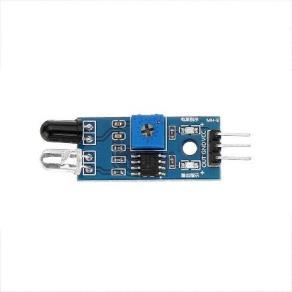
1.Infrared (IR) Sensor Module
The infrared sensor module is used to detect eye blink activity by sensing the reflection of IR rays from the eye. It continuouslymonitorswhethertheeyeisopenorclosed.Whentheeyeremainsclosedforalongerduration,itindicates possible drowsiness. The sensor converts this activity into electrical signals. These signals are then sent to the microcontrollerforfurtherprocessing.
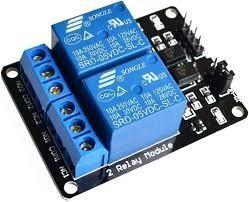
2. 5V Dual Channel Relay Module
Thedualchannelrelaymoduleisusedtocontrolmultipleoutputdevicessimultaneously.Itallowsswitchingoftwoindependent circuits using a single control unit. This module is useful for activating components like motors and alarms together. It operatesusinglowvoltagesignalsfromthemicrocontroller.It alsoprovideselectricalisolationbetweencontrolandoutput circuits.
International Research Journal of Engineering and Technology (IRJET) e-ISSN: 2395-0056
Volume: 13 Issue: 03 | Mar 2026 www.irjet.net p-ISSN: 2395-0072
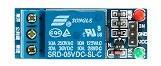
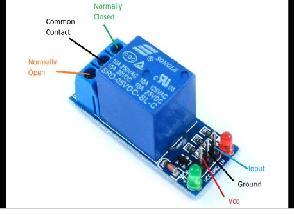
3. 5V Relay Module
The 5V relay module acts as an electrically operated switch. It is used to control high-power devices using low-power signals. When triggered, it opens or closes the circuit connected to the load. This ensures safe operation of external components.Itiscommonlyusedinautomationandcontrolsystems.
4. Relay Pin Configuration
Relaypinconfigurationdefineshowtherelayisconnectedwithinthecircuit.ItincludespinssuchasNormallyOpen(NO), NormallyClosed(NC),andCommon(COM).Thesepinsdeterminehowcurrentflowsindifferentstates.Properpin configurationensurescorrectfunctioningofconnecteddevices.Itisessentialforreliableswitchingoperations.
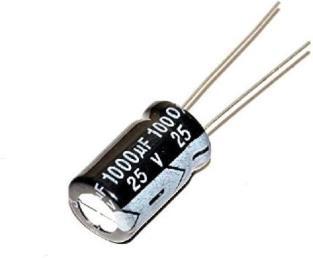
5. 25V / 1000µF Capacitor
The capacitor is used for filtering and stabilizing voltage in the circuit. It helps in reducing noise and sudden voltage fluctuations. This ensures smooth operation of electronic components.Thehighcapacitanceallowsittostoreandrelease energywhenneeded.Itimprovestheoverallefficiencyandreliabilityofthesystem.
International Research Journal of Engineering and Technology (IRJET) e-ISSN: 2395-0056
Volume: 13 Issue: 03 | Mar 2026 www.irjet.net p-ISSN: 2395-0072
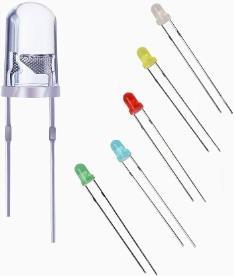
6. LED Bulb
7.
TheLEDbulbisusedasavisualindicatorinthesystem. Itglowswhendrowsinessisdetected.Thisprovidesanimmediatevisualalerttotheuser.LEDsconsumeverylowpower andhavealonglifespan.They arecommonlyusedinembeddedsystemsforindicationpurposes.
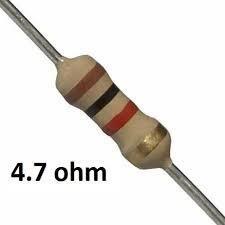
8. Resistor
Theresistorisusedtocontroltheflowofcurrentinthecircuit.Itprotects componentslikeLEDsfromexcessivecurrent. By limiting current, it ensures safe operation of the system. Different resistance values are used depending on circuit requirements.Itisabasicbutessentialcomponentinelectroniccircuits.
9. Sound Buzzer / Alarm
The buzzer is used to generate an audible alert when drowsiness is detected. It helps in immediately grabbing the attention of the driver. The sound continues until the driver responds. It is simple, compact, and easy to interface with microcontrollers.Thismakesithighlyeffectiveforalertsystems.
International Research Journal of Engineering and Technology (IRJET) e-ISSN: 2395-0056
Volume: 13 Issue: 03 | Mar 2026 www.irjet.net p-ISSN: 2395-0072
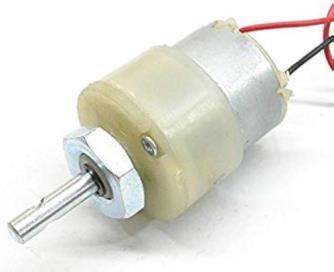
10.60 RPM Gear Motor
The gear motor is used to simulate mechanical action in the system. It operates at a fixed speed of 60 revolutions per minute. This motor can represent actions like vehicle control or movement. It provides high torque at low speed. It is suitableforcontrolledandsteadyoperations.
11. DC Motor (Variable Speed Motor)
The DC motor is used to demonstrate motion control based on system output. Its speed can vary depending on input voltageorcontrolsignals.Ithelpsinsimulatingreal-worldapplicationslikevehicleresponse.Themotorcanbecontrolled usingrelaymodules.Itiswidelyusedin automationandembeddedsystems.

3.2 SOFTWARE REQUIREMENTS
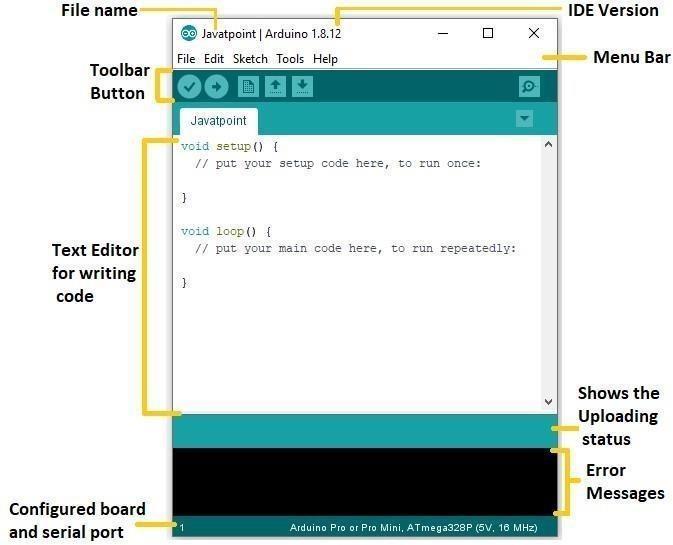
1. Arduino IDE:
TheArduinoIntegratedDevelopmentEnvironment(IDE)isauser-friendlysoftwareplatformusedforwriting,editing,and uploading code to Arduino boards. It provides features such as a code editor, output console, toolbar options, and menu navigation for efficient program development. The IDE allows seamless communication between the computer and the Arduinohardware,enablingeasyprogramexecution.
International Research Journal of Engineering and Technology (IRJET) e-ISSN: 2395-0056
ProgramswrittenintheArduinoIDEarecalledsketchesandarecreatedusingthebuilt-intexteditor.Thesesketchesare saved with a “.ino” file extension. The IDE organizes all projects within a sketchbook, which acts as a central directory fstoring and managing files. Users can open and manage their projects through the Sketchbook menu or toolbar options. By default, asketchbook folder is automatically created during installation, and its location can be changed throughthesettingsorpreferencesmenu.
4 .METHODOLOGY AND FLOW DIAGRAM
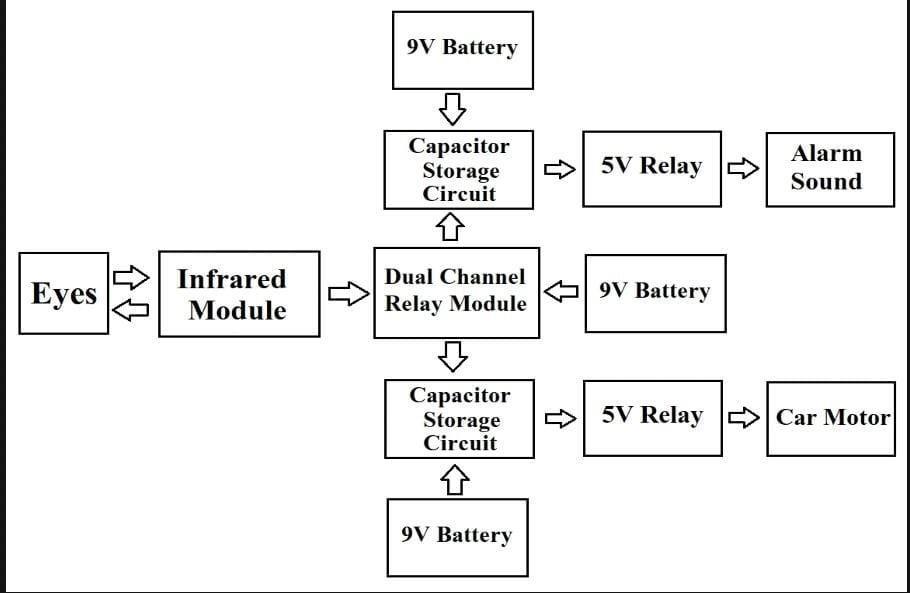
The working of the proposed Anti-Sleep Alarm System begins with the detection of eye activity using an infrared (IR) module. TheIR sensoris positioned in sucha way thatitcontinuously monitors the driver’s eyes. It detects whether the eyesareopenorclosedbasedonthereflectionofinfraredraysandsendsthesignaltothedual
Volume: 13 Issue: 03 | Mar 2026 www.irjet.net p-ISSN: 2395-0072 © 2025, IRJET | Impact Factor value: 8.315 | ISO 9001:2008 Certified Journal | Page1609
International Research Journal of Engineering and Technology (IRJET) e-ISSN: 2395-0056
Volume: 13 Issue: 03 | Mar 2026 www.irjet.net p-ISSN: 2395-0072
channelrelaymodule.
The dual channel relay module acts as the central control unit of the system. It processes the input received from the IR sensoranddetermineswhetherthedriverisalertordrowsy.Whentheeyeremainsclosedbeyondacertainthreshold,the systemidentifiesitasafatigueconditionandactivatestheoutputsection.
Thesystemusescapacitorstoragecircuitspoweredby9Vbatteriestoensurestablevoltagesupplyandsmoothoperation ofthecomponents.Onerelaypathisconnectedtothealarmsystem,wherea 5Vrelaytriggersthebuzzertogeneratean audiblealert.Thiswarninghelpsinimmediatelygrabbingthedriver’sattention.
Simultaneously,anotherrelaypathcontrolsthemotor section.A5Vrelayactivatesthecarmotor(orgearmotor),which represents a mechanical response such as slowing down or controlling vehicle movement. This dual-action mechanism enhances safety by combining alert generation with system response.Overall, the system operates continuously in real time, ensuring quick detection and immediate action. The integration of sensors, relays, and power management componentsmakesthesystemreliable,efficient,andsuitableforpracticalimplementationin reducingdrowsiness-related accidents.
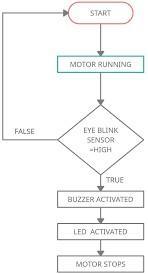
The process starts with the system being powered on and the motor running. The IR eye blink sensor continuously monitors the eye condition. If the sensor detects a normal state (eyes open), the system keeps running. If the sensor detects eye closure (drowsiness), the buzzer is activated to alert the driver. At the same time, the LED is turned on as a visualwarning.Finally,themotorstopstosimulatevehiclesafetyaction.
ThedevelopedAnti-SleepAlarmSystemwassuccessfullyimplementedandtestedusingthedesignedcircuitandhardware prototype. The system effectively monitored eye blink activity using the IR sensor mounted on goggles. During testing, whentheeyesremainedopen,thesystemmaintainednormaloperationwiththemotorrunningcontinuously.
Whentheeyeswereintentionallyclosedforalongerduration, theIRsensordetectedtheconditionaccuratelyandsenta signaltotherelaymodule.Asaresult,thebuzzerwasactivatedimmediately,andtheLEDindicatorturnedon,providing both audible and visual alerts. At the same time, the motor stopped functioning, simulating a safety response similar to vehiclecontrol.
International Research Journal of Engineering and Technology (IRJET) e-ISSN: 2395-0056
Volume: 13 Issue: 03 | Mar 2026 www.irjet.net p-ISSN: 2395-0072
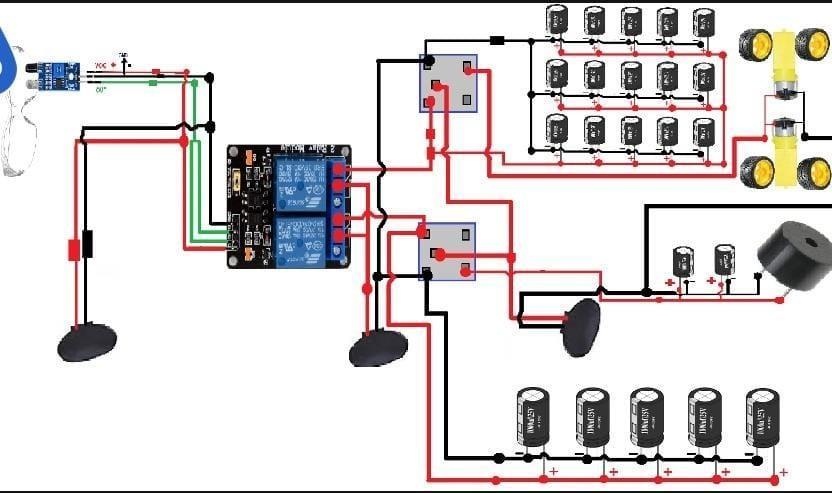
Thecircuitdiagramrepresentstheconnectionbetweenthesensingunit,controlunit,andoutputcomponentsoftheantisleep alarm system. The IR sensor is used as the input device, which detects eye closure and sends signals to the relay module.Thedualchannel relaymoduleactsasthemaincontrolunit,directingsignalstodifferentoutputpathsbasedon thesensorinput.
The power supply is provided using 9V batteries, and capacitor storage circuits are included to stabilize voltage and reduce noise. One relay channel is connected to the buzzer and LED, forming the alert system. When drowsiness is detected,thisrelayactivatesthealarmtonotifytheuser.
The second relay channel is connected to the motor section. When triggered, it controls the DC motor or gear motor, simulatingavehicleresponsesuchasstoppingorslowingdown.Theuseofrelaysensuressafepoweroutputdevices.
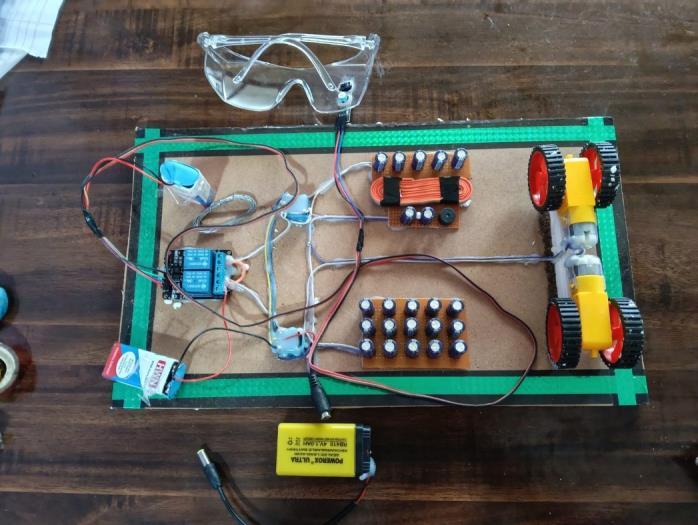
Fromtheexperimentalresults,itcanbeconcludedthatthesystemiscapableofdetectingdrowsinessefficientlyand triggeringappropriatesafetyactions.Thedesignprovestobecost-effective,simple,andsuitableforreal-timeapplications. However,performancemayvaryunderdifferentenvironmentalconditionssuchaslightingandsensorpositioning,which canbefurtherimprovedinfutureenhancements.
International Research Journal of Engineering and Technology (IRJET) e-ISSN: 2395-0056
Volume: 13 Issue: 03 | Mar 2026 www.irjet.net p-ISSN: 2395-0072
This project presents a practical Anti-Sleep Alarm System designed to address the problem of driver fatigue. The system effectivelydetectsdrowsinessbyanalyzingeyeblinkpatternsusinganIRsensorandprocessesthedatathroughacontrol unit.Upondetectingprolongedeyeclosure,itactivatesanalertmechanism,includingabuzzerandLED,towarntheuser instantly.
In addition, the use of relay modules to control the motor demonstrates a safety response mechanism, which can be extended to real vehicleapplications.The systemissimpleindesign, economical,and easytooperate, making itsuitable forreal-timeimplementation.
Theresultsindicatethattheproposedsystemperformsreliablyundertestconditionsandcanhelpinreducingaccidents causedbydriverinattention.Futureimprovementscanfocusonincreasingaccuracyandincorporatingadvancedfeatures forenhancedperformance.
The proposed Anti-Sleep Alarm System can be further improved by integrating advanced technologies to enhance accuracy and functionality. One possible enhancement is the incorporation of camera-based vision systems for more precise detection of facial features such as eye movement, yawning, and head position. Additionally, machine learning algorithmscanbeimplementedtoanalyzedriverbehaviorpatternsandprovideadaptive,personalizedfatiguedetection.
The system can also be upgraded using IoT technology to enable real-time data transmission and remote monitoring throughcloudplatforms.Integrationwithvehiclecontrolsystemscanallowautomaticactionssuchasspeedreductionor engine control in critical situations. Furthermore, the use of wearable and more compact sensors can improve user comfortandusability.
Future developments may also focus on improving system reliability under varying environmental conditions such as lightingandnoise.Bycombiningmultiplesensingtechniques,theoverallperformanceandrobustnessofthesystemcanbe significantlyenhanced.
[1] J.S.Bajaj,R.Singh,andA.Kumar,“SystemandMethodforDriverDrowsinessDetectionUsingBehavioralandSensorBasedPhysiologicalMeasures,”Sensors,vol.23,no.3,pp.1–18,2023.
[2] Y. Albadawi, M. Takruri, and M. Awad, “A Review of Recent Developments in Driver Drowsiness Detection Systems,” Sensors,vol.22,no.5,pp.1–25,2022.
[3] O.F.Hassan,M.Elhoseny,andS.Abdelaziz,“Real-TimeDriverDrowsinessDetectionUsingDeepLearningTechniques,” ScientificReports,vol.15,pp.1–12,2025.
[4] A. A. Saleem, M. Al-Ayyoub, and Y. Jararweh, “A Systematic Review of Physiological Signal-Based Driver Drowsiness DetectionSystems,”CognitiveNeurodynamics,vol.17,pp.1–20,2023.
[5] K. Avinash Babu and G. Eswara Rao, “Driver Drowsiness Detection System for Accident Prevention,” International Research Journal onAdvancedEngineering Hub,vol.6, no.2, pp.45–50,2024.
[6] F.Liu,X.Zhang,andY.Wang,“DriverFatigueDetectionBasedonDeepLearning:AReview,”Engineering Applications ofArtificialIntelligence,vol.114,pp.1–15,2022.
[7] H.Verma, S.Patel,and R.Shah,“Driver DrowsinessDetectionUsingEmbedded Systems,”Journal ofData Acquisition andProcessing,vol.38,no.3,pp.210–218,2023.
International Research Journal of Engineering and Technology (IRJET) e-ISSN: 2395-0056
Volume: 13 Issue: 03 | Mar 2026 www.irjet.net p-ISSN: 2395-0072
[8] Y. Yashwanth and J. S. Singh, “Driver’s Drowsiness Detection Using Eye and Facial Features,” in IEEE Region 10 Conference(TENCON),pp.1622–1625,2019.
[9] U. M. Kumar, D. Singh, and S. Jugran, “A System on Intelligent Driver Drowsiness Detection Method,” International JournalofEngineeringandTechnology,vol.7,no.3,pp.160–162,2018.
[10] H.U.R.Siddiquietal.,“Non-InvasiveDriverDrowsinessDetectionSystem,”Sensors,vol.21,no.14,pp.1–20,2021
© 2025, IRJET | Impact Factor value: 8.315 | ISO 9001:2008 Certified Journal | Page1613