
International Research Journal of Engineering and Technology (IRJET) e-ISSN: 2395-0056
Volume: 12 Issue: 01 | Jan 2025 www.irjet.net p-ISSN: 2395-0072
International Research Journal of Engineering and Technology (IRJET) e-ISSN: 2395-0056
Volume: 12 Issue: 01 | Jan 2025 www.irjet.net p-ISSN: 2395-0072
Haridas Pralhad Dandge
Row House No. B/05, Shrinath Park, Pisadevi Chhatrapati Sambhajinagar 431008
Professor: Dr. Pritam Malakar, Dept. of Civil Engineering, GH Raisoni University Amravati Maharashtra, India
Abstract - The efficient management of water resources is crucial in ensuring a sustainable water supply for both agricultural and domestic purposes, especially in regions dependent on tube wells. Automation of tube wells offers a promising solution to enhance the reliability, efficiency, and sustainabilityofwatersupplysystems.Thispaperpresentsan analysis of the automation process for tube wells, focusing on the integration of advanced technologies such as sensors, control systems, and IoT (Internet of Things) to optimize water extraction, distribution, and monitoring.
The study explores key aspects of automation, including realtime monitoring of water levels, remote control of pump operations, automated flow regulation, and data-driven decision-making for maintenance and system optimization. The implementation of automated systems significantly reduces human intervention, minimizes energy consumption, and ensures optimal performance under varying water demand conditions. Additionally, the integration of smart sensorsallowsforpredictivemaintenance,reducingdowntime and enhancing the longevity of infrastructure.
Through case studies and simulation models, this research evaluates the performance improvements, cost savings, and environmental impact of automated tube wells compared to traditional manual operations. The findings suggest that automation leads to more efficient water management, reduced operational costs, and a greater ability to respond dynamically to changes in water supply and demand.
In conclusion, the automation of tube wells offers a transformativeapproachtowatersupplysystems,promoting sustainability,reducingwastage,andensuringthecontinuous availabilityofwaterincriticalsectors.Theanalysishighlights the potential for scaling these solutions to larger water management networks, with a broader implication for resource conservation and climate resilience in water-scarce region
Key Words: 1. Tube Well Automation System, 2. Water flow & Level Sensors 3. Pump Control and Water quality monitoring 4. Remote Monitoring 5. Sustainable Water Management 6. Real-time Data 7. Remote Control Operational Efficiency, 8. Internet of Things (IoT).
Access to clean and reliable water is a fundamental requirement for the well-being of rural communities, yet manyvillagesinIndiacontinuetofacesignificantchallenges in managing their water resources efficiently. Jagdishpur Khas, a village located in Jaunpur District, Uttar Pradesh, reliesheavilyongroundwaterextractedfromtubewellsfor domesticneeds.However,likemanyruralareas,thewater supply is often plagued by inefficiencies due to outdated manual systems, and lack of real-time monitoring. These issuescanleadtoproblemssuchaswatershortages,overuse ofelectricityforpumpingandwaterwastage
In recent years, the need for efficient water management solutionshasbecomemorepressing,particularlyinregions wheregroundwateristheprimarysourceofwatersupply. Automation of tube wells offers a promising solution to address these challenges. By integrating modern technologies such as remote sensing, IoT (Internet of Things)-based monitoring systems, automated control mechanisms,anddataanalytics,tubewellscanbeoperated moreefficientlyandsustainably.Theautomationofwater supplysystemsnotonlyenhancesoperationalefficiencybut also helps in reducing energy consumption, and reducing wastagewater,minimizinghumanerrorandmaintainwater qualitytoensurethesupplyofgoodqualityofwatertoevery household.
Theaimofthisstudyistoanalyzethepotentialbenefitsand challenges of implementing tube well automation in Jagdishpur Khas village. This research focuses on how automation can improve the monitoring and control of groundwater extraction, reduce dependency on manual intervention, and contribute to more sustainable and efficientwatersupplypractices.Thestudywillexaminekey aspectssuchasreal-timewaterlevelmonitoring,automated pumping schedules, and the integration of predictive maintenancetechnologiestoreducesystemdowntimesand enhancethelongevityoftheinfrastructure.
Inthisresearch,automatingtubewellsinJagdishpurKhas presentsanopportunitytoimprovetheoverallefficiencyof water supply systems, reduce energy consumption, and ensuremoreequitableaccesstowaterforallresidents.This studyseekstodemonstratethetransformativepotentialof
International Research Journal of Engineering and Technology (IRJET) e-ISSN: 2395-0056
Volume: 12 Issue: 01 | Jan 2025 www.irjet.net p-ISSN: 2395-0072
automationtechnologiesin addressingthepressingwater managementchallengesfacedbyruralcommunitiesinIndia.
ThisTubewellautomationtechnologyimplementedunder the scheme of Implementation of Jagdishpur Khas Village water supply system under the State water Sanitation Mission(SWSM)underJJMProgramme.
Underthemission,theprogramenvisionsempoweringlocal communities, improving water quality management, and fosteringwaterconservationpracticestoensurethelongtermsustainabilityofwaterresources.
Theaimofthisstudytoanalysestheautomationsystemin water supply schemes, highlighting its significance in enhancing efficiency, reliability, and sustainability. By integratingadvancedtechnologiessuchasIoT,AI,anddata analytics,automatedsystemsfacilitatereal-timemonitoring, remote management, and predictive maintenance. Automation in these systems has emerged as a transformativeapproach,addressinginefficiencies,reducing waterloss,andimprovingservicequality.Thisstudyaimsto explore the various components of automation systems, their functionalities, and their impact on water supply management.
Ensure Consistent and Reliable Water Supply: Automate tube well operations to maintain a steady, uninterrupted watersupplywithreducedmanualintervention.
Enhance Operational Efficiency: Streamline and optimize operations to improve system reliability and reduce operationaldelays.
MonitorandImprove Water Quality:Implementreal-time monitoring systems for water quality to ensure safe and healthywaterdelivery.
Reduce Water Wastage and Promote Conservation: Automate water flow control to minimize wastage and promoteefficientusage.
Enable Remote Monitoring and Control: Provide remote accesstomonitorandcontroltubewellfunctions,allowing forreal-timedataaccessandimproveddecision-making.
Support Predictive Maintenance: Set up alerts and notificationstoallowforpredictivemaintenance,extending thesystem'slifeandreducingbreakdowns.
Enhanced Water Supply Efficiency, Reduction in Water Wastage, Lower Energy Consumption, Operational Reliability and Reduced Downtime, Improved System
2025, IRJET | Impact Factor value: 8.315 |
Monitoring and Data Management, Economic Benefits, EnhancedUserSatisfaction
1.4.1 Evaluation of Existing Infrastructure: Assess the current water supply infrastructure, including tube wells, pumps, pipelines, and distribution systems. Identify bottlenecks,inefficiencies,andoperationalchallengesinthe currentsetup.
1.4.2 Feasibility of Automation Technologies: Research suitableautomationtechnologiessuchasIoTsensors,SCADA systems,andsmartmeters.Evaluatetheirfeasibilityinterms of cost, reliability, and compatibility with the current infrastructure.
1.4.3AutomationSystem Design: Designa comprehensive automation plan, specifying required components like sensors, controllers, data loggers, and communication systems.Defineperformanceparameterstobemonitored, suchasflowrate,pressure,waterquality,andsystemhealth.
1.4.5 Implementation Planning: Develop a phased implementationplan,startingwithcriticalareaslikewater qualitymonitoringandpumpautomation.Createatimeline for implementation, focusing on minimizing disruption to thecurrentwatersupply.
1.4.6 Cost-Benefit Analysis:Estimate the costs involved in system installation, maintenance, and training. Analyze potential savings from reduced water wastage, energy consumption,andoperationalefficiency.
1.4.7RiskAssessmentandMitigation:Identifyriskssuchas power outages, system breakdowns, and cyber threats. Propose risk mitigation strategies to ensure system robustnessanddatasecurity.
1.4.8Training and Capacity Building: Assess training requirements for operators to manage and maintain the automatedsystem.Planatrainingprogramcoveringsystem operation,troubleshooting,anddatainterpretation.
1.4.9Performance Monitoring and Evaluation (M&E): DevelopanM&EframeworkwithKPIssuchasuptime,water qualityconsistency,andenergysavings.
2.1 Viani,F.,Bertolli,M.,andRocca,P.(2017)."WaterLevel MonitoringforLeakageDetectioninSmartCities."Sensors, 17(7),1571.
Thisarticlediscussestheuseofwaterlevel monitoringas part of a broader strategy for leakage detection in the contextofsmartcities.Itfocusesontheapplicationofsensor technology for real-time water monitoring, aimed at improving water distribution systems by detecting leaks
International Research Journal of Engineering and Technology (IRJET) e-ISSN: 2395-0056
Volume: 12 Issue: 01 | Jan 2025 www.irjet.net p-ISSN: 2395-0072
early and enhancing operational efficiency. Real-time monitoringnotonlyhelpinreducingwaterwastagebutalso improve overall system performance, reduce costs, and contributetothesustainableuseofwaterresources.
2.2 Singh,R.,andSharma,A.(2019)."TubeWellAutomation inRuralIndia:ACaseStudyofPunjab."InternationalJournal ofRuralDevelopmentandTechnology,3(2),32-40. providesanin-depthexaminationoftheimplementationand impact of tube well automation in rural areas of Punjab, India. The study explores how automating tube wells can address the challenges of water management, improve resource efficiency, and promote sustainability in rural water supply systems. The case study in Punjab demonstrates the viability and benefits of tube well automationinruralIndia.Theimplementationresultedin more efficient water and energy usage, improved agricultural productivity, and a sustainable approach to groundwatermanagement.Theseinsightscouldserveasa modelforotherruralregionsfacingsimilarchallengeswith waterresourcemanagement.
2.3 Ali,I.,andHameed,M.(2021)."SustainableRuralWater SupplythroughSolar-PoweredTubeWellsandAutomation." RenewableEnergyJournal,6,75-84.
explores the integration of solar power and automation technologyintubewellstocreateasustainablewatersupply systemforruralareas.Thisstudyhighlightsthepotentialof solar-poweredtubewellscombinedwithautomatedsystems to address water scarcity, reduce dependency on nonrenewableenergy,andimprovewatermanagementinrural communities.Thisarticledemonstratestheeffectivenessof combining solar energy with automation to create a sustainable water supply system for rural areas. Solarpowered,automatedtubewellsoffersignificantadvantages in energy efficiency, water conservation, and operational costsavings,providingavaluablemodelforimprovingrural wateraccessinanenvironmentallysustainableway.
2.4 CPHEEO, MoHUA, “Advisory on Water Meters, Instrumentation&SCADA”,June2020.
This document by the Central Public Health and EnvironmentalEngineeringOrganisation(CPHEEO)under theMinistryofHousingandUrbanAffairs(MoHUA)inIndia, offers a technical advisory on the integration of water meters,instrumentation,andSCADA(SupervisoryControl andDataAcquisition)systemsinwatersupplymanagement. Keypointsinclude:
Water Metering: Guidelines on selecting, installing, and maintainingwatermeterstoimproveusagemeasurement accuracy.
Instrumentation:Recommendationsfordeployingsensors for water quality and flow rate monitoring, aiding in realtimewatermanagement.
SCADA: Insights on how SCADA systems enable remote monitoring, control, and data analysis for efficient managementofmunicipalwatersystems.
Application in Urban and Rural Areas: Practical implementationstrategiesareoutlinedforbothurbanand rural settings in India, improving water conservation, reducinglosses,andenhancingsystemreliability.
2.5 DavidA.LloydOwen(2018)“SmartWaterTechnologies andTechniques:DataCaptureandAnalysisforSustainable WaterManagement
The article concludes by reinforcing that smart water technologies represent a critical component for achieving sustainable water management in the face of growing urbanization, climate change, and the increasing global demandforcleanwater.Byusingadvanceddatacaptureand analysistechniques,waterutilitiescanimproveoperational efficiency,enhancecustomerservice,andcontributetothe sustainability of water resources. David A. Lloyd Owen emphasizes that these technologies are not only transforming how we manage water systems but also offering cost-effective solutions that can help address the world'swaterscarcitychallenges.
2.6 Prabhata K. Swamee and Ashok K. Sharma (2007) “DesignofWaterSupplyPipeNetworks"
The article by Prabhata K. Swamee and Ashok K. Sharma focuses on the design principles and methodologies for watersupplypipenetworks.Theprimarygoalistoprovidea comprehensiveframeworkforengineersandwatersupply professionalstodesignefficientandeffectivepipesystems thatensurereliablewaterdistributionacrossurban,rural, andindustrialsettings.
EfficientDesign:Thearticleconcludesthatawell-designed water supply pipe network requires a balance between technical, economic, and environmental factors. Proper estimation of demand, appropriate pipe sizing, and maintainingpressureandflowarefundamentaltoareliable waterdistributionsystem.
Optimization: Engineers are encouraged to use advanced hydraulicanalysistoolsandoptimizationmethodstoensure that the water supply system operates at its highest efficiencywhilekeepingcostslow.
Sustainability: Long-term sustainability is achieved by designingflexiblesystemsthatcanadapttofuturechanges in population and demand, and by considering energyefficientsolutionsforpumpinganddistribution.
International Research Journal of Engineering and Technology (IRJET) e-ISSN: 2395-0056
Volume: 12 Issue: 01 | Jan 2025 www.irjet.net p-ISSN: 2395-0072
2.7 Daniel P. Loucks and Eelco van Beek (2017) "Water ResourcesSystemsPlanningandManagement"
Integrated Management: The book underscores the importance of an integrated approach to water resources management, where different aspects such as supply, demand,quality,andenvironmentalimpact areconsidered holistically.
Optimization and Decision Support: It emphasizes that effective planning and management require the use of advancedmodellinganddecision-supporttools,whichallow decision-makers to evaluate various scenarios and make informedchoices.
Resilience to Change: The authors stress the need for adaptive management strategies that can handle the uncertainties of climate change, population growth, and economicpressuresonwaterresources.
Sustainability Focus: The book promotes sustainable management practices that balance human needs with environmentalprotection,ensuringthatfuturegenerations haveaccesstoadequatewatersupplies
3.1
StudyAreaSelection:Identifyruralregionswithactivetube well-basedwatersupplysystemsthatareeithersuitablefor automationorarecurrentlyintheprocessofadoptingit.
DataCollection:Identifykeydatapoints(waterlevel,pump status,energyconsumption,flowrates,groundwaterdepth, water quality parameters). Use of IoT sensors, SCADA systems,andPLCcontrolstocollectreal-timedatafromtube wellsandtheassociatedinfrastructure.
Objective:Toselectappropriatetechnologiesfortubewell automation based on the local environment, technical requirements,andavailableresources.
Technologies to Consider:
WEBSCANETSoftware
SCADA (Supervisory Control and Data Acquisition) for centralizedcontrolandmonitoring.
PLC(ProgrammableLogicControllers)forautomationand controlofpumpoperations.
Sensorsformonitoringwaterquality,waterlevels,andflow rates.
Remote control interfaces for mobile or web-based management.
Renewableenergysources(e.g.,solar-poweredpumps) to minimizeenergycostsinoff-gridareas.
SystemIntegration:Designtheintegrationofallcomponents (sensors, controllers, communication systems) into a cohesiveandscalableautomationsystem.
Software Integration: Implementation of Webscanet software to automate data collection, monitoring, and controlprocesses.
PerformanceTesting:Comparativeanalysisofthesystem’s performancebeforeandafterautomation.
DataAnalysis:Continuousmonitoringofkeymetricssuchas waterflow,energyconsumption,andpressurevariations.
KeyFeaturesofWebScanetSoftware
Real-Time Monitoring: Captures operational data from sensorsinstalledintubewells.
Automated Alerts: Provides instant notifications for anomaliesorsystemfailures.
DataVisualization:Offersgraphicalrepresentationofwater supplymetricsforbetteranalysis.
Control Integration: Enables remote control of tubewell operationsthroughauser-friendlyinterface
3.4 Site Visit to Jagdishpur Khas village Jaunpur district Uttar Pradesh.
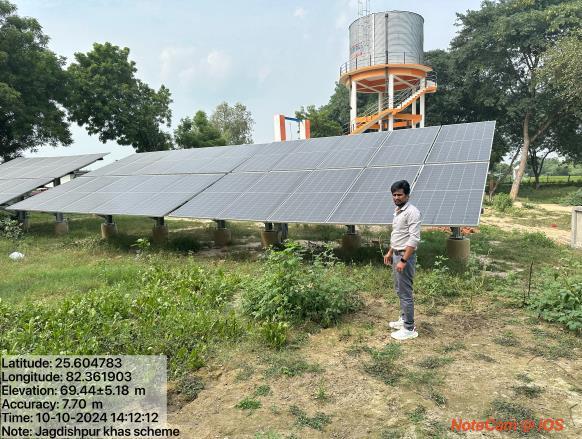
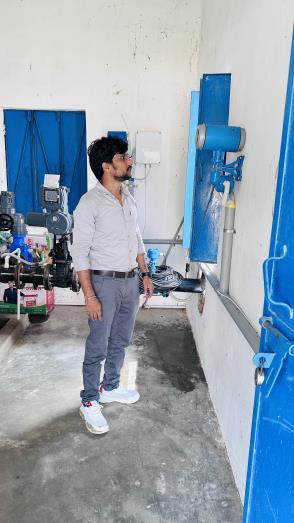
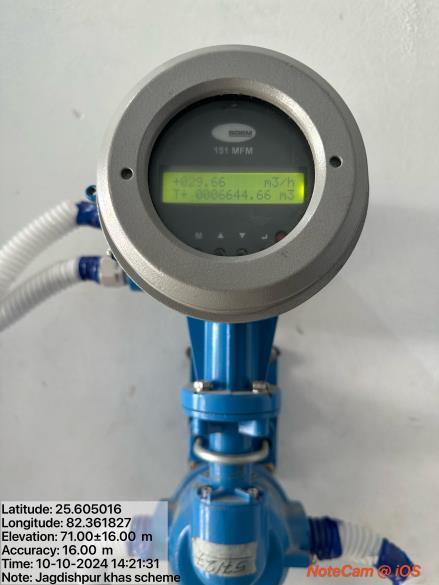
Visited at Jagdishpur Khas village on dated10-10-2024 to reviewprogressworkofAutomationsystem.
ObjectiveoftheVisit:Theobjectiveofthissitevisitwasto assess the ongoing progress of the tube well automation project at Jagdishpur Khas village. The visit focused on checkingthestatusofinstallation,inspectingthequalityof work, evaluating adherence to the project timeline, and identifyinganyobstaclesaffectingprogress.
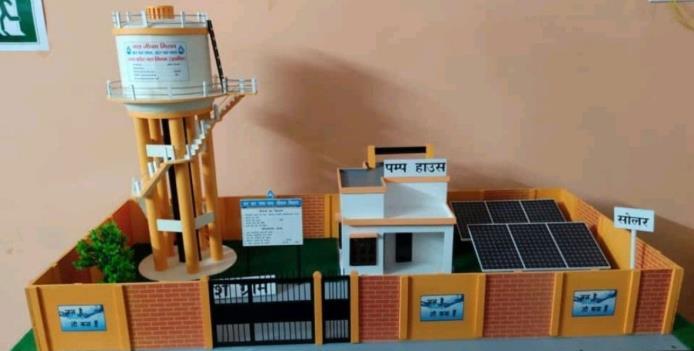
Project Overview: This project aims to automate the operation of tube wells in Jagdishpur Khas village to streamline water distribution for domestic purposes. Automation is intended to reduce manual involvement, improve water management, and provide real-time data monitoringcapabilities.
EquipmentDelivery:Allmajorequipment,includingpumps, control panels, sensors, and communication modules, has beendeliveredtothesite.
InstallationStatus:PumpInstallation10HP:Completed. ActuatorValveInstallation:Completed.
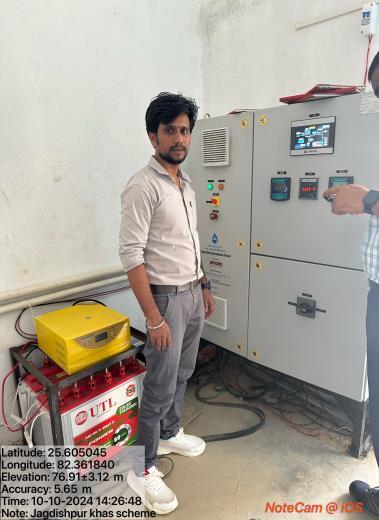
Control Panels: Installed and wired. The installation completed.
SensorSetup:Completed.
International Research Journal of Engineering and Technology (IRJET) e-ISSN: 2395-0056
Volume: 12 Issue: 01 | Jan 2025 www.irjet.net p-ISSN: 2395-0072
ChlorinationsystemInstallation:Completed.
CommunicationModules:Installationisprogress.
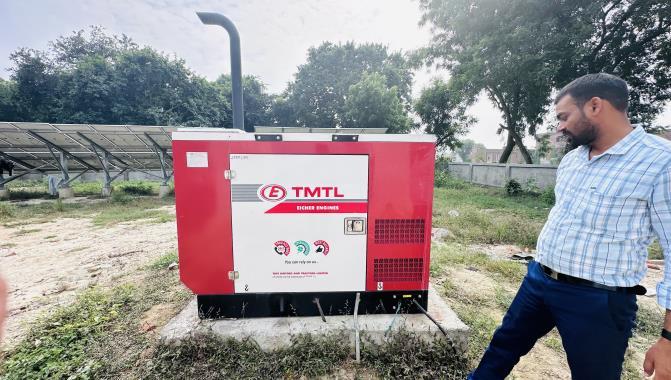
PowerSource:SolarpowerandstandbyDG
SolarandDGInstallation:Completed.
Testing:Preliminarytestsonthecontrolpanelandsensors have been conducted. Further testing is planned once the communicationmodulesarefullyfunctional.
Power Supply: Power connections have been established, withbackupsystems.
Complete Sensor Installation: Finish setting up remaining sensors.
InstallCommunicationModules:Completecommunication hardwareinstallationforremotemonitoringcapability.
Final Testingatsite:Conductcomprehensivesystemtests uponinstallationcompletion.
DataIntegrationandMappingonWebScanetsoftware
FinalymonitoringtherealdataonWebScanetsoftware
International Research Journal of Engineering and Technology (IRJET) e-ISSN: 2395-0056
Volume: 12 Issue: 01 | Jan 2025 www.irjet.net p-ISSN: 2395-0072
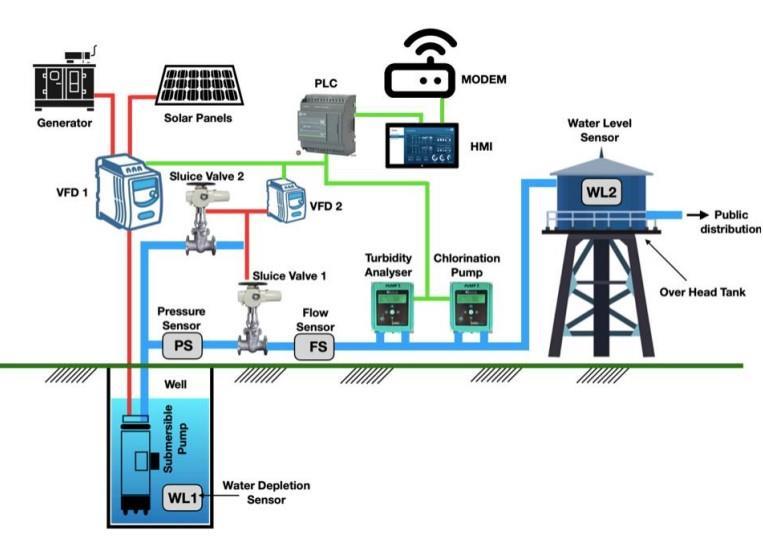
TheTubewellAutomationPanelsareintelligentlycontrolled byaPLC(ProgrammableLogicController)whichprocesses thelogicbytakinginputsfromsensorslikeDepletionsensor, Pressure Sensor, Flow Sensor & OHT Water Level Sensor, connectedtoitsinputs.
AnHMIisprovidedforviewingtheTAPprocess&manually controllingthePump-houseoperations. ItswitchestheSubmersiblePumpandtheActuatorvalves, whentheOverheadTankneedstobefilled.Italsopower-up theChlorinationDosingforwatertreatment.
The submersible pump will work through the power suppliedfromSolarPanels.Butinemergencyitcanalsobe operatedthroughDieselGeneratorsupply.
TheTubewellAutomationPaneldon’tneedanyoperatorto start/stoppumping.ThePanelcontrolremainsinalways ON condition so that, in the morning it can automatically sensetheintensityofsolarpower&startoperations.AUPS keepsitspoweruninterrupted.
The PLC communicates all the vital Parameters like Solar Intensity,WaterFlow,WaterPressure,Waterlevel,Chlorine level,VFDTripstatus&UPSbatteryleveletc.,totheMODEM throughMODBUS.TheMODEMsharesallthedatawiththe webserver,foranalysing&Alarmgeneration
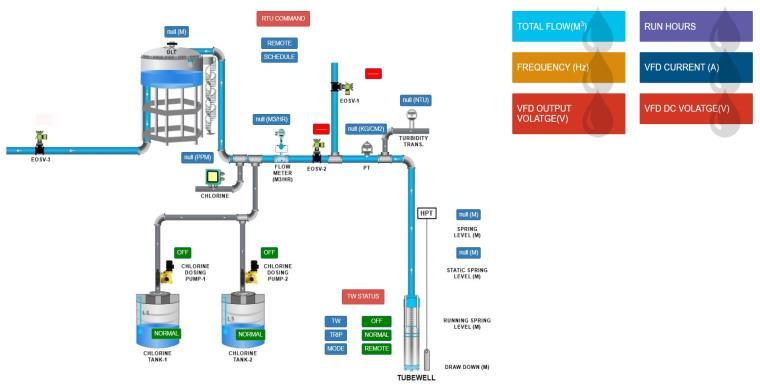
The analysis of the tubewell automation system for the Jagdishpur Khas Water Supply System using Webscanet software provides valuable insights into the efficiency, reliability, and overall performance of the water supply network. The implementation of webscanet software has enabledreal-timemonitoringandautomation,resultingin improvedoperationalmanagementandoptimizedresource utilization.
Keytakeawaysfromtheanalysisinclude:
EnhancedEfficiency:Automationhassignificantlyreduced manualinterventions,leadingtobettercontroloverwater distributionandminimizingenergywastage.
Real-Time Monitoring: The integration of webscanet software ensures accurate and timely data acquisition, aidinginproactivemaintenanceandfaultdetection.
ResourceOptimization:Automatedoperationshavehelped inreducingwaterloss,improvingwaterqualityandensuring requiredflowtofilledOHT.
Sustainability: The system’s automation aligns with sustainablepracticesbyreducingenergyconsumptionand optimizing resource use, which can serve as a model for similarprojectsinotherregions.
Thestudyhighlightsthecriticalroleofadvancedtechnology in modernizing water supply systems, ensuring their reliabilityandsustainability.
[1] Viani,F.,Bertolli,M.,andRocca,P.(2017)."WaterLevel Monitoring for Leakage Detection in Smart Cities." Sensors,
[2] Singh,R.,andSharma,A.(2019)."TubeWellAutomation in Rural India: A Case Study of Punjab." International JournalofRuralDevelopmentandTechnology
[3] Ali,I.,andHameed,M.(2021)."SustainableRuralWater Supply through Solar-Powered Tube Wells and Automation."RenewableEnergyJournal
International Research Journal of Engineering and Technology (IRJET) e-ISSN: 2395-0056
Volume: 12 Issue: 01 | Jan 2025 www.irjet.net p-ISSN: 2395-0072
[4] CPHEEO, MoHUA, “Advisory on Water Meters, Instrumentation&SCADA,”June2020
[5] DavidA.LloydOwen(2018)“SmartWaterTechnologies and Techniques: Data Capture and Analysis for SustainableWaterManagement”
[6] Prabhata K. Swamee and Ashok K. Sharma (2007) “DesignofWaterSupplyPipeNetworks"
[7] Daniel P. Loucks and Eelco van Beek (2017) "Water ResourcesSystemsPlanningandManagement"
2025, IRJET | Impact Factor value: 8.315 | ISO 9001:2008