
International Research Journal of Engineering and Technology (IRJET) e-ISSN: 2395-0056
Volume: 11 Issue: 12 | Dec 2024 www.irjet.net p-ISSN: 2395-0072

International Research Journal of Engineering and Technology (IRJET) e-ISSN: 2395-0056
Volume: 11 Issue: 12 | Dec 2024 www.irjet.net p-ISSN: 2395-0072
Mamta M. Panchariya1 , Monika G. Deulkar2 , Maheshwar Ambone3 , Sawan Dahare4
Shruti Satpute5, Yogesh Dhopte6
3Example: Professor, Dept. of xyz Engineering, xyz college, state, country
Abstract - Conditions drop theproductivityoffactory.Which circumscribe the growth of factory and quality and volume of factory also reduces. Image processing is stylish way for detecting and opinion the conditions. In which originally the infected region is set up also different features are uprooted similar as color, textureandshape.Eventually,bracketfashion is used for detecting the conditions. This paper has been divided into three main corridors. In the first part, a comprehensivereviewgroundedonalgorithmsishandedwere the major algorithms and workshop conducted using image processing and artificial intelligence algorithms have been compared. The alternate part discusses the fabrics and compared the former workshop. also, a comprehensive discussiongroundedonthedelicacyoftheresultswashanded. Grounded on the review conducted, a detailed explanation of the ails discovery and bracket performance is handed. Eventually, the findings and challenges in factory splint discoveryusingimageprocessingareepitomizedandbandied.
Key Words: Neural Networks, CNN, Image Processing, Bracket, Flask.
India is primarily an agrarian country, with husbandry employing the maturity of its people. Over 65 of the populationisemployedinhusbandry,makingthecountryan agrariannation.[3]husbandryexplorationaimstoincrease productivity and food quality while reducing costs and addinggains.Theagrarianproductsystemistheresultofa complexcommercebetweensoil,seeds,andagrochemicals. Vegetables and fruits are the most precious agrarian products. An explanation of pests and factory conditions Factoryconditionsandpestsareamongthetypesofnatural disasters that can stymie a factory's normal growth and indeedaffectinfactorydeaththroughoutthefactory'sentire lifecycle,fromseeddevelopmenttoseedlinggrowth.[4]To gain more precious products, a product quality control is principally needed.[2] The use of ML and DL in factory complaint discovery has gained fissionability and shown promisingresultsindirectlyrelatingfactoryconditionsfrom digital images. Traditional ML ways,similaraspoint birth and bracket, have been extensively used in the field of factorycomplaintdiscovery. Thesestylesexcerptfeatures fromimages,similarascolor,texture,andshape,totraina classifier that can separate between healthy and diseased shops. These styles have been extensively used for the
discoveryofconditionssimilarassplintblotch,finemildew, and rust, as well as complaint symptoms from abiotic stressessimilarasfailureandnutrientinsufficiencybuthave limitationsindirectlyrelatingsubtlesymptomsofconditions andearly-stagecomplaintdiscovery.[5]Thesewayshave demonstratedthecapabilitytodirectlyidentifyandclassify factoryconditions.Limitationsanddifficultiesstillliveand must be resolved. To produce generalizable models and increase the number of intimately available datasets for trainingandassessment,furtherexplorationisdemanded. Thisreviewsummarizesthecurrentstateofexplorationin this area and provides a thorough understanding of the advantagesanddisadvantagesofmachineliteracyanddeep literacy ways for factory complaint discovery. Its novelty stemsfromthebreadthofcontentofexplorationpublished from2015to2022,whichexplorescolorfulMLandDLways while agitating their advantages, limitations, and implicit results to overcome perpetration challenges. In summary, the field of factory complaint discovery using ML and DL waysisafast-movingtargetwithencouragingissues.The compositionisausefultoolforfactorycomplaintdiscovery experimenters,interpreters,andassiduityprofessionalswho want a deep understanding of the content because it providesperceptiveinformationaboutthestateofthefield's current exploration. The benefactions made by this exploration composition are listed in the section that follows:
•Thispapergivesasummaryofrecentadvancementsinthe useofML andDL ways forfactorycomplaintdiscovery. It offers a thorough grasp of the slice- edge styles and proceduresappliedinthisfieldbyencompassingexploration publishedbetween2015and2022.
•ThisreviewlooksatavarietyofMLandDLways,similaras CNNs,DBNs,imageprocessing,andpointbirth,forrelating factory conditions. It also discusses the advantages and disadvantages of these ways, including data availability, imaging quality,andthecapabilitytodistinguish between healthyanddiseasedshops.Thecompositiondemonstrates how the operation of ML and DL ways greatly improves factorycomplaintdiscoveryspeedandperfection.
•Anumberoffactorycomplaintdiscoverydatasets,similar as Plant Village, the rice splint complaint dataset, and datasets for insects that affect soybeans, sludge, and rice, havebeenexaminedintheliterature.
International Research Journal of Engineering and Technology (IRJET) e-ISSN: 2395-0056
Volume: 11 Issue: 12 | Dec 2024 www.irjet.net p-ISSN: 2395-0072
• The study covered a number of performance evaluation criteria, similar as accurate recall angles, bones similarity measure(DSC),andcrossroadofunions(IoU),thatareused togaugehowaccuratefactorycomplaintdiscoverymodels are.Therearesevenprimarysectionsinthecomposition.In Section 1, a brief summary of factory complaint and pest discoveryanditssignificanceisgiven. Section 2 discusses thedifficultiesandproblemsassociatedwithdetectingpests andfactoryconditions.Section3presentsthedeepliteracy approaches to image recognition and their operations in factory complaint and pest discovery. In Section 4, a comparisonofpopulardatasetsandtheperformancecriteria of deep literacy ways on colorful datasets are handed. In Section5,theproblemswiththecurrentsystemsarelisted. Section6presentsthediscussionregardingtheidentification ofpestsandfactoryconditions.InSection7,theexploration work's conclusion and implicit unborn exploration directionsarecovered.[5]Apresto,automated,andaccurate systemofcomplaintdiscoveryisdemanded.
2.PLANT DISEASE AND PEST DETECTION: CHALLENGES AND ISSUES
Inthefield offactorycomplaint,artificial intelligence (AI) technologieshavelatelybeenusedtoidentifyinfestations and abnormalities in shops. These technologies have the powertorevisethestylesusedtodescry,diagnose,andtreat factory conditions. We'll examine the numerous artificial intelligence (AI) technologies that have been put forth for detectingabnormalitiesandinfestationsinshops,aswellas their benefitsanddownsides,andhow thesetechnologies areaffectingthefieldoffactorypathology,inthispassage. Machineliteracy(ML)isoneofthemostpopularartificial intelligent (AI) technologies in factory pathology. ML algorithms,likethec 4.5classifier,treebagger,anddirect supportvectormachines,havebeenusedtoclassifyfactory conditions from digital images. These algorithms can be trained to identify particular patterns and symptoms of conditions, which makes them applicable for grading ails whenthey'reintheirearlystages.
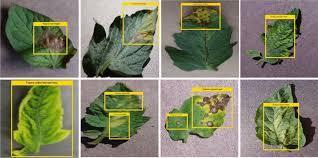
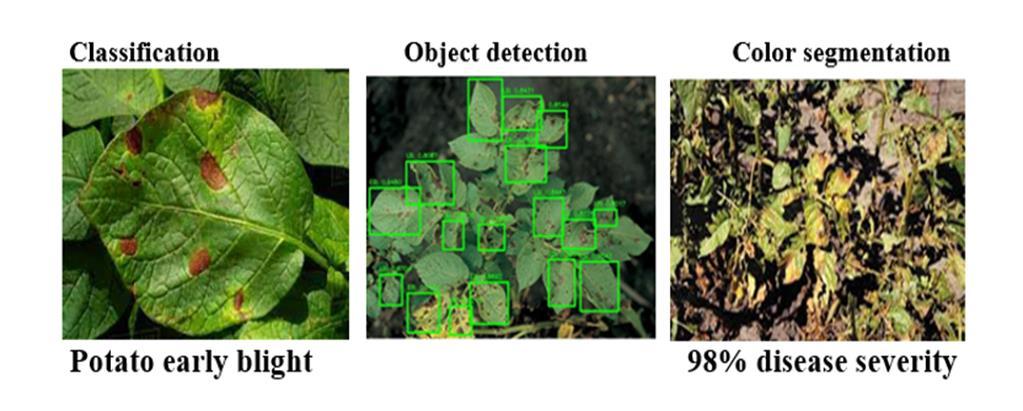
AsignificantquantumofannotateddataisneededforML algorithmstoservedulyduringtraining,sotheymightnot beapplicableforconditionsthathavenowaybeenobserved ahead. also, DL technologies have been proposed for the identification of infestations and abnormalities in shops, similar as CNNs and DBNs. When it comes to the identificationanddiscoveryoflesionsfromdigitalimages, thesetechnologieshavedemonstratedencouragingresults. [6][7] DL models are suitable to fete subtle complaint symptomsthatconventionalimageprocessingwaysmight miss by automatically learning features from the images. still,DeepLearningmodelsbearalargequantumoflabeled trainingdataandhighcomputationaloutflow,whichcould be a debit for some operations. Computer vision (CV) is another AI technology that has been used in factory pathology.Certainregionsofinterestinimages,similaras factoryleavesandcomplaintsymptoms,canbehonoredand localized using CV algorithms like object discovery and semantic segmentation. [8] These algorithms can automaticallyconverttheimagesintoidentifiablepatterns or features, which can also be combined with ML or DL algorithmstodescryandclassifyconditions.still,formodel training, CV algorithms bear a large quantum of labeled imagedata,andtheymightnotbeapplicableforconditions that have no way been observed ahead. Each of the four images in Figure 1 represents a distinct stage in the discoveryoffactoryconditions.Theresultsofthecomplaint identificationareshowninthefollowingimage,whichisthe input image in the first case. The factory lesion's segmentation results are shown in the final image, while lesion discovery is featured in the third image. Artificial intelligence (AI) technologies have demonstrated encouraging issues in the identification of anomalies and infestationsinshops.
Thesestyleshaveshowngreatpledgeforaddingcropyield, relating factory lesions, and optimizing factory growth. In comparisontotraditionalapproaches,MLandDL-grounded styles give traditional approaches, ML and DL- grounded stylesgiveseveralbenefitsandhavetheeventualitytorevise husbandry. Traditional approaches to husbandry and
International Research Journal of Engineering and Technology (IRJET) e-ISSN: 2395-0056
Volume: 11 Issue: 12 | Dec 2024 www.irjet.net p-ISSN: 2395-0072
botanical studies calculate heavily on homemade examinationandexpertknowledge.
Image Preprocessing
Segmentation
-1:Basicimagerecoveringwayfordetectingfactory conditions.[19}
These styles are frequently time- consuming, physically demanding,andpronetomortalerror.Indiscrepancy,ML and DL- grounded approaches can automate these tasks, reducing the need for mortal intervention while adding processperfectionlargequantitiesofdata,similarasimages, detectordata,andrainfalldata,havebeenanatomizedusing ML and DL approaches to identify patterns and make prognostications.Forillustration,MLalgorithmssimilaras thec4.5classifierandtreebaggerareusedtoprognosticate cropyields,identifyfactorylesionsandpests,andoptimize factorygrowth.[12][13][14]DL models,similarasCNNs andDBNs,havebeenappliedinfactorylesionidentification groundedonimageanalysisandbracket,furnishingbetter delicacyandrobustnessthantraditionalimageprocessing styles.[15][16][17]MLandDL-groundedapproacheshave severaladvantagesovertraditionalstylesinhusbandryand botany.Thesestylescanautomatetasks,amelioratedelicacy and effectiveness, and assay massive quantities of data. Becausethesestylesbearalargenumberoflabeledfeatures, they may not be applicable for preliminarily unknown lesions. further exploration is demanded to develop generalizable models that can be applied to colorful crop speciesandconditions,aswellastomakefurtherdatasets available to the public for prophetic model training and confirmationforperformanceanalysis.
Alsoaresomecommonsymptomsoffungal,bacterial,and viralfactoryflakeconditions:
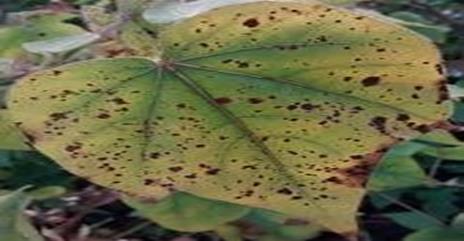
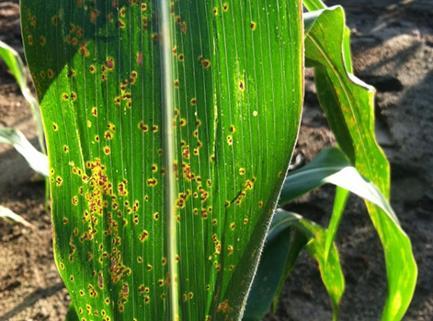
1)Bacterialcomplaintsymptomsincludesmalllightgreen spots that come water- soaked. As shown in Figure 1, the lesionsexpandandultimatelycomedrydeadspots.
2)Symptomsofcontagion-causedfactoryflakeconditions are challenging to diagnose. Contagions produce no egregious symptoms and are constantly confused with nutrientscarcitiesandgermicideinjury.
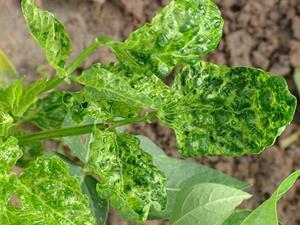
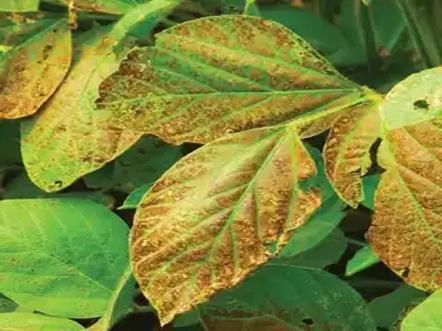
Mosaic Virus, for illustration, is generally transmitted by insects like aphids, leafhoppers, whiteflies, and cucumber beetles.ViralcomplaintonflakeLookforunheroicorgreen stripesorspotsontheleafage,asdepictedinFigure2.The leaves may be wrinkled or coiled, and the growth may be suppressed.[19]
Deep knowledge approaches have come to be as an instigative way of detecting factory injuries. These RNNrestedwayshaveproveneffectiveinrelatingcolorfulfactory injuries from images. [20] DL is an area of machine knowledge that's primarily used for image type, object discovery,andnaturallanguageprocessing.Deepknowledge (DL) is a neural network- rested algorithm for automatic pointselectionofdata.Itdoesnotbearimportantartificial point engineering. It combines low- position features to produce abstract high- position features that are used to discoverdistributedfeaturesandattributesinsampledata. Itoutperformstraditionalstylesforimagerecognitionand targetdiscoveryintermsofdelicacyandgenerality.[21][22] [23]
Complaintdiscoveryinfactoryleavescanbefulfilledusing respectable,effective,andreliableimageprocessingways. Image processing has multitudinous operations in fields
International Research Journal of Engineering and Technology (IRJET) e-ISSN: 2395-0056
Volume: 11 Issue: 12 | Dec 2024 www.irjet.net p-ISSN: 2395-0072
similar as biology, husbandry, drug, engineering, and computing.Motorizedimageprocessingwaysarecriticalfor detectingandclassifyingfactoryconditionsbeforehandon, before they spread throughout crops. [24] Digital signal processingisamethodologyforcarryingquickandaccurate resultsaboutfactoryflakeconditions.It'llreducenumerous agrarian aspects while adding productivity by detecting applicableconditions.Forcomplaintdiscovery,theimageof an infected flake should be examined using a set of procedures.AsillustratedinFigure3,theinputimageshould be pre-reused before its features are pulled rested on the
dataset. The conditions should also be classified using classifierwaysspecifictothedataset.
Image accession is the process of acquiring images and converting them into the asked affair format. For this operation,ananalogimageisoriginallycapturedandalso convertedtoadigitalimageforfartherprocessing.[25]
Preprocessing Segmentation containsprocessforimage segmentation, image improvement and colour space conversion originally image digital image is enhanced by sludge. Leaf image is filtered form the background image. alsofilteredimage’sRGBcoloursareconvertedintocolour space parameter. Hue Saturation Value (HSV) is a good systemforcolourperception.furtherimageissegmentedto ameaningfullpartwhichiseasiertoanalysing.Anyofthe modelrested,thresholdrested,edgerested,Regionrested andpointrestedsegmentationhasbeendoneontheimages. [25]
CNNsareatypeofdeepliteracymodelthat'sidealforimage brackettaskssimilarassplintcomplaintdiscovery.TheCNN armatureismadeupofmultiplelayers,includingcompletely connected layers, maximum pooling layers, and normalizationlayers.[27]ThefirstsubcasteinaCNNisthe inputsubcaste,whilethealternatesubcasteinutmostCNNs is convolutional layers, which prize features by applying colourfultypesof2Dpollutantstotheimage.Asthenumber of images increases, dimensionally reduced pooling, also
knownasdownslicelayers,canbeusedtoproduceafurther compact representation of the image. [28] Completely connected(FC)layersinaCNNarealsoknownaslearnable features,theuprootedfeaturesarereusedintheFCsubcaste forliteracyandweightsoptimization.Theselayersarealso responsible for making bracket which can be used to fete colourful factory conditions. The literacy process of CNN modelbeginswithtraining,theinputtotheCNNareimages alongwiththeirmarkers,afterthesuccessfultrainingofthe model,themodelissuitabletoidentifycomplainttypes.[29] The three main characteristics of the CNN are pooling, weightsharing,andposition.Theperformanceofprocessof CNN model begins with training, theinput totheCNN are images along with their markers, after the successful training of the model, the model is suitable to identify complainttypes.[30]Thethreemaincharacteristicsofthe CNN are pooling, weight sharing, and position. The performanceofprocessofCNNmodelbeginswithtraining, theinputtotheCNNareimagesalongwiththeirmarkers, after the successful training of the model, the model is suitable to identify complaint types. [30] The three main characteristicsoftheCNNarepooling,weightsharing,and position. The performance of speech recognition could be
International Research Journal of Engineering and Technology (IRJET) e-ISSN: 2395-0056
Volume: 11 Issue: 12 | Dec 2024 www.irjet.net p-ISSN: 2395-0072
enhancedbyeachofthem.Greateradaptabilityagainstonwhitenoiseismadepossiblebypositioninthecomplication bias'sunits,wherecertainbandsarecleanerthanothersThe decision- making process in a CNN for splint complaint
discoverybeginswiththeinputofasplintimage.Theimage isalsoreusedthroughconvolutionallayers,wherefeatures areuprooted.
Theperformanceofspeechrecognitioncouldbeenhanced byeachofthem.Greateradaptabilityagainston-whitenoise ismadepossiblebypositioninthecomplicationbias'sunits, wherecertainbandsarecleanerthanothers.Thedecisionmaking process in a CNN for splint complaint discovery begins with the input of a splint image. The image is also reused through convolutional layers, where features are uprooted.Theperformanceofspeechrecognitioncouldbe enhancedbyeachofthem.Greateradaptabilityagainstonwhitenoiseismadepossiblebypositioninthecomplication bias'sunits,wherecertainbandsarecleanerthanothersThe decision- making process in a CNN for splint complaint discoverybeginswiththeinputofasplintimage.Theimage isalsoreusedthroughconvolutionallayers,wherefeatures areuprooted.Theperformanceofspeechrecognitioncould beenhancedbyeachofthem.Greateradaptabilityagainst on-white noise is made possible by position in the complicationbias'sunits,wherecertainbandsarecleaner thanothersThedecision-makingprocessinaCNNforsplint complaintdiscoverybeginswiththeinputofasplintimage. The image is also reused through convolutional layers, where features are uprooted. The model's affair is the probability that the splint is diseased or healthy. CNNs' armature of over- slice, down- slice, and learnable layers makesthemidealfordetectingsplintconditions.[31]The convolutional neural network (CNN) can be allowed ofasavariationofthestandardneuralnetwork.ratherof using completely connected retired layers as described in the former section, the CNN introduces a special network structure that consists of interspersing so- called complication and pooling layers. An automatic system for
classifying and detecting factory conditions from splint images was delved by exercising the.[32] Deep literacy approach.Withthehelpofvisualdiagnostics,thedeveloped model was suitable to identify 13 distinct conditions and descry the presence of healthy leaves. Each step of the process was covered in detail, starting with gathering the trainingandconfirmationimagesandmovingontoimage preprocessing, addition, and deep CNN training and finetuning.[33]
Still,advancementsareneededasaresultofreviews,new developments, and conversations. Crop product can be significantlyincreasedencyclopedicallythroughtheuseof technology. Former exploration has established the robustnessofdeepliteracy(DL)andmachineliteracy(ML) ways similar as k- means clustering (KMC), naive Bayes (NB),feed-forwardneuralnetwork(FFNN),supportvector machine(SVM),k-nearestneighbor(KNN)classifier,fuzzy sense(FL),inheritablealgorithm(GA)areincludedinthis technology.
Factors responsible for factory conditions Agrarian conditions may intrude factory growth and negatively impactcropproductatdifferentstagesofdevelopment.[34]
International Research Journal of Engineering and Technology (IRJET) e-ISSN: 2395-0056
Volume: 11 Issue: 12 | Dec 2024 www.irjet.net p-ISSN: 2395-0072
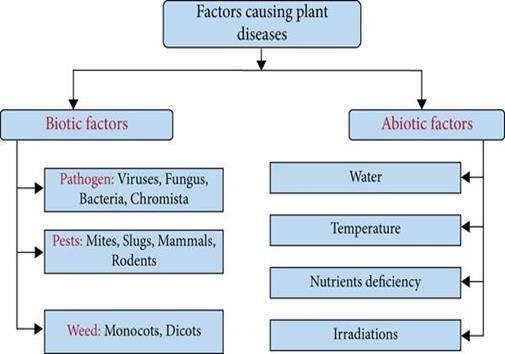
(Repudiated)Amethodicalanalysisofmachineliteracyand deep literacy-grounded approaches for factory splint complaintbracketareview[39]
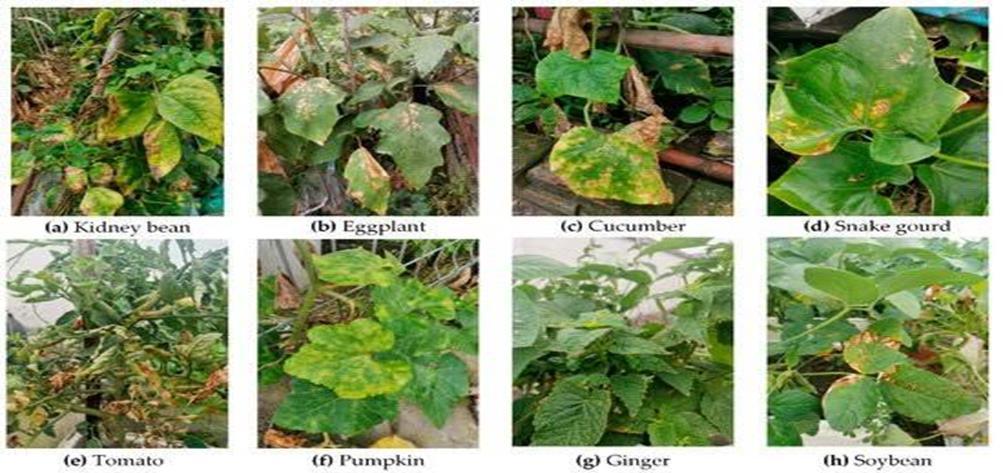
Factoryconditionscanarisefromcolorfulconditionsduring different stages of growth. [34] Crop complaint- causing variables are divided into two orders, according to [35] bioticfactorsandabioticfactors.[36]shopsareimpactedby biotic factors like contagions, fungi, bacteria, diminutives, andslugs,aswellasabioticfactorslikewater,temperature, irradiation,andnutritiveprivationduetomicrobialinfection harms factory growth. [37] The study included images of diseasedfactoryleavesfromthePlantVillagedatasetaswell ashealthyanddiseasedfactoryleavesfromotherdatasets. [38]
Amethodicalanalysisofmachineliteracyanddeepliteracygroundedapproachesforfactorysplintcomplaintbracketa review [39] and different images from other datasets showing healthy and diseased factory leaves have been epitomized in the workshop and consequently. also, the detail computer vision- grounded ways and proccsses includingfeldcrops,imageaccession,splintimagedatasets, imagepreprocessing(testset,trainingset,andconfirmation sets),datasplitting,andperformanceassessmentstyles)for factory complaint discovery and classifcation have been easilyindicatedinthework.[39]Detailsaboutthefactors thatbegetfactoryconditionshavebeendepicted.Imagesof factoryleaveswithcolorfulconditionsfromthePlantVillage dataset,aswell ashealthyanddiseasedleavesfromother datasets, have been included. [40] Below are images of factoryleaveswithcolorfulconditionsfromthePlantVillage dataset,aswellashealthyimagesfromotherdatasets.[41]
2.6
DL, ML, and computer vision ways are critical to the husbandry diligence for the discovery and bracket of crop conditions.[42]Inordertoautomaticallyidentifyandclassify agrarianfactoryconditions,algorithmsandstylesgrounded onprintsoftheplantleaf.
2.5
I.TheNBMethoderectedupontheNBclassiferconception, it'saprobabilisticclassifervariation.[43]It'sassumedthat theclassmarkershavebeenassignedtheirposteriorchances andthatthepreviouschancesofthepatternsareknownto live.Giventhissupposition,thedatathatbelongtoaspecific classmarkerhavetheirmaximumliabilityvaluesreckoned. keepingtheposteriorprobabilityinmind.It'sdeterminedby multiplying the tentative probability of each point by the product, using Baye's theorem. Although this proposition generallyfailsinpracticalsettings,itperformsnicelywellin numerousbracketproblems.
II. The KNN MethodologyIt'sa supervised,nonparametric machine learning fashion constantly used for pattern recognition[41].It'sgroundedonthenearestneighborrule, whichisusedtoclassifydatainmachineliteracyoperations. This fashion entails using the classifier to train the test pattern, after which it's distributed grounded on how analogous each training pattern is to the test pattern. The KNN classifier generates a value representing the class to whichitbelongs.Usingthepluralityvoteofitsneighbors,the objectisassignedtothemostpopularclassmarkersamong its k- nearest neighbors. It performs the bracket process
International Research Journal of Engineering and Technology (IRJET) e-ISSN: 2395-0056
Volume: 11 Issue: 12 | Dec 2024 www.irjet.net p-ISSN: 2395-0072
using separate calculations and locally approached operations,muchlikeacasegroundedliteracymodel.[41]
DATA SET DISTRIBUTION
Class Name No. of Samples
Maize:Cercosporaleafspotdisease 1025
Maize:Commonrustdisease 1220
Maize:HealthyLeaf 1120
Peach:HealthyLeaf 1050
Peach:HealthyLeaf 1273
Table -1: DistributingtheDataSet
III. TheMethodofDTBydividingthedataintoseverallower groups(treestructure)groundedonwhichdivisionresultsin the lesser disproportion, the supervised bracket and retrogression algorithm in supervised literacy produces classifiers[41].Theentropy,orGiniindicator,isagenerally used trait selection standard that's constantly used as a difference dimension. The system's eventuality to simplify resultinterpretationforhumansisoneofitsadvantages.A deepliteracytreemightproduceveritablylittletrainingerror ifitcouldhavetrainedwithoutbeingconstrainedbyitsdepth. multitudinous variations of DT, similar as ID3, C 4.5, and CART,areconsiderablyemployedindifferentdataminingand machine literacy operations. Using the SVM Method This supervised machine literacy classifier is defined by the separating hyperplane. The optimal hyperplane that maximizestheperipherybetweenthedatapointsofthetwo classes is set up using this fashion in high- dimensional space.SVMhasapointcalledkerneltricksthatareusefulfor nonlinear bracket. We look forward to carrying further distinct features in the high- dimensional point space. To finish it, the features can be converted using a variety of generalfunctions,similarasthedirect,polynomial,andradial basefunctions.Pointmetamorphosismaybegettheconfines ofthepointspacetoincreasedramatically.
The CNN Methodology CNN uses multidimensional data analysisthroughdeepfeed-forwardneuralnetworks.Onceit classifies a specific highlight at some spatial positioning information, the CNN learns channels that are activated [44][39] The accuracy of various convolution filters with dimensions of 2×2 and 3×3 depends on the number of epochsusedintheir-
implementation. This depends on the dimensions of the filter.TheCNNmethodcanbeusedwithanumberofpretrained architectures, such as VGG16, VGG19, ResNet50, ResNet152, InceptionV3, InceptionNet and DenseNet121. [45]TheANNMethodNeuralnetworksaremodelsthatThe
ANNMethodNeuralnetworksaremodelsthatreplicatehow biological systems, such as the brain, process information[48].Tocreateanetworktopology,Coefficients link artificial neurons,also knownasprocessing elements (PEs).Experienceiswhatidentifiesdatalinksandpatterns, not programming. Complex data can be interpreted and patterns can be found by using deep neural networks (ANNs). To build a network structure, connect artificial neurons, commonly referred to as processing elements (PEs).Itisthroughexperience,notprogramming,thatdata patterns and connections are found. ANNs are useful for extracting patterns from complex data because they can understandit.[46]
TheRGBimagesthatmadeupthedatasetincludedanequal amount of leaf samples that were infected and those that werenot.Toreducethesizeofthedataset,theimageswere compressed and split into five classes. To ensure optimal performancewhenusedasinputfortheConvolutionNeural NetworkAlgorithm,thedatasetimagesmustbeprocessed aftertheyarecollected.Toprocesstheimages,weemploy MatplotlibandOpenCV.Mapthealphanumericclasslabelsto anumericlabelvalueusingOneHotEncodertoencodethe labels, which facilitates prediction. Next, images are rearrangedtoachieveasuitabledataredistributionforthe splitprocess.Inordertokeepthemachinelearningmodel from overfitting, the images are split into training and validationsets.Imagesarethentransformedintoa3Dtensor intheformof(28,28,3)width=28,height=28,andchannels =3(RGB)shapedarrays,ensuringthateachimagehasthe same parameters[47] Data set shows the sample images from the dataset, with representing healthy spots and representing bacterial spots. Four categories are healthy, Cercosporaleafspot,andthesamplesofnorthernleafblight, commonrust,andgrayleafspotshowninDataset.[48]
Volume: 11 Issue: 12 | Dec 2024 www.irjet.net p-ISSN: 2395-0072
2.8
The specified input image is processed through the convolutionstepinordertoextractfeatures.Thatishowa CNNmodelstarts.Takeanexampleofaninputimagethat functionsasbothafeaturemapandafeatureindicator.Next, takethefilterandapplyeachblockofthefiltertotheinput imagethatisbeingconsidered.Matrixmultiplicationisused toachievethis.RectifiedLinearUnit,orReLUlayer,isalayer that operates as a progression to the convolution layer. Activation functions must be applied to feature maps in ordertoincreasethenon-linearitywithinthenetwork.This is a result of how highly non-linear images are by nature. Negative values are removed from an activation map by settingthemtozero.Maxpoolinginvolvesdividingtheinput image into a collection of non-overlapping regions. This means that every region's output is its maximum value throughout all of them. Thus, with fewer parameters, we obtainasmallerimage.UtilizingTensorflowandKeras,we employedvariouspackagestocreateConvolutionalNeural Networks(CNNs).[50]
2.9
Itisadvantageoustosavethemachinelearningmodelalong withallofitsparametersafterithasbeentrained.Afterit hasbeensaved,wecanloadthepreviouslytrained model whenever necessary and perform classifications without having to start the model's training process over. The components of a Keras machine learning model are as follows: An architecture that describes the model's layers andtheirrelationshipsisalsoreferredtoasaconfiguration. "State of the model" is a collection of weighted values, an optimizer (identified by putting the model together), A collection of metrics and losses that can be obtained by calling add_metric () or add_loss () or by compiling the model.UsingtheKerasAPI,allofthesecomponentscanbe saved to disk at once or only some of them can be saved selectively.Forexample,allofthecomponentscanbesaved asasinglearchiveintheTensorFlowSavedModelformat(or the older Keras H5 format), and the architecture and configurationcanbesavedseparatelyandusuallyasaJSON file.
Themethodsforidentifyingplantdiseasesthroughimage processing have been reviewed and summarized in this paper.Thefourmainmethodsforidentifyingplantdiseases are SGDM, K-means clustering, SVM, and BPNN. These methodsareemployedtoanalysetheleavesofbothhealthy andsickplants.Theimpactofbackgrounddatainthefinal image, technique optimization for "specific plant leaf diseases," and automation of the technique for ongoing automated monitoring of plant leaf diseases in real-world fieldconditionsareafewofthechallengesassociatedwith these approaches [51] We have successfully developed methods for classifying diseases that are used to identify plantleafdiseases.Itispossibletoautomaticallydetectand classifyplantleafdiseasesbyusingadeeplearningmodel thathasbeendeveloped.Thethirteenspeciesonwhichthe suggestedmodelistestedaretomato,strawberry,soybean, raspberry, potato, corn, pepper bell, peach, orange, grape, cherry,blueberry,andapple.Withthehelpofthiswork,38 plantclasseswereidentified.WorkingwiththeKerasimage data generator API was successful. This allowed us to performimageprocessingtasks.Asophisticatedconvolution modelcalledthevgg-19wasalsodevelopedbyus,anditwas trainedusingdatainordertomakepredictions.Ourmodel producedanearlyaccurateprediction.Ouraimistoimprove boththeaccuracyofthemodelandtheandroidapp,afterwe haveeffectivelyimplementedthesemodels.[52]
[1] S. Kumar and R. Kaur, ‘Plant Disease Detection using ImageProcessing-AReview’,2015.
[2] M. N. Hasan, M. Mustavi, M. A. Jubaer, and T. Ahmed, ‘Plant Leaf Disease Detection Using Image Processing: A Comprehensive Review’, 2022. [Online]. Available: https://mjsat.com.my/
[3] K. Khairnar and R. Dagade, ‘Disease Detection and DiagnosisonPlantusingImageProcessing-AReview’,2014. [Online]. Available: http://cotcorp.gov.in/currentcotton.aspx?pageid=4.
[4] J. Liu and X. Wang, ‘Plant diseases and pests detection based on deep learning: a review’, Dec. 01, 2021, BioMed CentralLtd.doi:10.1186/s13007-021-00722-9.
[5] M. Shoaib et al., ‘An advanced deep learning modelsbasedplantdiseasedetection:Areviewofrecentresearch’, 2023,FrontiersMediaSA.doi:10.3389/fpls.2023.1158933.
[6] K. Khairnar and R. Dagade, ‘Disease Detection and DiagnosisonPlantusingImageProcessing-AReview’,2014. [Online]. Available: http://cotcorp.gov.in/currentcotton.aspx?pageid=4.
International Research Journal of Engineering and Technology (IRJET) e-ISSN: 2395-0056
Volume: 11 Issue: 12 | Dec 2024 www.irjet.net p-ISSN: 2395-0072
[7] S. Kumar and R. Kaur, ‘Plant Disease Detection using ImageProcessing-AReview’,2015.
[8] A. Siddiqua, M. A. Kabir, T. Ferdous, I. B. Ali, and L. A. Weston, ‘Evaluating Plant Disease Detection Mobile Applications:QualityandLimitations’,Agronomy,vol.12,no. 8,Aug.2022,doi:10.3390/agronomy12081869.
[9]Y.KurmiandS.Gangwar,‘Aleafimagelocalizationbased algorithm for different crops disease classification’, InformationProcessinginAgriculture,vol.9,no.3,pp.456–474,Sep.2022,doi:10.1016/j.inpa.2021.03.001.
[10]M.Nawazetal.,‘Arobustdeeplearningapproachfor tomatoplantleafdiseaselocalizationandclassification’,Sci Rep, vol. 12, no. 1, Dec. 2022, doi: 10.1038/s41598-02221498-5.
[11]M.Akbaretal.,‘Aneffectivedeeplearningapproachfor theclassificationofBacteriosisinpeachleave’,FrontPlant Sci,vol.13,Nov.2022,doi:10.3389/fpls.2022.1064854.
[12] L. S. Cedric et al., ‘Crops yield prediction based on machinelearningmodels:CaseofWestAfricancountries’, Dec. 01, 2022, Elsevier B.V. doi: 10.1016/j.atech.2022.100049.
[13] B. W. Domingue, M. Dell, D. Lang, R. Silverman, J. Yeatman,andH.Hough,‘TheEffectofCOVIDonOralReading FluencyDuringthe2020–2021AcademicYear’,AERAOpen, vol.8,2022,doi:10.1177/23328584221120254.
[14]M.Yoosefzadeh-Najafabadi,H.J.Earl,D.Tulpan,J.Sulik, and M. Eskandari, ‘Application of Machine Learning Algorithms in Plant Breeding: Predicting Yield From HyperspectralReflectanceinSoybean’,FrontPlantSci,vol. 11,Jan.2021,doi:10.3389/fpls.2020.624273.
[15] S. C. Mandal, P. Boidya, M. I. M. Haque, A. Hossain, Z. Shams, and A. Al Mamun, ‘The impact of the COVID-19 pandemiconfishconsumptionandhouseholdfoodsecurity inDhakacity,Bangladesh’,GlobFoodSec,vol.29,Jun.2021, doi:10.1016/j.gfs.2021.100526.
[16]L.Alzubaidietal.,‘Reviewofdeeplearning:concepts, CNN architectures, challenges, applications, future directions’, J Big Data, vol. 8, no. 1, Dec. 2021, doi: 10.1186/s40537-021-00444-8.
[17]L.Alzubaidietal.,‘Reviewofdeeplearning:concepts, CNN architectures, challenges, applications, future directions’, J Big Data, vol. 8, no. 1, Dec. 2021, doi: 10.1186/s40537-021-00444-8.
[18] A. Ranjith Ram, ‘Plant Disease Detection Using Leaf Pattern:AReview’.[Online].Available:www.ijiset.com
[19]‘DN2536613664’.
[20] C. Shi, S. Luo, M. Xu, and J. Tang, ‘Learning Gradient Fields for Molecular Conformation Generation’, 2021. [Online].Available:https://github.com/
[21] G. Huang, Z. Liu, L. van der Maaten, and K. Q. Weinberger,‘DenselyConnectedConvolutionalNetworks’, Aug. 2016, [Online]. Available: http://arxiv.org/abs/1608.06993
[22]K.He,X.Zhang,S.Ren,andJ.Sun,‘IdentityMappingsin Deep Residual Networks’, Mar. 2016, [Online]. Available: http://arxiv.org/abs/1603.05027
[23] L. Deng and D. Yu, ‘Deep learning: Methods and applications’, 2013, Now Publishers Inc. doi: 10.1561/2000000039.
[24]J.LiuandX.Wang,‘Plantdiseasesandpestsdetection based on deep learning: a review’, Dec. 01, 2021, BioMed CentralLtd.doi:10.1186/s13007-021-00722-9.
[25]R.I.Hasan,S.M.Yusuf,andL.Alzubaidi,‘Reviewofthe stateoftheartofdeeplearningforplantdiseases:Abroad analysis and discussion’, Oct. 01, 2020, MDPI AG. doi: 10.3390/plants9101302.
[26]S.KumarandR.Kaur,‘PlantDiseaseDetectionsusing ImageProcessing-AReview’,2015.
[27] J. Lu, L. Tan, and H. Jiang, ‘Review on convolutional neural network (CNN) applied to plant leaf disease classification’, Aug. 01, 2021, MDPI AG. doi: 10.3390/agriculture11080707.
[28] H. Wang, G. Li, Z. Ma, and X. Li, ‘Image recognition of plantdiseasesbasedonprincipalcomponentanalysisand neuralnetworks’,inProceedings-InternationalConference on Natural Computation, 2012, pp. 246–251. doi: 10.1109/ICNC.2012.6234701.
[29] S. Zhao et al., ‘Preliminary estimation of the basic reproductionnumberofnovelcoronavirus(2019-nCoV)in China,from2019to2020:Adata-drivenanalysisintheearly phase of the outbreak’, International Journal of Infectious Diseases, vol. 92, pp. 214–217, Mar. 2020, doi: 10.1016/j.ijid.2020.01.050.
[30] I. T. Drvenica, A. Z. Stančić, I. S. Maslovarić, D. I. Trivanović, and V. L. Ilić, ‘Extracellular Hemoglobin: Modulation of Cellular Functions and Pathophysiological Effects’,2022,MDPI.doi:10.3390/biom12111708.
[31] A. Agarwal, A. Mukherjee, G. Kumar, P. Chatterjee, T. Bhatnagar, and P. Malhotra, ‘Convalescent plasma in the managementofmoderatecovid-19inadultsinIndia:Open label phase II multicentre randomised controlled trial (PLACID Trial)’, The BMJ, vol. 371, Oct. 2020, doi: 10.1136/bmj.m3939.
International Research Journal of Engineering and Technology (IRJET) e-ISSN: 2395-0056
Volume: 11 Issue: 12 | Dec 2024 www.irjet.net p-ISSN: 2395-0072
[32] O. Abdel-Hamid, A. R. Mohamed, H. Jiang, L. Deng, G. Penn,andD.Yu,‘Convolutionalneuralnetworksforspeech recognition’,IEEETransAudioSpeechLangProcess,vol.22, no. 10, pp. 1533–1545, Oct. 2014, doi: 10.1109/TASLP.2014.2339736.
[33]S.Sladojevic,M.Arsenovic,A.Anderla,D.Culibrk,andD. Stefanovic, ‘Deep Neural Networks Based Recognition of PlantDiseasesbyLeafImageClassification’,ComputIntell Neurosci,vol.2016,2016,doi:10.1155/2016/3289801.
[34] R. Kumar, A. Chug, A. P. Singh, and D. Singh, ‘A SystematicAnalysisofMachineLearningandDeepLearning Based Approaches for Plant Leaf Disease Classification: A Review’, 2022, Hindawi Limited. doi: 10.1155/2022/3287561.
[35] R. Kumar, A. Chug, A. P. Singh, and D. Singh, ‘A SystematicAnalysisofMachineLearningandDeepLearning Based Approaches for Plant Leaf Disease Classification: A Review’, 2022, Hindawi Limited. doi: 10.1155/2022/3287561.
[36]S.K.UpadhyayandA.Kumar,‘Anovelapproachforrice plantdiseasesclassificationwithdeepconvolutionalneural network’,InternationalJournalofInformationTechnology (Singapore), vol. 14, no. 1, pp. 185–199, Feb. 2022, doi: 10.1007/s41870-021-00817-5.
[37]M.Sharma,C.J.Kumar,andA.Deka,‘Earlydiagnosisof rice plant disease using machine learning techniques’, ArchivesofPhytopathologyandPlantProtection,vol.55,no. 3, pp. 259–283, 2022, doi: 10.1080/03235408.2021.2015866.
[38]P.Dhiman,A.Kaur,V.R.Balasaraswathi,Y.Gulzar,A.A. Alwan,andY.Hamid,‘ImageAcquisition,Preprocessingand Classification of Citrus Fruit Diseases: A Systematic LiteratureReview’,Sustainability(Switzerland),vol.15,no. 12,Jun.2023,doi:10.3390/su15129643.
[39] R. Kumar, A. Chug, A. P. Singh, and D. Singh, ‘A SystematicAnalysisofMachineLearningandDeepLearning Based Approaches for Plant Leaf Disease Classification: A Review’, 2022, Hindawi Limited. doi: 10.1155/2022/3287561.
[40] R. Kumar, A. Chug, A. P. Singh, and D. Singh, ‘A SystematicAnalysisofMachineLearningandDeepLearning Based Approaches for Plant Leaf Disease Classification: A Review’, 2022, Hindawi Limited. doi: 10.1155/2022/3287561.
[41] Y. M. Abd Algani, O. J. Marquez Caro, L. M. Robladillo Bravo, C. Kaur, M. S. Al Ansari, and B. Kiran Bala, ‘Leaf diseaseidentificationandclassificationusingoptimizeddeep learning’, Measurement: Sensors, vol. 25, Feb. 2023, doi: 10.1016/j.measen.2022.100643.
[42]W.B.Demilie,‘Plantdiseasedetectionandclassification techniques:acomparativestudyoftheperformances’,JBig Data, vol. 11, no. 1, Dec. 2024, doi: 10.1186/s40537-02300863-9.
[43] H. Bhati and M. Rathore, ‘International Journal of INTELLIGENT SYSTEMS AND APPLICATIONS IN ENGINEERINGClassificationandIdentificationofPlantLeaf DiseaseLeveragingAdvancedMachineLearningandDeep LearningTechniques’.[Online].Available:www.ijisae.org
[44] S. M. M. Hossain, K. Deb, P. K. Dhar, and T. Koshiba, ‘Plantleaf diseaserecognitionusingdepth-wise separable convolution-basedmodels’,Symmetry(Basel),vol.13,no.3, Mar.2021,doi:10.3390/sym13030511.
[45] S. Ramesh and D. Vydeki, ‘Application of machine learning in detection of blast disease in south indian rice crops’,Journal ofPhytology,vol.11,pp.31–37,May2019, doi:10.25081/jp.2019.v11.5476.
[46]C.I.SofuogluandD.Birant,‘PotatoPlantLeafDisease Detection Using Deep Learning Method’, Tarim Bilimleri Dergisi, vol. 30, no. 1, pp. 153–165, Sep. 2024, doi: 10.15832/ankutbd.1276722.
[47]A.Siddiqua,M.A.Kabir,T.Ferdous,I.B.Ali,andL.A. Weston, ‘Evaluating Plant Disease Detection Mobile Applications:QualityandLimitations’,Agronomy,vol.12,no. 8,Aug.2022,doi:10.3390/agronomy12081869.
[48] A. Ranjith Ram, ‘Plant Disease Detection Using Leaf Pattern:AReview’.[Online].Available:www.ijiset.com
[49] K. R. Gavhale and U. Gawande, ‘An Overview of the Research on Plant Leaves Disease detection using Image Processing Techniques’, Ver. V, 2014. [Online]. Available: www.iosrjournals.orgwww.iosrjournals.org
[50] A. Salaskar, A. Hegde, and S. Hegde, ‘PLANT LEAF DISEASEDETECTIONUSINGMACHINELEARNING’.
[51] S. Research and I. Network, ‘CERCOSPORA LEAF BLIGHT Soybean Diseases’. [Online]. Available: https://cropprotectionnetwork.org/publications/scoutingfor-soybean-seed-diseases
[52]H.AlHiary,S.BaniAhmad,M.Reyalat,M.Braik,andZ. ALRahamneh,‘FastandAccurateDetectionandClassification ofPlantDiseases’,IntJComputAppl,vol.17,no.1,pp.31–38, Mar.2011,doi:10.5120/2183-2754.
[53]N.Shelar,S.Shinde,S.Sawant,S.Dhumal,andK.Fakir, ‘Plant Disease Detection Using Cnn’, ITM Web of Conferences, vol. 44, p. 03049, 2022, doi: 10.1051/itmconf/20224403049.