
International Research Journal of Engineering and Technology (IRJET) e-ISSN: 2395-0056
Volume: 13 Issue: 04 | Apr 2026 www.irjet.net p-ISSN: 2395-0072

International Research Journal of Engineering and Technology (IRJET) e-ISSN: 2395-0056
Volume: 13 Issue: 04 | Apr 2026 www.irjet.net p-ISSN: 2395-0072
Abhishek Kashid¹, Abhilesh Shriniwas², Tulsi Chavle³, Kalyani Jagnale⁴, Shraddha Kashid⁵
¹²³⁴ Student Authors, Department of Computer Science
MIT ADT University, Pune, India
⁵ Faculty Advisor, Department of Engineering
MIT ADT University, Pune, India
Abstract - The increasing demand for energy and the need for sustainable resource utilization have made intelligent energymanagementsystemsessential.Traditionalmonitoring systemslackpredictivecapabilitiesandreal-timeadaptability.
This paper presents an intelligent energy consumption and optimization dashboard that uses machine learning techniques forforecastingandanomalydetection.Thesystem integrates data preprocessing, predictive modeling, and anomaly detection to provide meaningful insights.
Machinelearningmodelsimproveforecastingaccuracy,while anomaly detection helps identify unusual energy usage patterns. The system also includes an interactive dashboard for real-time visualization, cost estimation, and smart scheduling.
The results show improved decision-making, reduced energy wastage,and better efficiency,supportingthedevelopment of smart energy systems.
Key Words: Energy Management, Machine Learning, Forecasting,AnomalyDetection,SmartDashboard
1.INTRODUCTION
Therapidgrowthinenergyconsumptionhasincreasedthe needforefficientenergymanagementsystems.Traditional systemsprovidelimitedinsightsandcannotpredictfuture usage.
With advancements in artificial intelligence and smart technologies,modernsystemscananalyzeenergydataand forecastdemand.Machinelearningtechniquesareusefulfor identifyingpatternsanddetectinganomalies.
Thispaperproposesanintelligentdashboardthatcombines machine learning models with visualization tools for realtimemonitoringandoptimization
Severalresearchershavecontributedtothedevelopment ofenergymanagementsystemsusingmoderntechnologies. Studies on artificial intelligence-based anomaly detection haveshownthatsuchtechniquescansignificantlyimprove
system efficiency by identifying irregular energy usage patterns.Machinelearningalgorithmshavealsobeenwidely usedtodetectanomaliesandforecastenergyconsumptionin variousenvironments.
Inaddition,IoT-basedenergymonitoringsystemshave been developed to enable real-time data collection from sensorsanddevices.Thesesystemsprovidecontinuousdata streams, which improve the accuracy of analysis and predictions.Forecastingmodels,particularlythosebasedon machinelearning,havedemonstratedstrongperformancein predictingfutureenergyconsumptionusinghistoricaldata.
However,mostexistingsolutionsfocusonasingleaspect suchasforecastingoranomalydetection.Veryfewsystems combineallfunctionalitiesintooneplatform.Theproposed system addresses this gap by integrating data processing, forecasting, anomaly detection, and visualization into a unifiedandefficientframework.
Theproposedsystemisdesignedasamodularandscalable frameworkthatperformsintelligentenergymanagement.It begins with data acquisition, where energy consumption dataiscollectedfromdifferentsources.Thisisfollowedby datapreprocessing,whichincludescleaning,normalization, andfeatureselectiontopreparethedataforanalysis. Thesystemthenappliesmachinelearningmodelstoforecast futureenergyconsumptionbasedonhistoricalpatterns.At the same time, anomaly detection algorithms are used to identifyunusualorabnormalenergyusagethatmayindicate faultsorinefficiencies.
Finally, all results are presented through an interactive dashboard that allows users to visualize energy trends, monitorsystemperformance,andmakeinformeddecisions. Thisintegratedapproachensuresimprovedefficiencyand reducedenergywastage.
The architecture of the system consists of multiple interconnected components that work together in a structured manner. Initially, raw energy data is collected fromsensorsordatasets.Thisdataisthenpassedthrougha
International Research Journal of Engineering and Technology (IRJET) e-ISSN: 2395-0056
Volume: 13 Issue: 04 | Apr 2026 www.irjet.net p-ISSN: 2395-0072
preprocessingstage,whereitiscleanedandtransformedinto asuitableformatforanalysis.
Afterpreprocessing,machinelearningmodelsareappliedto performforecastingandanomalydetection.Theforecasting model predicts future energy consumption, while the anomalydetectionmodelidentifiesirregularpatternsinthe data.
Theoutputofthesemodelsisthensenttothevisualization layer,whereaninteractivedashboarddisplaystheresultsin theformofgraphs,charts,andindicators.Thisarchitecture enables real-time monitoring, predictive analysis, and efficientenergyoptimization.
Themethodologyoftheproposedsysteminvolvesthreemain stages: data preprocessing, forecasting, and anomaly detection.Inthedatapreprocessingstage,thecollecteddata is cleaned to remove noise and missing values. It is then normalized and relevant features are selected to improve modelperformance.
In the forecasting stage, machine learning algorithms are trained on historical data to predict future energy consumption.Thesemodelslearnpatternsandtrends,which helpinmakingaccuratepredictions.
In the anomaly detection stage, specialized algorithms are usedtoidentifyunusualpatternsorsuddenspikesinenergy usage.Theseanomaliesmayindicatefaults,inefficiencies,or abnormal behavior. Together, these steps ensure accurate analysisandeffectiveenergyoptimization.
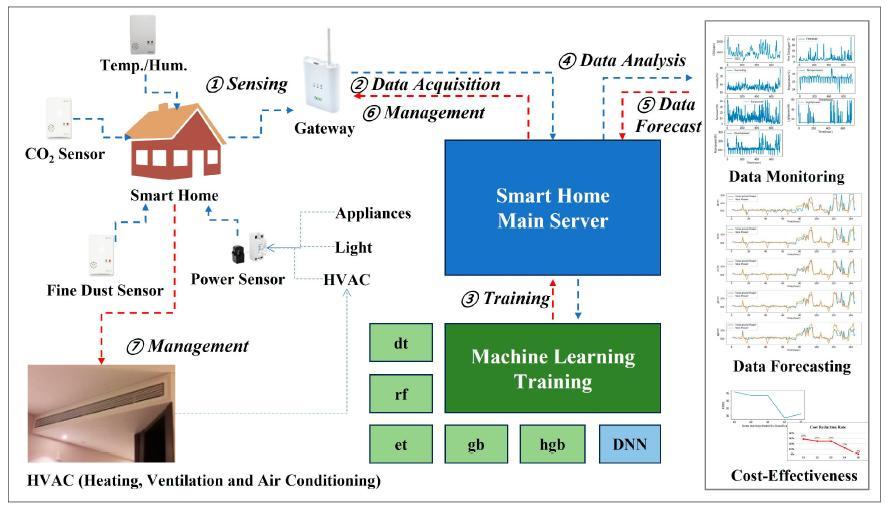
Forvisualization,theDashframeworkisusedtocreatean interactive dashboard that displays energy consumption trends,predictions,andanomalies.Thesystemisdesigned to be user-friendly and efficient, allowing users to easily monitorandanalyzeenergydata.
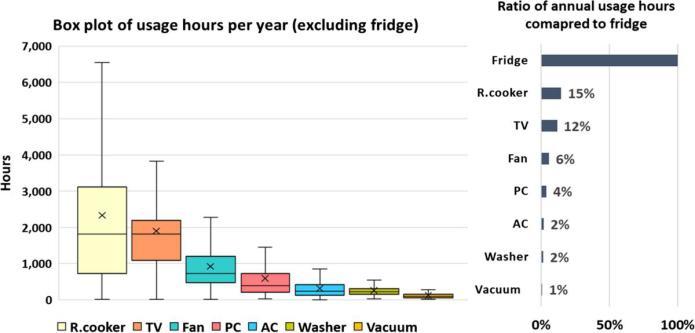
The results of the system demonstrate its effectiveness in analyzingandoptimizingenergyconsumption.Theenergy consumption analysis shows clear patterns and identifies peak usage periods, which helps in better planning and management.
The forecasting model produces predictions that closely match actual energy consumption values, indicating high accuracy.Thishelpsinplanningfutureenergyrequirements andavoidingwastage.
The anomaly detection system successfully identifies abnormal spikes and irregular patterns in energy usage. These detections help in identifying potential issues and improvingsystemreliability.Overall,theresultsconfirmthat the proposed system enhances efficiency and supports betterdecision-making.
Thispaperpresentsanintelligentenergyconsumptionand optimization dashboard that uses machine learning techniques for forecasting and anomaly detection. The systemprovidesacomprehensivesolutionformonitoring, analyzing,andoptimizingenergyusage.
6. IMPLEMENTATION
ThesystemisimplementedusingPythonduetoitspowerful libraries and ease of use. Libraries such as Pandas and NumPyareusedfordatapreprocessingandmanipulation. Scikit-learnisusedtoimplementmachinelearningmodels forforecastingandanomalydetection.
International Research Journal of Engineering and Technology (IRJET) e-ISSN: 2395-0056
Volume: 13 Issue: 04 | Apr 2026 www.irjet.net p-ISSN: 2395-0072
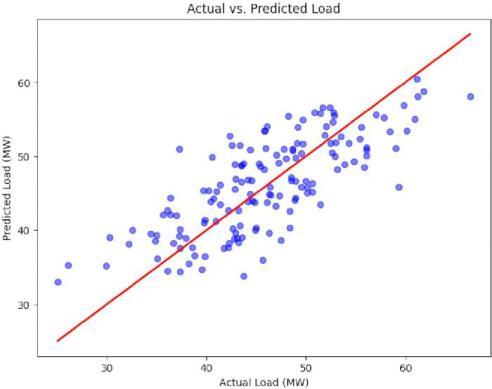
Fig.- 3.Actualvspredictedenergyconsumption
It improves efficiency, reduces energy wastage, and enhances decision-making capabilities. The integration of multiple functionalities into a single platform makes it a powerfultoolformodernenergymanagementsystems.
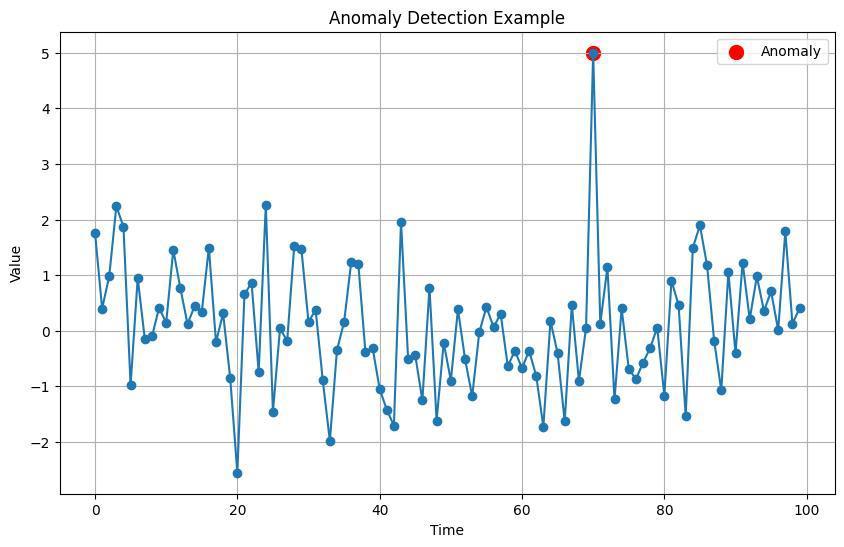
4.Detectedanomaliesinenergyconsumption
9. FUTURE WORK
Inthefuture,thesystemcanbeenhancedbyintegratingIoT devicesforreal-timedatacollectionandmonitoring.Amobile applicationcanalsobedevelopedtoprovideeasyaccessto thedashboard.Additionally,advanceddeeplearningmodels canbeusedtoimprovepredictionaccuracyandhandlemore complex data patterns. These improvements will further increasethesystem’seffectivenessandusability.
[1] M. Tayseer et al., “Cyber-resilient machine learning framework for load forecasting,” Scientific Reports, 2025.
[2] A.Zontaetal., “AI-basedanomalydetectioninenergy systems,” AppliedEnergy,2021.
[3] M.Mittaletal., “Machinelearningforenergyanomaly detection,” Energies,2021.
[4] M. T. Quasim et al., “IoT-based energy monitoring system,” JournalofCloudComputing,2023.
[5] “Predictive analysis of energy consumption,” IEEE Conference,2023.
[6] “Anomaly detection using deep learning,” IEEE Conference,2021.