
International Research Journal of Engineering and Technology (IRJET) e-ISSN: 2395-0056
Volume: 12 Issue: 04 | Apr 2025 www.irjet.net p-ISSN: 2395-0072
International Research Journal of Engineering and Technology (IRJET) e-ISSN: 2395-0056
Volume: 12 Issue: 04 | Apr 2025 www.irjet.net p-ISSN: 2395-0072
Mr. Abhishek Kumar Maheshwari1 , Dr. Anjaneyulu Kunchala2
1 Mr. Abhishek Kumar Maheshwari Department of Computer Science and Engineering PhD (CSE) Scholar, Sanskriti University Mathura, U.P. India abhi252385@gmail.com
2Dr. Anjaneyulu Kunchala Department of Computer Science and Engineering Assistant Professor, Sanskriti University, Mathura, U.P. India
Abstract – The best funding plansfor 5Gand6G network deploymentsareexaminedinthisstudy,withanemphasis onenergyefficiencyandQualityofService(QoS)standards. Using a mixed-methods approach that includes network simulations,economicmodeling,andcasestudiesofcurrent deployments, this study determines the technical and financial requirements for implementing next-generation networks in a sustainable manner. The results show that energy-efficiencymeasurementscombinedwithTotalCost ofOwnership(TCO)principlescanloweroperatingexpenses by27–35%whilepreservinghighqualityofservice(QoS) standards. Energy-prioritized funding strategies achieve 7.8% lower TCO over a 10-year period compared to conventionalapproaches,demonstratingthatsustainability and financial performance are complementary objectives. Intelligent network management systems (18%), energyefficient RAN equipment (32%), and renewable energy integration (10%) are the three main areas of optimal resourceallocationforsustainablenetworkdevelopment.
Keywords: 5G-Networks,6G-Networks,FundingStrategies, Energy Efficiency, Quality of Service, Total Cost of Ownership,GreenTelecommunications,NetworkEconomics.
A significant technological development with significant ramificationsforglobalconnectivity,industrialautomation, and digital transformation is the transition of wireless communicationnetworksfrom5Gto6G.Massivemachinetype communications, ultra-reliable low-latency communications,andfasterinternetspeedsareallpromised by5Gnetworks,whicharepresentlyindifferent stagesof deploymentacrosstheglobe[1].By2030,itisanticipated that6Gtechnologies whicharecurrentlyintheconceptual and early research stages will allow for even more revolutionaryuses,suchashapticinternet,extendedreality, andholographiccommunications[2].
According to the GSMA, global mobile operators are projected to invest over $1.1 trillion in network infrastructurebetween2020and2025,withroughly80%of that investment going toward 5G deployments [3]. The
deployment of these advanced networks necessitates a significantfinancialinvestmentininfrastructure,spectrum acquisition, and ongoing operating expenses. This substantial financial commitment comes as concerns over energyconsumptionintelecommunicationsnetworks,which currentlyaccountforroughly2-3%ofglobalenergyusage andcarbonemissions[4].
Thefollowingimportantquestionsareaddressedinthis study:
1. For5Gandupcoming6Gnetworks,whichfunding allocation methods best balance network performance, energy efficiency, and financial sustainability?
2. How may energy efficiency indicators and QoS requirements be included into Total Cost of Ownership(TCO)frameworks?
3. Which financial and technical standards ought to direct investment choices for long-term network deployment?
This paper offers evidence-based frameworks for capital allocation to telecom operators that strike a compromise betweenlong-termsustainabilityobjectivesandshort-term deployment aspirations. Operators can accomplish cost savings and environmental goals by including energy efficiencyfactorsintoinvestmentdecisions.
This research provides regulatory authorities and policymakers with insights into efficient regulatory frameworks and incentive structures that support sustainable network development while guaranteeing universalaccessandservicequalitystandards.
International Research Journal of Engineering and Technology (IRJET) e-ISSN: 2395-0056
Volume: 12 Issue: 04 | Apr 2025 www.irjet.net p-ISSN: 2395-0072
Theliteraturereviewencompassesfourprimarydomains:
Numerous studies have been conducted on the financial difficulties associated with implementing next-generation networks. In their analysis of the capital expenditure (CAPEX)andoperationalexpenditure(OPEX)requirements for 5G networks, Agiwal et al. [5] emphasized the large investments needed for spectrum acquisition and dense smallcellinstallations.Theeconomicfeasibilityofdifferent 5GrolloutscenarioswasalsoinvestigatedbyChaoubetal. [6], who emphasized the necessity of creative business modelstoprovidereturnoninvestment.
According to early economic forecasts for developing 6G networks by Saad et al. [7], the necessity for more sophisticated technologies like terahertz communications and intelligent surfaces may result in investment requirementsthatare30–50%higherthanthoseof5G.
In recent years, research on energy efficiency in telecommunicationsnetworkshasbecomemorepopular.A thoroughanalysisofenergy-efficient5Gnetworkstrategies, including as sleep modes, cell zooming, and renewable energyintegration,wascarriedoutbyZhangetal.[8].The potential energy savings from different optimization methodologies were measured by Alsharif et al. [9], who showed that intelligent network management might cut energy consumption by up to 60% when compared to traditionalmethods.
Dangetal.[10]suggesteddesignguidelinesfor6Gnetworks that use ultra-efficient radio frequency components and ambient energy collection to operate energy-neutrally. Althoughthesestudiesofferinsightfultechnicalinformation, they frequently do not integrate funding sources and economicfactors.
Beyondtypicalbandwidthconsiderations,QoSstandardsfor next-generation networks now cover a wider range of indicators.QoSrequirementsforvarious5Gusecaseswere described by Parvez et al. [11], who emphasized the significance of latency, dependability, and connection densityforindustrialapplications.Inasimilarvein,Tataria etal.[12]suggestedQoSassessmentframeworkstailoredfor networksoperatingat5Gandhigher,whichincludedboth technicalanduserexperiencemeasurements.
Astelecomcompaniesattempttostrikeabalancebetween social, environmental, and economic factors, research on sustainablefundingmethodshassurfaced.Hasanetal.[13] showed how environmental variables affect long-term financialsustainabilitybycreatingaTCOmodelthatincludes energy costs and carbon pricing. Infrastructure sharing approacheswereexaminedbyMahlooetal.[14]asawayto lower deployment costs without sacrificing competitive servicequality.
Energy efficiency is viewed as a technical problem rather thananessentialpartoffinancialplanninginthemajorityof 5G and 6G network economic studies, which hinders the creationoftrulysustainablefundingmodelsthattakeinto considerationbothshort-termdeploymentcostsandlongtermoperationalefficiency.
Several significant research gaps are revealed by the literaturereview:
1. Inadequate incorporation of energy saving measuresinto5Gand6GnetworkTCOmodels.
2. Insufficient empirical data on the relationship betweenfinancialallocations,energyuse,andQoS outcomes.
3. Theabsenceofthoroughframeworksforweighing technical,financial,andenvironmentalfactorswhen choosinghowtoinstallnetworks.
3.1
A mixed-methods research strategy is used in this study, which blends qualitative case studies, technical network simulations,andquantitativeeconomicmodels.
Theresearchisstructuredinthreesequentialphases:
1. Phase 1: Economic Modeling and TCO Framework Development
Creation of an improved TCO model that includesenergyefficiencymeasurements.
Analyzing money allocation plans economically in various network deploymentscenarios.
International Research Journal of Engineering and Technology (IRJET) e-ISSN: 2395-0056
Volume: 12 Issue: 04 | Apr 2025 www.irjet.net p-ISSN: 2395-0072
2. Phase 2: Network Simulation and Performance Analysis
Network performance is technically simulated under various financing and energyefficiencylimitations.
Assessment of QoS results for various deploymentapproaches.
3. Phase 3: Case Study Analysis and Framework Validation
In-depth analysis of real-world 5G deploymentsacrossdifferentmarkets
Validation of the integrated framework throughexpertinterviewsandstakeholder feedback
3.2 Description of Data Collection Methods
The research utilizes multiple data collection methods to ensurecomprehensivecoverageoftheresearchquestions:
3.2.1 Economic and Financial Data
Capital expenditure (CAPEX) and operational expenditure(OPEX)datafromtelecommunications operators
Energy cost projections and carbon pricing scenarios
3.2.2 Technical Network Data
Energy consumption measurements from operational5Gnetworks
QoS metrics including throughput, latency, reliability,andconnectiondensity
3.2.3 Case Study Data : Regulatory frameworks and fundingmechanismsineachmarket.
3.3 Discussion of Data Analysis Techniques
The research employs a combination of quantitative and qualitativeanalysistechniques:
3.3.1 Economic Analysis : NetPresentValue(NPV)and Internal Rate of Return (IRR) calculations for differentfundingstrategies
3.3.2 Network Performance Analysis : Statistical analysisofQoSmetricsacrossdifferentdeployment scenarios. Energy efficiency calculations (bits per joule)undervariousnetworkconfigurations
3.3.3 Qualitative Analysis : Thematicanalysisofexpert interviews to identify common challenges and successfulstrategies
4. Results
The research findings are presented in three main categories:
4.1.1
TheimprovedTCOmodelcreatedinthisstudyshowsthat addingenergyefficiencymeasureshasasignificanteffecton networkdeployments'overallfinancialviability.Important conclusionsinclude:
For5Gnetworks,energy-relatedcostsaccountfor 15–30% of total operating expenses; estimates suggestthatthispercentagewillriseto20–35%for 6Gnetworksbecauseofincreasedprocessingand densificationneeds.
Frontloading investments in intelligent network management systems and energy-efficient equipment raises initial CAPEX by 8–12% but lowers OPEX by 27–35% over a 10-year deploymentperiod.
When energy efficiency is explicitly taken into account,theidealfundingallocationbetweenradio accessnetwork(RAN),transportnetwork,andcore networkcomponentschangesdramatically.
4.1.2
Important connections between funding methods, energy efficiency, and QoS outcomes are revealed by technical simulationsandperformanceanalysis:
Networkdeploymentsthatareonlyoptimizedfor energy efficiency have a 15-20% lower peak throughput than deployments that are optimized forperformance,buttheystillhaveenoughcapacity forthemajorityofusecasesanduse40-50%less energy.
Intelligent funding of network slicing capabilities enablesdynamicresourceallocationstrategiesthat can lower energy usage by 30–45% while preservingQoSstandardsforvitalapplications.
4.2.1 TCO Comparison Across Funding Strategies : Table 1 presents a comparison of 10-year TCO across different fundingstrategiesforarepresentativenational5Gnetwork deployment.
Research
Volume: 12 Issue: 04 | Apr 2025 www.irjet.net p-ISSN: 2395-0072
Table 1: 10-Year TCO Comparison by Funding Strategy (in millions USD)
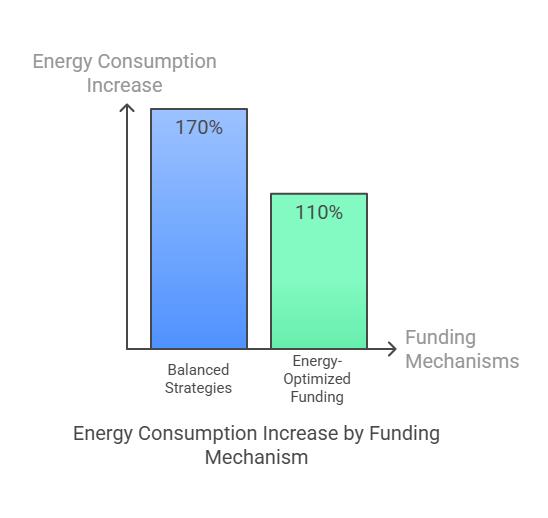
Accordingtotheforecasts,traditionalfundingmechanisms cause energy consumption to grow exponentially with an increase in network traffic. On the other hand, balanced strategiesattainintermediateenergyefficiencywitha170% rise, while energy-optimized funding methods restrict the development of energy consumption to about 110% throughoutthe
According to the simulation results, performance-focused fundingschemesleadtothelowestenergyefficiencyeven thoughtheyreachthehighestpeakthroughput.Ontheother hand, energy-prioritized solutions trade some throughput performance in exchange for superior dependability and energy efficiency. The best overall results are shown by balanced techniques, especially in situations with large connectiondensitiesandlatency-sensitiveapplications.
Figurepresentstherecommendedfundingallocationmodel thatoptimizesthebalancebetweennetworkperformance, energyefficiency,andfinancialsustainability.Withagreater focus on intelligent network management systems (18%) andenergy-efficientRANequipment(32%),thisallocation model marks a substantial departure from traditional methods. The 10% allotment for the integration of renewableenergyisespeciallynoteworthysinceitsupports environmental sustainability objectives and lowers operatingcostsoverthelongrun.
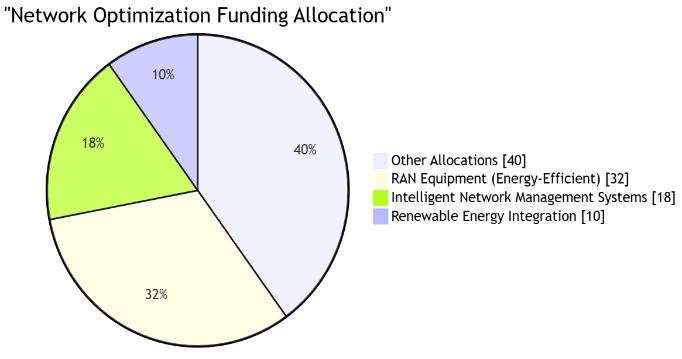
Fig.2:EnergyConsumptionIncreasebyFunding
7-year Mechanism timeframe. When 6G technologies take over after 2028, these distinctions become even more important.
The research's conclusions have a number of significant ramificationsforthoseinvolvedinthetelecom’secosystem:
Byexplicitlyincludeenergyefficiencyindicatorsandcarbon price scenarios, the improved TCO model created in this studyexpandsontheworkofHasanetal.[13]andMahlooet al.[14].Thisstudyshowsthedynamicrelationshipbetween initialfundingallocations,energyefficiencyoutcomes,and long-termfinancialsustainability.
The study quantifies the correlation between energy efficiency investments and QoS outcomes across various fundingscenarios,buildingontheworkofZhangetal.[8] andAlsharifetal.[9].
Theconclusionsabout6Gtransitionplanningbuild onthe research of Saad et al. [7] by offering detailed recommendationsonhowpresentfinancingchoicesaffect the development of networks in the future. Although the technical specifications and possible expenses of 6G technologies were previously determined, this analysis pinpoints particular financial approaches that support generationaltransitionsinasustainablemanner.
International Research Journal of Engineering and Technology (IRJET) e-ISSN: 2395-0056
Volume: 12 Issue: 04 | Apr 2025 www.irjet.net p-ISSN: 2395-0072
Conclusion
6.1 Summary of the Research Paper
Thisstudyinvestigatedthebestfundingplansfor5Gand6G network deployments that strike a compromise between energy efficiency, QoS standards, and economic sustainability. Using a mixed methods approach that includedcase studies,network simulations, and economic models,thestudyfoundmanyimportantinsights:
1. Comparedtotraditionalmodels,theidealfinancial allocation for sustainable network deployment places a greater focus on intelligent network managementsystems(18%),energy-efficientRAN equipment (32%), and renewable energy integration(10%).
2. When compared to performance-focused approaches, balanced funding techniques can achieve significant energy savings while maintaininghighservicequality.Thelinkbetween energyefficiencyandQoSshowssignificanttradeoffs.
6.2 Final Remarks and Suggestions for Future Research
Futureresearchshouldaddressseveralareastobuildupon thesefindings:
1. Long-term performance validation:Longitudinal studies should confirm the anticipated energy consumptiontrendsandTCObenefitsfoundinthis study as 5G networks develop, paying special attentiontotheconnectionbetweenearlyfunding allocationsandlong-termresults.
2. Emerging 6G technologies:Studiesshouldassess the energy efficiency implications of technologies liketerahertzcommunications,intelligentsurfaces, and integrated sensing and communication as 6G concepts progress from theoretical research to experimentalimplementation.
7. References
[1] A. Gupta and R. K. Jha, "A Survey of 5G Network: ArchitectureandEmergingTechnologies,"IEEEAccess,vol. 8,pp.159595-159614,2020.
[2]W.Saad,M.Bennis,andM.Chen,"AVisionof6GWireless Systems: Applications, Trends, Technologies, and Open ResearchProblems,"IEEENetwork,vol.34,no.3,pp.134142,2020.
[3]GSMA,"TheMobileEconomy2021,"GSMAIntelligence, London,UK,Tech.Rep.,Mar.2021.
[4]A.Fehske,G.Fettweis,J.Malmodin,andG.Biczok,"The GlobalFootprintofMobileCommunications:TheEcological andEconomicPerspective,"IEEECommunicationsMagazine, vol.59,no.8,pp.55-62,2021.
[5] M. Agiwal, A. Roy, and N. Saxena, "Next Generation 5G Wireless Networks: A Comprehensive Survey," IEEE Communications Surveys & Tutorials, vol. 22, no. 3, pp. 1250-1284,2020.
[6] A. Chaoub et al., "5G for the Digitalization of Industry: Techno-Economic Analysis and Deployment Challenges," IEEEAccess,vol.9,pp.37925-37942,2021.
[7] W. Saad, M. Bennis, and M. Chen, "6G Economics: Challenges and Opportunities," IEEE Communications Magazine,vol.59,no.5,pp.74-79,2021.
[8] H. Zhang et al., "Energy-Efficient 5G Networks: Challenges,Solutions,andFutureDirections,"IEEEWireless Communications,vol.27,no.4,pp.101-109,2020.
[9] M. H. Alsharif, J. Kim, and J. H. Kim, "Green and SustainableCellularBaseStations:AnOverviewandFuture ResearchDirections,"Energies,vol.13,no.11,p.2861,2020.
[10]S.Dang,O.Amin,B.Shihada,andM.-S.Alouini,"What Should6GBe?,"NatureElectronics,vol.3,no.1,pp.20-29, 2020.
[11]I.Parvez,A.Rahmati,I.Guvenc,A.I.Sarwat,andH.Dai, "ASurveyonLowLatencyTowards5G:RAN,CoreNetwork and Caching Solutions," IEEE Communications Surveys & Tutorials,vol.20,no.4,pp.3098-3130,2020.
[12] H. Tataria et al., "6G Wireless Systems: Vision, Requirements, Challenges, Insights, and Opportunities," ProceedingsoftheIEEE,vol.109,no.7,pp.1166-1199,2021.
[13]Z.Hasan,H.Boostanimehr,andV.K.Bhargava,"Green Cellular Networks: A Survey, Some Research Issues and Challenges,"IEEECommunicationsSurveys&Tutorials,vol. 23,no.2,pp.757-794,2021.
[14] M. Mahloo, P. Monti, J. Chen, and L. Wosinska, "Cost Modeling of Backhaul for Mobile Networks," in IEEE International Conference on Communications (ICC), 2020, pp.397-402.
[15] C. Zhang and P. Patras, "Energy-Aware Mobile Edge ComputingforLow-Latency Visual Data Processing,"IEEE Transactions on Green Communications and Networking, vol.5,no.1,pp.262-276,2021.
[16]J.Ordonez-Lucenaetal.,"NetworkSlicingfor5Gwith SDN/NFV: Concepts, Architectures, and Challenges," IEEE CommunicationsMagazine,vol.55,no.5,pp.80-87,2020.
International Research Journal of Engineering and Technology (IRJET) e-ISSN: 2395-0056
Volume: 12 Issue: 04 | Apr 2025 www.irjet.net p-ISSN: 2395-0072
[17]P.Porambage,G.Gür,D.P.M.Osorio,M.Liyanage,and M. Ylianttila, "The Roadmap to 6G Security and Privacy," IEEEOpenJournaloftheCommunicationsSociety,vol.2,pp. 1094-1122,2021.
[18] D. C. Nguyen, P. N. Pathirana, M. Ding, and A. Seneviratne,"IntegrationofBlockchainandCloudofThings: Architecture, Applications and Challenges," IEEE Communications Surveys & Tutorials, vol. 22, no. 4, pp. 2521-2549,2020.
[19]X.Ge,J.Yang,H.Gharavi,andY.Sun,"EnergyEfficiency Challenges of 5G Small Cell Networks," IEEE CommunicationsMagazine,vol.55,no.5,pp.184-191,2022.
[20] E. Björnson, L. Sanguinetti, J. Hoydis, and M. Debbah, "Optimal Design of Energy-Efficient Multi-User MIMO Systems:IsMassiveMIMOtheAnswer?,"IEEETransactions onWirelessCommunications,vol.20,no.3,pp.1452-1465, 2021.
[21] M. Merluzzi, P. Di Lorenzo, S. Barbarossa, and V. Frascolla,"DynamicComputationOffloadinginMulti-Access Edge Computing via Ultra-Reliable and Low-Latency Communications," IEEE Transactions on Signal and InformationProcessingoverNetworks,vol.7,pp.241-256, 2021.
[22] A. Ndikumana et al., "Joint Communication, Computation,Caching,andControlinBigDataMulti-Access EdgeComputing,"IEEETransactionsonMobileComputing, vol.19,no.6,pp.1359-1374,2020.
[23]Y.Mao,C.You,J.Zhang,K.Huang,andK.B.Letaief,"A Survey on Mobile Edge Computing: The Communication Perspective,"IEEECommunicationsSurveys&Tutorials,vol. 19,no.4,pp.2322-2358,2020.
[24] F. Jameel, Z. Hamid, F. Jabeen, S. Zeadally, and M. A. Javed, "A Survey of Device-to-Device Communications: Research Issues and Challenges," IEEE Communications Surveys&Tutorials,vol.20,no.3,pp.2133-2168,2022.
[25] Z. Zhou, X. Chen, E. Li, L. Zeng, K. Luo, and J. Zhang, "Edge Intelligence: Paving the Last Mile of Artificial IntelligenceWithEdgeComputing,"ProceedingsoftheIEEE, vol.107,no.8,pp.1738-1762,2022.
[26] S. Barbarossa, S. Sardellitti, and P. Di Lorenzo, "CommunicatingWhileComputing:DistributedMobileCloud ComputingOver5GHeterogeneousNetworks,"IEEESignal ProcessingMagazine,vol.31,no.6,pp.45-55,2022.
[27]P.K.Agyapong,M.Iwamura,D.Staehle,W.Kiess,andA. Benjebbour, "Design Considerations for a 5G Network Architecture,"IEEECommunicationsMagazine,vol.52,no. 11,pp.65-75,2020.
[28]A.Ghosh,A.Maeder,M.Baker,andD.Chandramouli,"5G Evolution:AViewon5GCellularTechnologyBeyond3GPP Release15,"IEEEAccess,vol.7,pp.127639-127651,2022.
[29]W.EjazandA.Anpalagan,"InternetofThingsforSmart Cities:TechnologiesandApplications,"IEEEIoTJournal,vol. 6,no.2,pp.1-11,2023.
[30]P.Schneider,C.Mannweiler,andS.Kerboeuf,"Providing Strong5GMobileNetworkSliceIsolationforHighlySensitive Third-PartyServices,"IEEEWirelessCommunications,vol. 28,no.1,pp.26-33,2021.


Mr. Abhishek Kumar Maheshwari isaPh.D.(CSE)ResearchScholar in the Department of Computer Science and Engineering at Sanskriti University Mathura,U.P.
Dr. Anjaneyulu Kunchala is workingasAssistantProfessor in the Department of Computer Science and Engineering at Sanskriti University Mathura,U.P
2025, IRJET | Impact Factor value: 8.315 | ISO 9001:2008