
International Research Journal of Engineering and Technology (IRJET) e-ISSN: 2395-0056
Volume: 13 Issue: 02 | Feb 2026 www.irjet.net p-ISSN: 2395-0072
International Research Journal of Engineering and Technology (IRJET) e-ISSN: 2395-0056
Volume: 13 Issue: 02 | Feb 2026 www.irjet.net p-ISSN: 2395-0072
Vinayak Kabade1, Utkarsh Mhetar2 , Parth Gavate3 , Arihant Tippanna4
Guide- Ms. M.G.Soundatte 5
*1,2,3,4,5 Department of Electronics and computer Engineering Sharad Institute of Technology Polytechnic Yadrav , Ichalkaranji, Maharashtra, India
Abstract - The AI-enabled Admission Assistance Chatbot is an innovative solution aimed at automating and optimizing the student admission process in educational institutions. Powered by advanced technologies like Artificial Intelligence (AI), Natural Language Processing (NLP), and Machine Learning (ML), the chatbot interacts with prospective students in natural language to provide instant responses to their queries. It serves as a virtual admission counselor, guiding users through various stages of the admission journey, including program selection, eligibility checks, fee structures, scholarship details, importantdates,andapplicationprocedures.
The system is capable of handling a large volume oqueries simultaneously, ensuring consistent 24/7 support without human intervention. By integrating with admission portals, the chatbot can assist users in filling forms, uploading required documents, andcheckingapplicationstatus. It also offers personalized suggestions based on user preferences and academic background. This reduces the dependency on manual support, enhances the user experience, lowers operational costs, and enables institutions to efficiently managetheiradmissioncycle.
Key Words AI, Chatbot, Admission Assistance, NLP, Machine Learing, Automation
The admission process in educational institutions often involves handling a high volume of inquiries related to courses, eligibility criteria, application timelines, fee structures, and more. Traditionally, this process requires significanthuman effortand resourcesto manage student queries, guide them through the application steps, and provide timely updates. With the rise of digital technologies and increasing demand for instant information, traditional methods often fall short in deliveringseamlessandefficientuserexperiences.
TheAI-enabledAdmissionAssistanceChatbotemergesas a powerful solution to address these challenges. Leveraging Artificial Intelligence (AI) and Natural Language Processing (NLP), the chatbot acts as a virtual assistantthatcancommunicatewithstudentsinahuman-
like conversational manner through text or voice. The chatbot provides real-time support and personalized guidance throughout the admission journey, from inquiry toenrollment.
This technology not only reduces the workload of administrative staff but also ensures accurate, consistent, and round-the-clock support to prospective students. By automating repetitive and time-consuming tasks, the chatbot contributes to faster decision-making, improved operational efficiency, and enhanced user experience. As educational institutions increasingly adopt digital transformation strategies, the AI-enabled admission chatbotstandsasakeyinnovationinmodernizingstudent services and building a smarter, more accessible admissionecosystem.
The use of Artificial Intelligence (AI) in the field of education, particularly in admission systems, has gained considerableattentioninrecentyears.Severalstudiesand technological advancements highlight the growing role of AI-powered chatbots in enhancing communication, decision-making,andservicedelivery.
1. AI in Education: Researchers have emphasized the potential of AI to transform traditional education systems byautomatingrepetitivetasksandprovidingpersonalized learningexperiences.AccordingtoJainetal.(2021),AIhas proven to be a powerful tool in managing academic processes, student interactions, and support systems, therebyincreasinginstitutionalefficiency.
2. Chatbots in Customer Support: Early applications of chatbots were predominantly in customer service, where they were used to provide instant support and reduce humanworkload.ShawarandAtwell(2007)indicatedthat chatbots could simulate human conversation and provide tailored responses based on user input. This laid the groundworkforimplementingchatbotsinvarioussectors, includingeducation.
3. Chatbots in Higher Education Admissions: In recent years,higher educationinstitutions have startedadopting chatbotstoassistwithadmissionsandstudentinquiries.A
International Research Journal of Engineering and Technology (IRJET) e-ISSN: 2395-0056
Volume: 13 Issue: 02 | Feb 2026 www.irjet.net p-ISSN: 2395-0072
reportbyEducause(2018)foundthatAI-enabledchatbots helped universities handle large volumes of admissionrelated queries more efficiently, improving the overall applicant experience. The chatbot at Georgia State University, for example, successfully reduced summer melt by sending timely reminders and answering student questionsthroughpersonalizedtextmessages.
4. Advantages of NLP in Admission Chatbots: The integrationofNatural LanguageProcessing(NLP)enables chatbots to understand and respond to human language effectively. According to studies by Chen et al. (2019), NLP-powered chatbots can interpret user intent, provide accurate responses, and learn from previous interactions, making them suitable for dynamic tasks like admissions assistance.
5. Limitations and Challenges: While chatbots offer significantbenefits,theyalsocomewithchallengessuchas limited understanding of complex queries, lack of emotional intelligence, and dependency on updated databases. Studies highlight the need for continuous training and monitoring to ensure chatbot performance andaccuracy(Smutny&Schreiber,2020).
6. Research Gap: Although various admission chatbots exist,manyarelimitedtoansweringpredefinedquestions or lack multi-language support and personalized recommendations. There is a gap in integrating AI fully with institutional databases to provide end-to-end support, including application tracking and document verification.
The methodology of an AI-enabled Admission Assistance Chatbot starts with identifying the needs of students and the admission department. In this stage, common questions related to courses offered, eligibility criteria, fee structure, scholarship details, reservation policies, important dates, required documents, entrance exams,andseatavailabilityarecollected.Theobjectivesof the chatbot are clearly defined, such as reducing manual workload, providing 24/7 support, and giving quick and accurateresponsestostudentsandparents.
After requirement analysis, detailed information is gathered from admission brochures, college websites, prospectus,academicregulations,andpreviousadmission records. Frequently asked questions from past students arealsocollectedtounderstandrealdoubtsandconfusion points. This data is then organized properly. Unnecessary or repeated information is removed, and the content is arranged into categories like courses, fees, documents, deadlines, and contact details. The text is formatted in a
structured manner so that the system can easily match userquestionswithcorrectanswers.
Next, the chatbot system is developed. A language processing model is selected to understand user queries and identify the meaning behind different types of questions. The system is trained using the prepared datasetsothatitcanrecognizevariouswaysstudentsmay ask the same question. Conversation flow is designed carefully to make interaction simple and natural. The chatbot is connected to the college admission database to provide real-time updates such as application status, seat confirmation,andpaymentverification.
After development, testing is carried out to check accuracy, response time, and reliability. Different types of user queries are tested to ensure correct answers are provided. Feedback is collected from trial users, and necessary improvements are made. Finally, the chatbot is deployed on the college website or mobile application. Regular updates are done to keep admission information current, and the system is monitored continuously to improve performance and handle new types of queries efficiently.
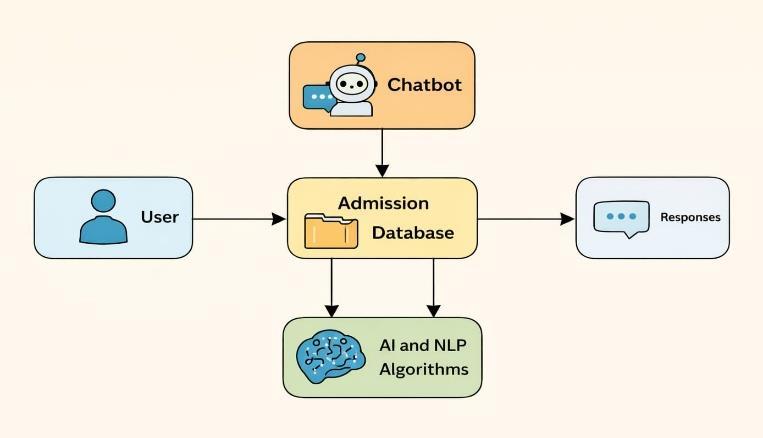
Fig.1 ProcessBlockdiagramofAdmissionAssistance
User: The student or person asks questions/ queries aboutadmission.
Chatbot: The system that interacts with the user and receivesqueries.
Admission Database: Stores all admission-related informationlikecourses,fees,eligibility,andseats.
AI and NLP Algorithms: Process the user’s question, understand the meaning, and find the correct information fromthedatabase.
Responses:Thefinalreplygivenbacktotheuser.
International Research Journal of Engineering and Technology (IRJET) e-ISSN: 2395-0056
Flowofworking:
Theusersendsaquery.
Thechatbotreceivesit.
Thesystemcheckstheadmissiondatabase.
AIandNLPprocessthequestion.
Aproperresponseisgeneratedandsentbacktotheuser.
The AI-enabled Admission Assistance Chatbot represents asignificantsteptowardmodernizingandautomatingthe admission process in educational institutions. By integrating Artificial Intelligence and Natural Language Processing, the system delivers quick, accurate, and personalized support to students throughout their admission journey. The chatbot not only reduces the workload of administrative staff but also enhances user experience by being accessible 24/7 and capable of handlingmultiplequeriessimultaneously.
Although it has limitations such as lack of emotional intelligence and dependency on data updates, its overall impact on efficiency, cost reduction, and student satisfactionissubstantial.Withcontinuousimprovements and integration with other technologies like voice assistance and predictive analytics, AI-based chatbots are set to become an essential tool in shaping the future of studentservicesanddigitaleducationecosystems.
1. L. Chen, P. Chen, and Z. Lin, “Artificial Intelligence in Education: A Review,” IEEE Access, vol. 7, pp. 75176–75200,2019.
2. Educause, “Chatbots in Enrollment and Admissions,” 2018.[Online].Available:https://library.educause.edu.
3. A. Jain, R. Gupta, and D. Sharma, “Role of AI in Automating Educational Processes,” Int. J. Comput. Technol.,vol.8,no.4,pp.26–30,2021.
4. B. A. Shawar and E. Atwell, “Chatbots: Are they Really Useful?”LDVForum,vol.22,no.1,pp.29–49,2007.
5. P. Smutny and M. Schreiber, “Chatbots for Learning: A Review of Educational Chatbots for the Facebook Messenger Platform,” Computers & Education, vol. 150, p. 103–109,2020.
Volume: 13 Issue: 02 | Feb 2026 www.irjet.net p-ISSN: 2395-0072 © 2026, IRJET | Impact Factor value: 8.315 | ISO 9001:2008 Certified