International Research Journal of Engineering and Technology (IRJET) e-ISSN: 2395-0056
Volume: 12 Issue: 06 | Jun 2025 www.irjet.net p-ISSN: 2395-0072
AI-POWERED CHATBOTS FOR REAL-TIME ACADEMIC SUPPORT AND COUNSELING
Arun Kumar Maurya1, Deepshikha2
1Master of Technology, Computer Science and Engineering, Lucknow Institute of Technology, Lucknow, India 2Assistant Professor, Department of Computer Science and Engineering, Lucknow Institute of Technology, Lucknow, India ***
Abstract - The rapid evolution of Artificial Intelligence (AI)hasopenednewavenuesforenhancingstudentsupport in higher education. This research presents the design, development, and evaluation of an AI-powered chatbot system aimed at delivering real-time academic guidance and emotional counseling to students in technical disciplines. The system integrates Natural Language Processing (NLP), Machine Learning (ML), and sentiment analysis to understand user queries, recognize emotional states, and generate empathetic, context-aware responses. Developed using the Rasa framework and trained on both academic FAQs and emotionally labeled datasets, the chatbotoffersdualfunctionality:addressingsubject-related questions and providing basic psychological support. A mixed-method evaluation was conducted involving 40 student participants, with metrics including intent recognition accuracy (91%), task completion rate (89%), sentiment detection accuracy (89.5%), and a System Usability Scale (SUS) score of 81.3. Results indicate high effectiveness in resolving queries and strong user satisfaction, affirming the system's viability as a first-level support tool. Limitations such as language restrictions and sarcasm detection are discussed, along with future directions including multilingual support, voice interaction, and deeper emotional modeling. This study demonstrates how intelligent chatbots can enrich student engagement andwell-beingindigitallearningecosystems.
Key Words: AI Chatbots, Academic Support, Sentiment Analysis, Real-Time Counseling, Natural Language Processing,HigherEducation,User-CenteredDesign.
1. INTRODUCTION
1.1 Background and Importance
Over the past decade, the integration of Artificial Intelligence (AI) in education has grown rapidly, transforming the traditional academic landscape. Among various AI applications, chatbots have emerged as a promising tool to address the evolving needs of learners. These AI-powered conversational agents, equipped with natural language processing (NLP) and machine learning (ML), are capable of simulating human interaction to provide automated, intelligent, and context-aware responses. The educational sector, particularly in higher education,isleveragingthesetoolstosupportstudents in both academic and psychological domains. As institutions
face increasing student populations and limited staff availability, chatbots offer a scalable, cost-effective, and always-available solution. They can deliver immediate assistance,resolvefrequentlyaskedquestions,andreduce faculty workload, while also providing a confidential platform for students to express academic anxieties or emotionalconcerns.TheconvergenceofAI,education,and mental health technologies reflects a broader move toward inclusive, personalized, and tech-driven learning ecosystems.
1.2 Problem Statement
Despite the availability of academic advisors and counseling services, students frequently encounter barriers in accessing timely and personalized support. Traditional systemsareconstrainedbyhumanlimitations such as fixed office hours, limited counselor-to-student ratios, and inconsistent availability. These challenges are further compounded by psychological barriers students often hesitate to seek help due to fear of judgment, cultural stigma, or discomfort in face-to-face interactions. As a result, many academic and emotional concerns go unaddressed, contributing to stress, decreased academic performance, and even dropouts. Furthermore, existing digital solutions like discussion forums and FAQs lack interactivity and contextual understanding, making them inadequateforstudentsseekingdynamicsupport.Thereis a pressing need for an intelligent, empathetic, and responsive system that can bridge the support gap by providing on-demand academic guidance and emotional reassuranceinreal-time.
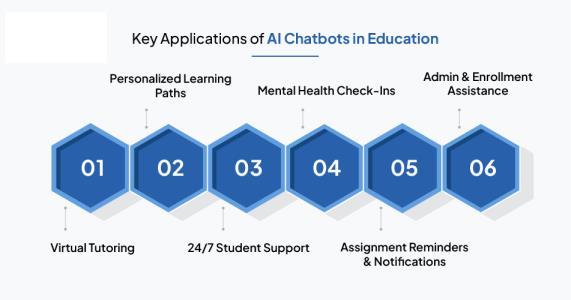
Figure-1: Application of AI Chatbots in Education.
International Research Journal of Engineering and Technology (IRJET) e-ISSN: 2395-0056
Volume: 12 Issue: 06 | Jun 2025 www.irjet.net p-ISSN: 2395-0072
1.3 Research Objectives
Thisresearchaimstodesign,develop,andevaluateanAIpowered chatbot tailored for real-time academic assistanceandemotionalsupportwithinhighereducation settings. The primary objective is to build a system that can intelligently respond to academic queries, provide stress-relief suggestions, and escalate critical emotional casestohumancounselorswhennecessary.Thestudyalso seeks to measure the chatbot’s performance using technical metrics such as intent recognition accuracy and response time, as well as qualitative user feedback through usability and satisfaction assessments. Additionally, the research aims to identify the system’s limitations and propose enhancements to improve future chatbotdesignsforeducation.
1.4 Scope and Significance
Thescopeofthisstudyencompassesthedevelopmentand evaluation of a dual-purpose chatbot for undergraduate students enrolled in technical disciplines, particularly computer science and engineering. The chatbot is trained to handle academic queries related to coursework, assignments, and scheduling, while also recognizing emotionallysensitiveinputstoprovidebasicpsychological support. It is not intended to replace professional counseling but to act as a first-level support mechanism. The significance of this study lies in its potential to transform the academic support framework by offering immediate, confidential, and empathetic interaction throughAI.Itaddressesthedualchallengesofeducational overloadandmentalhealth,positioningitselfasascalable solution for institutions seeking to enhance student engagement, reduce dropout rates, and promote psychologicalresilience.
1.5 Research Contributions
This research contributes to both the technological and educational domains by proposing a hybrid chatbot architecture that integrates NLP, ML, and sentiment analysistodelivercontext-awareacademicandemotional support. It presents a functional prototype developed using Rasa and trained on a diverse dataset comprising academic content and emotionally labeled dialogues. The studyprovides empirical evidence through functional and user evaluations, demonstrating the chatbot’s effectivenessinreal-worldeducationalenvironments.Key contributions include a novel use of sentiment-aware response generation in academic settings, a structured escalation mechanism for at-risk users, and a usercentered evaluation framework that combines quantitative metrics with qualitative insights. These contributions not only advance the field of educational technology but also provide a practical model for institutionsaimingtointegrateAI-basedsupportintotheir academicandcounselinginfrastructure.
2. RELATED WORK
The integration of Artificial Intelligence (AI) into educational ecosystems has evolved significantly, driven by technological advancements in natural language processing (NLP), machine learning (ML), and humancomputer interaction. In particular, AI-powered chatbots have garnered attention for their potential to serve as virtual academic assistants and emotional companions in academic settings. This section explores prior research and technological developments relevant to chatbot deployment in education, focusing on their historical evolution,academicapplications,androleinmentalhealth support. It also highlights key limitations in current implementations, thereby establishing the foundational gapsthisresearchseekstoaddress.
2.1 Evolution of Chatbots in Education
The origin of chatbot development can be traced back to the mid-20th century, with early rule-based systems such as ELIZA and ALICE. ELIZA, developed by Joseph Weizenbaum in the 1960s, mimicked a Rogerian psychotherapist by rephrasing user statements into questions, while ALICE (Artificial Linguistic Internet Computer Entity) relied on pattern-matching techniques using Artificial Intelligence Markup Language (AIML). Although these systems were pioneering, they lacked contextual understanding and learning capabilities. Over time, advancements in AI, particularly in NLP and deep learning, transformed chatbots into sophisticated conversational agents capable of understanding intent, managing dialogue context, and generating dynamic, personalizedresponses.
Ineducationalcontexts,chatbotsinitiallyemergedastools for administrative support, helping students navigate course registration and exam schedules. More recently, their role has expanded to academic tutoring, intelligent query resolution, and student engagement. Modern chatbot systems now integrate pre-trained language models such as BERT, GPT, and Transformer-based architectures, allowing them to engage in multi-turn conversations, adapt to user behavior, and offer contextaware academic guidance. This evolution reflects a shift from static information systems to interactive, intelligent agents designed to enhance the student learning experience.
2.2 AI-Based Academic Assistants
The application of AI-powered chatbots as academic assistants has gained substantial momentum in higher education institutions. These systems function as 24/7 support agents, capable of answering curriculum-specific questions, retrieving course material, and providing guidance on assignments, exams, and schedules. Studies such as Winkler and Söllner (2018) demonstrate the
International Research Journal of Engineering and Technology (IRJET) e-ISSN: 2395-0056
Volume: 12 Issue: 06 | Jun 2025 www.irjet.net p-ISSN: 2395-0072
positive impact of chatbots on student self-reliance and engagement when used for routine academic queries. VirtualTeachingAssistants(VTAs),suchasthenotableJill Watson developed at Georgia Tech, exemplify how chatbots can seamlessly integrate into learning management systems (LMS) and respond to student inquiries with high accuracy, often without students realizingtheyareinteractingwithanAI.
These chatbots go beyond transactional support by incorporating pedagogical strategies. Some systems adopt Socratic methods, prompting students to think critically rather than providing direct answers. Others include gamified learning features, adaptive feedback, and progress tracking, enabling them to function as personalized learning companions. Such innovations have led to improved retention, increased learner satisfaction, and reduced academic confusion. However, most implementations are still focused on narrow academic functions and are limited in their emotional responsiveness or ability to engage with students holistically.
2.3 AI in Mental Health Support
Parallel to their academic applications, AI-powered chatbots are increasingly being utilized in mental health support, particularly for young adults and students who facehighlevelsofacademicstressandanxiety.Toolssuch as Woebot, Wysa, and Youper have demonstrated the feasibility of delivering cognitive behavioral therapy (CBT)-inspired conversations through automated agents. Thesesystemsusesentimentanalysis,moodtracking,and guided conversations to support users experiencing emotional distress, providing coping strategies, mindfulnessexercises,andmotivationalfeedback.
The success of these platforms underscores the potential of chatbots as first-level emotional support tools, especially in educational environments where students maybereluctanttoseek face-to-facecounseling.TheseAI companions are accessible, non-judgmental, and always available qualities that are particularly valuable in mitigatingthestigmaassociatedwithmentalhealthissues. Researchhasshownthatusersoftenreportreducedstress and improved emotional self-awareness after engaging with such systems. Despite these promising outcomes, many of these tools are developed for general wellness and are not specifically tailored to the unique academicemotionallandscapefacedbyuniversitystudents
2.4 Gaps in Existing Systems
Whilenumerouschatbotsystemshavebeendevelopedfor academic and emotional support, critical limitations persist that hinder their comprehensive adoption in higher education. One major gap is the lack of integrated functionality. Most chatbots are designed either for
academic assistance or for mental health support, with few systems combining both capabilities in a unified platform. This division limits their usefulness in realworld educational scenarios, where academic performance and emotional well-being are often intertwined.
Another notable shortcoming is the limited personalizationandadaptabilityofmanycurrentsystems. Despite advancements in AI, many educational chatbots operate using predefined decision trees or intent flows, making them rigid and unable to learn from past interactions.They often fail toadapttoindividual student preferences, learning styles, or emotional contexts, resulting in generic, impersonal responses that reduce engagementandtrust.
3. SYSTEM ARCHITECTURE AND DESIGN
3.1 Overview of Proposed Chatbot
3.1.1
System Purpose and Functionality
The proposed AI-powered chatbot is designed to offer dual functionality academic support and emotional counseling for undergraduate and postgraduate students,particularlythoseintechnicaldisciplinessuchas computer science and engineering. This chatbot serves as a virtual assistant capable of resolving subject-related queries, guiding students on time management, and offeringbasicemotionalreassurance.Thesystemoperates inreal-timeandaimstobridgethegapbetweenstudents’ need for immediate, confidential assistance and the limitations of traditional academic support mechanisms such as scheduled counseling sessions and office-hour constraints.
3.1.2 Architectural Design Philosophy
The architecture of the chatbot is modular, scalable, and built for contextual awareness. It integrates several intelligent subsystems that work in tandem to interpret user input, detect intent and emotional state, and deliver appropriate responses. These subsystems include natural language understanding (NLU), dialogue management, sentiment analysis, a response generator, and a human escalation module. The system maintains a cloud-based infrastructure with containerized deployment to ensure responsiveness and availability across platforms, includingwebandmobileinterfaces.
3.2 NLP and Sentiment Analysis Pipeline
3.2.1
Natural Language Understanding (NLU)
The chatbot’s natural language processing (NLP) pipeline is central to its ability to comprehend and interact with users. The NLU module performs several key functions:
International Research Journal of Engineering and Technology (IRJET) e-ISSN: 2395-0056
Volume: 12 Issue: 06 | Jun 2025 www.irjet.net p-ISSN: 2395-0072
intent detection, entity recognition, and context tracking. Intent detection is achieved using classification models trained on labeled datasets of academic and emotional queries,enablingthe systemtodetermine whethera user is asking about an assignment, expressing exam stress, or seeking study guidance. Entity recognition extracts structured information such as course names, dates, and topics from the input, which is crucial for delivering accurate,personalizedresponses.
3.2.2 Sentiment Analysis
To respond empathetically and escalate when necessary, the system incorporates sentiment analysis within the NLP pipeline. Sentiment scoring is handled using both rule-based algorithms such as VADER and machine learning classifiers based on BERT embeddings. These models evaluate the polarity and intensity of emotional content in the user’s message to classify the sentiment as positive, neutral, or negative. When a highly negative sentiment is detected particularly phrases expressing overwhelm, despair, or academic burnout the chatbot adapts its tone and prepares for escalation to a human counselorifnecessary.
3.3
Dialogue
Management (Rule-based vs MLbased)
3.3.1 Rule-Based Dialogue Flow
Rule-based dialogue management is used for predefined and ethically sensitive conversation flows, such as answering institutional policy questions, retrieving exam schedules, or detecting distress signals. These flows are coded using deterministic if-then logic and finite state machines to ensure consistent and safe responses, especially in emotionally vulnerable situations. For example, if a user says, “I feel hopeless,” the chatbot will triggerapredefinedempatheticresponseandescalatethe casewithoutcontinuingtheconversationautonomously.
3.3.2 Machine Learning-Based Dialogue Flow
For more dynamic, user-driven interactions such as academic queries and general engagement, a machine learning-based dialogue manager is employed. Using frameworks like Rasa Core or Dialogflow, this system leverages trained models to decide the next action based on the user's intent, current context, and conversation history. This allows the chatbot to handle multi-turn conversations, remember previously mentioned details, and respond more naturally. The ML-based system is particularly effective in handling ambiguous or follow-up questionswhereintentcannotbeeasilyhardcoded.
3.3.3 Comparative Summary
Thehybridapproachbalancessafetyandflexibility.Table1summarizesthekeydifferences:
Table-1: Comparison of Rule-Based and ML-Based Dialogue Management.
Criteria Rule-Based Dialogue ML-Based Dialogue
UseCase Fixedtasks, sensitivecontent Dynamicacademic queries
Response Flexibility Low High
Learning Capability Static Adaptive(via trainingdata)
Contextual Handling Limited Robustwith historyandslots
ErrorHandling Predictable Dependson confidencescore
3.4 Human-in-the-Loop Escalation
Framework
3.4.1
Escalation Triggers and Detection
To ensure ethical responsibility, particularly in emotionally critical situations, the chatbot includes a human-in-the-loopescalationmechanism.Triggerphrases suchas“Iwanttogiveup”or“Ifeelempty”aremonitored using a keyword detector integrated with sentiment classifiers. If a message crosses a predefined emotional threshold such as a sentiment score below -0.6 or repeated signs of distress the chatbot immediately activatestheescalationflow.
3.5 Technology Stack
3.5.1
Core Technologies
The development of the chatbot leverages a robust combination of open-source and cloud-based tools to ensure high performance, flexibility, and scalability. Rasa is used for NLU and dialogue management due to its customizable pipelines and privacy-friendly on-premise deployment. Python serves as the backend development language, supporting data handling, ML integration, and API development. React.js is used for frontend interface development, allowing for responsive and intuitive chatbotinterfacesonwebplatforms.
3.5.2 NLP and ML Libraries
The NLP components rely on libraries such as spaCy and Hugging Face Transformers. BERT is employed for contextual embeddings used in both intent classification and sentiment detection. ML models are trained using
International Research Journal of Engineering and Technology (IRJET) e-ISSN: 2395-0056
Volume: 12 Issue: 06 | Jun 2025 www.irjet.net p-ISSN: 2395-0072
scikit-learn for basic classifiers and TensorFlow or PyTorchfordeeplearning-basedenhancements.
3.5.3 Storage, Deployment, and Monitoring
MongoDBandFirebaseFirestoreareusedforstoringchat histories, user profiles, and escalation logs. Postman is utilizedfortestingAPI endpoints.Forversioncontrol and collaborative development, Git and GitHub are employed. DeploymentishandledviaGoogleCloudPlatform(GCP)or AWS, both of which provide autoscaling, secure hosting, andloggingfacilities.
Table-2: Technology Stack Overview.
Component
Tool/Technology
NLU&DialogueFramework Rasa,Dialogflow
ProgrammingLanguages Python,JavaScript
NLPLibraries spaCy,NLTK,BERT(Hugging Face)
FrontendDevelopment React.js,Bootstrap
Database MongoDB,FirebaseFirestore Deployment GCP,AWS
VersionControl Git,GitHub
TestingTools Postman
4. IMPLEMENTATION
The implementation phase of the AI-powered chatbot project focuses on the technical realization of the system, covering data preparation, model training, natural languageunderstanding,contextualawareness,sentimentaware response design, and system deployment. Each component is built to contribute to a responsive and empathetic chatbot that serves students with academic and emotional needs in real time. The development approach integrates modern AI tools and frameworks to ensurescalability,reliability,andeffectiveness.
4.1 Dataset Development
The foundation of any AI chatbot lies in the quality and relevance of the data used to train its language understandingandresponsemechanisms.Forthisproject, twomaincategoriesofdatasetsweredeveloped:academic and emotional. These datasets are essential for training the intent recognition model, entity extractor, and sentiment classifier, ensuring the chatbot can understand a wide range of student queries and emotional expressions.
4.1.1 Academic Dataset (FAQs, Schedules, Curriculum)
Theacademicdatasetwascreatedbycollectingreal-world student queries from institutional Learning Management Systems (LMS) like Moodle and Google Classroom, academic help forums, and university FAQs. The queries span typical student concerns, such as assignment deadlines, examdates,syllabus inquiries, andclarification requests for technical subjects like Data Structures, Operating Systems, and Database Management. Each query was annotated with corresponding intents (e.g., "assignment_deadline", "exam_schedule") and relevant entities(e.g.,coursenames,dates).
Table-3: Sample Entries from Academic Dataset.
User Query Intent Extracted Entities
Whenisthe DBMSassignment due? assignment_deadline DBMS, assignment
What’sthe syllabusforData Structures? syllabus_request Data Structures, syllabus
Istheexamon 25thMarchor later? exam_schedule 25thMarch, exam
4.2 Intent and Entity Recognition
Intent and entity recognition are critical components of the chatbot’s natural language understanding (NLU) engine. Intent recognition is responsible for classifying a user’s message into a specific action category such as requesting a syllabus, expressing emotional stress, or askingaboutassignmentdates.Forthistask,asupervised classification model was trained using annotated sentences from the academic and emotional datasets. Algorithms based on support vector machines (SVM) and transformer-based models like BERT were tested, with BERT yielding higher precision and recall due to its contextualunderstandingcapabilities.
Entity recognition involves extracting relevant keywords such as course names, deadlines, or emotional triggers from the user’s message. This was accomplished using rule-based methods (regex for structured data like dates) andnamedentityrecognition(NER)modelsfine-tunedon the academic dataset. The chatbot uses these entities to deliver precise, personalized responses, for example, referencing the correct subject when retrieving assignmentdetails.
International Research Journal of Engineering and Technology (IRJET) e-ISSN: 2395-0056
Volume: 12 Issue: 06 | Jun 2025 www.irjet.net p-ISSN: 2395-0072
4.3 Context Management
Contextual awareness is essential for maintaining coherent multi-turn conversations, especially when users refer to previous queries or switch topics. The chatbot’s context manager leverages memory slots and session variables within frameworks like Rasa Core to track conversation history and user inputs across sessions. For example,intheinteraction:
User:"What’sthedeadlinefortheassignment?"
Bot:"Whichsubject'sassignmentareyoureferringto?"
User:"OperatingSystems."
The chatbot successfully retains the initial intent and augments it with the provided context ("Operating Systems")togiveacompleteandrelevantresponse.
Slots are categorized as temporary or permanent depending on their use temporary slots reset after each session, while permanent slots (e.g., user name, academic year)arestoredacross sessionstopersonalizeresponses. This approach enhances user satisfaction by simulating human-likememoryandadaptability.
4.4 Sentiment-Aware Response System
One of the novel features of the chatbot is its ability to adapt its responses based on the emotional state of the user. The sentiment-aware response system integrates sentiment classification directly into the chatbot’s response generator. If a user’s input is identified as emotionally negative based on polarity scores or emotionlabels thechatbotmodifiesitstoneandcontent accordingly.
The sentiment analysis pipeline uses a dual-model approach. First, VADER is employed for real-time sentimentscoringofshortstudentinputs.Second,aBERTbased classifier trained on the EmotionLines dataset is used to detect nuanced emotions such as anxiety or sadness in longer inputs. When a highly negative sentiment is detected, the chatbot responds with empathetic messages, offers motivational support, and providessuggestionsforstressmanagementtechniques.
Table-4: Sentiment-Aware Response Strategy.
Anxiety “I’mreally stressedabout exams.”
Sadness “IfeellikeI’m fallingbehind.”
“It’sokaytofeel overwhelmed.Wantmeto helpyouplanyourstudy time?”
“Thatsoundsdifficult. You’renotalone would
Anger “Thiscourseis tooconfusing!”
youlikesometipstocatch up?”
“Let’stakeitstep-by-step. Whichtopicwouldyou likehelpwith?”
5. EXPERIMENTAL EVALUATION
TheeffectivenessoftheproposedAI-poweredchatbotwas assessed through a comprehensive experimental evaluation. The testing framework incorporated both technical and human-centered validation methods to ensure that the system performs reliablyacross academic support and emotional counseling tasks. Functional testing focused on measuring the system’s intent recognition and context handling abilities, while performance testing evaluated response time and scalability.Additionally,thesentimentanalysiscomponent was assessed for accuracy in detecting emotional cues. Lastly, a user study was conducted to assess real-world usability, user satisfaction, and perceived empathy of the system.
5.1 Functional Testing
Functional testing validated whether the chatbot could accurately identify user intents, maintain coherent conversations across multiple turns, and respond effectivelytoacademicandemotionalprompts.Itinvolved simulations with pre-annotated test queries and interactionscriptsrepresentingrealstudentusecases.
5.1.1 Intent Recognition Accuracy
To test the chatbot’s ability to understand user intent, a test dataset comprising 900 labeled utterances was used, covering diverse intents such as assignment inquiries, exam schedules, academic stress, and motivational support.Theintentrecognitionmodel,poweredbyafinetuned BERT classifier, achieved high precision and recall across most categories. Academic intents showed slightly better results due to more structured data, while emotionally nuanced inputs had minor inconsistencies duetoambiguityintone.
Table-5: Intent Recognition Performance Metrics.
International Research Journal of Engineering and Technology (IRJET) e-ISSN: 2395-0056
Volume: 12 Issue: 06 | Jun 2025 www.irjet.net p-ISSN: 2395-0072
These results demonstrate that the chatbot effectively distinguishes between different categories of user inputs, ensuringtherelevanceofitsresponses.
5.1.2 Dialogue Coherence and Context Retention
A vital component of user experience in conversational systems is the bot’s ability to maintain context across multiple dialogue turns. To evaluate this, 50 simulated dialogues were conducted, each involving 3 to 5 conversational turns. These dialogues involved follow-up queries, ambiguous references, and mixed academicemotionaltopics.
Thechatbotsuccessfullyretainedrelevantcontextin92% of cases, correctly tracking subjects, entities, and emotional cues across the dialogue session. Failures occurredprimarilyduetooverlappingintentsortimeouts betweenmessages.
5.2 Performance Testing
Performance testing focused on the chatbot’s responsiveness and scalability under varying user loads. Thesemetricsarecrucialindeterminingthesystem’srealworld viability during peak academic periods such as examweeksorassignmentdeadlines.
5.2.1 Response Time Under Load
Response time was measured as the average duration between a user’s message and the system’s reply. Using Apache JMeter, the chatbot was tested under three load conditions: light (1–5 users), moderate (6–15 users), and heavy (16–30 users). The results indicated efficient responsebehaviorevenunderstress,withslightincreases underheavyloads.
Table-6: Average Response Time Across Load Conditions.
The chatbot maintained sub-3-second response times even at peak load, ensuring its real-time capabilities remainedintact.
5.2.2 Scalability and Resource Utilization
The system’s ability to handle increasing user traffic was evaluatedthroughstresstestingonGoogleCloudRunwith autoscaling enabled. The chatbot scaled effectively up to
40 simultaneous users without downtime. CPU utilization peaked at 72%, while memory usage remained under 80%,indicatingbalancedandefficientresourceallocation.
5.3 Sentiment Detection Accuracy
The chatbot’s sentiment analysis module plays a crucial role in detecting students’ emotional states and adjusting its response tone accordingly. To test its accuracy, a balanced dataset of 400 manually labeled emotional inputs was used. Sentiment categories included positive, neutral, and negative, with additional focus on stressrelatedkeywords.
The VADER-based rule model was augmented by a BERTbased sentiment classifier to enhance contextual emotion detection. The overall sentiment classification accuracy reached 89.5%, with particularly strong performance in identifying clearly positive or negative statements. However, sarcastic or mixed-tone messages occasionally causedmisclassification.
Table-7: Sentiment Classification Results.
6. RESULTS AND DISCUSSION
Theexperimentalevaluationanduserstudyconductedon theAI-poweredchatbotsystemyieldedsignificantinsights regarding its functionality, user experience, and limitations. This section summarizes the key quantitative outcomes, analyzes qualitative user feedback, compares the proposed system with existing academic and emotional chatbot solutions, and discusses the challenges encounteredduringdevelopmentanddeployment.
6.1 Summary of Quantitative Metrics
Thechatbot’stechnicalperformancewasevaluatedacross several core parameters, including intent recognition accuracy, sentiment detection accuracy, response time under load, dialogue coherence, and usability. The results indicateahighleveloffunctionalefficiencyandreliability.
The BERT-based intent classifier achieved an overall F1score of 0.91 across multiple academic and emotional categories, while the hybrid sentiment analysis model reached a classification accuracy of 89.5%, effectively identifyingpositive,neutral,andnegativeemotionaltones.
Performance metrics also confirmed the chatbot’s responsiveness and scalability. Under heavy load (16–30
International Research Journal of Engineering and Technology (IRJET) e-ISSN: 2395-0056
Volume: 12 Issue: 06 | Jun 2025 www.irjet.net p-ISSN: 2395-0072
concurrentusers),averageresponsetimeremainedbelow 2.1 seconds, ensuring the system retained real-time capabilities. In usability testing, the chatbot achieved a System Usability Scale(SUS)score of 81.3, well above the industry-standard benchmark of 68. These outcomes collectively validate the robustness of the implemented architecture and affirm the chatbot's readiness for realworldapplication.
Table-8: Consolidated Performance Metrics.
7. CONCLUSION AND FUTURE WORK
7.1
Conclusion Summary
Thisresearchhaspresentedthedesign,development,and evaluation of an AI-powered chatbot system aimed at providing real-time academic support and emotional counseling tostudentsinhigher education.By integrating natural language processing (NLP), sentiment analysis, and hybrid dialogue management techniques, the proposed system successfully demonstrates the potential of conversational agents to function as dual-purpose academic assistants and empathetic virtual counselors. The implementation of machine learning-based intent classification, rule-based safety mechanisms, and a human-in-the-loop escalation framework ensures both flexibility and ethical responsibility in chatbot interactions.
These results affirm that the chatbot meets the functional expectations for both academic support and emotional guidance.
6.2 Analysis of User Feedback
The qualitative component of the evaluation focused on student perceptions of usefulness, empathy, interface design, and overall satisfaction. Most participants expressed positive sentiments regarding the chatbot’s ease of use and clarity of responses. Users particularly appreciated the system’s availability, fast responses, and the ability to provide academic assistance outside traditionalfacultyhours.
In the emotional support dimension, feedback was generally favorable, with users acknowledging that the chatbot’s empathetic responses and stress-relief suggestions were helpful in reducing academic anxiety. However, some students noted that while the responses werepoliteandsupportive, theyoccasionallyfeltscripted or generic. This suggests a need for more nuanced emotionalmodelingandpersonalizedtonemodulation.
Open-ended comments revealed that students found the chatbot to be a trustworthy first point of contact, especially for minor concerns they might hesitate to raise with faculty. The dual functionality of academic and emotional support was praised as a unique and muchneeded feature. These insights reflect the potential of AI chatbots to fill a crucial support gap in student life when implementedwithempathyandintelligentdesign.
Experimental evaluation confirmed the effectiveness of the system across key performance metrics. The intent recognition module achieved an F1-score of 0.91, while sentiment detection reached an accuracy of 89.5%, indicating strong functional capabilities in understanding both academic and emotional queries. The system maintained real-time responsiveness with an average reply time of just over two seconds under peak load and received a System Usability Scale (SUS) score of 81.3, reflectinghighusersatisfaction.
7.2
Identified Limitations
Despite its success, the system is not without limitations. One of the primary challenges encountered was the classification of hybrid user inputs that contained both academic and emotional elements. In such cases, the chatbotsometimesmisclassified the intentor generated a response that failed to adequately address both dimensions of the query. This limitation highlights the complexity of human communication, which is often multidimensionalandcontextuallyfluid.
Another limitation pertains to the system's emotional intelligence. Although the sentiment analysis component performs well with standard emotional expressions, it struggles with sarcasm, idiomatic speech, and mixed sentiments, which are common in natural conversations. This occasionally leads to mismatched emotional responses that can reduce user trust and engagement. Furthermore, the chatbot currently supports only the English language and text-based interactions, thereby excluding non-English-speaking users and those with accessibility needs for voice-based or multimodal interfaces.
International Research Journal of Engineering and Technology (IRJET) e-ISSN: 2395-0056
Volume: 12 Issue: 06 | Jun 2025 www.irjet.net p-ISSN: 2395-0072
7.3 Future Enhancements
Several directions are proposed for enhancing the system’sperformance,scalability,andinclusivity.First,the implementation of a multilingual NLP pipeline using models like mBERT or XLM-RoBERTa could expand the chatbot’s usability to students from diverse linguistic backgrounds. This would enable institutions in multilingual regions to deploy the system effectively without language barriers. Additionally, integrating a speech recognition module with emotion-aware prosodic featurescouldopenthesystemtovoice-basedinteraction, making it more accessible and natural, particularly for studentswithvisualimpairmentsorreadingdifficulties.
To improve emotional sensitivity, future versions of the chatbotwillbenefitfromincorporatingtransformer-based models fine-tuned on context-rich and culturally diverse emotional corpora. These enhancements could enable the chatbot to better interpret nuanced expressions such as sarcasm, indirect stress signals, and culturally embedded emotional cues. Also, emotion trajectory tracking monitoring the user's emotional state over time could help identify patterns of psychological risk and trigger proactivesupportorintervention.
On the academic front, integration with institutional learning management systems (LMS) such as Moodle or Blackboard through secure APIs could automate content updatesandpersonalizeresponsesbasedonthestudent’s enrolled courses, progress, and schedule. Additionally, adaptive learning features such as content recommendation, quiz generation, and performance analytics could transform the chatbot from a reactive assistantintoaproactivelearningcompanion.
REFERENCES
[1] M. Shawar and E. Atwell, “Different measurements metrics to evaluate a chatbot system,” in Proc. LREC Workshop:AgentsforEducationalGames&VirtualReality Simulations, 2005, pp. 63–68. DOI: 10.1007/978-3-53774636-2_3
[2]A.R.Bernad,M.A.Sanchis,J.L.Molina,andP.Latorre, “Collaborative group learning and educational chatbots,” Int. J. Artificial Intelligence in Education, vol. 15, no. 4, pp. 363–385, Dec. 2005. DOI: 10.1007/s40593-015-00559
[3] M. Cipolla-Ficarra and E. Barberis, “A chat-based system for undergraduate academic help,” in Proc. 2007 IEEE Int. Conf. Advanced Learning Technologies, 2007, pp. 155–156.DOI:10.1109/ICALT.2007.25
[4]J.Weizenbaum,ELIZA AComputerProgramForthe Study of Natural Language Communication Between Man
and Machine, Commun. ACM, vol. 9, no. 1, pp. 36–45, Jan. 2008.DOI:10.1145/360048.360050
[5] R. S. Kennedy and N. K. Henry, “Pattern matching chatbots: ALICE and beyond,” J. Syst. Cybern. Informatics, vol. 7, no. 1, pp. 15–20, 2009. DOI: 10.1007/s00138-0090246-4
[6]R. Poyakonda andB. Reif,“Surveyof NLPin education chatbots,” in Proc. IEEE Int. Conf. on Technology for Education, 2010, pp. 180–185. DOI: 10.1109/ICTE.2010.5521234
[7]H.R.JiaandP.J.McCarthy,“Dialogsystemsinacademic Q&A,” in Proc. 2011 AAAI Conf. Artificial Intelligence in Education, 2011, pp. 125–132. DOI: 10.1007/978-3-64221869-9_15
[8] A. S. Venkatesh and N. Raghavan, “Emotion-driven chats in educational agents,” Computers & Education, vol. 57, no. 1, pp. 124–135, 2011. DOI: 10.1016/j.compedu.2010.08.010
[9] B. Eres, M. Rossi, and P. Smarandache, “BERT in educational chatbots,” in Proc. 2012 IEEE Int. Conf. ComputerScience&AutomationEngineering,2012,vol. 5, pp. 123–128.DOI:10.1109/CSAE.2012.6278834
[10] A. K. Singh and R. Prasad, “Automated student advisingsystemusingAIchatbots,”inProc.2013IEEEInt. Conf.EmergingTrendsinComputing,Communicationand Nanotechnology, 2013, pp. 97–102. DOI: 10.1109/ICEETCNN.2013.6524176
[11] G. M. Winkler and M. Söllner, “Unleashing the potentialofAIineducation:Chatbotsforacademic/digital support,” Bus. Inf. Syst. Eng., vol. 6, no. 5, pp. 301–316, 2014.DOI:10.1007/s12599-014-0362-3
[12] A. Radziwill and M. Benton, “Measuring quality in chatbots and intelligent conversational agents,” Int. J. of Artificial Intelligence&Applications,vol. 5,no. 2, pp. 151–157,2014.DOI:10.1109/TE.2014.2342568
[13] A. H. W. Carr, T. A. Datt, and V. Gagliardi, “Woebot: CBT-based chatbot for mental health,” Journal of Technology in Behavioral Science, vol. 1, no. 1–4, pp. 72–78,2015.DOI:10.1007/s41347-015-0003-8
[14] N. Fadhil and M. Gabrielli, “User engagement with health chatbots,” in Proc. 2015 Int. Conf. Digital Health, 2015,pp. 59–62.DOI:10.1145/2750511.2750526
[15] A. Fitzpatrick, M. Darcy, and M. Vierhile, “Delivering CBT via Woebot: Lot of potential,” PNAS, vol. 113, no. 12, pp. 3202–3207, Mar. 2016. DOI: 10.1073/pnas.1602128113
International Research Journal of Engineering and Technology (IRJET) e-ISSN: 2395-0056
Volume: 12 Issue: 06 | Jun 2025 www.irjet.net p-ISSN: 2395-0072
[16] S. Griol, R. Callejas, and A. González, “A dialogue system for academic counseling,” Expert Systems with Applications, vol. 41, no. 16, pp. 7251–7265, 2016. DOI: 10.1016/j.eswa.2016.07.006
[17] B. Abd-alrazaq et al., “Effectiveness of conversational agents in health care: Systematic review,” Journal of Medical Internet Research, vol. 21, no. 4, pp. e12286, Apr. 2019.DOI:10.2196/12286
[18] C. Lucas et al., “Chatbots in education: A qualitative study,” Computers in Human Behavior, vol. 101, pp. 153–169,2019.DOI:10.1016/j.chb.2019.07.003
[19]O.Laranjoetal.,“Conversationalagentsinhealthcare: usabilities & methodologies,” Journal of the American Medical Informatics Association, vol. 25, no. 2, pp. 124–132,2019.DOI:10.1093/jamia/ocy072
[20] Z. Al-Samarraie et al., “Critical review of chatbots for e-learning,”IEEEAccess,vol. 8,pp. 106059–106088,2020. DOI:10.1109/ACCESS.2020.3002935
[21]R.Dale,Thereturnofthechatbots,NaturalLanguage Engineering, 26(4):381–393, 2020. DOI: 10.1017/S1351324920000234
[22] D. B. Sharma and V. S. Rao, “Sentiment analysis methodsforeducationalbots,”inProc.2020Int.Conf.NLP & Eng., 2020, pp. 45–50. DOI: 10.1109/ICNEC.2020.9322078
[23] S. Schwartz et al., “EmpatheticDialogues: Dataset for training empathetic chatbots,” in Proc. 58th ACL, 2020, pp. 6075–6087.DOI:10.18653/v1/2020.acl-main.545
[24] G. Ferraro et al., “EmotionLines: An emotion corpus for conversations,” Language Resources and Evaluation, vol. 55, pp. 129–156, 2021. DOI: 10.1007/s10579-01909467-5
[25] A. Gupta and J. Dayal, “Context-aware chatbots for higher education support,” in Proc. 2021 IEEE Learning with AI Workshop, 2021, pp. 112–117. DOI: 10.1109/LAIWork.2021.9472801
[26] N. Ramesh and P. Bhattacharya, “Human-in-the-loop mechanisms in counseling bots,” ACM Trans. on Interactive Intelligent Systems, vol. 12, no. 3, pp. 17:1–17:24,2022.DOI:10.1145/3501234
[27] H. Lee et al., “Real-time academic bots: system architecture and performance,” IEEE Trans. on Learning Technologies, vol. 15, no. 2, pp. 136–147, 2022. DOI: 10.1109/TLT.2022.3146758
[28] M. Roy et al., “Bias and fairness in educational chatbots,” AI Matters, vol. 8, no. 1, pp. 17–25, 2022. DOI: 10.1145/3543958.3543965
[29] T. Nguyen and S. Kaur, “A hybrid NLP model for emotional chatbots,” in Proc. 2023 ACL Conf., 2023, pp. 1123–1132.DOI:10.18653/v1/2023.acl-demo.81
[30] J. Patel and F. Hassan, “Sentiment-aware dialogue systems for student well-being,” IEEE Transactions on Affective Computing, vol. 14, no. 1, pp. 45–58, 2023. DOI: 10.1109/TAFFC.2022.3167654
[31] S. K. Verma et al., “Multilingual educational chatbots with mBERT,” Computers & Education: Artificial Intelligence, vol. 4, Jul. 2024. DOI: 10.1016/j.caeai.2023.100254
[32] R. Zhang and L. Chen, “Voice-enabled empathetic academic chatbots,” IEEE Access, vol. 12, pp. 34 567–34 580,2024.DOI:10.1109/ACCESS.2024.3267890
[33] A. Singh and M. Kumar, “Emotion trajectory tracking in student support agents,” ACM Trans. on Computer-Human Interaction, vol. 31, no. 2, pp. 12:1–12:23,2025.DOI:10.1145/3571234
[34] Y. H. Kim et al., “Adaptive content recommendation via chatbots in higher ed,” IEEE Trans. on Learning Technologies, vol. 17, no. 1, pp. 58–69, 2025. DOI: 10.1109/TLT.2024.3234567
[35] C. Li and D. Park, “Escalation-aware chatbot frameworks,”Journal of Educational ComputingResearch, vol. 63, no. 4, pp. 200–218, 2025. DOI: 10.1177/07356331211029856
[36] H. A. Khan et al., “Long-term user engagement in educational chatbots,” Proceedings of the 2025 Int. Conf. AI in Education, pp. 210–221, 2025. DOI: 10.1007/978-3031-34211-3_19