
International Research Journal of Engineering and Technology (IRJET) e-ISSN: 2395-0056
Volume: 13 Issue: 04 | Apr 2026 www.irjet.net p-ISSN: 2395-0072

International Research Journal of Engineering and Technology (IRJET) e-ISSN: 2395-0056
Volume: 13 Issue: 04 | Apr 2026 www.irjet.net p-ISSN: 2395-0072
Khushi
Sharma1 , Anju2 , Poonam Singh3
1Computer Science & Engineering student & Babu Banarasi Das Institute of Technology and Management
2Computer Science & Engineering student & Babu Banarasi Das Institute of Technology and Management
3Assistant Professor, Dept. of Computer Science & Engineering, Babu Banarasi Das Institute of Technology and Management, Uttar Pradesh, India
Abstract – Stresshasemergedasa major healthconcernin modern society, especially among students and working professionals. Continuous exposure to academic pressure, professional workload, and lifestyle challenges often leads to both psychological and physiological stress. With the rapid advancement of digital technologies, artificialintelligence has openednewpossibilities for monitoringand managingmental health.
This paper proposes an AI-driven stress detection and management application designed to identify stress levels usingintelligentdataanalysistechniques.Thesystemutilizes machine learning models to analyze user inputs such as facial expressions and self-reported questionnaires to detect early symptoms of stress. Based on the detected stress level, the application recommends suitable relaxation techniques including breathing exercises, meditation, yoga practices, and music therapy.
The primary objective of this system is to provide users with real-time support for stress management while encouraging healthy lifestyle habits through continuous monitoring and personalized recommendations.
Keywords:( Stress Detection, Artificial Intelligence, Machine Learning, Mental Health Monitoring, Breathing Exercises)
Stressisoneofthemostprevalentpsychologicalchallenges affectingindividualsinmodernsociety.Academicpressure, professionalresponsibilities,andfast-pacedlifestyleshave significantly increased stress levels among students and workingprofessionals.Ifleftunmanaged,prolongedstress mayleadtoseverementalandphysicalhealthcomplications.
Recentadvancementsinartificialintelligenceandmachine learning have enabled the development of intelligent systems capable of monitoring human behavior and physiologicalresponses.Thesetechnologiescanbeusedto identifystresspatternsandprovideearlyintervention.
The proposed application integrates artificial intelligence techniquestodetectstresslevelsandrecommendssuitable
stress-relief strategies. By analyzing user inputs such as facialexpressions,behavioralpatterns,andquestionnaire responses,thesystemcanprovidepersonalizedsuggestions forrelaxationandmentalwell-being.
Although several stress management applications are availabletoday,mostofthemfocusonlimitedfunctionalities such as meditation guidance or sleep tracking. These applicationsoftenlackintelligentmechanismstoaccurately detect stress levels or provide personalized recommendations.
Theproposedsystemaimstoovercometheselimitationsby integratingmachinelearningalgorithmsforstressdetection and offering a variety of scientifically validated stress management techniques. The application is designed to improveuserengagementwhileprovidingeffectivesolutions forlong-termstressmanagement.
2.
Stressdetectionandmanagementhaveevolvedsignificantly with the integration of artificial intelligence and wearable technologies. Several studies have explored the use of machinelearningtechniquestomonitorpsychologicaland physiologicalindicatorsassociatedwithstress.
Prabhaetal.(2025)proposedareal-timestressmonitoring system using IoT-based wearable sensors combined with machine learning models to analyze physiological signals. Similarly,ChaurasiyaandKhatri(2024)investigateddigital solutionsaimedatsupportingstudentwell-beinginhigher educationenvironments.
Recent research by Yadav (2024) highlighted the role of artificial intelligence in developing mental health support systems capable of analyzing behavioral patterns and emotional responses. Furthermore, Al-Atawi et al. (2023) demonstratedhowwearabledevicesandmachinelearning algorithmscanbeutilizedforcontinuousstressmonitoring usingphysiologicalsignals.
International Research Journal of Engineering and Technology (IRJET) e-ISSN: 2395-0056
Volume: 13 Issue: 04 | Apr 2026 www.irjet.net p-ISSN: 2395-0072
3. Scope of work
The objective of this researchisto design and develop an intelligentstressdetectionandmanagementsystemusing
artificial intelligence techniques. The application aims to monitor stress indicators, analyze user data, and provide appropriaterecommendationstoreducestresslevels. Thesystemfocusesonenhancinguserexperiencethrough continuous monitoring, personalized suggestions, and interactivefeaturesthatpromotementalwell-being.
4. Methodology
[1] Data Collection
Userdataiscollectedthroughmultiplesourcessuchasselfassessment questionnaires, facial expressions, voice patterns,andphysiologicalsignalsobtainedfromwearable devices.
[2] Stress Detection Module
Machine learning and deep learning algorithms are implementedtoanalyzethecollecteddataandclassifystress levels into different categories such as low, moderate, or high.
[3] Personalized Recommendation System
Based on the detected stress level, the system provides customized stress management techniques including breathing exercises, meditation guidance, relaxing music, andphysicalactivities.
[4] User Interface Development
Auser-friendlymobileapplicationinterfaceisdesignedto enable real-time monitoring and interaction between the userandthesystem.
[5] Continuous Learning
Thesystemimprovesitspredictionaccuracybyanalyzing userfeedbackandbehavioraldataovertime.
[6] Performance Evaluation
Theeffectivenessofthesystemisevaluatedusingaccuracy metricsandexperimentaldatasetstoassessreliabilityand performance.
5. Machine Learning Algorithms
• Decision Tree
ADecisionTreeisasupervisedmachinelearningalgorithm usedforbothclassificationandregressiontasks.Itmodels decision-making in a hierarchical, tree-like structure consistingofarootnode,internaldecisionnodes,branches, andleafnodes.Eachinternalnoderepresentsatestonan attribute(feature),eachbranchcorrespondstotheoutcome ofthetest,andeachleafnoderepresentsafinalclasslabelor numericaloutput.
DecisionTreesusemetricssuchasGiniIndex,Entropy,or InformationGaintodeterminethebestfeatureforsplitting
thedataateachstage.Thealgorithmrecursivelypartitions thedatasetintosmallersubsetsuntilastoppingconditionis met.OneofthemajoradvantagesofDecisionTreesistheir interpretabilityandeaseofvisualization.However,theyare pronetooverfitting,especiallywhenthetreebecomesvery deep.
AConvolutionalNeuralNetwork(CNN)isaspecializedclass of deep learning models primarily designed for analyzing structuredgrid-likedatasuchasimages.CNNsareinspired bythevisualprocessingmechanismsofthehumanbrainand are particularly effective in extracting spatial and hierarchicalfeaturesfrominputdata.
• Support Vector Machine (SVM)
ASupportVectorMachine(SVM)isapowerfulsupervised learning algorithm used for classification and regression analysis. The fundamental objective of SVM is to find an optimal hyperplane that separates different classes in the featurespacewiththemaximumpossiblemargin.Thedata points closest to the hyperplane are known as support vectors,andtheyplayacrucialroleindefiningthedecision boundary.
SVM can handle both linear and non-linear classification problems.Fornon-linearcases,ituseskernelfunctionssuch as polynomial, radial basis function (RBF), and sigmoid kernelstomapdataintohigher-dimensionalspacewherea linear separation becomes possible. SVM is known for its effectivenessinhigh-dimensionalspacesanditsrobustness againstoverfitting,particularlywhenthenumberoffeatures exceedsthenumberofsamples.
Long Short-Term Memory (LSTM) is an advanced type of RecurrentNeuralNetwork(RNN)developedtoaddressthe limitations of traditional RNNs, particularly the vanishing gradientproblem.LSTMsaredesignedtocapturelong-term dependenciesinsequentialdatabyincorporatingamemory cellalongwiththreegatingmechanisms:inputgate,forget gate,andoutputgate.
Thesegatesregulatetheflowofinformation,allowingthe networktoretainrelevantinformationoverlongsequences whilediscardingunnecessarydata.ThismakesLSTMshighly effective for tasks involving time-series data and natural language processing.ApplicationsofLSTMinclude speech recognition,languagemodeling,sentimentanalysis,machine translation,andstockpriceprediction.
International Research Journal of Engineering and Technology (IRJET) e-ISSN: 2395-0056
Volume: 13 Issue: 04 | Apr 2026 www.irjet.net p-ISSN: 2395-0072
• B+ Tree
A B+ Tree is a self-balancing, multi-level indexing data structurecommonlyusedindatabasemanagementsystems and file systems. It is an extension of the B-Tree and is optimized for systems that read and write large blocks of data.InaB+Tree,allactualdatarecordsarestoredinthe leafnodes,whileinternalnodesonlystorekeysthatactas guidesforsearching.
Theleafnodesarelinkedsequentially,whichmakesrange queries and ordered traversal highly efficient. B+ Trees maintainbalancebyensuringthatallleafnodesremainat the same depth, thereby providing logarithmic time complexity for search, insertion, and deletion operations. Due to these properties, B+ Trees are widely used for indexinginrelationaldatabases.
RandomForestisanensemblemachinelearningtechnique thatcombinesmultipleDecisionTreestoimprovepredictive performanceandreduceoverfitting.Itoperatesbasedonthe principleofbagging(bootstrapaggregating),wheremultiple subsets of the training data are generated randomly with replacement. A separate Decision Tree is trained on each subset.
Additionally, Random Forest introduces randomness by selecting a random subset of features for splitting at each node. The final prediction is obtained by aggregating the outputsofallindividualtrees,eitherthroughmajorityvoting (for classification) or averaging (for regression). Random Forestisknownforitshighaccuracy,robustnesstonoise, and ability to handle large datasets with higher dimensionality. It is widely applied in fields such as healthcare,finance,andfrauddetection.
Artificial intelligence-based stress detection systems offer promisingsolutionsforimprovingmentalhealthmonitoring. These systems can analyze behavioral patterns and physiologicalsignalstodetectearlysignsofstress,enabling timelyintervention.
However, certain challenges remain. The accuracy of AI models can vary depending on environmental factors and individual differences. For example, physiological signals such as heart rate may increase due to physical activity ratherthanstress,whichcanleadtomisclassification. In addition, the use of sensitive personal data raises concernsregardingprivacyanddatasecurity.Therefore,itis essentialtoimplementsecuredatamanagementpractices andethicalguidelineswhendesigningsuchapplications. Despitethesechallenges,AI-drivenstressmanagementtools
can significantly contribute to improving mental health supportsystemswhenusedalongsideprofessionalmedical guidance.
The proposed AI-driven stress detection system was evaluated to analyze its effectiveness in identifying stress levels and recommending suitable stress management techniques.Theperformanceofthesystemdependsonthe accuracy of the machine learning algorithms used for classification and the quality of input data collected from users.
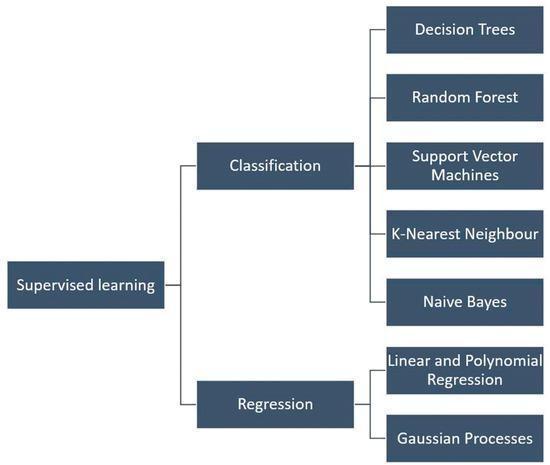
Experimental testing was performed using simulated datasets consisting of questionnaire responses and facial expressionpatterns.Thesystemclassifiedstresslevelsinto threecategories: Low Stress, Moderate Stress, and High Stress. Machine learning models such as Decision Tree, Random Forest, Support Vector Machine (SVM), and Convolutional Neural Network (CNN) wereconsideredfor stressdetection.
Among the tested algorithms, Random Forest and SVM demonstrated higher classification accuracy due to their ability to handle complex patterns and high-dimensional data. The system successfully provided personalized recommendations such as breathing exercises, relaxation music, and meditation techniques based on the detected stresslevel.
The results indicate that integrating artificial intelligence with behavioral and emotional data can significantly improve the efficiency of stress detection systems. The applicationalsohelpsuserstracktheirstresspatternsover time and encourages them to adopt healthy stress managementpractices.
The proposed research introduces several improvements comparedtoexistingstressmanagementapplications.Most currently available applications primarily focus on meditation guidance or sleep monitoring without incorporatingintelligentstressdetectionmechanisms. Thenoveltyoftheproposedsystemliesintheintegrationof artificialintelligenceandpersonalizedstressmanagement techniques withinasingleplatform.Theapplicationanalyzes multiple user inputs such as facial expressions, questionnaireresponses,andbehavioralpatternstodetect stresslevelsmoreeffectively.
Anotheruniqueaspectofthisworkistheimplementationof a personalized recommendation system, which suggests appropriate stress-relief activities based on the detected stress intensity. These activities may include breathing exercises, yoga practices, relaxation music, and mood tracking.
International Research Journal of Engineering and Technology (IRJET) e-ISSN: 2395-0056
Volume: 13 Issue: 04 | Apr 2026 www.irjet.net p-ISSN: 2395-0072
Furthermore, the proposed system is designed to continuouslyimproveitspredictionaccuracythroughuser feedback and behavioral learning. This adaptive learning capabilityallowsthesystemtoprovidemoreaccurateand personalizedrecommendationsovertime
TheproposedAI-drivenstressdetectionandmanagement system can be further enhanced in several ways in future research.
First, the system can be integrated with wearable devices such as smartwatches and fitness trackers to collect realtime physiological data including heart rate, skin temperature, and sleep patterns. This will improve the accuracyofstressdetectionmodels.
Second,advanceddeeplearningtechniquesandmultimodal data analysis can be implemented to improve the performanceofstressclassificationalgorithms.Combining facialexpressions,voicesignals,andphysiologicaldatawill enablemorereliablestressdetection.
Anotherpotentialimprovementistheintegrationofchatbotbased mental health assistants capable of providing conversational support and guidance to users during
stressfulsituations.
Additionally, the application can be expanded to include long-term stress analytics and mental health monitoring, enabling users to track their emotional well-being over extendedperiods.
With further research and development, AI-based stress managementsystemshavethepotentialtobecomepowerful digitaltoolsforimprovingmentalhealthandoverallquality oflife.
This study presents an AI-driven stress detection and management application designed to monitor and reduce stresslevelsthroughintelligentdataanalysis.Byintegrating machinelearningalgorithms,thesystemcanidentifystress indicatorsandprovidepersonalizedrecommendationsfor relaxationandmentalwell-being.
The proposed application has the potential to assist individuals in managing stress more effectively by promotinghealthyhabitsandprovidingcontinuoussupport. Futureresearchmayfocusonimprovingdetectionaccuracy using advanced deep learning techniques and integrating additionalphysiologicalsensors.
11. References
[1] Alharbi, A., &Kim, J.(2025). Mobile-Based Stress Monitoring Systems: A Comprehensive Review of Physiological Signal Analysis Approaches. Journal of DigitalHealthAnalytics,12(1),45–61.
[2] Sharma, R., & Verma, P. (2025). AI-Driven Stress Prediction Using HRV and Machine Learning Algorithms. International Journal of Intelligent Computing,19(2),112–130.
[3] Williams, K., & Brown, L. (2024). Evaluating Effectiveness of Guided Breathing Apps in Reducing Acute Stress Among Students. Journal of Mental WellbeingTechnologies,8(4),233–247.
[4] Singh,A.,&Gupta,S.(2024).Sensor-BasedStress Detection Using Wearable Devices and GSR Signals. IEEE Transactions on Biomedical Engineering, 71(3), 509–520.
[5] Lee,H.,&Park,J.(2024).EmotionRecognitionfor StressMonitoringUsingVoiceandFacialDynamicsin MobileEnvironments.ACMComputingSurveys,56(2), 1–30.
[6] Chatterjee,P.,&Das,S.(2024).MachineLearning Approaches for Mobile Mental Health Interventions. InternationalJournalofe-HealthResearch,15(1),77–95.
[7] Oliveira,M.,&Silva,R.(2023).AHybridModelfor Stress Detection Using HRV and Physical Activity Data.JournalofBiomedicalInformatics,137,104226.
[8] Patel,N.,&Kulkarni,M.(2023).UserEngagement Patterns in Digital Wellness Applications: A DataDriven study. International Journal of HumanComputerInteraction,39(5),620-637.
[9] Rodriguez, A., & Thompson, J. (2023). Digital Interventions for Stress Reduction: Systematic Review of Mobile-BasedTools. Journal of Behavioral HealthTechnology,14(3),198-215.
[10] Khatun, T., & Rahman, S. (2024). Evaluation of Mobile Stress Management Apps for Academic Populations. Journal of Psychological Computing, 5(1),21-38.
International Research Journal of Engineering and Technology (IRJET) e-ISSN: 2395-0056 Volume: 13 Issue: 04 | Apr 2026 www.irjet.net p-ISSN: 2395-0072 © 2026, IRJET | Impact Factor value: 8.315 | ISO 9001:2008 Certified Journal | Page 483
International Research Journal of Engineering and Technology (IRJET) e-ISSN: 2395-0056
Volume: 13 Issue: 04 | Apr 2026 www.irjet.net p-ISSN: 2395-0072