

International Research Journal of Engineering and Technology (IRJET) e-ISSN: 2395-0056
Volume: 13 Issue: 04 | Apr 2026 www.irjet.net p-ISSN: 2395-0072
AI-DRIVEN ROBOTIC SYSTEM FOR MULTI-WEED MANAGEMENT AND INTEGRATED CROP CARE IN SMART FARMING
Shakira Thankayathil1 , Suhail Mubarak K2 , Adil Rizan3 , Mohammed Nazal T N4 , Ajith M5
1Assistant Professor, Dept of Electronics and Communication Engineering, Al Ameen Engineering College, Palakkad, India 2345Student,DeptofElectronicsandCommunicationEngineering,Al AmeenEngineeringCollege, Palakkad,India
Abstract – Weed management is one of the most critical and labor-intensive tasks in agriculture, as weeds compete with crops for nutrients, water, and sunlight, significantly reducing crop yield and quality. Traditional weed control methods such as manual removal and chemical herbicides are either timeconsuming, costly, or harmful to the environment. With the advancement of technology, there is a growing need for intelligent and automated solutions in agriculture. This project presents an AI-driven robotic system designed for multi-weed management and integrated crop care. The system utilizes image processing and machine learning algorithms to detect and classify weeds and crops accurately. A camera module captures real-time images of the field, which are processed to identify unwanted weeds. Based on this detection, the robotic system performs targeted weed removal using mechanical or chemical methodsAdditionally, the system integrates crop care features such as monitoring environmental conditions using sensors. The proposed system reduces human effort, minimizes chemical usage, and increases precision in weed management
Key Words: Raspberry Pi, Arduino Nano, Temperature and Humidity sensor,
1.INTRODUCTION
Agriculture is the backbone of many economies, and improving crop productivity is essential to meet the increasingglobalfooddemand.Oneofthemajorchallenges faced by farmers is weed infestation, which negatively affects crop growth by competing for essential resources such as nutrients, water, and sunlight. Effective weed management is necessary to ensure healthy crop development and maximize yield. Traditional weed control methodsincludemanualweedingandtheuseofherbicides. Manualweedingrequiressignificantlaborandtime,making itinefficientforlarge-scalefarming.
Ontheotherhand,excessiveuseofchemicalherbicidescan
lead to environmental pollution, soil degradation, and health risks. Therefore, there is a need for an efficient, cost-effective, and eco-friendly solution. With advancements in Artificial Intelligence (AI), robotics, and theInternetofThings(IoT),smartfarmingtechniquesare being developed to address these challenges. AI enables machines to analyze visual data and make intelligent decisions, while robotics allows automated physical actions in the field. This project aims to develop an AIdriven robotic system capable of detecting weeds and performing targeted weed removal. The system also integratescropcarefunctionalities suchasenvironmental monitoring. By combining AI, sensors, and robotic mechanisms, the proposed system enhances efficiency, reduces labor dependency, and promotes sustainable agriculture.
2. WORKING PRINCIPLE
The working principle of the AI-driven robotic weed management system is based on the integration of image acquisition, data processing, decision-making, and mechanical action. The system operates in a continuous loop to monitor and manage weeds effectively. Initially, the camera module captures real-time images of the agricultural field. These images are processed using AIbased image processing algorithms to differentiate between crops and weeds. The system is trained using machine learning models to recognize patterns such as shape, colour, and texture of plants. Once weeds are detected,theirexactlocationisdetermined.Theprocessed data is sent to the microcontroller, which acts as the central control unit. Based on this information, the microcontroller sends signals to the motor driver to controlthemovementoftheroboticsystem.
3.BLOCK DIAGRAM
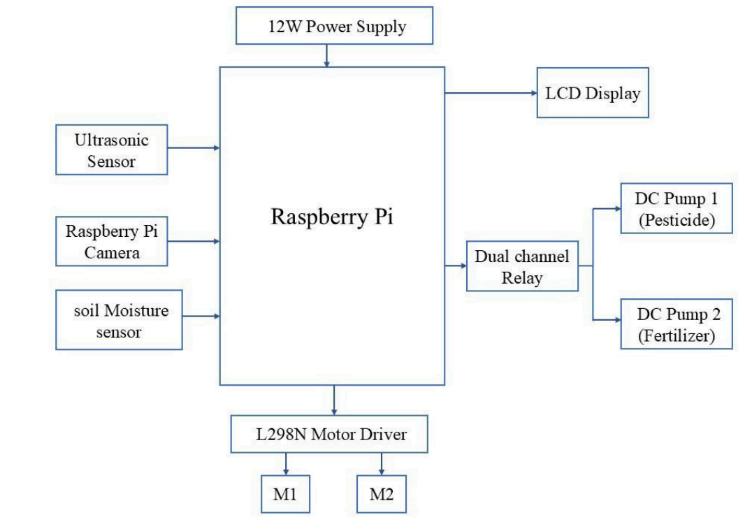
The block diagram of the system shows how different components work together for automated weed management.Thecameracapturesimagesofthefieldand sendsthemtotheAIprocessingunit, Based which detects weeds and crops. This information
International Research Journal of Engineering and Technology (IRJET) e-ISSN: 2395-0056
Volume: 13 Issue: 04 | Apr 2026 www.irjet.net p-ISSN: 2395-0072
isgiventothemicrocontroller,whichcontrolsthesystem. Themotordriveroperatesthemotorstomovetherobotic platformorarmtowardstheweed.
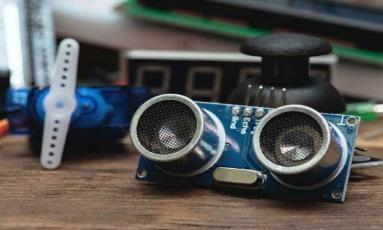
3.1 ultrasonic sensor
The ultrasonic sensor is used to measure distance by transmitting and receiving sound waves. It helps in detecting obstacles and monitoring object levels in the system. This sensor works on the echo principle and provides accurate real-time measurements. It is mainly usedfornavigationandavoidingcollisions.
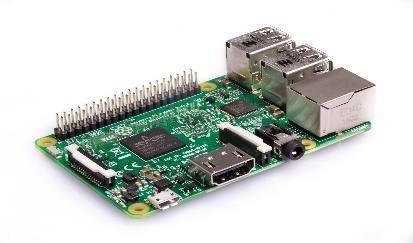
3.2
The Raspberry Pi is a tiny, single-board computer. It's designed to be affordable and versatile. It runs on Linux based operating systems. It has a processor, RAM, and various ports. You can connect it to a monitor, keyboard and mouse. It's used for education, hobby projects, and industrial applications. It has GPIO pins for connecting electronic components. It's popular for robotics, media centresandhomeautomation.Alargecommunityprovides supportandresources.
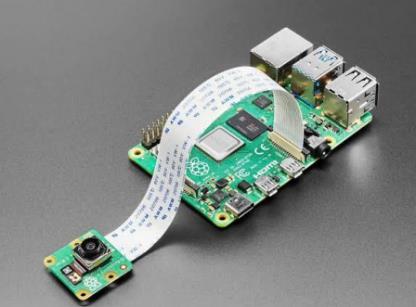
3.3 Pi Camera
The Pi Camera is used for capturing real-time images in the smart farming system. It is connected to Raspberry Pi andhelpsinidentifyingweedsandplantdiseasesthrough image processing techniques. The camera provides highresolution images for accurate detection. It plays a key roleinenablingAI-basedmonitoringanddecision-making
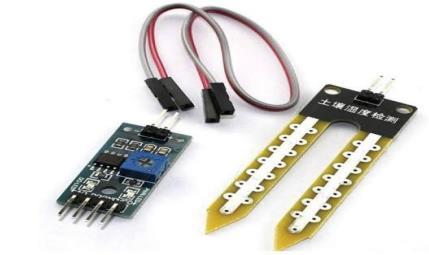
3.4 Soil Moisture Sensors
Thesoilmoisturesensorisusedtomeasurethewatercontent presentinthesoil.Itworks bydetectingchanges inelectrical resistanceorcapacitancebasedonthemoisturelevel.Whenthe soilisdry,thesensorgivesalowoutput,andwhenthesoilis wet, it gives a higher output. This information is sent to the RaspberryPi,whichusesittodeterminewhetherirrigationis needed. It helps with efficient water management by preventing overwatering or underwatering of crops. This improvescrophealthandconserveswaterresources.
3.5
The motor driver is used to control the movement of motorsintherobot.ItreceivessignalsfromtheRaspberry Pi and drives the motors accordingly. It enables forward, backward, and directional movements. It also provides sufficient current required for motor operation.
International Research Journal of Engineering and Technology (IRJET) e-ISSN: 2395-0056
Volume: 13 Issue: 04 | Apr 2026 www.irjet.net p-ISSN: 2395-0072
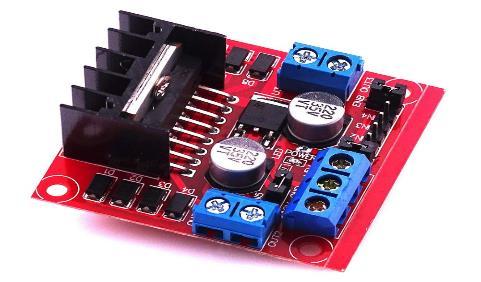
Fig3.5MotorDriver
3.6 Relay Module
The relay module acts as an electronic switch to control high-powerdevices.Itallowslow-voltagesignalsfromthe controllertooperatehigh-voltagecomponentslikepumps. Itensuressafeand reliable switching. Itis mainlyused to turndevicesONandOFFautomatically.
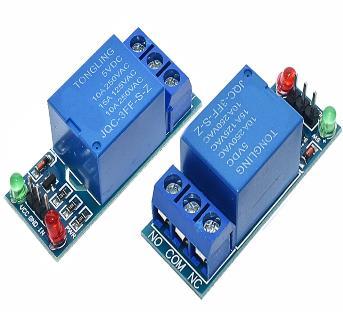
Fig3.6RelayModule
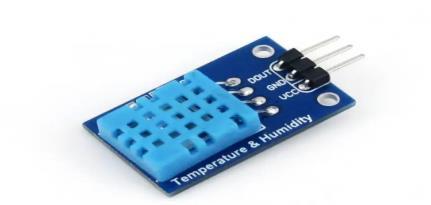
3.7DHT11
The DHT11 sensor is used to measure temperature and humidity of the surrounding environment. It provides digital output data that can be easily read by the Raspberry Pi or microcontroller. This sensor helps in monitoring environmental conditions for better crop management. It is simple, low-cost, and suitable for basic weather sensing applications. The collected data can be usedtoimprovefarmingdecisionsandautomation.
3.8 Pump and Nozzle
The pump and nozzle system is used for spraying pesticides and fertilizers in the smart farming setup. The pump draws liquid from the container and pushes it through the nozzle. The nozzle ensures proper distribution and spraying of the liquid onto targeted plants. It helps in precise application, reducing chemical wastage. This system plays an important role in spot spraying and efficient crop management.
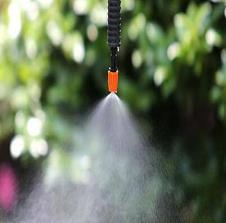
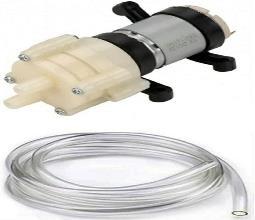
Fig3.8PumpandNozzle
3.9 Power Supply
The power supply unit provides the necessary electrical energy required for the operation of all system components.Itensuresstableandregulatedvoltagelevels for devices such as Raspberry Pi, Arduino Nano, sensors, and motors. Since different components operate at differentvoltagelevels,thepowersupplysystemincludes regulation and distribution mechanisms. A reliable power source is essential to maintain continuous operation and prevent system failure. It also protects components from voltage fluctuations and electrical noise. Proper power management improves system efficiency and longevity. The power supply acts as the backbone that supports the entiresystem’sfunctionality
International Research Journal of Engineering and Technology (IRJET) e-ISSN: 2395-0056
Volume: 13 Issue: 04 | Apr 2026 www.irjet.net p-ISSN: 2395-0072
6 CONCLUSION
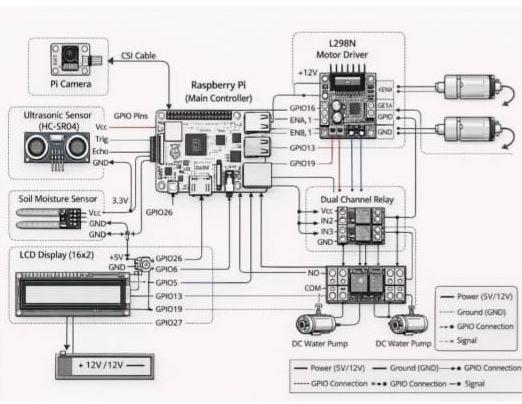
Fig4.1 CircuitDiagram
5 RESULT AND DISCUSSIONS
The developed AI-driven robotic system for multi-weed management and integrated crop care was successfully implemented and tested under controlled conditions. The system was able to capture real-time images of the field using the Pi Camera and process them using the Raspberry Pi to accurately identify weeds and crops. The AI model demonstrated good accuracy in distinguishing weedsbasedonfeaturessuchasshape,color,andtexture. Once identified, the robotic mechanism was able to move towards the detected weed and perform the removal operation effectively without damaging nearby crops.The ultrasonicsensorensuredsmoothnavigationbydetecting obstaclesandpreventingcollisionsduringmovement.The soil moisture sensor provided accurate readings of soil water content, allowing the system to monitor irrigation needsefficiently.Similarly,theDHT11sensorsuccessfully measured temperature and humidity, helping maintain suitable environmental conditions for crop growth. The LCD display continuously showed real-time data, making it easy for users to monitor system performance. The integrationofallcomponentsresultedinafullyautomated systemthatreducesmanuallaborandincreasesefficiency in weed management. The system showed reliable performance with minimal errors and demonstrated the potential to improve agricultural productivity. However, the accuracy of weed detection may vary depending on lightingconditionsandimagequality.
In the proposed AI-driven robotic system for multi-weed managementandintegratedcropcareoffersaninnovative solutiontomodernagriculturalchallenges.ItcombinesAI, robotics, and sensor technologies to automate weed detection and removal efficiently.The system reduces human effort, enhances precision, and promotes sustainable farming practices by minimizing chemical usage.Italsocontributestoimprovedcrophealththrough environmental monitoring.With further advancements, this system can be widely implemented in smart farming applications, leading to increased productivity and better resourcemanagement.
7 REFERENCES
[1] A. Kamilaris and F. X. Prenafeta-Boldú, “Deep learning in agriculture: A survey,” Computers and Electronics in Agriculture,vol.147,pp.70–90,2021.
[2]J.A.Thomasson,S.Sui,andR.K.Prasher,“Automation and robotics in precision agriculture,” IEEE Transactions on Automation Science and Engineering, vol. 17, no. 2, pp. 563–572,2022.
[3] S. Lottes, J. Behley, A. Milioto, and C. Stachniss, “Fully convolutional networks with sequential information for robust crop and weed detection,” IEEE Robotics and Automation Letters,vol.3,no.4,pp.2870–2877,2020.
[4] M. Bah, A. Hafiane, and R. Canals, “Deep learning with unsupervised data labeling for weed detection in crops,” IEEEAccess,vol.8,pp.179650–179662,2021.
[5] R. Gebbers and V. I. Adamchuk, “Precision agriculture and food security,” Science, vol. 327, no. 5967, pp. 828–831,2020.
[6] Y. LeCun, Y. Bengio, and G. Hinton, “Deep learning,” Nature,vol.521,no.7553,pp.436–444,2019.
[7] H. M. Bechar and C. Vigneault, “Agricultural robots for field operations: Concepts and components,” Biosystems Engineering,vol.149,pp.94–111,2020.
[8]P.R.SihagandS.K.Singh,“IoT-basedsmartagriculture system,” in Proc. IEEE Int. Conf. Communication and Electronics Systems,2021,pp.456–460.
[9]K.Ahmed, M.R. Hossain, andM. A.Rahman,“AI-based weed detection system using image processing,” in Proc. IEEE Int. Conf. Intelligent Systems and Robotics, 2023, pp. 210–215.
[10] S. Duckett, S. Pearson, S. Blackmore, and B. Grieve, “Agricultural robotics: The future of robotic agriculture,” UK-RAS White Paper,2018.