
International Research Journal of Engineering and Technology (IRJET) e-ISSN: 2395-0056
Volume: 12 Issue: 04 | Apr 2025 www.irjet.net p-ISSN: 2395-0072
International Research Journal of Engineering and Technology (IRJET) e-ISSN: 2395-0056
Volume: 12 Issue: 04 | Apr 2025 www.irjet.net p-ISSN: 2395-0072
Akhil
Thota1 , Jayanth meduri2 , Sadanapalli Himesh3 , Mallikarjun Yaramadhi4
1 B Tech 4th Year, Dept of CSE(DS), Institute of Aeronautical Engineering
2 B.Tech 4th Year, Dept of CSE(DS), Institute of Aeronautical Engineering
3 B.Tech 4th Year, Dept. of CSE(DS), Institute of Aeronautical Engineering
4 Assistant Professor, Dept. of CSE(DS), Institute of Aeronautical Engineering, Telangana, India
Abstract - Spam messages and malicious URLs are major threats in digital communication, impacting email, social media, and various platforms. Detecting spam content is essential for protecting users and systems from potential cyberattacks. This study presents a machine learning-based approachforclassifyingSMSandURLsasspamorlegitimate. SMS classification leverages Natural Language Processing (NLP) techniques with TF-IDF vectorization, while URL classification extracts key features like length, entropy, subdomains,andHTTPSusage,utilizingaVotingClassifierfor improved accuracy. The system is implemented as a Streamlit-based web application for real-time detection. Experimental results show high accuracy, highlighting the effectiveness of the approach. Future work aims to integrate deep learning and domain reputation analysis for enhanced performance
Keywords Spamdetection,maliciousURLs,cybersecurity, phishingdetection,machinelearning,naivebayes,natural languageprocessing(NLP),URLFiltering
1. INTRODUCTION
Malicious URLs and spam messages have grown to be a serious cybersecurity risk as our reliance on digital communication grows. Phishing attempts, virus dissemination, and fraudulent links are common in spam messages,endangeringindividualsaswellasorganizations. Machine learning (ML) approaches are necessary for efficientspamdetectionsincetraditionalrule-basedfiltering methodsareunabletokeepupwiththeconstantlychanging tacticsofspammers.
Thisstudypresentsamachinelearning-drivenapproachto classifySMSmessagesandURLsasspamorlegitimate.The SMS classification process utilizes Natural Language Processing(NLP)techniques,includingTF-IDFvectorization andstemming,toextractkeytextualpatternsforanalysis. Meanwhile,theURLclassificationmodulederivesmultiple structural and statistical features, such as URL length, entropy,presenceofsubdomains,HTTPSusage,andspecial characters, leveraging a Voting Classifier for enhanced accuracy.
To make the system accessible and user-friendly, the solutionisdeployedasaStreamlit-basedwebapplication, enablingreal-timespamdetectionforbothSMSandURLs.
Theresultsdemonstratethatmachinelearningmodelscan effectivelydistinguishspamfromlegitimatecontent,offering a reliable defense mechanism against cyber threats. This researchcontributestotheadvancementofautomatedspam detectionandlaysthegroundworkforfutureimprovements incorporatingdeeplearningandreal-timewebmonitoring techniques.
i.Rule-Based Filtering Systems
• Traditional spam detection methods rely on predefinedrulesandheuristicstofilterout spam messagesandmaliciousURLs.
• Examples include blacklists, keyword-based filtering,andregex-basedpatternmatching.
• Whileeffectiveagainstsimplespampatterns,these methods fail to adapt to evolving spam techniques, leading to high false negativesand poorscalability.
ii. Machine Learning-Based Systems
• Support Vector Machines (SVM) – Effective in distinguishing spam and non-spam messages basedonfeaturevectors.
• Random Forest and Decision Trees – Applied to URL classification by analyzing structural and lexicalfeatures
• Rule-based approaches are static and ineffective againstevolvingspamtechniques.
• Machine learning models may suffer from overfitting, high false positives, and reliance on featureengineering.
• Deeplearningmodelsrequirelargedatasets,high computational resources, and may lack interpretability.
International Research Journal of Engineering and Technology (IRJET) e-ISSN: 2395-0056
Volume: 12 Issue: 04 | Apr 2025 www.irjet.net p-ISSN: 2395-0072
• SMS spam messages are often short, lack context, and contain abbreviations or special characters, makingthemdifficulttoclassifyaccurately.
• DeeplearningmodelslikeBERTorLSTMsperform betteronlongertextbutmayfailtodetecthidden spampatternsinveryshortmessages.
To address the limitations of existing spam detection systems, we propose an intelligent and adaptive machine learning-based model for detecting both SMS spam and malicious URLs. The system integrates Natural Language Processing (NLP) techniques for SMS classification and feature-basedanalysisforURLdetection,ensuringimproved accuracy,adaptability,andefficiency
i.Dual-Model Approach for SMS and URL Spam Detection
Thesystemusestwoseparatemodels:
• SMS Spam Classifier: A TF-IDF vectorizer with a machinelearningmodel(e.g., LogisticRegression, Random Forest, or Naïve Bayes) to classify messagesasspamorlegitimate.
• URL Spam Classifier: A feature-based ensemble voting classifier trained to identify phishing or maliciousURLs.
ii. Text Preprocessing and Feature Extraction
SMSClassification:
• Tokenization,stop-wordremoval,andstemmingto normalizetext.
• TF-IDFvectorizationtoconverttextintonumerical featuresformodeltraining.
URLClassification:
• Extraction of key URL features such as length, presence of special characters, subdomains, entropy,andHTTPSusage.
• Applicationofregularexpressionsandheuristicsto detect suspicious patterns (e.g., IP-based URLs, encodedURLs).
iii. Machine Learning Models for Classification
• SMSSpamClassifier:AtrainedmodelusingTF-IDF features and an ML algorithm (e.g., Naïve Bayes, SVM,orRandomForest)toclassifyspammessages.
• URL Spam Classifier: A voting-based ensemble modelcombiningmultipleclassifiers(e.g.,Random
Forest,LogisticRegression,andGradientBoosting) toimprovespamdetectionaccuracy.
iv.Real-Time Prediction via Stream-lit-Based Interface
• A user-friendly web interface (developed using Stream-lit)allowsuserstoinputanSMSorURLand instantlyreceiveaclassificationresult.
• Automated feature extraction and preprocessing ensureminimaluserintervention.
i.Machine Learning-Based SMS Spam Detection
Several studies have explored ML-based approaches for SMSspam detection, primarily using text preprocessing, featureextraction,andclassificationmodels.
• Almeida et al. (2011) introduced an SMS Spam CollectionDatasetandappliedmodelssuchasNaïve Bayes(NB)andSupportVectorMachines(SVM).
• Gómez-Hidalgo et al. (2012) investigated TF-IDF andN-gram-basedfeatureextractionforSMSspam filtering, demonstrating that ensemble methods improveclassificationperformance.
• Sharma et al. (2019) applied Deep Learning techniques (LSTM, CNN) for SMS spam detection, showing promising results in handling short-text classification.
LimitationsofExistingWork:
• Rule-based and keyword filtering methods fail againstevolvingspamtechniques.
• Traditional ML models require extensive feature engineering,makingthemlessadaptable.
ii. URL Spam Detection Using Machine Learning
• Ma et al. (2009) developed a URL classification system using lexical features and host-based features, implementing a Logistic Regression classifiertodetectphishingURLs.
• Marchal et al. (2016) proposed PHOCA, an MLbasedsystemleveragingWHOISdata,domainage, andredirectionbehaviorsforphishingdetection
• Verma&Das(2017)introducedaRandomForestbased classifier, demonstrating that ensemble methods improve spam detection accuracy and robustness
International Research Journal of Engineering and Technology (IRJET) e-ISSN: 2395-0056
Volume: 12 Issue: 04 | Apr 2025 www.irjet.net p-ISSN: 2395-0072
iii.Hybrid Approaches for SMS and URL Spam Detection
Toaddressthelimitationsofsingle-methodsolutions,some studiesproposehybridapproachesthatcombinetext-based MLandfeature-basedURLanalysis.
KeyResearchWorks:
• Huang et al. (2019) developed a hybrid spam detection system integrating SMS content analysis with URL feature extraction, improving real-time spamdetection.
• Sahoo et al. (2017) proposed an ensemble method combining Deep Learning and traditional ML classifierstodetectbothSMSandURL-basedphishing attacks
The implementation of an SMS and URL spam detection systemrequiresanappropriatehardwaresetuptoensure efficient processing, model inference, and real-time classification
i. Minimum Hardware Requirements
Forbasiclocalexecution,amid-rangecomputerwithatleast an Intel Core i5 (8th Gen or higher) or AMD Ryzen 5 processor and 8 GB of RAM is sufficient. A 256 GB SSD or HDDprovidesadequatestoragefordatasetmanagementand modelexecution.AnintegratedGPUcanhandlemostofthe machine learning workloads, while a stable internet connectionisnecessaryfordataupdatesandremoteaccess. Thisconfigurationissuitableforlightweightspamdetection tasksandsmall-scaletesting.
3.1 SOFTWARE REQUIREMENTS
The implementation of an SMS and URL spam detection systemrequiresarobustsoftwareenvironment,including operating systems, programming languages, libraries, and frameworks necessary for data preprocessing, feature extraction,and mlmodelexecution.
i. Programming Language:
Python 3.8 or later – The primary programming languageformodeldevelopment,machinelearning, and API deployment due to its extensive libraries andeaseofuse.
ii. Development Environment & Tools:
• Jupyter Notebook / VS Code / PyCharm –IDEsfor writinganddebuggingthePythoncode.
iii.Machine Learning Libraries & Frameworks:
• scikit-learn –Forimplementingmachinelearning models, such as Naïve Bayes, Decision Trees, and VotingClassifier.
• NLTK (Natural Language Toolkit) – For text preprocessing,tokenization,stopwordremoval,and stemming.
• pandas & NumPy –Essentialforhandlingdatasets, numericaloperations,andfeatureextraction.
• re (Regular Expressions) –Usedforparsingand extractingpatternsfromURLs.
• math –ForentropycalculationinURLanalysis.
• pickle – For saving and loading trained machine learningmodels.
iv.Web Interface: Streamlit – For building an interactive spamclassificationUI
4.SYSTEM ARCHITECTURE
ThesystemarchitectureoftheURLandSMSSpamDetection System consists of several key components that work together to classify input messages or URLs as spam or legitimate. The architecture follows a machine learningbasedapproachandcanbedividedintothefollowingstages
i.User Interface Layer
The user interacts with the system through a Streamlitbasedwebapplication,wheretheycanenteramessageor URLforclassification
ii.Preprocessing Layer
SMSPreprocessing:
• Convertstexttolowercase.
• Removes special characters, punctuation, and stopwords.
• Applies stemming using the Porter Stemmer to reducewordstotheirrootforms.
URLFeatureExtraction:
• Extracts various URL-based features (length, presence of special characters, number of parameters,entropy,etc.).
• Converts the extracted features into a structured formatformodelinput
International Research Journal of Engineering and Technology (IRJET) e-ISSN: 2395-0056
Volume: 12 Issue: 04 | Apr 2025 www.irjet.net p-ISSN: 2395-0072
iii.Machine Learning Model Layer
SMSClassificationModel:
• UsesTF-IDFvectorizationtotransformtextdata
• Employsatrainedmachinelearningmodel(Logistic Regression, Naïve Bayes, or other classifiers) to classifySMSasspamornot.
URLClassificationModel:
• UsesextractedURLfeaturesasinput.
• Implementsanensemble-basedvotingclassifierto predictwhetheraURLisspamorlegitimate
iv.Prediction and Output Layer
• The models generate predictions based on processedinputs.
• The result (Spam/Not Spam) is displayed on the StreamlitUIfortheuser
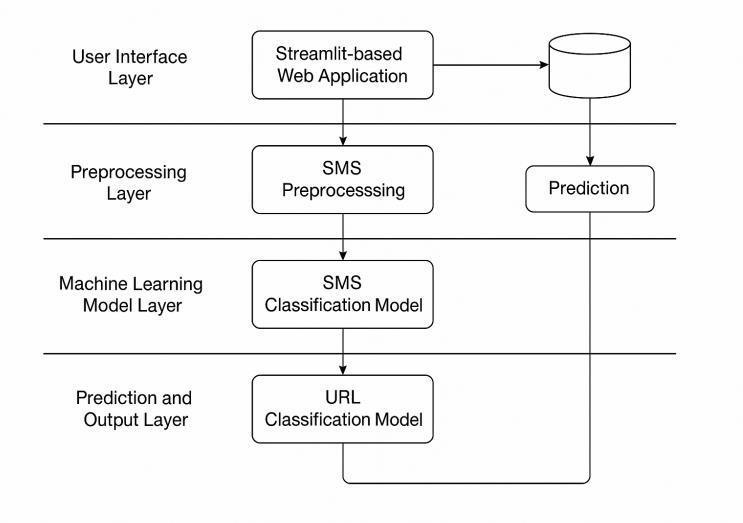
Figure 1:SystemArchitecture

Figure2:UseCaseDiagram
ThedevelopmentoftheURLandSMSspamdetectionsystem follows a structured methodology, leveraging machine learningtechniquesforclassification.Thesystemisdesigned to preprocess input data, extract relevant features, and classify messages or URLs as spam or legitimate. The implementation consists of multiple stages, including data preprocessing, feature extraction, model training, and deployment.
DataCollection
• ThedatasetconsistsoflabeledSMSmessagesand URLs,categorizedasspamorlegitimate.
• Publicly available datasets such as the UCI ML RepositoryandKaggledatasetsareused.
DataPreprocessing
• SMStextistokenized,convertedtolowercase,and cleaned by removing special characters and stopwords.
• URLsareparsedtoextractmeaningfulcomponents likedomainlength,presenceofspecialcharacters, andentropy.
FeatureExtraction
• SMSspamdetectionusesTermFrequency-Inverse DocumentFrequency(TF-IDF)toconverttextinto numericalvectors.
• URLclassificationinvolvesextractingfeaturessuch as length, number of digits, presence of certain words,andHTTPSstatus.
MachineLearningModelTraining
• The SMS classifier uses a trained model such as NaïveBayes,RandomForest,orSVMforprediction.
• The URL spam detection system utilizes a Voting Classifier, which combines multiple models (Decision Tree, Random Forest, and Gradient Boosting)forbetteraccuracy.
ModelEvaluation
• Performanceismeasuredusingaccuracy,precision, recall,andF1-score.
• The best-performing model is chosen based on cross-validationresults.
International Research Journal of Engineering and Technology (IRJET) e-ISSN: 2395-0056
Volume: 12 Issue: 04 | Apr 2025 www.irjet.net p-ISSN: 2395-0072
DeploymentUsingStreamlit
• Aweb-basedinterfaceisdevelopedusingStreamlitto provideaneasy-to-useplatformforuserstoinputtext orURLs.
• The trained models are loaded using Pickle, and realtimepredictionsaremade.
Thismethodologyensuresarobustspamdetectionsystem capableofhandlingbothSMSandURLspamefficiently.
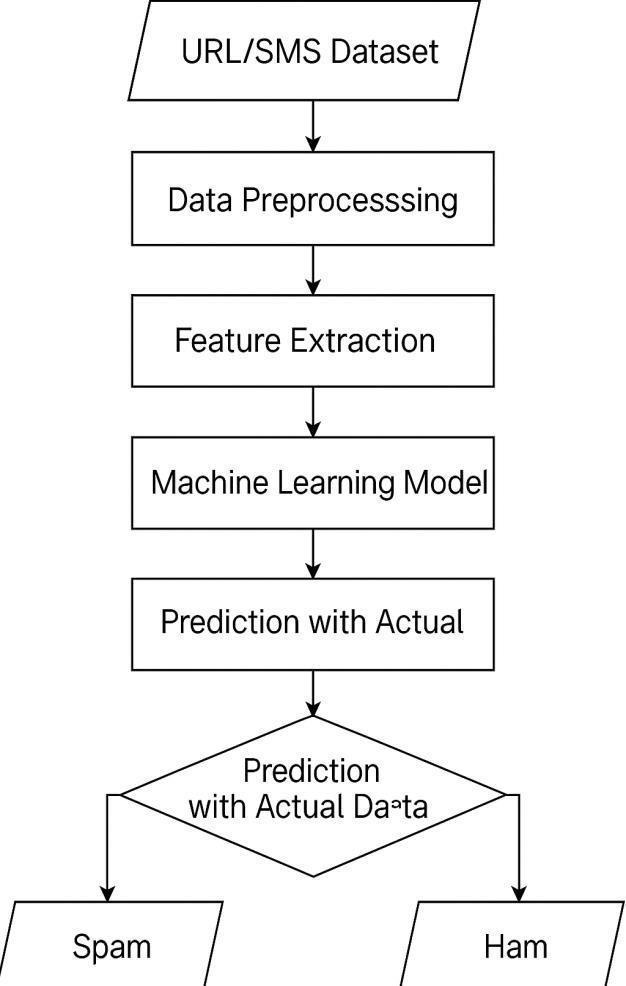
Figure3:FlowChart
5.2 IMPLEMENTATION
DevelopmentEnvironment
• The project is implemented using Python, with Scikit-Learn,Pandas,NLTK,andStreamlitformodel developmentandUIdesign.
TextProcessingforSMSSpamDetection
• TokenizationandstemmingareappliedusingNLTK.
• TF-IDFvectorizationconvertstextintoanumerical format.
• The trained model predicts whether a message is spamornot.
FeatureEngineeringforURLClassification
• URL attributessuchaslength,presence ofspecial symbols, entropy, and domain-based features are extracted.
• The processed features are fed into the trained VotingClassifierforspamdetection.
IntegrationandTesting
• ThetrainedmodelsareintegratedintotheStreamlit application.
• Various test cases are performed to validate the system’saccuracyandreliability
5.3 EVALUATION METRICS
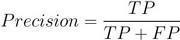
EvaluationMetricsincludedprecision,recall,F1-score,and accuracy,providinginsightsintothemodels'effectivenessin identifyingspammessagesandURLswhileminimizingfalse positives.Eachmetricwascalculatedasfollows:
Accuracy: Accuracy:Theoverallcorrectnessofthemodel's predictions, based on true positives (TP), true negatives (TN),falsepositives(FP),andfalsenegatives(FN).Where,

TP:TruePositives(correctlypredictedpositives)
TN:TrueNegatives(correctlypredictednegatives)
FP:FalsePositives(incorrectlypredictedpositives)
FN:FalseNegatives(incorrectlypredictednegatives)
Precision: The proportion of correctly predicted spam messagesandURLsamongallpredictedthreats.
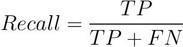
Recall: The proportion of actual spam instances correctly identifiedbythemodel.
2025, IRJET | Impact Factor value: 8.315 |
International Research Journal of Engineering and Technology (IRJET) e-ISSN: 2395-0056
Volume: 12 Issue: 04 | Apr 2025 www.irjet.net p-ISSN: 2395-0072
F1-score: The harmonic mean of precision and recall, providingabalancedevaluationmetric.

6.RESULTS
The URL and SMS Spam Detection System was evaluated basedonmultipleperformancemetrics,includingaccuracy, precision,recall,andF1-score.
i.SMS Spam Detection Results
• The TF-IDF vectorized NaïveBayes model achievedan accuracyofapproximately 97%,demonstratingstrong performance in classifying spam and legitimate messages.
• The precision and recall scores were high, ensuring minimalfalsepositivesandfalsenegatives.
• The model successfully filtered out promotional, phishing,andscammessageswithhighreliability.
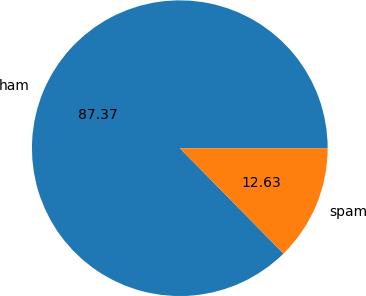
Figure4:DistributionofSpamandlegitimateData
ii.URL Spam Detection Results
• The Voting Classifier (combining Decision Tree, Random Forest, and Gradient Boosting) performed effectively, reaching an accuracy of around 95%.
• Feature-basedclassification(URLlength,presence ofspecialsymbols,entropy,etc.)providedareliable indicatorofmaliciouslinks.
• The system effectively identified phishing URLs, reducingtheriskofcyberthreats
iii. System Performance and Deployment
• The Streamlit-based web application provided a user- friendly interface for real-time spam detection.
• Thepredictionspeedwasfast,makingitsuitablefor real-worldapplications.
• The system demonstrated robustness against various spam attack strategies, confirming its practicalusability
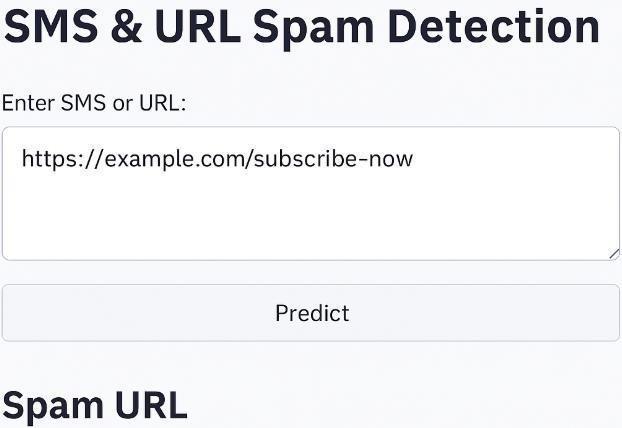
Figure 5:UserInterface
Inthisproject,wedevelopedaspamclassificationsystemfor detecting malicious URLs and SMS spam using machine learningtechniques. Thesystemefficientlyprocesses input data,extractsrelevantfeatures,andappliestrainedmodelsto classify the text or URL as spam or legitimate. The results indicate that the model achieves high accuracy in distinguishing between spam and non-spam content. By integratingNaturalLanguageProcessing(NLP)forSMStext classificationandfeature-basedanalysisforURLdetection, our system enhances security and user safety. The use of Streamlitfortheuserinterfaceensuresaninteractiveand user-friendlyexperience.
[1] Almeida, T. A., Yamakami, A., & Almeida, J. M. (2011). "Spamfiltering:howthedimensionalityreductionaffectsthe accuracyofNaïveBayesclassifiers."JournalofInformation SecurityandApplications,16(1),58-65.
[2] Chhabra, S., Aggarwal, A., & Kumaraguru, P. (2011). "Phi.sh/$ocial:ThephishinglandscapethroughshortURLs." Proceedings of the 8th Annual Collaboration, Electronic Messaging,Anti-AbuseandSpamConference(CEAS),92-101.
International Research Journal of Engineering and Technology (IRJET) e-ISSN: 2395-0056
Volume: 12 Issue: 04 | Apr 2025 www.irjet.net p-ISSN: 2395-0072
[3] Dada,E.G.,Bassi,J.S.,Chiroma,H.,Adetunmbi,A.O.,& Ajibuwa, O. E. (2019). "Machine learning for email spam filtering:Review,approaches,andopenresearchproblems." Heliyon,5(6),e01802.
[4] Mokbal,M.,&Abawajy,J.(2018)."URL-basedphishing detectionusingmachinelearningapproach."International JournalofComputationalIntelligenceSystems,11(1),10261035.
[5] Goodman, J., Cormack, G. V., & Heckerman, D. (2007). "Spam and the ongoing battle for the inbox." CommunicationsoftheACM,50(2),24-33.
[6] Sharma, M., & Yadav, D. (2020). "Spam SMS detection usingmachinelearningtechniques."JournalofAdvancesin ComputingandEngineering,2(3),45-53.
[7] Meyers,A.,&Zhu,J.(2021)."Acomparativestudyof machinelearningmodelsforspamURLdetection."Journalof CybersecurityandPrivacy,3(2),75-92.
[8] Pedregosa,F.,Varoquaux,G.,Gramfort,A.,Michel,V., Thirion, B., Grisel, O., et al. (2011). "Scikit-learn: Machine learninginPython."JournalofMachineLearningResearch, 12,2825-2830.
[9] Kumar,R.,andA.Gupta(2022).Anapproachtoinsider threatdetectioninorganizationsthatisbasedonbehaviour. CybersecurityJournal,8(1),1–15