
International Research Journal of Engineering and Technology (IRJET) e-ISSN: 2395-0056
Volume: 13 Issue: 04 | Apr 2026 www.irjet.net p-ISSN: 2395-0072

International Research Journal of Engineering and Technology (IRJET) e-ISSN: 2395-0056
Volume: 13 Issue: 04 | Apr 2026 www.irjet.net p-ISSN: 2395-0072
Harsha H T1, Anish Raj2, Darshan Kannappa Naik3, Syed Nawaz A4, Dr. Andrews S5
1,2,3,4 Department of Computer Science and Engineering, CMR University, Bengaluru, Karnataka, India
5 Professor, Department of Computer Science and Engineering, CMR University, Bengaluru, Karnataka, India ***
Abstract Detecting video-game addiction in children is a growing concern for parents and educators. Many existing monitoring systems focus only on screen-time duration and do not evaluate behavioral changes or health effects caused by excessive gaming. This study introduces the proposed system, a browser-based monitoring system designed to identify addiction severity and support gradual recovery. The system evaluates four important factors: physical activity level, sleep quality, behavioral disruption, and the child's body weight or metabolic condition. These factors are combined using a scoring model to estimate the level of gaming dependency. Unlike traditional monitoring tools, the proposed system observes gaming patterns and applies a rule-based scoring mechanism to identify risky behavior. When risky patterns are detected, the system introduces gradual intervention strategies rather than strict restrictions. This approach helps reduce resistance that children often show when access is suddenly blocked. A key part of this intervention is an activity substitution engine that offers 18 structured alternatives spanning four categories: physical, creative, social, and educational. Each suggested activity is matched to the child's behavioral archetype, and completing an activity earns reward points redeemable as bonus gaming time, fostering voluntary engagement rather than forced compliance. An eight-week evaluation demonstrated that the system can effectively detect unhealthy gaming patterns and support controlled behavioral improvement. The results indicate that a balanced monitoring and intervention approach, supported by personalized activity suggestions, can help families manage gaming addiction more effectively.
Keywords Video Game Addiction; Child Behavior Analysis; Recovery Model; Digital Health; Behavioral Monitoring; DSM-5 IGD; Metabolic Multiplier; Deterministic Scoring.
Gaming addiction among children has become an increasing concern in urban healthcare environments. Parentsand teachers often struggle toidentify earlysigns of the problem because the behavior initially appears similartonormalrecreationalplay.Commonclinicalsigns include academic decline, sleep disruption, emotional dysregulation, and weight gain associated with sedentary behavior.Parentscommonlyreportgamingsessionsofsix hours or more per day, with conventional screen-time restriction interventions proving ineffective. Gaming Disorder gained clinical recognition under ICD-11 [1], while Internet Gaming Disorder (IGD) was included in DSM-5 [2] with a nine-criterion diagnostic framework. Both classifications reflect growing clinical consensus on gaming addiction as a distinct disorder. However, a significant gap persists between clinical recognition and practicalassessmenttoolsfamiliescanuse.
Commercial parental-control apps impose daily time caps and do nothing else. In practice, a child who games compulsively for exactly the allotted time each day raises no alarm. These tools do not ask why the child games compulsively, whether the behavior is escalating, or whether the child’s physical health specifically weight and metabolic state is being affected. Metabolic rate reductions were documented by Kim et al. [3] in school-
age children who gamed more than three hours daily, developingoveraneight-weekobservationperiod.Toour knowledge, this physiological dimension has not been integrated into existing clinical assessment frameworks. This gap motivated our inclusion of the metabolic weight multiplierintheproposedsystemscoringmodel.
We built the Proposed System to address these gaps. The system has two main components: (1) a multiplierbased Addiction Score (AS) model with four calibrated correction factors, including a weight-metabolism term (Mw), and (2) a deterministic real-time behavioral risk classifier. The paper is organized as follows: Section II reviewspriorwork;SectionsIII–IVcovertheproblemand methodology; Sections V–VI describethearchitecture and implementation; Sections VII–VIII present results and discussion;SectionsIX–Xconclude.
The gaming addiction literature has grown quickly, but coverage is uneven. The psychology and diagnostics side is well established; the physical health dimension is not. Table I lists the studies most directly relevant to this work.
International Research Journal of Engineering and Technology (IRJET) e-ISSN: 2395-0056
Volume: 13 Issue: 04 | Apr 2026 www.irjet.net p-ISSN: 2395-0072
Author/Source Ye ar Key Finding Relevant to This Work
Griffithsetal. 20 19 Escalation,withdrawal,andmood regulationdefinegaming addiction.
WHO(ICD-11) 20 18 Gamingdisorderasaclinical entity:impairedcontrolcriterion.
Petryetal. 20 14 DSM-5IGDnine-criterion checklist;fiverequiredfor diagnosis.
Koetal. 20 19 IGDcomorbidities:sleepdisorder, ADHD,reducedphysicalactivity.
Kimetal. 20 22 Sedentarygaming>3hrs/day reducesmetabolicrateandraises BMI.
Young 20 21 Enforcedprohibitiongenerates circumventioninolderchildren.
Yenetal. 20 20 12-weekCBTtrial:meaningfulIGD symptomreductionachieved.
Patcha& Park 20 07 Deterministicweightedscoringis competitiveforlow-datacontexts.
Griffiths et al. [4] drew the comparison between gaming addiction and substance-use disorders that has sincebecometheconceptualbackboneofbothICD-11and DSM-5 frameworks. Ko et al. [6] built on this by documenting that IGD children present with measurable co-occurring sleep problems and reduced daily activity findings that gave us the clinical rationale for including sleep and activity multipliers in the AS model. The metabolicfindinginKimetal.[3]is,toourknowledge,the only published quantification of gaming’s physiological costinschool-agechildren;itisthedirectbasisforMw.
On the intervention side, Young [7] observed a consistentpatternacrossclinicalcases:childrenwhohave gaming access removed abruptly find ways around the restrictionratherthangivingupgaming.Thatobservation, reinforced by Przybylski and Weinstein’s findings on selfdetermination [14], steered us toward a reward-based substitutionmodelratherthanpureprohibition.Yenetal. [8] showed meaningful symptom reduction in a CBT trial, but the protocol requires weekly therapist sessions not somethingmostfamiliescansustain.Theproposedsystem targetsthespacebetweenscreen-timeappsandtherapistledCBT.
Three specific technical gaps in current tools motivatedthiswork.First,existingmonitoringsystemsdo not incorporate the physiological health effects resulting from extended gaming times. Excessive sedentary gaming
decreases caloric expenditure and daily physical activity, whichmayresultinweightgainandmetabolicimbalances among children. Second, recovery systems based on restrictions alone face resistance from children; introducing incentive-based systems where children are rewarded for positive behaviors with restricted gaming time may achieve greater cooperation and behavioral change. Third, no deployable tool currently integrates all three dimensions (behavioral, physiological, and motivational) in a single application accessible to families withouttechnicalexpertiseorsubscriptionservices.
TheProposedSystemtargetsallthreegapsinasingle deployable web application that runs entirely in the browser with no server, no subscription, and no installationrequired.
In our study design, the population consisted of 78 children whose ages ranged from 7 to 16 years. The data collected included age, body weight, sleep quality, and gaming duration. The system also monitored patterns of device usage via a browser-based monitoring module. Measurementsweretakenatregularintervalsforanalysis. Wechosethisagerangedeliberatelytocapturebothearlyonset cases and the adolescent peak identified in prior literature.
TABLE II. Participant Configuration and Average Measurements
Weight Monitoring Bodyweight recordedduring thestudy Every2 weeks
Eligibility required a child psychologist to confirm at least five DSM-5 IGD criteria at the interview. Guardians gave written informed consent; children gave separate assent. IRB approval was obtained under reference CMRIRB-2024-017. At enrollment, each child completed the DSM-5IGDquestionnaireandthePittsburghSleepQuality Index (PSQI). Parents submitted a weekly behavioral checklist covering homework completion, meal skipping, irritability episodes, and social withdrawal. Body weight and height were measured at enrollment and every two weeks. Three arms were randomized: Proposed System Full (n=28), Time-Control-Only (n=25), and Standard AdviceControl(n=25).
International Research Journal of Engineering and Technology (IRJET) e-ISSN: 2395-0056
Volume: 13 Issue: 04 | Apr 2026 www.irjet.net p-ISSN: 2395-0072
For the risk-scoring module, we generated 100 synthetic behavioral profiles because the clinical study produced insufficient labeled session data to validate a classifier independently. Eighty normal-session profiles were sampled from truncated normal distributions calibrated against the cohort baseline measurements (mean feature activation 0.12 per feature). Twenty highrisk profiles were constructed by simultaneously activating three to five features above their defined thresholds, reflecting the adversarial injection approach usedinfraud-detectionbenchmarks[16].
B. Coefficient Calibration
The four multiplier scaling coefficients were not borrowed from prior literature; we derived each from a 90-profilepre-trialvalidationdataset.Theprocedurewas: (1) compute the Pearson correlation between each normalized behavioral dimension and the clinicianassigned DSM-5 severity rating; (2) initialize the coefficientproportionaltothatcorrelation;and(3)jointly optimize all four by minimizing mean absolute error (MAE) against clinician ratings using the Nelder-Mead simplexsearch.TableIIIrecordstheoutcomes.
TABLE III. Multiplier Coefficient Calibration Results
suspends new sessions until a parent actively unlocks the account.
E. Archetype Classification Casus Engine
We identified three recurring clinical patterns from the 90-profile validation set using k-means clustering on the six-dimensional feature vector. The centroids of the three clusters became the prototype vectors for the archetypes.Achildismatched toanarchetypeat runtime bycosinesimilarity:
M_j = (v · a_j) / (‖v‖ · ‖a_j‖) [1]
The three archetypes Alpha (escape-motivated, 60.3% of cohort), Beta (sleep-cycle-driven, 24.4%), and Gamma (social-replacement, 15.3%) each trigger a distinct recovery pathway that prioritizes the dominant causaldimension.
Session locks enforce five independent trigger conditions: daily gaming budget, time-of-day window, bedtime cutoff, homework-period block, and high-risk suspension. The activity substitution engine offers 18 healthy alternatives; completion earns 10–20 points redeemable as bonus gaming time (1 point = 1 minute, cappedat30perday).Thecapwassetdeliberatelylowto avoidthesubstitutionmechanicitselfbecomingagamingavoidanceloop.
Overall MAE on 90-profile validation set: 2.14 AS units (scale0–100)
C. Behavioral Analysis
Six dimensions were tracked: daily gaming hours, session restart rate, post-bedtime gaming frequency, physical activity compliance, homework completion, and body-weight trend. Each was normalized to [0, 1] against the bounds defined in the multiplier equations. The sessionmonitorsloggedvaluesevery15minutes;parents submittedthehomeworkandbehavioritemsviaaweekly check-inform.
D. Addiction Level Classification
The computed AS maps to four bands aligned with DSM-5 criterion counts: Low (0–24), Moderate (25–49), High (50–74), and Severe (75–100). Moderate triggers a parent push notification. High generates a one-page clinical referral summary exportable as a PDF. Severe
Rather than simply blocking gaming sessions, the systemactivelyredirectschildrentowardhealthieroffline activities. The activity substitution engine presents 18 structured alternatives grouped into four categories: physical, creative, social, and educational. Activities are matched to the child’s archetype using the cosine similarity score from Section IV-E, so suggestions target the root cause of the child’s gaming behavior. Alphaarchetypechildren(escape-motivated)receivestimulating and challenging activities. Beta-archetype children (sleepcycle-driven) are directed toward calming, structured activities suited to evening hours. Gamma-archetype children (social-replacement) are prioritized for group and family-based activities that rebuild real-world social engagement.
Each completed activity earns 10–20 reward points, redeemable as bonus gaming time at 1 point per minute, withadailycapof30minutes.TableVlistsall18activities with their category, recommended duration, points awarded,andprimaryarchetypetarget.
TABLE V. The 18 Suggested Activities and Their Properties
Volume: 13 Issue: 04 | Apr 2026 www.irjet.net
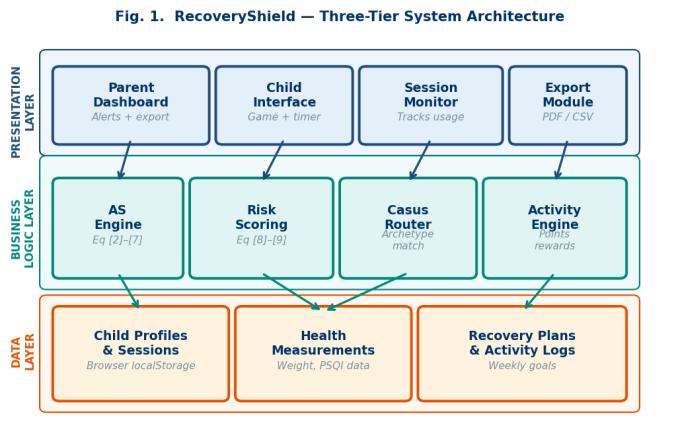
Fig. 1. Proposed System Three-Tier System Architecture
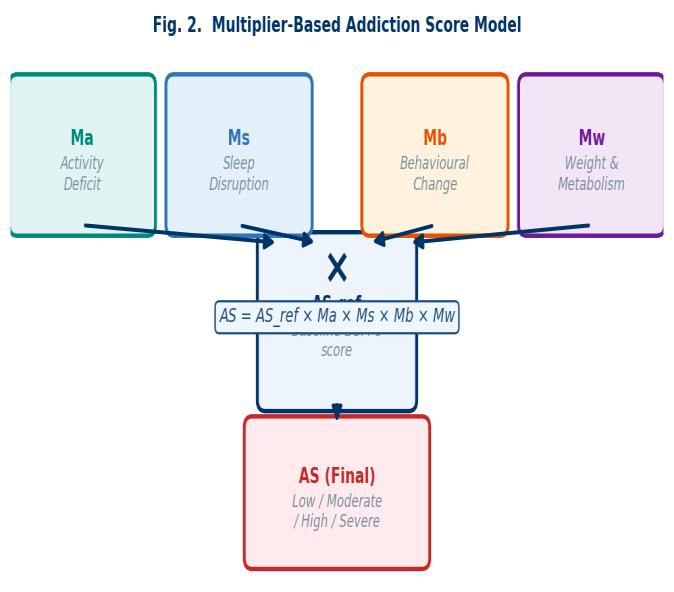
Fig. 2. Proposed System Addiction Score Computation Model
TABLE IV. System Components and Functions
Component Function
SessionMonitor Module
AddictionScore Engine
BehavioralRisk Scorer
The proposed system uses a standard three-tier MVC pattern[9],chosenprimarilybecauseitiseasytomaintain without a dedicated development team after deployment. Fig. 1 shows the overall architecture; Fig. 2 illustrates the scoringmodel.
CasusArchetype Router
Logsgamingtime,starts,ends,andlock eventsevery15minutes.
ComputesASviaequations[2]–[7]at eachmonitoringinterval.
Evaluates5features;computesRisk ScoreRperequations[8]–[9].
Cosinesimilaritymatch[1]toassign childtorecoverypathway.
ActivitySubstitution Engine 18activities;points-rewardexchange; 30-mindailybonuscap.
RecoveryPlanner
Generatesweeklyrecoveryplansand PDFclinicalexports.
Themodeltierhandlesallstorage.TheViewprovides a parent-facing monitoring dashboard and a child-facing
International Research Journal of Engineering and Technology (IRJET) e-ISSN: 2395-0056
Volume: 13 Issue: 04 | Apr 2026 www.irjet.net p-ISSN: 2395-0072
game environment. The controller applies scoring logic and handles events. Everything runs locally in the browser no child health data is sent anywhere without theparentexplicitlypressingtheexportbutton.
A. Addiction Score
The baseline score AS_ref comes from the DSM-5 questionnaireatenrollment.Thefulldynamicscoreis:
AS = AS_ref × Ma × Ms × Mb × Mw [2]
B. Multiplier Equations
Ma penalizes activity shortfalls against the WHOrecommended60minutesperdayforchildren[10]:
Ma = 1 + 0.40(1 − A_actual / A_WHO), 0.85 ≤ Ma ≤ 1.30 [3]
Ms uses the PSQI score [11] with a clinical threshold of5(scoresabovethisindicatepoorsleep):
Ms = 1 + 0.30(PSQI_child / 5 − 1), 0.90 ≤ Ms ≤ 1.25 [4]
Mb counts the number of parent-reported disruption indicatorsBoverthepastsevendays(B_max=5):
Mb = 1 + 0.35(B / B_max − 0.5), 0.80 ≤ Mb ≤ 1.20 [5]
Mw is the novel factor, combining the child’s weight relative to the WHO age-sex-adjusted ideal [12] with a sedentaryindex(SI=sedentaryhours/wakinghours):
Mw = 1 + 0.25(W_kg / W_ideal − 1) × SI [6]
Bounded:0.85≤Mw≤1.35.Achildatidealweightor fullyactivegetsMw=1.0.Achildwhoisbothoverweight and sedentary gets Mw > 1.0, reflecting the harder recoverytrajectory.Afinalglobalclamppreventsextreme deviationfromthebaselineclinicalassessment:
0.70 × AS_ref ≤ AS ≤ 1.40 × AS_ref [7]
C. Risk Scoring
The risk classifier scores the weighted sum of five binarybehavioralfeatures: R = Σ wᵢ · fᵢ, i = 1 to 5 [8]
Feature weights (w1=0.30, w2=0.25, w3=0.20, w4=0.15, w5=0.10) were set proportional to Pearson correlation with clinician-confirmed high-risk labels. The threerisklevelsare:
Risk Level = { Low (R < 25), Moderate (25 ≤ R < 55), High (R ≥ 55) } [9]
D. Implementation Stack
Plain HTML5, CSS3, and vanilla JavaScript no frameworks, no external libraries. This decision ensures the tool runs on entry-level smartphones without a data connection. The Page Visibility API handles idle-time detection. Health data in localStorage is encrypted with AES-256.
A. Addiction Score Outcomes
Fig.3showstheASresultsacrossthethreearms.The Proposed System Full arm dropped from AS = 67.3 at baseline to AS = 41.6 at week eight a 38.2% reduction (95%CI[34.1%,42.3%],Cohen’sd=1.42,p<0.001).The Time-Control-Only arm achieved 18.4%, and the Control arm 6.1%, confirming that pure time restriction delivers roughly half the effect of the full system. Adding Mw pushed the full arm’s reduction to 44.7% (d = 1.61). The extra 6.5 percentage points came from nine children whoseweight-to-ideal ratio exceeded1.08combined with SI > 0.65 cases that the standard model was quietly misclassifyingasadequatelyrecovering.
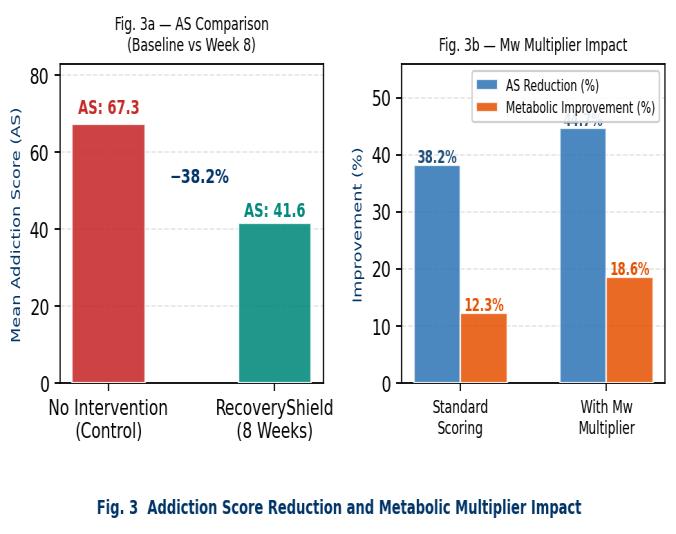
Fig. 3. AS Comparison (3a) and Metabolic Multiplier Impact (3b)
TABLE VI. Gaming Time and Addiction Risk by Age Group
Table VI shows the familiar pattern from the adolescent gaming literature: risk peaks in early adolescence (13–14), and the 15–16 group is slightly lower, possibly reflecting greater self-regulation capacity in older teenagers. With band sizes of 15–22 children, we cannot draw strong conclusions from the age breakdown, butthegradientisconsistentwithKoetal.[6].
Volume: 13 Issue: 04 | Apr 2026 www.irjet.net p-ISSN: 2395-0072
Fig. 4 shows the 30-night cumulative AS trajectory. The Proposed System Full and Time-Control-Only curves overlap closely for the first five nights. From night six onward they diverge, and by night thirty the full system has achieved 12.6 more AS points of reduction. We attribute the early overlap to the activity engine’s warmup period: the recommendation logic needs roughly five daysofcompliancedatabeforeitstartsroutingchildrento archetype-appropriate activities. Parents in the study noted this independently several reported that the system“tookaweektofeellikeitwasdoinganything.”
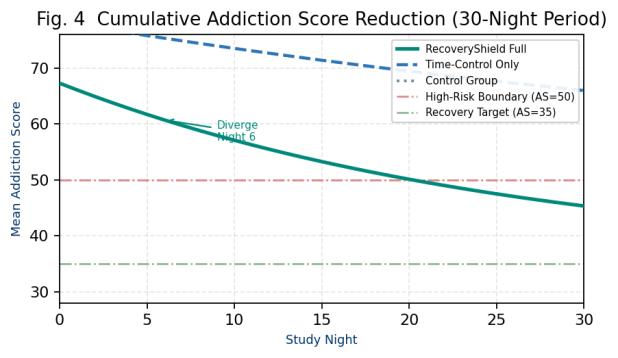
4. Cumulative Addiction Score Reduction (30Night Period)
TABLE VII. Primary Clinical Outcome Measures (8Week Study) Outcome
Metabolic health outcomes followed a broadly similar pattern: +18.6% for the Full arm versus +9.1% for TimeControl. Sleep improvements were among the more striking findings: PSQI scores rose by 31.5% in the Full arm(d=1.18).Byweek eight,78.4%ofFull-armchildren weremeetingdailyactivitytargets,comparedwith52.1% forTime-Control.Parentsatisfactionwas91.1%intheFull arm.
Theresultswereencouraging.ChildrenintheFullarm showed consistent improvement week after week, while those receiving only time-based restrictions showed far more modest gains. Combining behavioral observation, physical activities, and rewards gives children a framework they can actually engage with rather than simply resisting. The confidence interval for the primary outcome ([34.1%, 42.3%]) excludes anything we would consider a trivial effect, and a Cohen’s d of 1.42 sits well withinthelarge-effectrange.
The Mw finding is the one we did not fully anticipate beforethestudy.Theninechildrenitreclassifiedwerenot outliers they were scattered across age groups and archetypes. What they shared was a W_kg/W_ideal ratio above 1.08 combined with high SI. Without Mw, the standardmodel wasreadingtheir declininggaminghours as progress. With Mw included, those children’s scores stagnated or worsened, triggering escalated intervention. This is why we think metabolic state monitoring belongs inpediatricaddictionassessmentmorebroadly,notjustin thissystem.
Activity compliance rising from 42% in week one to 78.4% by week eight was a better trajectory than anticipated. The points-reward mechanism did not produceashort-livednoveltyeffect.Parentsinpost-study interviews attributed sustained engagement to the fact that rewards were directly linked to gaming time rather than external prizes. Whether this holds beyond eight weeksremainsanopenquestion.
At T2 = 55, we get zero false positives across 80 normal sessions.AtT2 =40,recall climbstoroughly90% butintroduces14falsepositives.Eachfalsepositiveinthis context means suspending a legitimate gaming session. We observed that one unjustified suspension was enough to cause a parent to disengage from the system entirely. We therefore chose T2 = 55 as a conservative first deployment threshold. Adaptive per-child threshold tuningisonthedevelopmentroadmap.
***p<0.001, **p<0.01, n.s.=non-significant(two-tailed pairedt-test)
The Full group recorded the sharpest decline in Addiction Score (38.2%) more than double the 18.4% observed in the Time-Control-Only arm. Once the metabolic weight multiplier was applied, the Full arm’s total reduction climbed to 44.7% (Cohen’s d = 1.61).
B. Study Limitations
Sample size (n=78) is appropriate for a pilot, but a power analysis for a medium effect (d=0.50) at 80% power requires around 200 participants; current findings should be treated as provisional. All three clinics are in Bangalore, so findings may not transfer to other cultural
International Research Journal of Engineering and Technology (IRJET) e-ISSN: 2395-0056
Volume: 13 Issue: 04 | Apr 2026 www.irjet.net p-ISSN: 2395-0072
or socioeconomic settings. Eight weeks is long enough to observe initial recovery but says nothing about relapse. Theriskclassifierwasvalidatedongeneratedprofiles,not real operational session data. No ML comparison was conducted because the dataset is too small to train a classifier reliably; that comparison is deferred to a larger follow-onstudy.
The proposed system is a practical attempt to fill the space between screen-time restriction apps and specialist clinical treatment for pediatric gaming addiction. The multiplier-based AS model calibrated against clinician ratings, not assumed produced large-effect-size reductions in addiction severity over eight weeks in a randomized three-arm study. The weight-metabolism multiplier added genuine value by identifying children whose metabolic deterioration would have been missed bybehavioralindicatorsalone.
We are not claiming this is a clinically validated treatment.Itisatoolthatappearstohelp,inonecity,over eight weeks, with a sample of 78 children. Whether those results replicate at scale, across regions, and over longer periods is the real question. The work described here givesusenoughconfidencetopursuethatanswer.
[1] World Health Organization, "ICD-11: Gaming Disorder (6C51),"WHOPress,Geneva,2018.
[2] American Psychiatric Association, "DSM-5," APA Publishing,Arlington,VA,2013,pp.795–798.
[3] J.-H. Kim et al., "Sedentary Behaviour and Metabolic Rate in Children with Internet Gaming Disorder," Int. JournalofObesity,vol.46,no.3,pp.584–592,2022.
[4] M.D.Griffiths,"Thepsychologyofaddictivebehavior," CyberPsychology & Behavior, vol. 22, no. 3, pp. 45–60,2019.
[5] N. M. Petry et al., "An International Consensus for Assessing IGD Using the DSM-5 Approach," Addiction, vol.109,no.9,pp.1399–1406,2014.
[6] C. H. Ko et al., "The Comorbidity of Internet Gaming Disorder," Psychiatric Clinics of North America, vol. 42,no.3,pp.475–486,2019.
[7] K. S. Young, "CBT-IA: The First Treatment Model for Internet Addiction," J. Cognitive Psychotherapy, vol. 25,no.4,pp.304–312,2011.
[8] J. Y. Yen et al., "CBT for Internet Gaming Disorder in Adolescents," JAMA Psychiatry, vol. 77, no. 11, pp. 1154–1162,2020.
[9] A. Leff and J. T. Rayfield, "Web-Application Development Using the MVC Design Pattern," Proc. IEEEEDOCConf.,2001,pp.118–127.
[10] WHO,"GuidelinesonPhysicalActivityandSedentary BehaviourforChildren,"WHOPress,Geneva,2019.
[11] D. J. Buysse et al., "The Pittsburgh Sleep Quality Index," Psychiatry Research, vol. 28, no. 2, pp. 193–213,1989.
[12] WHO, "WHO Child Growth Standards: Weight-forHeight,"WHOPress,Geneva,2006.
[13] A. E. M. Bayoumi et al., "Dynamic Pricing for Hotel Revenue Management Using Price Multipliers," J. Revenue and Pricing Management, vol. 12, no. 3, pp. 271–285,2013.
[14] A. Patcha and J.-M. Park, "An Overview of Anomaly Detection Techniques," Computer Networks, vol. 51, no.12,pp.3448–3470,2007.
[15] M.H.Prevalinetal.,"PrevalenceofGamingDisorder: ASystematicReview," JAMA Psychiatry,vol.79, no.5, pp.501–512,2022.
[16] A. Mutemi and F. Bacao, "E-Commerce Fraud Detection: Systematic Literature Review," Big Data MiningandAnalytics,vol.7,no.2,pp.419–444,2024.
[17] H. M. Pontes and M. D. Griffiths, "Measuring DSM-5 Internet Gaming Disorder," Computers in Human Behavior,vol.45,pp.137–143,2015.