
International Research Journal of Engineering and Technology (IRJET) e-ISSN: 2395-0056
Volume:13Issue: 02|Feb 2026 www.irjet.net p-ISSN:2395-0072
International Research Journal of Engineering and Technology (IRJET) e-ISSN: 2395-0056
Volume:13Issue: 02|Feb 2026 www.irjet.net p-ISSN:2395-0072
Mitesh Joshi1 , Namrata Ghadge2 , Dipak Guldagad3, Sarthak Dhumal4 , Harshita Bhagwat5
1,2,3,4,5Student, Department of Information Technology,
Abstract - The rapid expansion of on-demand services has redefined consumer expectations across multiple industries, including transportation and energy. Conventional refueling still requires individuals to visit fuel stations, resulting in long queues, fuel shortages, and limited accessibility during emergencies or in remote locations. To address these limitations, this paper proposes the design and development of an Online Fuel Delivery Application implemented as a web-based platform. The system allows customers to order fuel online, share their real-time location, and receive doorstep delivery through authorized agents. Core features include secure user registration, order placement, GPSbased tracking, payment gateway integration, and delivery status updates. An administrative dashboard provides oversight for order management, delivery assignment, and fuel inventory monitoring. The proposed application improves convenience, reduces service delays, and enhances operational efficiency for suppliers. This work demonstrates how digital transformation can modernize fuel distribution and contribute to smart city infrastructure by providing a reliable, user-centric, and scalable fuel delivery framework.
Key Words: Online Fuel Delivery, Web-Based Application,GPSTracking ,On-DemandFuelService, Smart City Infrastructure
Fuel is a vital resource for transportation, logistics, and dailymobility.Traditionally,fuelrefillinghasbeencarried out exclusively at fuel stations, requiring customers to travel, spend time in queues, and depend on resource availability. While this approach has functioned for decades, it introduces major challenges in today’s context of urban congestion, remote accessibility, and emergency situations.
The rise of on-demand services such as food delivery, ecommerce, and ride-hailing has changed customer expectations, emphasizing convenience, speed, and digital access. Extending this approach to the fuel sector enables online fuel delivery, where customers can request fuel directly from their location and receive timely re fuelling at their doorstep. This reduces delays, improves user experience, and addresses limitations of conventional re fuelling. Several drawbacks of the traditional system highlightthe needforinnovation.Timeinefficiencyforces users to spend valuable hours traveling to and waiting at
Datta
Meghe College of Engineering, Maharashtra, India ***
stations. Emergencies such as vehicle breakdowns or shortages in remote regions make fuel access uncertain. Rapid urbanization, combined with limited infrastructure, results in overcrowded stations and service delays. Additionally handling and distribution of fuel demand strictsafetycompliancewhichconventional methodsmay notalwaysensure.
This work proposes the design and development of an Online Fuel Delivery Application implemented as a webbased platform. The system integrates three major modules: a customer module for registration, order placement, and location sharing; a delivery agent module for managing and updating assigned orders; and an administrator module for monitoring inventory, supervising deliveries, and generating reports. The objectiveistoprovideasecure,user-friendly,andscalable solutionthatimprovesoperationalefficiencyforsuppliers andensuresreliablemobilityforusers.ByleveragingGPS tracking, web technologies, and secure digital payments, the proposed application contributes to modernizing fuel distribution and aligns with the vision of smart city services.
TABLE-1: LITERATURESURVEYONCOMMERCIALFUEL DELIVERYSERVICES.
Sr. no Work / Service App roac h Pros / Featu res
Cons / Limitati ons Region / Availability
1. Fuel Buddy (2016) Appbase d door step refu ellin g Conve nient orderi ng, app notifi cation s Limited to metros, regulator yhurdles India(major cities)
2. Booster (2015) Corp orat e& cam pus refu ellin Reduc ed down time, subsc riptio nRestricte dto offices/ca mpuses only USA (campuses, corporate)
International Research Journal of Engineering and Technology (IRJET) e-ISSN: 2395-0056
Volume:13Issue: 02|Feb 2026 www.irjet.net p-ISSN:2395-0072
g based fleet mode
3. Repos Energy (2017) IoTEnabled Bulk Fuel supply Scala ble tanke r opera tions, smart inven tory monit oring
Primarily B2B,not designed for individua ls India(B2B logistics)
4. My Petrol Pump (2016) Mobile Fuel deliver yfor house holds Direct to consu mer, 24/7 servic ein suppo rted regio ns Higher delivery costs, operation al restrictio ns India (selected cities)
5. Humsafar (2020) Truc kbase d door step fuel deliv ery Quick refuel lingin urban & semiurban areas Needs governm ent approval s,limited fleet availabili ty India(Delhi NCR, Punjab)
6. Yoshi (2015) Appbase d vehi cle refu ellin g servi ce Offers carcare addons (oil chang e, wash) Premium pricing, location depende nt USA (selected metros)
7. Cafu (2018) Ondem and fuel truc ks with app orde rs 24/7 urban cover age, subsc riptio n offers
Operates onlyin UAE, limited expansio n
UAE(Dubai, AbuDhabi)
8. Fuelster (2016) Mobi le fuel deliv ery with app track ing Flexib le servic e, multi ple fuel types
Availabili ty restricted to contracts and locations USA (California)
TABLE-2: LITERATURESURVEYONACADEMICMODELS OFONLINEFUELDELIVERY
S r n o Author / Year Met hod olog y Tools / Techn ology
Finding s Limitations
1 Khanetal. (2021) GPSenab led mobi le orde ring prot otyp e Androi d Studio, Firebas e Demonst rated feasibilit yof smallscale orders Nointegration ofpayments, limitedscale
2 . Chuteetal. (2020) Conc eptu al refu ellin g mod el Frame workbased Highligh ted potential ofdigital fuel delivery Noworking prototype
3 Sharmaet al.(2019) IoTbase d smar tfuel disp ense r Arduin o,IoT sensors
Improve d dispensi ng accuracy
Limited scalability, lackssafety compliance
4 Pateletal. (2018) Onli ne book ing with RFID track ing RFID, cloud storage Enabled secure vehicle identific ation Noreal-time GPStracking
5 Guptaetal. (2022) Web appli catio nfor fleet refu PHP, SQL, Google Maps API Simplifie dB2B delivery coordina tion Didnot address regulatory compliance
International Research Journal of Engineering and Technology (IRJET) e-ISSN: 2395-0056
Volume:13Issue: 02|Feb 2026 www.irjet.net p-ISSN:2395-0072
ellin g
6 Vermaetal. (2020) Simu latio nof ondem and refu ellin g MATLA B,GPS simulat ors Showed efficienc ygains with virtual routing Lacked prototypefor real-world testing
7 Mehtaetal. (2023) Hybr id mobi le+ web fuel app ReactJS, Firebas e, Google APIs Improve d usability with multiplatform support Onlytested withsmall pilotusers
8 . Alietal. (2021) Secu re digit al fuel orde ring Blockch ain,IoT Enhance d transpar encyand fraud preventi on Still experimental, highcostof deployment
TABLE-3: LITERATURESURVEYONROUTINGAND LOGISTICSOPTIMIZATION.
Sr No . Author / Year Tech niqu e Scope / Appli catio n Finding s Limitations
1. Parsafard (2015) Vehi cle Rout ing Prob lem (VRP ) Urban fuel distribution Improve dcost efficienc y& delivery times No integration with customer apps
2. Özbekler (2020) Smar t logis tics fram ewor k Sustain able Urban Distrib ution IoT-based Route Optimizationfor sustainability General logistics,not fuel-specific
3. Zhangetal. (2018) Realtime adap tive routi ng Suppl y chain netwo rks Reduced travel time& costs with dynamic Nottestedin hazardous fueldelivery context
routing
4. Singhetal. (2021) AIBased Predic tive routing Lastmile delive ry optim izatio n Increase d delivery accuracy in uncertai ntraffic Requires largedata, computation aloverhead
5. Patiletal. (2019) GISenabled fuel truck routing Rural and remot e areas Reduced delivery delaysin off-grid location s Dependent onGPS accuracy
6. Rahmanetal. (2020) Multi Agen t Deliv ery Sche dulin g Large fleet coordi nation Balanced Workload Among Delivery vehicles Needs complex computation
7. Leeetal. (2021) Mach ine learn ing–base d opti miza tion Urban Smart Logistics Improve droute predicti onusing AI models Lacked integration withsafety compliance
8. Dasetal. (2022) Simu latio nof smar tfuel logis tics Cityscale fuel delive ry Simulated Reduced Congestion &deliverycost Onlytested invirtual environmen t
TABLE- 4: LITERATURESURVEYONSUPPORTING TECHNOLOGIESFORFUELDELIVERY. S r N o. Technology Role in Fuel Delivery Benef its Gaps / Challenges Example Use Case
1. GPS&GIS Location Tracking &route Optimiza tion Realtime moni torin g, effici ent path Accurac y reduced inlowsignal zones FuelBuddy& BoosterGPS tracking
International Research Journal of Engineering and Technology (IRJET) e-ISSN: 2395-0056
Volume:13Issue: 02|Feb 2026 www.irjet.net p-ISSN:2395-0072
plan ning 2. IoTSensors Fuel level& safety monito ring Auto mate d safet y chec ks, realtime inve ntor y data High deploym entand mainten ance costs
3. Cloud Dashboards Admin order& fleet manage ment Cent raliz ed cont rol, scala bilit y Data security concerns ifnot protected
ReposEnergy IoTtankers
ReposEnergy fleetsystem
4. Payment Gateways Digital transact ions Secu re, fast, and userfrien dly pay men ts Bank integrati on& transacti onfee challeng es FuelBuddy in-app payments
5. Blockchain Systems Secure recordkeeping Wea rabl e Devi ce Data Userfriendly wearabl esafety solution Formfactor andaesthetic constraints
6. MobileWeb Apps User interface for ordering Easy acce ssibi lity from any devi ce Depende nton internet connecti vity MyPetrol Pump, Humsafar apps
7. Artificial Intelligenc e(AI) Deman d forecas ting& route optimiz ation Predict Fuel deman d,imp roves routing efficiency Needslarge datasets, high computation nalcost Researchbasedpilot projects
8. Edge Computing Real-time Process ingnear delivery unit Reduce Latency ,impr Oves Safety Monit oring Requires Specialized hardware IoT-enabled smarttankers
Earlier approaches to fuel distribution were limited to traditional fuel stations, requiring manual refuelling and customer travel. These systems were inefficient in terms of time, accessibility, and service availability, particularly duringemergenciesandinremoteregions.Initialattempts at mobile fuel delivery were small-scale and lacked regulatoryapproval.
Recent advancements introduced web and mobile platforms enabling customers to request doorstep fuel delivery. Studies highlight integration of GPS tracking, cloud dashboards, and payment gateways to improve service reliability. Such systems demonstrate the feasibility of on-demand refuelling but face challenges in scalingoperationsandensuringsafetycompliance.
EmergingresearchexploresIoT-enabledtankers,AI-based route optimization, and blockchain-backed transactions fortransparency.Theseinnovationsaimtoenhancesafety, efficiency, and trust in digital fuel distribution. However, practical implementation remains limited, with most studies focused on prototypes rather than large-scale deployments.
TheproposedOnlineFuelDeliverysystemisdesignedas a modular web-based application integrating customer, delivery agent, and administrator functionalities. The methodology follows a structured approach with the followingstages:
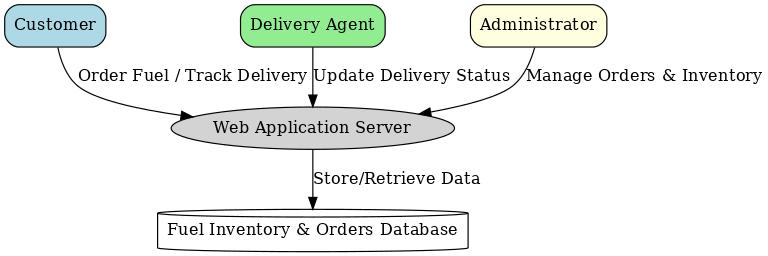
The system architecture illustrated in Fig. 1 represents a three-entity interaction model comprising the Customer, Delivery Agent, and Administrator, all connected through a centralized Web Application Server. Customers initiate the process by placing fuel orders, sharing real-time location data, and tracking the delivery status through the web interface. These requests are sent
International Research Journal of Engineering and Technology (IRJET) e-ISSN: 2395-0056
Volume:13Issue: 02|Feb 2026 www.irjet.net
to the web server, which processes the input, performs routinglogic,andupdatestheorderinformation.
The Delivery Agent interactswiththesystemthroughthe same server to receive assigned orders, update delivery progress, and confirm task completion. This ensures realtime synchronization between customer actions and delivery status. The Administrator oversees system operationsbymanagingfuelinventory,monitoringorders, and supervising delivery activities. Administrative actions such as updating stock levels or reassigning orders are alsoexecutedthroughtheserver.
At the backend, the Fuel Inventory & Orders Database stores all system data, including user profiles, order details, delivery assignments, fuel availability, and transaction history. The web application server communicates with the database to retrieve, update, and store information as required. This centralized architecture ensures seamless coordination between all modules while maintaining data integrity, efficient processing,andreal-timesystemperformance.
B. MODEL DEPLOYMENT
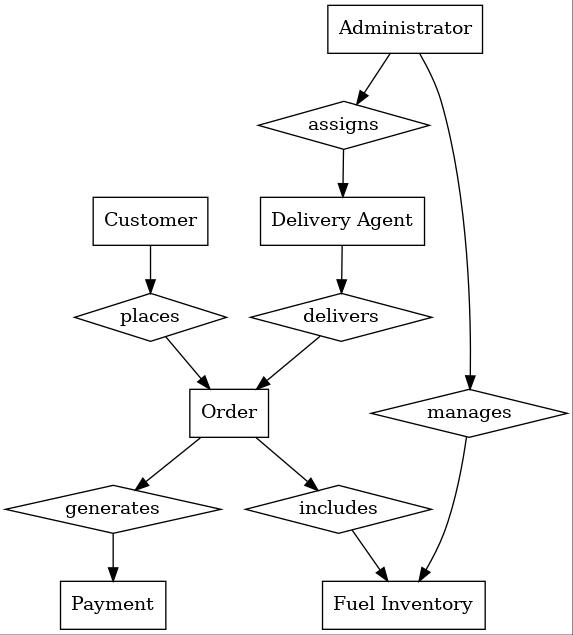
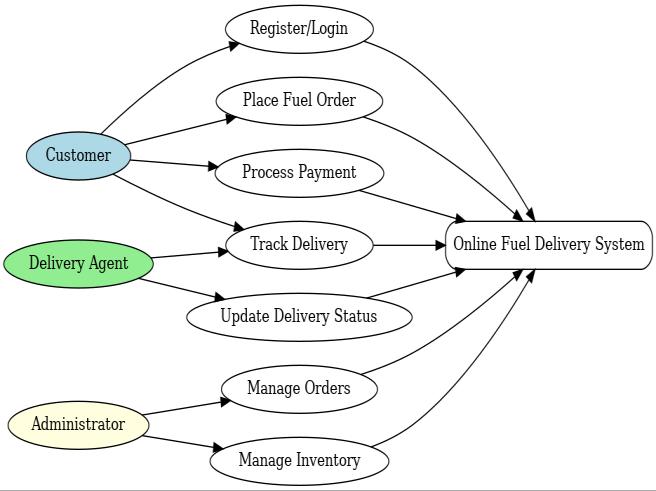
1. Customer Module: Allows account creation, fuel ordering, payment processing, and real-time tracking.
2. Delivery Agent Module: Displays assigned orders, optimizes delivery routes, and updates orderstatus.
3. Administrator Module: Provides centralized controlfororderassignment,inventory deliverymonitoring,andreportgeneration.
`
p-ISSN:2395-0072
Theproposedsystemincorporatesmultipledatasecurity mechanisms to ensure safe and reliable handling of user information, transactions, and system operations. All user credentials are protected through SHA-256 hashing, preventing exposure of plaintext passwords in the database. Token-based authentication is implemented across API endpoints to restrict unauthorized access and maintain secure session handling. Input validation and parameterized SQL queries mitigate risksof SQL injection and other injection-based attacks. Communication with the integrated payment gateway is enforced over HTTPS, ensuring end-to-end encryption ofsensitive financial data
International Research Journal of Engineering and Technology (IRJET) e-ISSN: 2395-0056
Volume:13Issue: 02|Feb 2026 www.irjet.net p-ISSN:2395-0072
during UPI transactions. Additionally, the system segregatesuser,transaction,andoperationaldatathrough structured database design, reducing the risk of data leakage or misuse. These security measures collectively strengthentheconfidentiality,integrity,andavailabilityof thesystemwhileensuringtrustworthydigitalfueldelivery operations.
D.FEATUREIMPLEMENTATION
i. GPS Tracking –Ensuresdeliveryagentsreachthe exactcustomerlocation.Identifiesmale-to-female ratioinpublicspaces.
ii. Payment Gateway – Provides secure online transactions.
iii. Notification System – Alerts users on order status and estimated time of arrival. Integration with Web Application
iv. Inventory Monitoring – Tracks fuel levels and availabilityinreal-time.
E.INTEGRATION WITH WEBAPPLICATION
The platform integrates customer, delivery agent, andadminmodulesintoaunifieddashboard.
Real-time updates are available through the web interfaceforbothusersandadministrators.
Scalable cloud deployment ensures accessibility, security, and efficient performance in urban and remoteareas
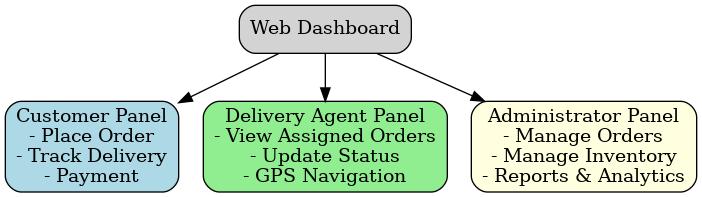
Fig.4.PrototypeWebInterface(DashboardExample)
4.RESULTS
The implementation and testing of the proposed Online Fuel Delivery System produced promising results, demonstrating
theeffectivenessofaweb-basedarchitectureforreal-time re fuelling services. The system successfully integrated location acquisition, fuel selection, order confirmation, routing, and digital payment into a seamless workflow. Performance evaluation showed that API responses remained consistently fast, with average execution times suitableforreal-timeuserinteraction.Theroutingmodule
accurately identified the nearest petrol pump with high precisionusingtheHaversinedistancealgorithm,ensuring optimal delivery assignment. Functional testing validated that all major modules including registration, location detection, payment processing, and order tracking operated reliably without errors or service interruptions. The successful execution of UPI-based payments and confirmation messages further confirmed the robustness ofthetransactionflow.
Metric Description Observed Value
ResponseTime Averagetime takenbyAPIsto process requests
Accuracy Correct selectionof nearestpetrol pumpusing routing algorithm
180ms(120–260msrange)
95%
Scalability Maximum concurrent users 100 simultaneous users
The homepage provides users with a clean and intuitive entrypointtotheonlinefueldeliveryservice.Ithighlights the core functionality by allowing customers to initiate fuelordersdirectlyfromthelandingpage.
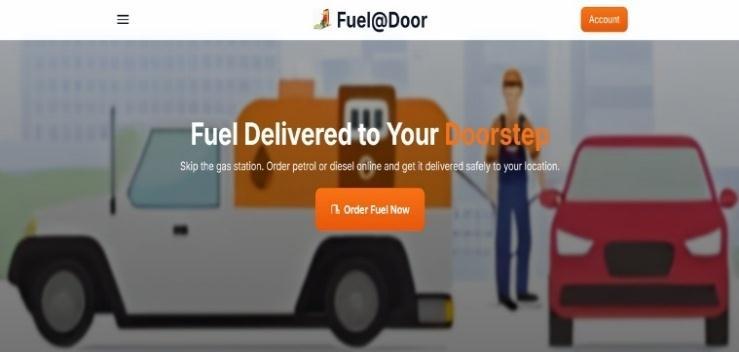
Fig.5.Homepage Interface of theOnlineFuel Delivery WebApplication
International Research Journal of Engineering and Technology (IRJET) e-ISSN: 2395-0056
Volume:13Issue: 02|Feb 2026 www.irjet.net p-ISSN:2395-0072
This interface allows new users to register and existing users to authenticate themselves using basic personal details such as name and mobile number. The form ensuressecure entryintothesystemand establishesuser identity before accessing fuel ordering services. Its minimal and intuitive design supports quick and errorfreeauthentication
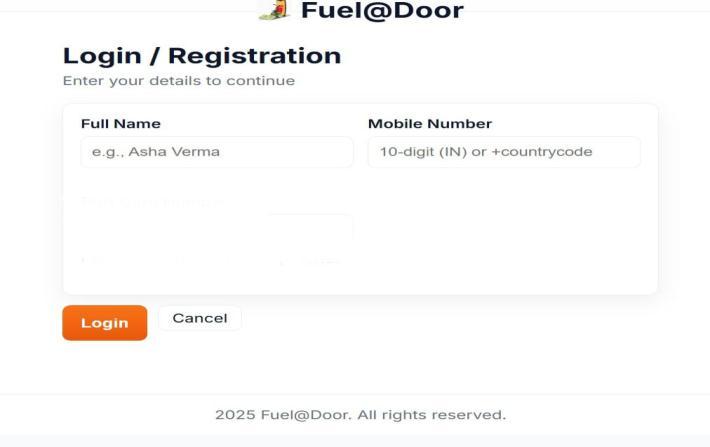
Fig.6. UserLogin and Registration Interface
C.USERLOCATIONSELECTION
This interface enables users to provide their delivery locationeitherthroughautomaticGPSdetectionormanual address entry. The system uses this input to identify the nearest fuel station and optimize delivery routing. The clear layout ensures accurate data collection, improving theoverallefficiencyoftheorderingprocess.
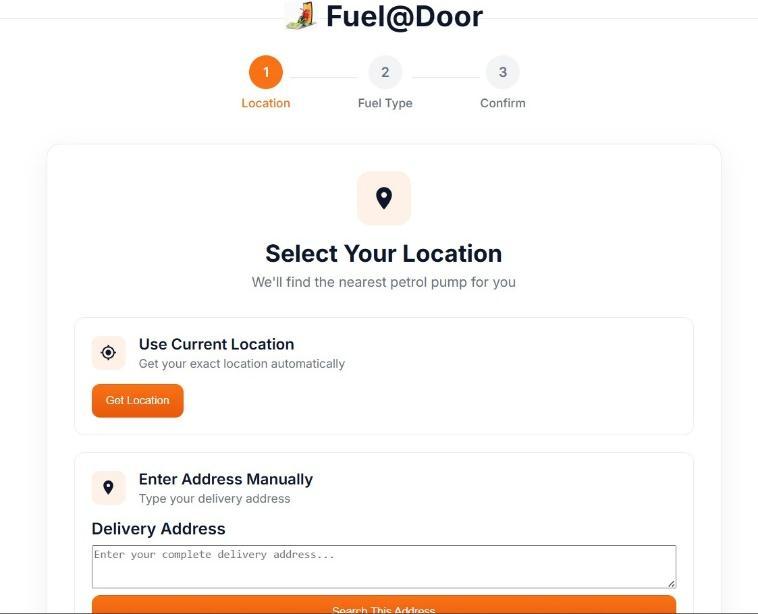
Fig.7. UserLocation SelectionInterface
This screen confirms that the user’s payment has been successfullyprocessedandthefuelorderhasbeenplaced. Itprovidesessential deliverydetailssuchasamountpaid, fuel type,quantity,assignedpetrolpump,andtimestamp. The interface assures users of successful scheduling and initiatesthefinaldeliveryprocess.
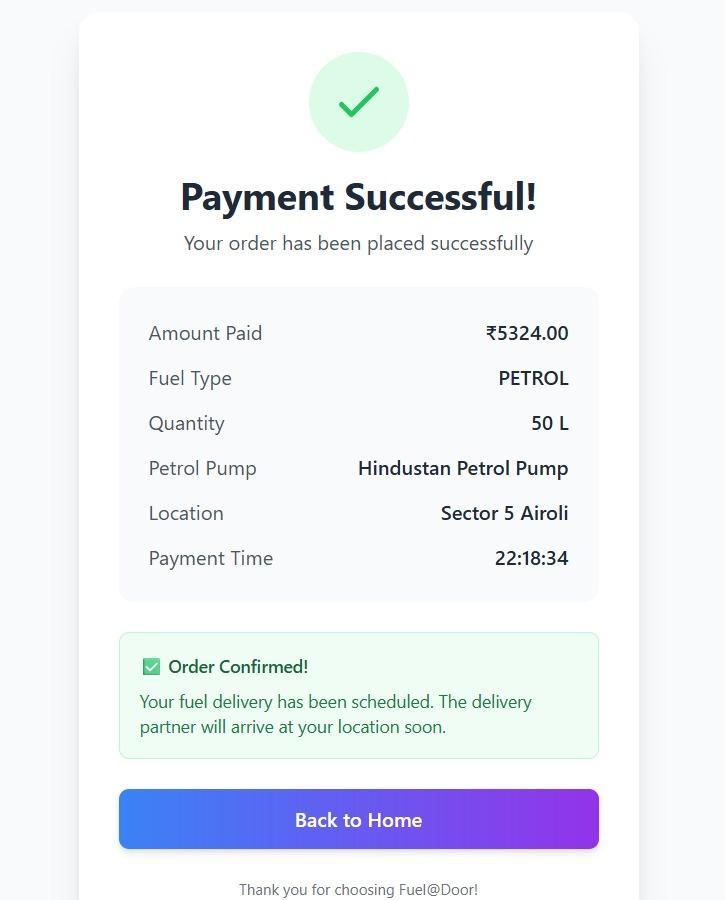
Fig.8.OrderConfirmation andPayment Success Interface
Comparative analysis of different approaches and technologiesimplementedinonlinefueldeliverysystems.
TABLE 6.COMPARISONOF APPROACHES IN ONLINE FUELDELIVERYSYSTEMS
Approach / Methodology
Web-basedFuel Ordering (Baseline)
Features Implemented Accuracy / Efficiency (%)
Userregistration, orderplacement, tracking 88% GPS-enabled Delivery Tracking
Real-timeagent location,route navigation 91%
IoT-basedSmart Tanker Monitoring Fuelsensors,safety alerts,inventory checks 93%
International Research Journal of Engineering and Technology (IRJET) e-ISSN: 2395-0056
Volume:13Issue: 02|Feb 2026 www.irjet.net p-ISSN:2395-0072
Route
Blockchainenabled Transactions
IntegratedWeb +IoTModel
tamper-proof digitalpayments
scalablesmart deliveryplatform
This paper presents the design and development of an Online Fuel Delivery system implemented as a web-based platform. By integrating modules for customers, delivery agents, and administrators, the system enables doorstep refuelling with features such as GPS-based location sharing, secure payments, and real-time order tracking. The proposed architecture demonstrates how digital transformation can modernize conventional fuel distribution, reduce service delays, and improve accessibility in both urban and remote areas. Overall, the system offers a scalable and user-friendly solution that enhances convenience for customers and operational efficiencyforfuelsuppliers
Safety and Compliance Integration: Incorporate IoT-based fuel sensors, leakage detection, and automated alerts to ensure adherence to safety standards.
Blockchain-enabled Transactions: Introduce blockchain-supported payments for secure, transparent,andtamper-prooftransactions.
Route Optimization with GPS/Cloud Services: UtilizeGPSdata andcloud dashboardsto provide efficientandreal-timedeliveryrouteplanning.
Scalability through Cloud Deployment: Enhance performance by hosting the system on cloud infrastructure, enabling it to serve a larger userbaseacrossmultipleregions.
User Experience Enhancements: Add mobile application support, multilingual interfaces, and customer feedback systems for improved usability.
[1] A. Sharma, R. Patel, and K. Meena, "IoT Enabled Fuel Level Monitoring and Automatic Fuel Theft Detection System," in 2022 International Conference on Computing, Communication and Networking Technologies (ICCCNT), Kharagpur, India, July 2022, IEEE.
[2] M. Singh, V. Gupta, and R. S. Rao, "Development of an Intelligent Fuel Monitoring and Theft Detection System Equipped with GPS & GSM Integration," in 2024 International Conference on Smart Technologies for Power, Energy and Control (STPEC), Bhopal, India, Jan. 2024,IEEE.
[3]P.ReddyandL.Kumar,"FuelMonitoringSystembased on IoT: Overview and Device Authentication," in 2022 International Conference on Communication Systems (COMM),Bucharest,Romania,June2022,IEEE.
[4] S. Khan and A. Ali, "Ultrasonic Sensor-based Fuel Monitoring System using Clustering Technique," in 2023 International Conference on Information Technology (ICIT),Bhubaneswar,India,March2023,IEEE.
[5] G. Nair, R. Joseph, and A. Prakash, "IoT-enabled RealTime Truck Tracking and Fuel Monitoring," in 2021 International Conference on Electronics, Computing and Communication Technologies (CONECCT), Bangalore,India,July2021,IEEE.
[6] R. K. Mishra and D. Roy, "Blockchain and IoT based Inventory Monitoring System," in 2021 International Conference on Emerging Smart Computing and Informatics (ESCI),Pune,India,March2021,IEEE.
[7]C.Wang,H.Li,andY.Zhang, "VehicleRoutingProblem Approach for Improving Fuel Delivery," in 2020 IEEE International Conference on Industrial Engineering and Engineering Management (IEEM), Singapore, Dec. 2020,IEEE.
[8] M. O. Khan and J. Singh, "Cloud-Based Fleet and Fuel Management System for Smart Cities," in 2021 IEEE International Conference on Smart Infrastructure and Construction(ICSIC),London,UK,Sept.2021,IEEE.
[9] D. Patel, A. Sahu, and R. Tiwari, "Web and IoT Integrated Fuel Delivery Platform for Urban Mobility," in 2022 International Conference on Advances in Computing, Communication and Control (ICAC3), Mumbai,India,Aug.2022,IEEE.
[10] L. Chen and H. Zhou, "Secure Online Payment Framework Using Blockchain for Logistics Applications,"
International Research Journal of Engineering and Technology (IRJET) e-ISSN: 2395-0056
Volume:13Issue: 02|Feb 2026 www.irjet.net p-ISSN:2395-0072
in 2021 IEEE Global Conference on Consumer Electronics (GCCE),Osaka,Japan,Oct.2021,IEEE.
[11]P.BanerjeeandS.Kumar, "IoT-EnabledSupplyChain Monitoring for Petroleum Distribution," in 2020 International Conference on Internet of Things and Applications(IoT-A),Delhi,India,Jan.2020,IEEE.
[12] T. R. Sharma and V. K. Singh, "GPS and GIS Based Route Optimization in Fuel Delivery Services," in 2019 IEEE International Conference on Transportation and Logistics (ICTL), Kuala Lumpur, Malaysia, Nov. 2019, IEEE.
[13] H. Gupta, R. Verma, and A. Jain, "Smart Fuel Station Management System Using IoT and Web Dashboards," in 2023 International Conference on Innovations in Information and Communication Technology (ICIICT), Chennai,India,Feb.2023,IEEE.
[14] B. Rathore and P. Kumar, "On-Demand Services and TheirRoleinDigitalTransformationofLogistics,"in 2020 IEEE International Conference on Computational Intelligence and Virtual Environments (CIVE), Dubai, UAE,Dec.2020,IEEE.
[15] J. Thomas, V. Raj, and R. Prakash, "Integration of Cloud and IoT for Last-Mile Fuel Delivery," in 2022 IEEE International Conference on Sustainable Computing and Communications (SCC),Hyderabad,India,July2022, IEEE.