
International Research Journal of Engineering and Technology (IRJET) e-ISSN: 2395-0056
Volume: 12 Issue: 05 | May 2025 www.irjet.net p-ISSN: 2395-0072
International Research Journal of Engineering and Technology (IRJET) e-ISSN: 2395-0056
Volume: 12 Issue: 05 | May 2025 www.irjet.net p-ISSN: 2395-0072
Ankush Rameshwar Bhange 1 , Dr. Abhijit Kundu 2
1Ankush Bhange, Student G.H.Raisoni University, Amravati Maharashtra, India
2 Prof, Dept. Of Civil Engineering, GH Raisoni University, Amravati Maharashtra, India
Abstract - This study investigates the effectiveness of electrochemical treatment for wastewater collected from sugar industries in the Western Maharashtra region of India, utilizing iron and aluminum electrodes. The sugar industry, a significant contributor to wastewater pollution in the region, generates effluents with high organic load, suspended solids, and chemical contaminants. Traditional treatment methods often fail to meet the required standards due to high treatment costs and complexity. Electrochemical treatment, known for its efficiency and relatively low environmental impact, offers a promising alternative for wastewater management. The research explores the performance of iron andaluminumelectrodes inremovingcontaminants fromthe wastewater, analyzing parameters such as chemical oxygen demand (COD), biochemical oxygen demand (BOD), total suspended solids (TSS), and color removal. Various operational factors, including current density, electrode material, and treatment duration, were optimized to assess the maximum pollutant removal efficiency. Experimental results will be analyzed for parameters such as turbidity, chemicaloxygendemand(COD),andconcentrationsofspecific contaminants before and after treatment. Additionally, the comparative performance of iron and aluminum electrodes willbeassessedbasedonremovalrates,energyefficiency,and operationalstability.Thefindingsofthisstudyareexpectedto provide valuable insights into the practical application of electrochemical treatment for wastewater, offering an effective and sustainable solution for water purification. The project will contribute to the development of optimized electrochemical treatment systems that could potentially be applied at various industrial scales to address the growing concerns of wastewater contamination.
Key Words: Electrochemical treatment, Electrocoagulation (EC), Electro flotation (EF), Iron electrodes, Aluminium electrodes, Contaminant removal efficiency
Electrochemical treatment of industrial wastewater has garnered attention as an effective method for removing pollutants,especiallyinregionswithhighindustrialactivity. ThesugarindustryinWesternMaharashtra,India,generates large volumes of wastewater, which contains high
concentrations of organic matter, suspended solids, and variouschemicals.Traditionaltreatmentmethods,suchas biologicaltreatmentandchemicalcoagulation,oftenstruggle tomeetstringenteffluentstandardswhilealsobeingcosteffectiveandenergyefficient.ThesugarindustryinWestern Maharashtra plays a pivotal role in the region's economy, contributing significantly to agricultural production and rural employment. However, the industry also generates large volumes of wastewater containing high levels of organic matter, suspended solids, and various chemical pollutants, which pose severe environmental and health risks.Theuntreatedorinadequatelytreatedeffluentfrom sugar mills can lead to contamination of water bodies, degradationofaquaticecosystems,andadverseeffectson public health, especially in water-scarce regions like Maharashtra.
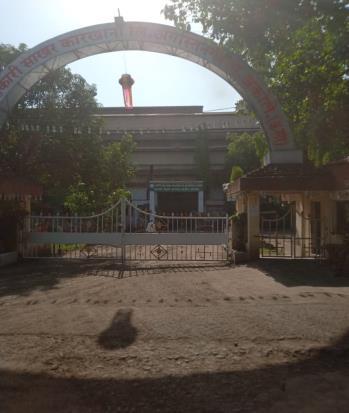
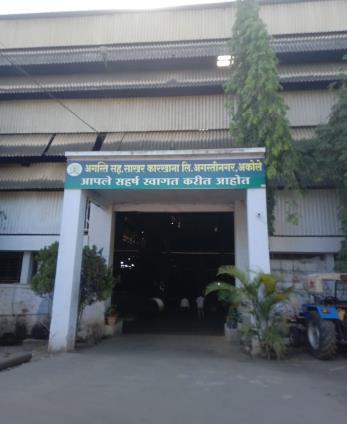
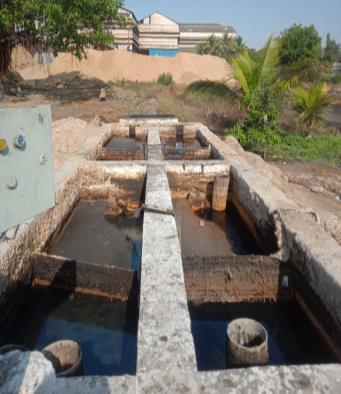
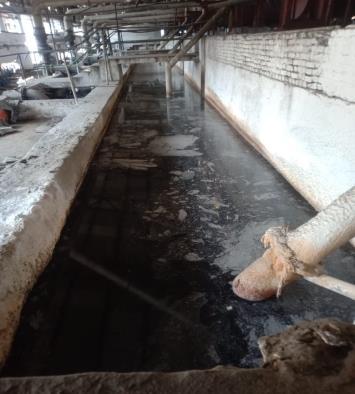
The wastewater samples were collected from the effluent dischargepointofAgastiSugarIndustry,situatedinAkole district,Ahilyanagar,Maharashtra.Thislocationwaschosen duetoitsdirectdischargeofuntreatedorpartiallytreated wastewater, which is representative of the effluent generatedbythesugarindustryinthisregion.Alongwith the raw sample from effluent discharge point, I have collectedsamplefromthetreatmentplantofsugarindustry after pretreatment processes in PST (like sedimentation) andafterthecompletetreatment.
Belowaresomephotographsfromsitevisit,
International Research Journal of Engineering and Technology (IRJET) e-ISSN: 2395-0056
Volume: 12 Issue: 05 | May 2025 www.irjet.net p-ISSN: 2395-0072
1.2Materials & Methods
Iron Electrodes: Iron electrodes are effective in generating Fe^3+^ ions, which are strong coagulants. Theyarealsorelativelyinexpensiveandwidelyavailable.
Aluminum Electrodes: Aluminum electrodes generate Al^3+^ions,whicharealsoeffectivecoagulants.Theyare particularly useful in removing organic pollutants and colourfromwastewater.
LaboratorySetup:Thereactormadeupofplasticmaterial withthedimensionsof14cmx9cmx15cmwasused.The working volume of the reactor was 1L. The EC unit consisted of four iron electrodes connected as bipolar system in the reactor and DC power supply. The dimensionsoftheelectrodeswere5cmx5cmx1mm.
1.3.Experimental Procedure: Experiments were performed with two electrodes connected to the DC power supply to determine optimum conditions. In the bipolar connection of electrodes, there is no electrical connection between inner electrodes; only the outer electrodesareconnectedtothepowersupply.Thespace between the four electrodes was maintained 1cm in all theexperiments.Ineachrunthevoltagewasvariedtoa desiredvalueof8,10and12V.Tomaintainhomogenous mixing of the reactor content, magnetic stirring unit is used.Thewastewaterconcentrationwasreducedtohalf thestrengththroughoutthestudytoreducethetimeand currentconsumptionandtoobtainbetterefficiency.
2.RESULTS
Wastewater sample was collected from the Agasti sugar industry and wascharacterized byquality parameters. To maintainsecrecy¬tohaveanyconflictofinterestthe officials from sugar industry shared the results of raw wastewater effluent orally for study purpose. The various parametersofwastewaterareshowninTable1.1,
Table1.1-Effluentchemicalcharacteristics
Inordertohavelesserloadonelectrochemicaltreatment& for cost effectiveness, effluent wastewater is first treated with pretreatment methods such as sedimentation. After allowingthewastewaterinPSTfor5hoursofdetentiontime. CollectivesamplefromPSTisalsotasted.Inpretreatment methods some impurities are removed and parameters reducedareshownintable1.2,
Table1.2-Wastewaterchemicalcharacteristicsafter pretreatmentmethods
The wastewater sample is then taken to lab for electrochemicaltreatment.
Thestudywasmainlyfocusedontheelectrocoagulationof the sugar industry wastewater with high concentration of CODfordeterminingeffectsofoperatingparameterssuchas pH, voltage and electrolysis time on COD, BOD and TDS removal.
Initially,theexperimentwascarriedoutwithoutadjusting pHofrawwastewateratpH5withvaryingvoltages.TheCOD reducedfrom3440mg/Lto740and550mg/Ltherebygiving 78.5% and 84% COD removal efficiencies respectively for 10Vand12Vat4hours,almostsameresultsareobtainedfor BOD5 as well (Table 1.3). However, the COD removal efficienciesremainednearlysamefor5hoursofelectrolysis time.TheTDSreducedfrom775mg/litto380and290mg/lit therebybeing73.6%,79.8%efficientinremovingTDSfrom wastewaterrespectivelyfor10Vand12Vat4hours(Table 1.3).TheTDSremovalefficienciesalsodidnotchangefurther for5hoursofelectrolysisduration.Nexttheexperimentwas
International Research Journal of Engineering and Technology (IRJET) e-ISSN: 2395-0056
Volume: 12 Issue: 05 | May 2025 www.irjet.net p-ISSN: 2395-0072
carried out by increasing pH to 6.0 with different voltages 10V and 12V and maximum COD removal efficiencies of 80.4% and 90.3% respectively were obtained for 4 hours (Table 1.5) which remained constant for 5 hours of electrolysis time. Similarly, maximum TDS removal efficienciesof77.1%and81.9%for4hours(Table1.5)were obtained. Similarly, tests were conducted using aluminum electrodeswithvariationinparametersasmentionedabove forironelectrodes.Testresultsisasfollows,
Table1.3–SummaryoftestresultsatoperatingpH5
Parameter
Table1.4–SummaryoftestresultsatoperatingpH5
Table1.6–SummaryoftestresultsatoperatingpH6
Table1.5–SummaryoftestresultsatoperatingpH6
Based on the experimental findings, the electrolysis durationof 4hours,pH 6.0 and12V werefound to be the critical operating parameters for the treatment of wastewaterusingironaselectrodematerial.MaximumCOD removalof91.4%andTDSremovalof81.9%wereobtained at these optimum operating conditions. Hence, it can be concluded that the electrochemical technology using iron electrodes appears to be a feasible alternative for the treatment of sugar industry wastewater. Thus electrochemicaltreatmentalongwithpretreatmentmethods is an efficient process for treatment of sugar industry wastewaterwhichisfastandeasyandcanbeoperatedusing lessequipmentandlimitedspace.
[1] Sonkamble S, et al (2018) - Natural treatment system models for wastewater management: a study from Hyderabad,India. Vol77(2):479–492
[2] Garcia-Segura S, et al (2017) - Electrocoagulation and advanced electrocoagulation processes: A general reviewaboutthefundamentals,emergingapplications anditsassociationwithothertechnologies.Vol801:15 September2017,Pages267-299
[3] Metcalf, Eddy (2003) Wastewater Engineering: TreatmentandReuseFourthEdition.Chem.Eng.1819
[4] CoskunT,etal(2012)-Optimizationofenergycostsin the pretreatment of olive mill wastewaters by electrocoagulation.18Nov201,Pages801-807.
[5] MollahMYA,etal(2004)-Fundamentals,presentand future perspectives of electrocoagulation. Vol 114. Issues1-3,18October2004,Pages199-210.
International Research Journal of Engineering and Technology (IRJET) e-ISSN: 2395-0056
Volume: 12 Issue: 05 | May 2025 www.irjet.net p-ISSN: 2395-0072
[6] ChoudharyR,etal(2017)-Electrocoagulationprocess to remove contaminants of coking wastewater using aluminiumelectrode.Vol86,August2017,Pages68-79.
[7] Manoj Babu J & Goel S (2013) - Defluoridation of drinking water in batch and continuous-flow electrocoagulation systems. Volume 32(4), December 2013,Pages29-38.
[8] VasudevanS,etal(2009)-Remediationofphosphatecontaminated water by electrocoagulation with aluminium, aluminium alloy and mild steel anodes. Volume114.Issues2-3,30May2009,Pages1480-1486.
2025, IRJET | Impact Factor value: 8.315 | ISO 9001:2008