
International Research Journal of Engineering and Technology (IRJET) e-ISSN: 2395-0056
Volume: 13 Issue: 04 | Apr 2026 www.irjet.net p-ISSN: 2395-0072

International Research Journal of Engineering and Technology (IRJET) e-ISSN: 2395-0056
Volume: 13 Issue: 04 | Apr 2026 www.irjet.net p-ISSN: 2395-0072
DR. G. TABITHA 1 , BELLANA SIVA SAI KUMAR2 , MADENA PRADEEP 3 , MAKANA KUMAR 4 , SHAIK SALMA FARZANA5
1 Associate Professor, Dept. of Civil Engineering, Sanketika Vidya Parishad Engineering College, VSP, India
2B.tech graduate student, Dept. of Civil Engineering, Sanketika Vidya Parishad Engineering College, VSP, India
3B.tech graduate student, Dept. of Civil Engineering, Sanketika Vidya Parishad Engineering College, VSP, India
4B.tech graduate student, Dept. of Civil Engineering, Sanketika Vidya Parishad Engineering College, VSP, India
5B.tech graduate student, Dept. of Civil Engineering, Sanketika Vidya Parishad Engineering College, VSP, India
Abstract - The increasing demand for sustainable construction materials has encouraged researchers to explore the use of agricultural waste as fiber reinforcement in concrete. Among these materials, rice straw, a by-product of rice cultivation, has emerged as a promising eco-friendly material due to its wide availability, low cost, and potential to improve the mechanical performance of concrete. This study investigates the effect of incorporating rice straw fibers in M20 grade concrete under Saturated Surface Dry (SSD) conditions to enhance compressive and tensile strength characteristics.
Rice straw fibers were collected, cleaned, and cut into suitable sizes to ensure uniform distribution within the concrete matrix. Before mixing, the fibers were brought to SSD condition to prevent excessive absorption of mixing water and to maintain the desired water-cement ratio. Concrete specimens were prepared by adding rice straw fibers into the mix and casting them into standard cube and cylinder moulds. After casting, the specimens were demoulded after 24 hours and placed in water for curing. The samples were tested at curing periods of 7, 14, 21, and 28 days to study strength development over time.
The inclusion of rice straw fibers improved crack resistance by acting as micro-reinforcement that bridges cracks and delays their propagation. This resulted in improved tensile performance and overall toughness of concrete. In addition, the use of rice straw fibers helps reduce agricultural waste and promotes sustainable construction practices. Therefore, rice straw fibers can be considered an economical and environmentally friendly reinforcement material for M20 grade concrete.
Key Words: M20 Grade Concrete, Rice Straw Fibers, Sustainable Construction, Fiber Reinforced Concrete, Compressive Strength, Split Tensile Strength, Agricultural Waste, Saturated Surface Dry (SSD) Condition.
Concrete is one of the most commonly used construction materialsintheworld.Itiswidelypreferredbecauseofits strength, durability, and ability to be moulded into different shapes. Concrete is made by mixing cement, fine aggregate(sand),coarseaggregate,andwater.Whenthese materials are properly mixed and cured, concrete gains high compressive strength. Due to these properties, concrete is used in various structural elements such as beams, columns, slabs, and foundations. Among different grades, M20 grade concrete is commonly used for residential buildings, pavements, and small structural works. M20 grade concrete means that it achieves a compressivestrengthof20MPaafter28daysofcuring.
Despite its advantages, concrete has low tensile strength and behaves in a brittle manner. Because of this, cracks may develop when concrete is subjected to tensile stress, shrinkage, temperature changes, or heavy loads. These cracks reduce the durability of concrete structures and allow water to enter, which may cause corrosion of reinforcement and reduce the life of the structure. To overcome these problems, different reinforcement methods such as steel bars, synthetic fibers, and admixturesareused.
Recently, fiber-reinforced concrete has become popular for improving the performance of concrete. The addition of fibers helps to control cracking, improve tensile strength, and increase durability. Usually, steel fibers, glassfibers,andsyntheticfibersareusedforthispurpose. However, these fibers are costly and not environmentally friendly. Due to increasing environmental concerns, researchers are now focusing on natural fibers as sustainablealternatives.
Rice straw is an agricultural waste material that is easily available in large quantities, especially in rural areas. It is lightweight,biodegradable,low-cost,andenvironmentally friendly. In many places, rice straw is burned after harvesting,whichleadstoairpollutionandenvironmental problems. Using rice straw fibers in concrete can help reduce waste and promote sustainable construction. Rice
International Research Journal of Engineering and Technology (IRJET) e-ISSN: 2395-0056
Volume: 13 Issue: 04 | Apr 2026 www.irjet.net p-ISSN: 2395-0072
strawfibersalsohelpincontrollingcracksandimproving tensilestrengthandtoughnessofconcrete.
Therefore, this study focuses on the strength characteristics of M20 grade concrete using rice straw fibers. The main aimisto evaluatethe effectofricestraw fibersoncompressivestrengthandsplittensilestrengthof concreteandtodetermineitssuitabilityasaneco-friendly constructionmaterial.
Rice straw is an agricultural by-product obtained after harvesting rice (Oryza sativa), one of the oldest cultivated crops in the world. Rice cultivation began around 8,000–10,000yearsago,mainlyincountrieslikeIndiaand China. Since then, large quantities of rice straw have been producedasresidueafterseparatingthericegrains.
Traditionally, rice straw has been widely used in rural areas for various purposes. Farmers commonly used it as animalfodder,roofthatching,beddingforlivestock,andas fuel. It was also used for mulching and composting to improvesoil fertilityandcropproductivity.InmanyAsian countriessuchasIndia,China,andThailand,ricestrawhas played an important role in agriculture and rural livelihoodsforcenturies.
In recent years, with growing environmental concerns, researchers have started exploring rice straw for use in construction materials. Rice straw fibers are now being used in fiber-reinforced concrete because they are easily available, low-cost, lightweight, and eco-friendly. These fibers help control cracks and improve the tensile performance of concrete, making them suitable for sustainableconstructionpractices.
1. The main objective of this study is to evaluate the feasibility of using rice straw fibers as reinforcement in concrete.
2. The study also aims to examine the effect of rice straw fiberadditiononthecompressivestrengthofconcreteand toinvestigateitsinfluenceonthetensilestrength.
3. Another objective is to compare the strength performance of fiber-reinforced concrete with conventionalconcrete.
4. Additionally, the study aims to determine the optimum percentageofricestrawfibersrequiredforimprovingthe strengthcharacteristicsofconcrete.
1. This project is limited to the use of rice straw fibers as reinforcement in concrete. Rice straw fibers are added in
proportions of 0.25%, 0.5%, and 0.75% by weight of cement.
2.Thefibersaresoakedinwaterfor24hoursandusedin Saturated Surface Dry (SSD) condition during concrete mixing.
3.Thestudymainlyfocusesonevaluatingthecompressive strengthandsplittensilestrengthofconcrete.
5. Concrete specimens with and without rice straw fibers arecastandtestedatstandardcuringages.
6. The scope of this study does not include durability studies, long-term performance, or structural behavior of concrete.
1. Ahmed et al. (2020) investigated the compressive behavior of concrete reinforced with rice straw fibers for rigid pavement applications. A mix ratio of 1:2:4 with a water–cement ratio of 0.6 was used as the reference concrete. Rice straw fibers with a length of 25 mm were addedat1%bywetvolume.Experimentalresultsshowed that the inclusion of rice straw improved the energy absorption capacity, toughness index, and resistance to micro-shrinkage cracking. The compressive strength remainedcomparabletoconventionalconcrete,indicating thatricestrawfiberreinforcedconcretecanbeeffectively used in rigid pavement construction while enhancing durabilityandsustainability.
2. Aya Nafea (2021) conducted research on the Behavior of Natural Fiber Reinforced Concrete Using Rice Straws with 30 MPa concrete. Rice straw fibers of 25 ± 5 mm length were added at 1.5% and 2.5% with raw and chemically treated fibers. The results indicated that compressive strength and workability decreased, but tensileandflexuralstrengthincreasedwithfiberaddition. Treated fibers showed better bonding and improved strength compared to untreated fibers, and 1.5% fiber contentprovidedoptimumperformance.
3. C.S. Ezenkwa, A. N. Ede, and C. K. Ogbaga (2024) published in IOP Conference Series: Earth and Environmental Science investigated the influence of rice strawashasapartialreplacementforcementinconcrete. Rice straw collected from Enugu, Nigeria, was calcined through open burning to produce rice straw ash (RSA). Cement was replaced at 0%, 5%, 10%, 15%, 20%, and 30% in M25 grade concrete. The results showed that increasing RSA content reduced workability. However, compressive strength improved slightly at lower replacement levels, with 5% and 10% RSA showing strength higher than the design strength at 28 days. Higherreplacementlevels(15–30%)significantlyreduced strength. The study concluded that 10% RSA is the
International Research Journal of Engineering and Technology (IRJET) e-ISSN: 2395-0056
Volume: 13 Issue: 04 | Apr 2026 www.irjet.net p-ISSN: 2395-0072
optimum replacement level for structural reinforced concrete.
4. Eduardo Cesar Pachla et al. (2021) investigated the sustainable use of rice husk and rice straw in cellular concrete composites to improve thermal and acoustic properties. The results showed that adding rice straw enhanced bending strength and sound absorption but slightly reduced compressive strength. The optimal mixture contained 15% rice straw of 3 cm length, providing better thermo-acoustic performance. The study concluded that rice straw can be effectively used in lightweight and sustainable concrete materials, particularlyforinsulationandnon-structuralapplications.
5 FeraidonAtaie(2018)investigatedtheInfluenceofRice Straw Fibers on Concrete Strength and Drying Shrinkage using normal strength concrete with water–cement ratios of 0.42 and 0.54. Rice straw fibers of 2 mm and 5 mm length were added in percentages of 1%, 2%, and 3%. Bothwashedandunwashed fibersweretested.Thestudy found that increasing fiber content reduced compressive and flexural strength and increased drying shrinkage, although 1% fine fiber showed compressive strength nearly equal to control concrete. Washing the fibers slightlyimprovedstrengthandreducedshrinkage.
6.G.Thongchuaetal.(2023)investigatedtheutilizationof rice straw waste in cement-based construction materials for sustainable development. The study examined the effect of incorporating rice straw in lightweight concrete blocks produced using a cold press technique. The researchers compared rice straw in as-received condition andsaturatedsurfacedry(SSD)condition.Resultsshowed that rice straw in SSD condition improved bonding with the cement matrix and enhanced compressive strength compared to untreated straw. The study concluded that rice straw can be effectively used as an eco-friendly material in concrete products while also reducing agriculturalwaste.
7.HesamDoostkami,DavidHernández-Figueirido,Vicente Albero, Ana Piquer, Pedro Serna and Marta Roig-Flores (2025) conducted an Experimental Study on the Valorization of Rice Straw as Fiber for Concrete using high-strength concrete greater than 30 MPa. Rice straw fibers of 79 mm length were used with contents of 10 kg/m³ and 15 kg/m³. Fibers were treated with sodium hydroxide (NaOH), potassium hydroxide (KOH), and thermal treatment. The results showed that rice straw fibers slightly improved peak flexural strength but reduced workability, and higher fiber dosage negatively affectedotherconcreteproperties.
8 Mohamed M. Mahdy, Sameh Y. Mahfouz, Ahmed F. Tawfic and Mohamed A. E. M. Ali (2023) studied the Performance of Rice Straw Fibers on Hardened Concrete Properties under Effect of Impact Load and Gamma
Radiation using M30 concrete. Rice straw fibers were added at 0.25%, 0.5%, and 0.75% by volume without chemical treatment. The study found that 0.75% fiber content increased compressive strength by about 7%, tensilestrengthby17.1%,flexuralstrengthby25.8%,and impactresistanceby48.6%comparedtocontrolconcrete
3. METHODOLOGY
Collectionofrawmaterials
Preparationofricestrawfibers
Materialtesting
M20concretemixing(0%,0.25%,0.5%,0.75%)& workabilitytest
Casting&curing(7,14,21,28Days)
Compressionstrength&splittensilestrength
Resultanalysis&Discussion
Conclusion
3.1
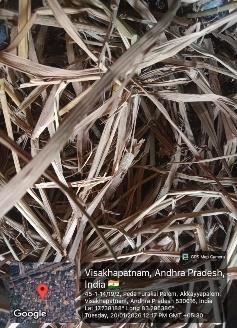
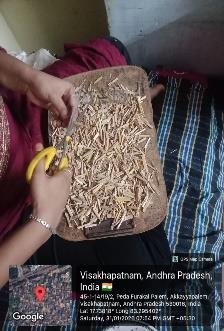
Rice straw was collected from farms and cleaned to remove dirt. The dried straw was then chopped into 15–20 mm lengths for uniform mixing. After that, it was soaked in water for 24 hours and drained to achieve a saturated surface dry (SSD) condition, ensuring no free surface water remained. The straw was then left exposed for15minutesbeforebeingmixedintotheconcrete.
International Research Journal of Engineering and Technology (IRJET) e-ISSN: 2395-0056
Volume: 13 Issue: 04 | Apr 2026 www.irjet.net p-ISSN: 2395-0072
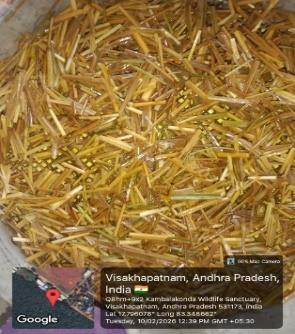
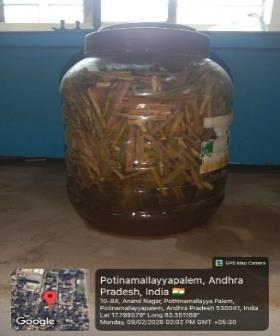
Fig -3:24hrssoakedFibers Fig -4:ricestrawInSSDCond.
Table -1: DifferentPercentageOfRiceStrawAddedFor 1m3ConcreteMix
MIX %ofricestraw added(addedbased oncementweight)
QuantityofRice Strawaddedfor1 m3 ofconcrete Cementquantityfor1m3 ofconcrete=403.2kg’s
Control mix 0 0
1mix 0.25% 1KGS
2mix 0.5% 2KGS
3mix 0.75% 3KGS
4. RESULTS
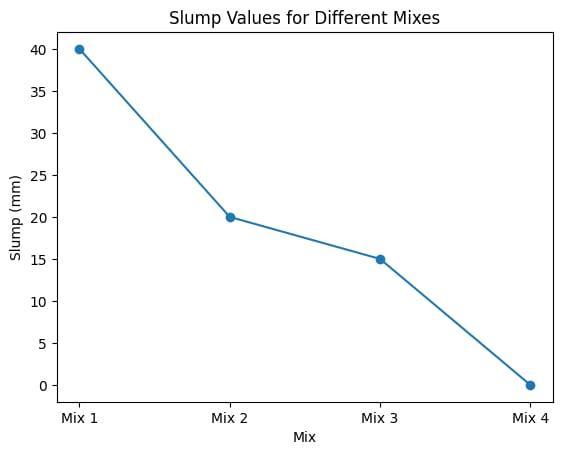
4.1 FRESH CONCRETE VALUES
4.2 COMPARSION B/W COMPRESSION TEST VALUES
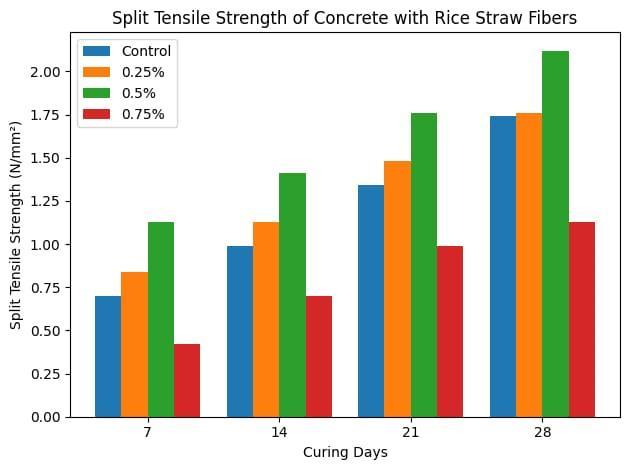
Chart -2: ComparisonB/WCompressionTestValues
4.3 COMPARSION B/W SPLIT TENSILE STRENGTH TEST VALUES
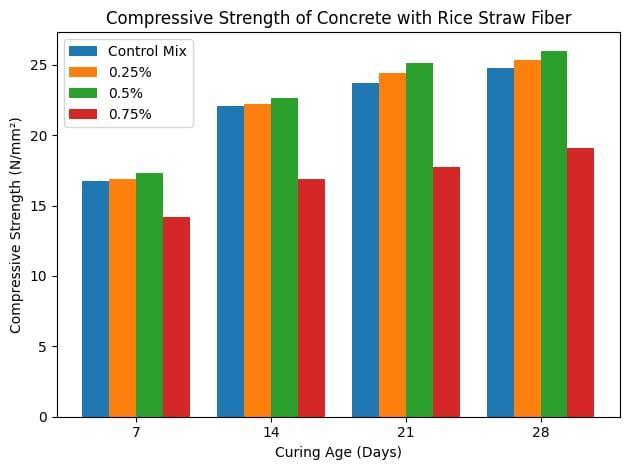
Chart -3: ComparisonB/WSplitTensileStrengthTest Values
5. CONCLUSIONS
1. The control mix showed 40 mm slump, but after adding SSD rice straw fibers, slump decreased to20 mm(0.25%),15mm (0.5%), and very low at 0.75%, indicating reduced workability.
2. Even in SSD condition, increasing fiber content caused higher internal friction and
2026, IRJET | Impact Factor value: 8.315 | ISO 9001:2008
International Research Journal of Engineering and Technology (IRJET) e-ISSN: 2395-0056
Volume: 13 Issue: 04 | Apr 2026 www.irjet.net p-ISSN: 2395-0072
stiffness, making the concrete mix less workable,especiallyathigherpercentages.
3. At 0.25% fiber content, compressive strength showedaslightincreasecomparedtocontrol mix: about 0.8% (7d), 0.6% (14d), 3.0% (21d),and2.4%(28d).
4. At 0.5% fiber content, strength improvement wasmoresignificant:around3.5%(7d),2.6% (14d),5.8%(21d),and5.1%(28d),indicating betterperformance.
5. At 0.75% fiber content, compressive strength decreased drastically: about −15.1% (7d), −23.6% (14d), −25.1% (21d), and −22.8% (28d)comparedtocontrolmix.
6. Overall, adding SSD rice straw fibers improves strength up to 0.5%, but higher content(0.75%)leadstosignificantreduction duetopoorbondingandfiberclustering.
7. At 0.25% fiber content, split tensile strength increased compared to control by about 20.0% (7d), 14.1% (14d), 10.4% (21d), and 13.5%(28d).
8. At 0.5% fiber content, the increase was significant, around 61.4% (7d), 42.4% (14d), and 31.3 % (21d), and 36.8% (28d), showing maximumimprovement.
9. At0.75%fibercontent,strengthdecreasedby about −40.0% (7d), −29.3% (14d), −26.1% (21d),and−27.1%(28d)comparedtocontrol mix.
10. Overall, adding SSD rice straw fibers improves split tensile strength up to 0.5%, buthighercontent(0.75%)leadstoreduction duetopoorbondingandfiberclustering.
1. Ahmed, T., Farooqi, M. U., & Ali, M. (2020, February). Compressive behavior of rice straw-reinforced concrete for rigid pavements. In IOP Conference Series: Materials Science and Engineering (Vol. 770, No. 1, p. 012004). IOP Publishing.
2. Nafea, A., Abd El-Rahman, A. M., Ghonaim, S. A., & Tawhed, W. F. (2021). Behavior of Natural Fiber Reinforced Concrete Using Rice Straws. J. Archit. Civ. Eng, 6,26-32.
3. Ezenkwa, C. S., Ede, A. N., & Ogbaga, C. K. (2024, May). InfluenceofRiceStrawAshonWorkabilityandStrengthof Concrete. In IOP Conference Series: Earth and Environmental Science (Vol. 1342, No. 1, p. 012018). IOP Publishing.
4.Pachla, E. C., Silva, D. B., Stein, K. J., Marangon, E., & Chong,W.(2021).Sustainableapplicationofricehuskand rice straw in cellular concrete composites. Construction andBuildingMaterials,283,122770.
5. Ataie, F. (2018). Influence of rice straw fibers on concrete strength and drying shrinkage. Sustainability, 10(7),2445.
6.Thongchua,G.,Suwan,T.,Jitsangiam,P.,Wattanachai,P., Kamthai, S., Thongchua, H., & Yamuangmorn, S. (2023, February).Utilization ofricestraw wastesasaggregate in lightweightconcreteblock productionbyusingcoldpress technique. In IOP Conference Series: Earth and Environmental Science (Vol. 1146, No. 1, p. 012006). IOP Publishing.
7 Doostkami, H., Hernández-Figueirido, D., Albero, V., Piquer, A., Serna, P., & Roig-Flores, M. (2025). Experimental sStudy on the Valorization of Rice Straw as FiberforConcrete.Fibers,13(3),28.
8. Mahdy, M. M., Mahfouz, S. Y., Tawfic, A. F., & Ali, M. A. (2023). Performance of rice straw fibers on hardened concrete properties under effect of impact load and gammaradiation.Fibers,11(5),42.
International Research Journal of Engineering and Technology (IRJET) e-ISSN: 2395-0056
Volume: 13 Issue: 04 | Apr 2026 www.irjet.net p-ISSN: 2395-0072





DR. G. TABITHA
Associate Professor, Dept. of Civil Engineering, Sanketika Vidya Parishad Engineering College, VSP,India
BELLANA SIVA SAI KUMAR
B.tech graduate student, Dept. of Civil Engineering, Sanketika Vidya Parishad Engineering College,VSP,India
MADENA PRADEEP
B.tech graduate student, Dept. of Civil Engineering, Sanketika Vidya Parishad Engineering College,VSP,India
MAKANA KUMAR
B.tech graduate student, Dept. of Civil Engineering, Sanketika Vidya Parishad Engineering College,VSP,India
SHAIK SALMA FARZANA
B.tech graduate student, Dept. of Civil Engineering, Sanketika Vidya Parishad Engineering College,VSP,India