
International Research Journal of Engineering and Technology (IRJET) e-ISSN:2395-0056
Volume: 12 Issue: 04 | Apr 2025 www.irjet.net p-ISSN:2395-0072
International Research Journal of Engineering and Technology (IRJET) e-ISSN:2395-0056
Volume: 12 Issue: 04 | Apr 2025 www.irjet.net p-ISSN:2395-0072
Gunja Goyal1, Dr. Richa Ankush Pathe2
1 Research Scholar, Department of Architecture, R.K.D.F University, Bhopal, India
2 Professor, Department of Architecture, R.K.D.F University, Bhopal, India
Abstract
In many parts of India like Rajasthan, Gujarat, and parts of Madhya Pradesh summer temperatures can soar above 45°C, making indoor comfort a serious challenge. While air conditioners are commonly used, they consume a lot of electricity and aren’talwaysaffordableorsustainable.Thispaperlooksathowbothtraditionalandmodernbuildingsinhot-dryclimatesare keeping spaces cool without relying on mechanical systems. From courtyards and jaali walls in old havelis, to modern solutionslikeearthairtunnelsandventilatedfaçadesingreenbuildings,thestudyexploreshowthesetechniqueswork,and howeffectivetheyreallyare.Usingrealexamplesanddocumentedperformancedata,we trytounderstandwhatmakesthese cooling strategies work in harsh climates. The goal is to show how lessons from the past can be combined with modern technology to create buildings that are comfortable, cost-effective, and environmentally friendly. This paper brings together traditionalwisdomandsmartdesign,offeringpracticalideasforarchitects,builders,andpolicymakersworkingtowardsmore climate-resilientconstructioninIndia.
Keywords
Passivecooling,climate-responsivedesign,traditionalarchitecture,earthairtunnel,greenbuildings,hot-dryclimate,energyefficienthousing,sustainablearchitecture
India’s hot and dry regions such as western Rajasthan, parts of Gujarat, Madhya Pradesh, and interior Maharashtra face extremesummertemperatures,oftencrossing45°C.In theseareas,ensuringthermal comfortindoors without depending on energy-intensive air conditioning has always been a major design challenge. While modern mechanical cooling systems are effective, they are expensive, electricity-dependent, and contribute to the urban heat island effect and carbon emissions.
Interestingly, long before air conditioning became common, traditional Indian architecture already had solutions to beat the heat like inward-facing courtyards, thick walls, shaded verandahs, and jaali (perforated) screens. These features not only madetheindoorenvironmentmorecomfortablebutalsorespondedintelligentlytothelocalclimate,materials,andlifestyle.
Today,asclimatechangeincreasesbothtemperaturesandelectricitydemand,revisitingtheseage-olddesignstrategiesmakes moresensethanever.Atthesametime,newertechniques suchasearthairtunnelsystems,greenroofs,ventilatedfaçades, and reflective coatings are being integrated into modern buildings to enhance energy efficiency and reduce cooling loads.
This paper explores both ends of the spectrum: the wisdom of vernacular cooling systems and the innovations of modern passivetechniques.Usingreal-lifeexamplesfromarchitectureinIndia’shot-dryzones,thestudycompareshoweachmethod performsintermsofcomfort,cost,andsustainability.
India’straditionalarchitecturehasalwaysrespondedwiselytoitslocalclimate,especiallyinhot-dryregionswhereheatand drynessposeseriouschallenges.Longbeforemechanicalcoolingbecameavailable,peopledevelopedbuildingtechniquesthat madehomesandpublicspaceslivable evenduringpeaksummer.Thesetechniquesweren’tjustpractical,theyweredeeply rootedinculture,craftsmanship,andtheuseoflocalmaterials.
International Research Journal of Engineering and Technology (IRJET) e-ISSN:2395-0056
Volume: 12 Issue: 04 | Apr 2025 www.irjet.net p-ISSN:2395-0072
Courtyardsareoneofthemosticonicfeaturesofvernacularbuildingsinhot-dryareas.WhetherinthehavelisofRajasthanor homesinpartsofGujarat,thecentralcourtyardservesasathermalbuffer.Duringtheday,itallowshotairtoriseandescape, while at night it promotes cooling through natural air circulation. Shaded by overhangs or trees, it becomes a cool and comfortablegatheringspace.
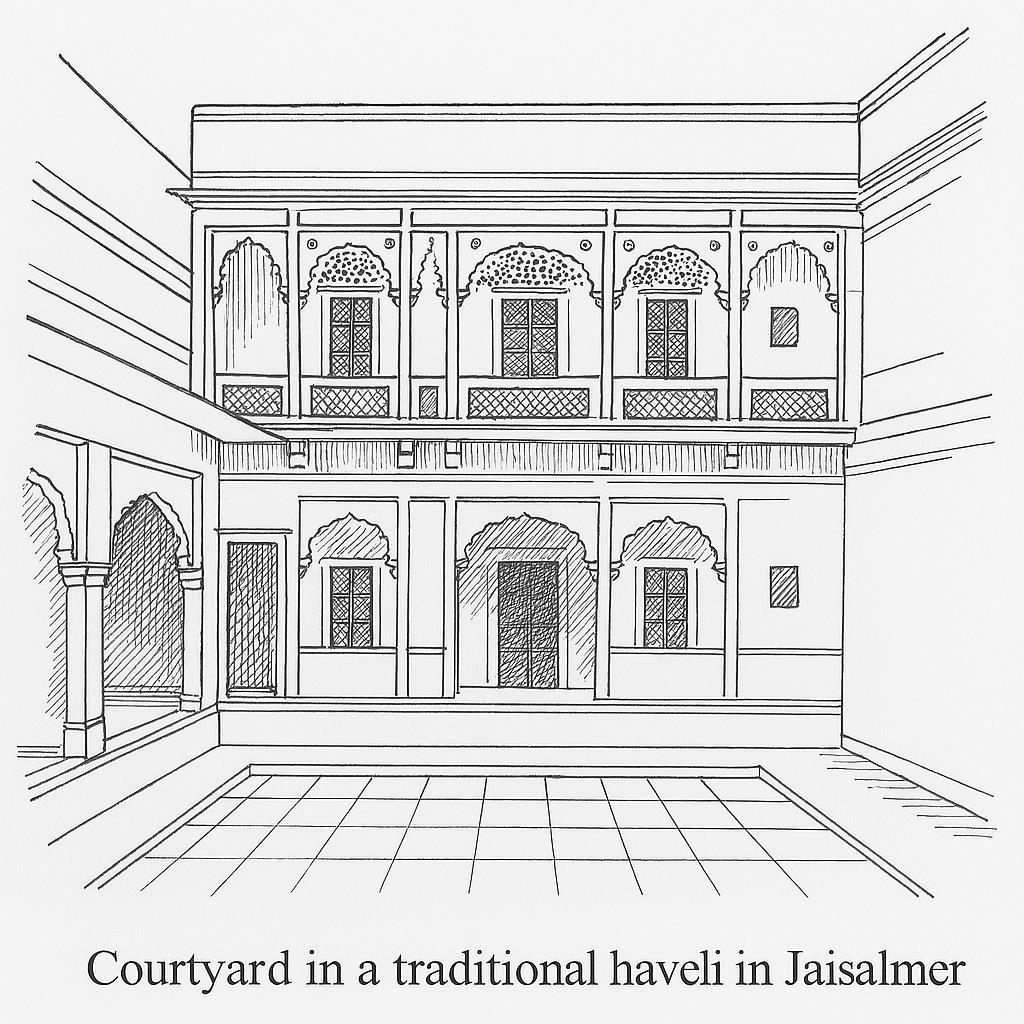
Fig-1:CourtyardsketchfromahaveliinJaisalmer,showcasinginward-facinglayoutforthermalcomfort.
Jaaliwallsarebeautifullycarvedstoneorwoodenscreensusedtofiltersunlightandallowventilation.Theyreduceglarewhile promotingcross-ventilation.Thepatternandthicknessofthejaaliallowcoolairtoflowthroughwhilepreventingdirectheat entry.
International Research Journal of Engineering and Technology (IRJET) e-ISSN:2395-0056
Volume: 12 Issue: 04 | Apr 2025 www.irjet.net p-ISSN:2395-0072
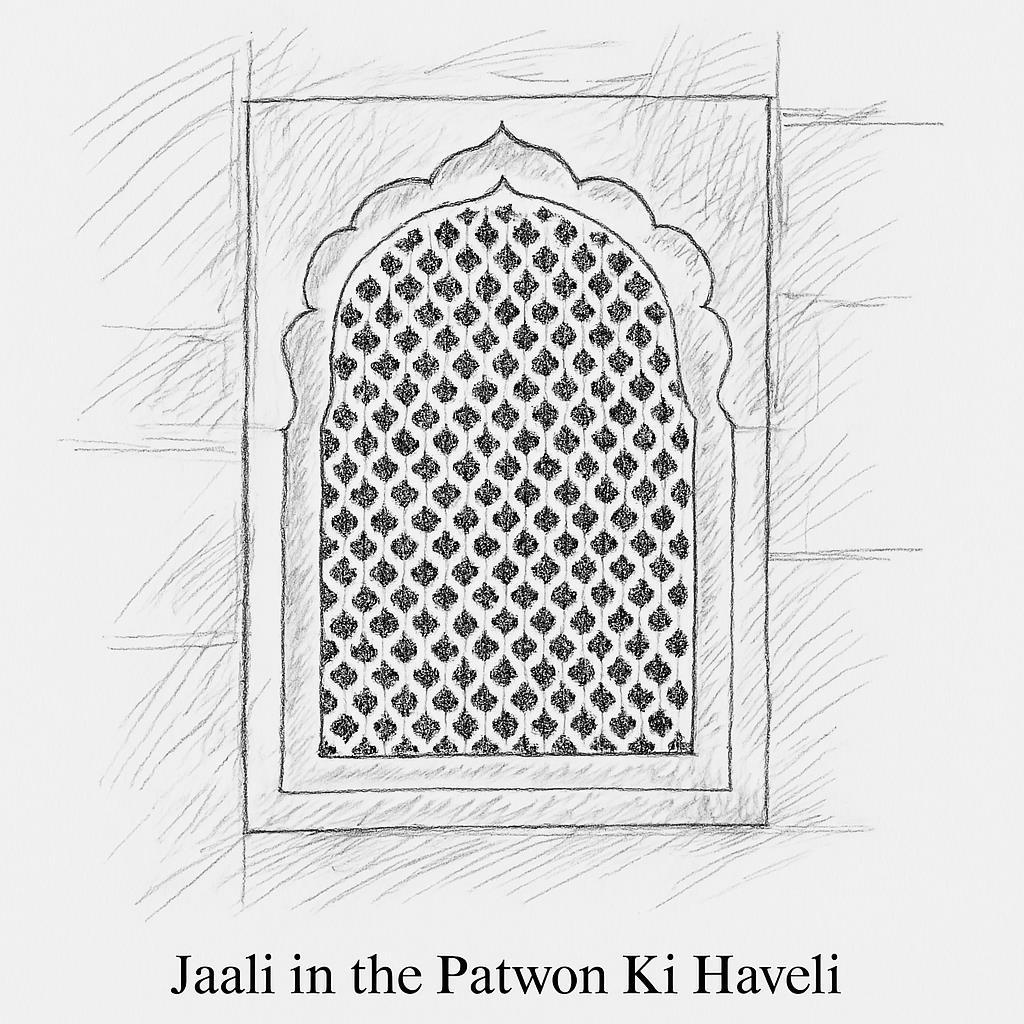
Fig-2:TraditionaljaaliscreenfromPatwonKiHaveli,illustratingdecorativeperforationsandairflow.
Anothercommontechniqueistheuseofthickwallsmadeoflocallyavailablematerialslikesandstone,adobe,ormudbricks. Thesematerialshavehighthermalmass,meaningtheyabsorbheatduringthedayandreleaseitslowlyatnight,thusreducing indoortemperaturefluctuations.
International Research Journal of Engineering and Technology (IRJET) e-ISSN:2395-0056
Volume: 12 Issue: 04 | Apr 2025 www.irjet.net p-ISSN:2395-0072
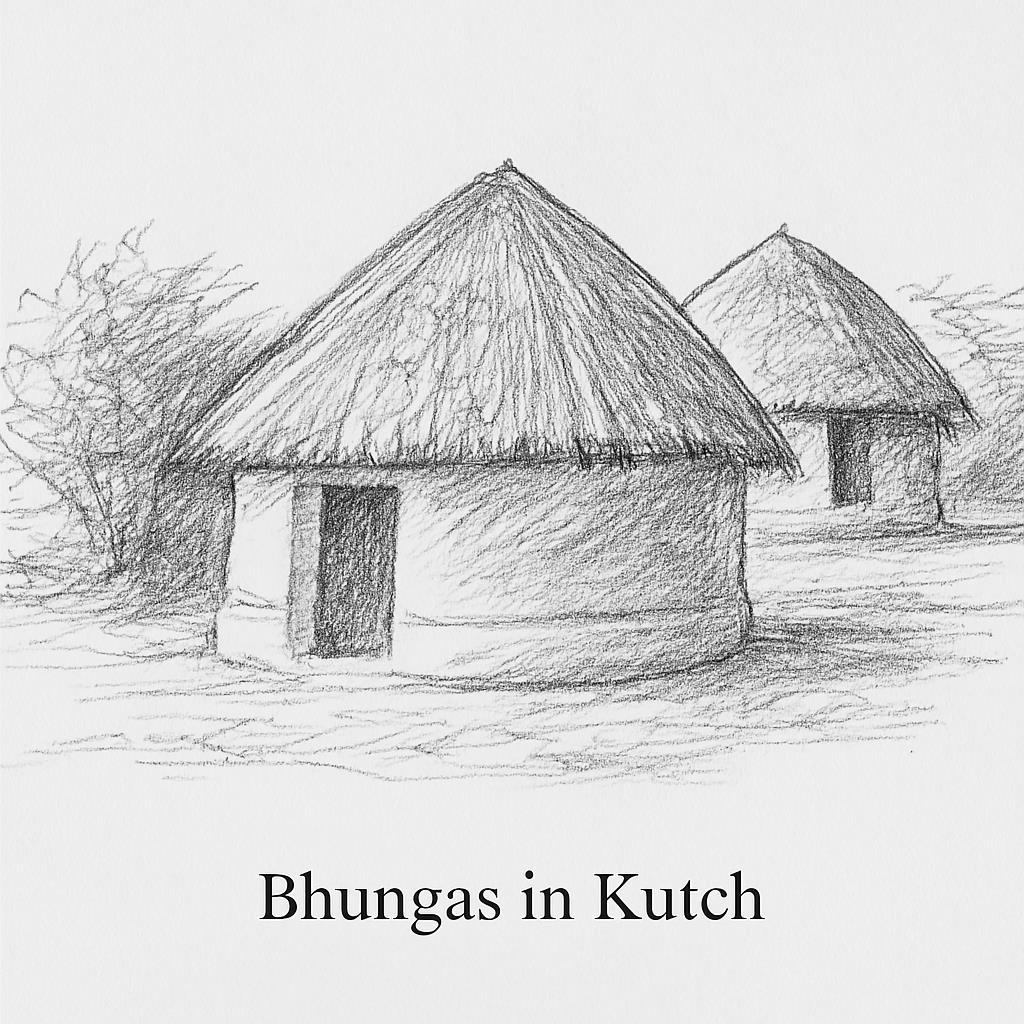
Fig-3:BhungasfromKutchwiththickearthenwallsandcircularformsprovidingnaturalinsulation.
Stepwellsandwatertankswereoftenincorporatedintosettlementstocoolthesurroundingenvironment.Whiletheirprimary rolewaswaterstorage,theirshadedinteriorsprovidedacoolretreatandinfluencedmicroclimatesinadjacentstructures.
International Research Journal of Engineering and Technology (IRJET) e-ISSN:2395-0056
Volume: 12 Issue: 04 | Apr 2025 www.irjet.net p-ISSN:2395-0072
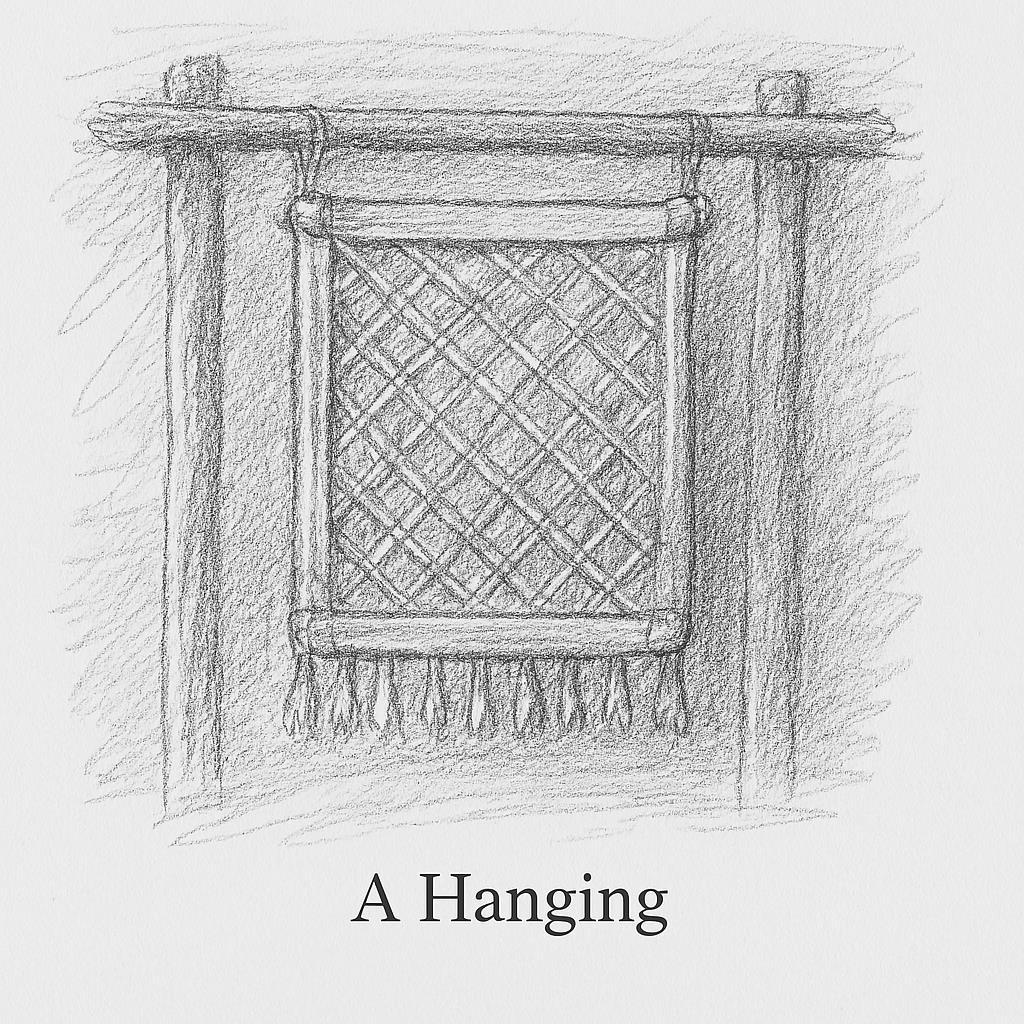
Fig-4:Hangingelementwithlatticedesign,promotingshadedairflowandevaporativecooling.
While vernacular techniques offer time-tested solutions, modern buildings especially in urban and institutional settings havebegunadoptingnewer,technology-aidedstrategiesforpassiveandenergy-efficientcooling.Theseapproachesdrawfrom traditionalprinciplesbutaresupportedbyscientificanalysis,energymodeling,andperformancetesting.Inhot-dryclimates, wheresolarradiationisintenseandhumidityislow,controllingheatgainwhilepromotingventilationiskey.
The Earth Air Tunnel System is a passive cooling method where outside air is drawn through underground pipes before enteringthebuilding.Astheundergroundsoiltemperatureissignificantlylowerthantheambientsummertemperature,the airgetsnaturallycooled,reducingtheindoortemperaturewithouttheneedformechanicalairconditioning.
Greenroofs,whicharecoveredwithsoilandvegetation,actasnaturalinsulationandreducerooftopheatgain.Similarly,highalbedo(reflective)coatingsonroofsandwallshelpreflectsunlightinsteadofabsorbingit.
A ventilated façade includes a gap between two wall layers one usually glass or metal, and the other an insulated or solid wall.Thegapactsasathermalbarrier,whilecontrolledairflowcanhelpextractheatbeforeitreachestheinnerwall.
Shadingelementslikefixedoverhangs,verticalfins,andbrisesoleilreducedirectsunexposureonwallsandwindows.Modern buildingsalsouseelectrochromicorsolar-controlglass,whichadjuststransparencybasedonsunlightintensity.
International Research Journal of Engineering and Technology (IRJET) e-ISSN:2395-0056
Volume: 12 Issue: 04 | Apr 2025 www.irjet.net p-ISSN:2395-0072
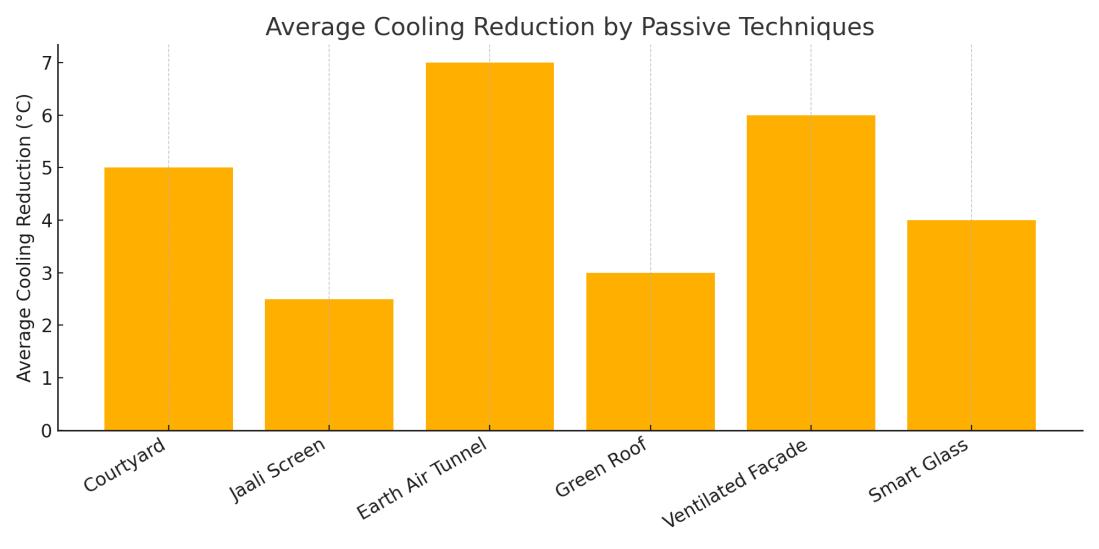
Chart-1:AverageCoolingReductionbyPassiveTechniques.
This chart shows the average temperature reduction (in °C) provided by different passive cooling strategies based on documentedcasestudiesinIndia.
Source:TERI,CEPTUniversity,IGBC,BEEPIndiaReports.
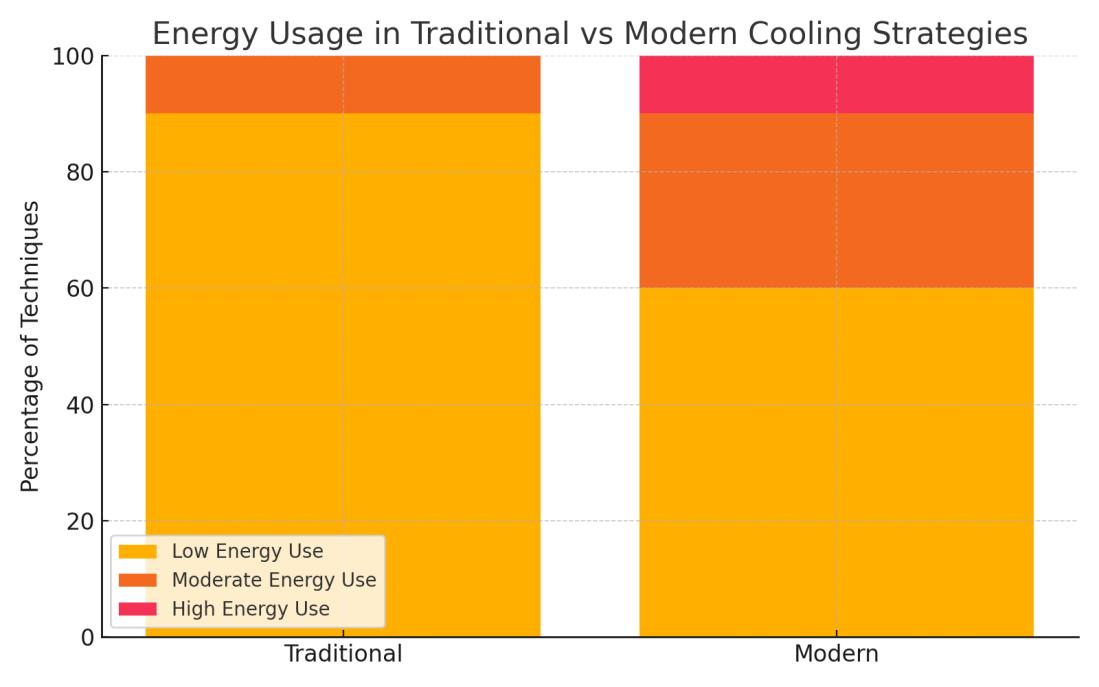
Chart-2:EnergyUsageinTraditionalvsModernCoolingStrategies.
This stacked bar chart shows how traditional cooling strategies overwhelmingly rely on low energy use, while modern strategies thoughmorevaried stillleantowardenergyefficiency.
Source:GRIHAManual,ECBCGuidelines,empiricalanalysis.
© 2025, IRJET | Impact Factor value: 8.315 | ISO 9001:2008
International Research Journal of Engineering and Technology (IRJET) e-ISSN:2395-0056
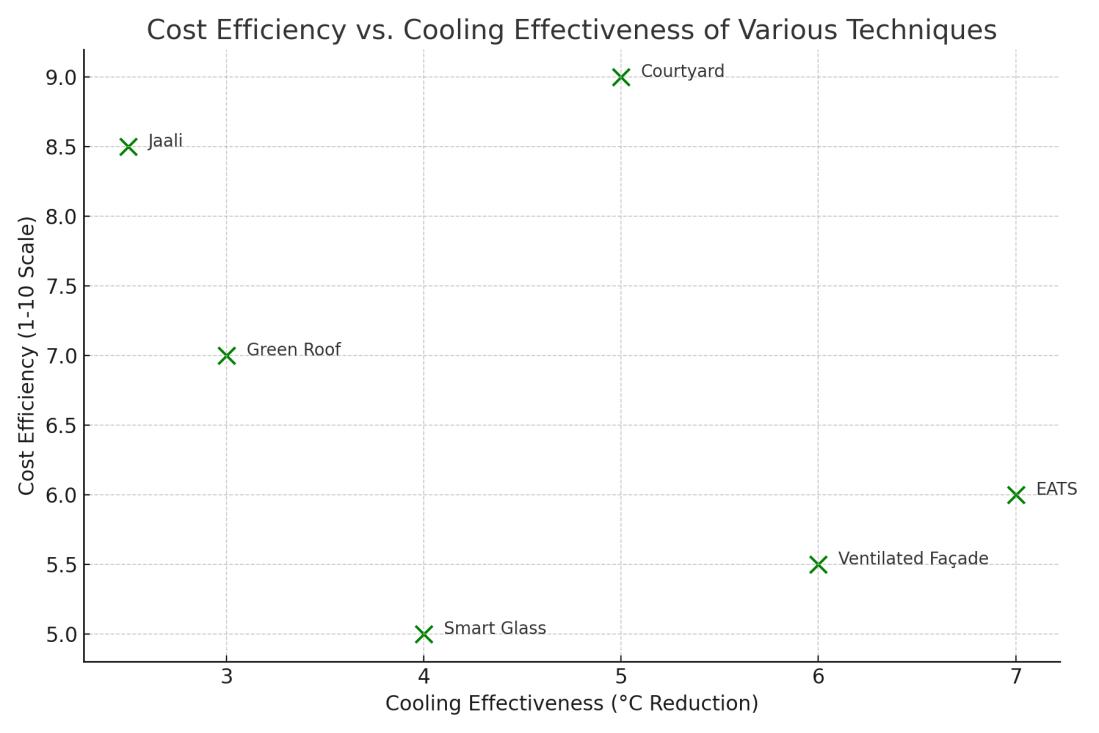
Chart-3:CostEfficiencyvs.CoolingEffectivenessofVariousTechniques.
This scatter plot compares each strategy’s cooling performance with its cost-efficiency. Techniques like courtyards and jaali screensperformwellonbothfronts.
Source:CEPTUniversity,CII-GodrejGreenBuildingcasestudies.
4. DISCUSSION AND INTEGRATION
Theexplorationof bothvernacularandmodernpassivecoolingstrategiesrevealsa valuablelesson coolinga buildingdoes not always require high energy consumption or complex systems. In fact, some of the simplest techniques, refined over centuries of traditional wisdom, are still highly effective today. What sets modern solutions apart is their precision, adaptabilitytodifferentscales,andabilitytobecombinedwithautomationandperformancemonitoring.
Whencomparingthetwoapproaches,itbecomesevidentthattheyarenotoppositesbutrathercomplementary.Forexample, courtyards and jaali screens provide excellent cross-ventilation and shading in small-scale or residential buildings. On the other hand, earth air tunnels and double-skin façades serve better in larger institutional or commercial projects where air circulationandenergymonitoringneedtobemorecontrolled.
A key takeaway from this study is the potential for hybrid strategies where traditional methods are adapted with modern enhancements. By recognizing the value in traditional cooling methods and adapting them to modern materials, building types, and user expectations, architects and designers can create spaces that are not only comfortable but also climateresilientandcost-effective.
5. CONCLUSION
In a time where urban temperatures continue to rise and energy demands strain both households and infrastructure, the importance of passive cooling strategiescannot be overstated. This paper exploredhow both traditional and modern design approaches have addressed the challenge of indoor thermal comfort in India’s hot-dry climate zones. From inward-facing courtyards and jaali screens in vernacular architecture to earth air tunnels and ventilated façades in contemporary green buildings,eachtechniquecontributesuniquelytoreducingheatgainandenhancingenergyefficiency.
Volume: 12 Issue: 04 | Apr 2025 www.irjet.net p-ISSN:2395-0072 © 2025, IRJET | Impact Factor value: 8.315 | ISO 9001:2008 Certified Journal | Page1061
International Research Journal of Engineering and Technology (IRJET) e-ISSN:2395-0056
Volume: 12 Issue: 04 | Apr 2025 www.irjet.net p-ISSN:2395-0072
What emergesclearlyis thatthesestrategiesare not mutuallyexclusive.Instead, themostsustainablepath forwardliesina thoughtful integration of past wisdom with present innovation. By recognizing the value in traditional cooling methods and adaptingthemtomodernmaterials,buildingtypes,anduserexpectations,wecanshapebuildingsthatarecomfortable,costeffective,andenvironmentallyresponsible.
The authors would like to thank CEPT University, BEEP India, and GRIHA for providing access to relevant case studies and data. We also acknowledge the contributions of traditional craftsmen and academic sources that have preserved and documentedvernaculararchitecturetechniquesacrossIndia.
1. BEEPIndia,“ThermalComfortinAffordableHousing,”BuildingEnergyEfficiencyProjectReport,2020.
2. TERI,“PassiveCoolingTechniques:SustainableBuildingDesignPractices,”TheEnergyandResourcesInstitute,2017.
3. CEPTUniversity,“EarthAirTunnelSysteminIndianContext,”Ahmedabad:FacultyofArchitectureResearchSeries,2019.
4. IGBC,“GreenBuildingCaseStudies,”IndianGreenBuildingCouncilPublications,2021.
5. MinistryofPower,“EnergyConservationBuildingCode(ECBC),”BureauofEnergyEfficiency,2017.
6. GRIHA,“GRIHAManualVolume1:IntroductiontoNationalRatingSystem,”TheEnergyandResourcesInstitute,2010.
7. CII-GodrejGBC,“PerformanceHighlightsofNet-ZeroEnergyBuildings,”Hyderabad,2021.
8. Gopalan,K.,&Narayanamurthy,P.,“ImpactofCourtyardDesignonThermalPerformance inHot-DryClimates,”Journalof BuildingPhysics,Vol.42,No.2,2019.